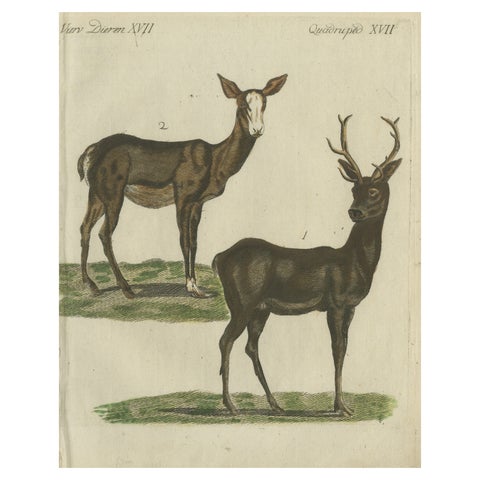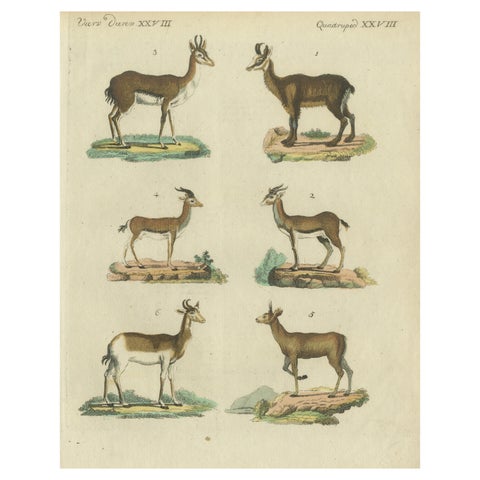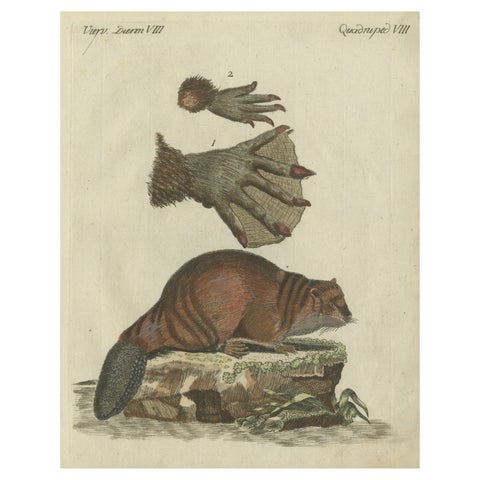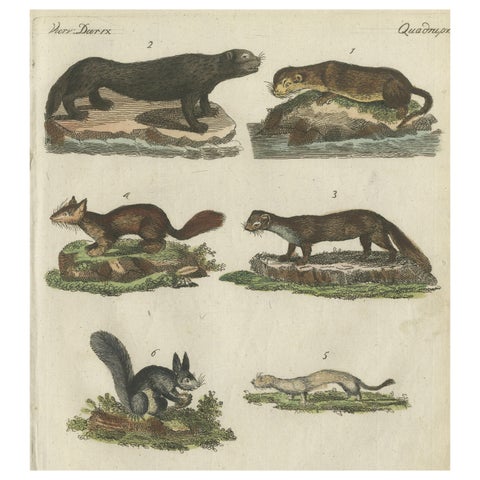
Close-ups
Framed and on the wall
Frame and rooms are illustrations of how the print could look; the description says what is included.
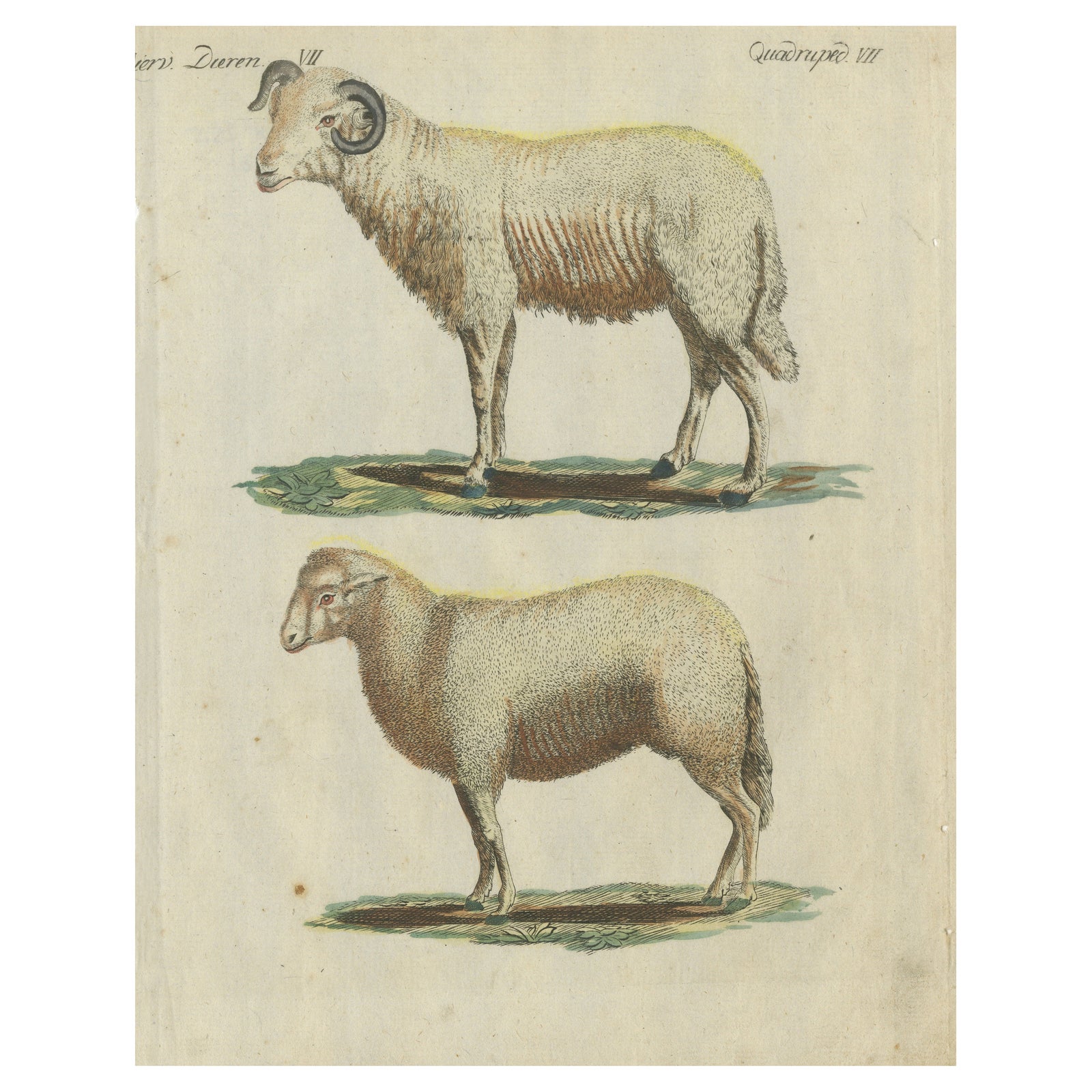
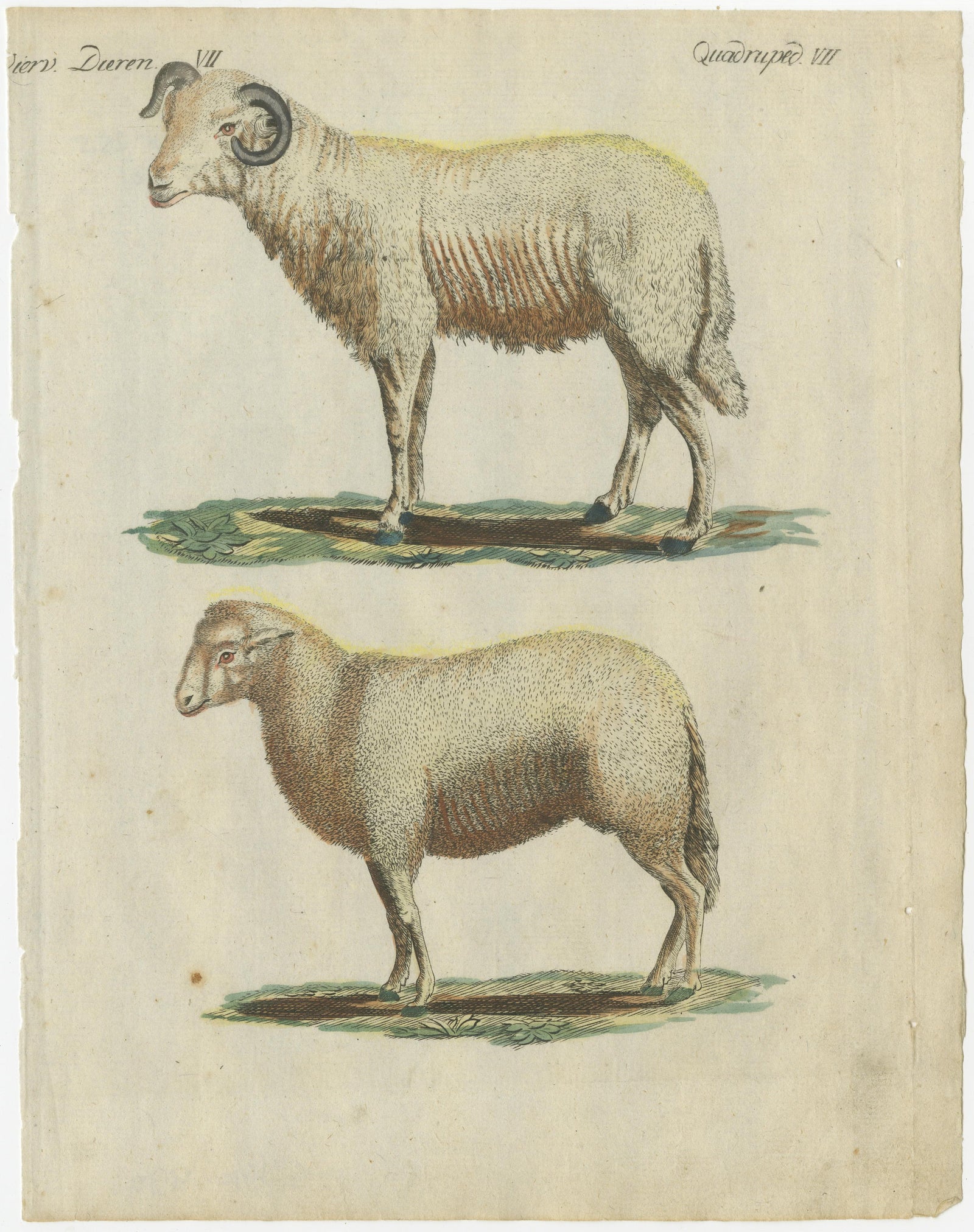
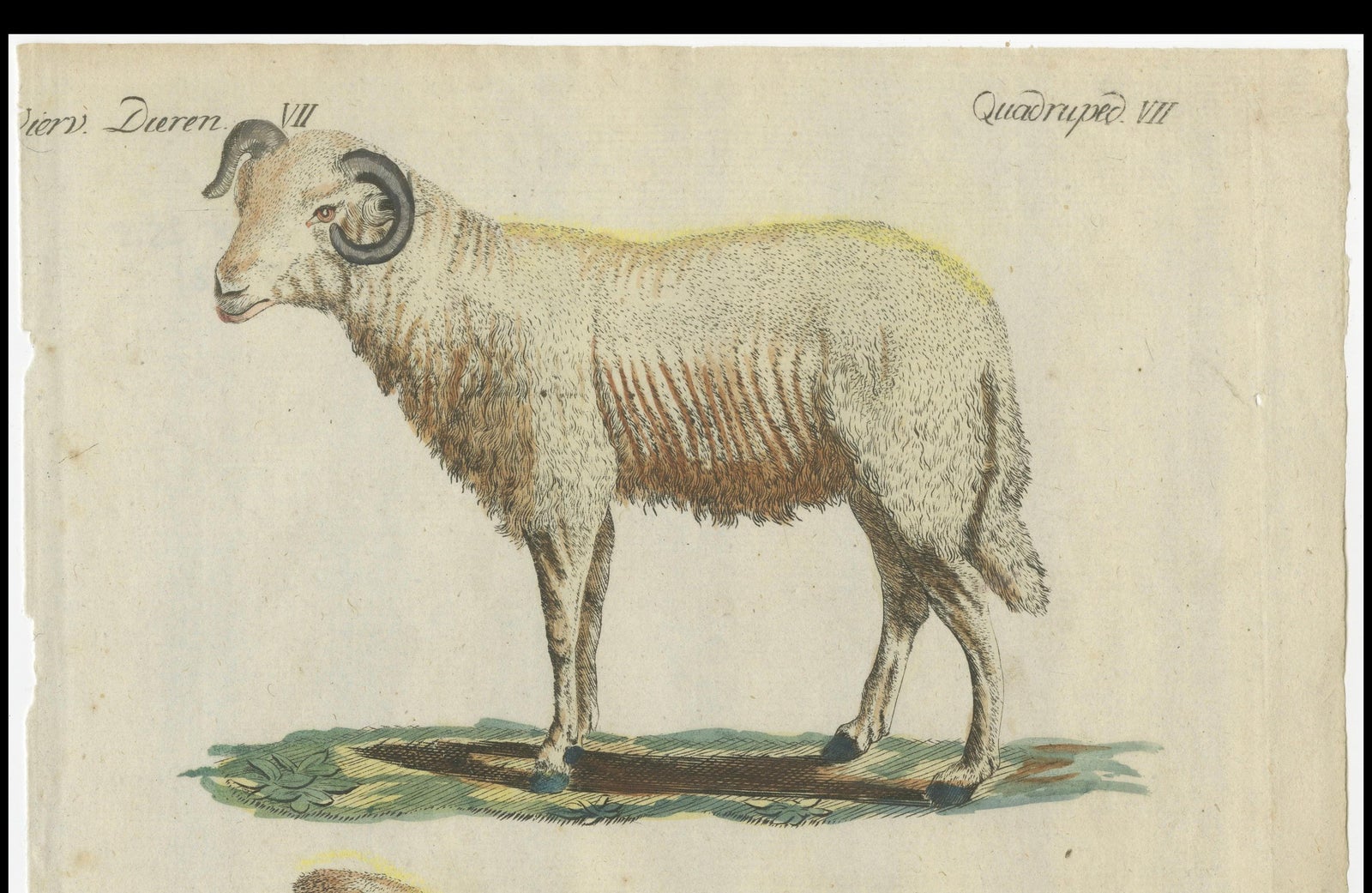
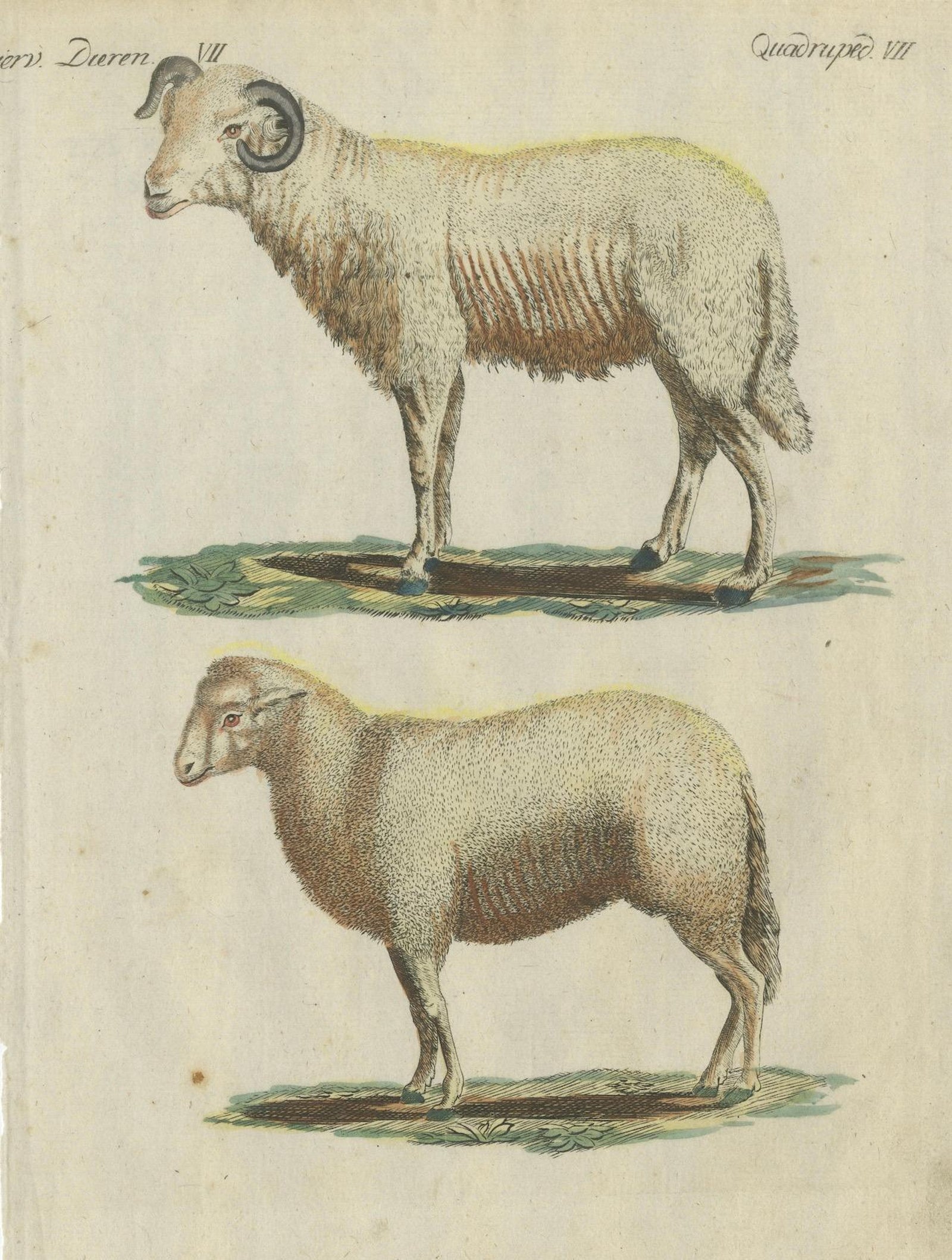
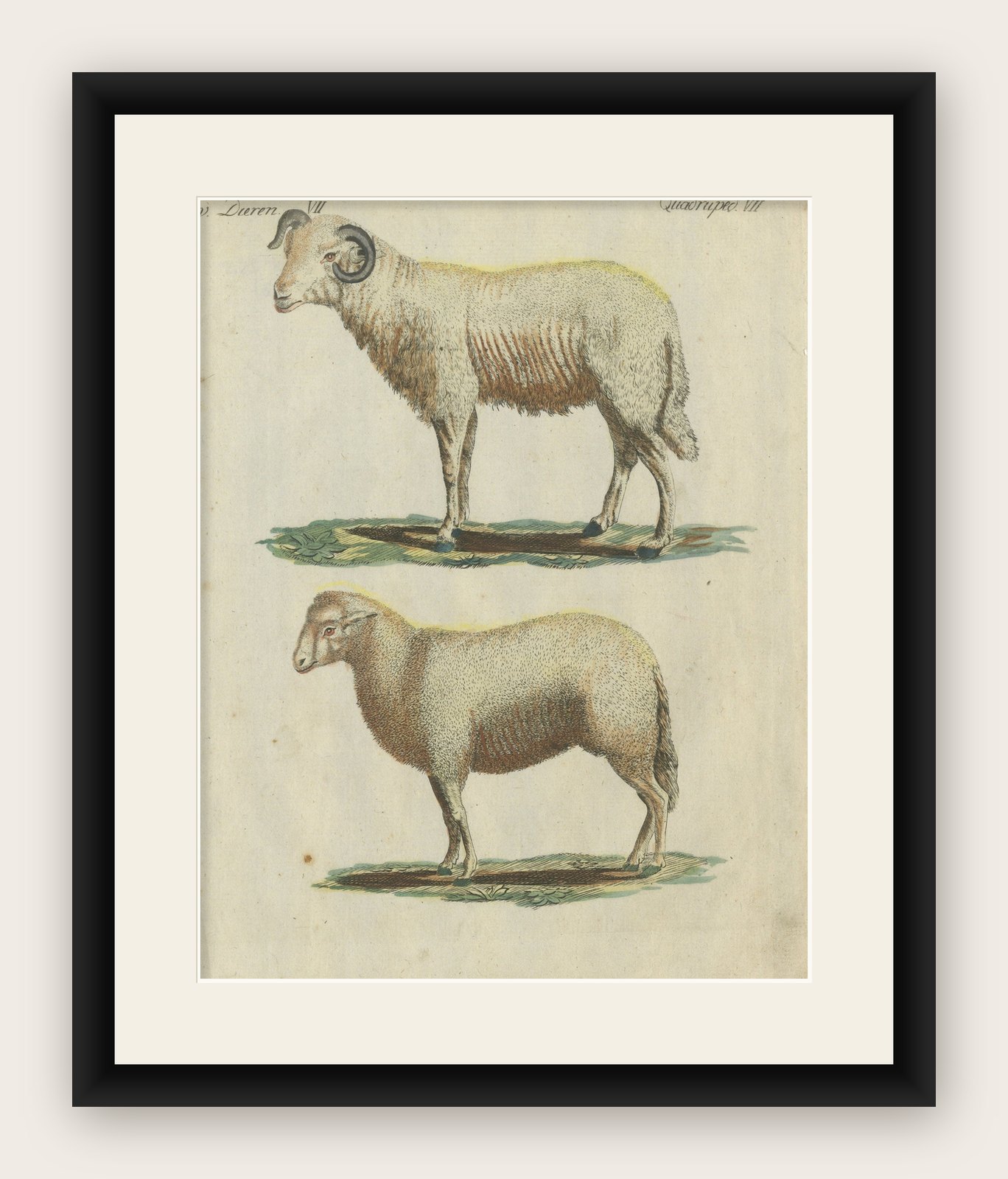
Patina Rich Hand Colored Antique Print of a Sheep and Ram, circa 1820
£135 ($180, €160)
Period original, not a reproduction.
Shipped from the Netherlands, flat, insured and tracked, worldwide. Returns accepted within 14 days.
- Date
- 1820
- Size
- 10.1 × 7.8 in (25.6 × 19.7 cm)
- Condition
- Good. General age-related toning. Small punch holes in right margin. Some wear and soiling, adding to the patina. Blank verso. Please study image carefully.
- Period
- Early 19th century
- Artist or book
- Bertuch
- Section
- Mammals
- Reference
- f_38510382
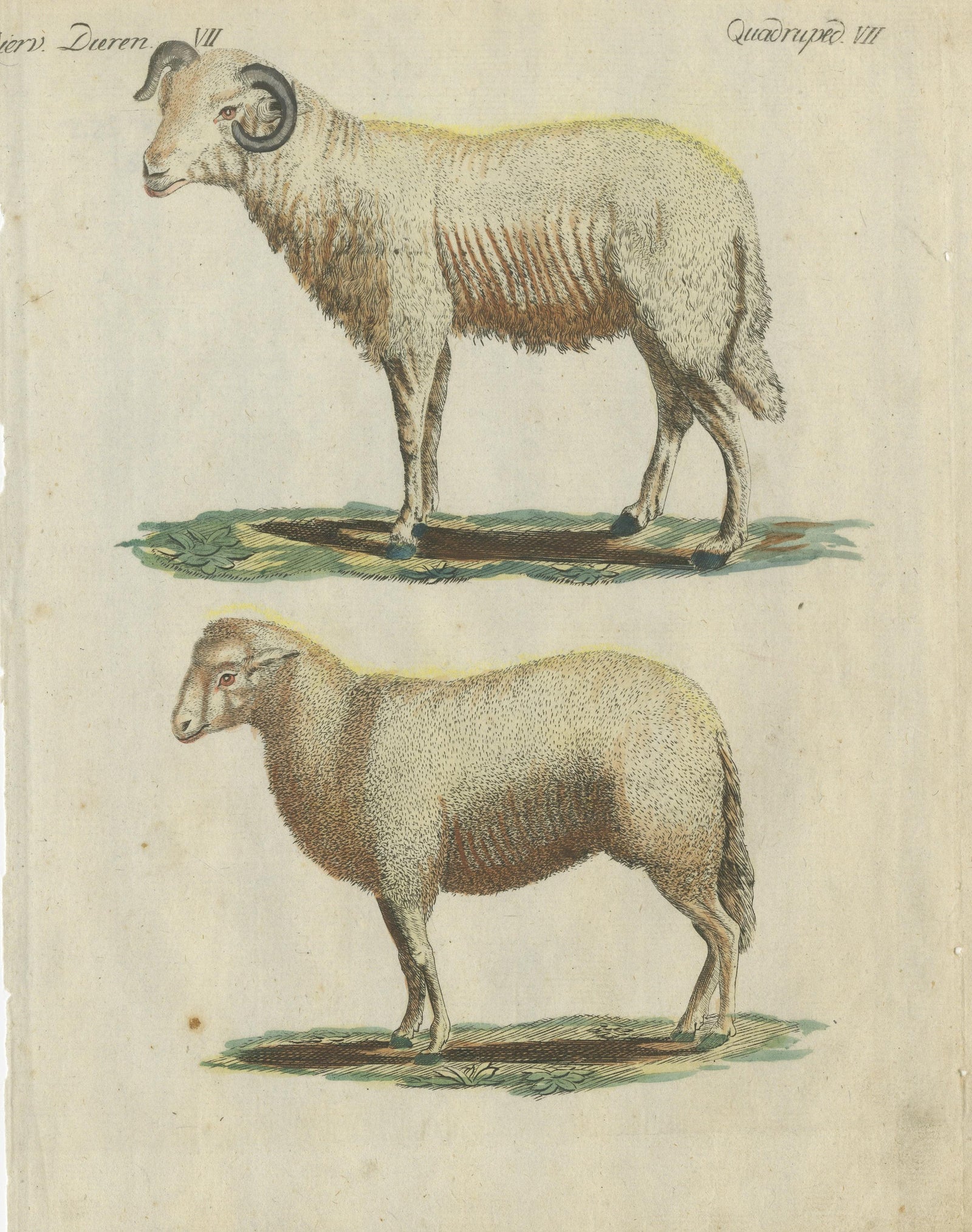
Original antique print of a sheep and ram. This engraved print originates from a very rare unknown Dutch work. The plates are similar to the plates in the famous German work: ‘Bilderbuch fur Kinder' by F.J. Bertuch, published 1790-1830 in Weimar. This could be Dutch edition of this work (no references found), or a work that used the Bertuch plates. Published circa 1820.
In more detail:
The image features two different breeds of sheep, each depicted with significant detail typical of the natural history illustrations from the 18th or 19th century. The image is labeled "Vierv Dieren III" and "Quadrup. III," suggesting that it is the third in a series of illustrations of quadrupeds, although the term "Viverr." is probably the Dutch 'Viervoeters' meaning quadrupeds.
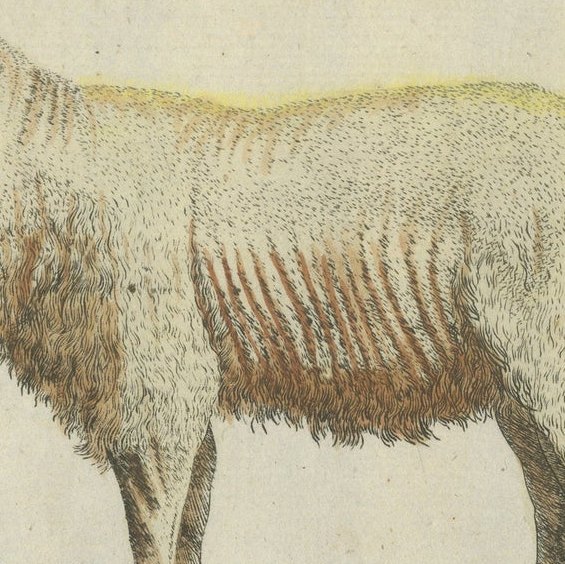
1. The top sheep has a robust body with a heavy coat, indicative of a breed raised for both its meat and wool. Its curled horns suggest it's a male, and its thick fleece is colored in shades of white and brown, with detailed shading that gives a sense of texture.
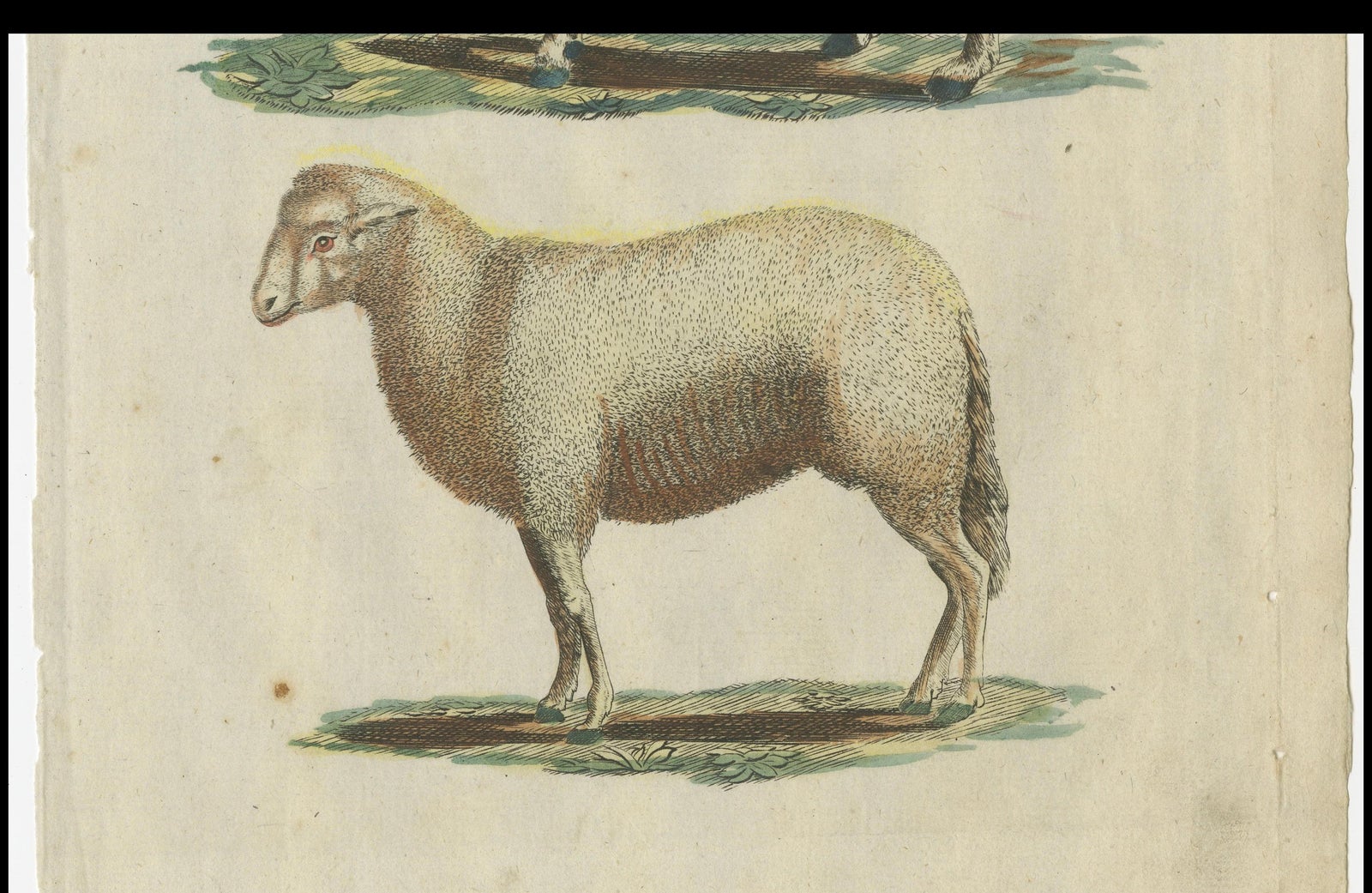
2. The bottom sheep is sleeker with a shorter fleece, depicted in a standing pose with its head turned towards the viewer. The coloration is more uniform, and it also displays the detailed texturing that is characteristic of these illustrations.
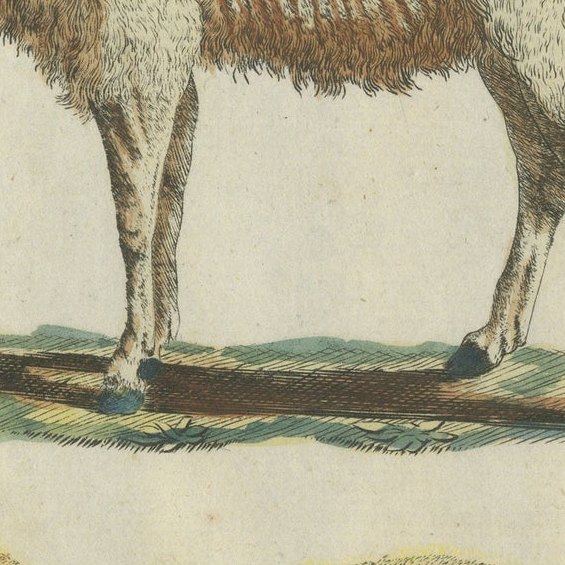
Both sheep are standing on a simple green ground, which might imply a pastoral setting without distracting from the detailed study of the animals themselves. The artwork aims to be both informative and aesthetically pleasing, capturing the physical characteristics that distinguish different sheep breeds. These illustrations would have been important for educational purposes, providing those unable to see such animals in person with a detailed reference.