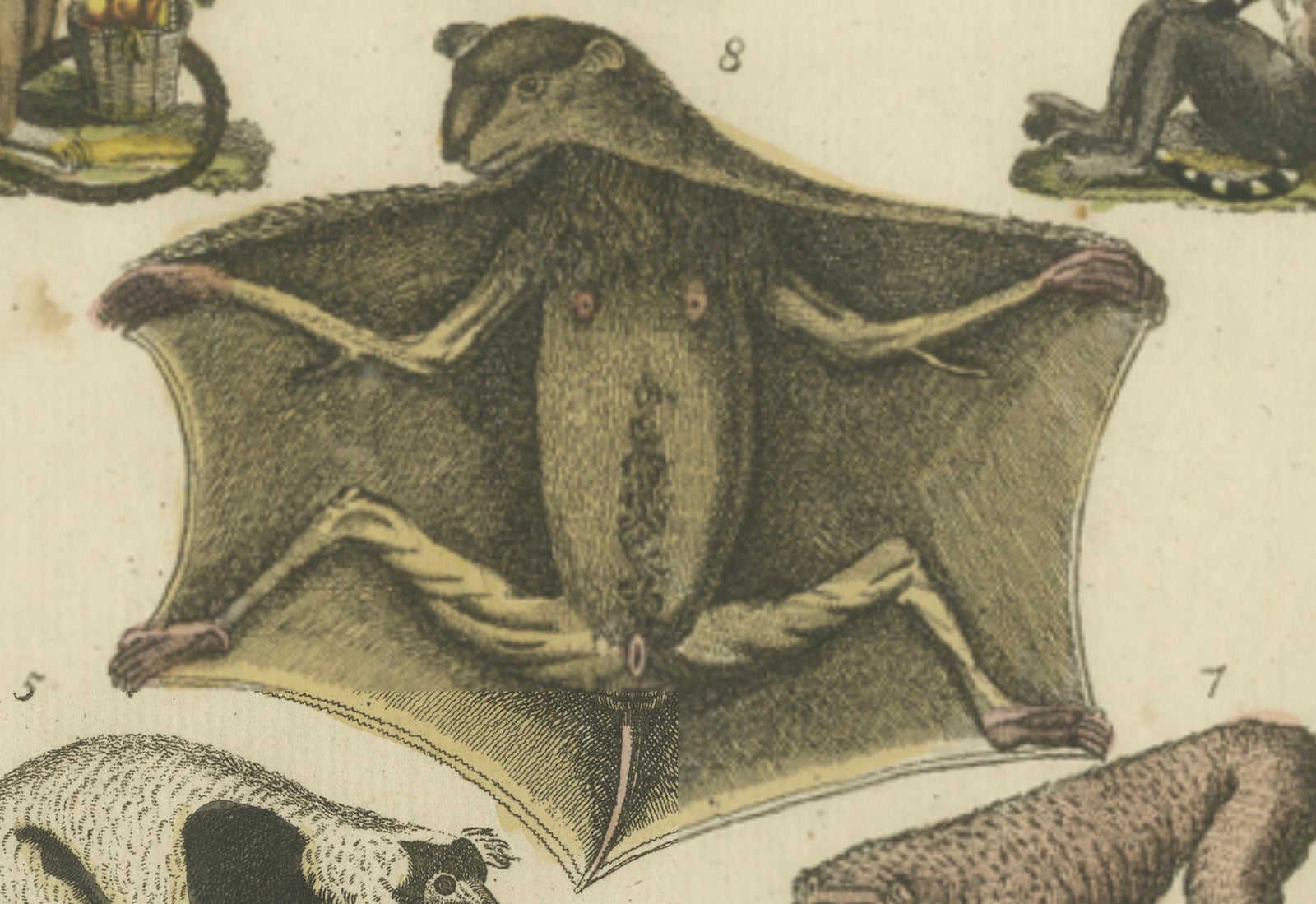
Close-ups
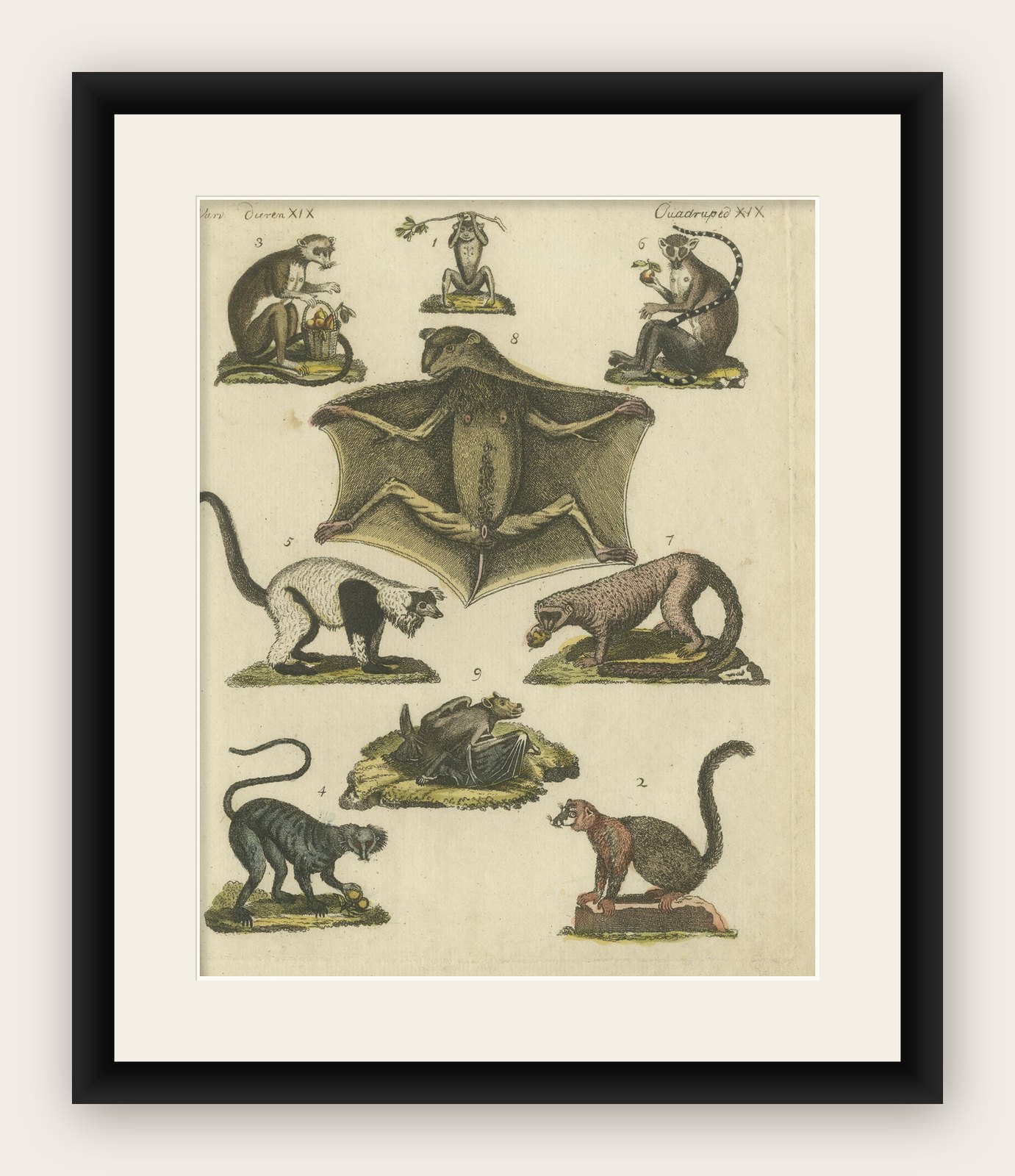
Framed and on the wall
Frame and rooms are illustrations of how the print could look; the description says what is included.
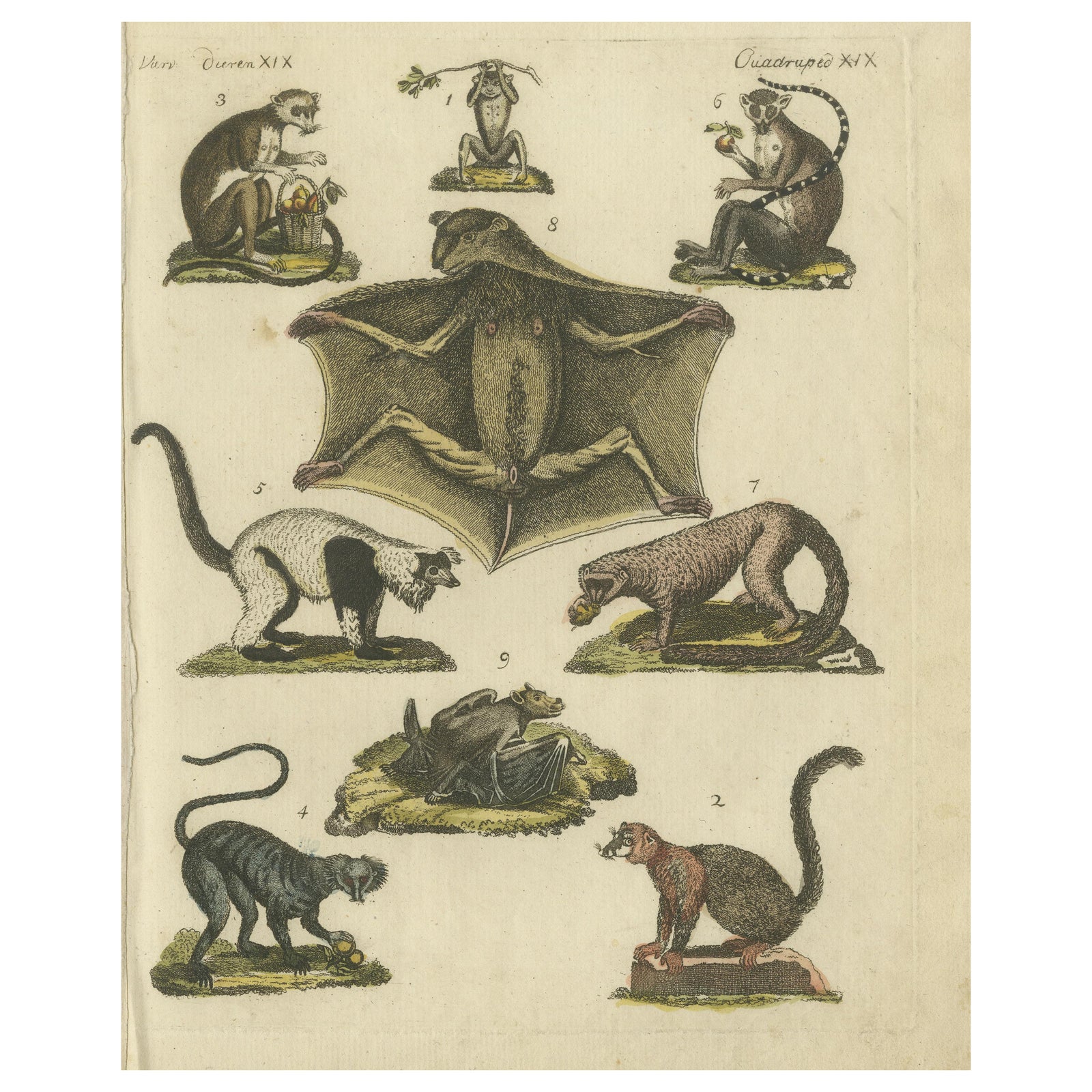
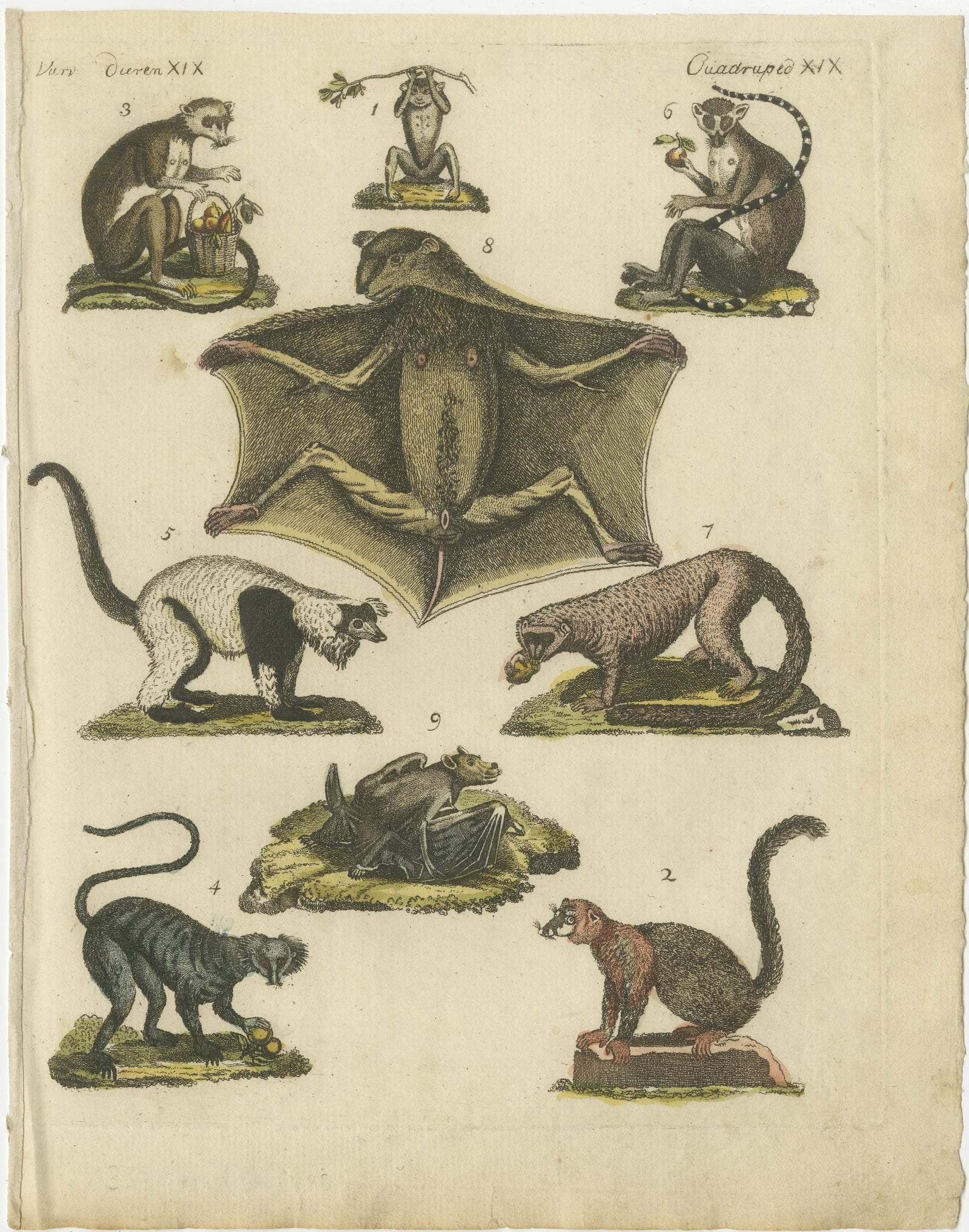
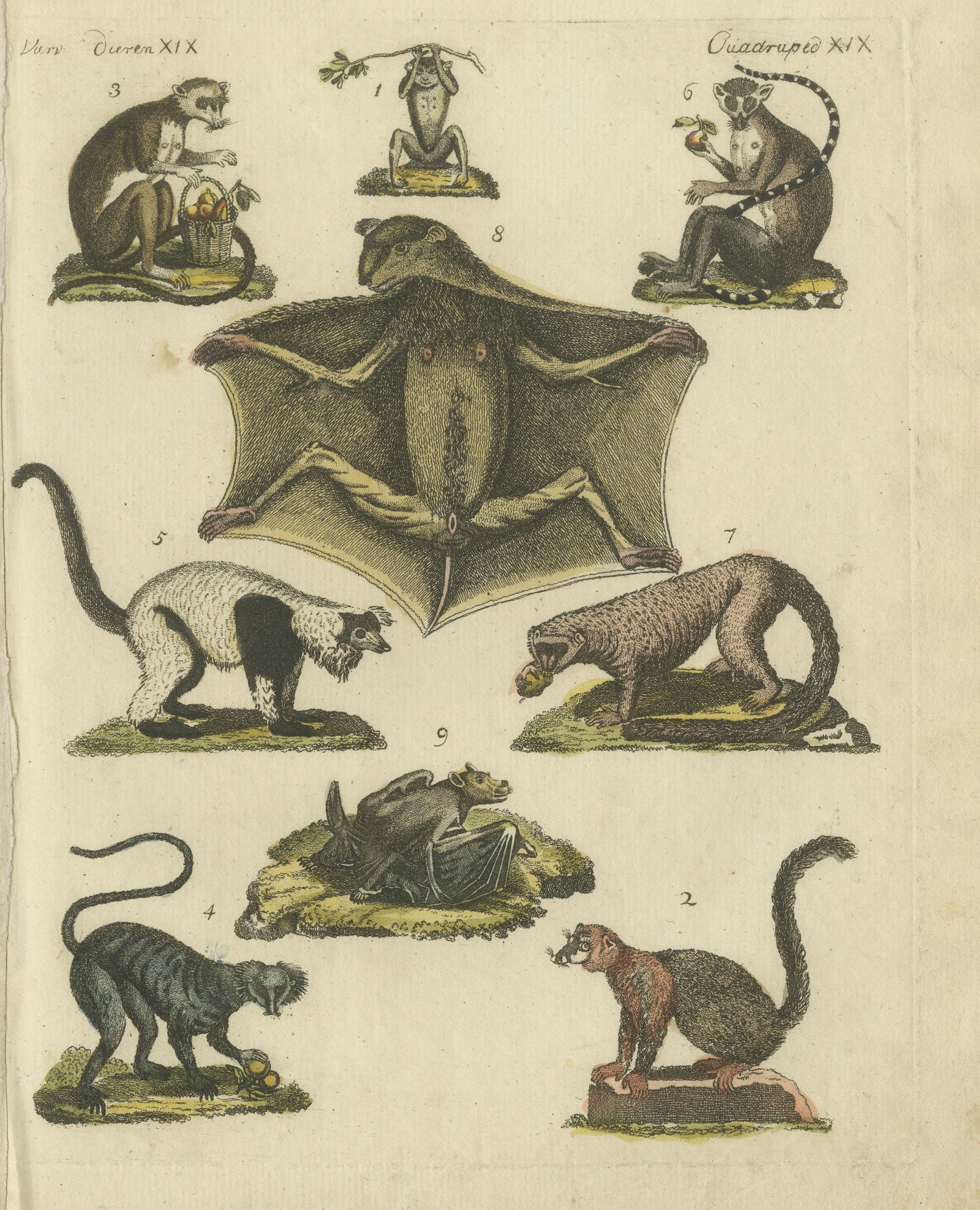
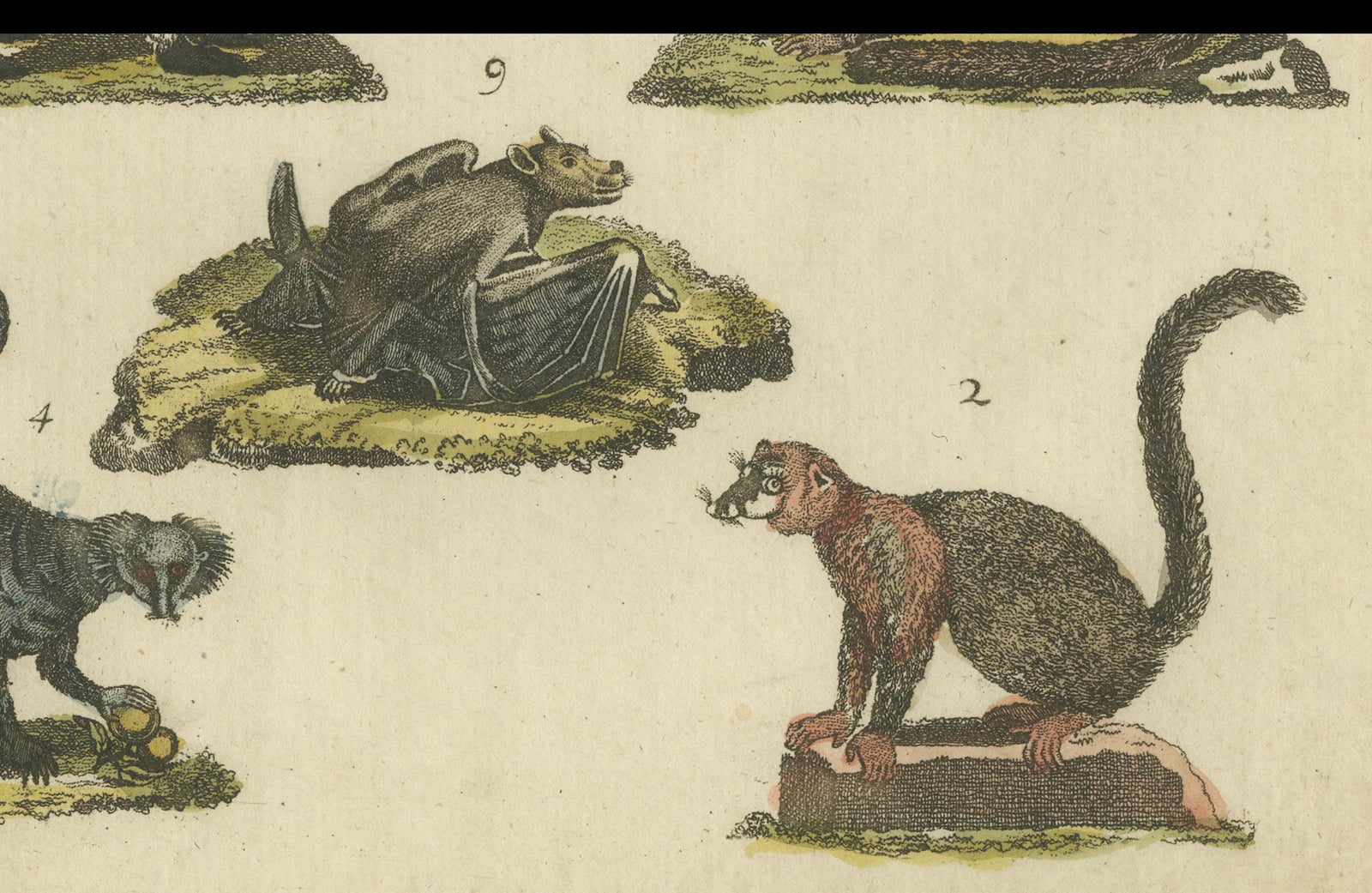
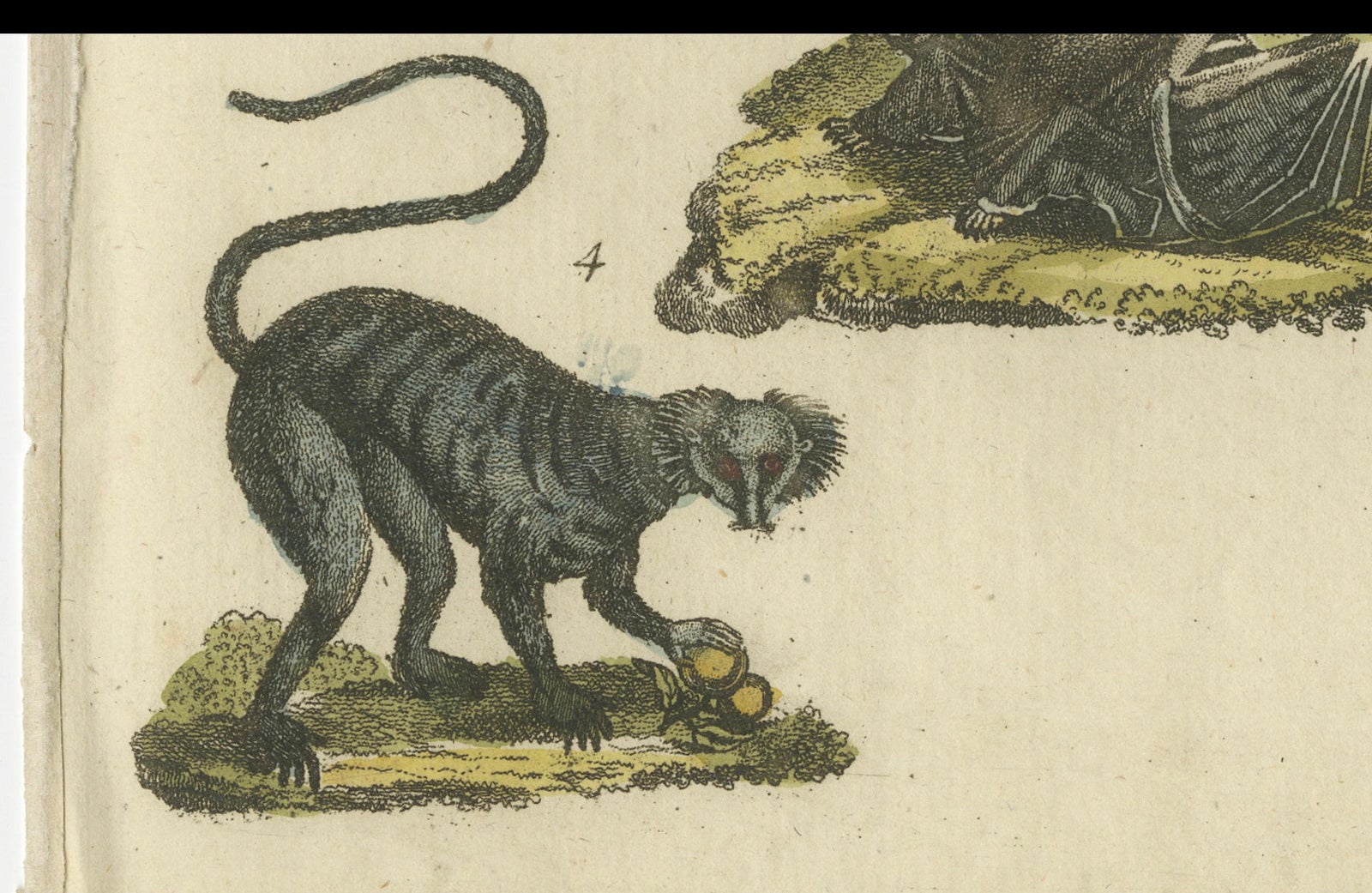
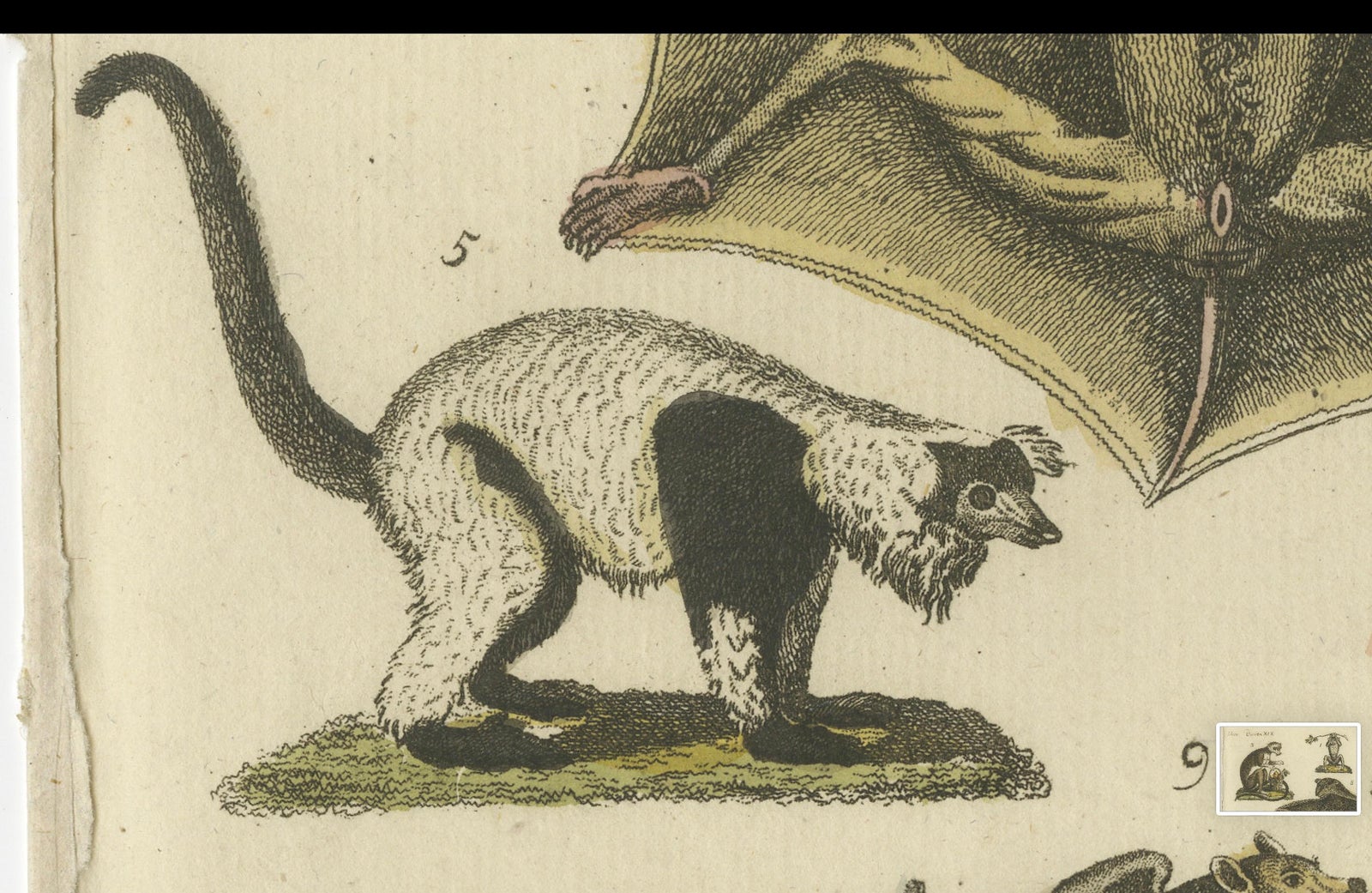
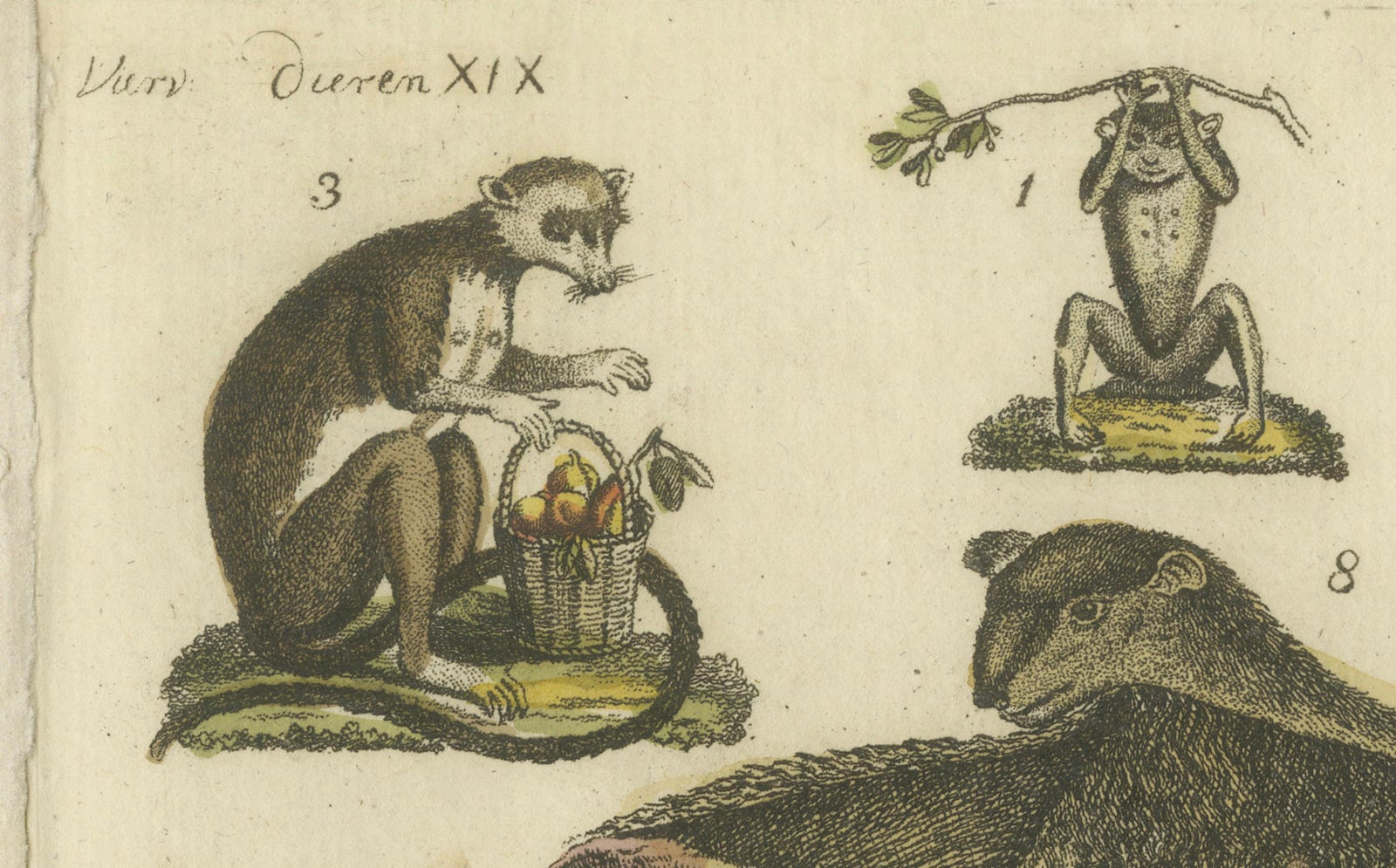
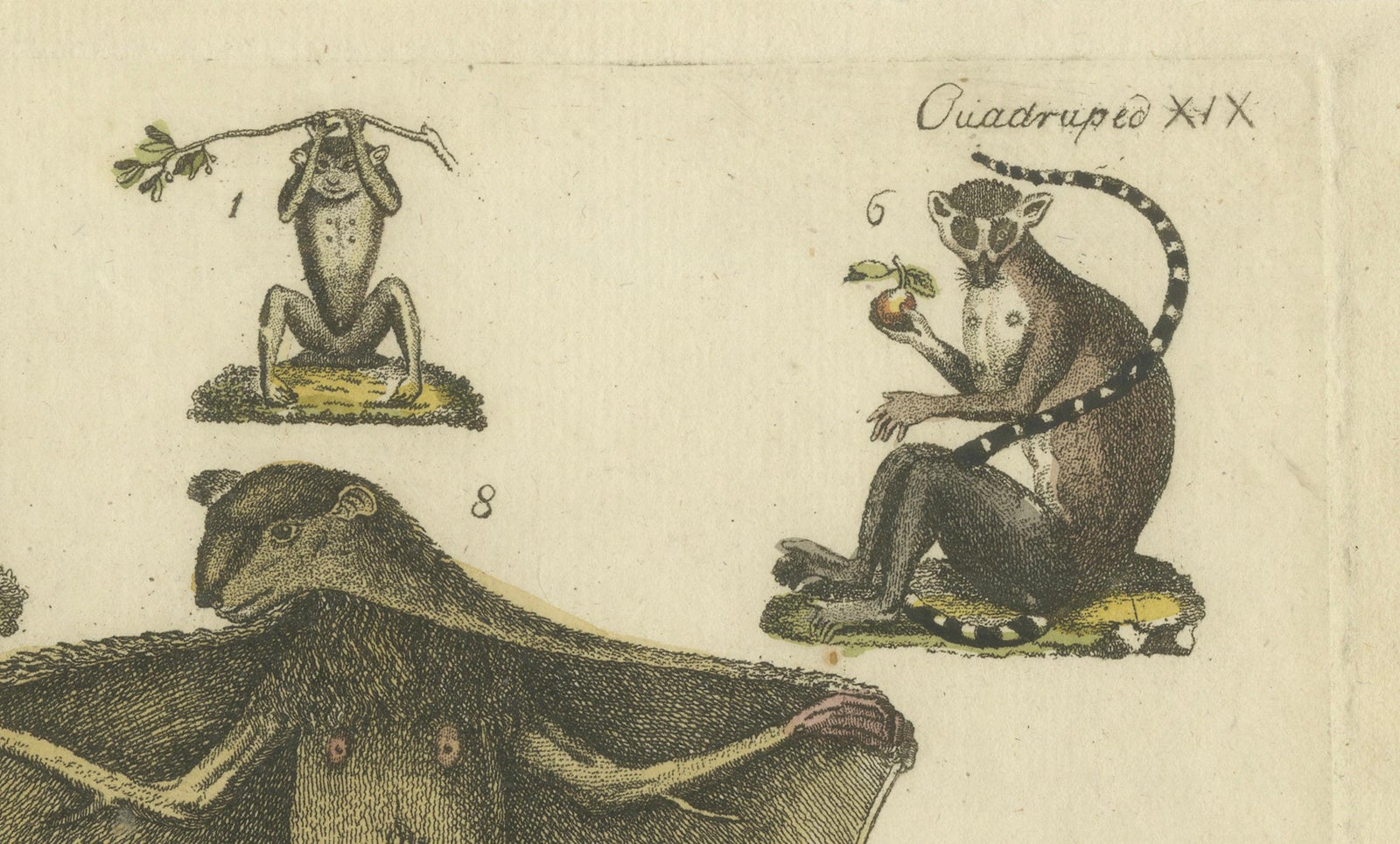
Hand Colored Antique Print of Lemurs and the extinct Mauritian Flying Fox, 1820
£135 ($180, €160)
Period original, not a reproduction.
Shipped from the Netherlands, flat, insured and tracked, worldwide. Returns accepted within 14 days.
- Date
- 1820
- Size
- 10.1 × 7.8 in (25.6 × 19.7 cm)
- Condition
- Good. General age-related toning. Some wear and soiling. Blank verso. Please study image carefully.
- Period
- Early 19th century
- Artist or book
- Bertuch
- Section
- Mammals
- Reference
- f_38599532
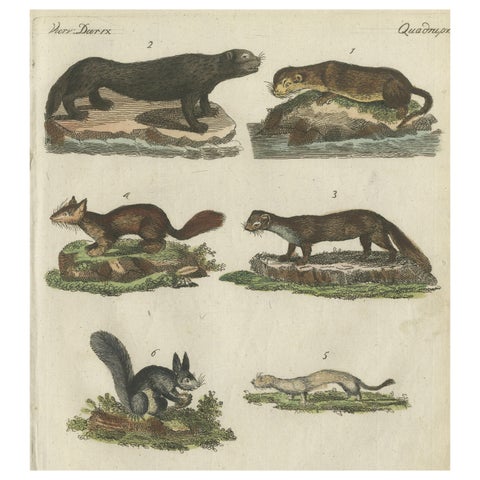
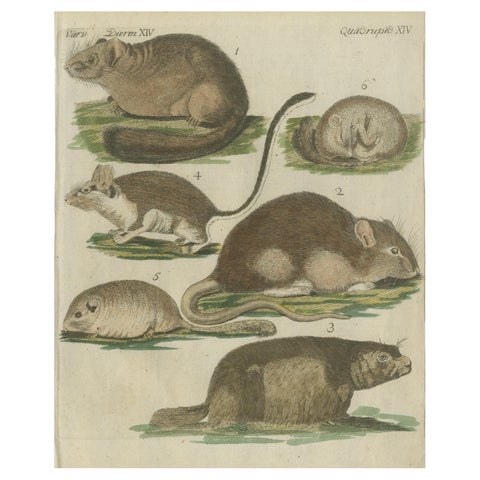
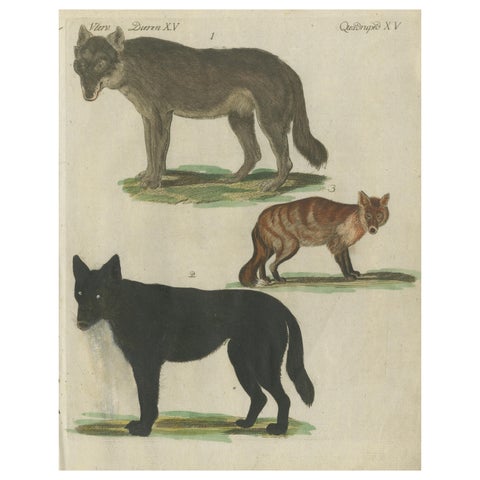
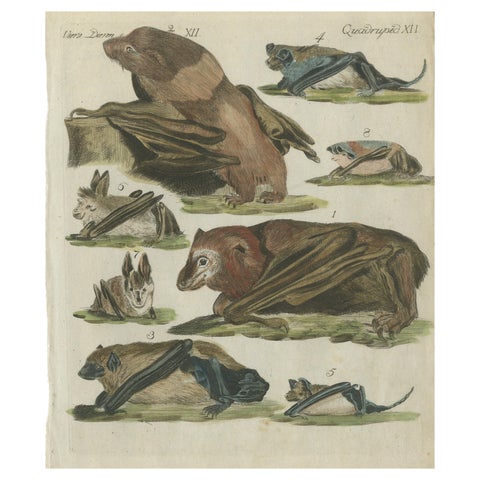
Original antique print of lemurs and the extinct Mauritian flying fox or dark flying fox (Pteropus subniger), known as a rougette to early French travelers. This engraved print originates from a very rare unknown Dutch work. The plates are similar to the plates in the famous German work: ‘Bilderbuch fur Kinder' by F.J. Bertuch, published 1790-1830 in Weimar. This could be Dutch edition of this work (no references found), or a work that used the Bertuch plates. Published circa 1820.
In more detail:
This image shows a collection of various animals, each labeled with a number, and the page is divided into two sections labeled "Quadrup. XIX" and "Quadrup. XX," likely abbreviations for "Quadruped," indicating that these are the nineteenth and twentieth illustrations in a series on quadrupeds.
In the top left, labeled "3," there is a primate holding a basket of fruit, suggesting it might be trained or in captivity. In the top middle, "1," there appears to be another primate, possibly a type of lemur, holding a branch with leaves. To the top right, "6," there is yet another primate with a long tail, seated on a cushion and eating fruit.
In the middle of the page, "8," there is a large bat species with its wings spread out, showing the detailed structure of its wings.
On the bottom left, "5," there is an animal that resembles a possum or a similar marsupial. In the bottom middle, "9," there is a depiction of a wild boar or hog, lying on the ground. Next to it, "7," there's an animal that might be a mongoose or weasel.
Finally, on the bottom row, "4" shows a feline creature playing with a ball, suggesting it might be a domestic cat, and "2" depicts a solitary animal with a bushy tail, possibly a type of lemur or other tree-dwelling mammal.
The style of the engravings is detailed and naturalistic, suggesting that they were intended for scientific or educational purposes. Each animal is placed in a naturalistic setting, either on grass or with other elements like a cushion or a branch, which adds context to their behaviors or habitats. The numbering system implies that these illustrations are part of a larger collection or encyclopedia of animals.