Close-ups
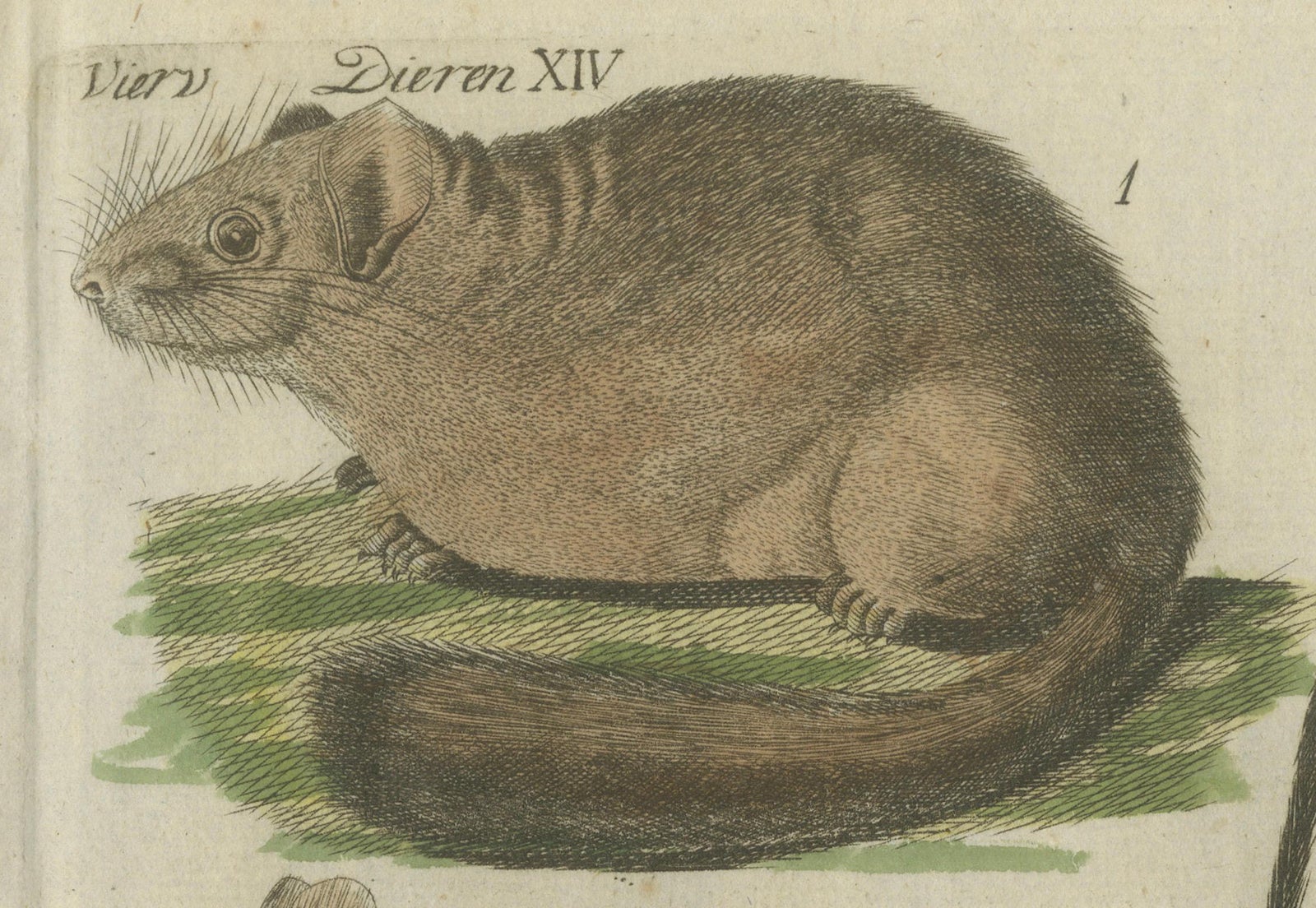
Framed and on the wall
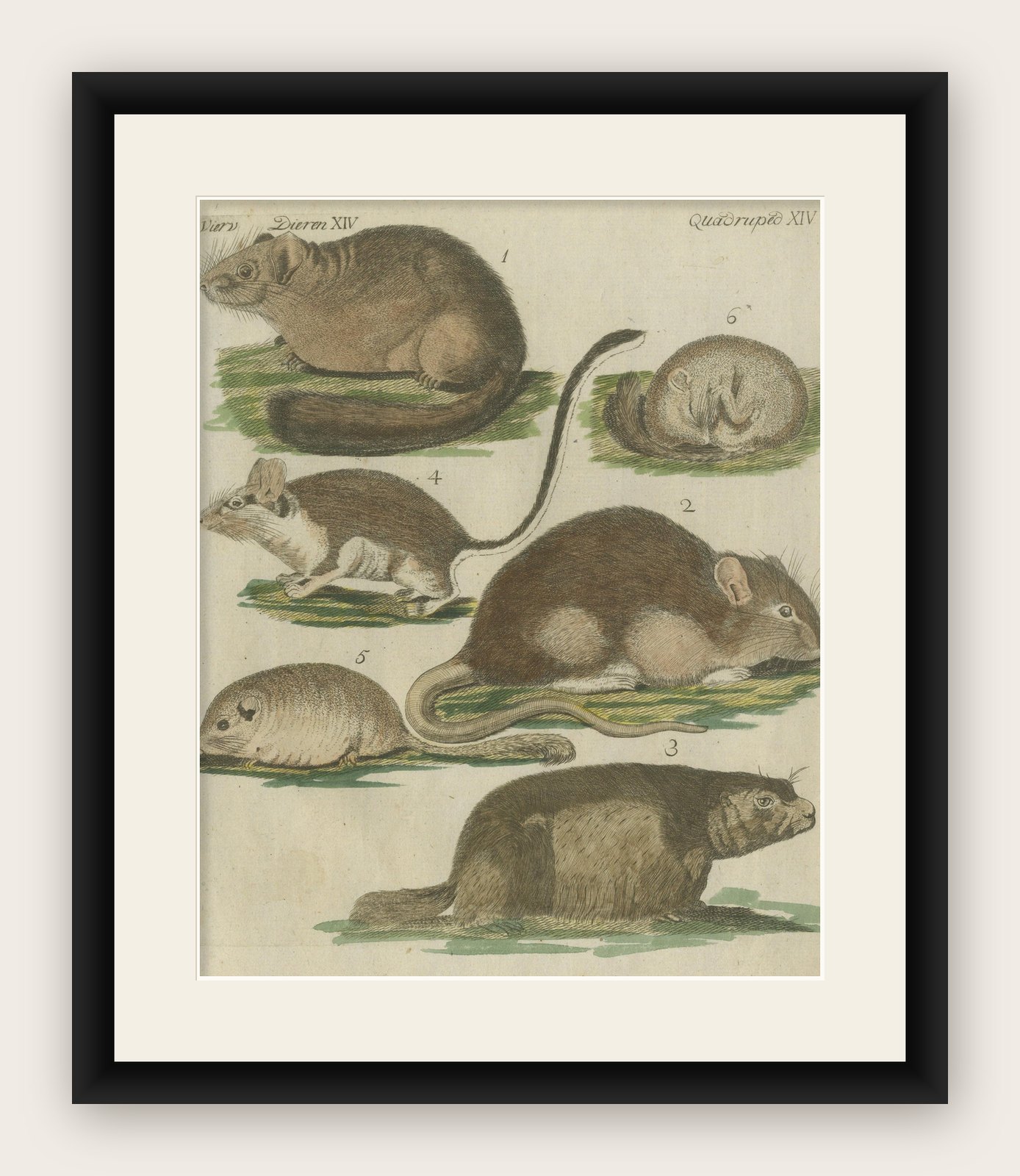

Frame and rooms are illustrations of how the print could look; the description says what is included.
Hand-Colored Antique Illustrations of Various Rodent-like Animals, circa 1820
$175$12530% off (£95, €112)
Period original, not a reproduction.
Shipped from the Netherlands, flat or rolled, insured and tracked, worldwide. Returns accepted within 14 days.
- Date
- 1820
- Size
- 10.1 × 7.8 in (25.6 × 19.7 cm)
- Condition
- Good. General age-related toning. Small punch holes in right margin. Some wear and soiling, adding to its patina. Blank verso. Please study image carefully.
- Period
- Early 19th century
- Artist or book
- Bertuch
- Section
- Mammals
- Reference
- f_38599572
- Color
- Hand colored
What the condition grades mean
- Excellent
- Bright and clean, with no faults worth mentioning.
- Very good
- Only light signs of age, such as faint toning.
- Good
- Normal signs of age for a sheet of this period: toning, some foxing, small marks or neat old repairs.
- Fair
- Clear faults such as staining, tears or repairs, priced to match.
Every fault we see is written in the condition note, and the whole sheet is shown uncropped in the photos.
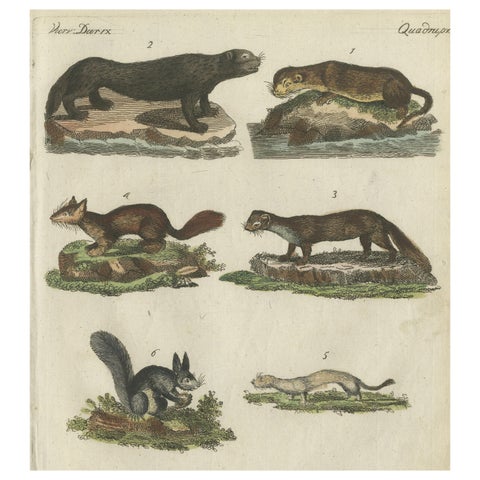
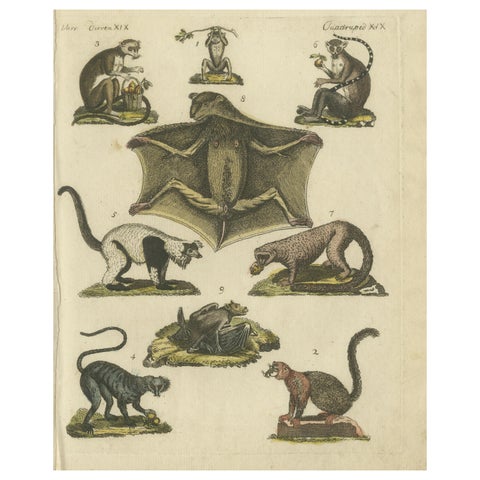
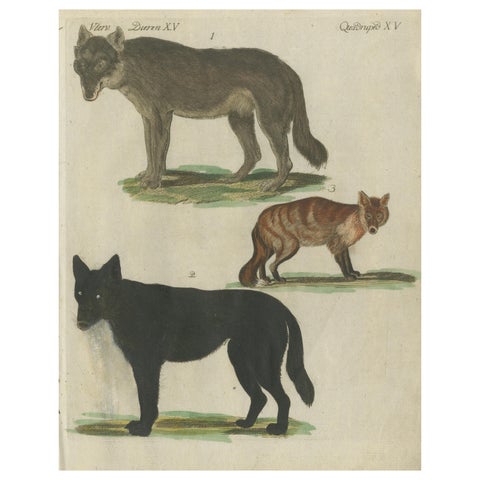
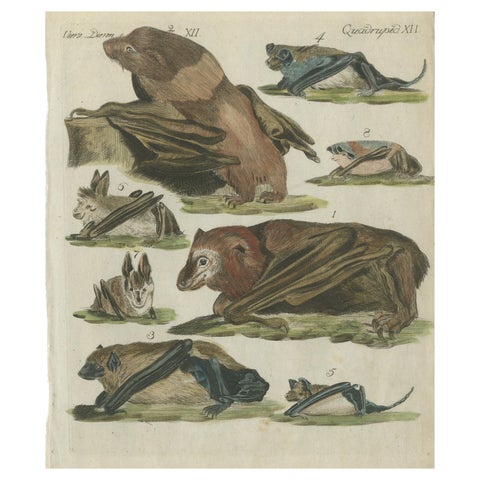
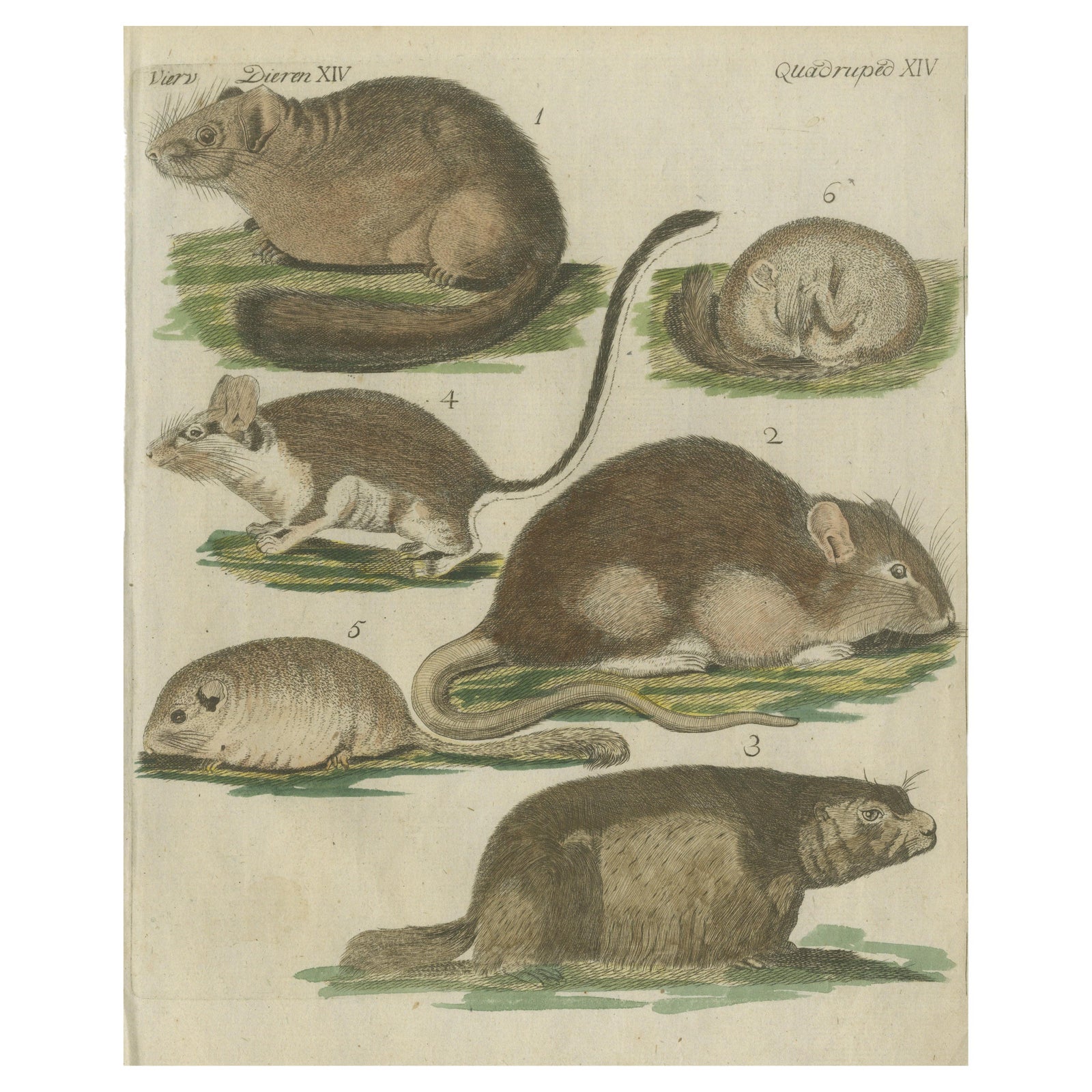
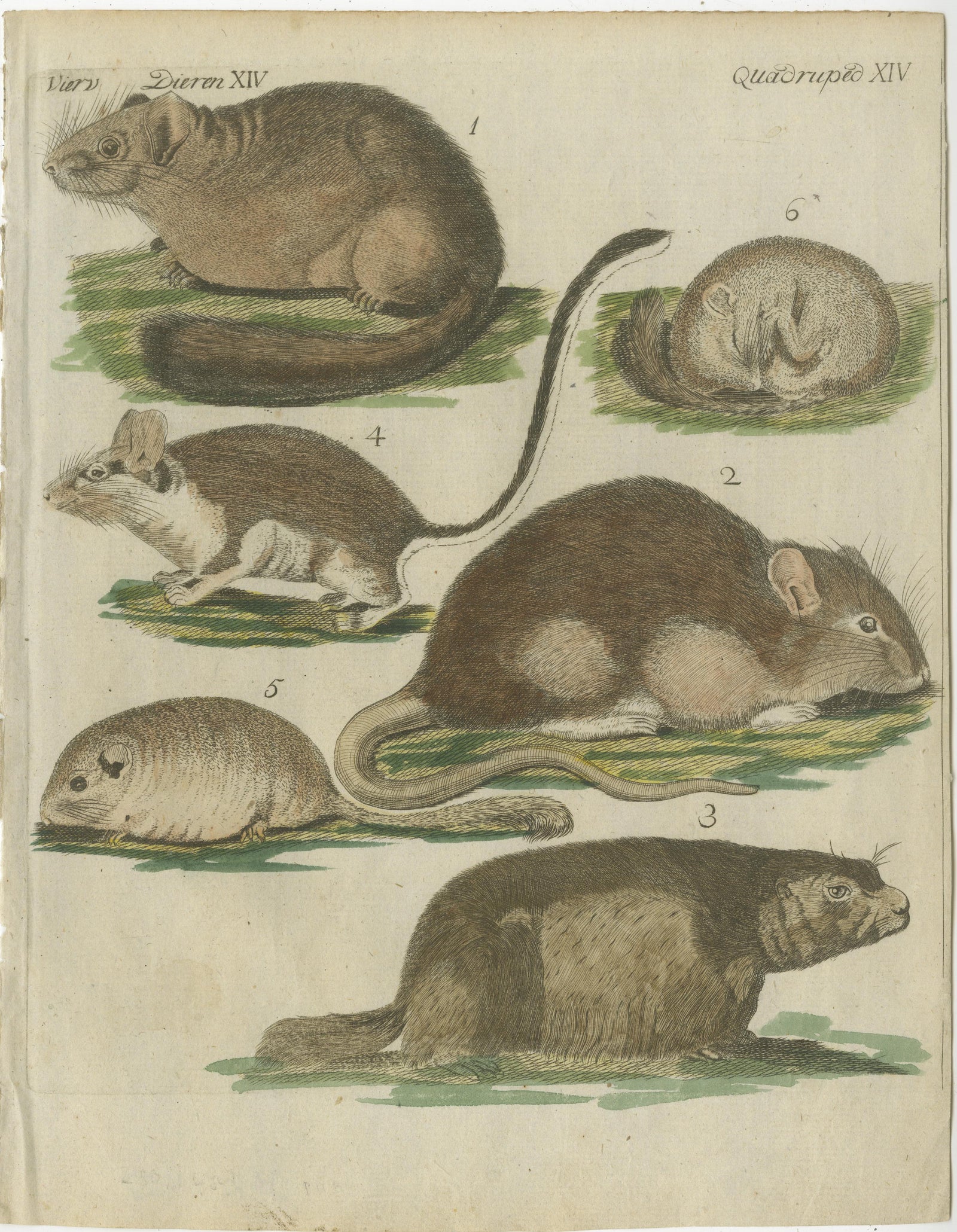
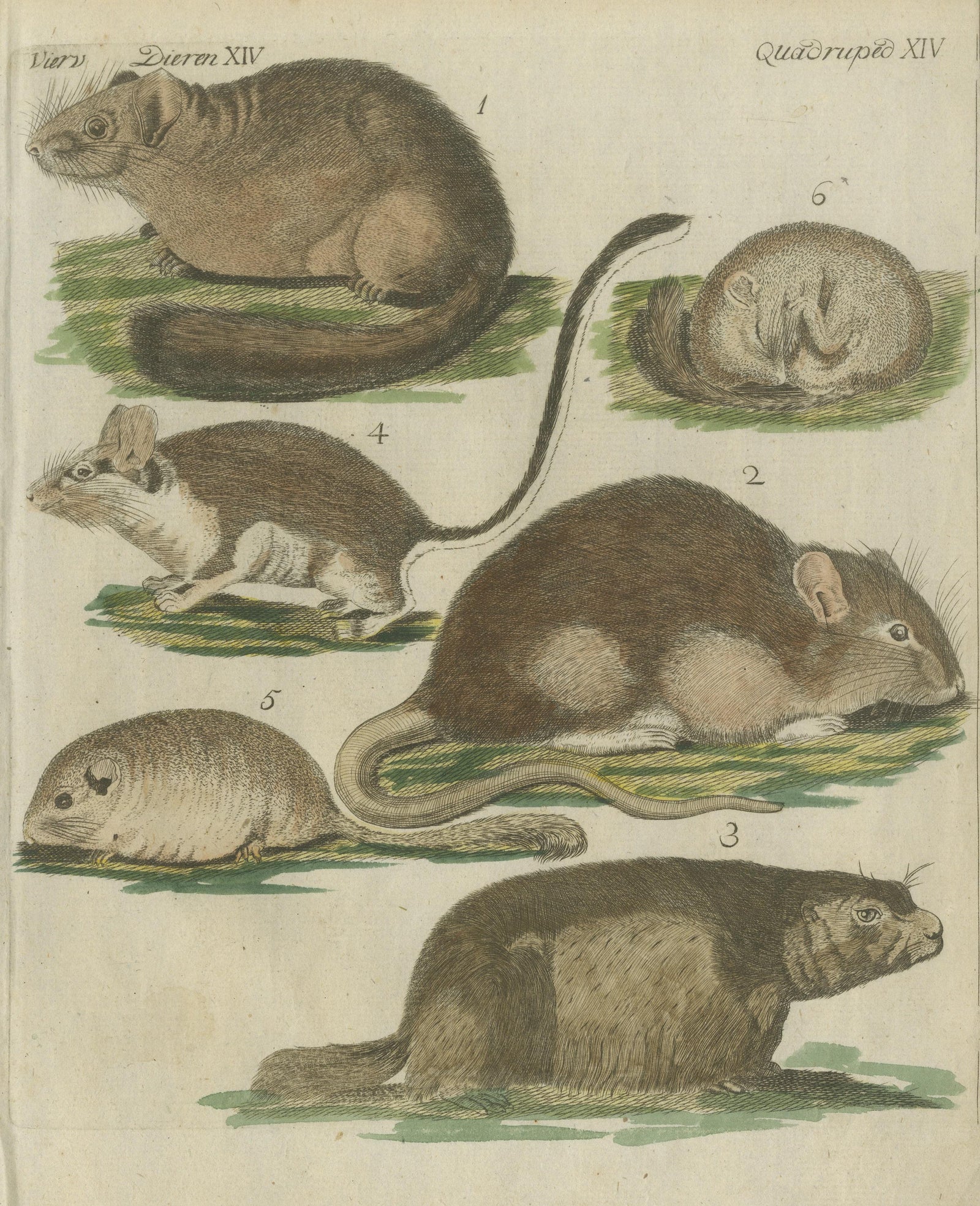
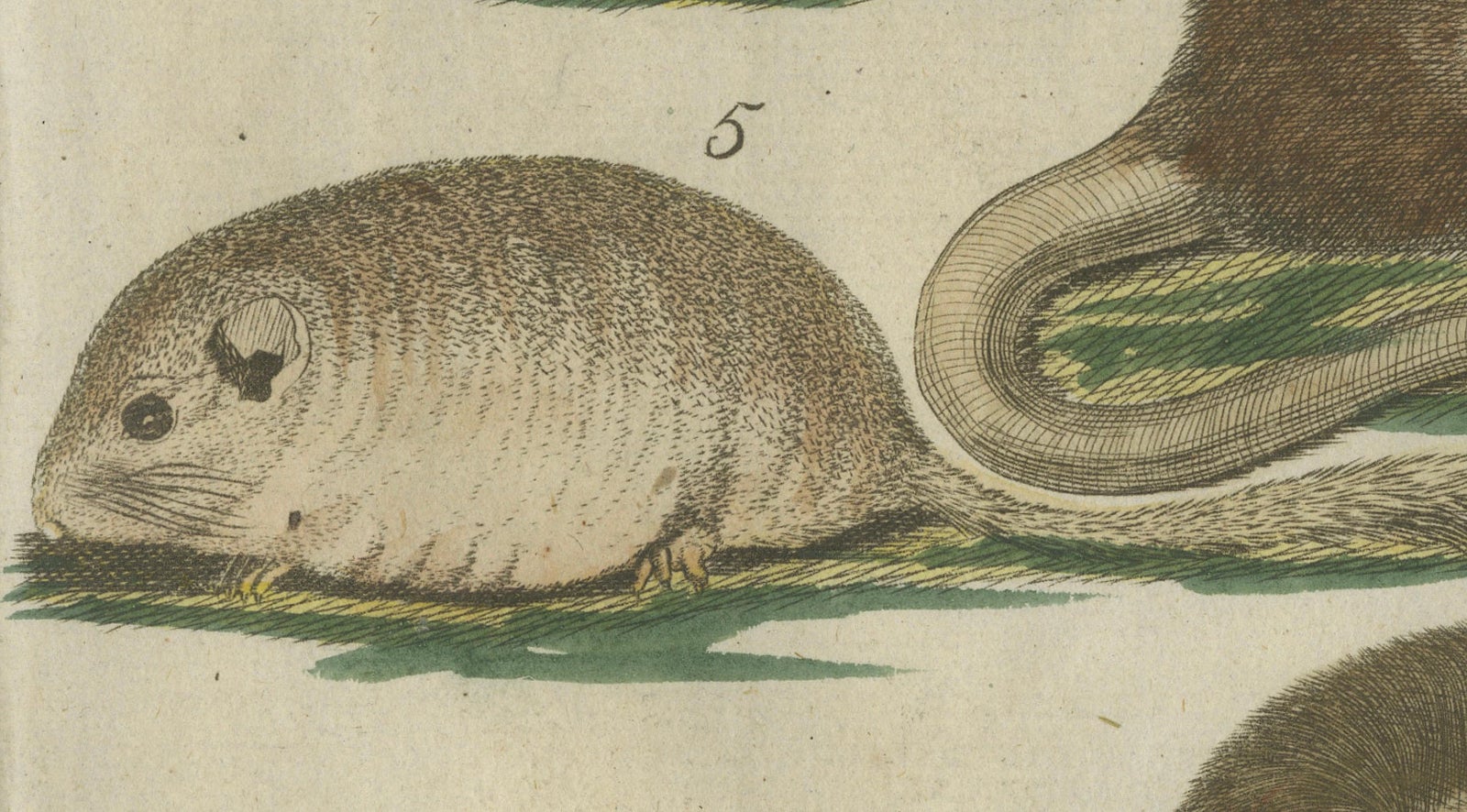
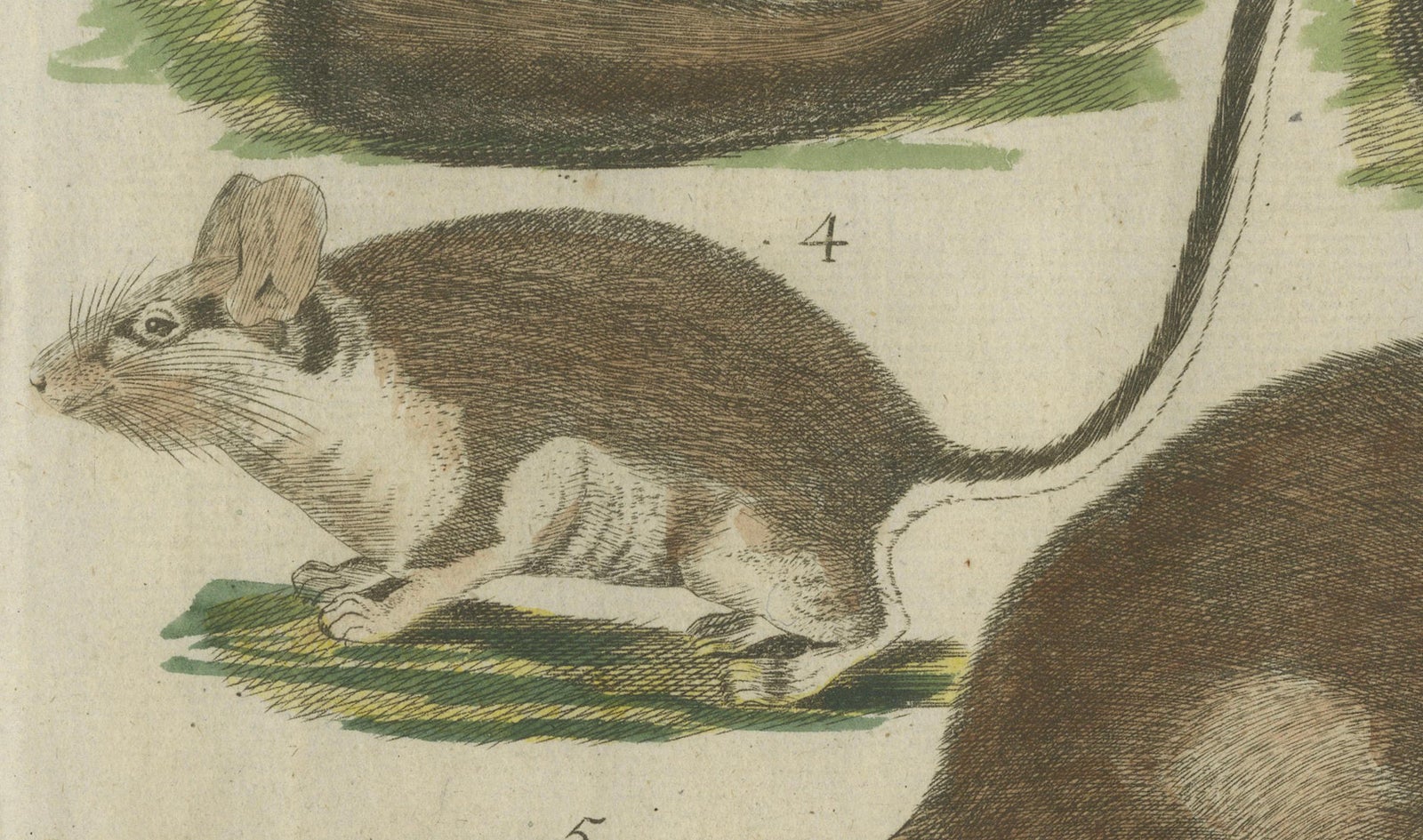
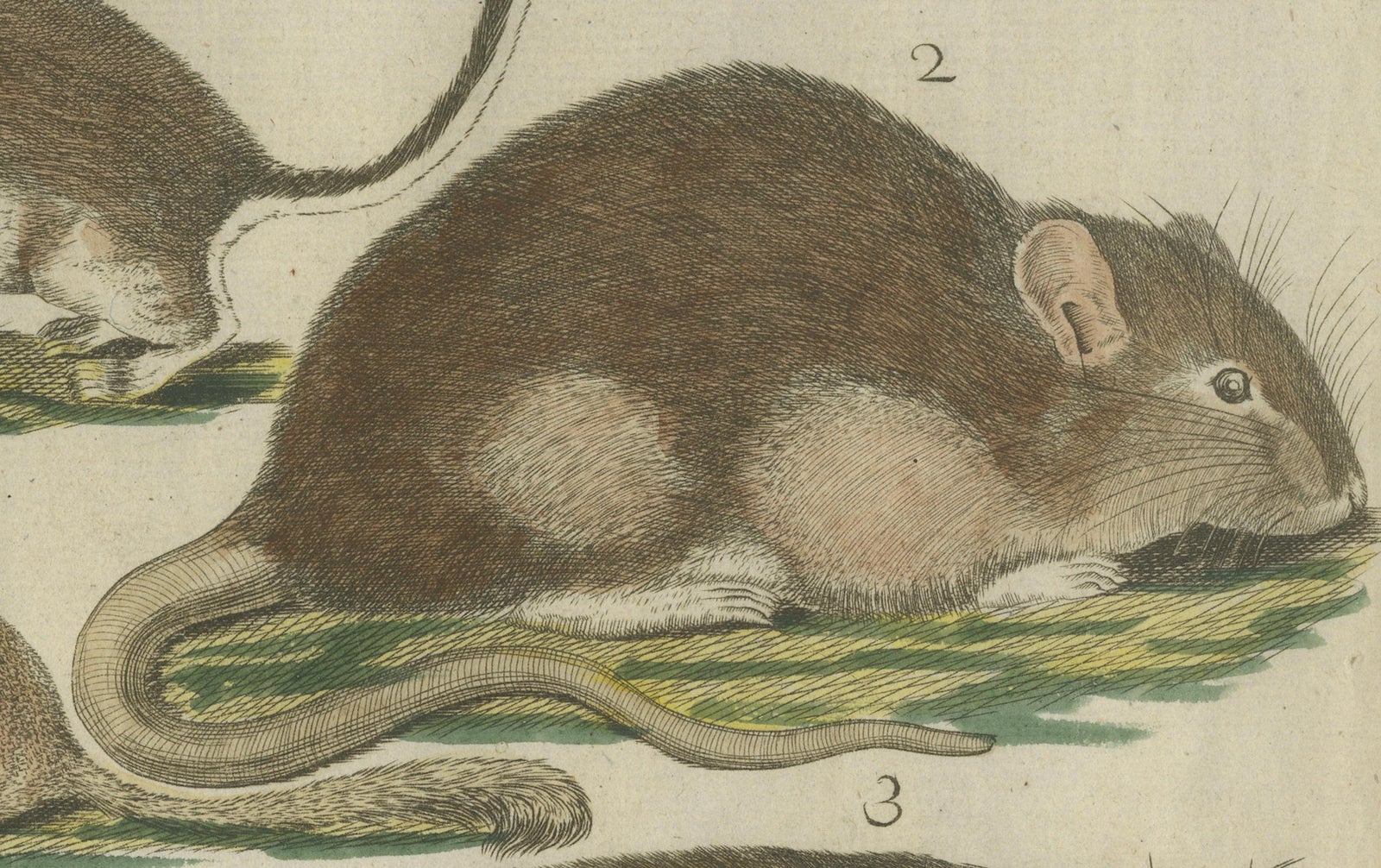
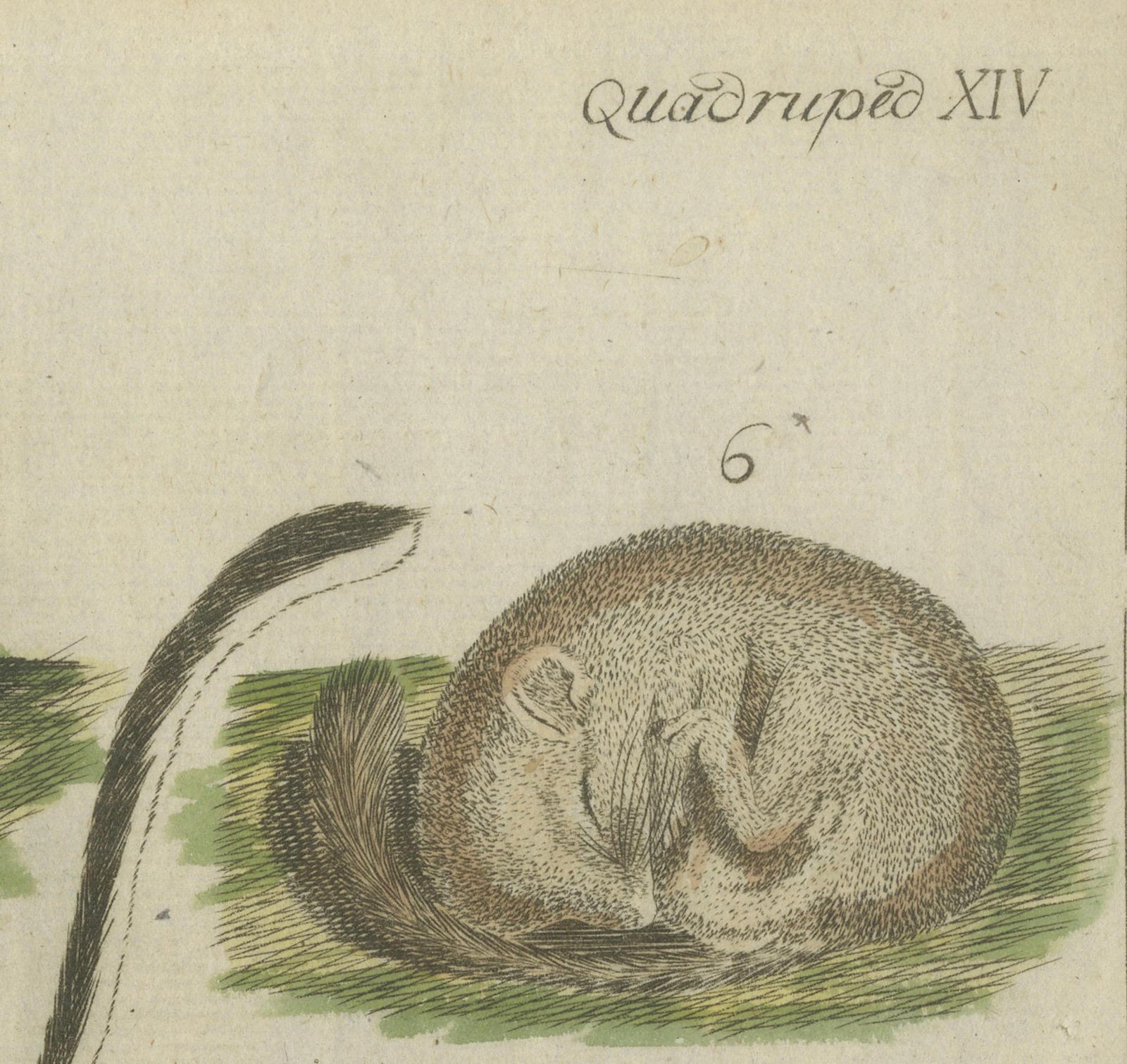
Original antique print of mouse species / mice and other rodents. This engraved print originates from a very rare unknown Dutch work. The plates are similar to the plates in the famous German work: ‘Bilderbuch fur Kinder' by F.J. Bertuch, published 1790-1830 in Weimar. This could be Dutch edition of this work (no references found), or a work that used the Bertuch plates. Published circa 1820.
This engraving described in more detail:
The print features six illustrations of various rodent-like animals. They are not all mice; they represent a range of rodent species, which can be inferred from their different physical characteristics:
1. The largest animal at the top left looks like a type of pika or a chinchilla due to its rounded ears and body shape.
2. The second illustration on the top right is a curled-up animal, which might be a dormouse based on its compact body and fur texture.
3. The animal at the center-right with prominent ears and elongated body could be a type of rat or a gerbil.
4. The creature in the middle left with large hind legs and long ears appears to be a jerboa, which is known for its distinctive jumping movement.
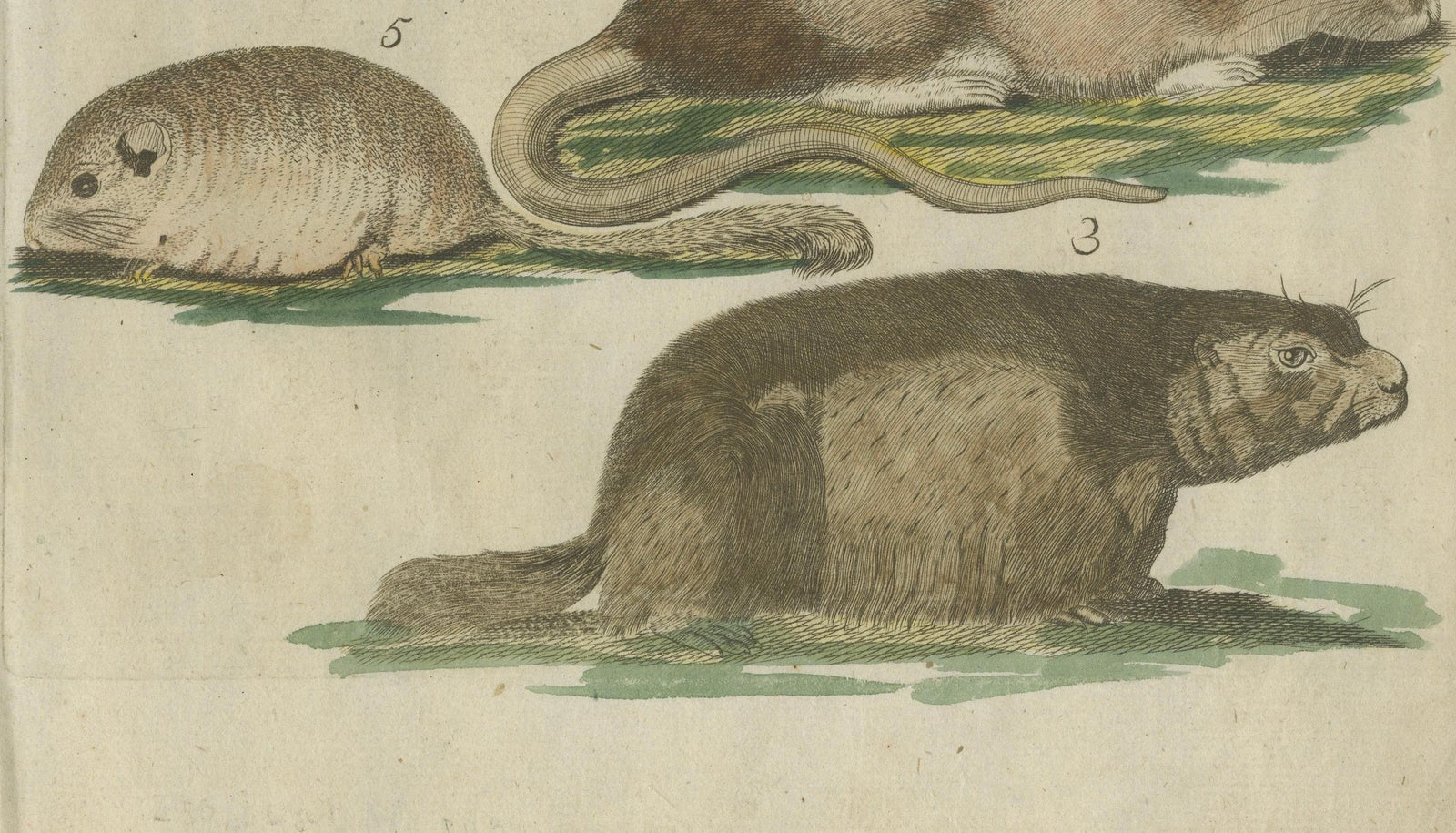
5. The bottom left animal resembles a vole, suggested by its short tail and stout body.
6. Finally, the bottom right illustration shows a creature with a robust body and rounded ears, possibly another variety of pika or a related species.
Each animal is depicted in a different pose, which provides a sense of their varied sizes, body structures, and fur patterns. The illustrations likely aim to showcase the diversity within the rodent family.