Close-ups
Framed and on the wall

Frame and rooms are illustrations of how the print could look; the description says what is included.
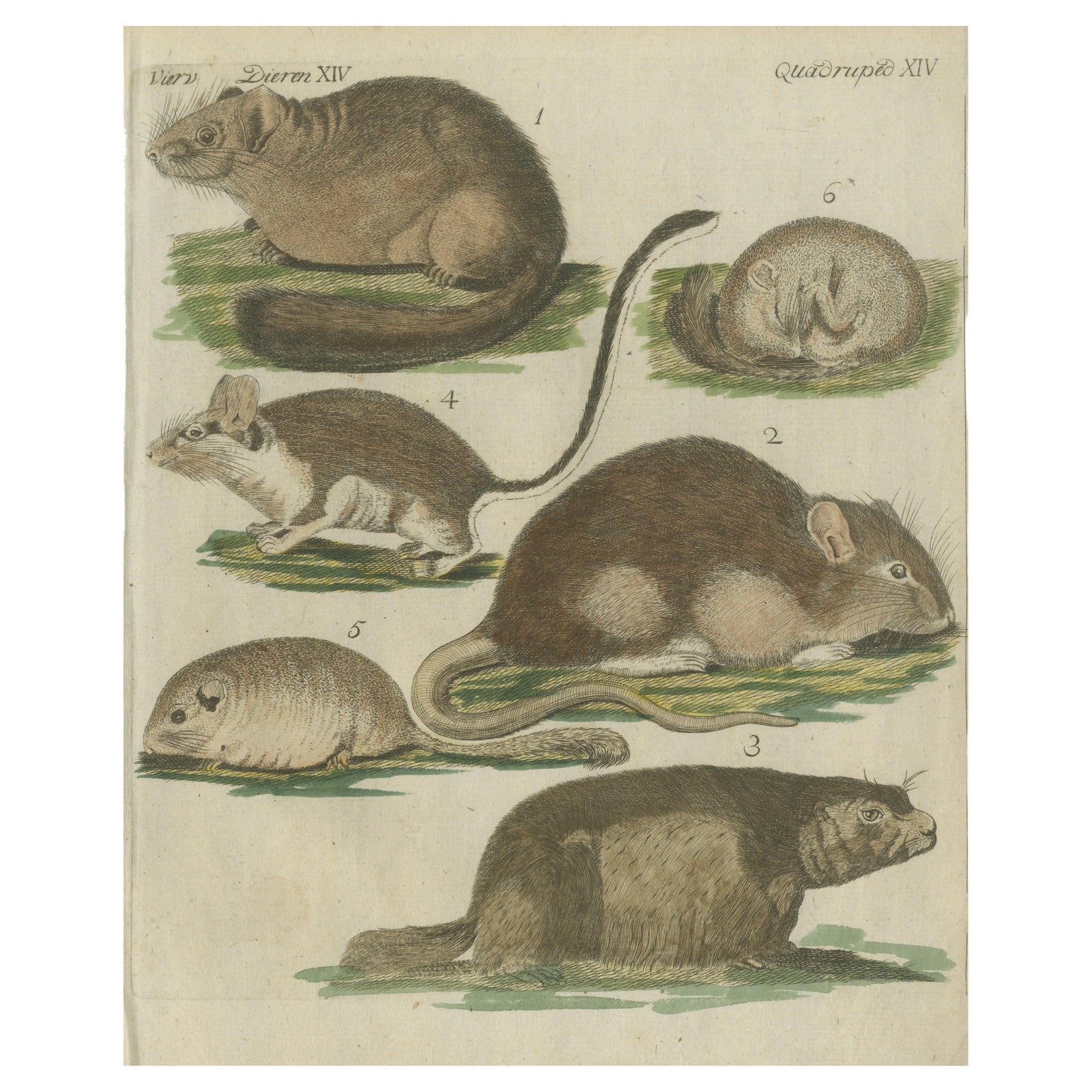
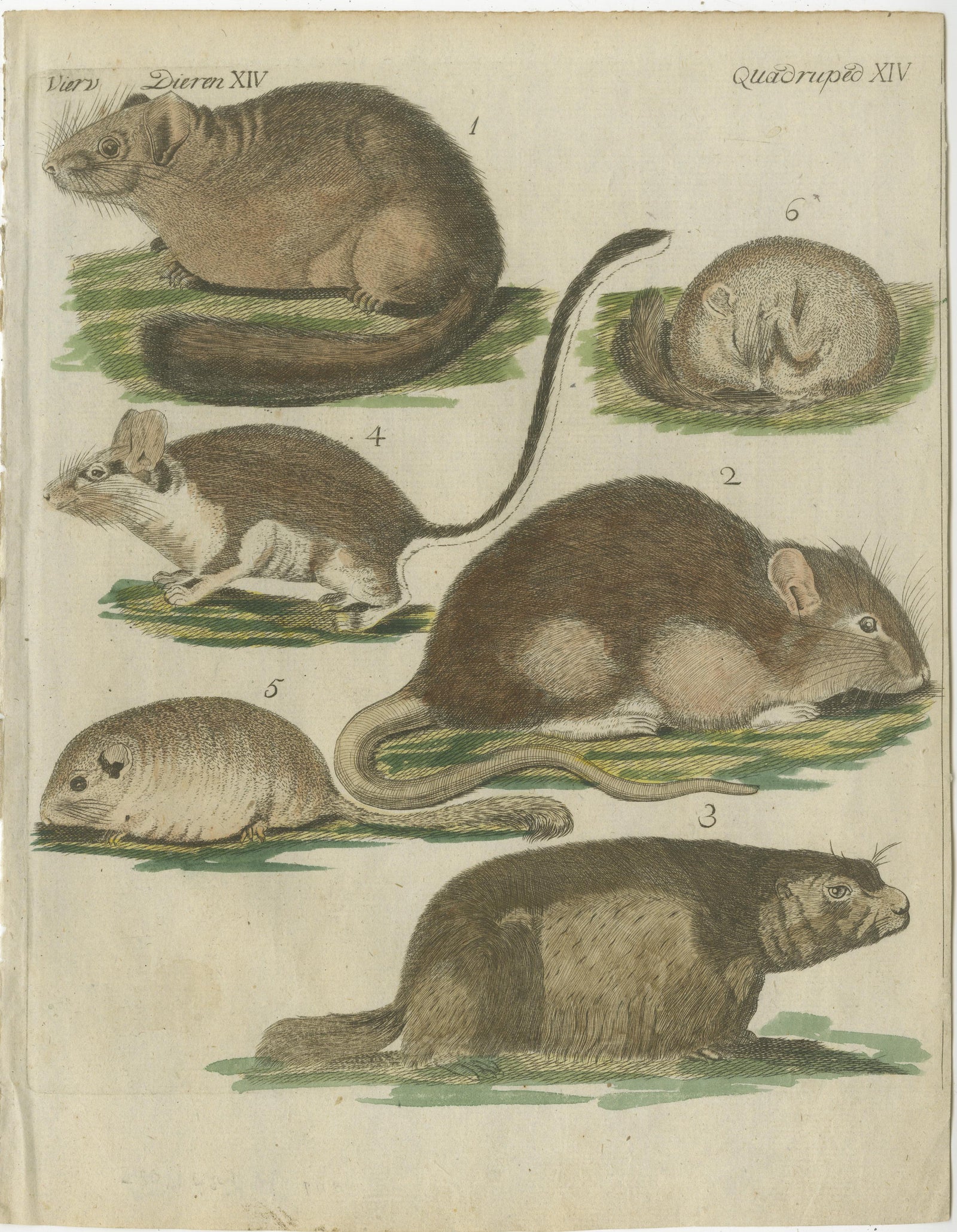
Hand-Colored Antique Illustrations of Various Rodent-like Animals, circa 1820
$180 (£135, €160)
Period original, not a reproduction.
Shipped from the Netherlands, flat, insured and tracked, worldwide. Returns accepted within 14 days.
- Date
- 1820
- Size
- 10.1 × 7.8 in (25.6 × 19.7 cm)
- Condition
- Good. General age-related toning. Small punch holes in right margin. Some wear and soiling, adding to its patina. Blank verso. Please study image carefully.
- Period
- Early 19th century
- Artist or book
- Bertuch
- Section
- Mammals
- Reference
- f_38599572
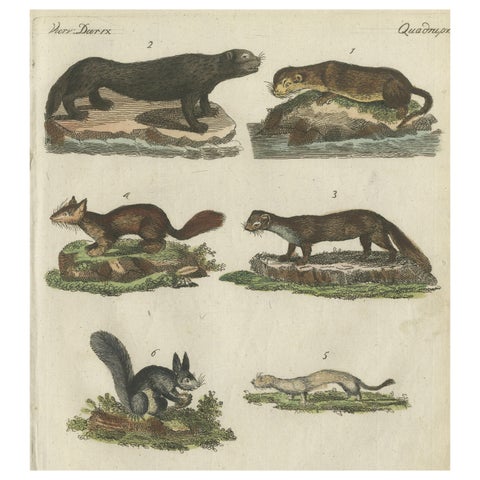
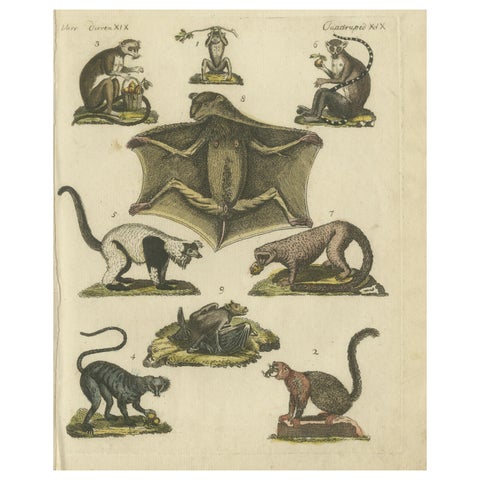
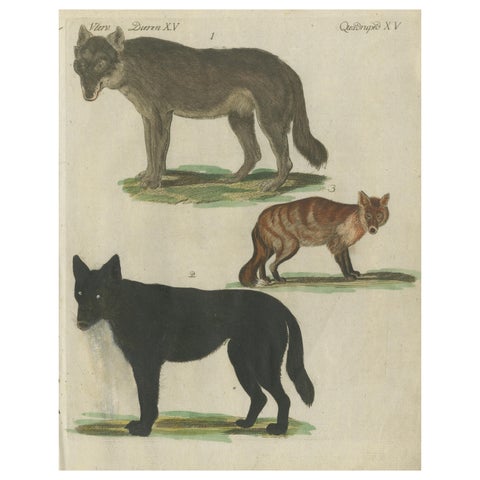
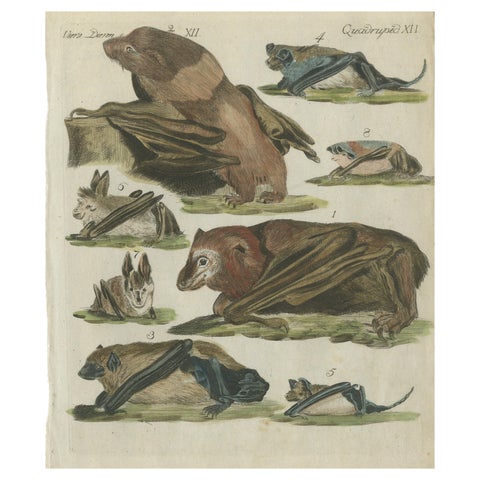
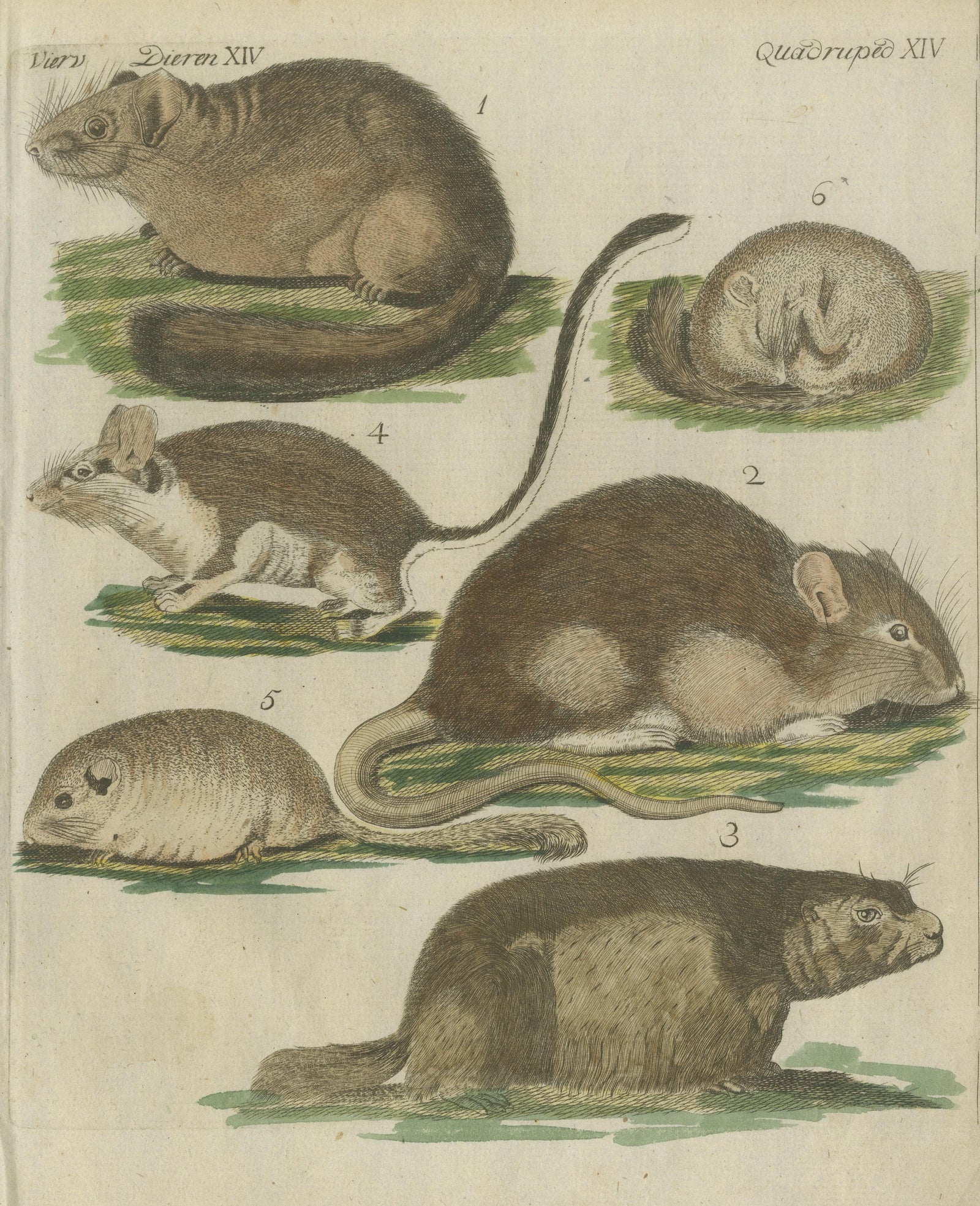
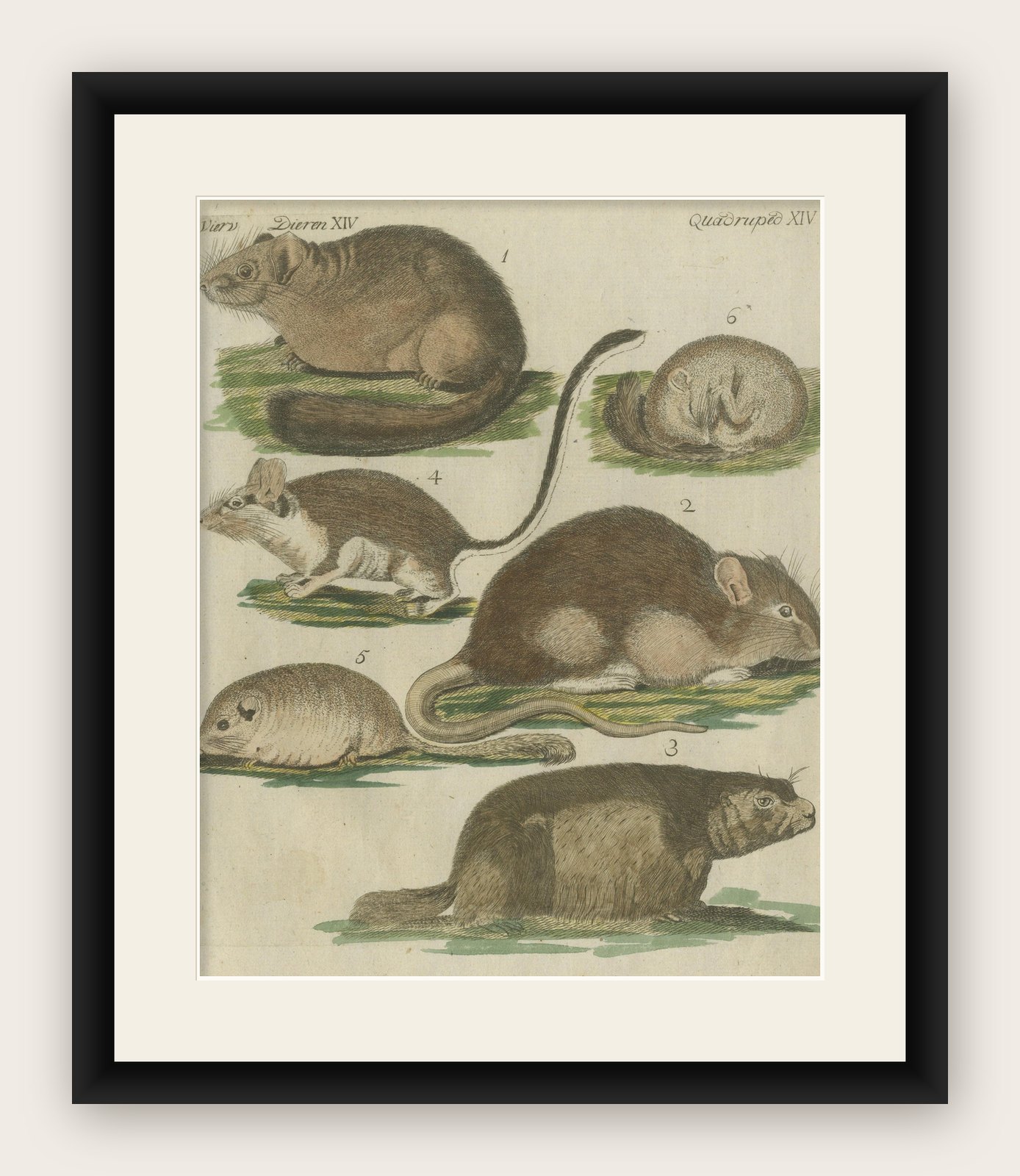
Original antique print of mouse species / mice and other rodents. This engraved print originates from a very rare unknown Dutch work. The plates are similar to the plates in the famous German work: ‘Bilderbuch fur Kinder' by F.J. Bertuch, published 1790-1830 in Weimar. This could be Dutch edition of this work (no references found), or a work that used the Bertuch plates. Published circa 1820.
This engraving described in more detail:
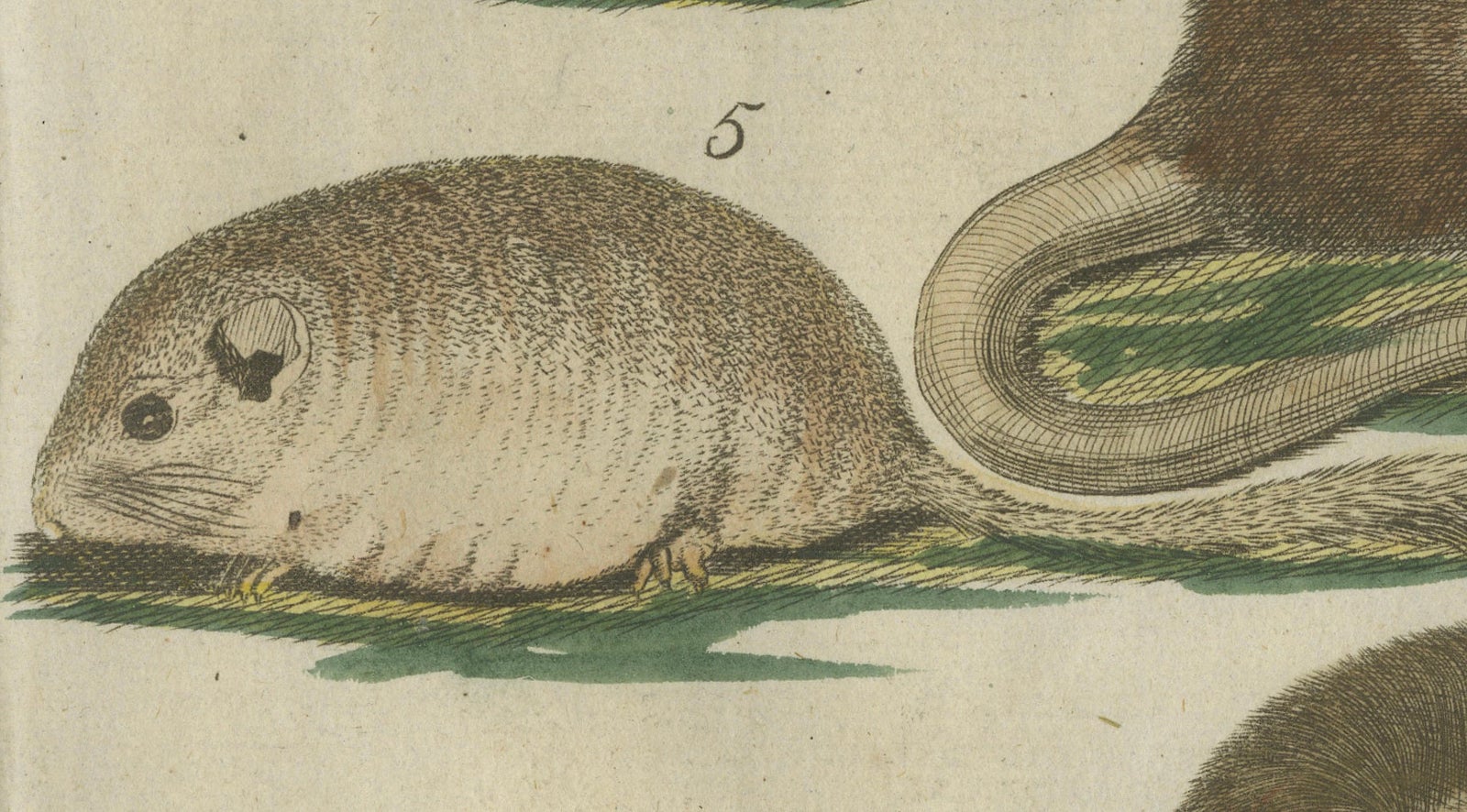
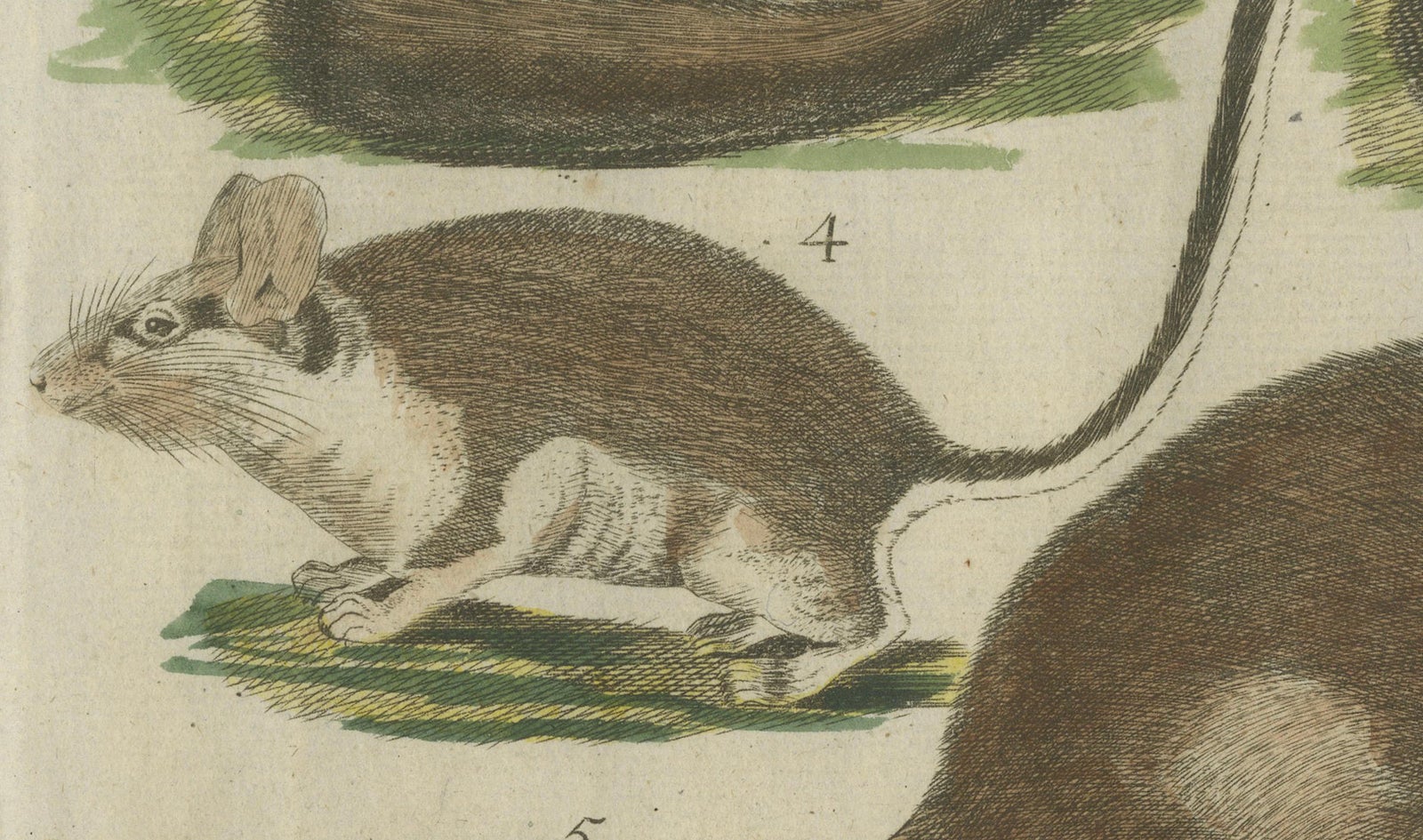
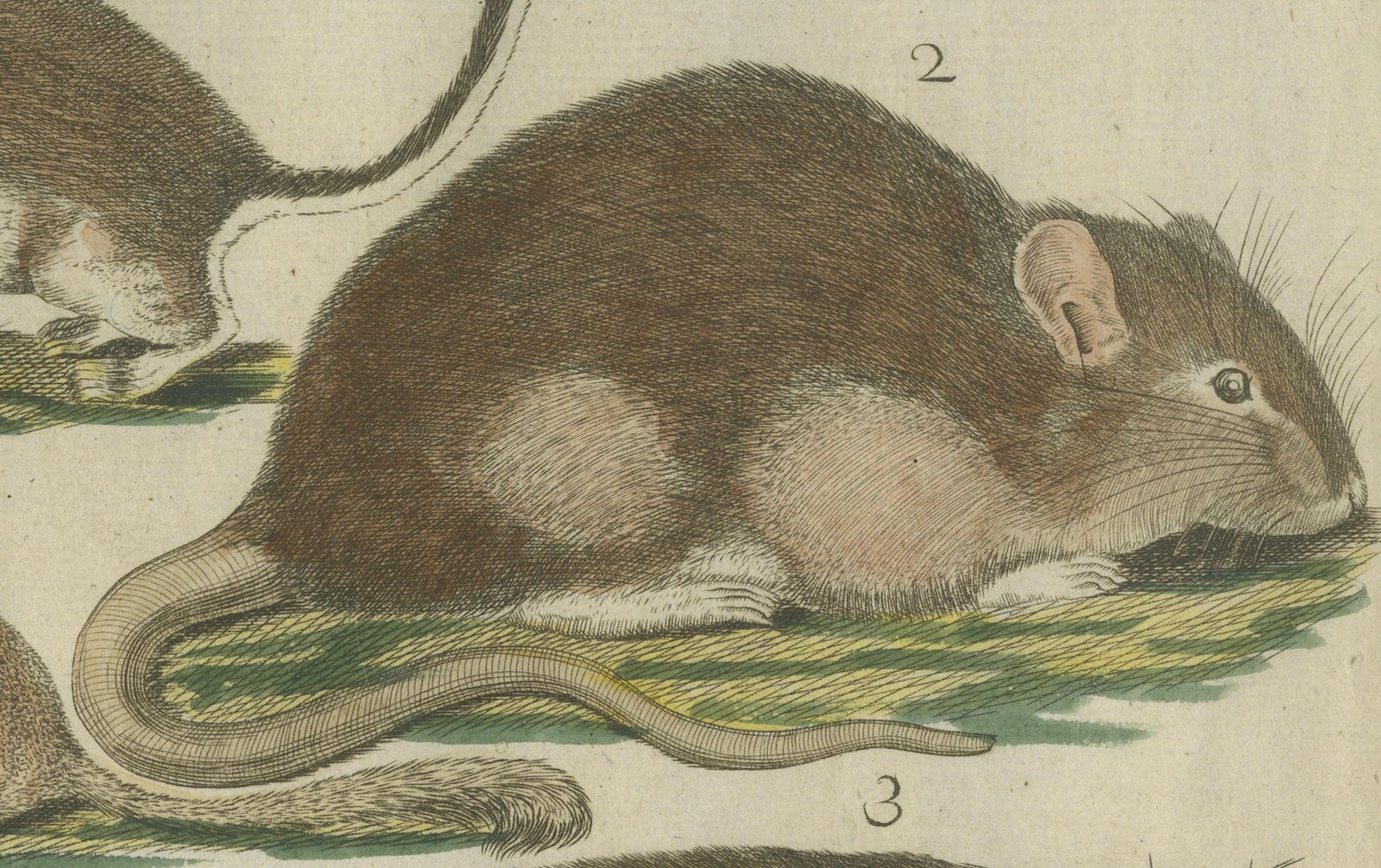
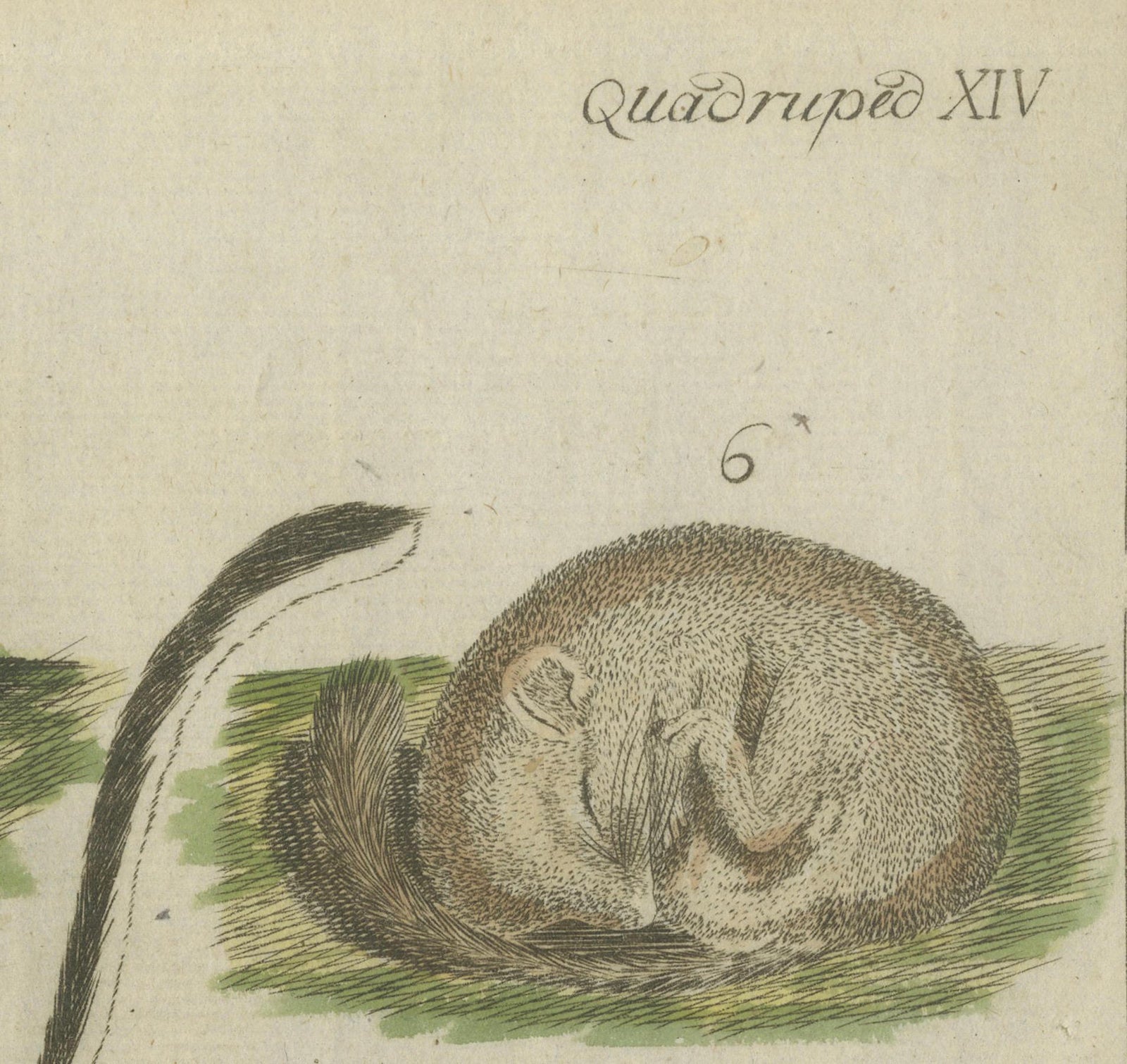
The print features six illustrations of various rodent-like animals. They are not all mice; they represent a range of rodent species, which can be inferred from their different physical characteristics:
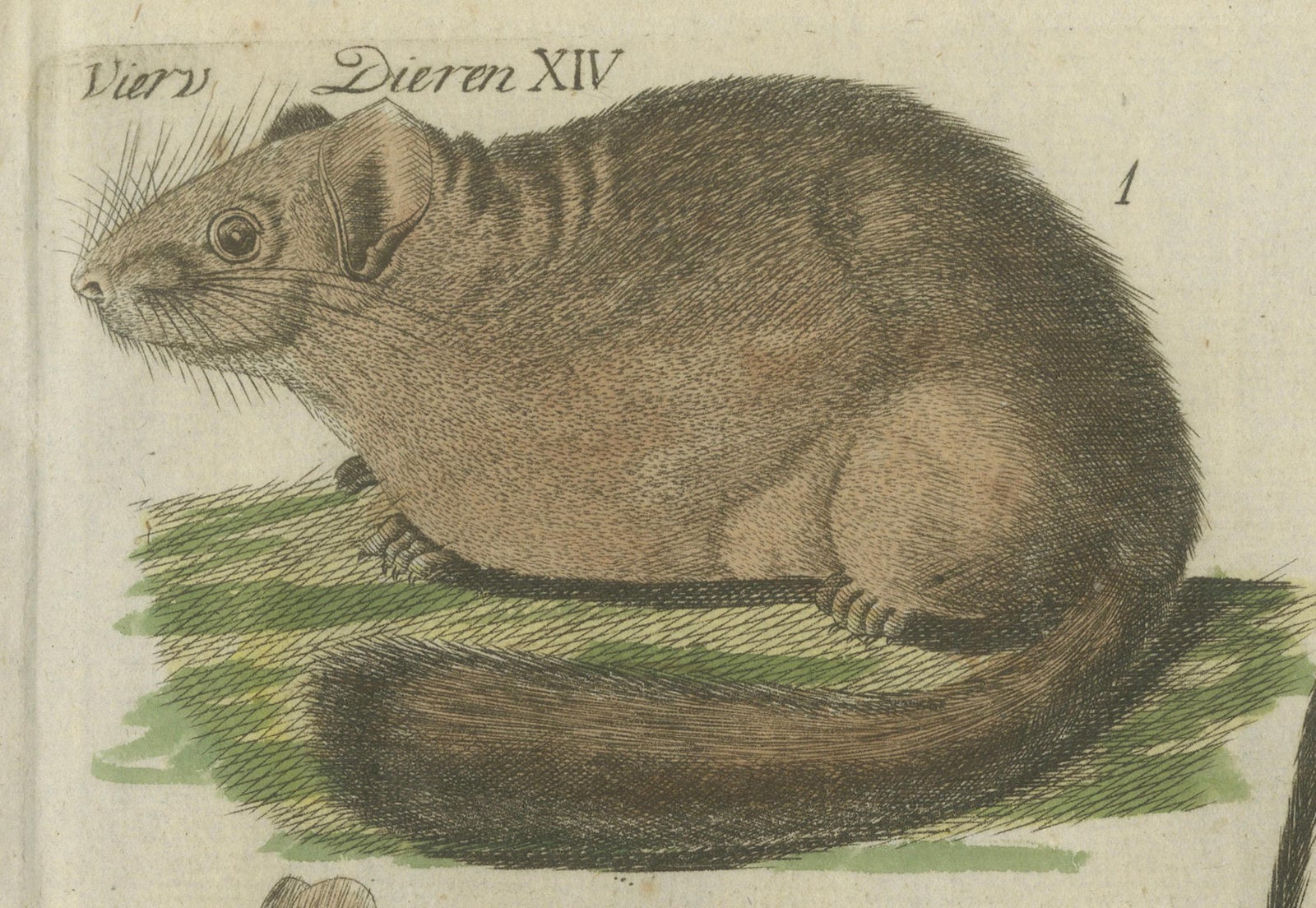
1. The largest animal at the top left looks like a type of pika or a chinchilla due to its rounded ears and body shape.
2. The second illustration on the top right is a curled-up animal, which might be a dormouse based on its compact body and fur texture.
3. The animal at the center-right with prominent ears and elongated body could be a type of rat or a gerbil.
4. The creature in the middle left with large hind legs and long ears appears to be a jerboa, which is known for its distinctive jumping movement.
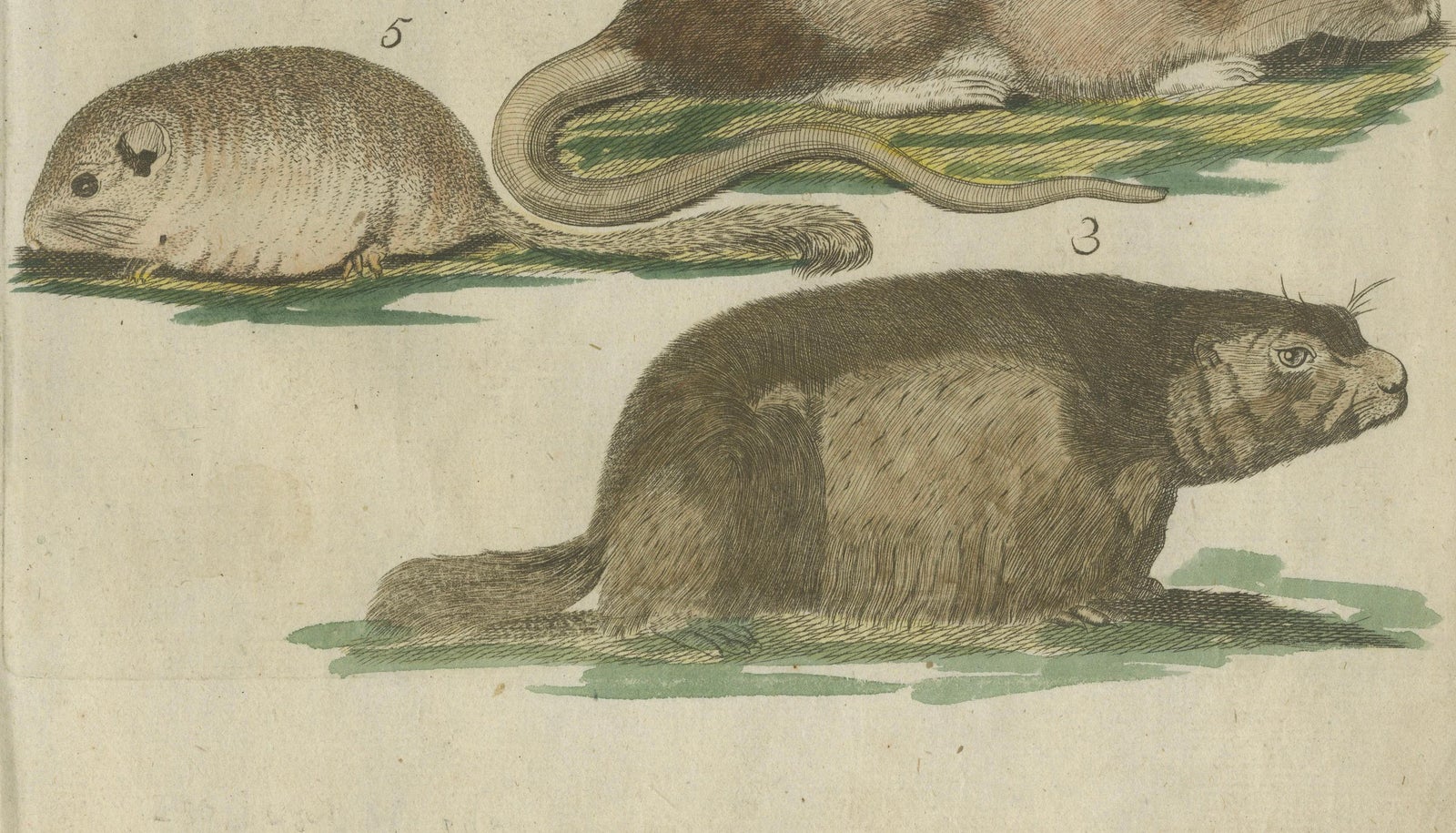
5. The bottom left animal resembles a vole, suggested by its short tail and stout body.
6. Finally, the bottom right illustration shows a creature with a robust body and rounded ears, possibly another variety of pika or a related species.
Each animal is depicted in a different pose, which provides a sense of their varied sizes, body structures, and fur patterns. The illustrations likely aim to showcase the diversity within the rodent family.