Close-ups
Antique Chromolithographs of Peacock Tiger-Flower, Crocus & Ixia, 1897
£290 ($380, €340)
Period original, not a reproduction.
Shipped from the Netherlands, flat, insured and tracked, worldwide. Returns accepted within 14 days.
- Date
- 1897
- Size
- 9.4 × 6.3 in (24 × 15.9 cm)
- Condition
- Very good, with minor age toning typical of prints from this period. Paper edges remain clean, with vibrant coloring well preserved. Prints are not framed. Sold as set of loose prints.
- Period
- Late 19th century
- Section
- Birds
- Reference
- f_46486512
Antique Chromolithographs of Peacock Tiger-Flower, Crocus & Ixia, 1897
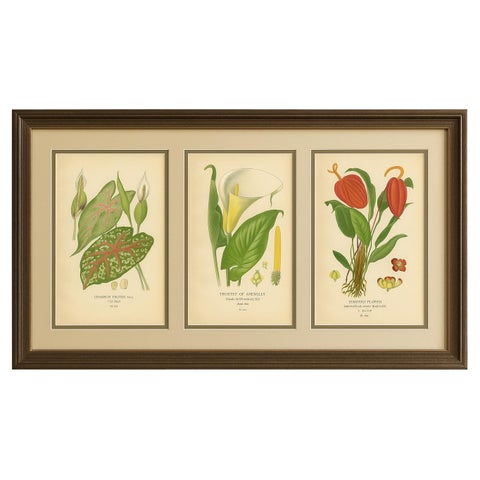
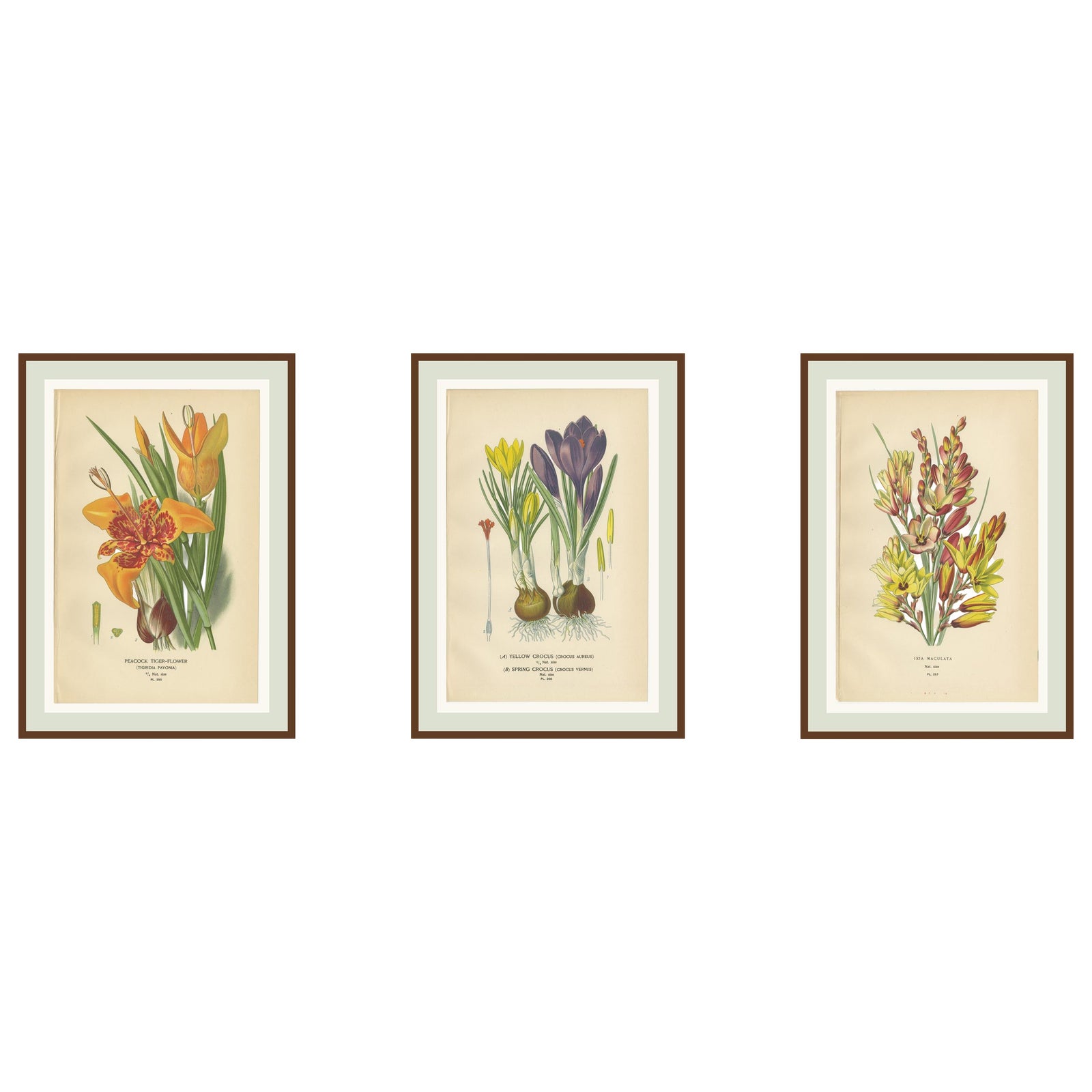
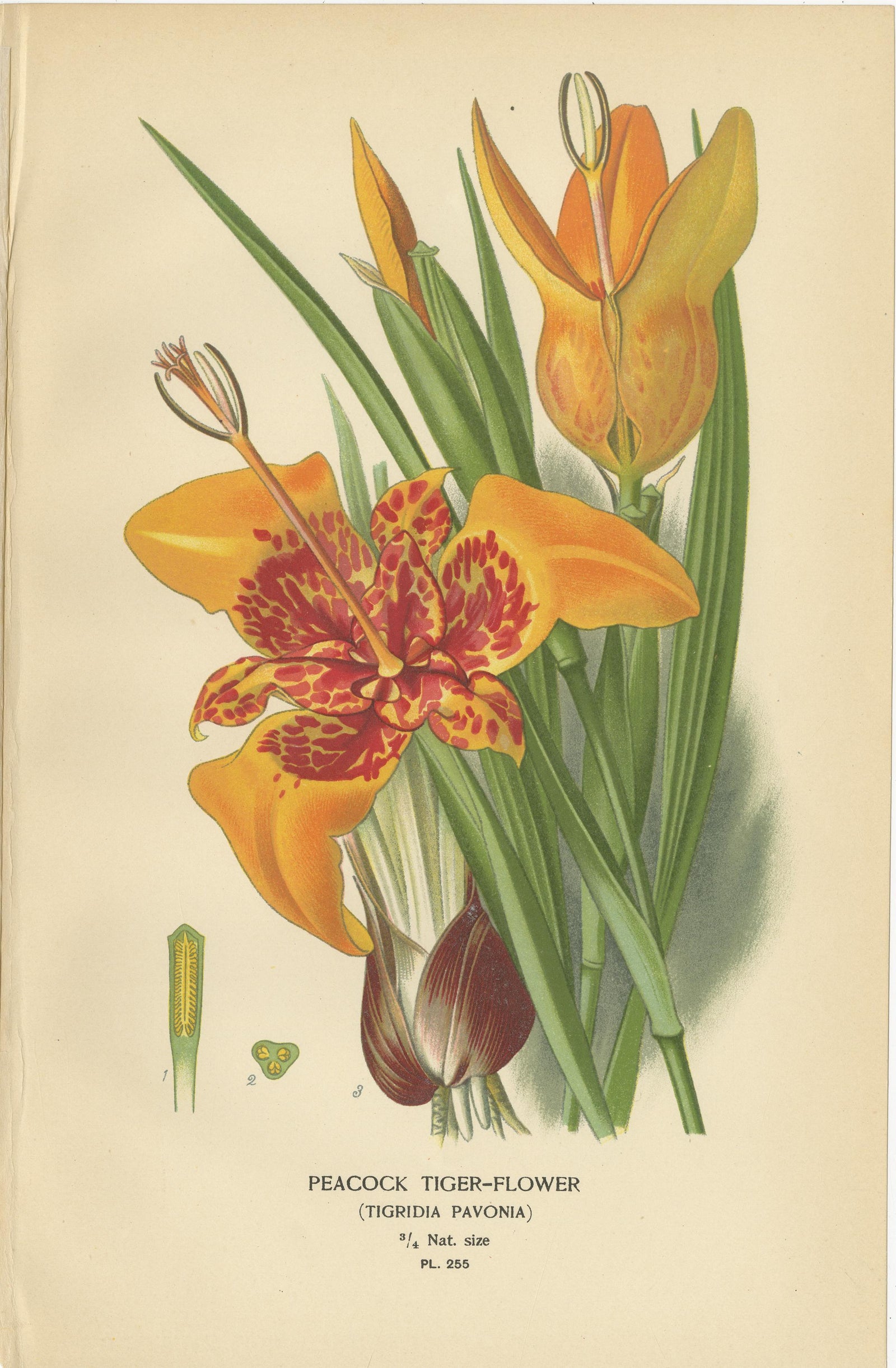
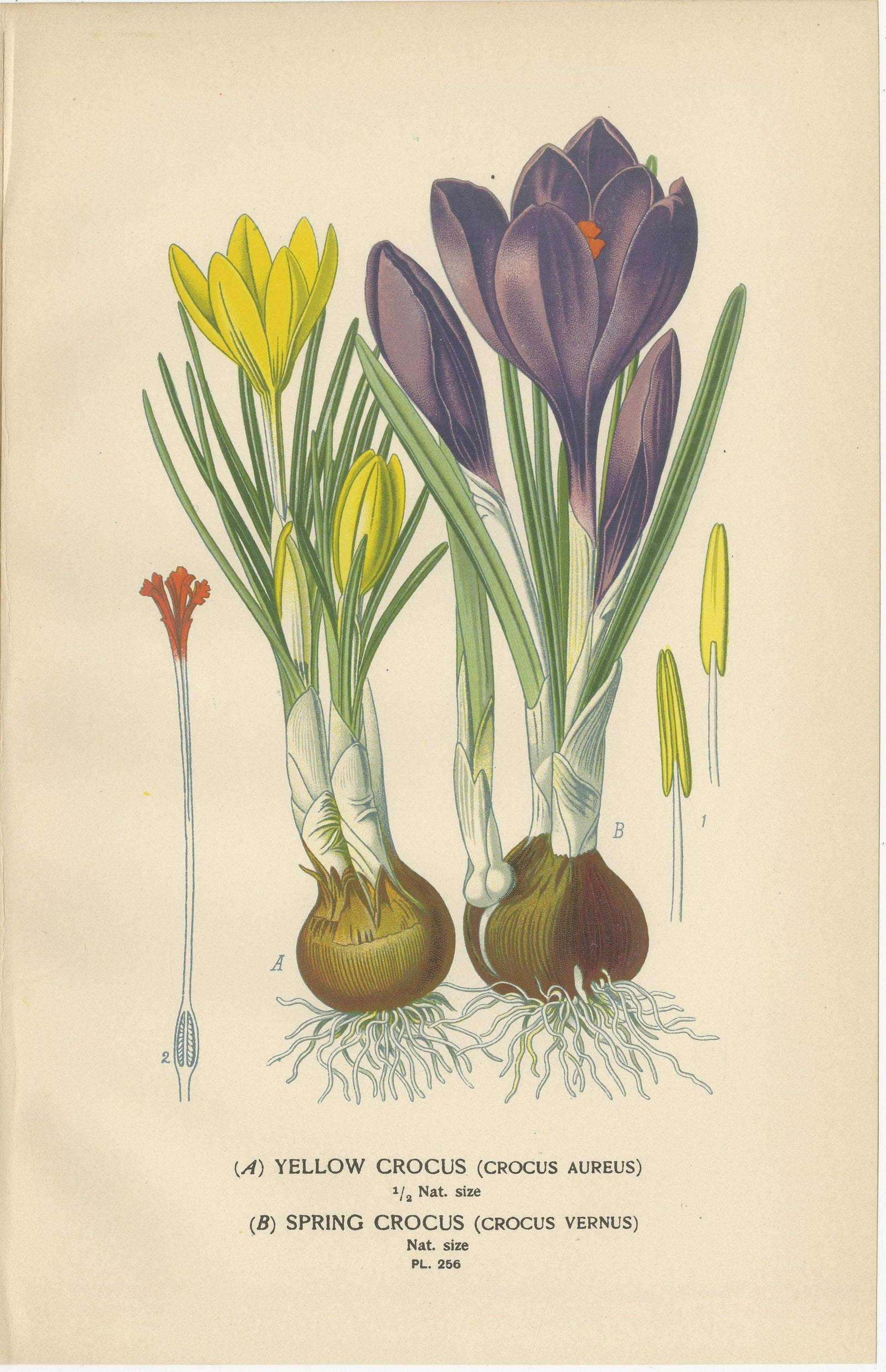
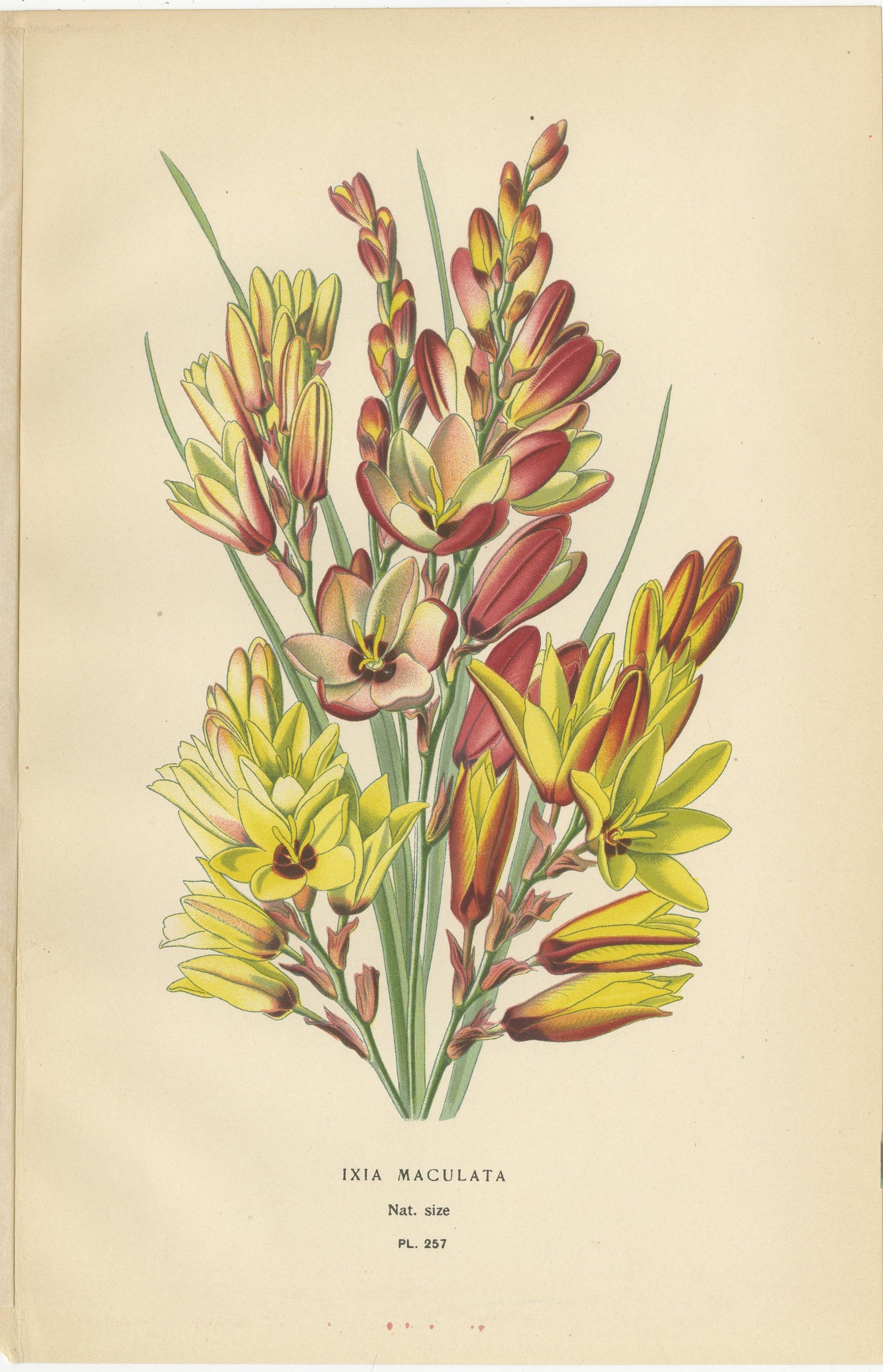
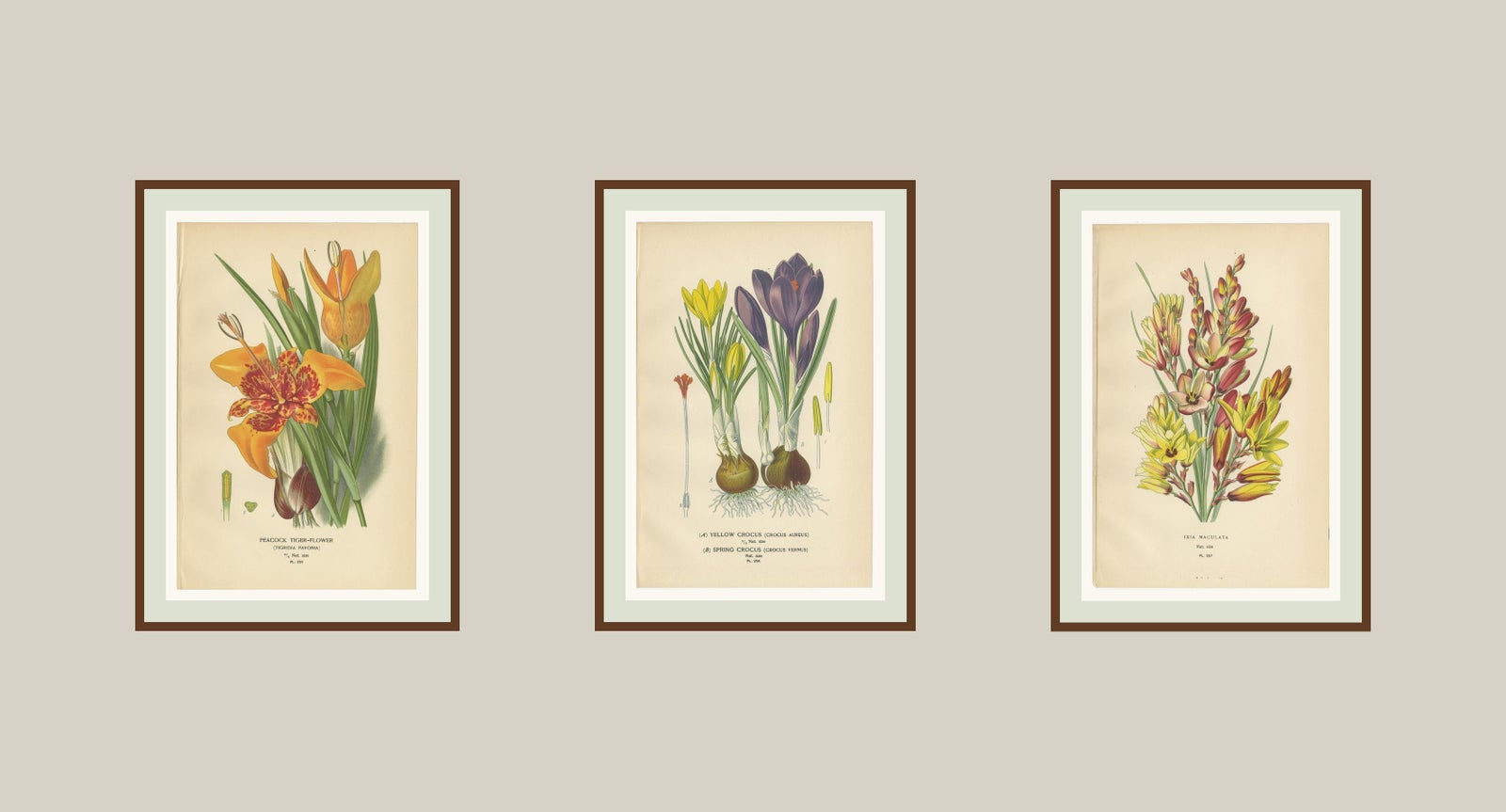
A vibrant set of three original chromolithographs from Favourite Flowers of Garden and Greenhouse by Edward Step, published in 1897. These beautifully detailed plates feature some of the most decorative flowering plants popular in late 19th-century gardens.
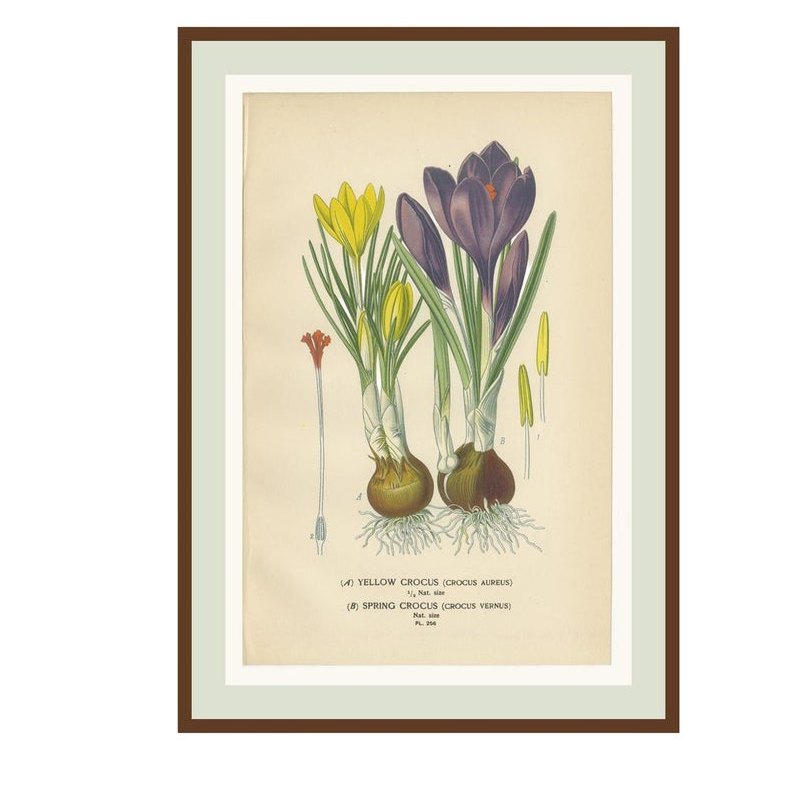
Plate 255 depicts the Peacock Tiger-Flower (Tigridia pavonia), a striking bulbous plant with bright orange petals and intricate red markings, often referred to as the “Mexican shell flower.” Plate 256 illustrates two varieties of crocus: the Yellow Crocus (Crocus aureus) and the Spring Crocus (Crocus vernus), both essential early bloomers long associated with the arrival of spring. Plate 257 shows the colorful Ixia maculata, also known as the African corn lily, native to South Africa and admired for its tall stems of clustered star-shaped blossoms in red and yellow tones.
These chromolithographs were printed with exceptional precision, capturing both the natural hues and the structural details of the plants, often accompanied by magnified floral segments or bulb studies. They offer not only artistic beauty but also a glimpse into the Victorian passion for botany and exotic horticulture.
Condition: Very good, with minor age toning typical of prints from this period. Paper edges remain clean, with vibrant coloring well preserved. Prints are not framed. Sold as set of loose prints.
Framing tips: For maximum effect, consider framing the three plates together in a horizontal row or vertically stacked, using a light cream or off-white mat to highlight the vivid floral colors. A simple gold or dark wood frame will lend a classic botanical presentation.
Technique: Chromolithograph
Maker: Edward Step, London, 1897