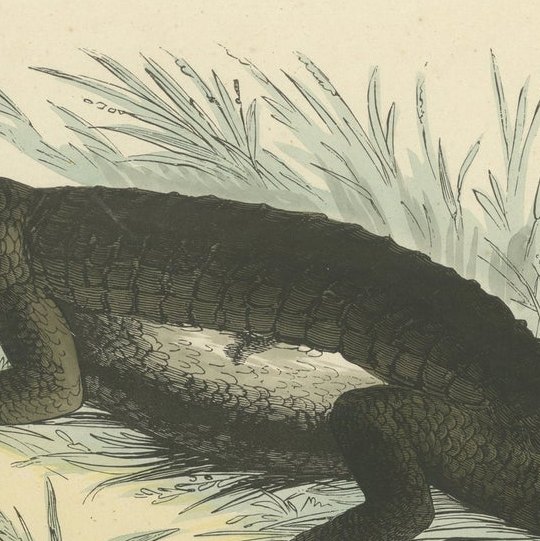
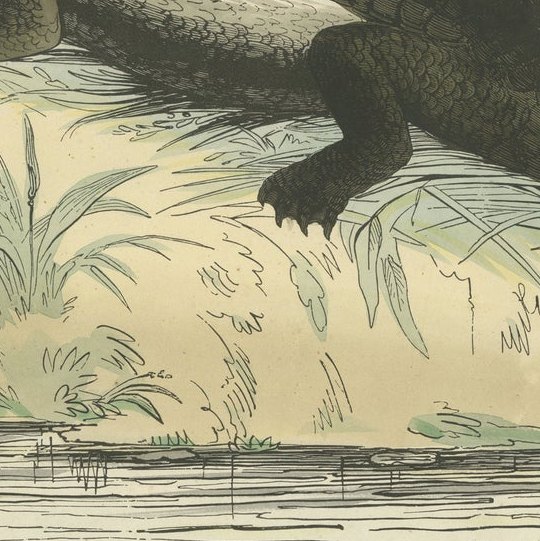
Close-ups
Framed and on the wall
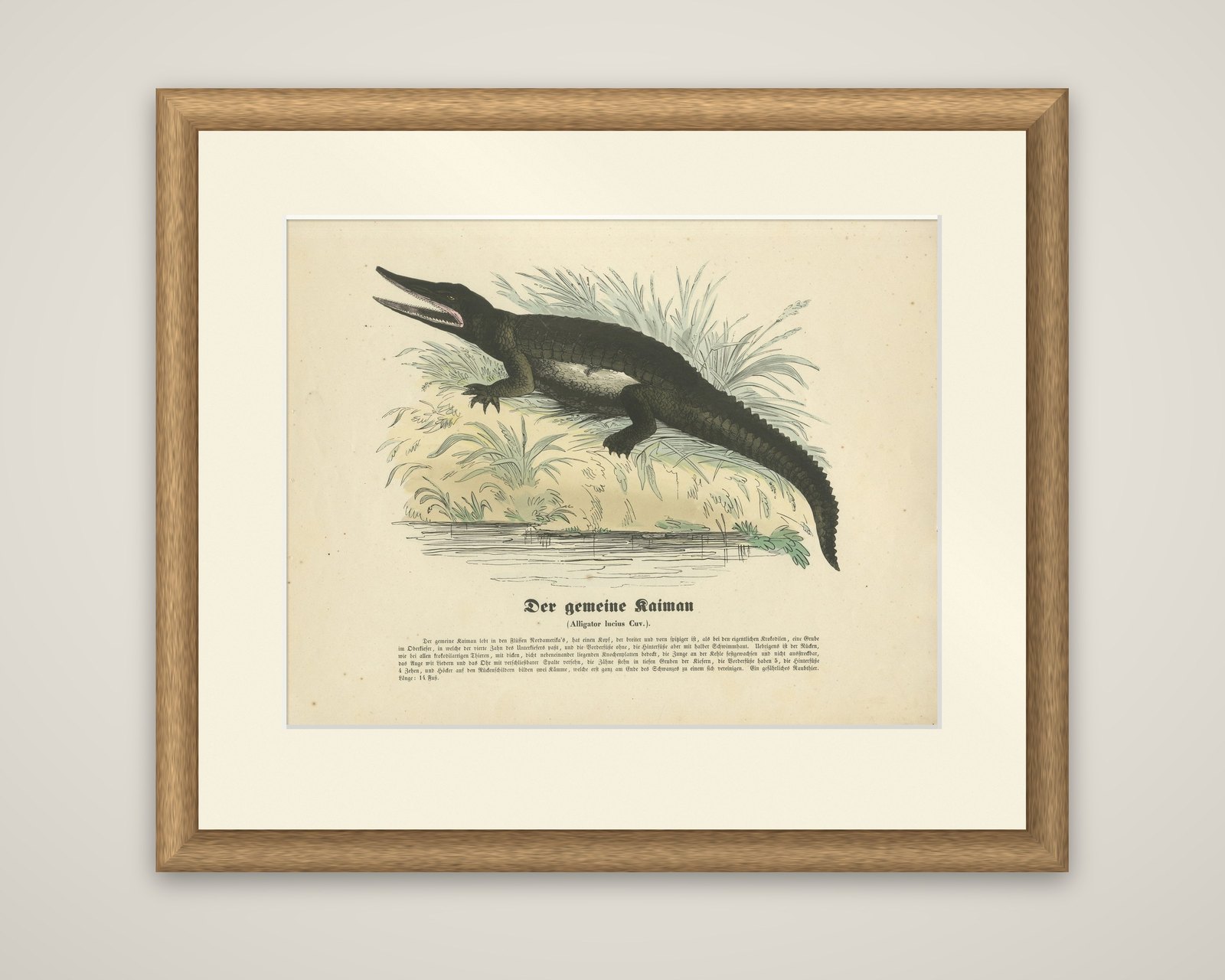
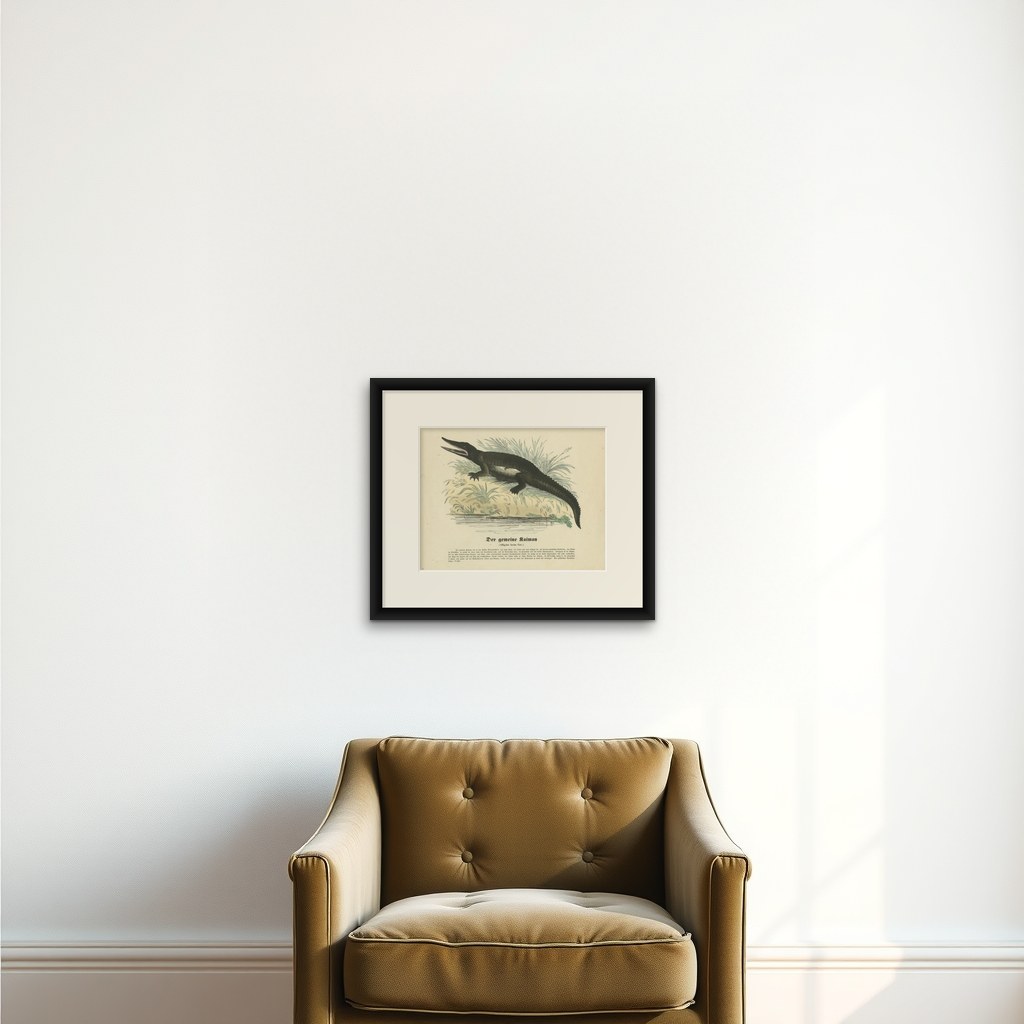

Frame and rooms are illustrations of how the print could look; the description says what is included.
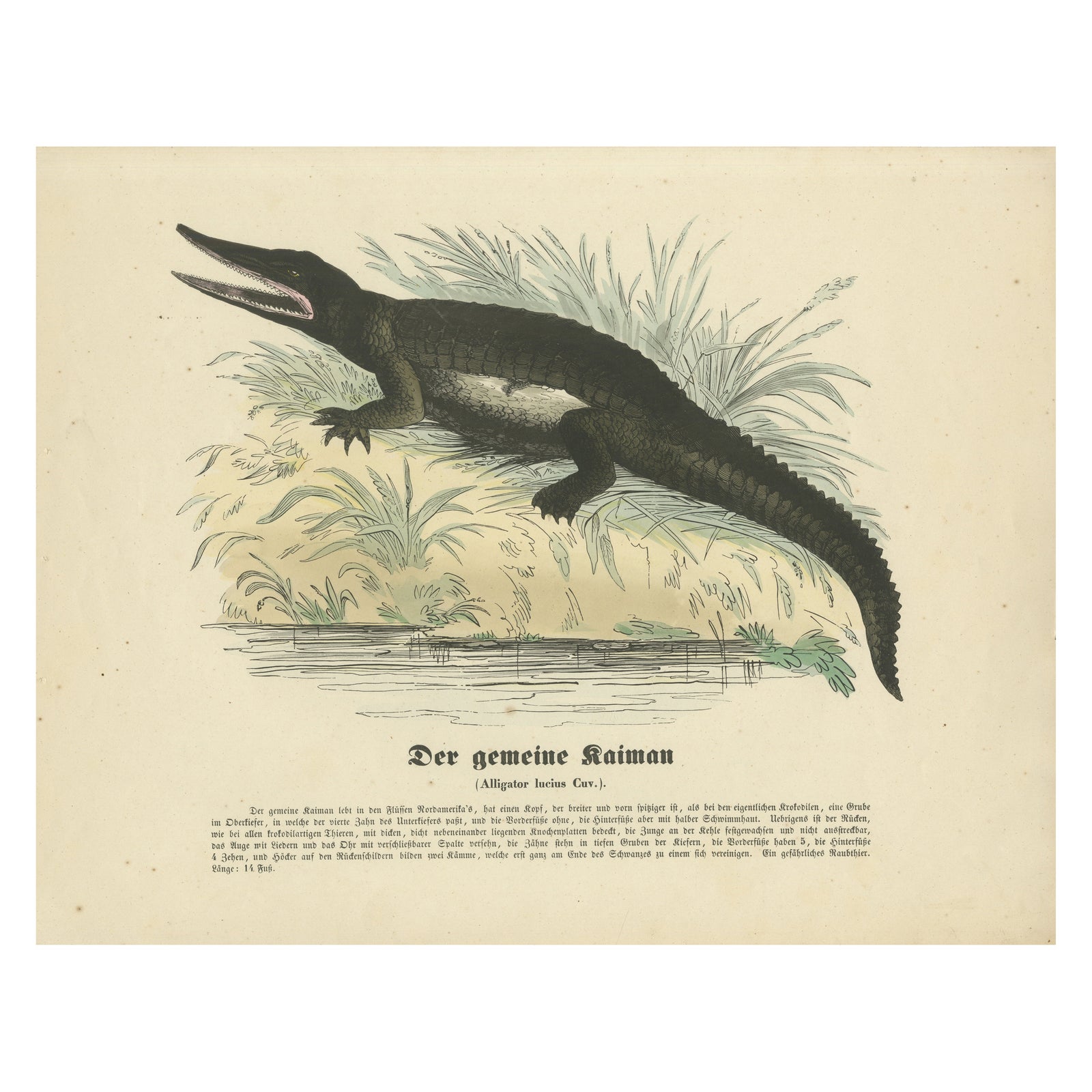
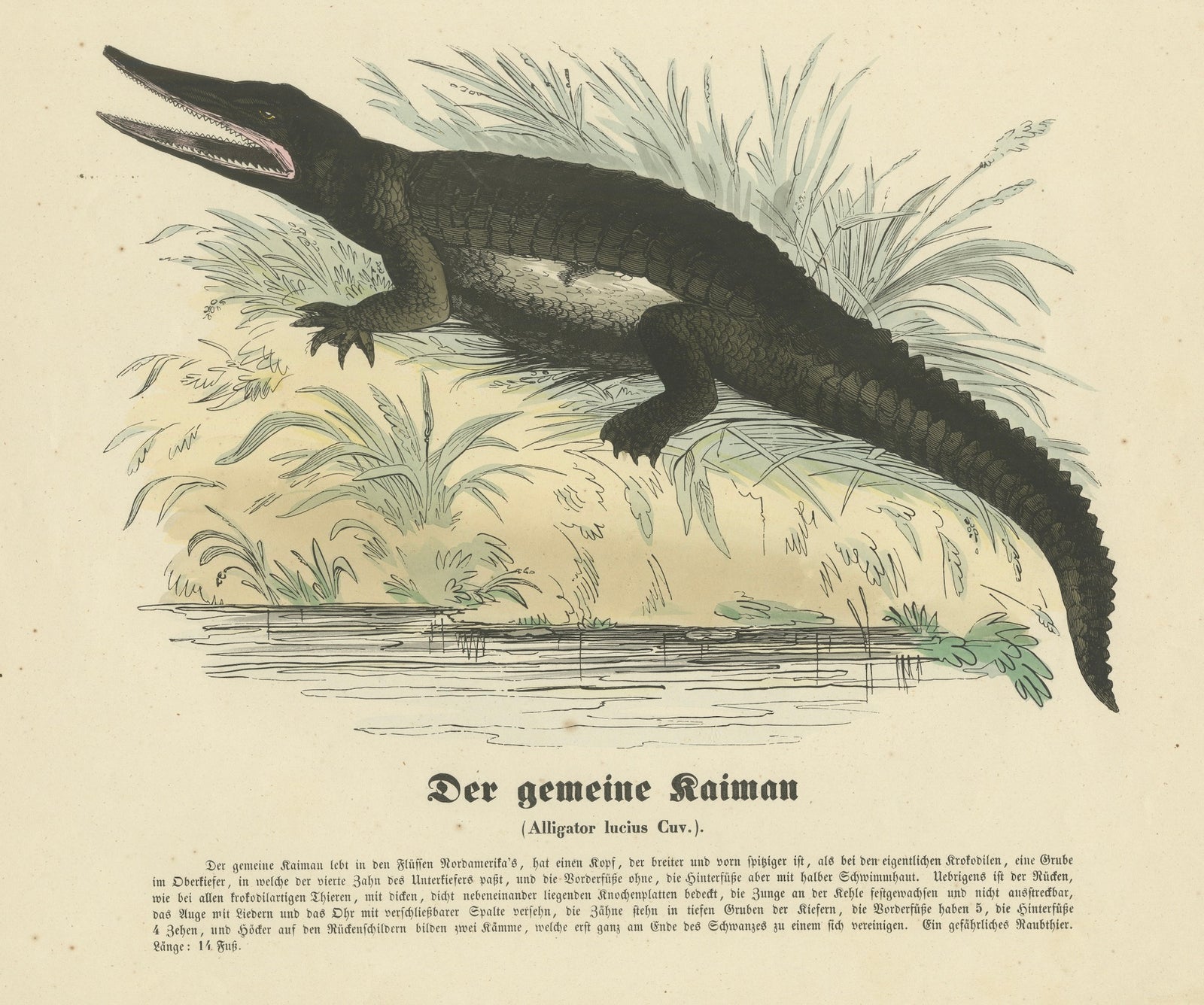
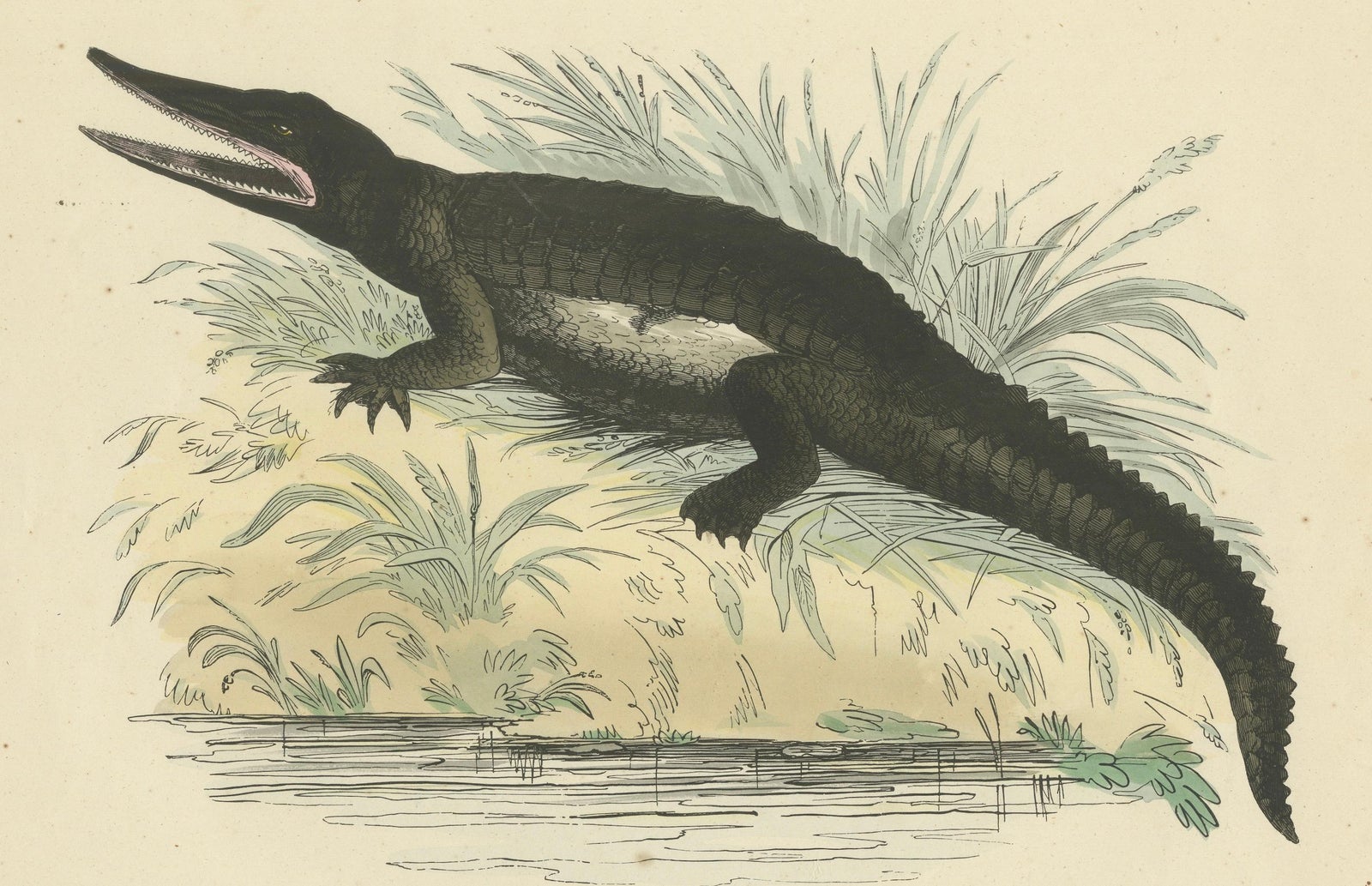
Der gemeine Kaiman (Common Caiman) - Hand-Colored Zoological Print, Circa 1840
€290 ($325, £245, €290)
Period original, not a reproduction.
Shipped from the Netherlands, flat, insured and tracked, worldwide. Returns accepted within 14 days.
- Date
- 1840
- Size
- 11.8 × 15.2 in (30 × 38.5 cm)
- Condition
- Good. The condition of this print is good for its age, with clean lines and vivid colors. Minor foxing and slight discoloration around the edges are present, consistent with prints of this period, but the central image remains well-preserved and vibrant.
- Period
- Early 19th century
- Section
- Mammals
- Reference
- f_43014642
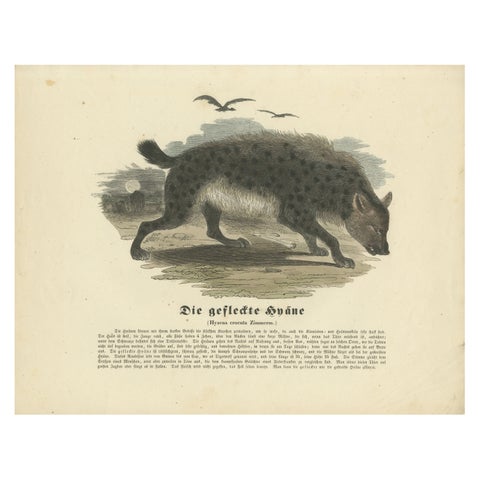
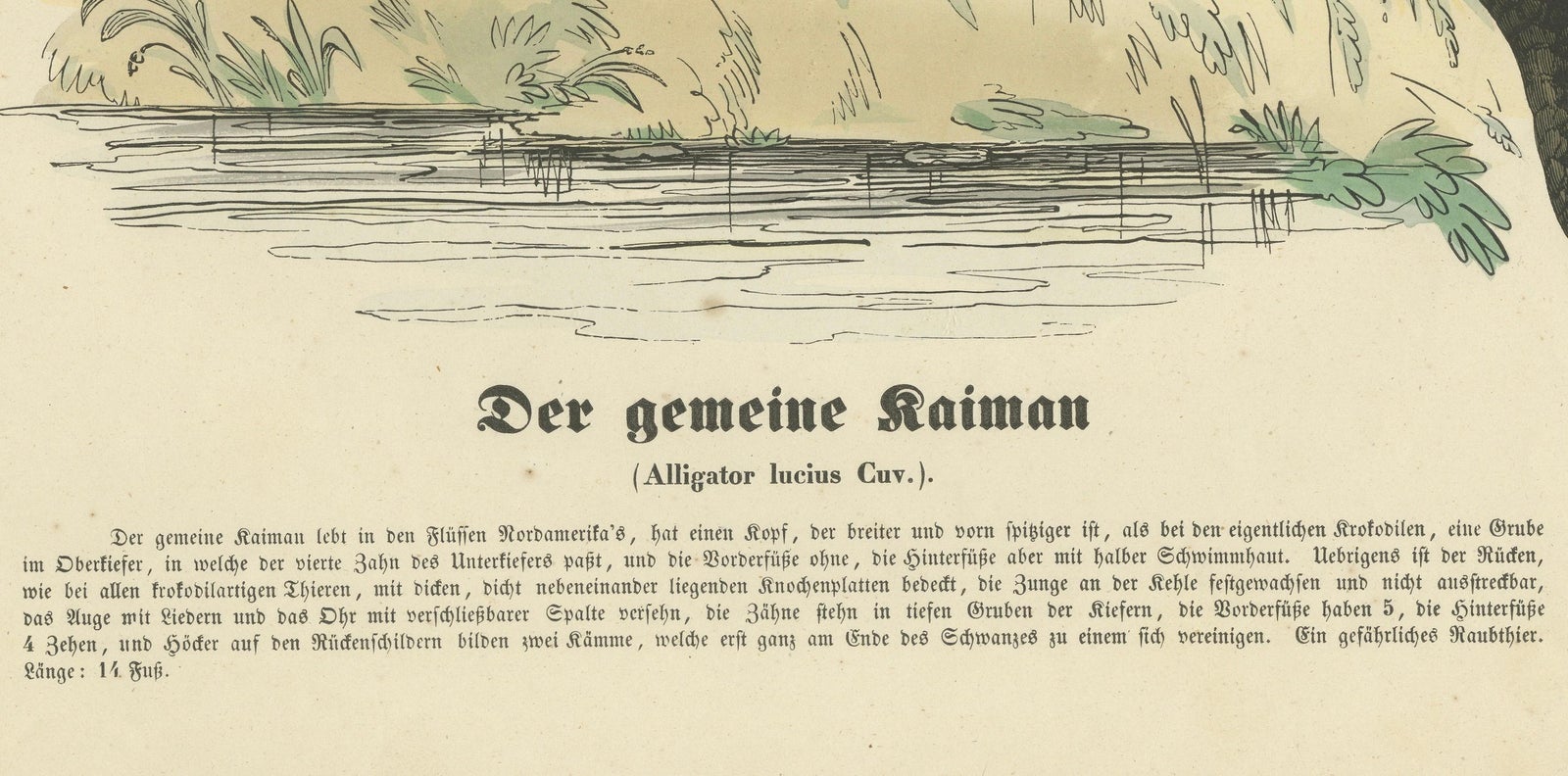
Der gemeine Kaiman, a hand-colored lithograph of about 1840 from a German natural history series. The title "Der gemeine Kaiman" and the scientific name "(Alligator lucius Cuv.)" are printed beneath the image, with a paragraph of German text below.
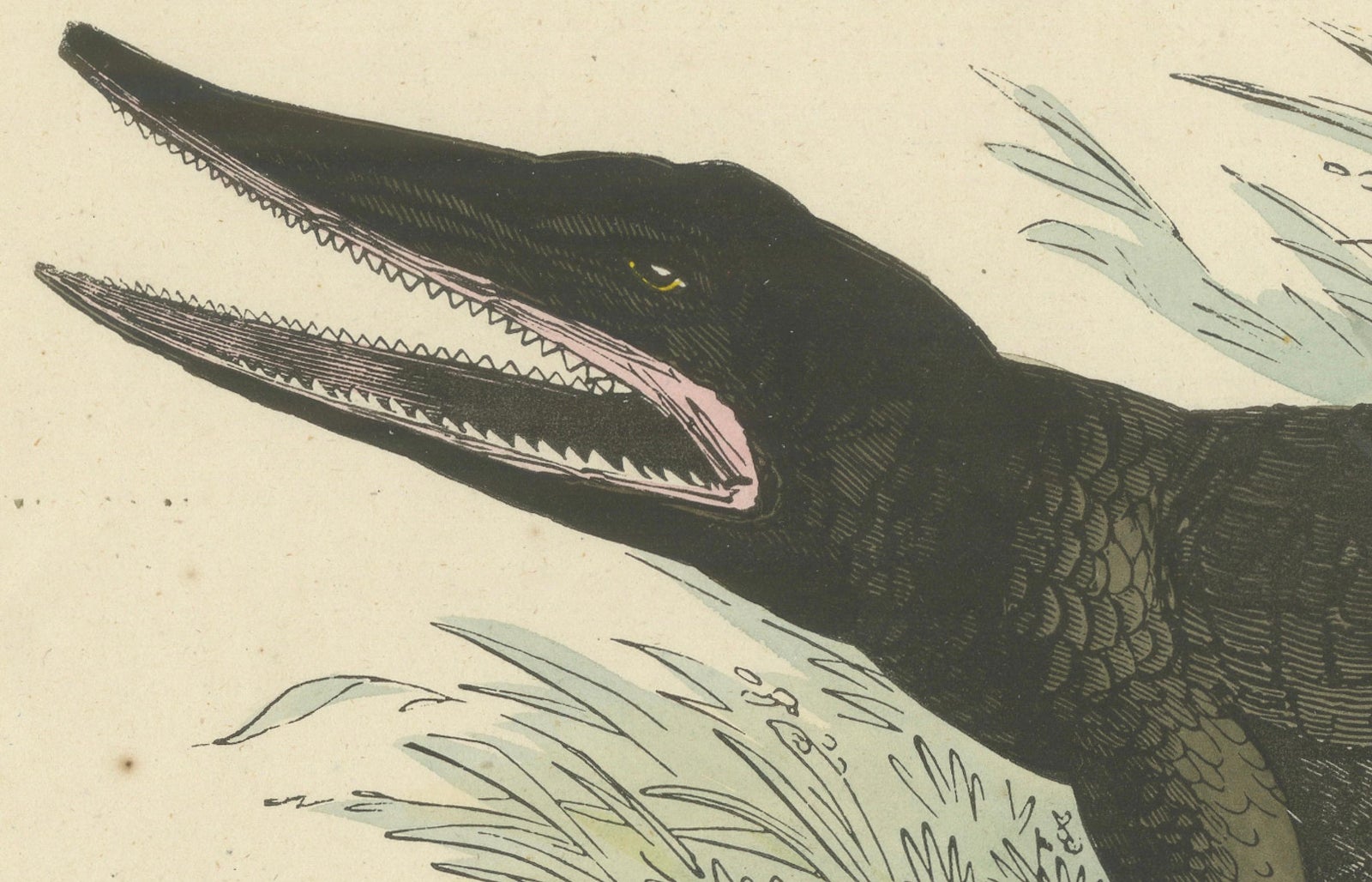
The animal is drawn in profile, resting on a bank among tall grasses with its jaws wide open to show its teeth, dark green back covered with horny scales, pale underside and a long tail ridged with crests. A line of water with a few green leaves lies in the foreground, and the grasses are tinted in pale green and yellow. The German text describes the head, the teeth, the scaly back and the tail, and gives the length as 14 feet.
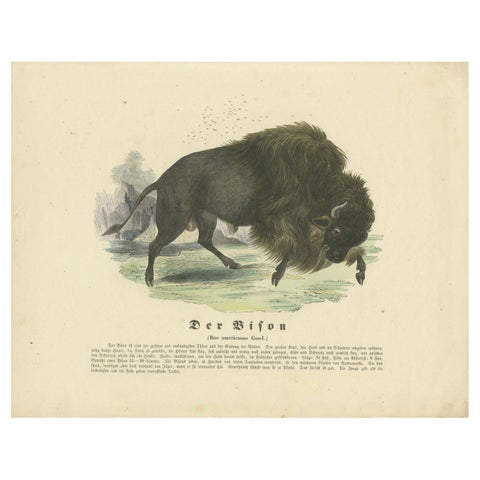
Alligator lucius was the name Cuvier gave to the American alligator, the large crocodilian of the rivers and swamps of the southern United States, which German natural history books of the period called a Kaiman. The same series included other large American animals, such as the bison.