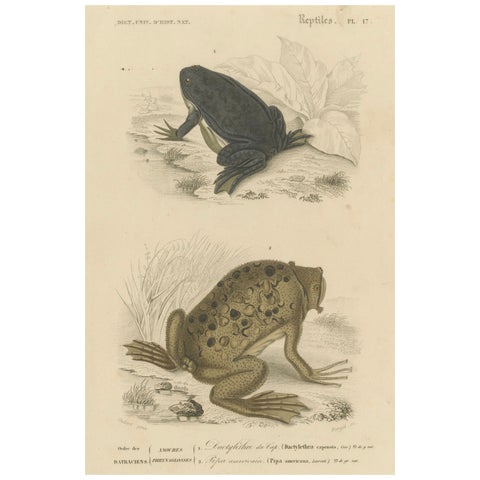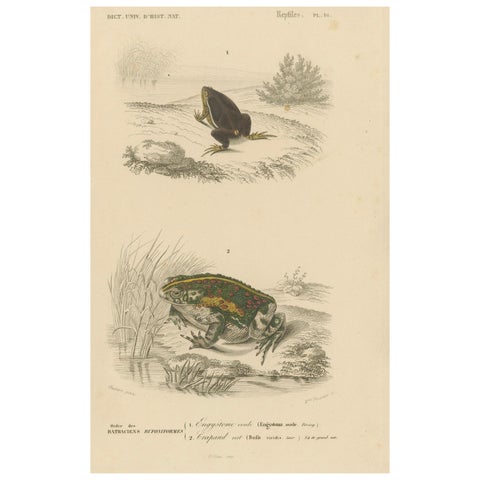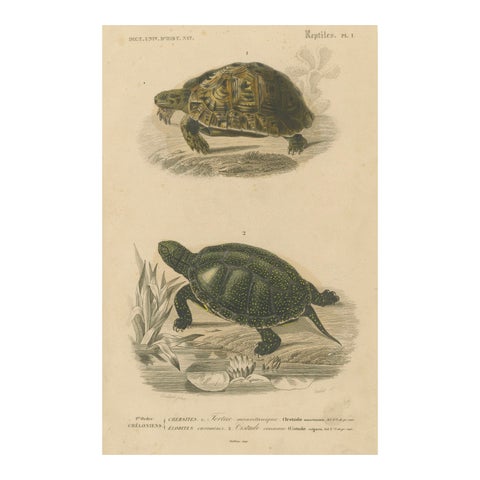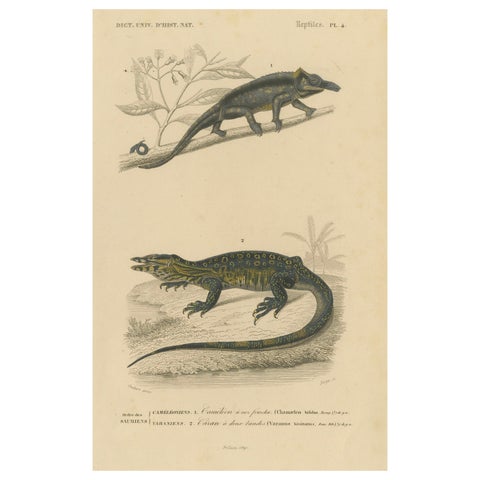
Close-ups
Framed and on the wall
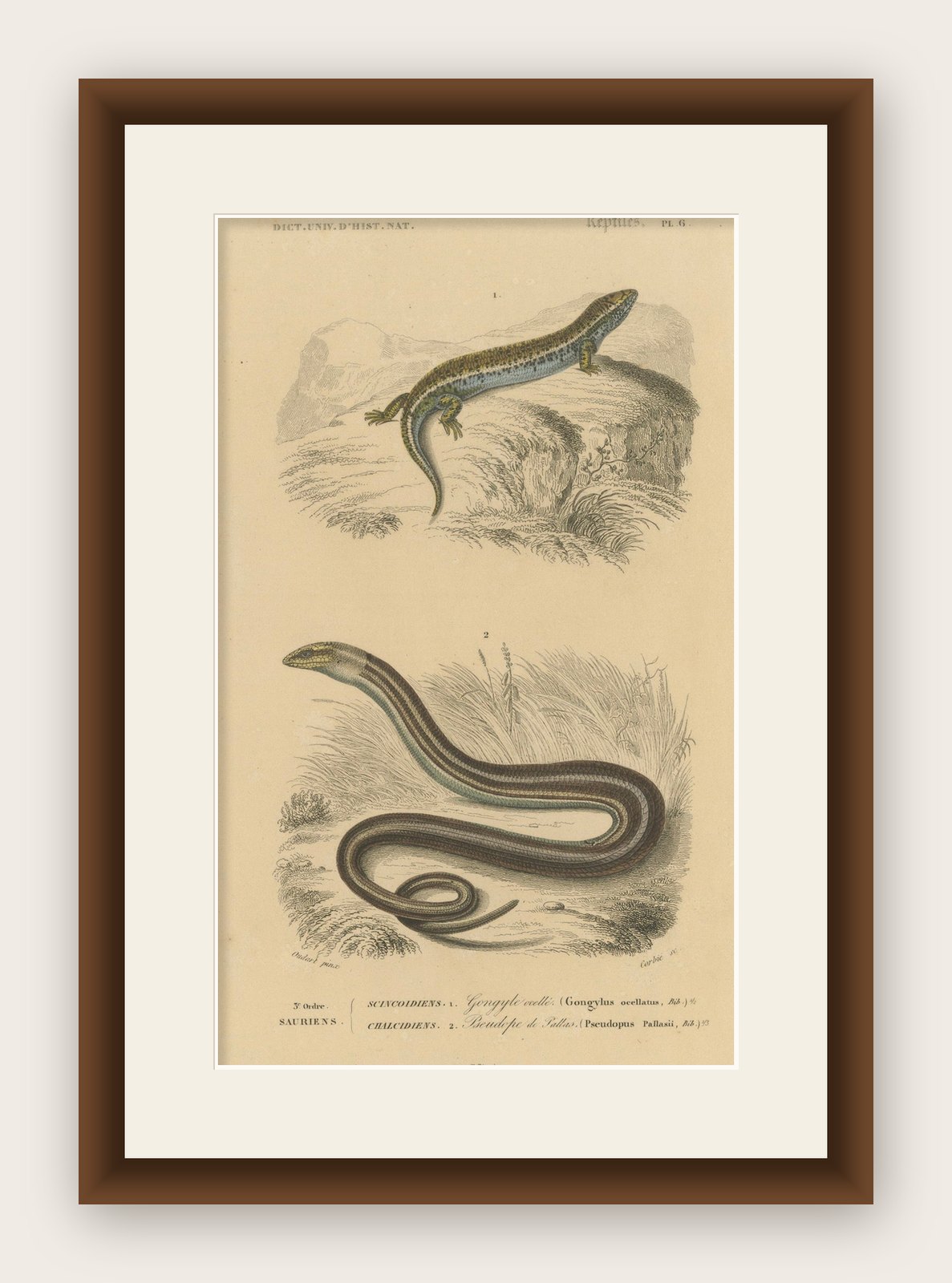
Frame and rooms are illustrations of how the print could look; the description says what is included.
Lizard Print of Ocellated Skink and European Glass Lizard, c.1850, Orbigny
£160 ($215, €190)
Period original, not a reproduction.
Shipped from the Netherlands, flat, insured and tracked, worldwide. Returns accepted within 14 days.
- Date
- 1850
- Size
- 9.7 × 6.3 in (24.7 × 16 cm)
- Condition
- Good. Light foxing and faint age toning at the edges. Image area clean, with strong plate lines and original hand coloring intact. No tears or repairs. A fine and well-preserved example.
- Period
- Late 19th century
- Section
- Reptiles and amphibians
- Reference
- f_45337982
Lizard Print of Ocellated Skink and European Glass Lizard, c.1850, Orbigny
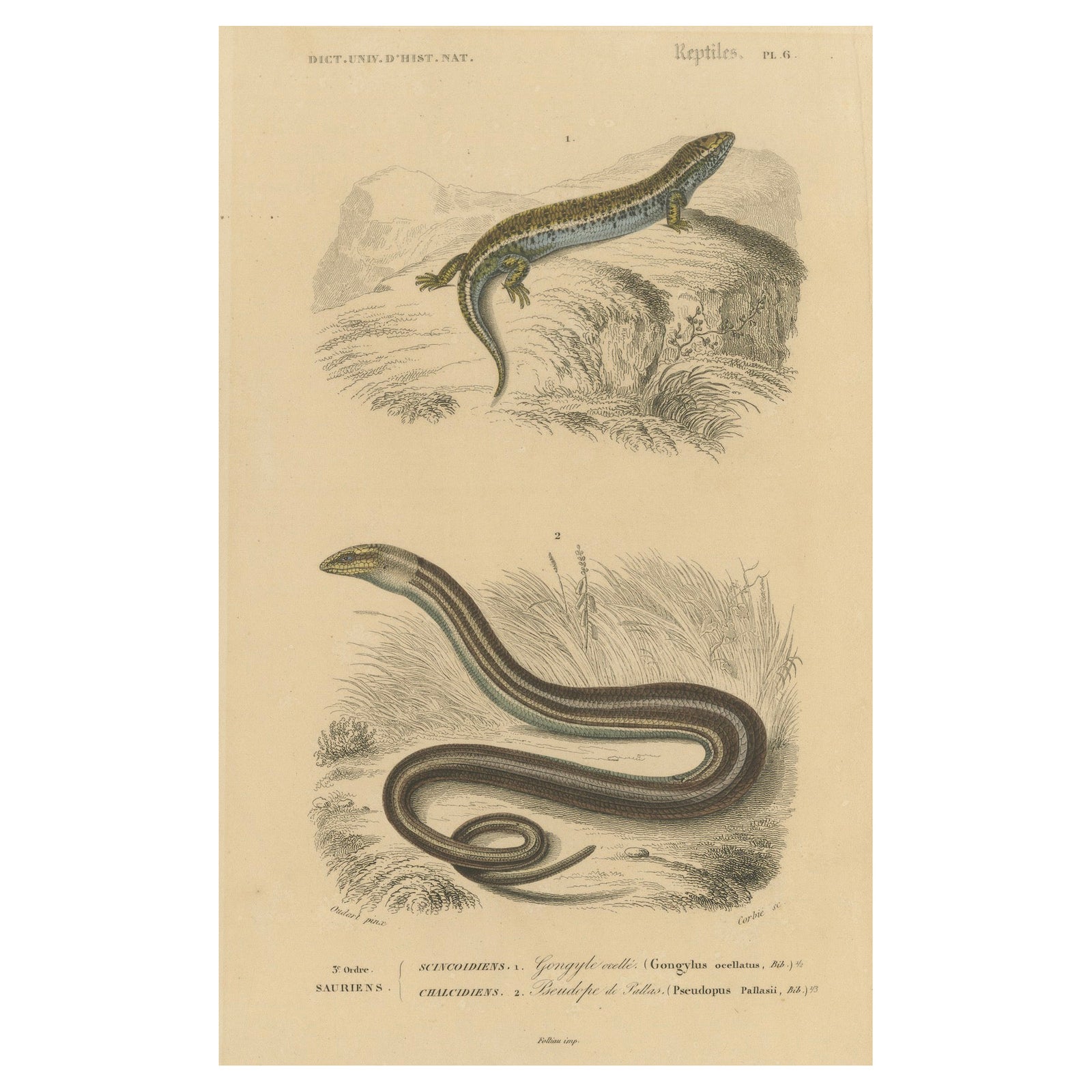
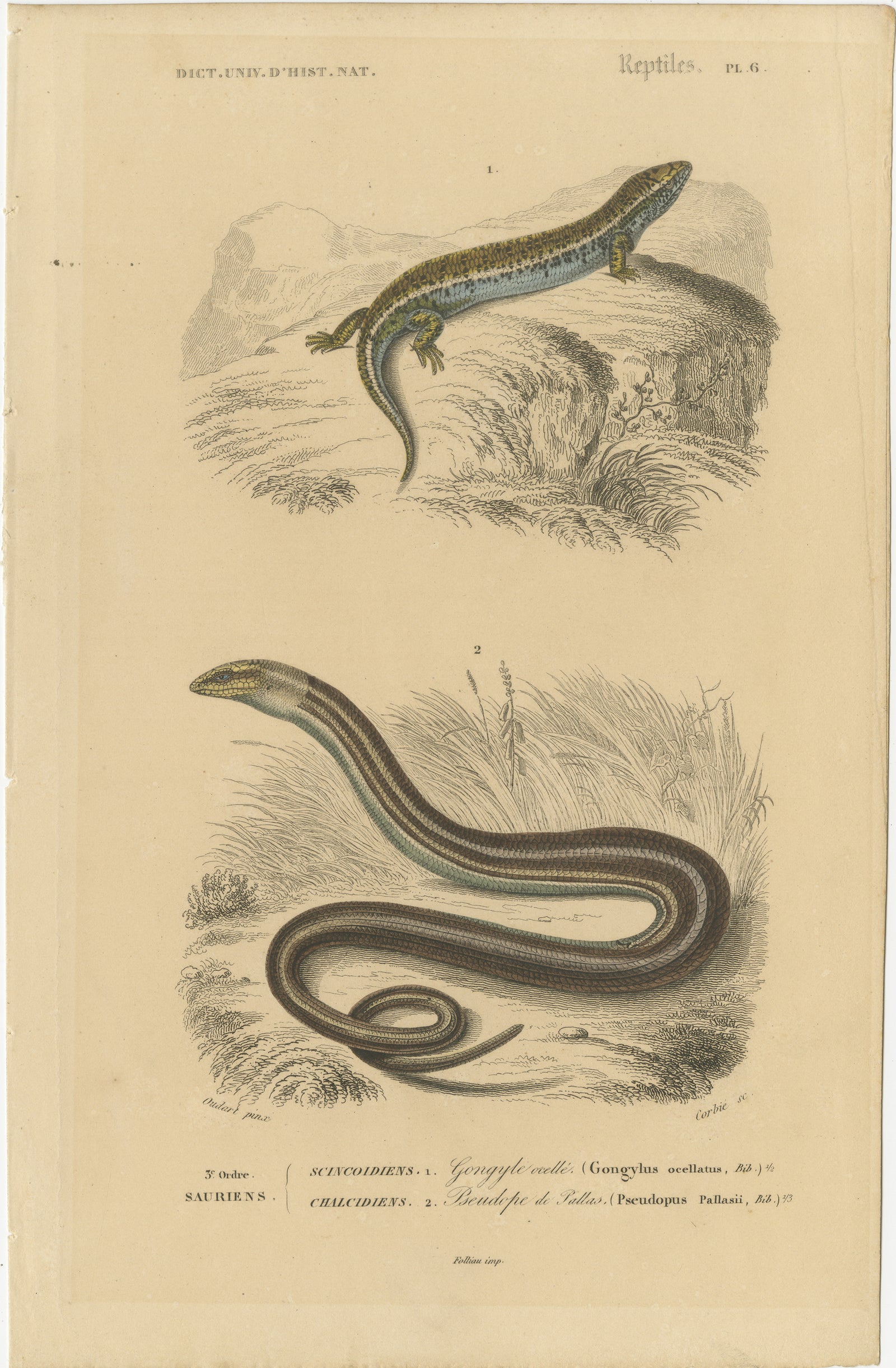
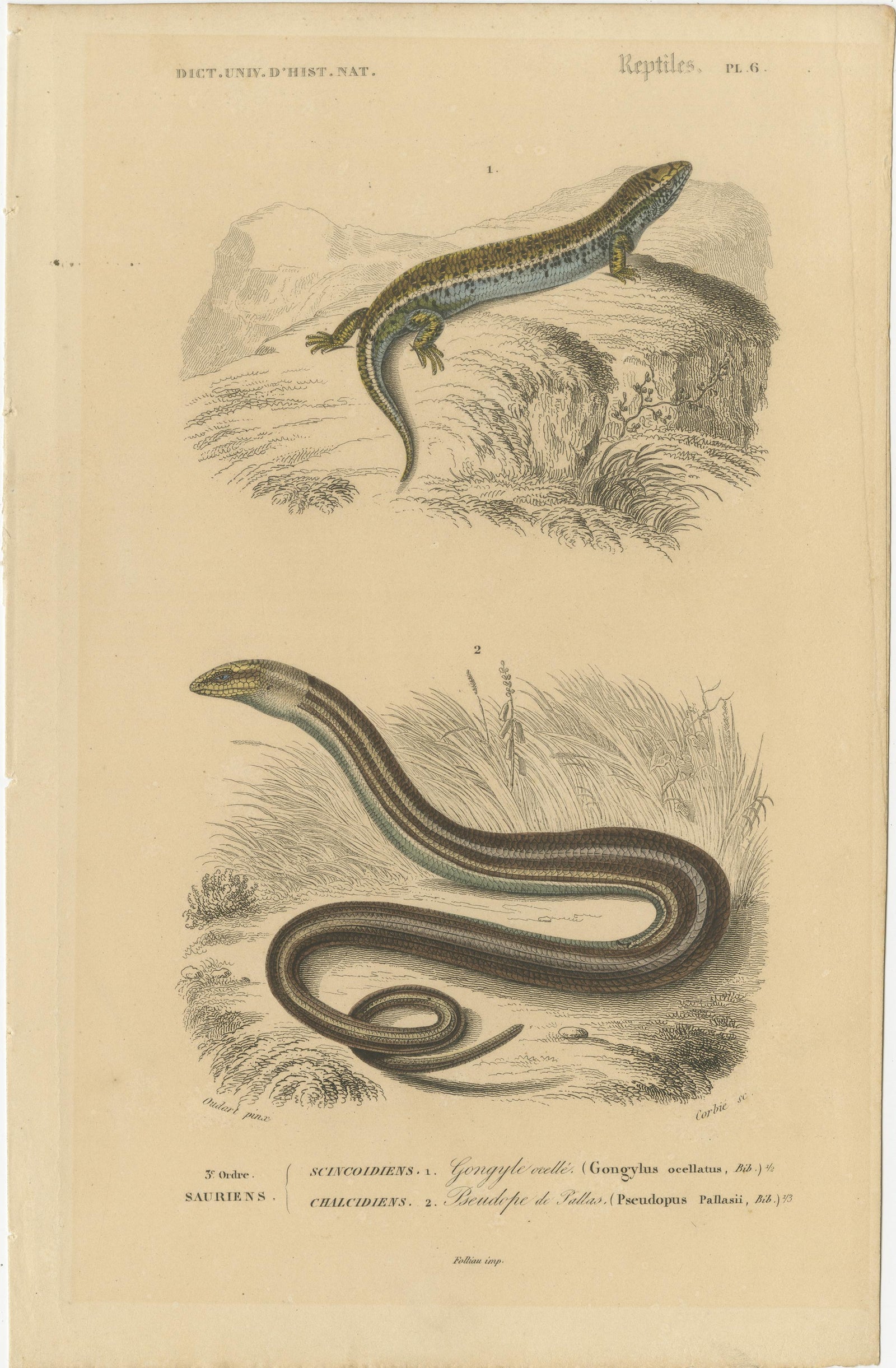
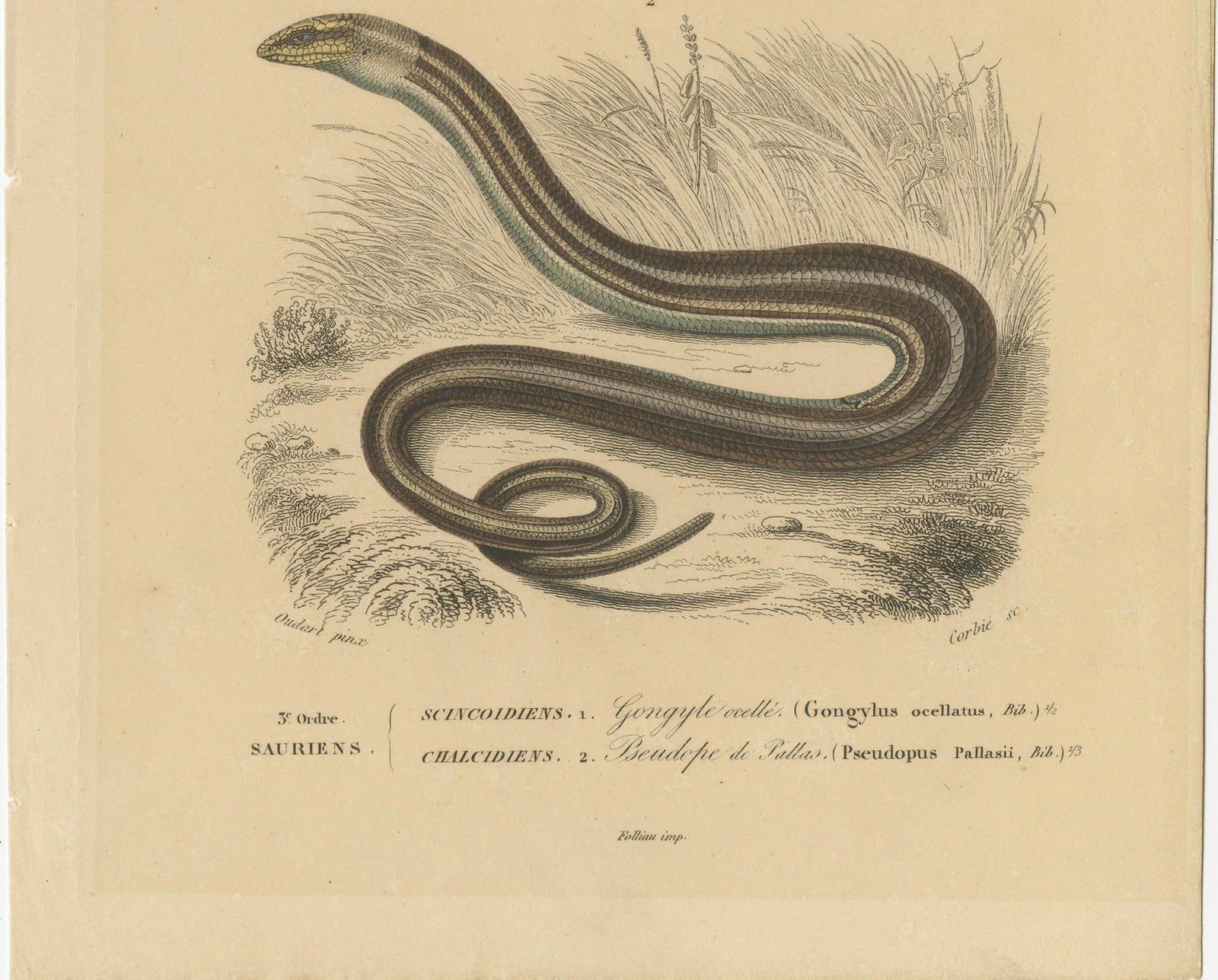
This elegant hand-colored engraving, Reptiles Pl. 6, presents two remarkable lizard species: the Ocellated Skink (Gongylus Ocellatus, now commonly Chalcides Ocellatus) and the European Glass Lizard (Pseudopus pallasii). The plate was created for the Dictionnaire Universel d’Histoire Naturelle, a comprehensive natural history encyclopedia published in Paris around 1850 under the direction of Charles Dessalines d'Orbigny.
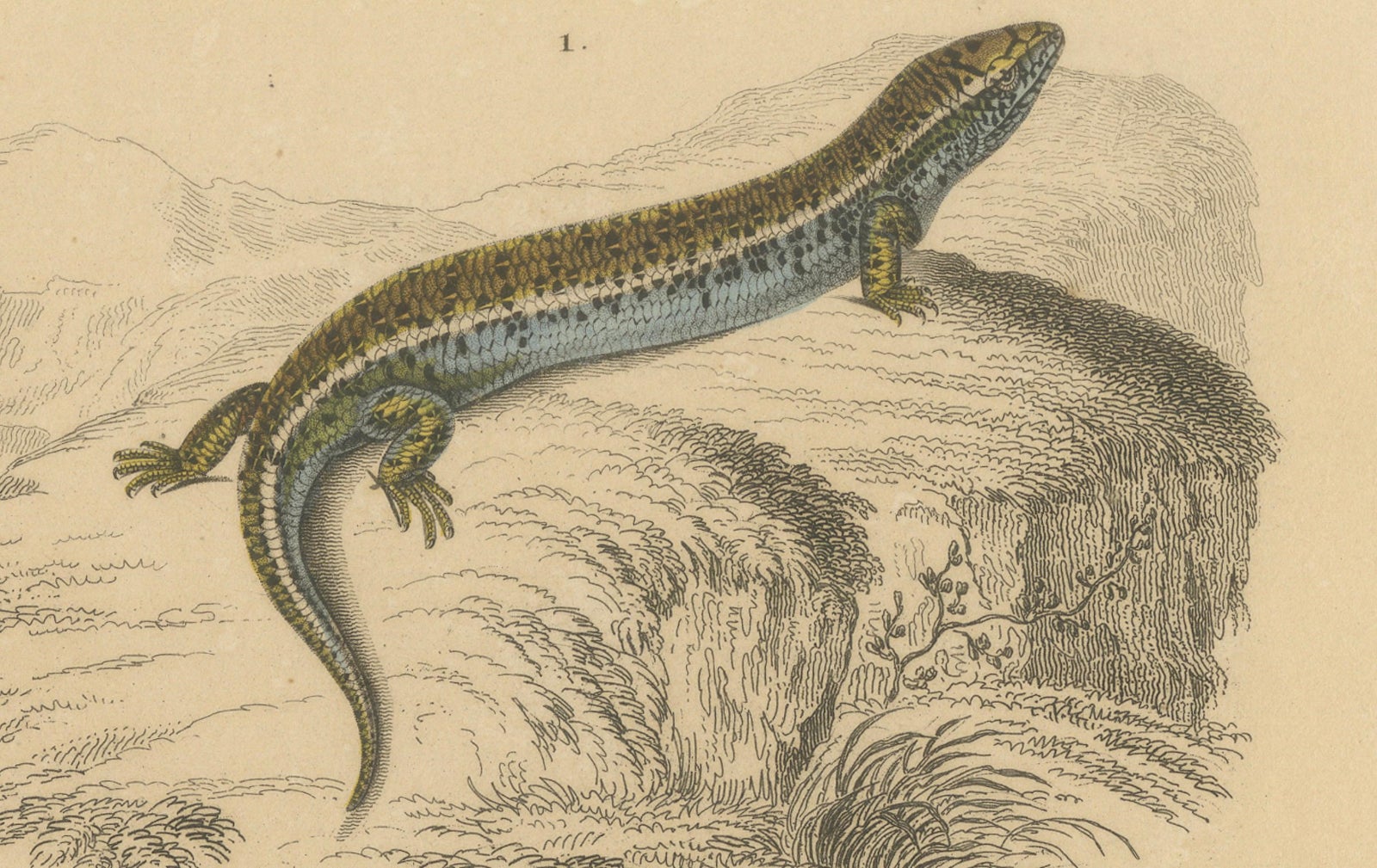
Figure 1 at the top shows the Ocellated Skink, native to parts of North Africa, southern Europe, and the Middle East. It is shown poised on a rocky outcrop, rendered in earth tones with speckled markings that give the species its name. This skink is notable for its shiny, overlapping scales and relatively short limbs, well adapted for burrowing and living in arid habitats. The artist has captured both the texture of its skin and the natural setting with delicate precision.
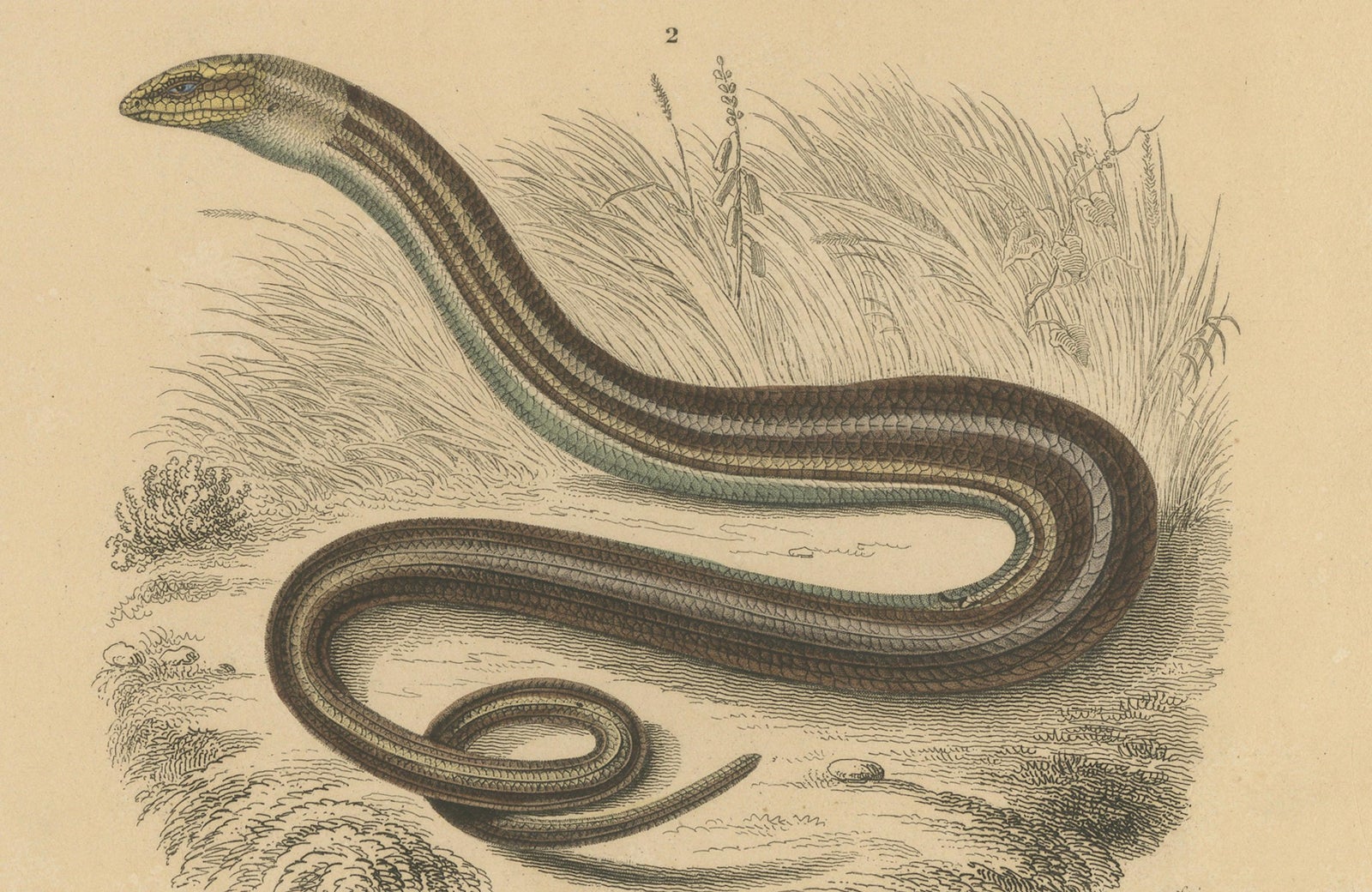
Figure 2 below depicts the European Glass Lizard, *Pseudopus pallasii*, a legless lizard often mistaken for a snake. Unlike snakes, glass lizards have eyelids and external ear openings, and this plate highlights those anatomical distinctions. It is shown coiled in grassland, with brown and tan striping along its body and a pale blue underside, suggesting motion and flexibility. This species is found from the Balkans through to Central Asia and is named for its defensive ability to break off parts of its tail when threatened.
The plate was drawn by Oudart and engraved by Corbie, both respected illustrators of the 19th-century French natural history tradition. Hand coloring was carefully applied, enhancing the natural realism of the scene. As with all plates in the Orbigny series, the blend of scientific detail and decorative style makes it ideal for collectors.
Condition Summary :
Light foxing and faint age toning at the edges. Image area clean, with strong plate lines and original hand coloring intact. No tears or repairs. A fine and well-preserved example.
Framing Tips:
Frame in medium wood or dark brown for a natural look. A light cream or pale green mat will highlight the earthy colors of the reptiles. Use UV-protective glass to preserve the subtle detailing and pigmentation of the hand coloring.