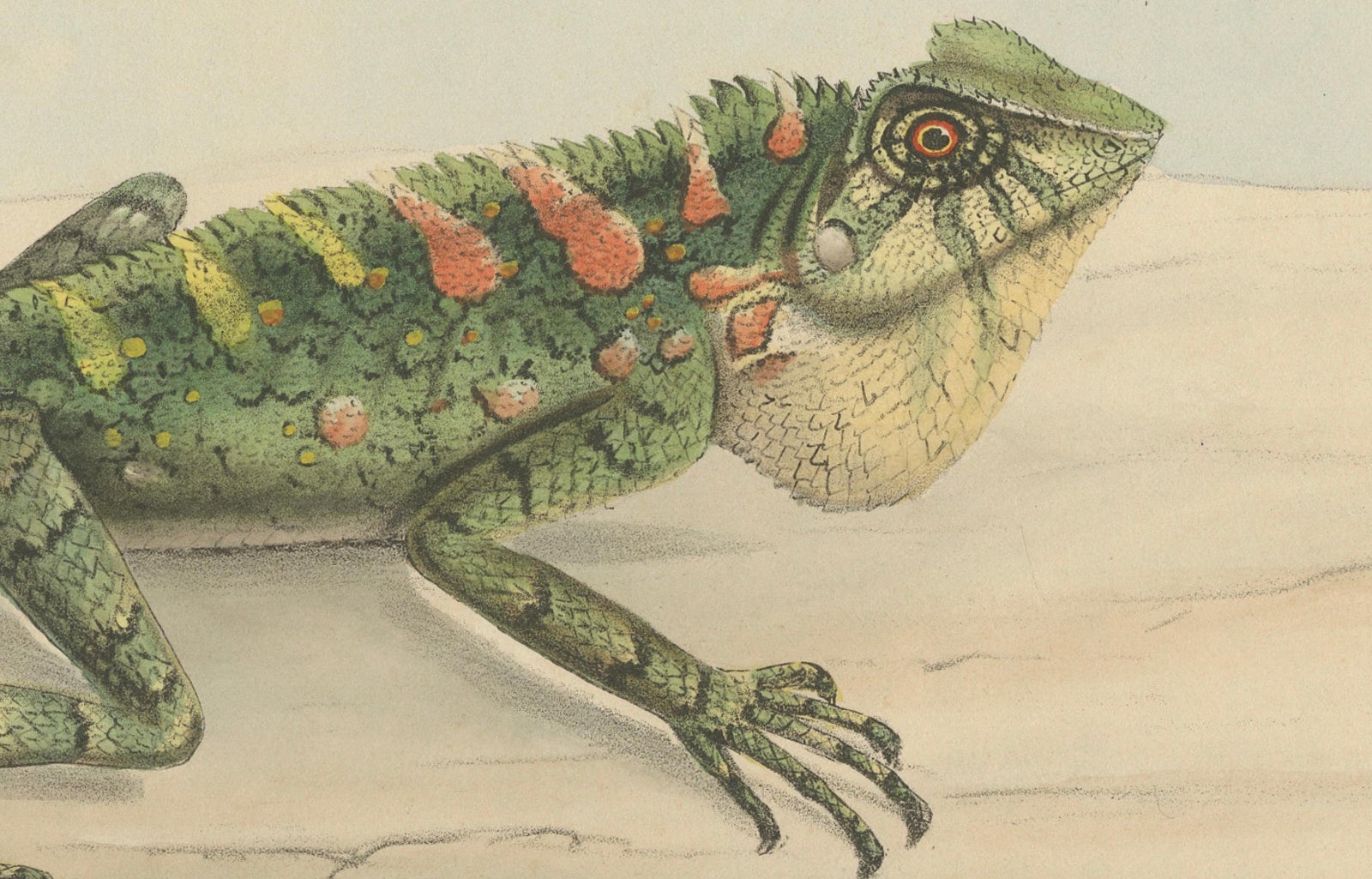
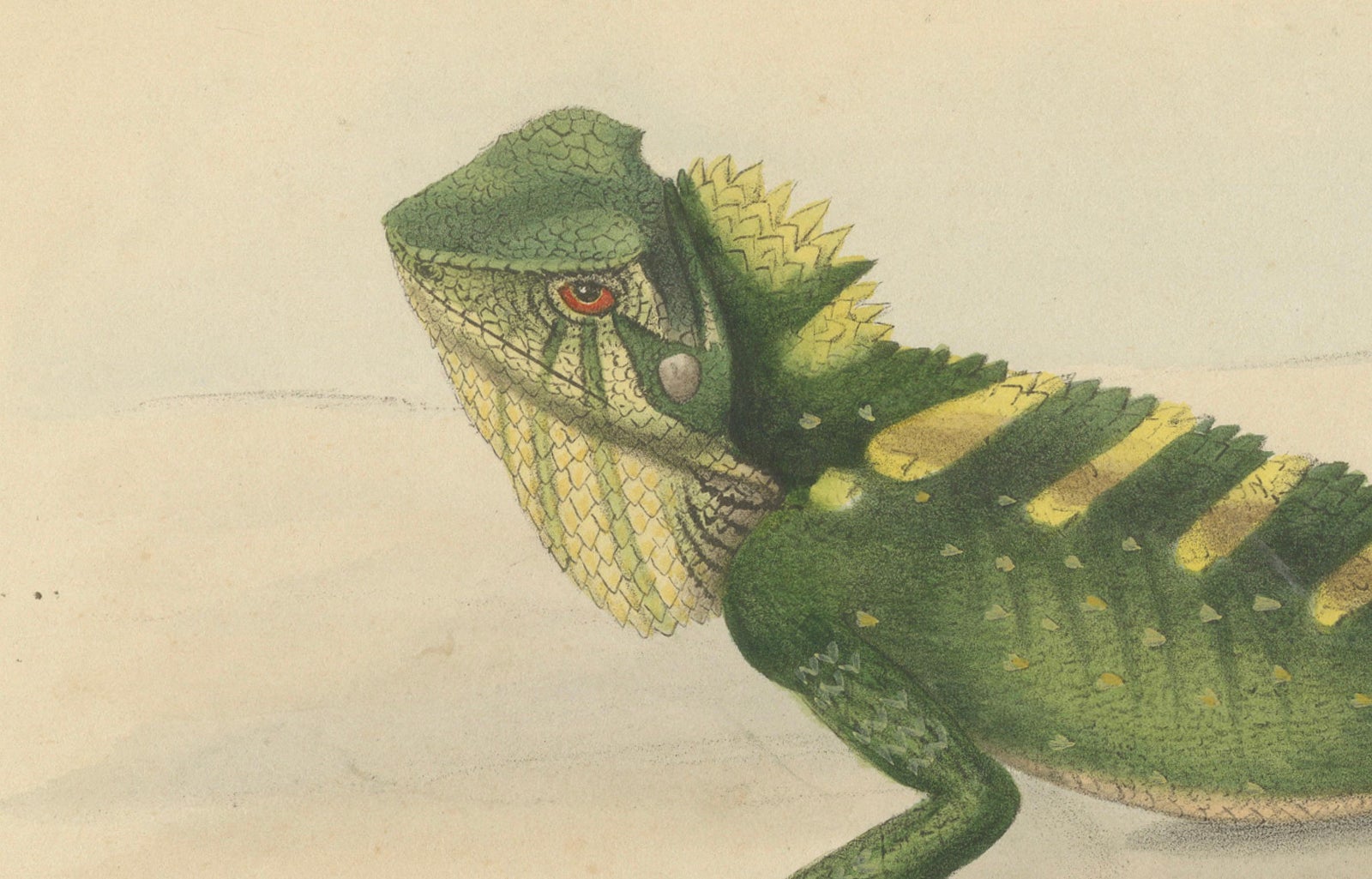
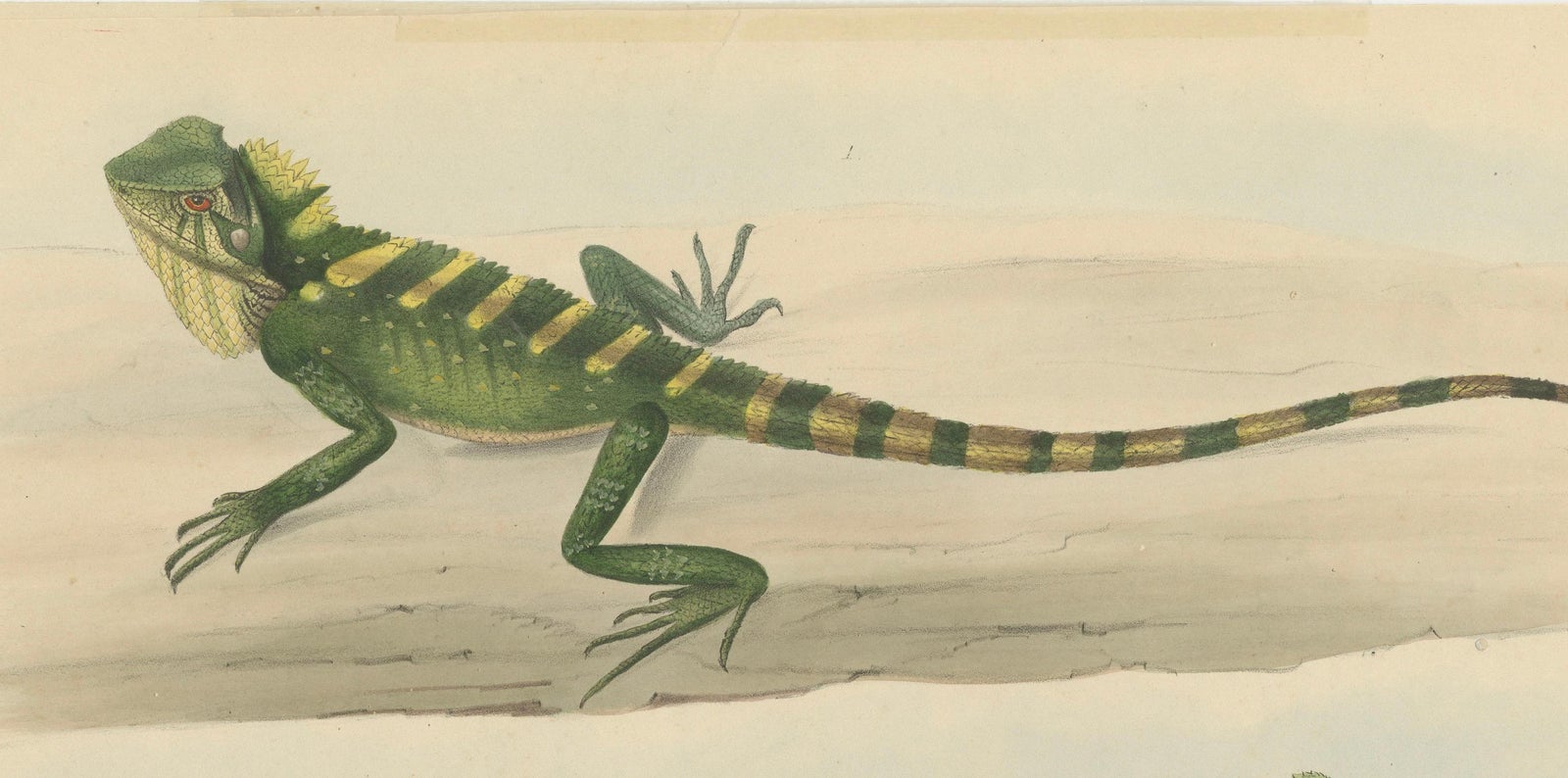
Close-ups
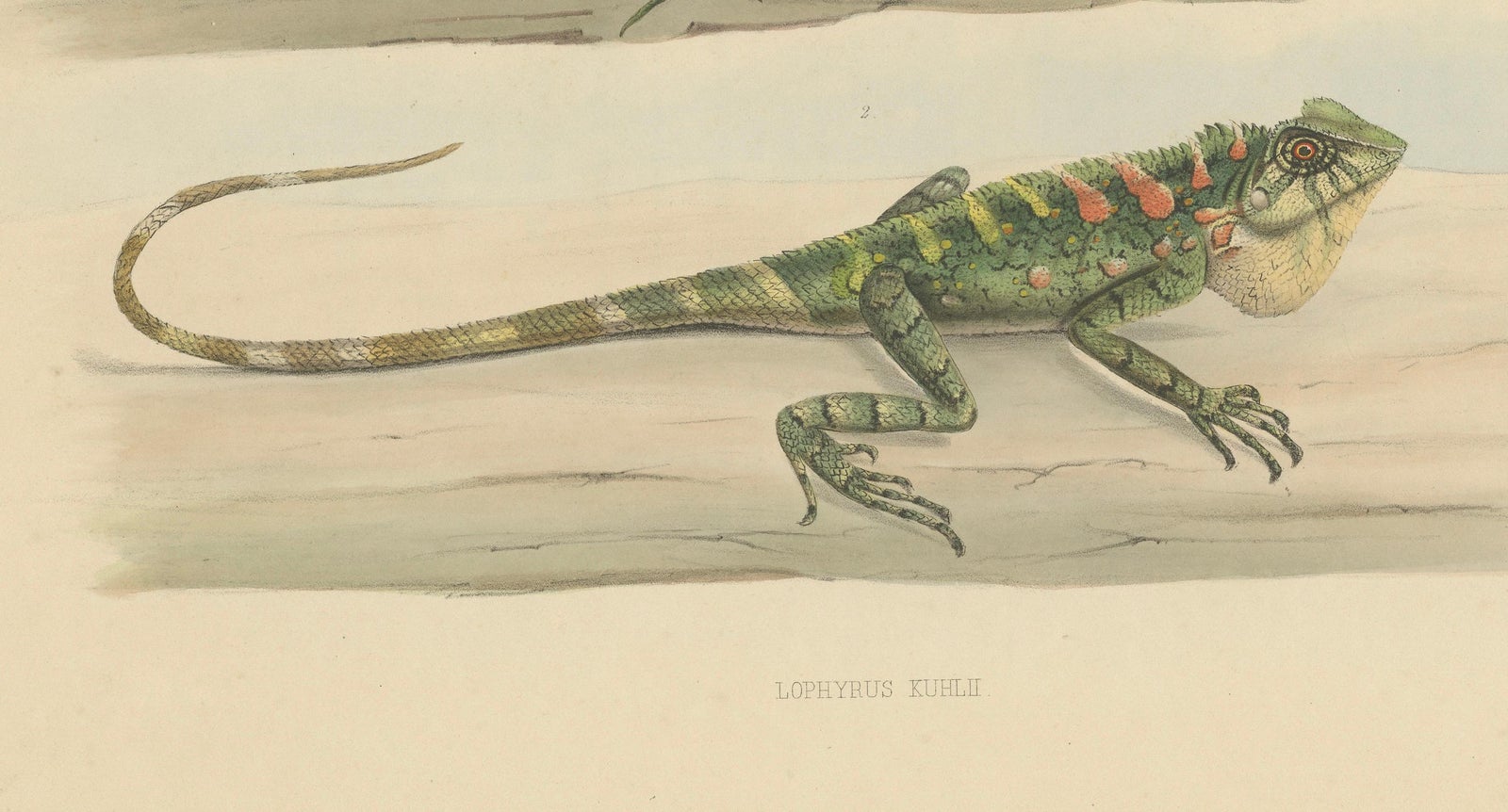
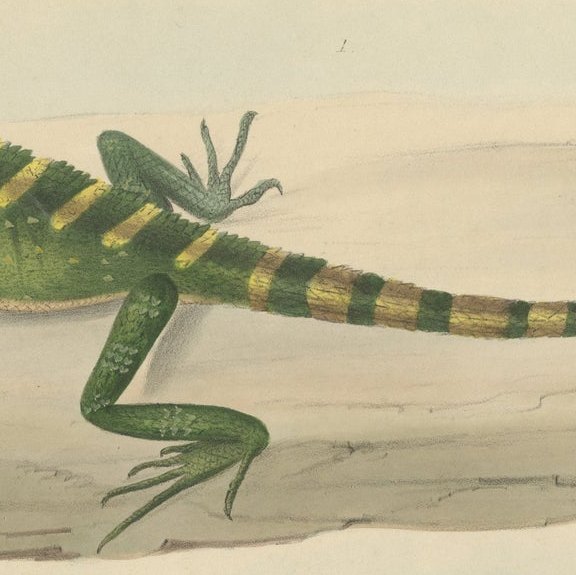
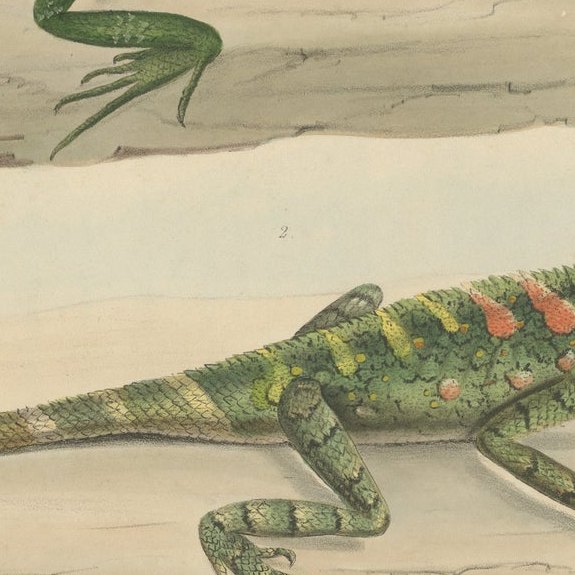
Framed and on the wall
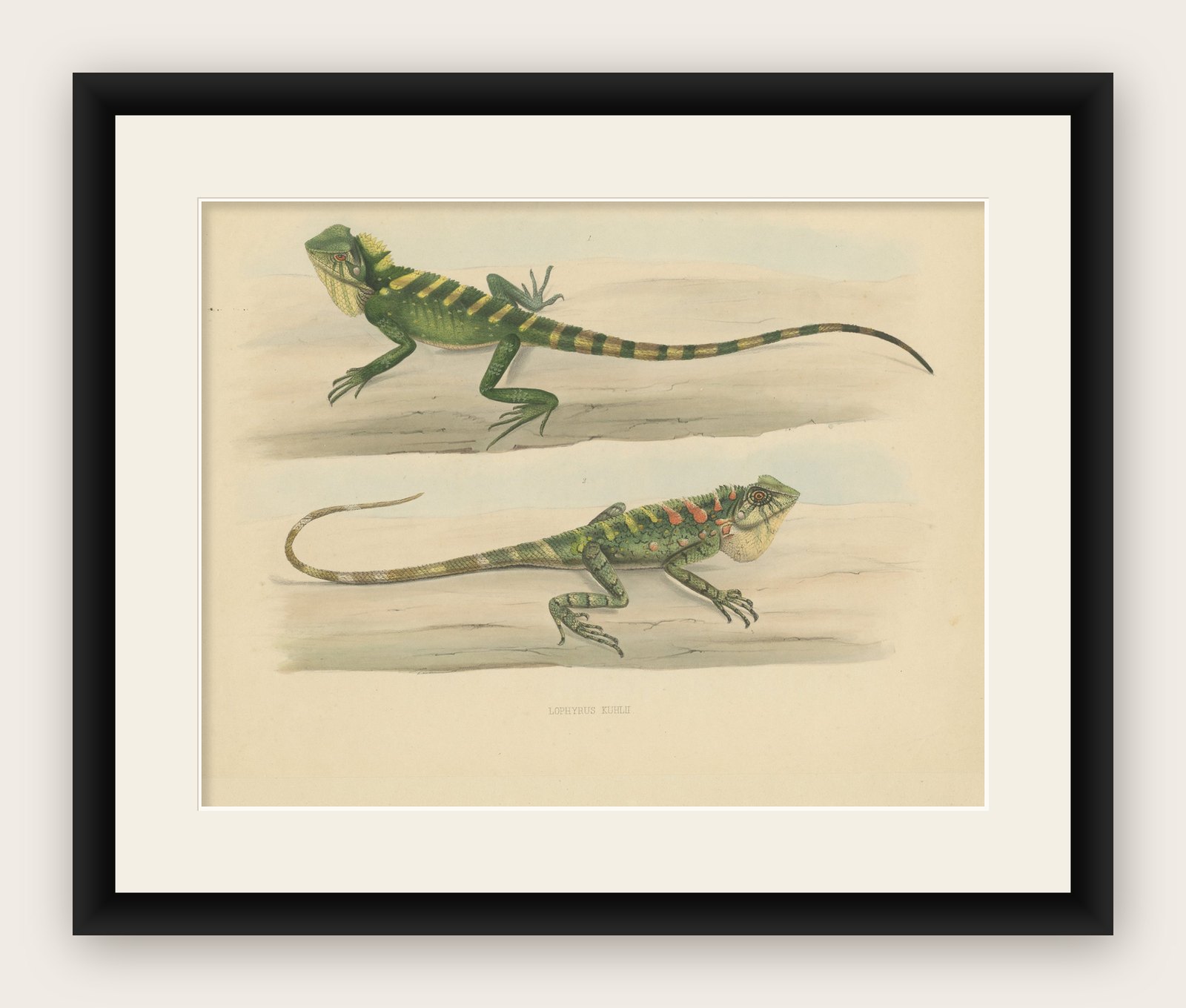
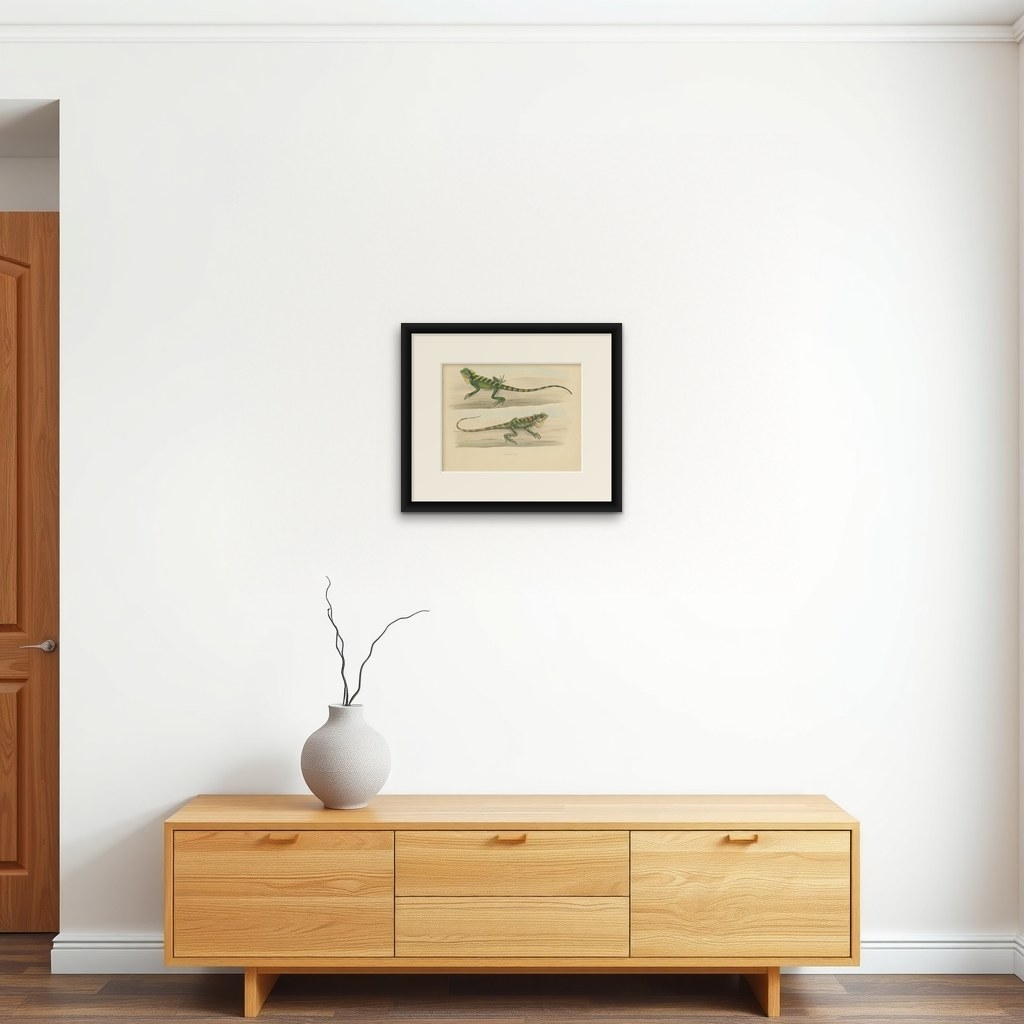

Frame and rooms are illustrations of how the print could look; the description says what is included.
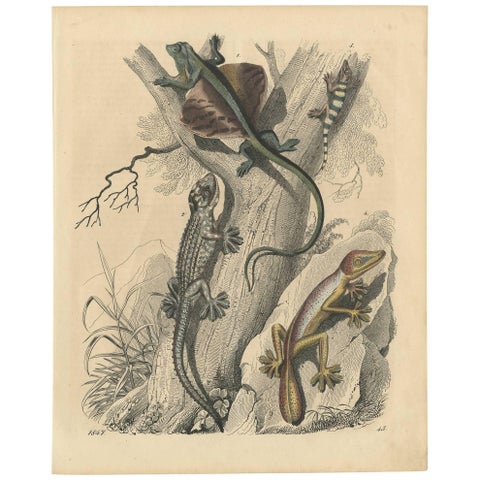
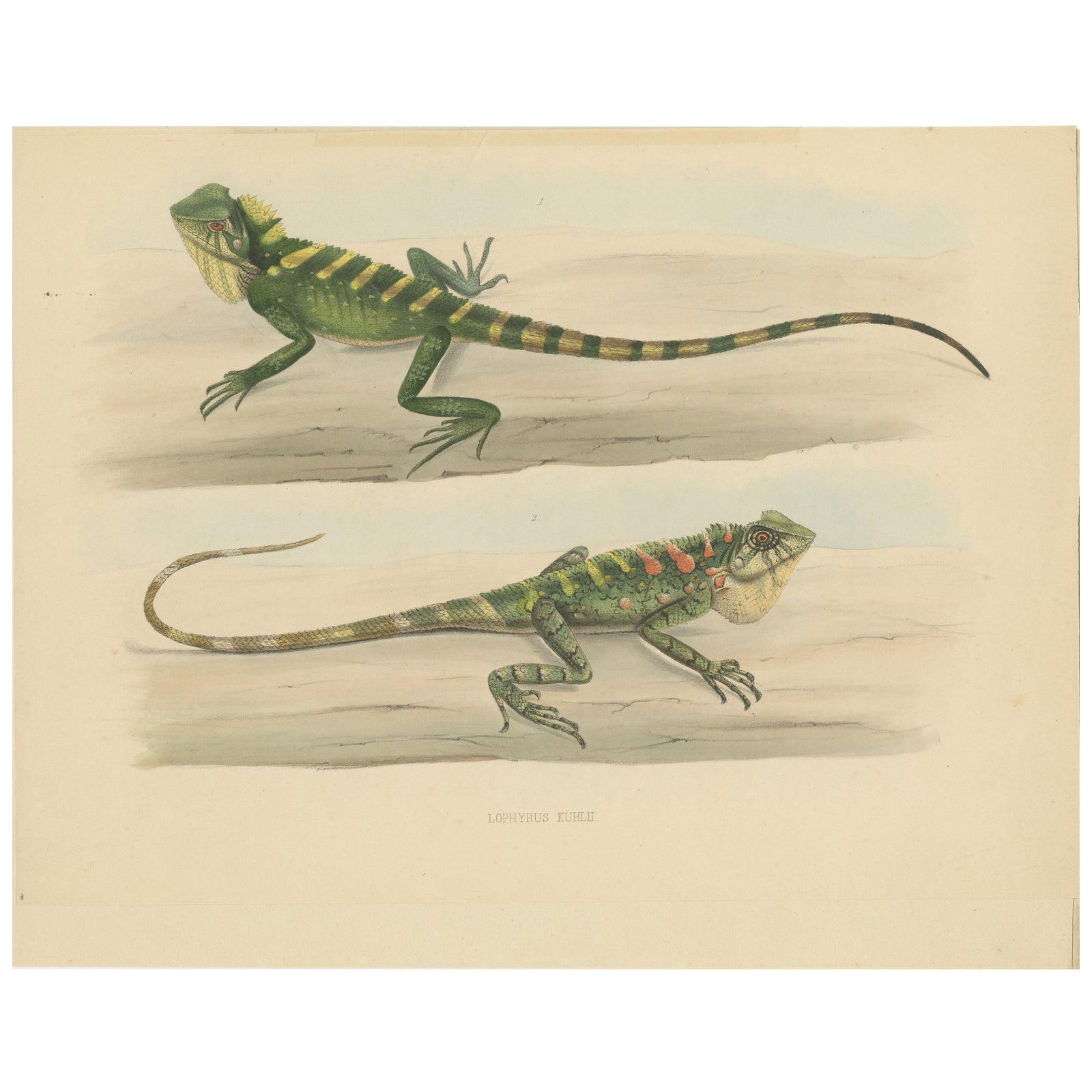
Antique Herpetological Print: Illustration of Green Crested Lizards, 1837
$360 (£270, €320)
Period original, not a reproduction.
Shipped from the Netherlands, flat, insured and tracked, worldwide. Returns accepted within 14 days.
- Date
- 1837
- Size
- 9.6 × 13.4 in (24.5 × 34 cm)
- Condition
- Good. Good condition. Remains of tape in the top and reverse, otherwise clean with bright colors. A few very tiny holes in the print, but only visible when holding up against the light. Study the images carefully.
- Period
- Early 19th century
- Section
- Reptiles and amphibians
- Reference
- f_40580212
This original antique print is accompanied by a text sheet starting with "Descriptions plusiers espèces nouvelles du genre LOPHYRUS par H. Schlegel. Memoire accompagnie de trois planches," it is clear that this print is part of a work by Hermann Schlegel, a prominent German herpetologist and ornithologist.
Hermann Schlegel published numerous works on reptiles and amphibians. This specific print, "Lophyrus KuhlII," is likely from his detailed studies and descriptions of new species within the genus Lophyrus. The accompanying text suggests that this is a scientific paper or memoir describing several new species, supported by three illustrative plates, one of which is this print.
The full title and citation might be found in one of Schlegel's publications, such as:
1. "Essai sur la Physionomie des Serpens" (1837)
2. "Revue des Oiseaux d’Europe" (1844)
3. "Abbildungen neuer oder unvollständig bekannter Amphibien: nach der Natur oder dem Leben entworfen" (1837-1844)
This particular print is a scientific illustration typical of Schlegel's work, which was often accompanied by detailed descriptions and taxonomic information.
The lizards depicted in the print titled "Lophyrus KuhlII" are commonly known as **Green Crested Lizards**. These reptiles are notable for their vibrant coloration and the distinct crests or frills on their heads and necks. The scientific name and the illustration suggest they belong to the genus Bronchocela, specifically the species Bronchocela cristatella, commonly referred to as the Green Crested Lizard.
Green Crested Lizards (Bronchocela cristatella) are typically found in the following regions:
- **Southeast Asia**: They are widely distributed across countries like Thailand, Malaysia, Indonesia, and the Philippines.
- **Southern China**: They are found in the southern regions of China.
- **Singapore**: They are common in various parts of Singapore.
- **Borneo**: These lizards are also present in the forests of Borneo.
They primarily inhabit tropical forests, gardens, and parks, often seen on trees and shrubs where they can blend in with their green surroundings.
Hermann Schlegel (1804-1884) was a renowned German ornithologist, herpetologist, and ichthyologist. He made significant contributions to the field of zoology, particularly in the study of birds and reptiles. Here are some key points about Schlegel:
1. **Early Life and Education**: Schlegel was born in Altenburg, Germany. He developed an interest in natural history from a young age and studied under several prominent scientists of his time.
2. **Career**: Schlegel's professional career took off when he moved to Leiden, Netherlands, where he worked at the National Museum of Natural History (Rijksmuseum van Natuurlijke Historie). He eventually became the director of the museum in 1858, succeeding Coenraad Jacob Temminck.
3. **Contributions to Herpetology and Ornithology**: Schlegel described many new species of birds and reptiles. His works include detailed illustrations and descriptions that have been valuable for taxonomic studies. He published several important works, such as "Abbildungen neuer oder unvollständig bekannter Amphibien" (Illustrations of New or Incompletely Known Amphibians).
4. **Collaborations and Legacy**: Schlegel collaborated with other notable naturalists and contributed to various scientific expeditions and publications. His legacy includes numerous species named in his honor and his influence on the development of natural history museums in Europe.
Schlegel's work remains highly respected in the fields of ornithology and herpetology, and his publications continue to be referenced by scientists and researchers today.