Close-ups
Framed and on the wall

Frame and rooms are illustrations of how the print could look; the description says what is included.
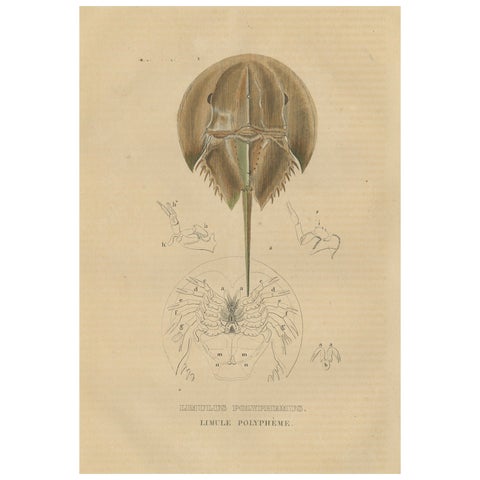
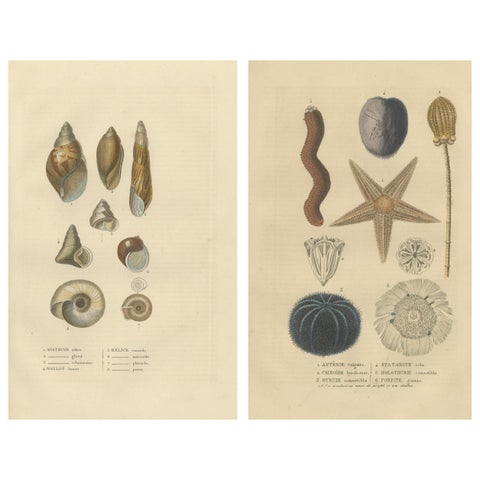
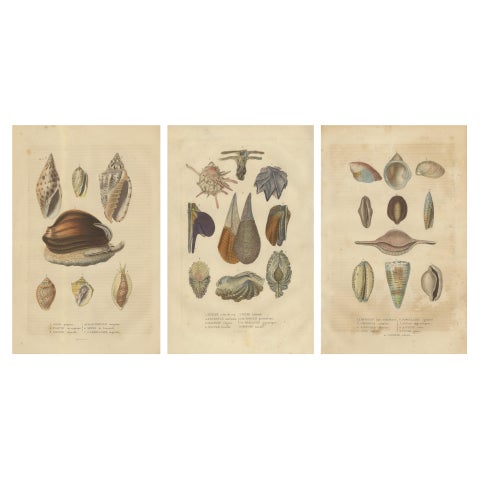
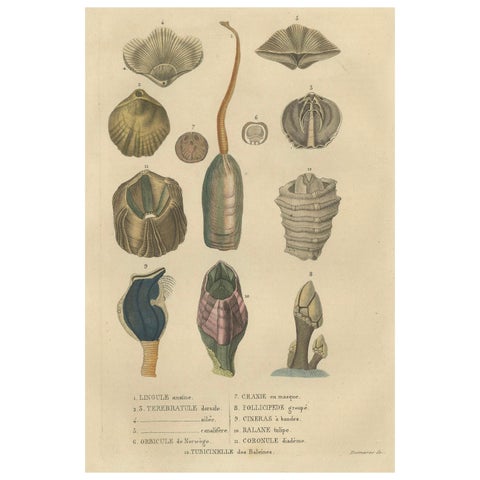
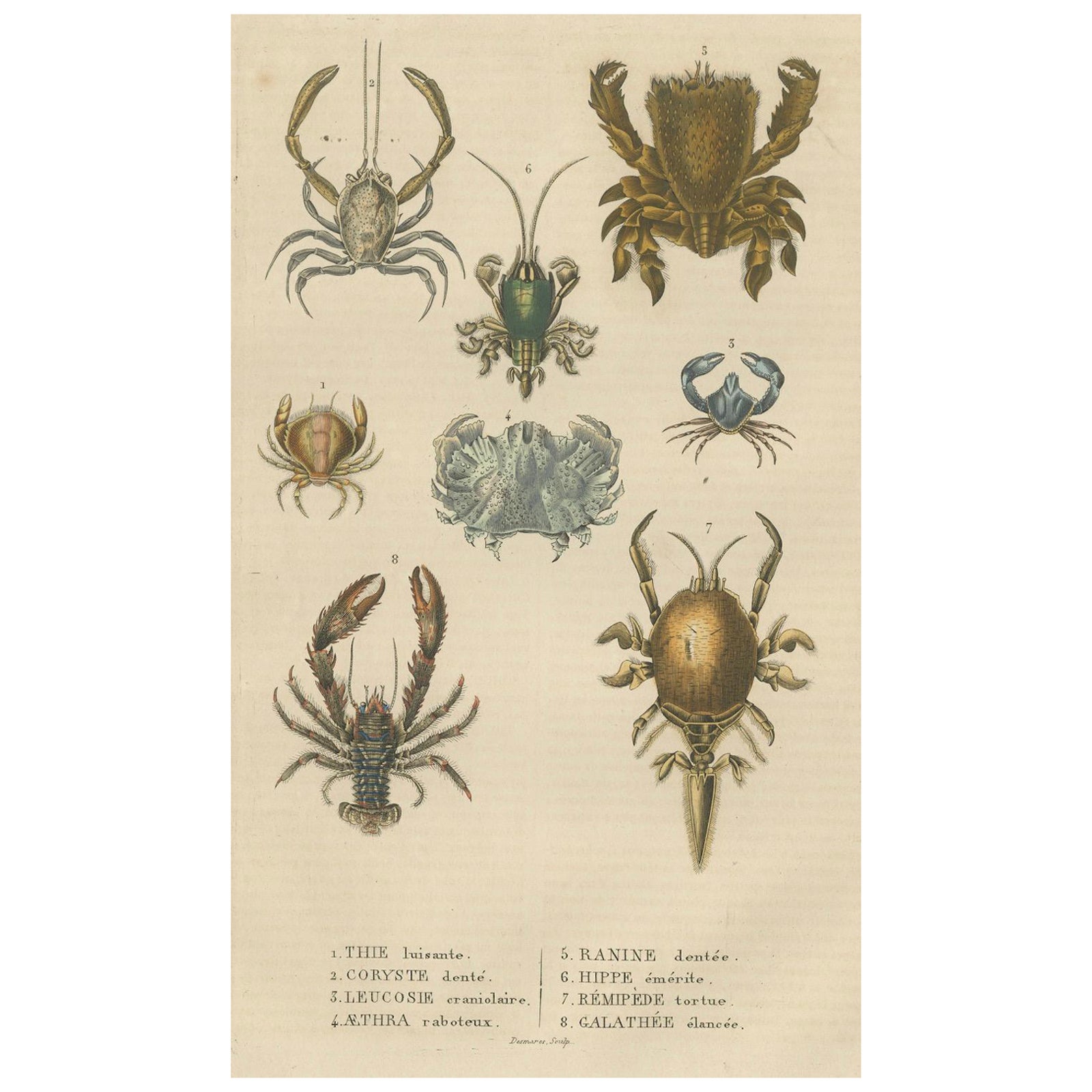
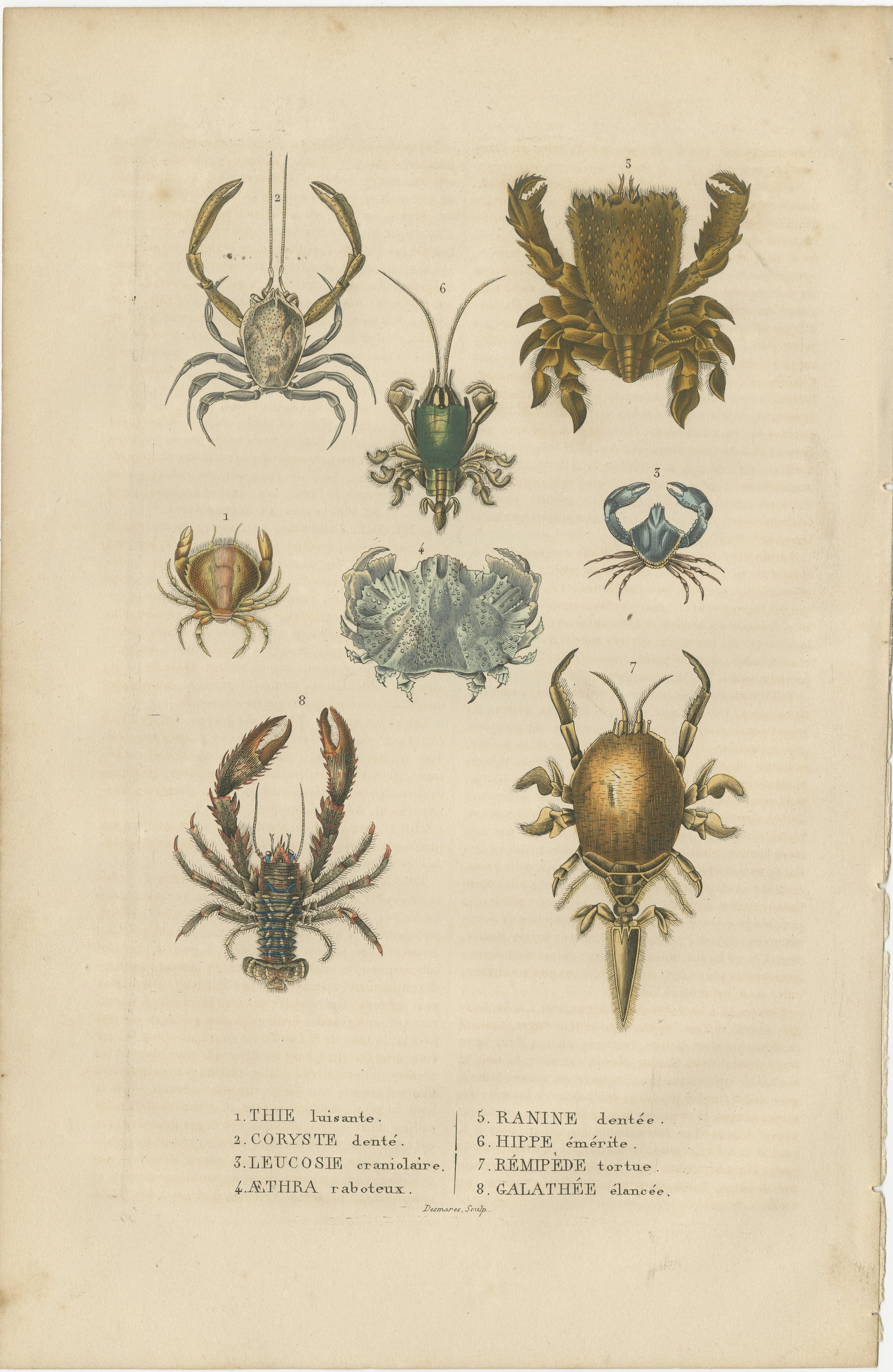
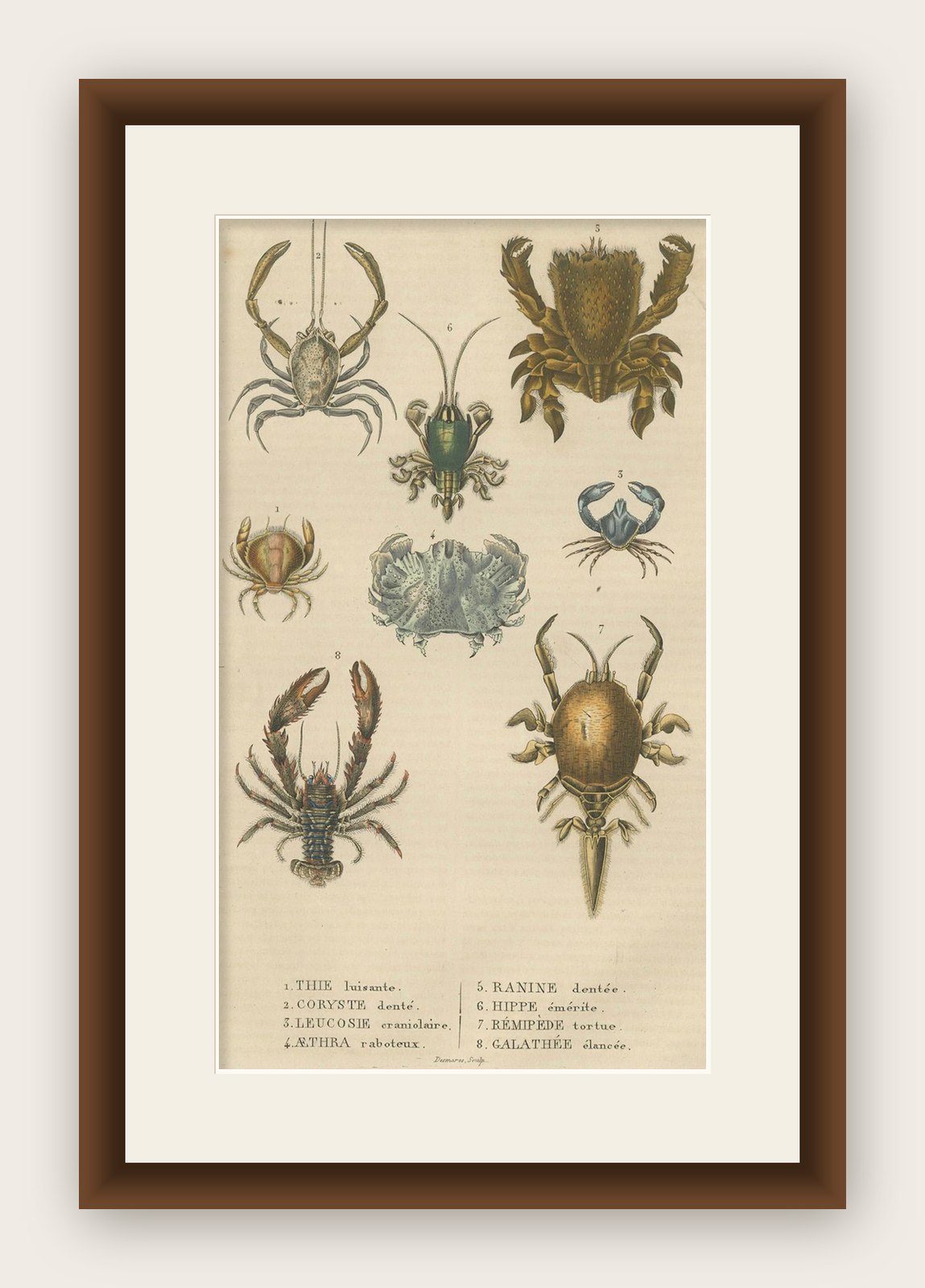
Crustacean Varieties in Drapiez's Natural Sciences Dictionary, 1845
€350 ($390, £295, €350)
Period original, not a reproduction.
Shipped from the Netherlands, flat, insured and tracked, worldwide. Returns accepted within 14 days.
- Date
- 1845
- Size
- 10.4 × 6.7 in (26.5 × 17 cm)
- Condition
- Good. Good. Strong paper and vibrant colors. Light offsetting and soiling. Few browns spot due to aging and handling. Please study the image carefully.
- Period
- Early 19th century
- Section
- Fish and shells
- Reference
- f_37856382
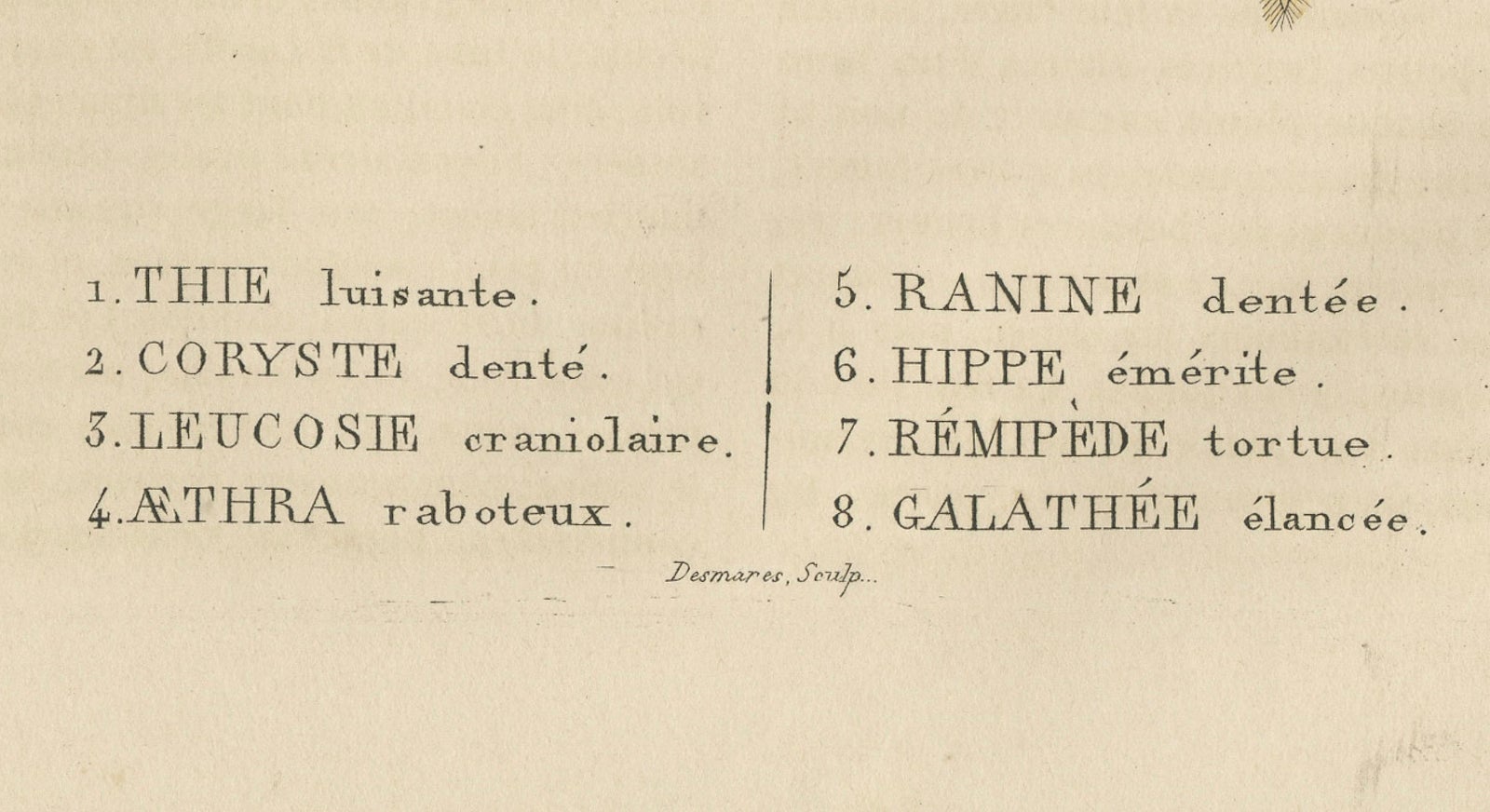
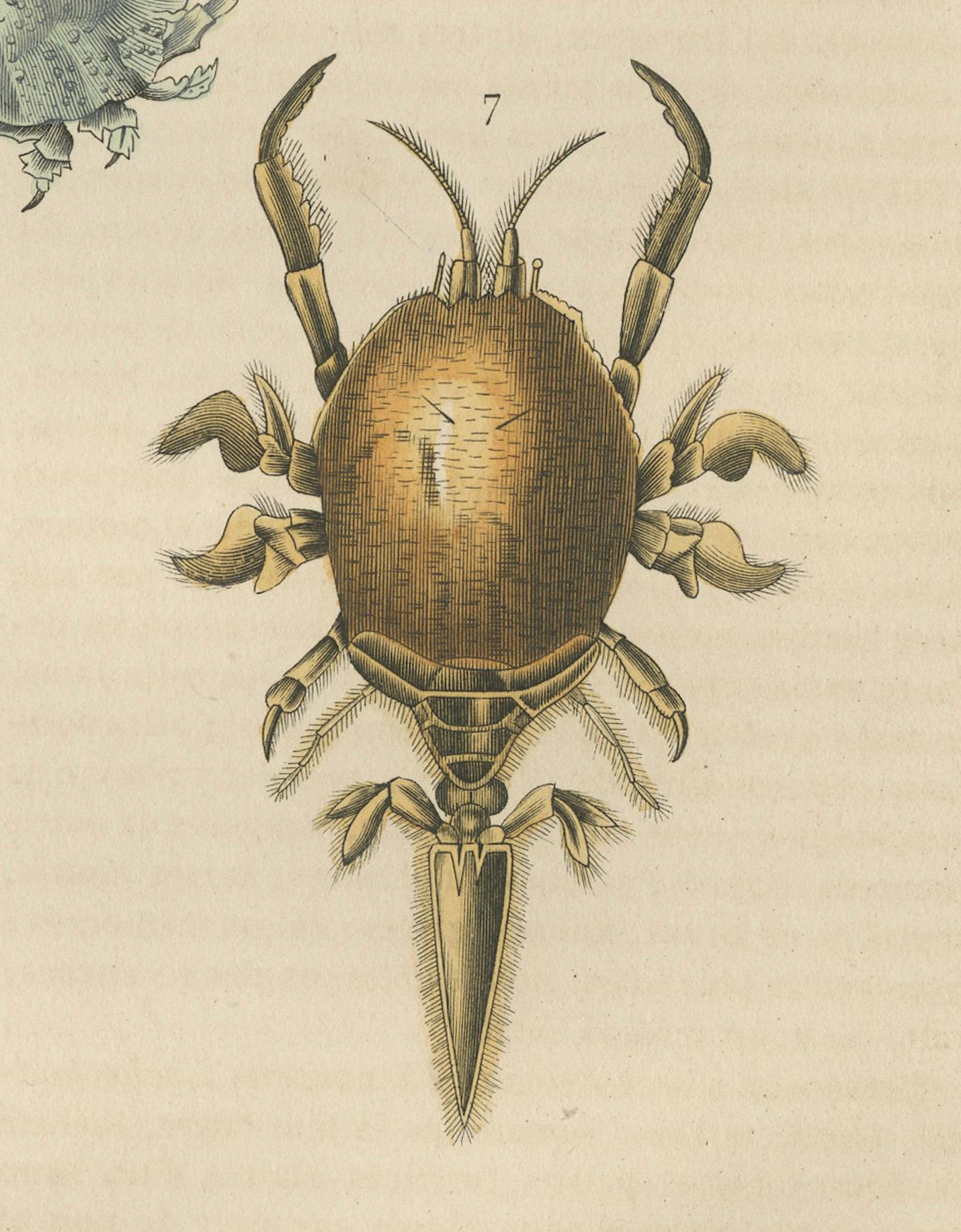
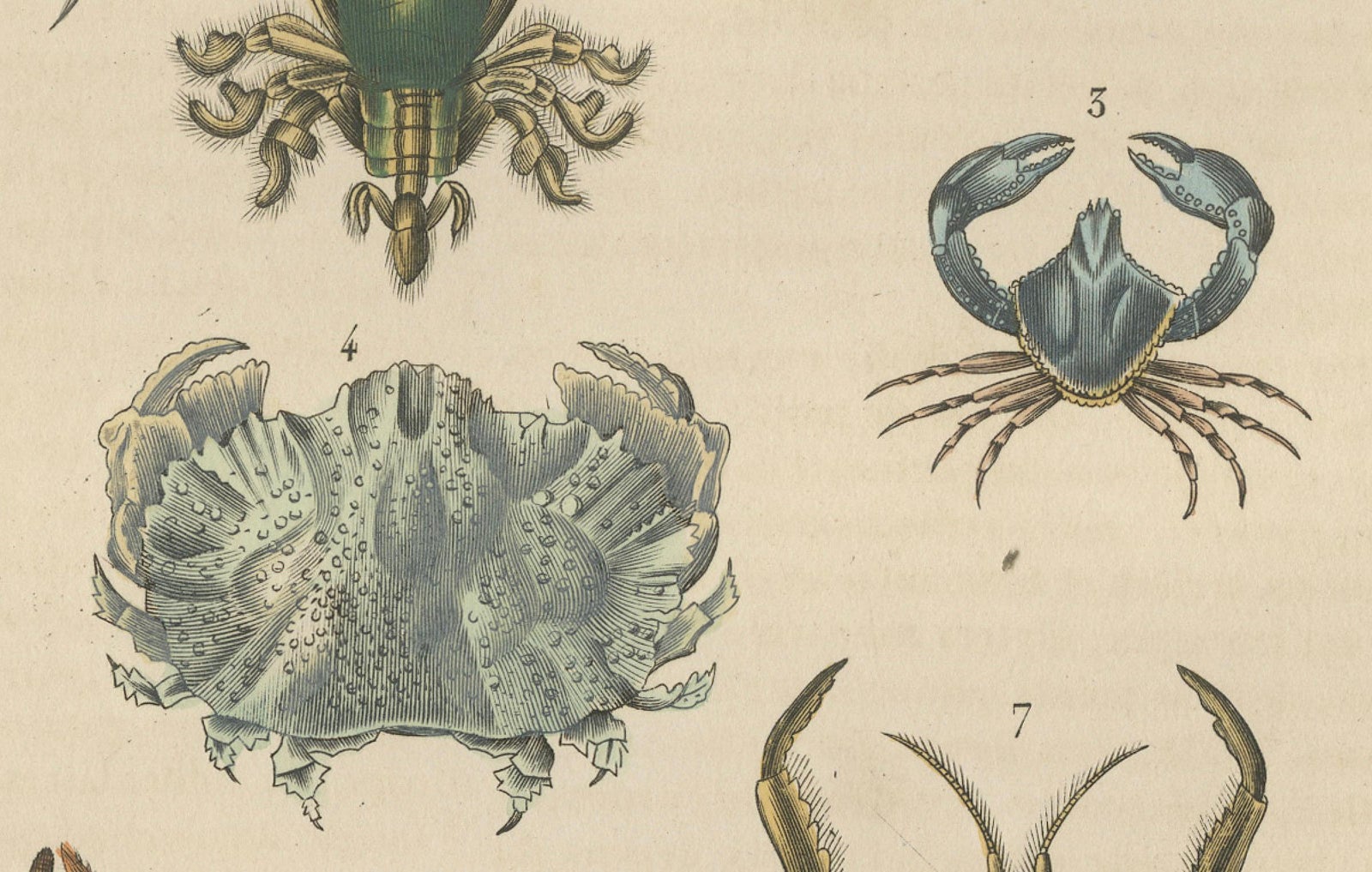
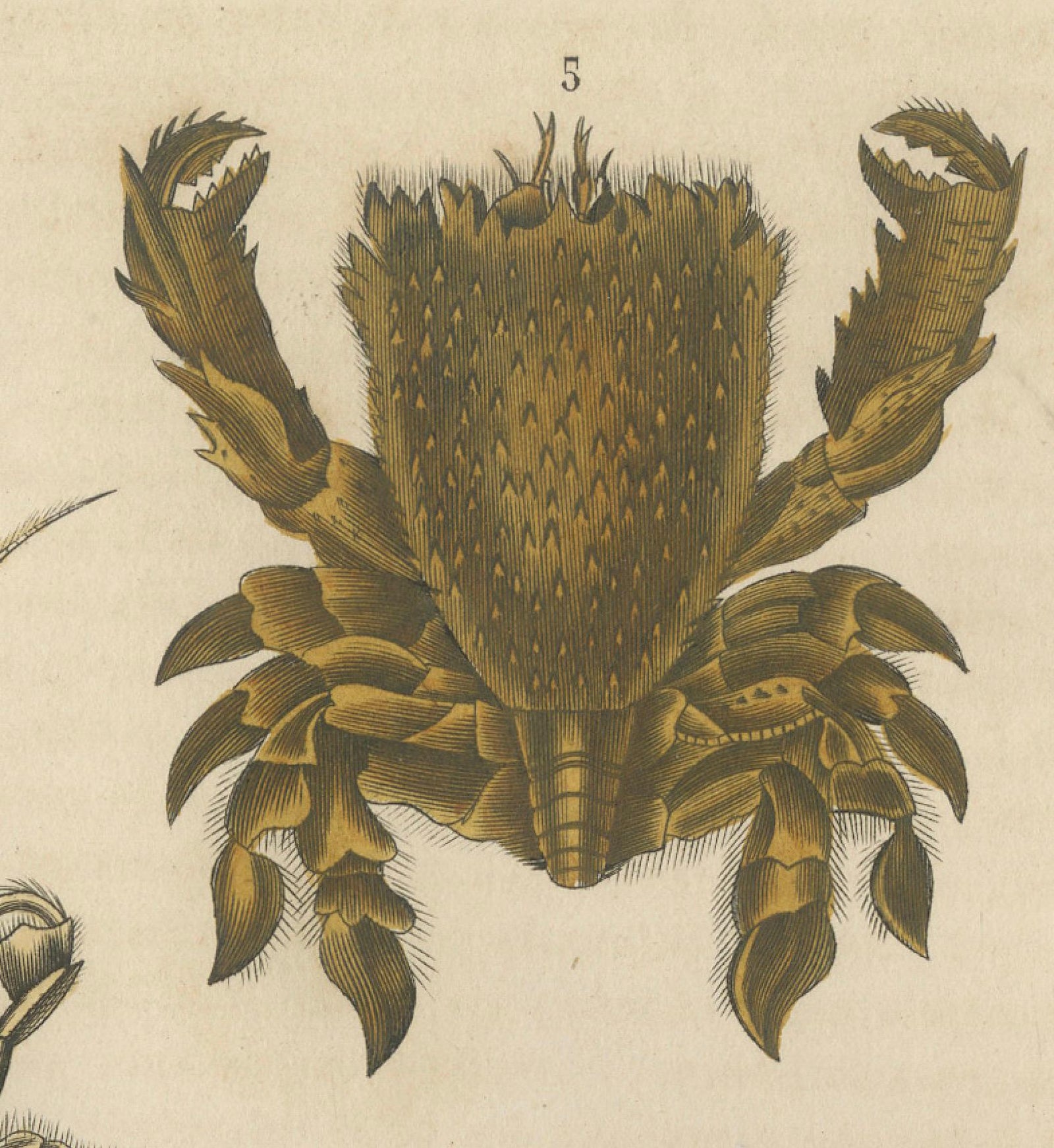
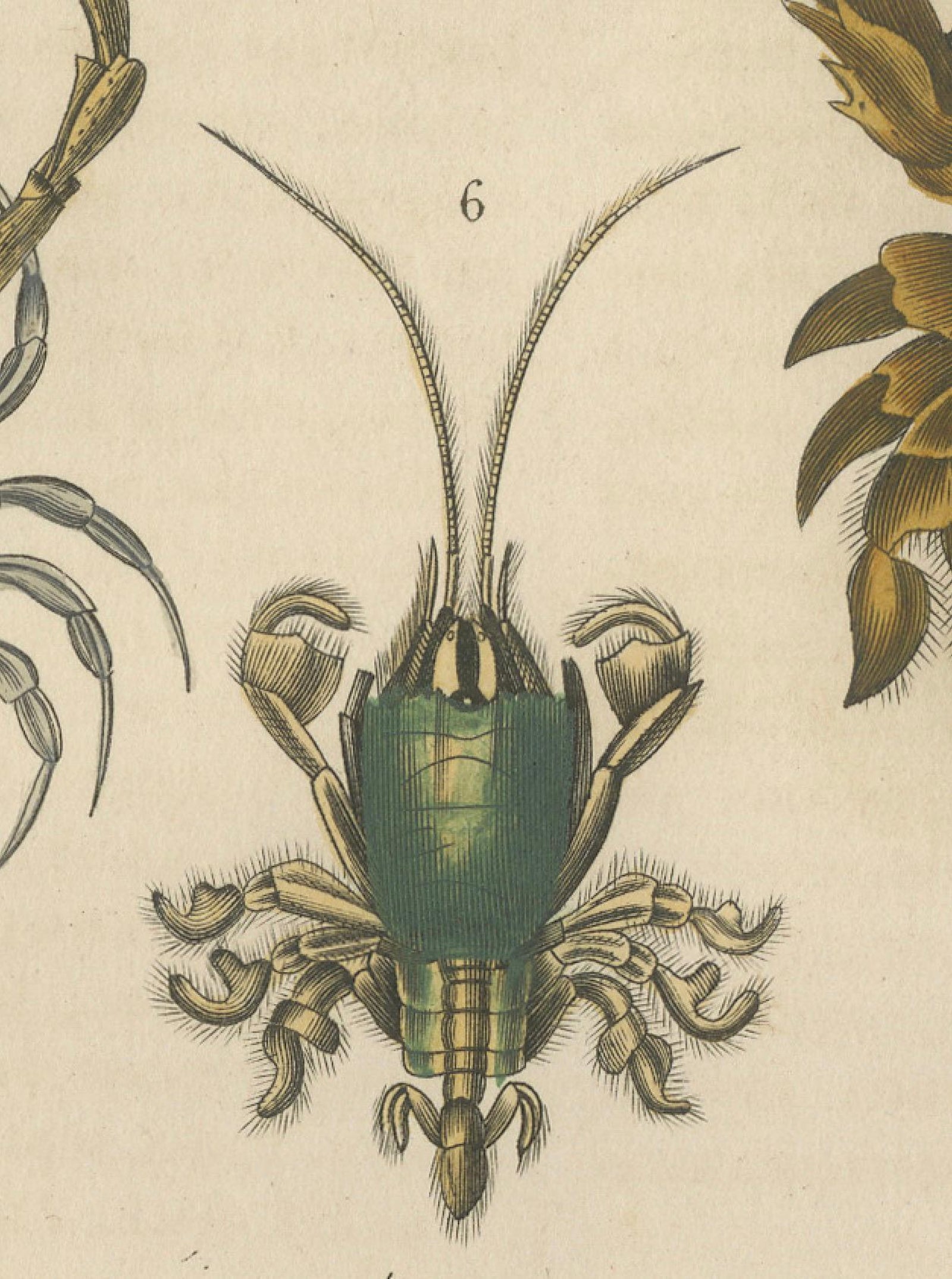
This original hand-colored antique engraving appears to depict a variety of crustaceans, which are characterized by their hard exoskeletons, segmented bodies, and jointed limbs. Each of the numbered creatures is labeled in French with common names that might have been used historically. Here is a translation and description of each:
1. "Thie luisante" - Likely a reference to a shiny crab species.
2. "Corysife denté" - Possibly a type of crab known for its tooth-like projections.
3. "Leucosie éraniolaire" - This could refer to a crab from the genus Leucosia, known for its rounded shape and smooth shell.
4. "Anthea raboteux" - This might be an anemone or a mislabeled organism, as "Anthea" typically refers to a genus of sea anemones.
5. "Ranine dentée" - A type of Ranina, also known as a frog crab, with a distinctive flattened and wide body shape.
6. "Hippe émérite" - Likely a type of squat lobster or similar decapod.
7. "Rempede tortue" - This is a bit ambiguous, but it may refer to a type of barnacle or parasitic crustacean that attaches to turtles.
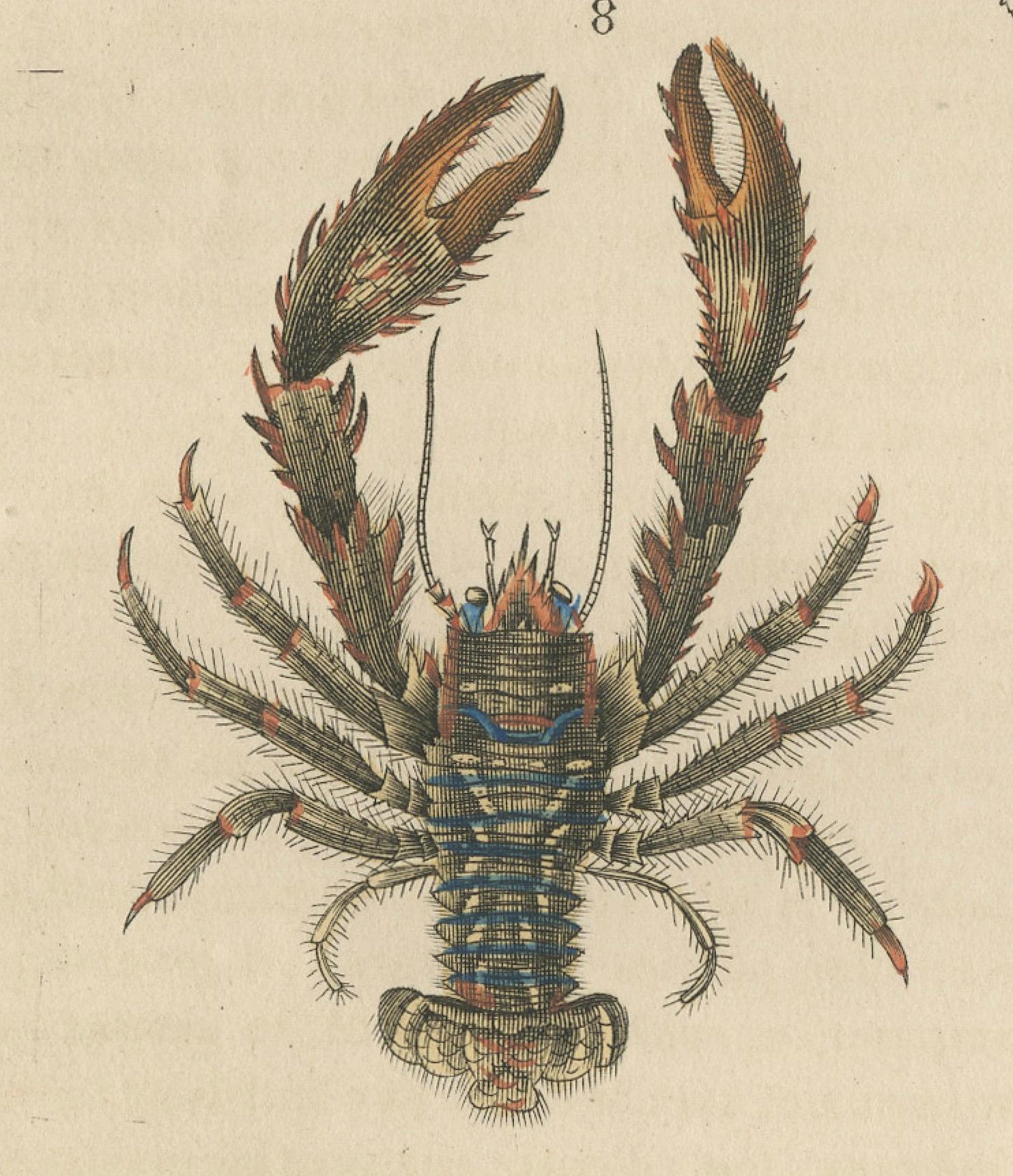
8. "Galathee élançée" - A slender squat lobster from the genus Galathea.
Please note that scientific classification has evolved since the 19th century, and common names and genus assignments from historical texts may not correspond directly with modern taxonomy.