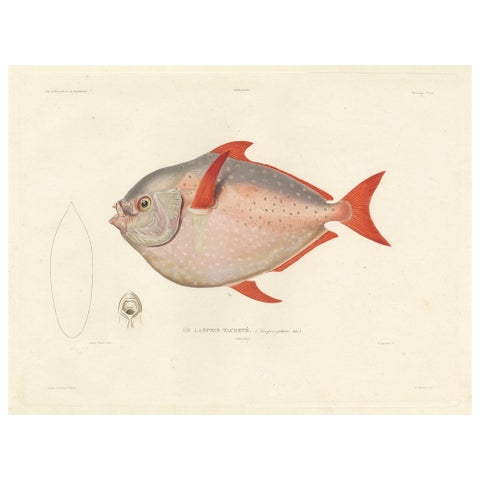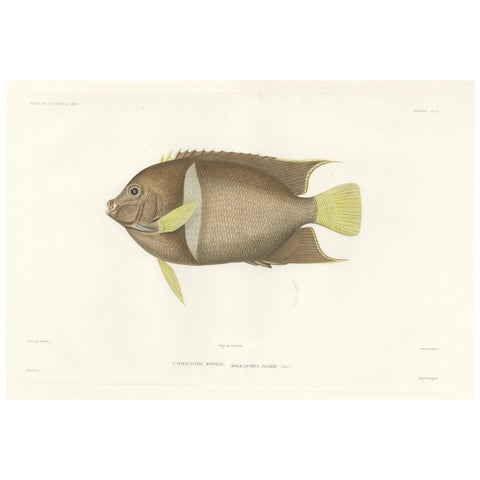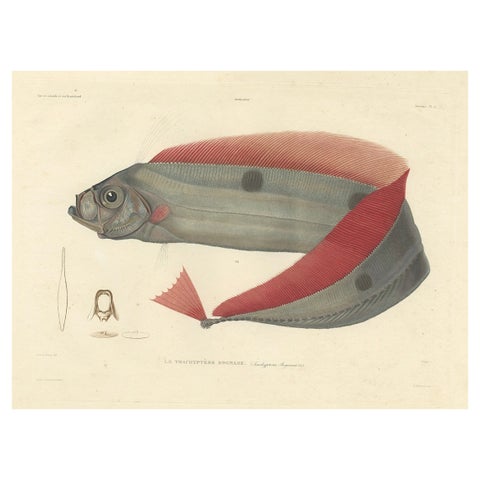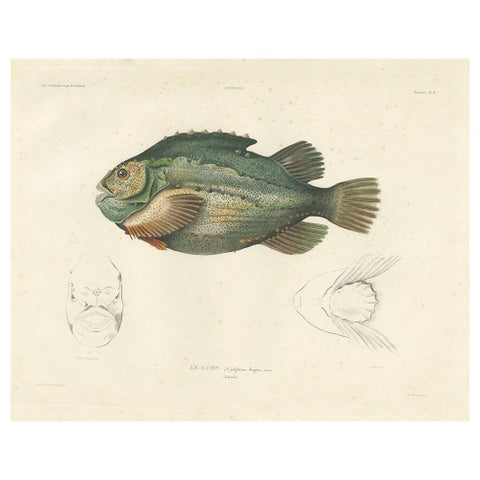
Close-ups
Framed and on the wall
Frame and rooms are illustrations of how the print could look; the description says what is included.
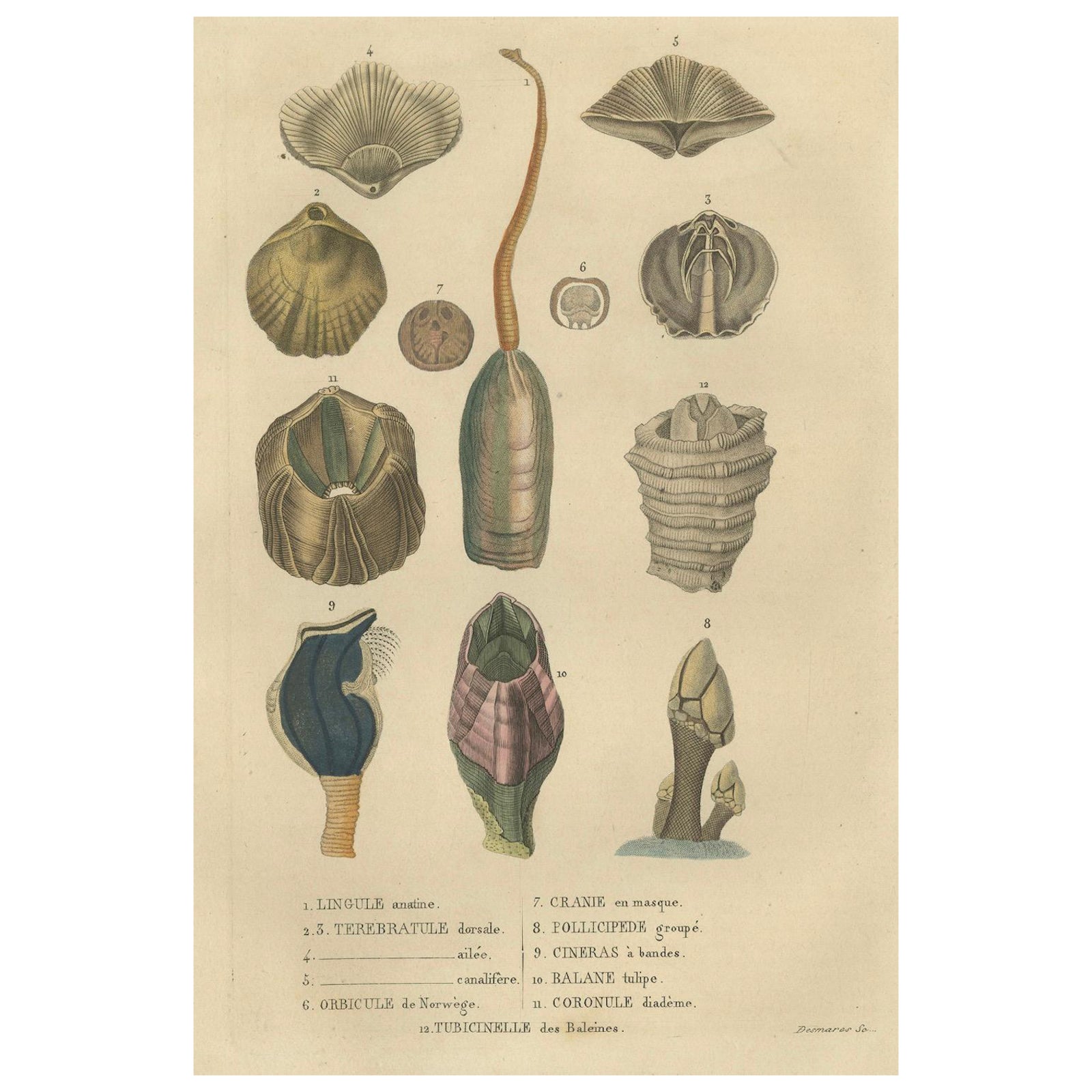
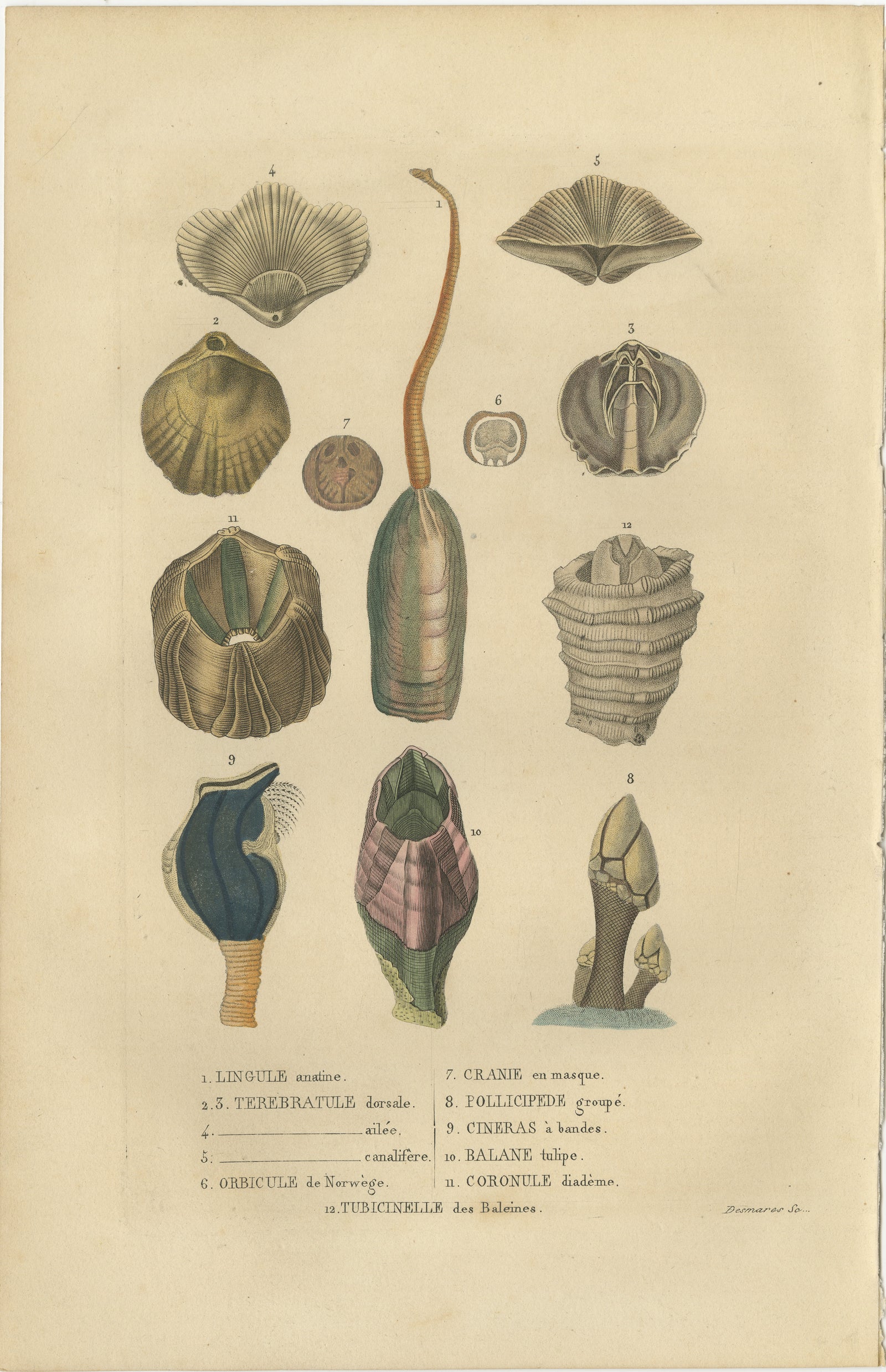
Marine Curiosities: An Assortment of Shells and Sea Life, 1845
£235 ($315, €280)
Period original, not a reproduction.
Shipped from the Netherlands, flat, insured and tracked, worldwide. Returns accepted within 14 days.
- Date
- 1845
- Size
- 10.4 × 6.7 in (26.5 × 17 cm)
- Condition
- Good. Very Good. Right edge cut rough, but enough margin to frame. Superb colors, considering its age. Please study the image carefully.
- Period
- Early 19th century
- Section
- Fish and shells
- Reference
- f_37855432
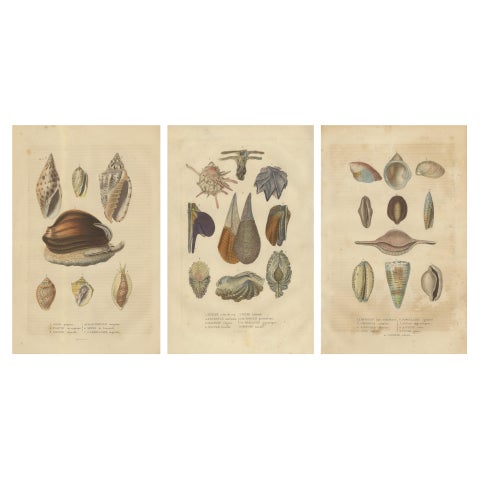
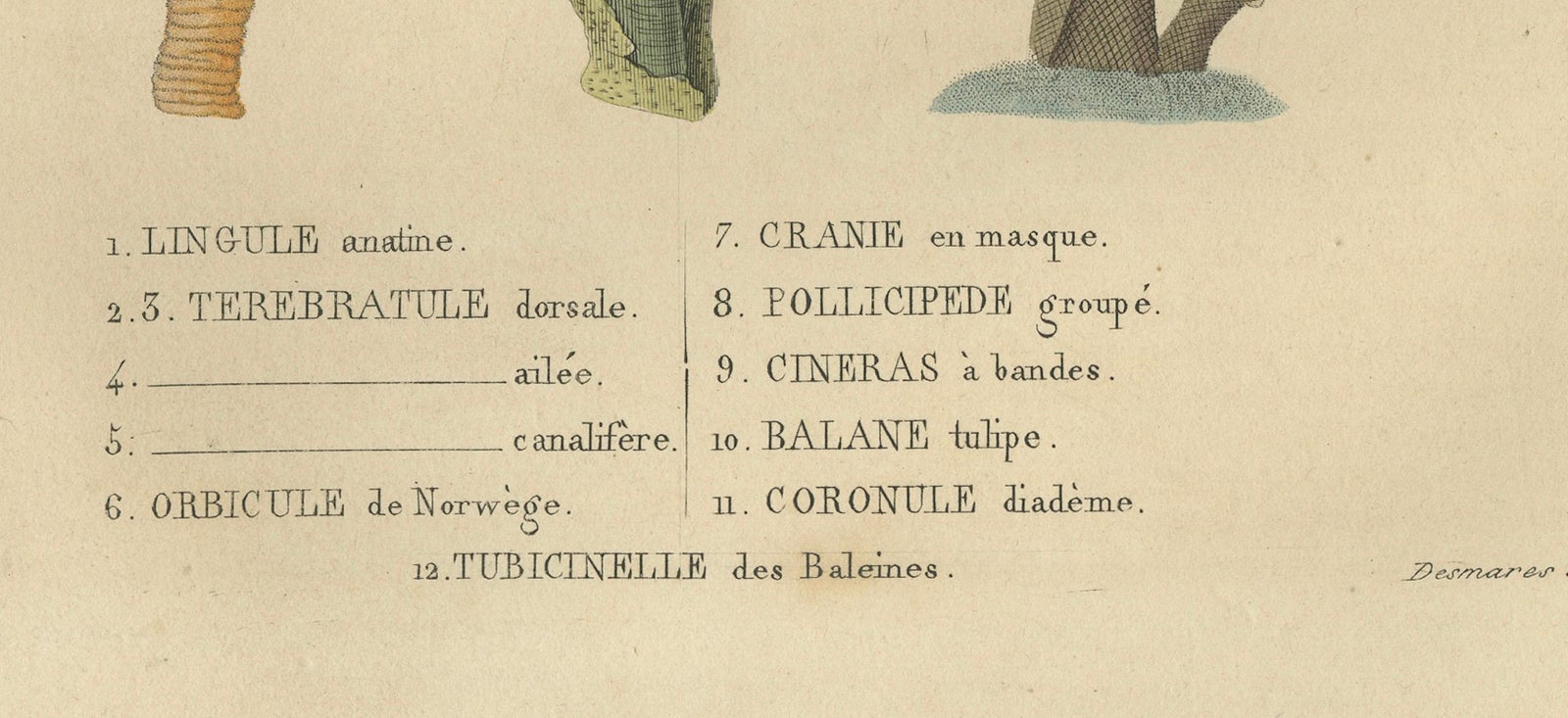
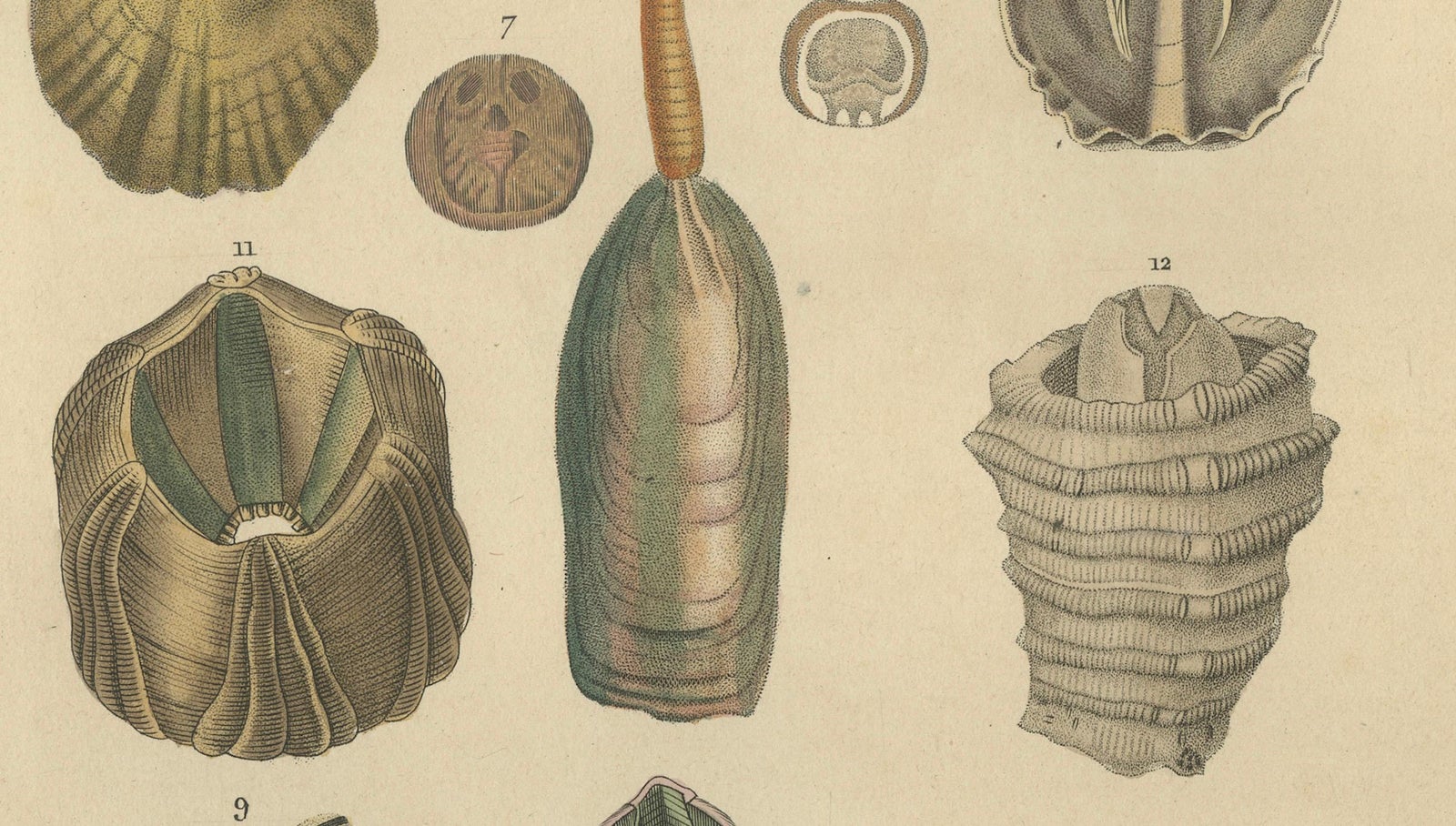
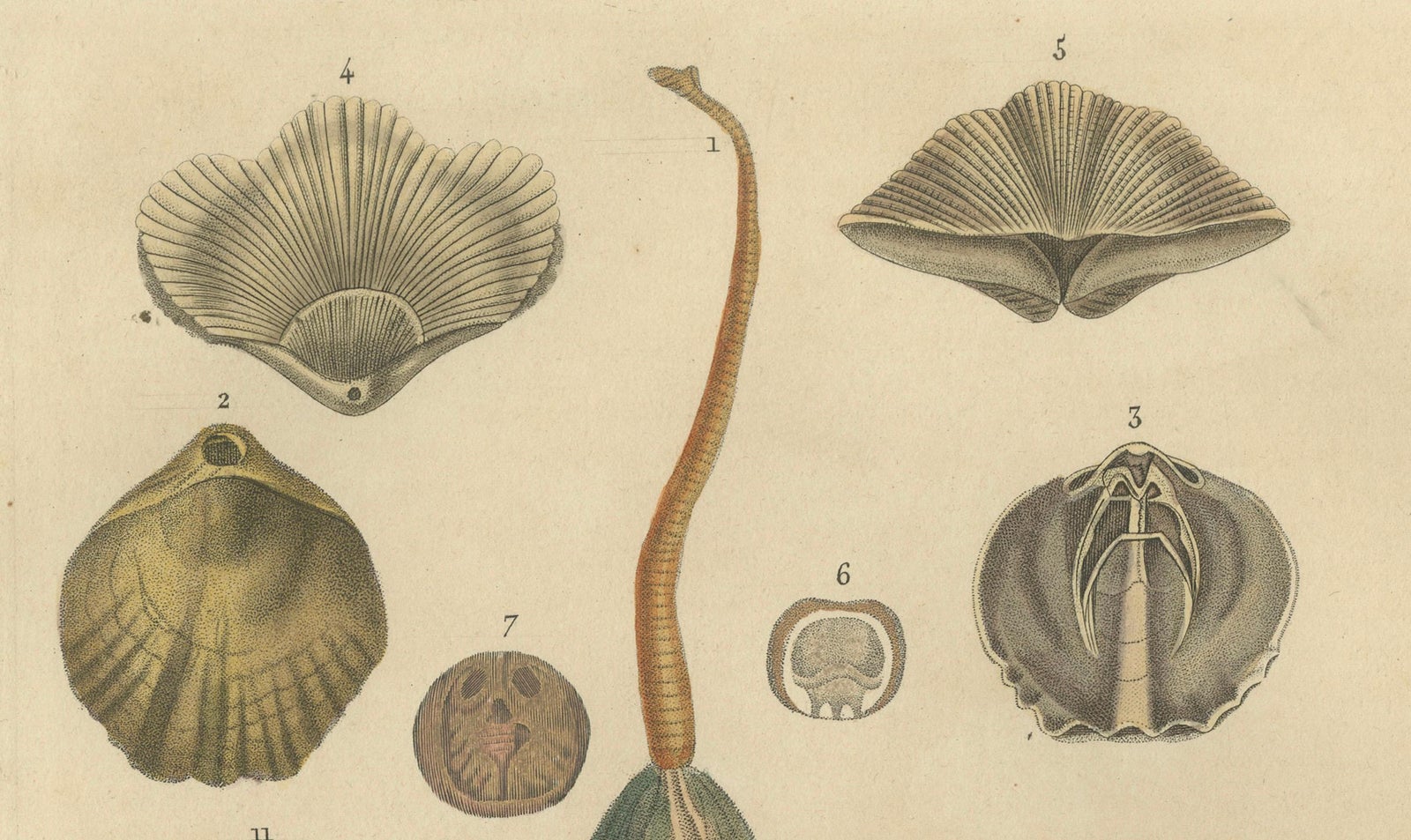
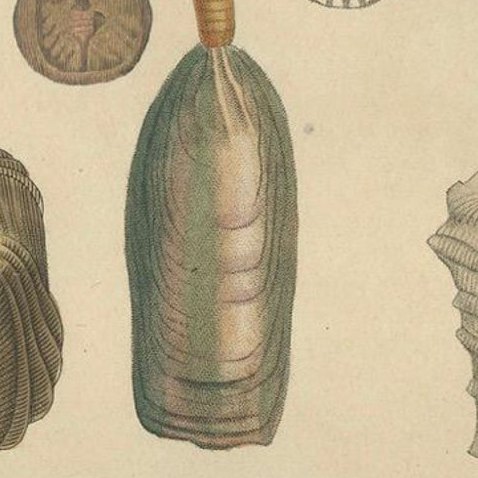
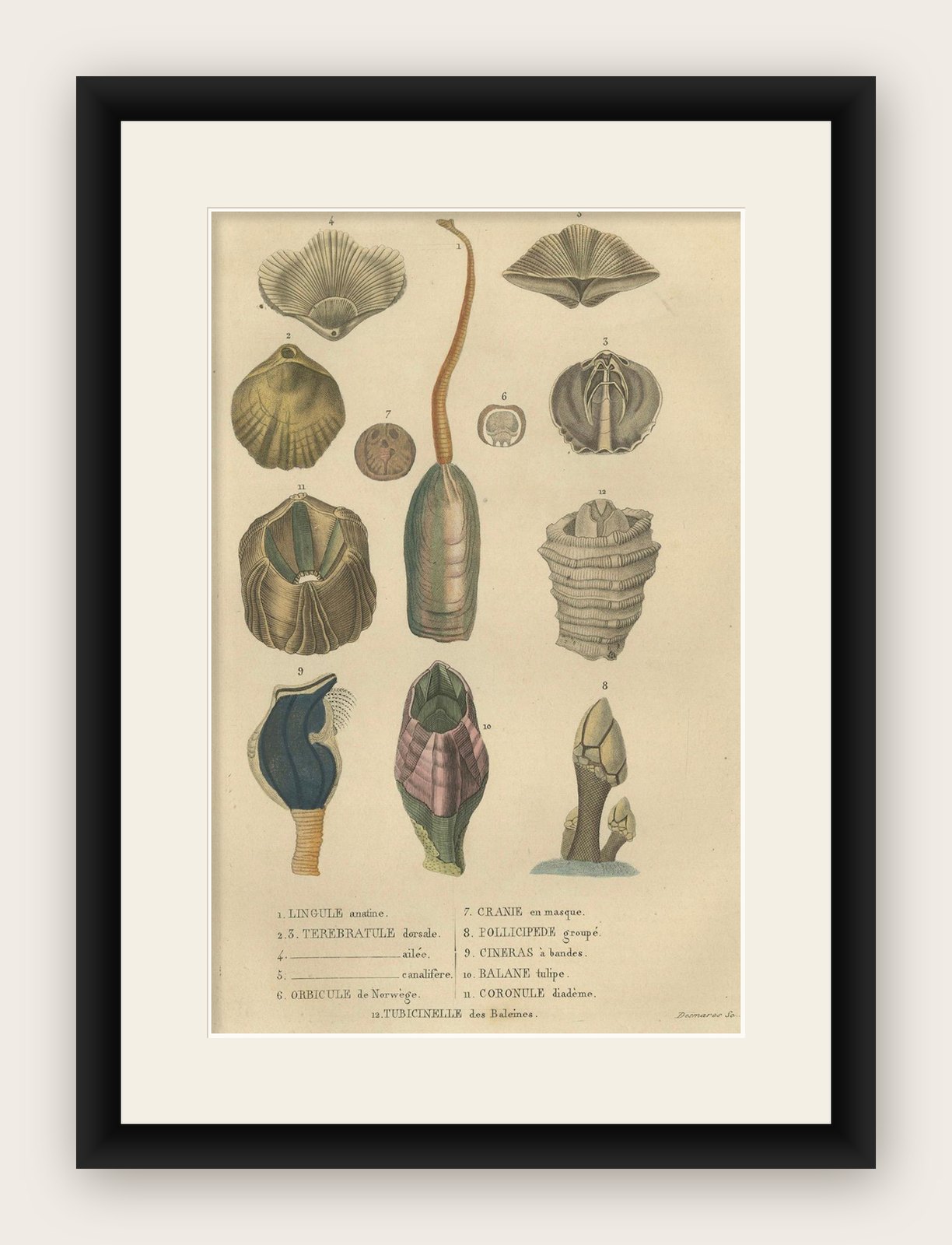
The illustration, an original hand-colored engraving, features a collection of shells and marine organisms, likely from various classes of the phylum Mollusca:
1. **Lingule anatine** - This could represent Lingula anatina, a species of brachiopod, which are marine animals with bivalve-like shells.
2. & 3. **Terebratule dorsale** - Likely a dorsal view of a Terebratulid brachiopod, recognized for their lamp shell shape.
4. **----- ailée** - The descriptor suggests a winged form, which could refer to a type of bivalve or possibly another brachiopod with wing-like extensions.
5. **----- canalière** - This term might indicate a shell with a channeled structure.
6. **Orbicule de Norvège** - Could be referring to Orbicula, a genus of small, disc-shaped brachiopods.
7. **Cranie en masque** - Possibly a "mask-like" cranial structure of a marine organism, but the exact type is unclear.
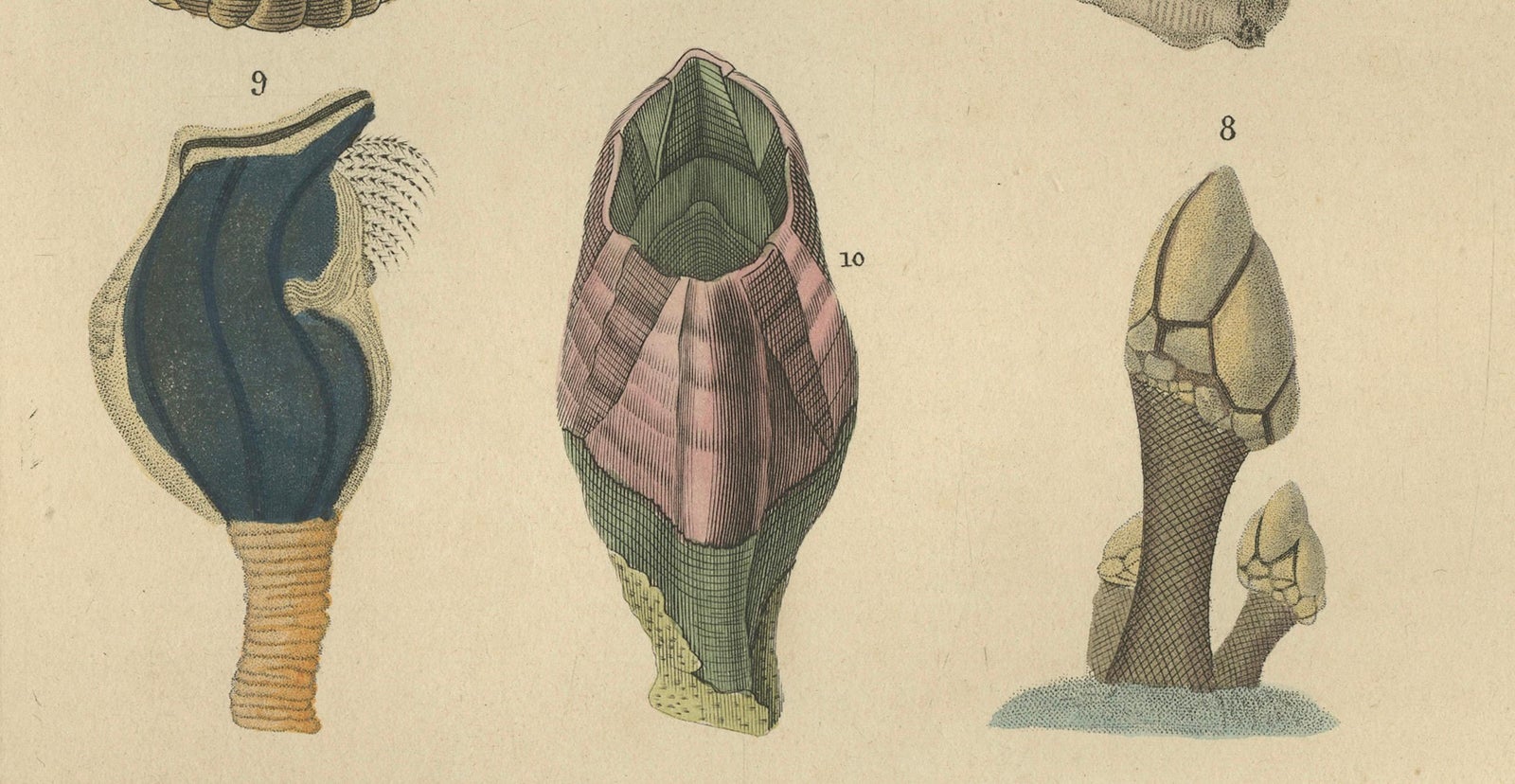
8. **Pollicipède groupé** - Suggestive of a clustered barnacle (order Pedunculata), which are sessile crustaceans with hard plates.
9. **Cinéras à bandes** - This might be related to a banded sea creature, potentially a type of sea urchin or similar echinoderm.
10. **Balane tulipe** - Appears to be a tulip-shaped barnacle, another type of crustacean.
11. **Coronule diadème** - Likely a type of coronulid barnacle, known to attach to whales or other large marine animals.
12. **Tubicinelle des Baleines** - This name suggests a relationship with whales, which could be a tubeworm or barnacle that attaches to whales.
The hand-colored engraving from 'The 'Dictionnaire Classique des Sciences Naturelles' by Pierre Auguste Joseph Drapiez is a detailed depiction of marine life forms, designed for educational and scientific purposes in the mid-19th century.