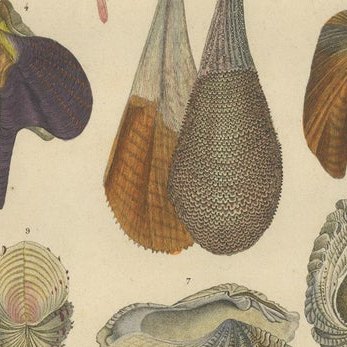
Close-ups
Framed and on the wall
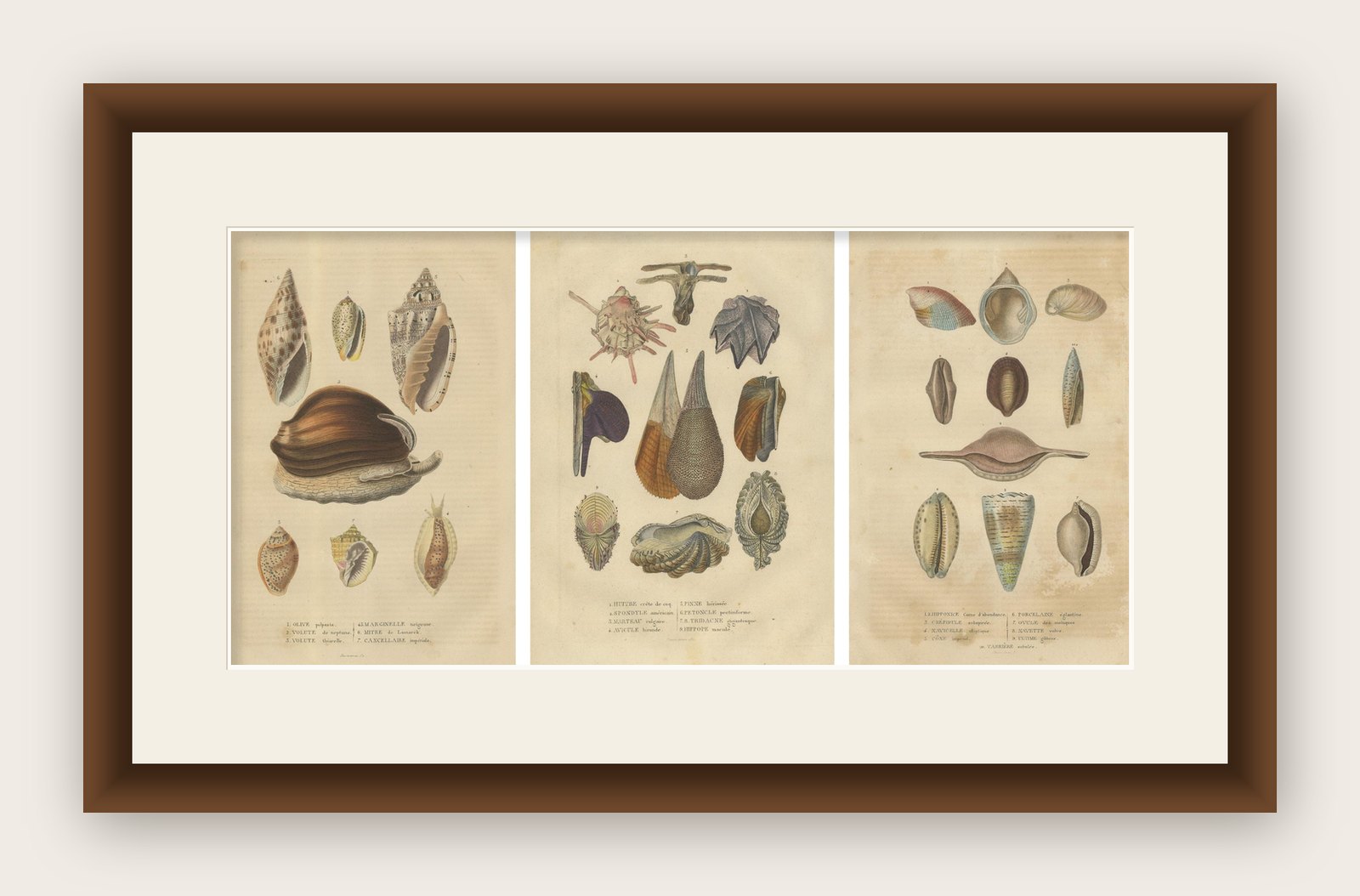

Frame and rooms are illustrations of how the print could look; the description says what is included.
Marine Elegance: A 19th Century Mosaic of Mollusk Diversity, 1845
£280 ($370, €330)
Period original, not a reproduction.
Shipped from the Netherlands, flat, insured and tracked, worldwide. Returns accepted within 14 days.
- Date
- 1845
- Size
- 10.4 × 6.7 in (26.5 × 17 cm)
- Condition
- Good. Fair to Good. Some edges cut rough, but leaving enough margin to frame. Overall soiling and offset a of a text plate. One engraving more intense browning. Please study the image carefully.
- Period
- Early 19th century
- Section
- Fish and shells
- Reference
- f_37855582
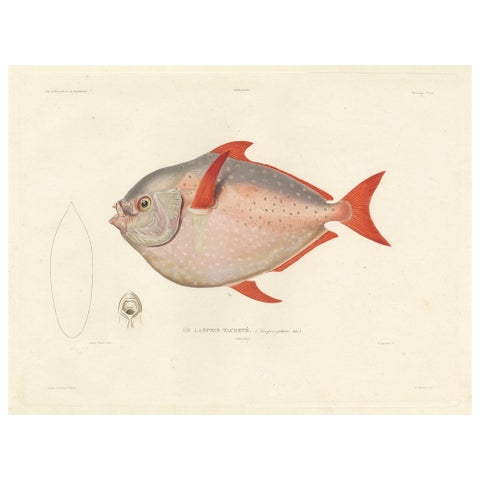
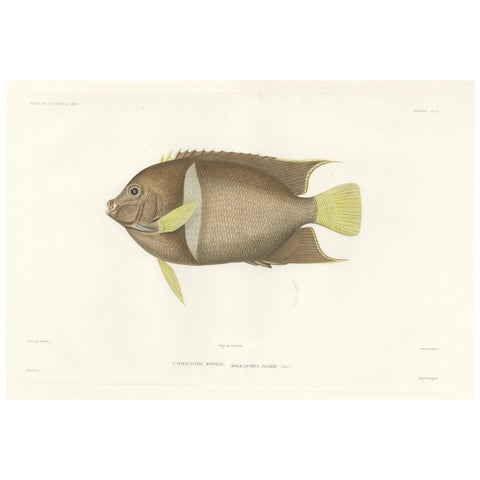
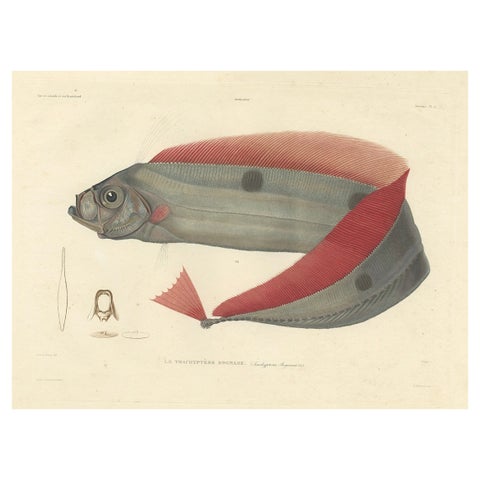
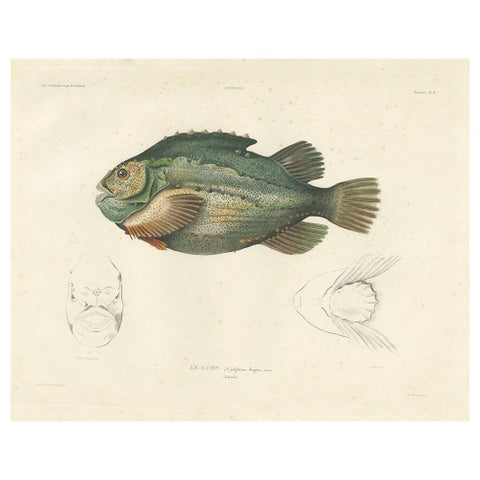
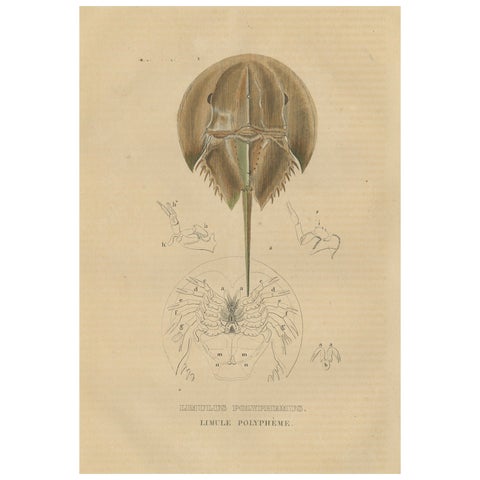
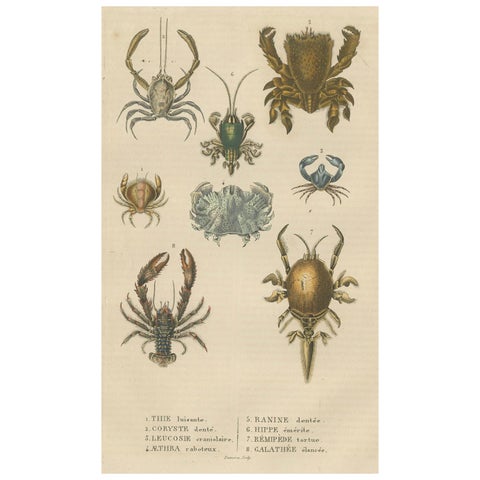
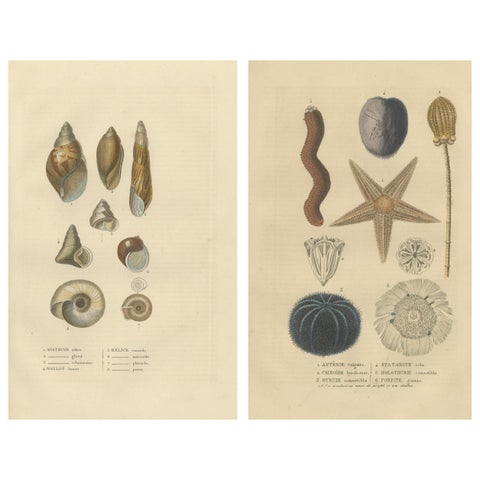
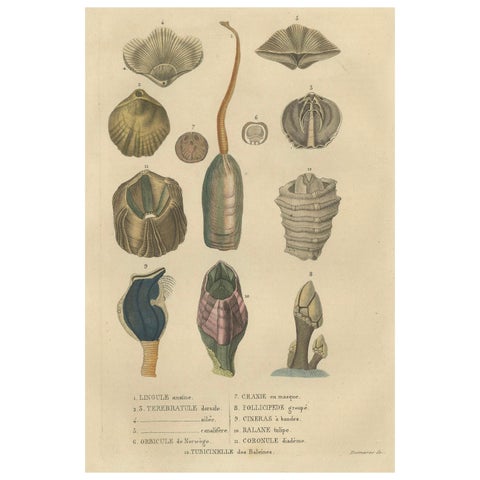
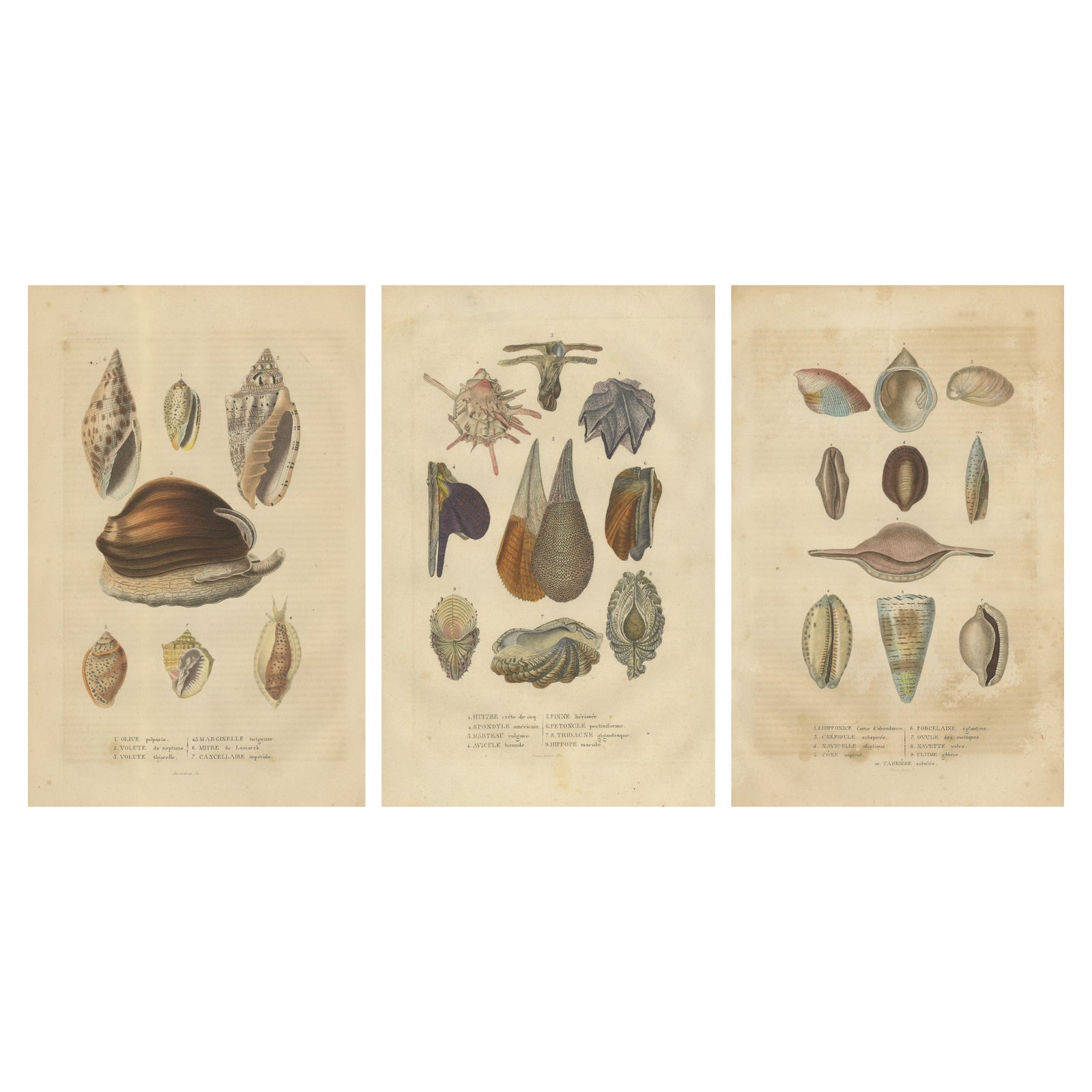
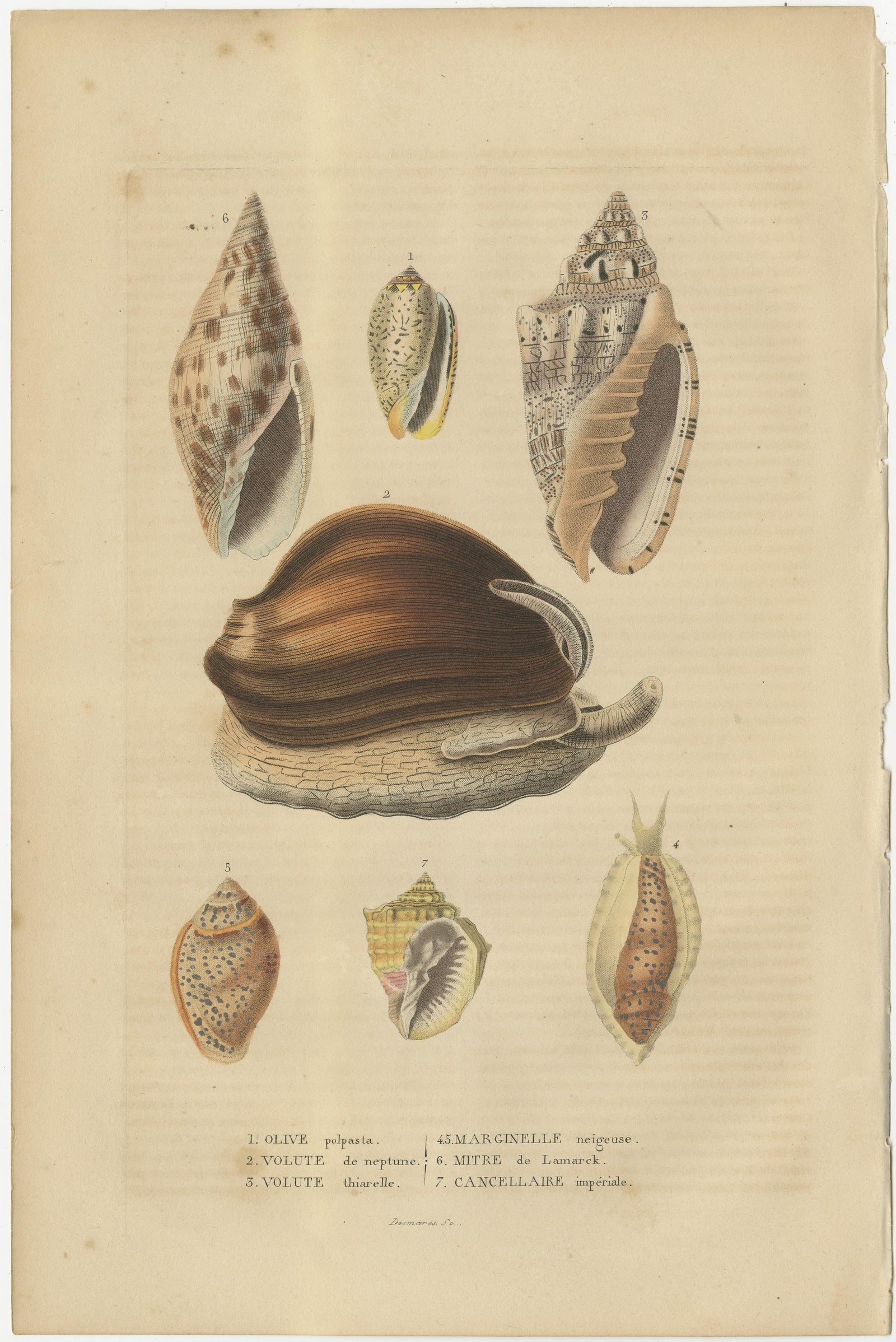
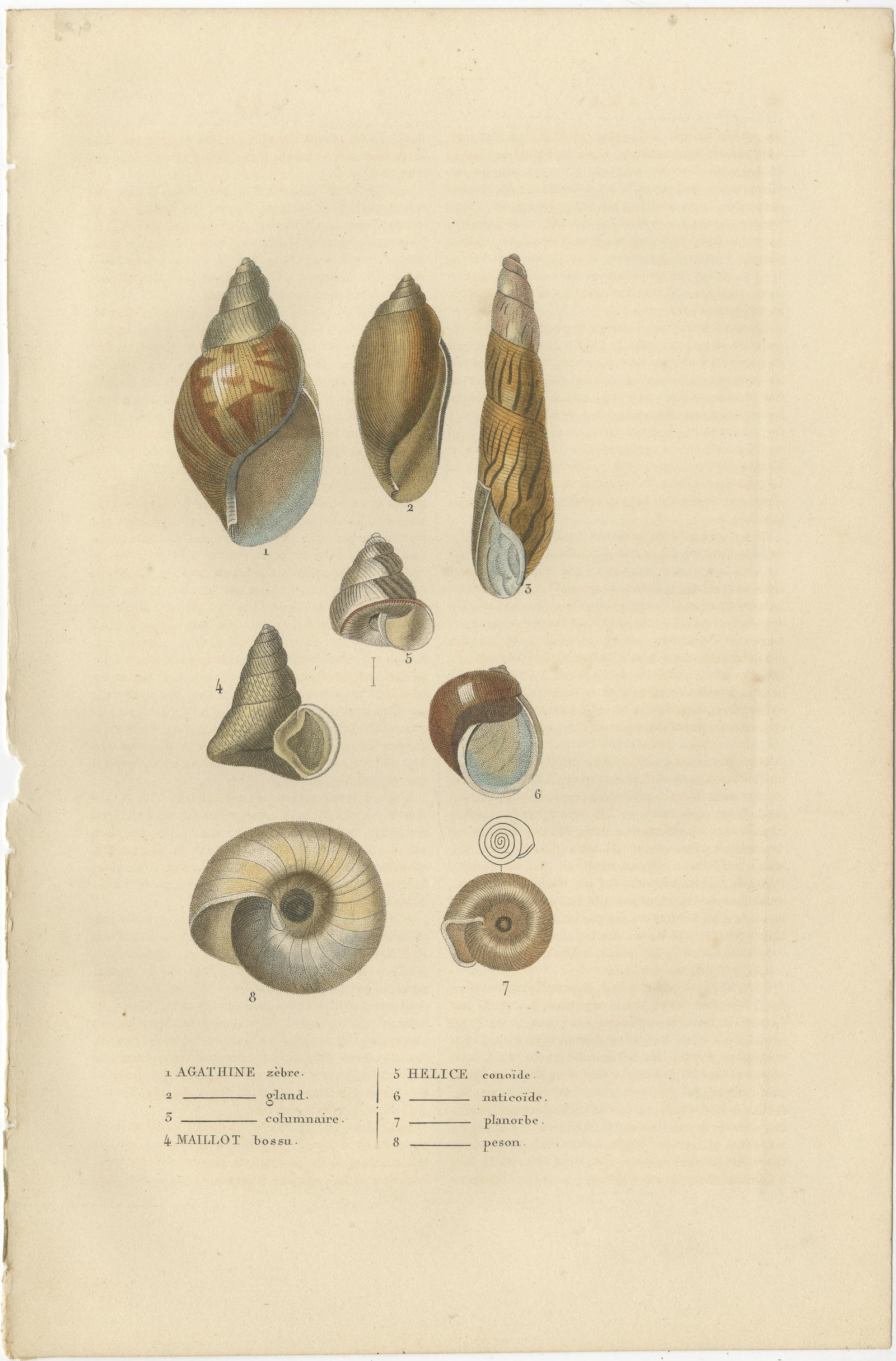
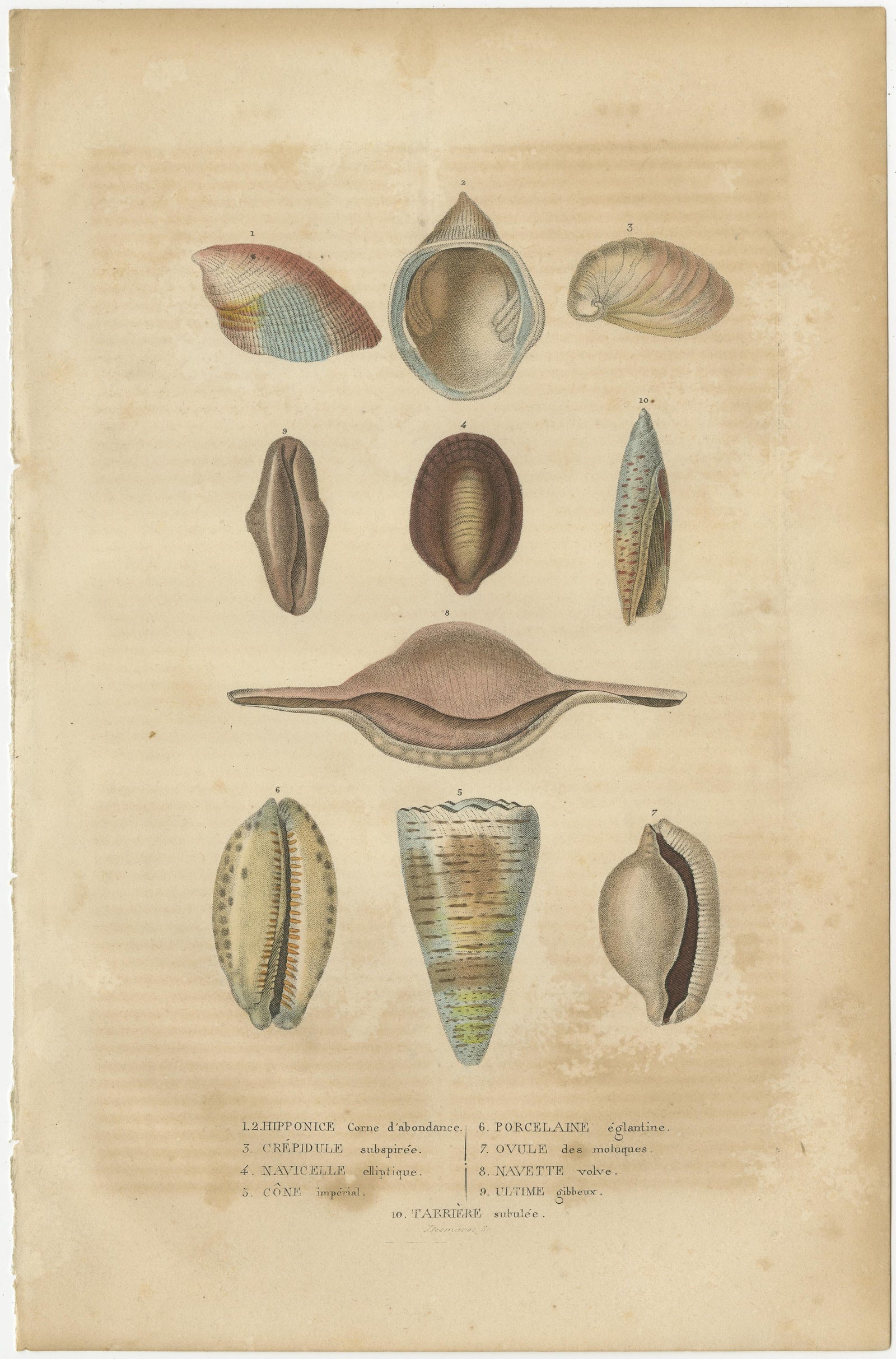
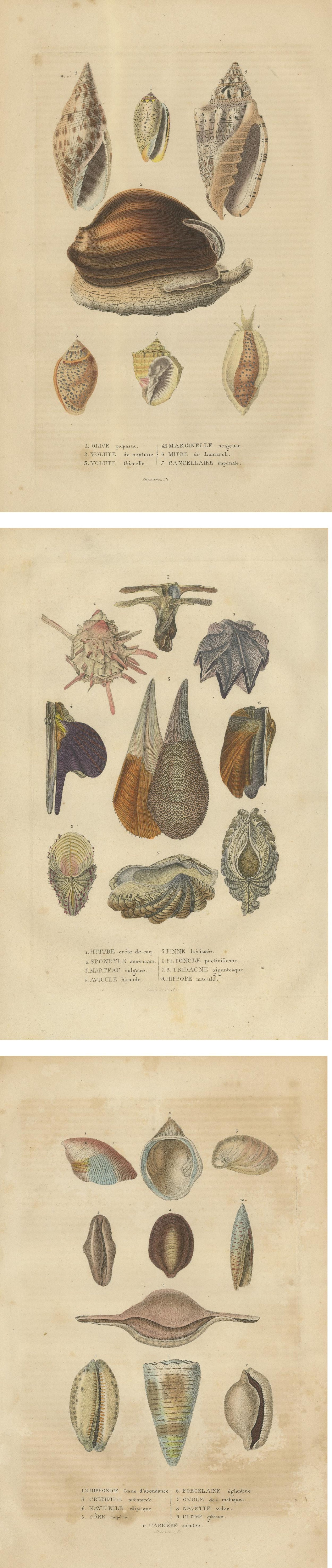
The engravings depict a variety of marine organisms, specifically mollusks, which include both gastropods and bivalves. The details for the three prints provided are as follows:
1. The first print showcases various seashells with intricate patterns and colors. These shells belong to different species of sea snails and clams, each with its unique shape and design.
2. The second print contains a selection of more seashells, some with spiky protrusions, others with smooth, streamlined designs. The diversity in their forms suggests adaptations to different marine environments.
3. The third print includes seashells along with creatures that have elongated, tapering shapes, which could be indicative of cephalopods or other types of marine life with similar body plans.
All these organisms would have been part of the marine biodiversity study in the mid-19th century, and their illustrations would serve educational purposes to teach about the variety of life in the oceans. The hand-coloring of the prints adds a layer of realism to the depictions, providing a valuable visual aid in an era before color photography.
This title reflects the elegance and diversity of marine life as captured by the hand-colored engravings from Drapiez's natural science dictionary.