Close-ups
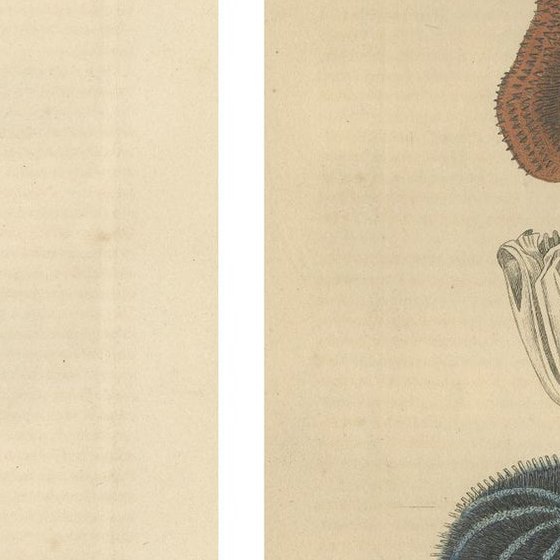
Framed and on the wall
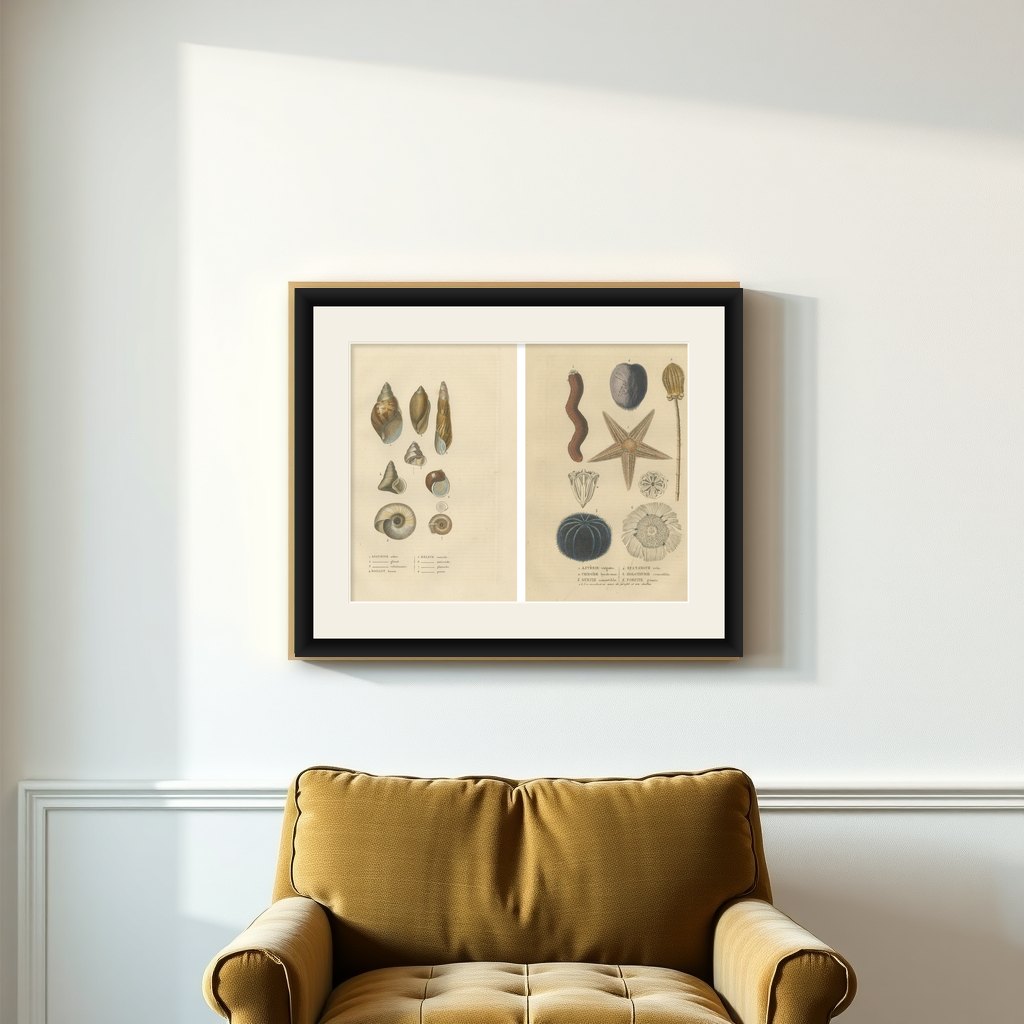
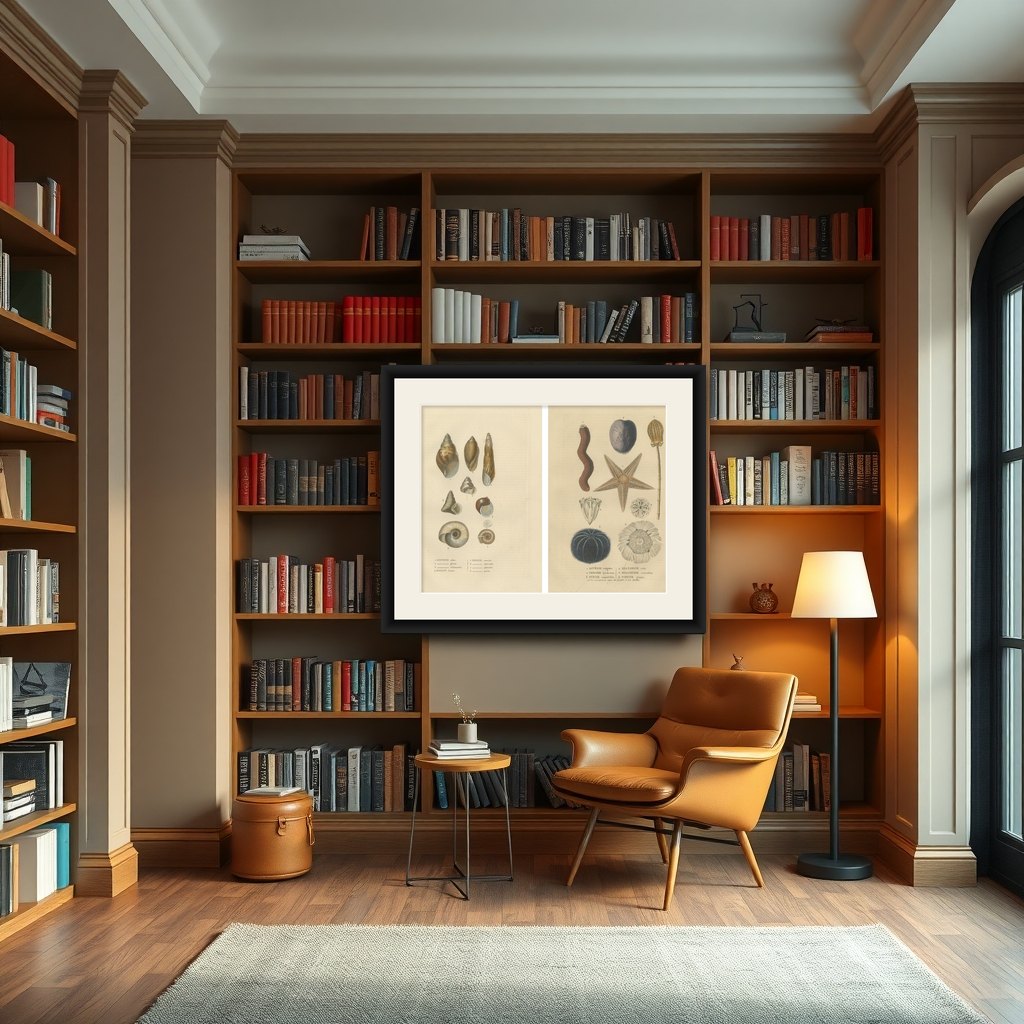
Frame and rooms are illustrations of how the print could look; the description says what is included.
Sea Splendor: A Tapestry of Marine Life in the Mid-19th Century, 1845
$525 (£400, €470)
Period original, not a reproduction.
Shipped from the Netherlands, flat, insured and tracked, worldwide. Returns accepted within 14 days.
- Date
- 1845
- Size
- 10.4 × 6.7 in (26.5 × 17 cm)
- Condition
- Good. Very Good set. Some edges cut rough, but leaving enough margin to frame. Light offset a of a text plate. Minor soiling. Please study the image carefully.
- Period
- Early 19th century
- Section
- Fish and shells
- Reference
- f_37855622
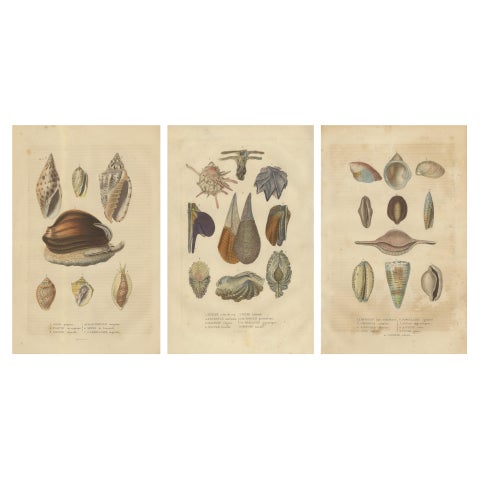
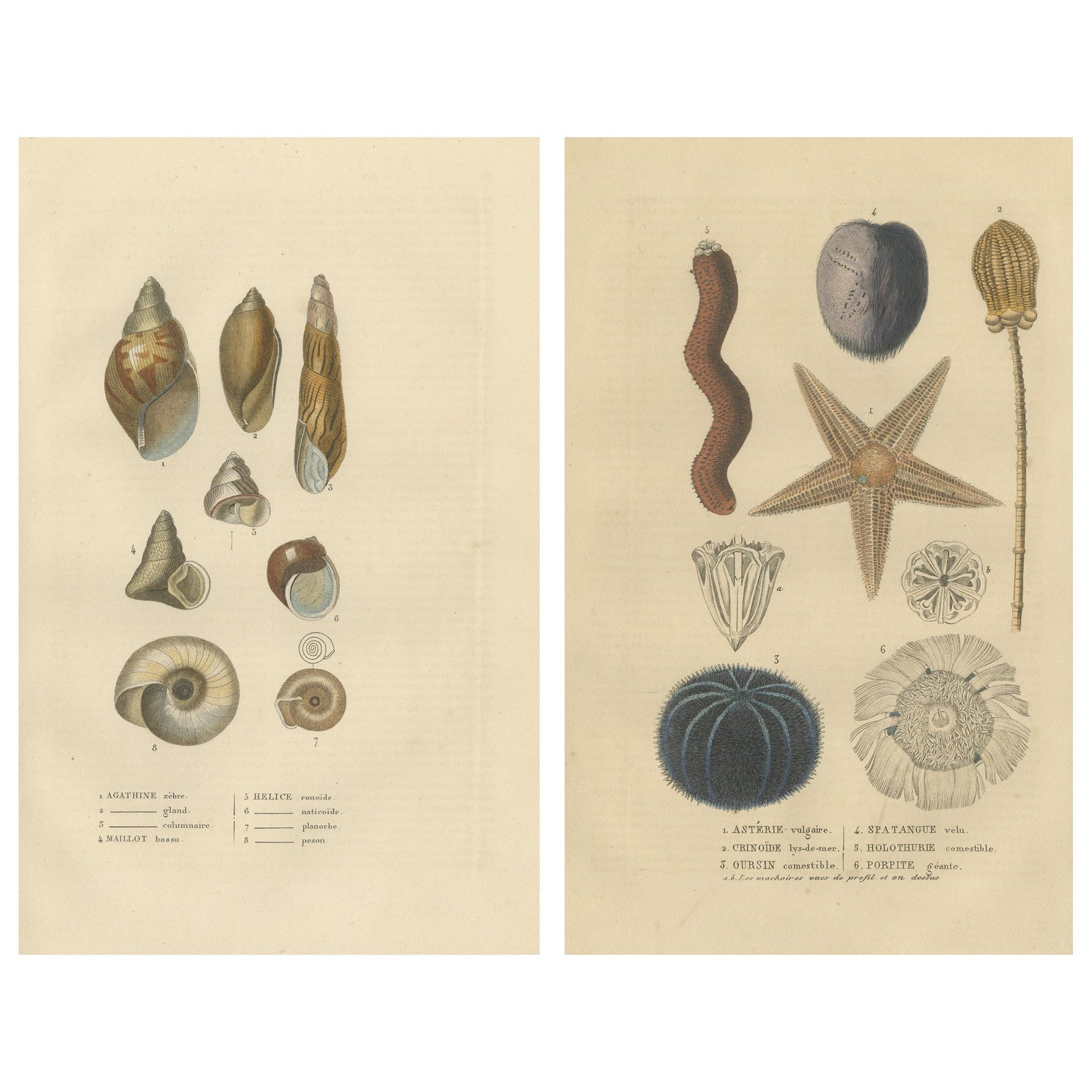
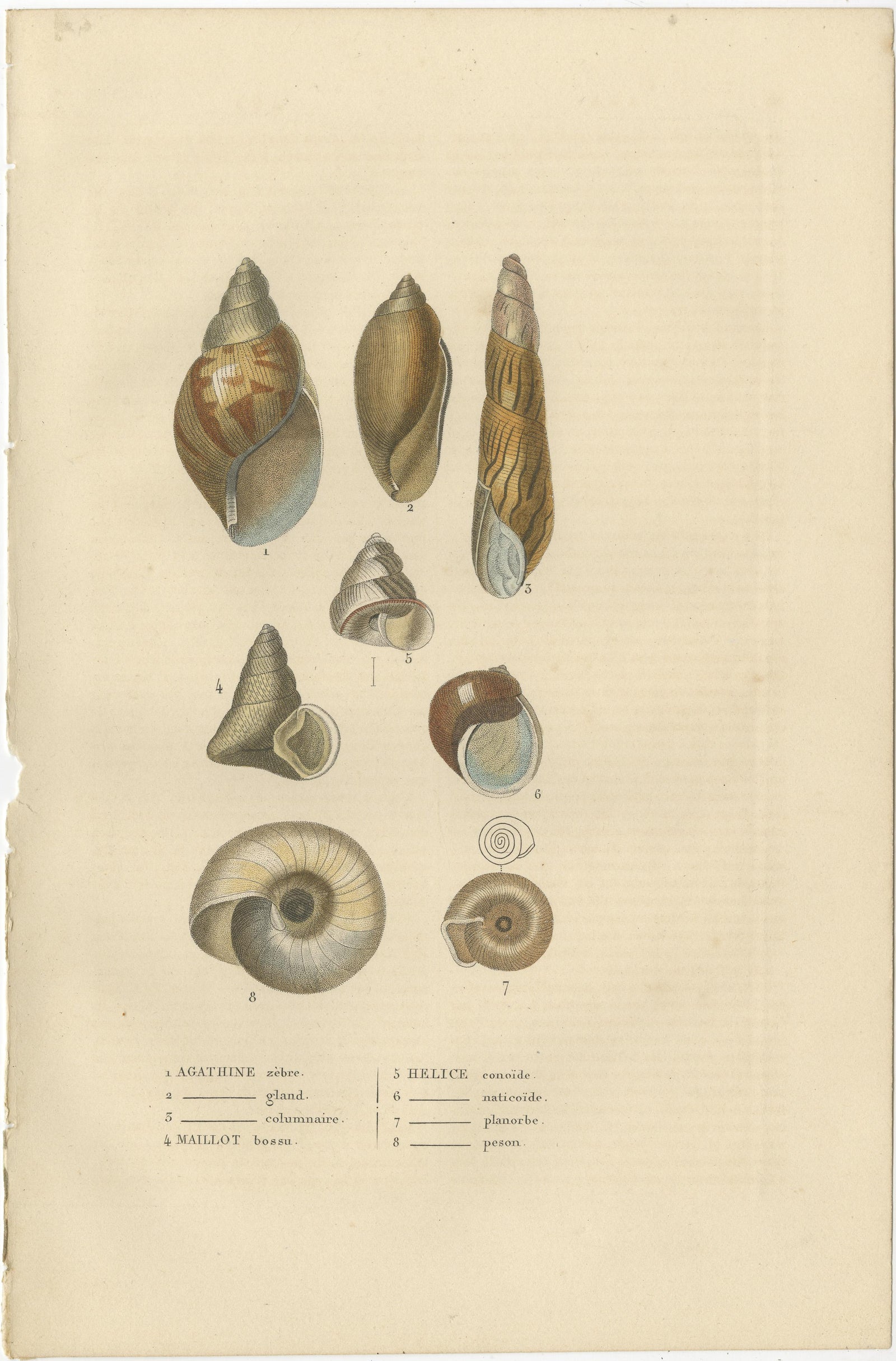
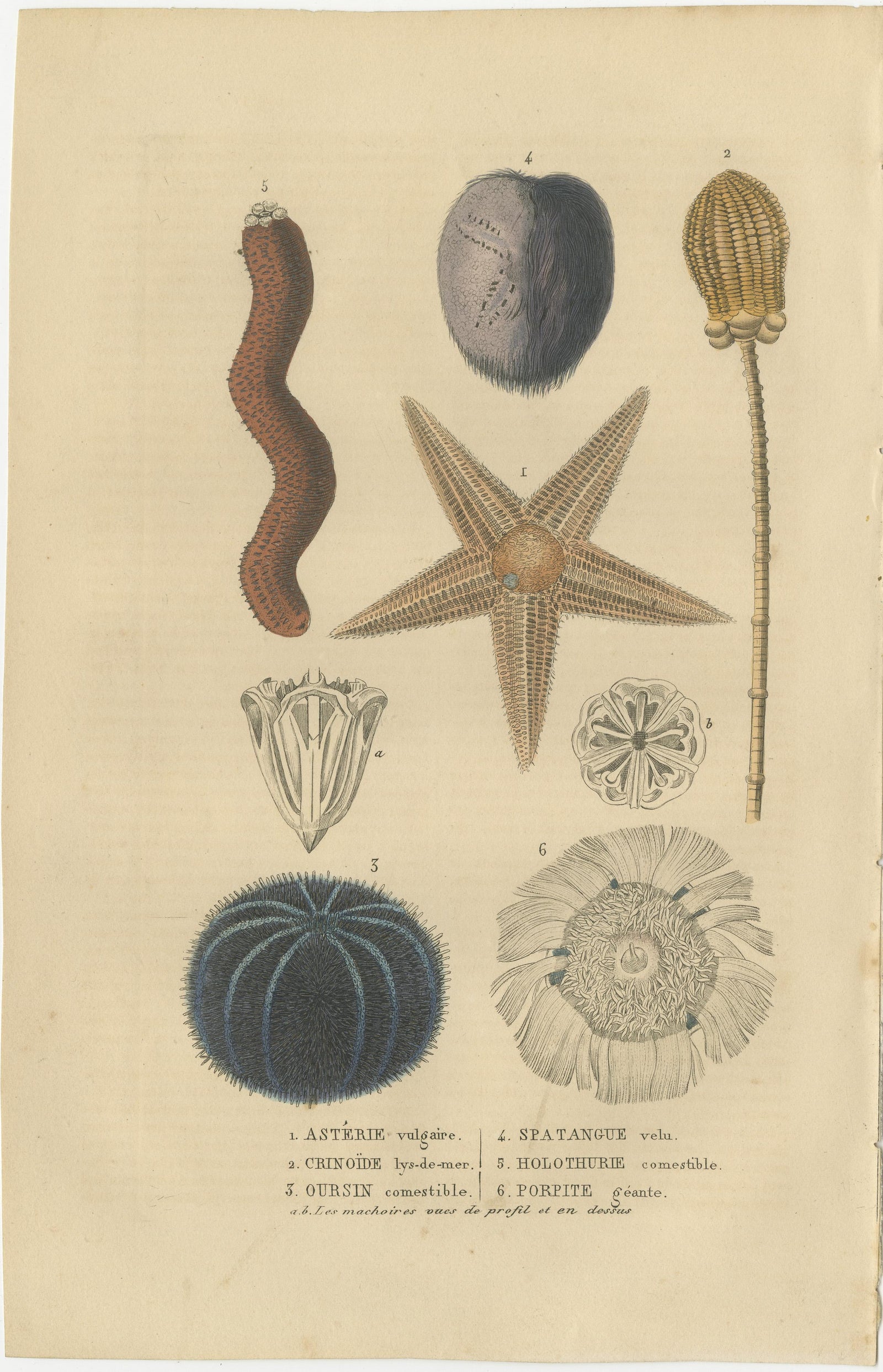
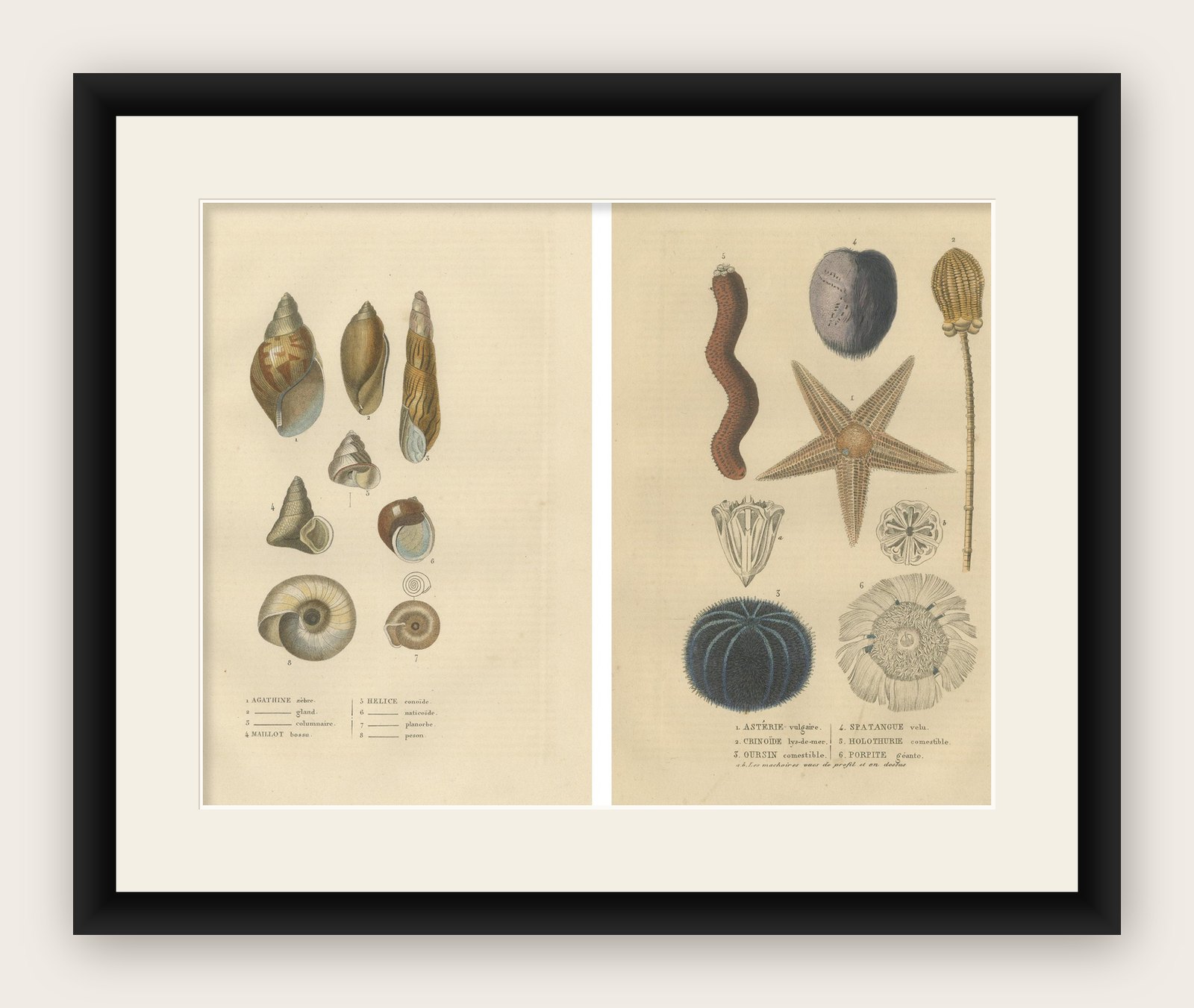
In the two prints, a variety of marine organisms are depicted, predominantly from the echinoderm and mollusk phyla:
**First Print:**
1. **Agathine zébrée** - Likely a gastropod with a zebra-like pattern on its shell.
2. **----- gland** - The name suggests a gastropod with a shell shape resembling a gland.
3. **----- columnaire** - Possibly referring to a shell with a columnar shape.
4. **Maillot bossu** - A shell with a humped or bulging appearance.
5. **Hélice conoïde** - A conical snail shell.
6. **----- natatoire** - The term implies a swimming or floating nature, likely a pelagic snail.
7. **----- planorbe** - Indicates a planispiral or coiled shell, characteristic of some gastropods.
8. **----- peson** - The name suggests a weight or pendulum, perhaps describing the shape of the shell.
**Second Print:**
1. **Astérie vulgaire** - Commonly known as a starfish or sea star.
2. **Crinoïde lys-de-mer** - A crinoid, also known as a sea lily, which is an echinoderm with feathery arms.
3. **Oursin comestible** - An edible sea urchin.
4. **Spatangue velu** - A type of sea urchin known for its hairy appearance.
5. **Holothurie comestible** - An edible sea cucumber.
6. **Porpite géante** - Likely referring to a large porpita, a type of hydrozoan related to jellyfish.
The detailed hand-colored engravings from Drapiez's 'Dictionnaire Classique des Sciences Naturelles' provide a rich visual record of these diverse sea creatures, showcasing their unique forms and structures as understood in the mid-19th century.