Close-ups
Framed and on the wall
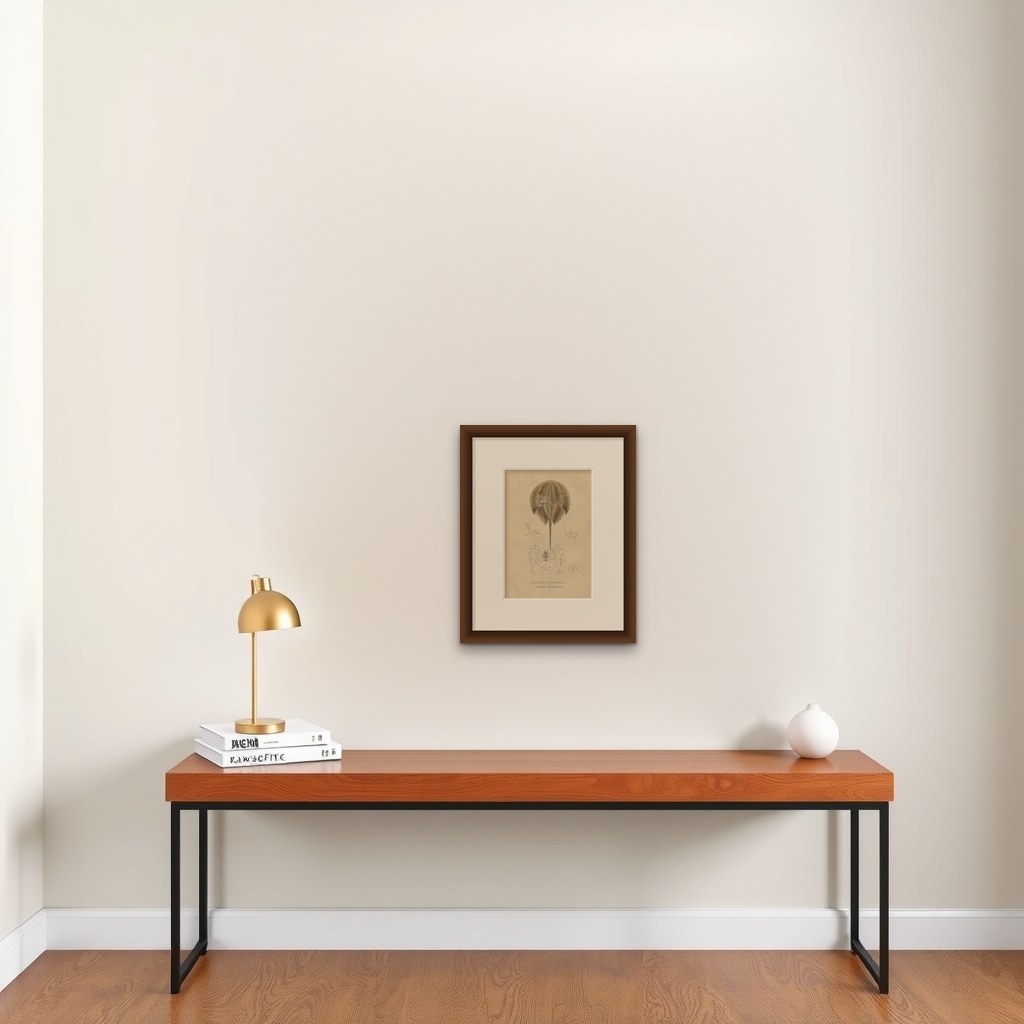

Frame and rooms are illustrations of how the print could look; the description says what is included.
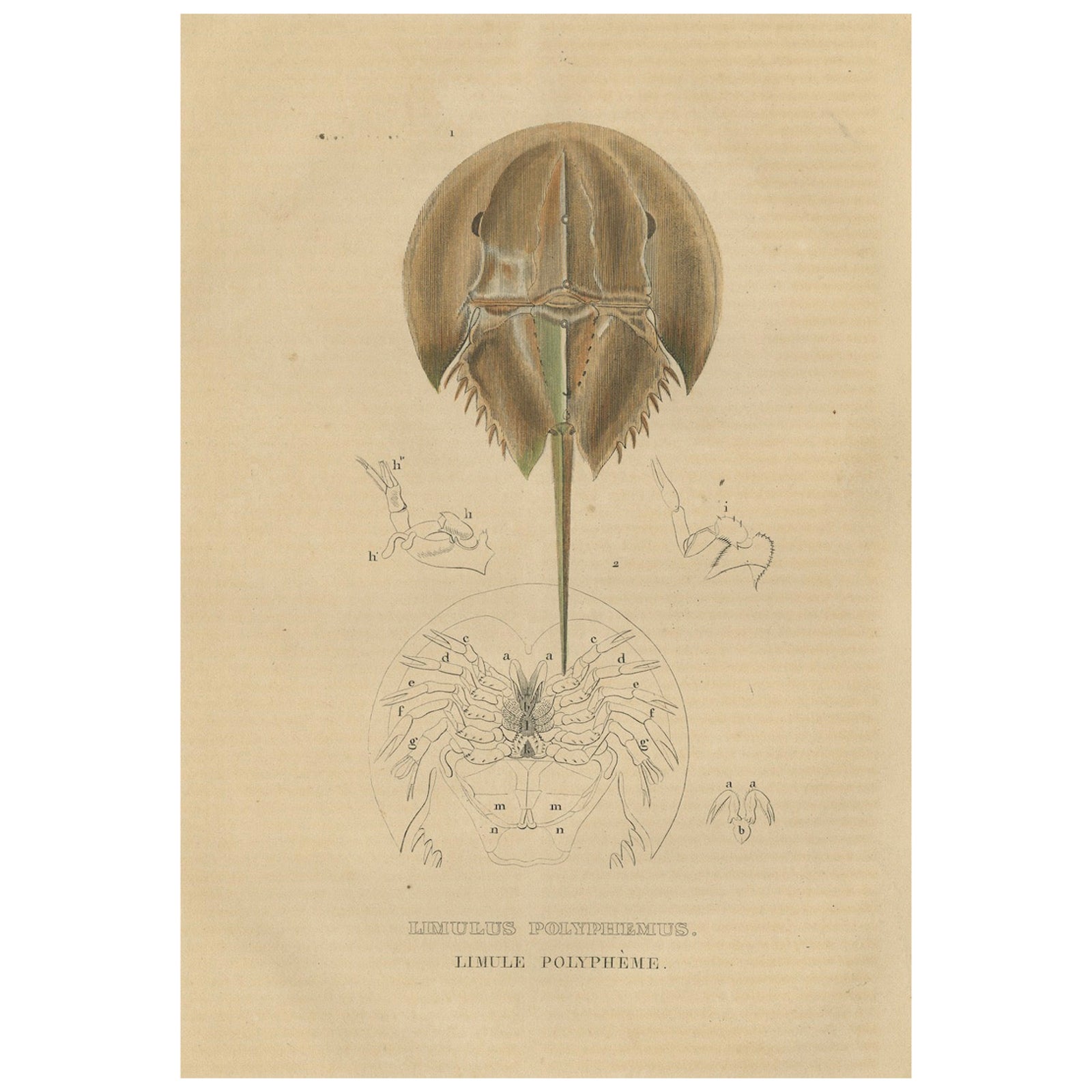
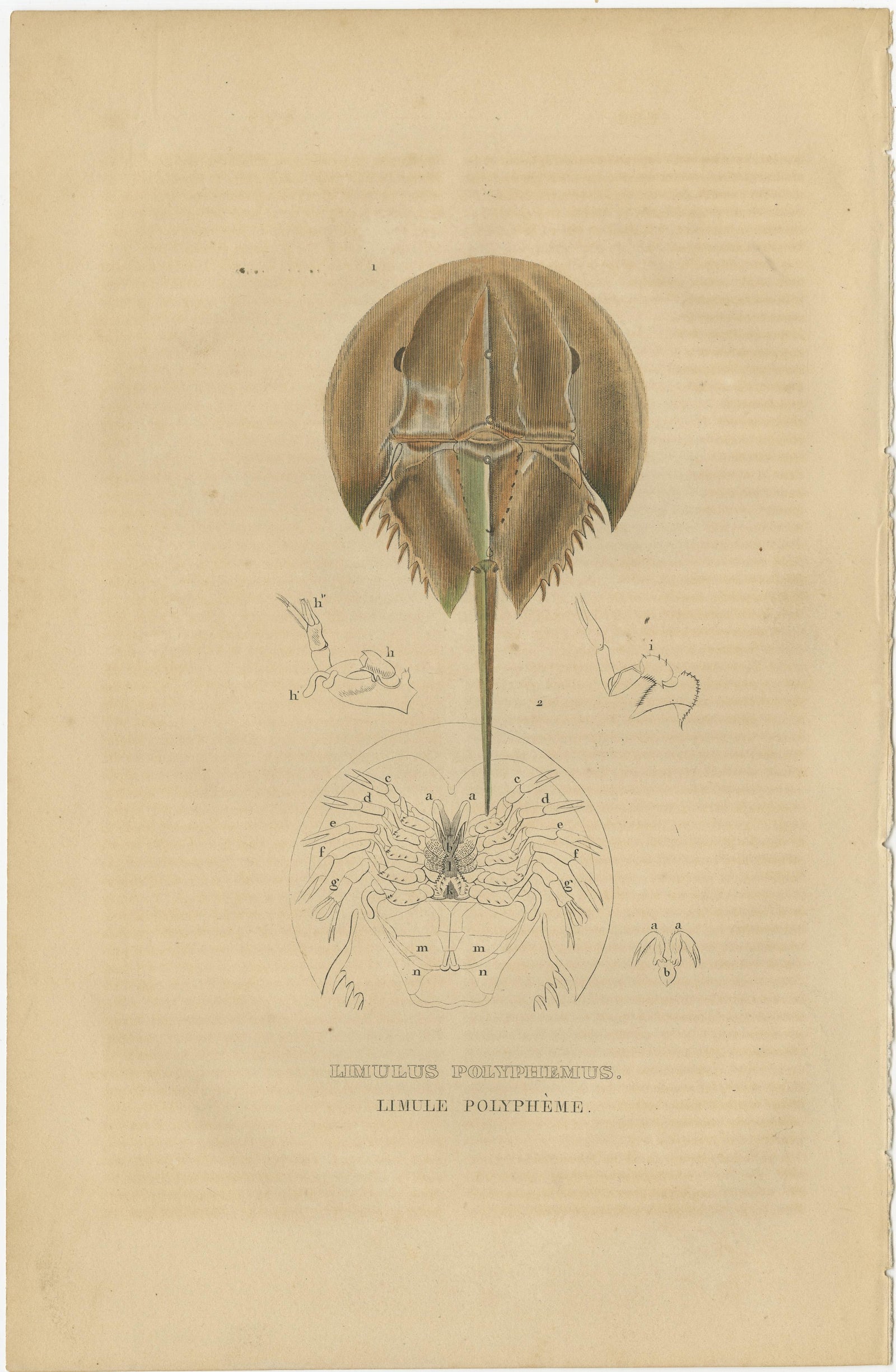
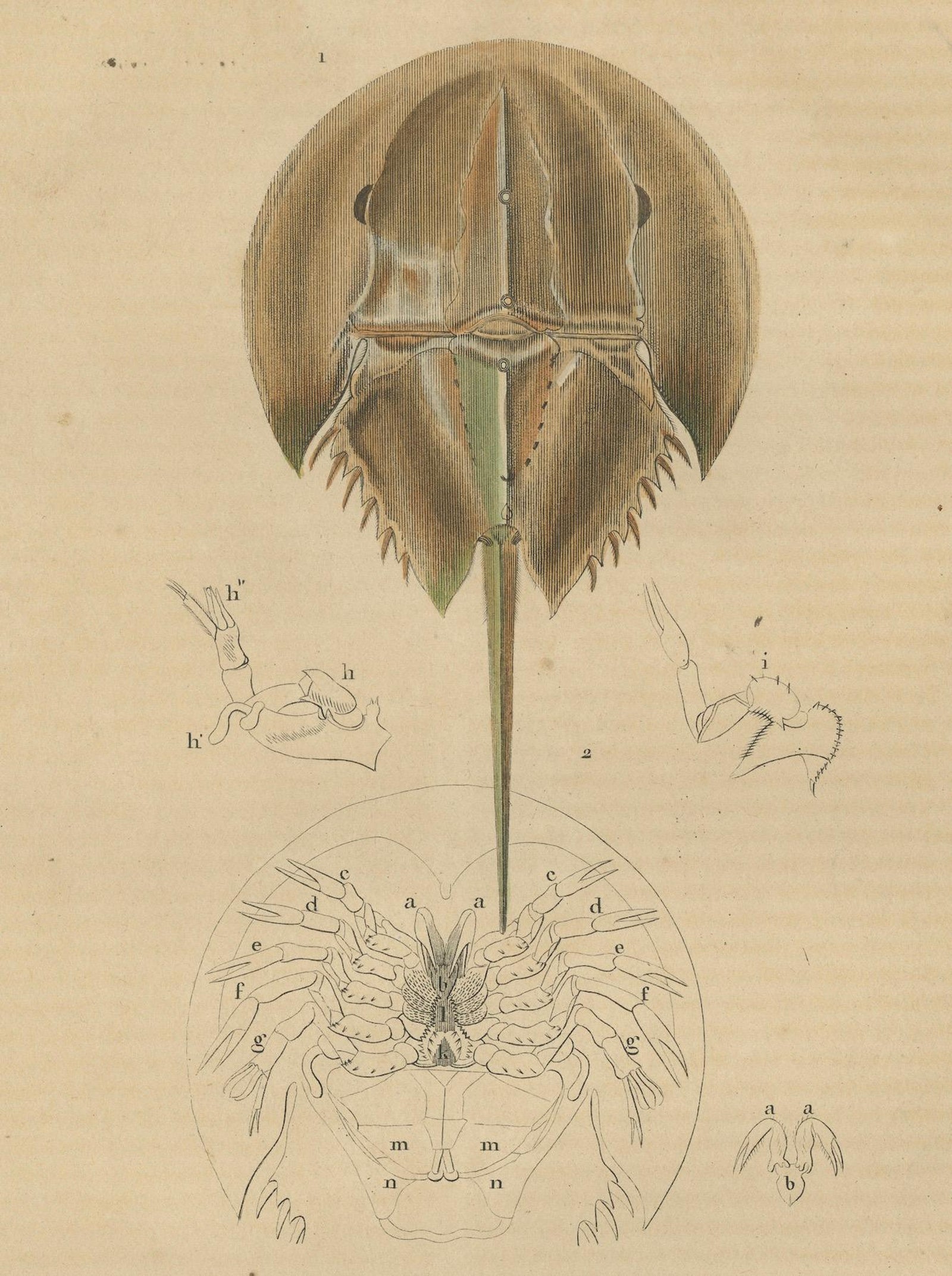
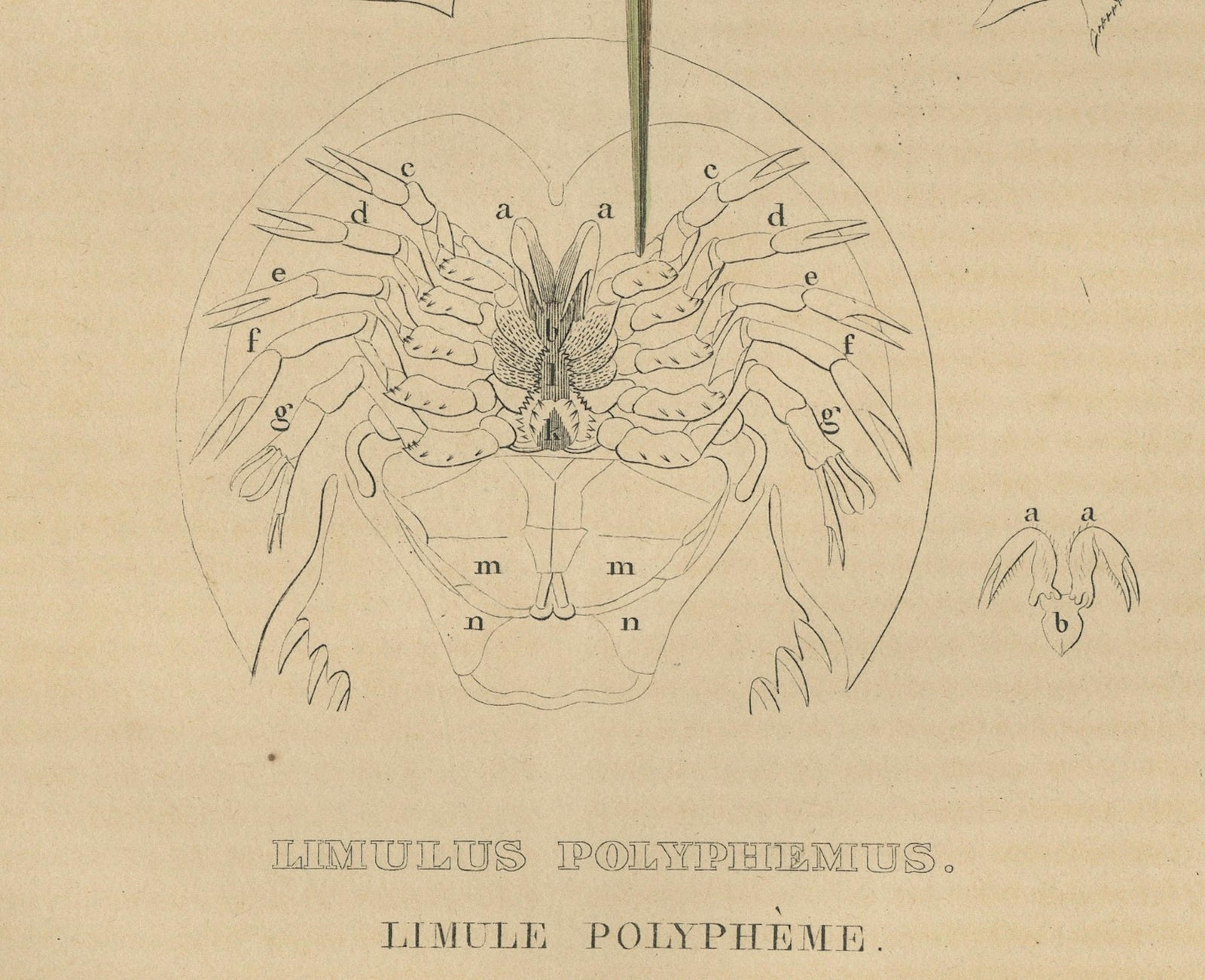
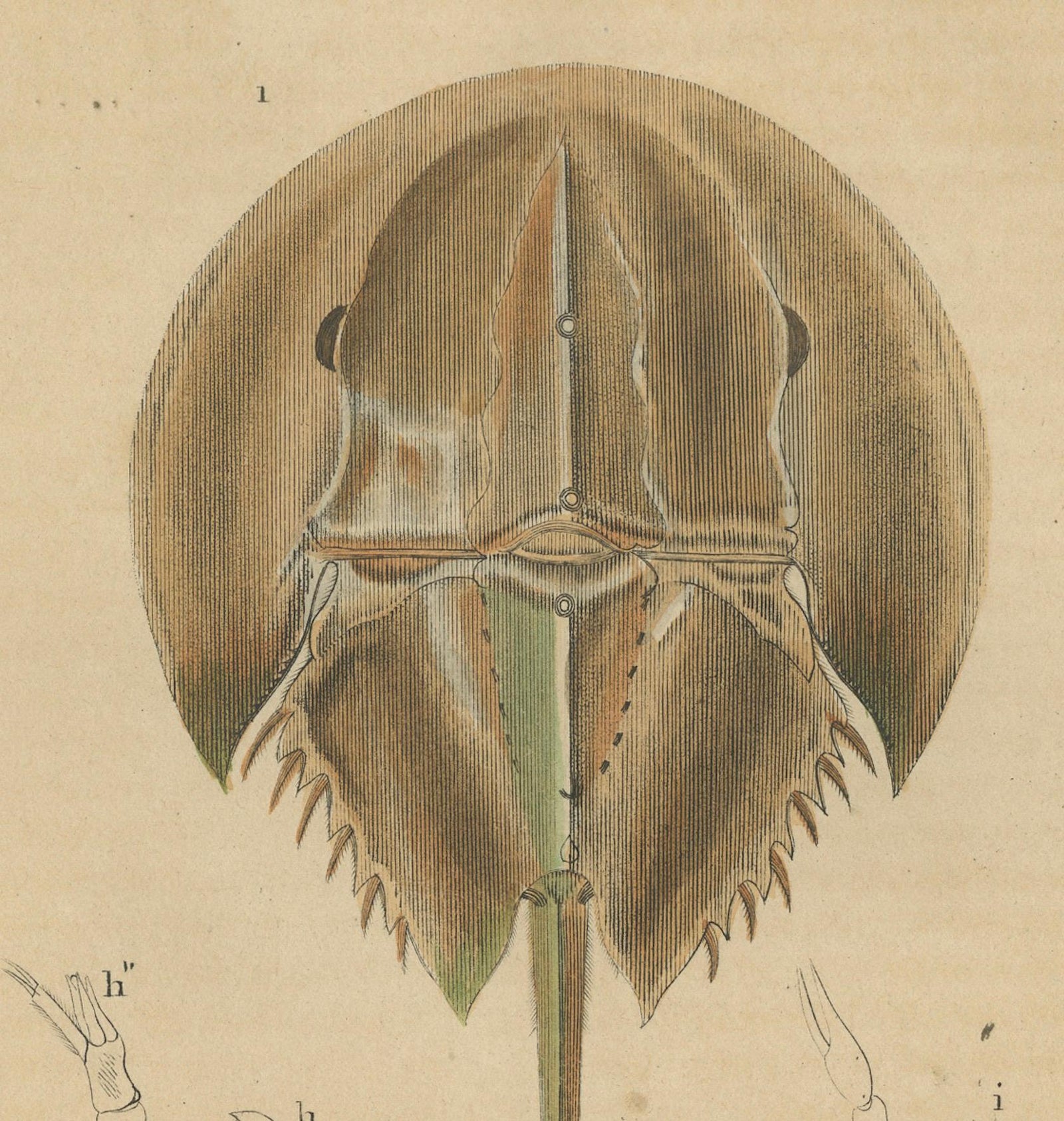
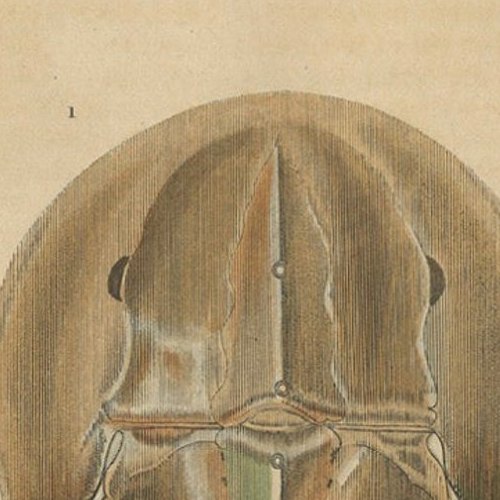
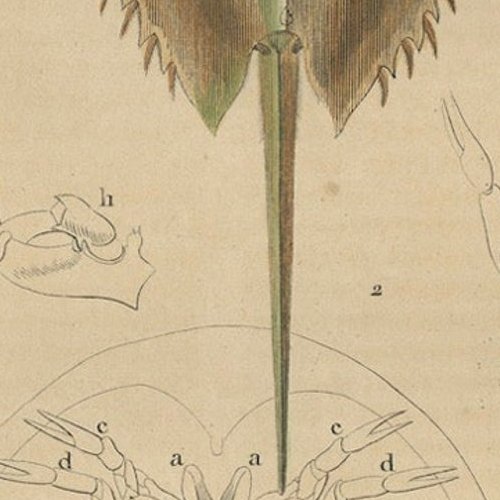
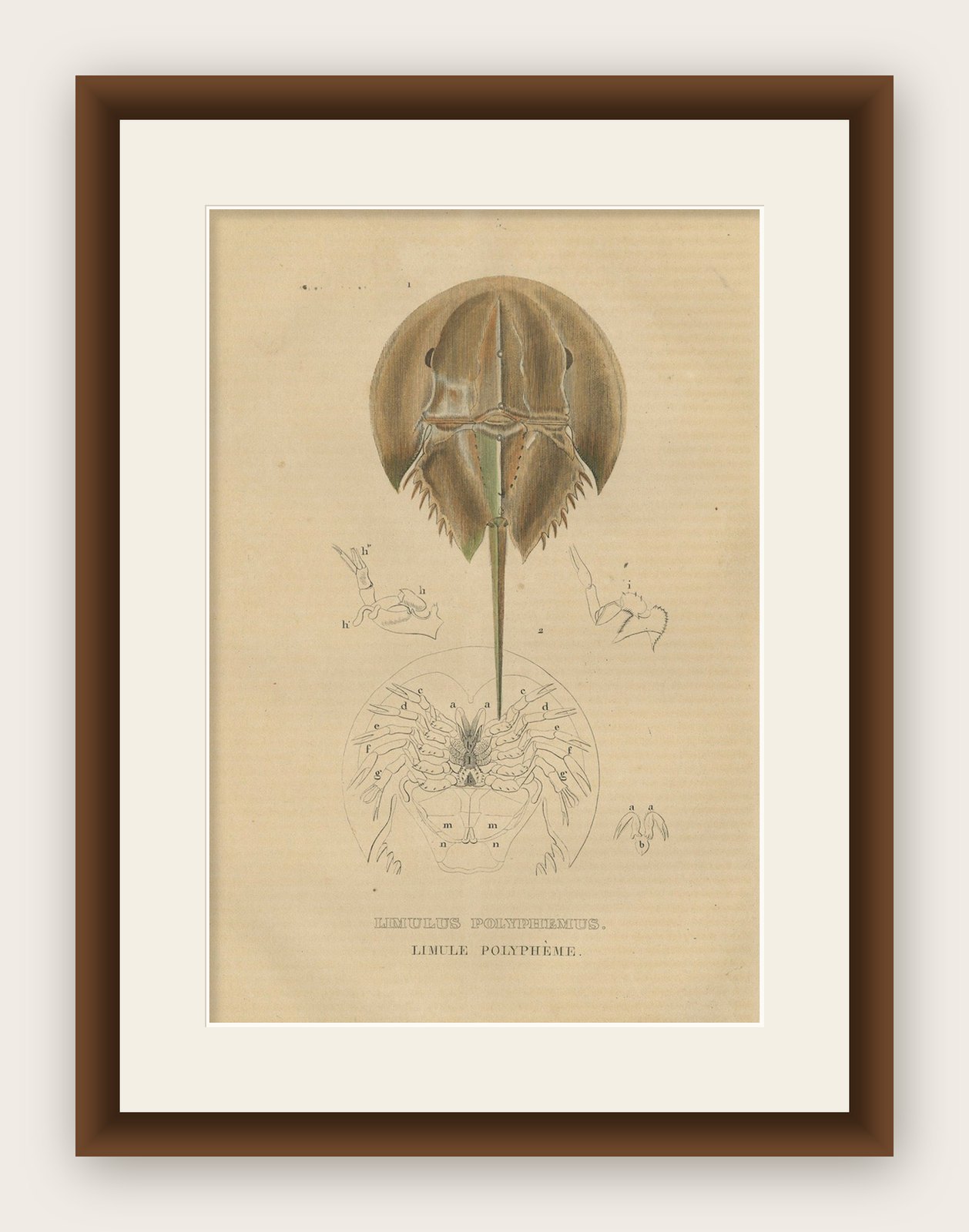
Anatomy of the Atlantic Horseshoe Crab, A Hand-Colored Engraving of 1845
€280 ($315, £235, €280)
Period original, not a reproduction.
Shipped from the Netherlands, flat, insured and tracked, worldwide. Returns accepted within 14 days.
- Date
- 1845
- Size
- 10.4 × 6.7 in (26.5 × 17 cm)
- Condition
- Good. Good. Light offsetting and soiling. Few browns spot due to aging and handling. Please study the image carefully.
- Period
- Early 19th century
- Section
- Fish and shells
- Reference
- f_37856522
- Colour
- Hand coloured
What the condition grades mean
- Excellent
- Bright and clean, with no faults worth mentioning.
- Very good
- Only light signs of age, such as faint toning.
- Good
- Normal signs of age for a sheet of this period: toning, some foxing, small marks or neat old repairs.
- Fair
- Clear faults such as staining, tears or repairs, priced to match.
Every fault we see is written in the condition note, and the whole sheet is shown uncropped in the photos.
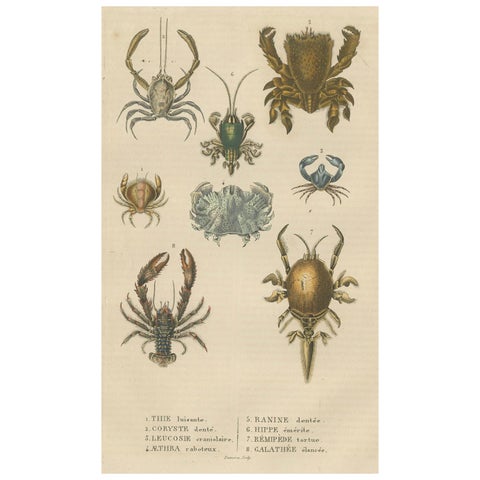
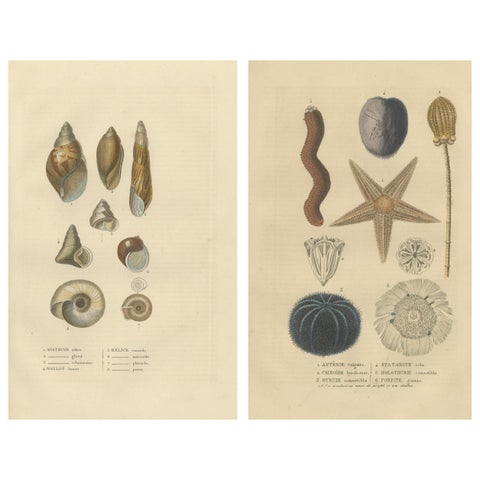
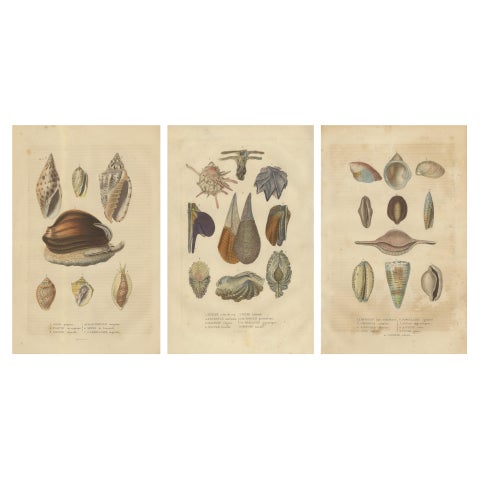
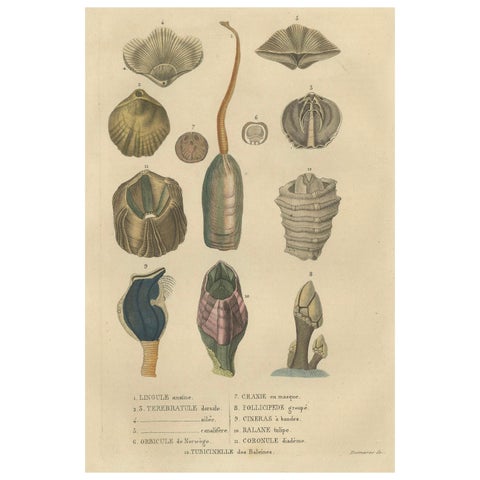
The animal depicted in this print is commonly known as the horseshoe crab, specifically the Limulus polyphemus, also known as the Atlantic horseshoe crab. These marine arthropods are not true crabs but are related to arachnids (spiders and scorpions). They are known for their distinctive horseshoe-shaped carapace and long, pointed tail spine or telson.
The engraving is a scientific illustration from "The 'Dictionnaire Classique des Sciences Naturelles'" by Pierre Auguste Joseph Drapiez, published in 1845. It is a detailed, hand-colored print that was likely used for educational purposes to study the anatomy of this species.