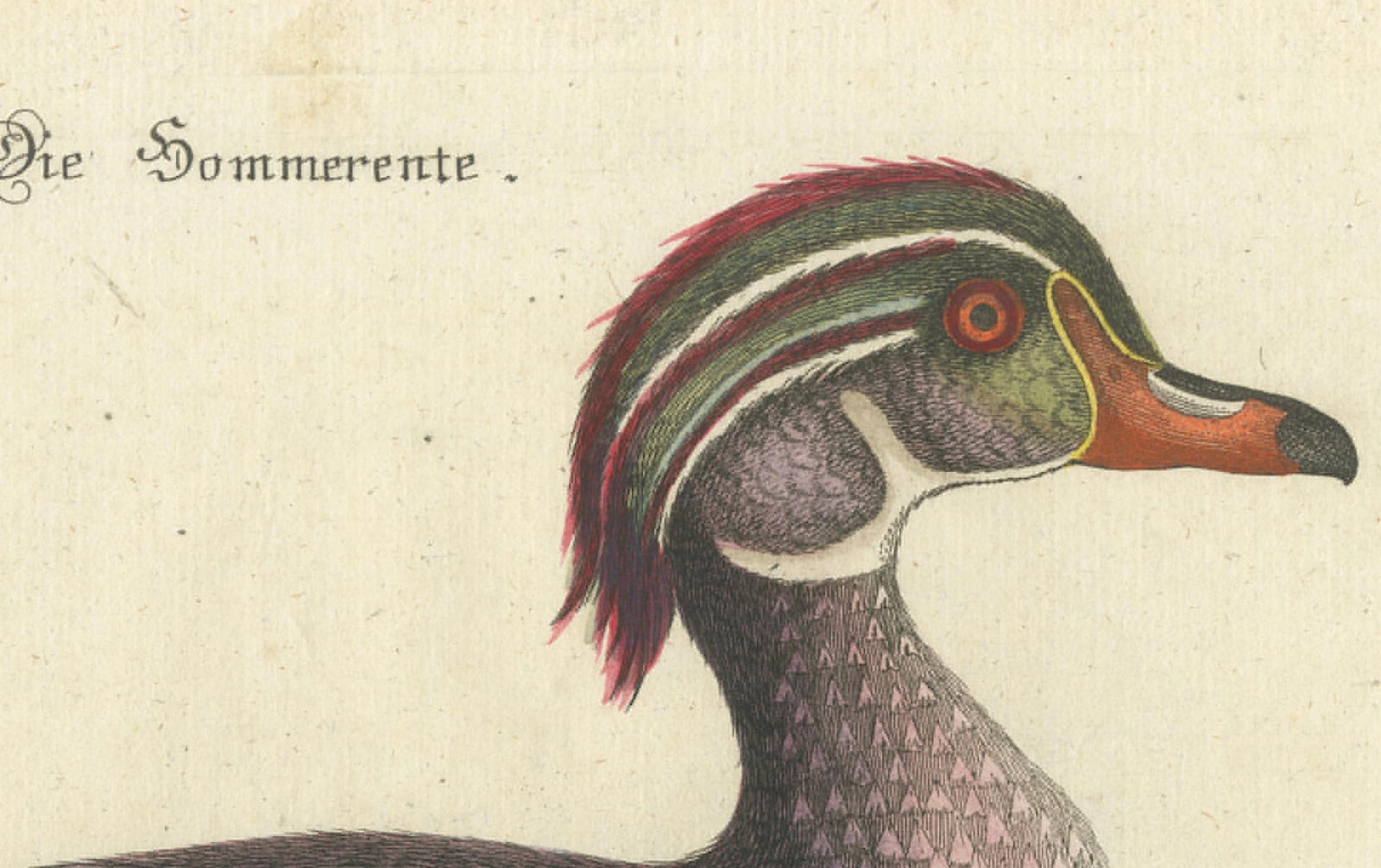
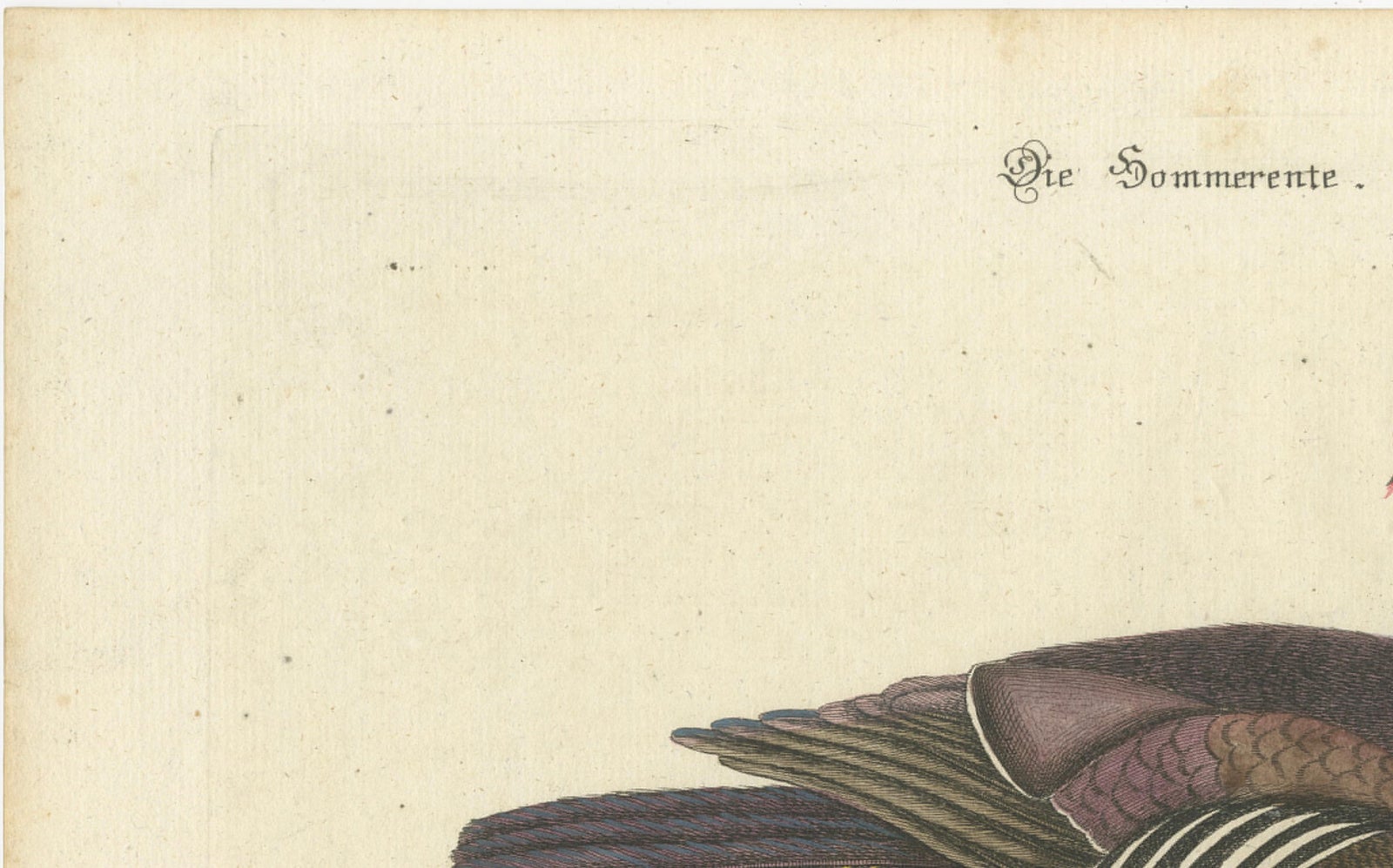
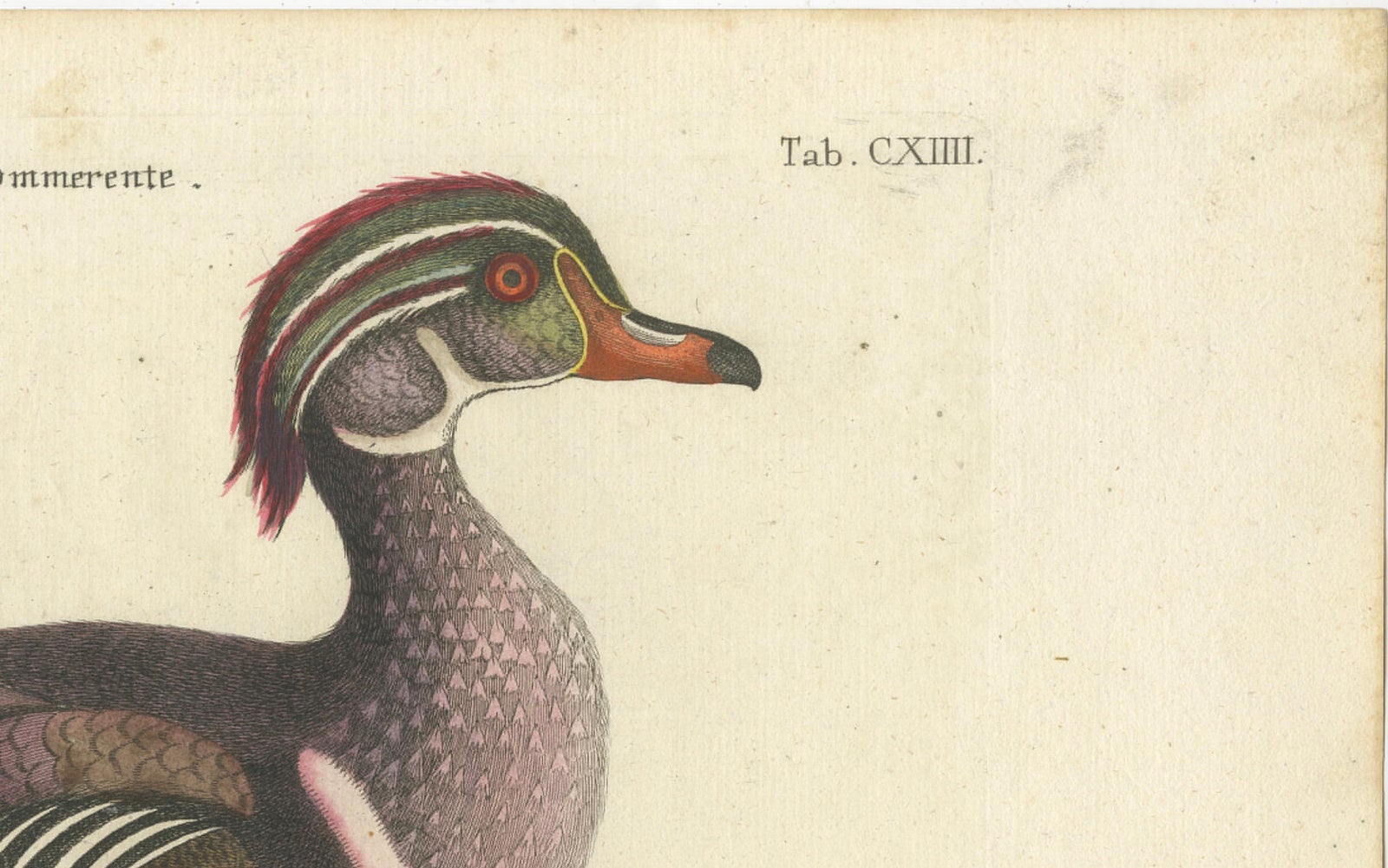
Close-ups
Framed and on the wall
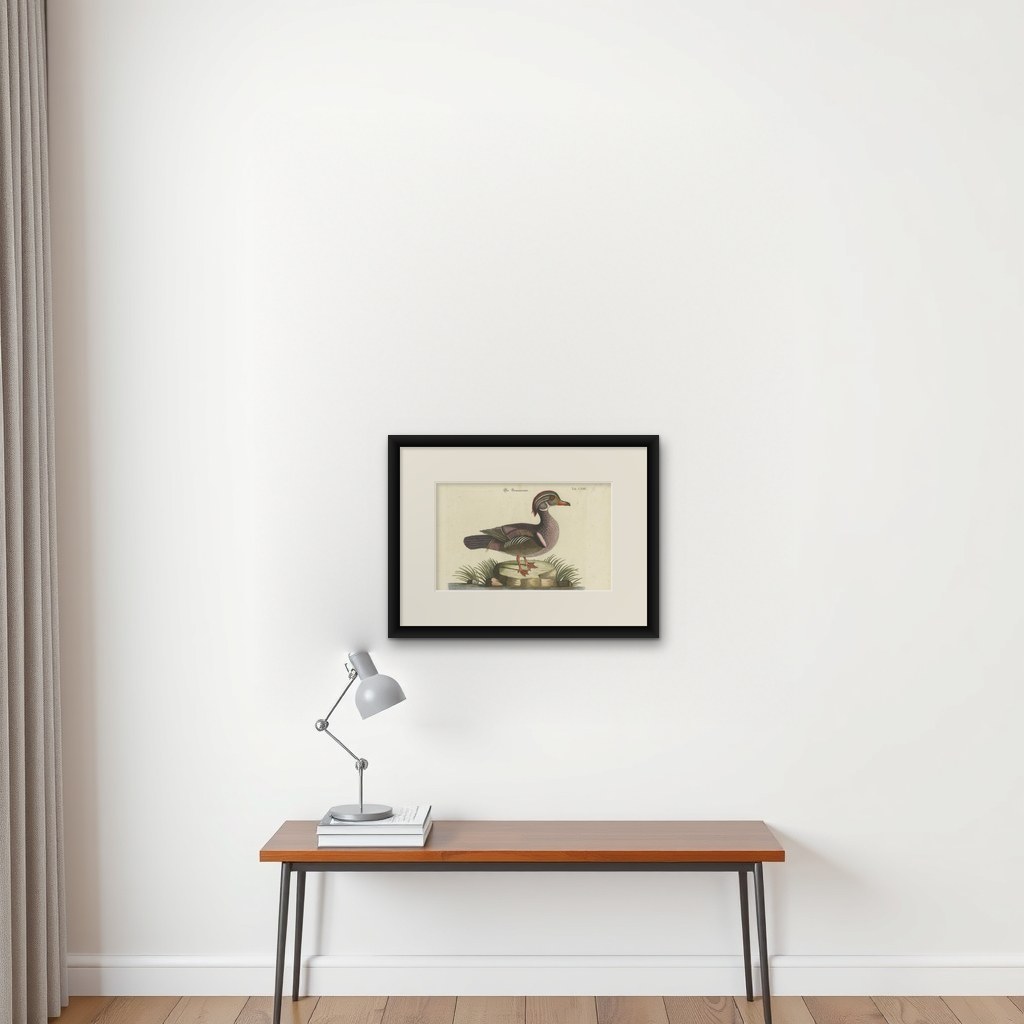

Frame and rooms are illustrations of how the print could look; the description says what is included.
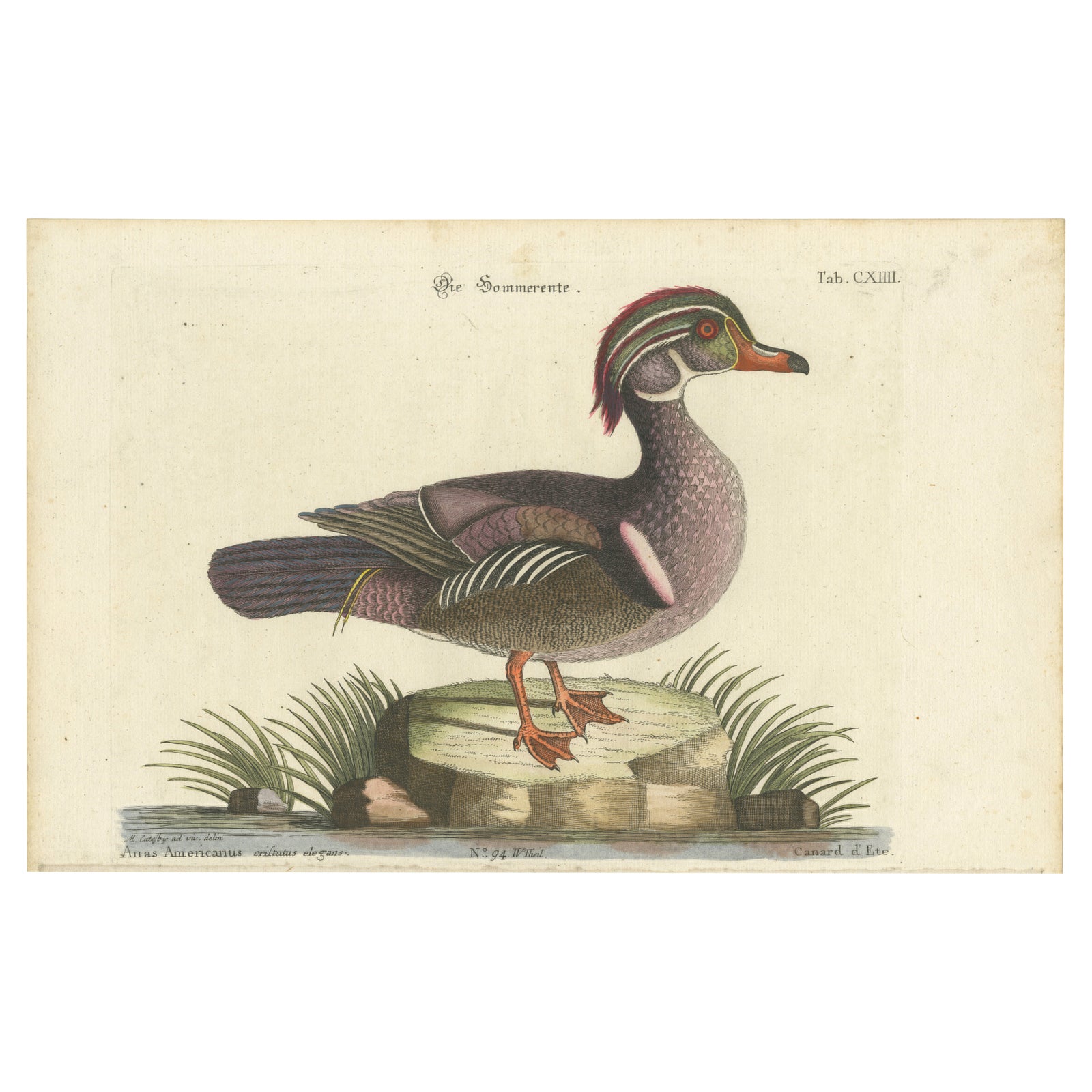
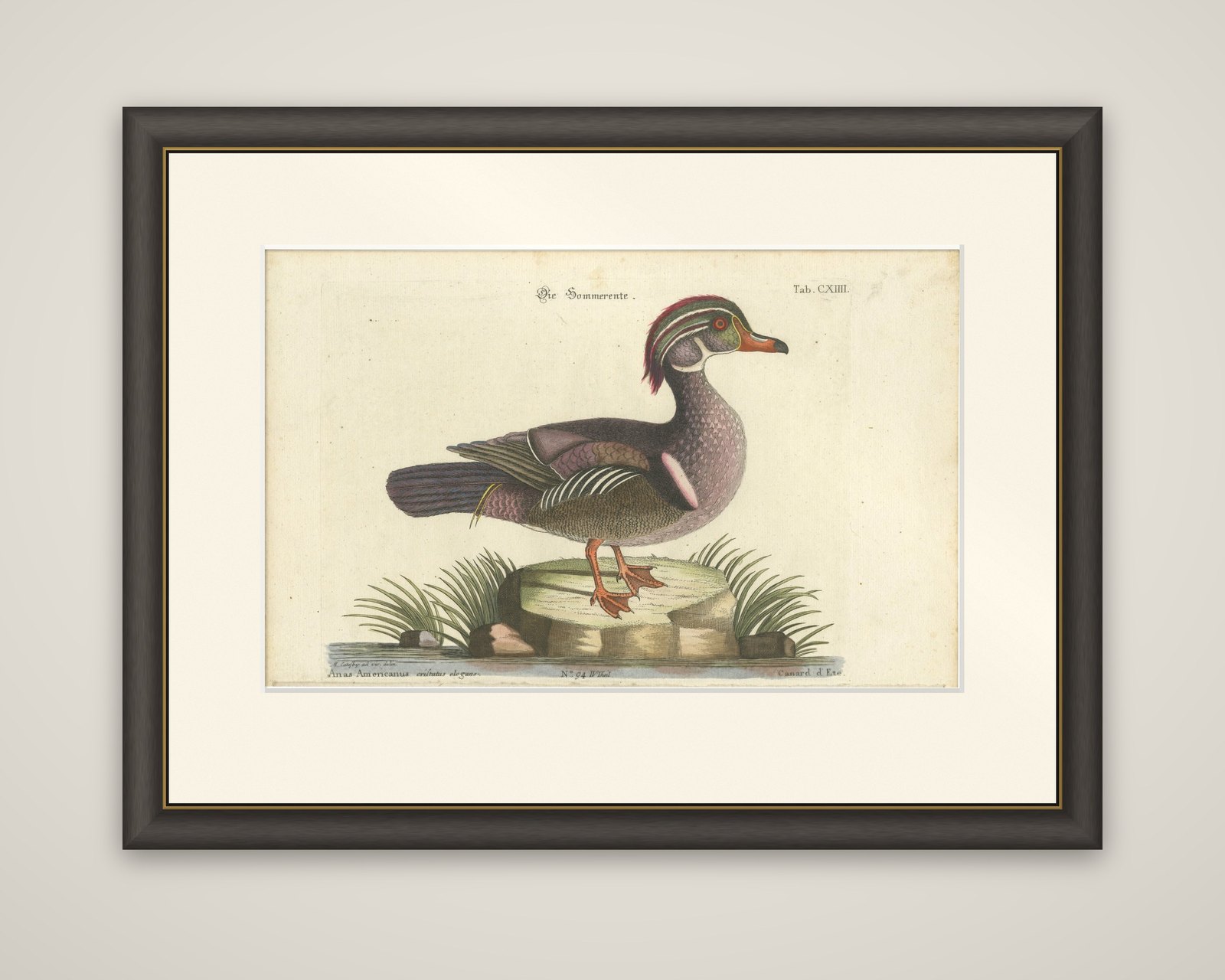
Wood Duck, Die Sommerente / Canard d’Été, after Mark Catesby, Seligmann, c.1770
€590 ($660, £500, €590)
Period original, not a reproduction.
Shipped from the Netherlands, flat, insured and tracked, worldwide. Returns accepted within 14 days.
- Date
- 1770
- Size
- 9.4 × 14.8 in (23.8 × 37.5 cm)
- Condition
- Good. Vibrant colors, minimal fading. Paper shows light toning and minor foxing. Some handling marks, mostly outside plate-mark, not affecting image quality.
- Period
- 18th century
- Artist or book
- Mark Catesby
- Section
- Birds
- Reference
- f_42320632
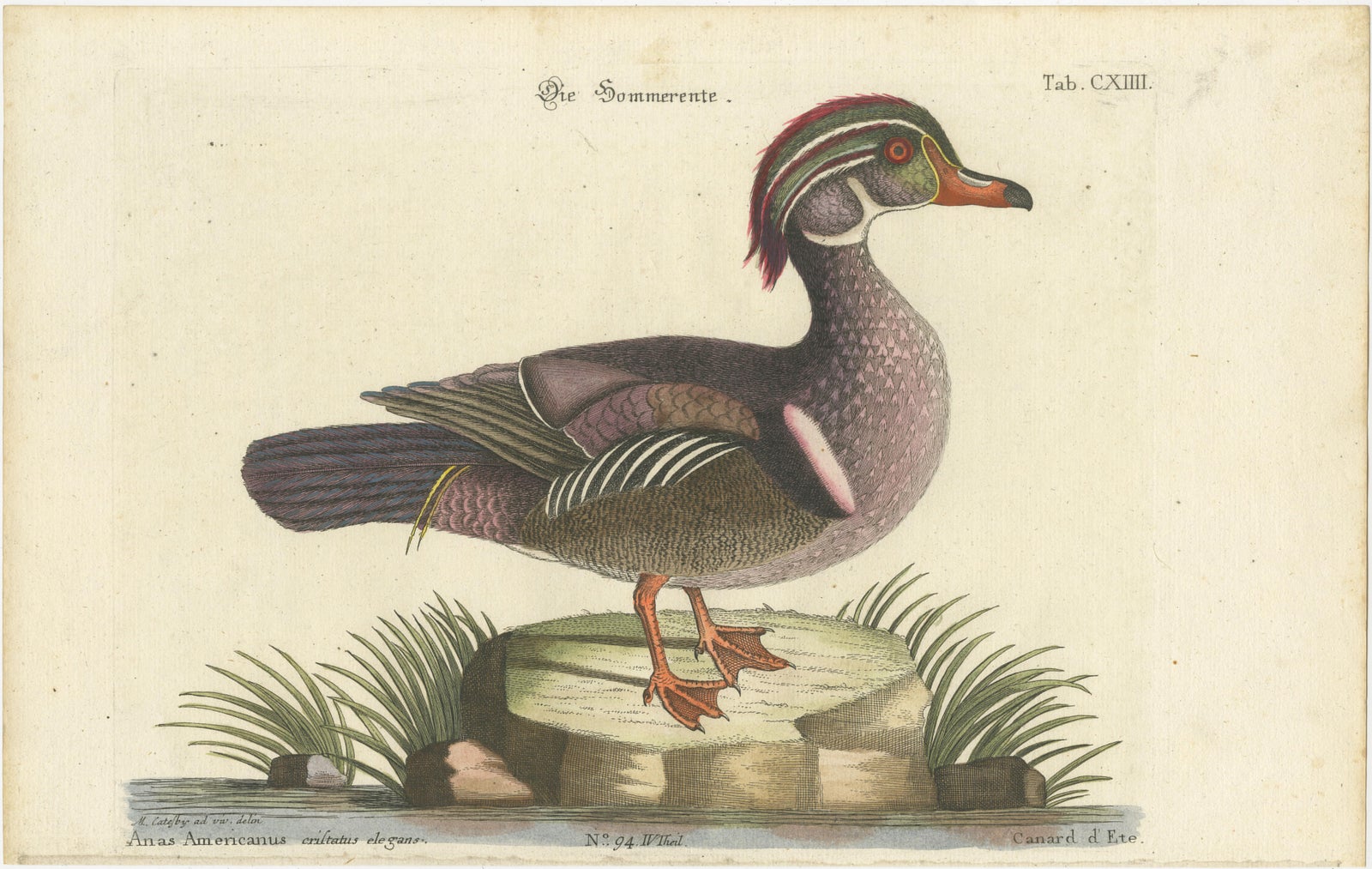
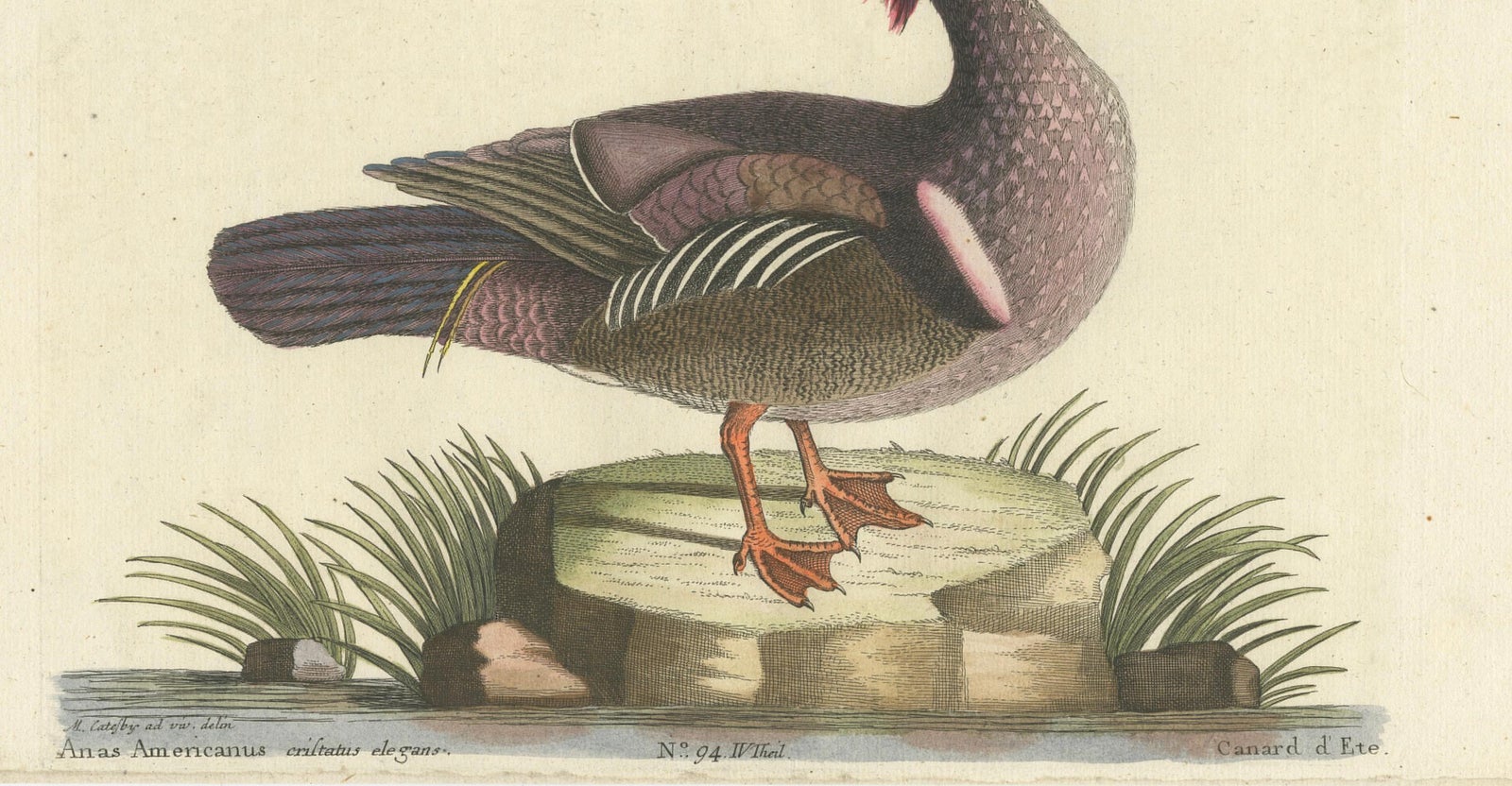
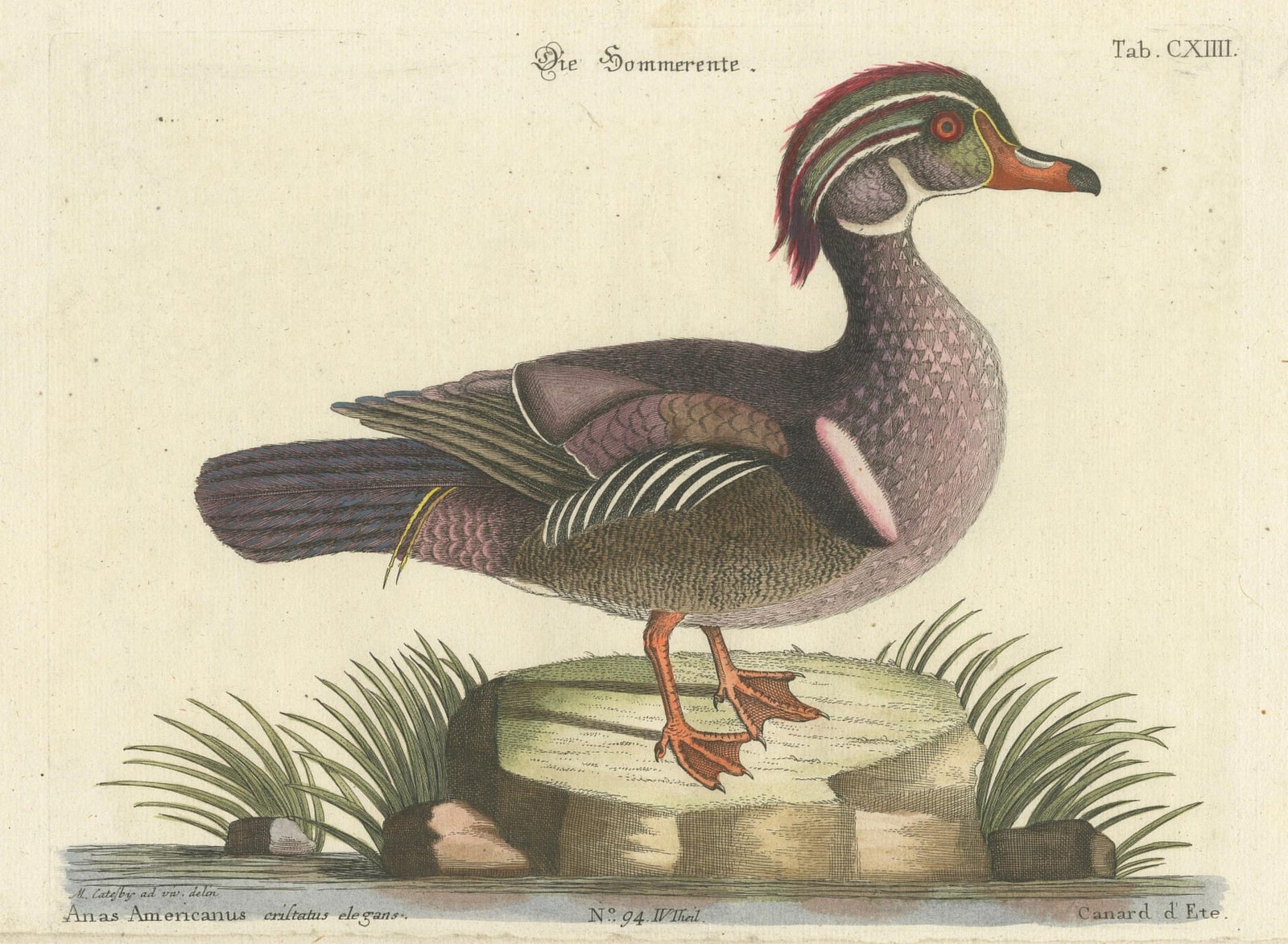
The wood duck, titled "Die Sommerente", in an original hand-colored copperplate engraving after Mark Catesby, circa 1770, from Johann Michael Seligmann's Sammlung verschiedener ausländischer und seltener Vögel, published in Nuremberg. The plate is lettered below with the Latin "Anas Americanus cristatus elegans", "N° 94 IV Theil" and the French "Canard d'Eté", and the credit "M. Catesby ad viv. delin." appears at the lower left.
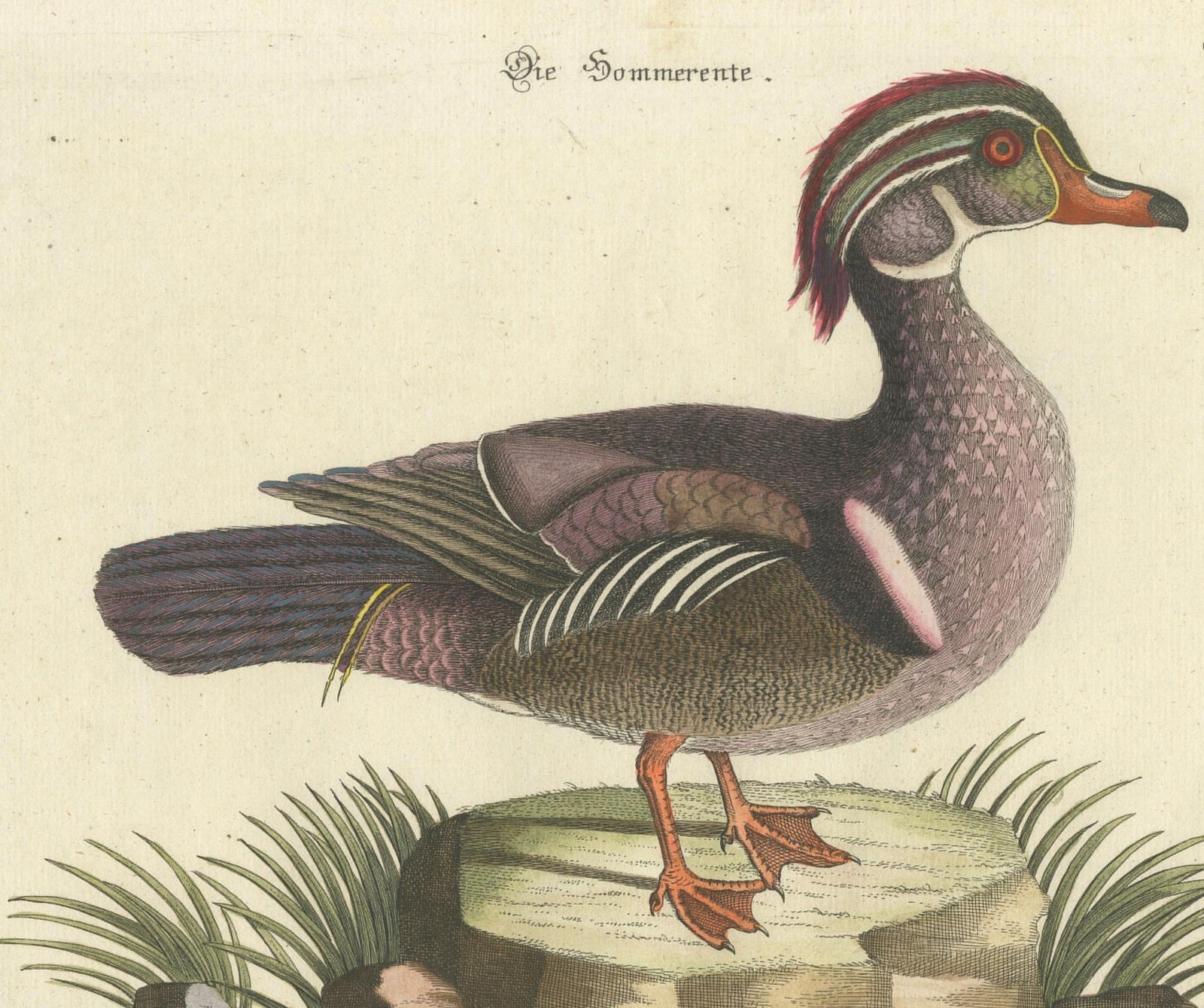
The drake stands in profile facing right on a flat, mossy rock, with tufts of grass rising behind it on both sides and water along the foot. The crested head is drawn in great detail: a swept-back crest in red and green with white stripes, a red eye, and an orange bill with a dark tip. The breast is mauve and finely spotted, with a pink flash at the side, the folded wing is striped in white and green over a mottled brown back, and the long tail is dark purple. The legs and webbed feet are bright orange.
The wood duck was one of the showpieces of Catesby's Natural History of Carolina, Florida and the Bahama Islands, which appeared in 1729 to 1747. Seligmann re-engraved the plates for a German audience, with captions in three languages.