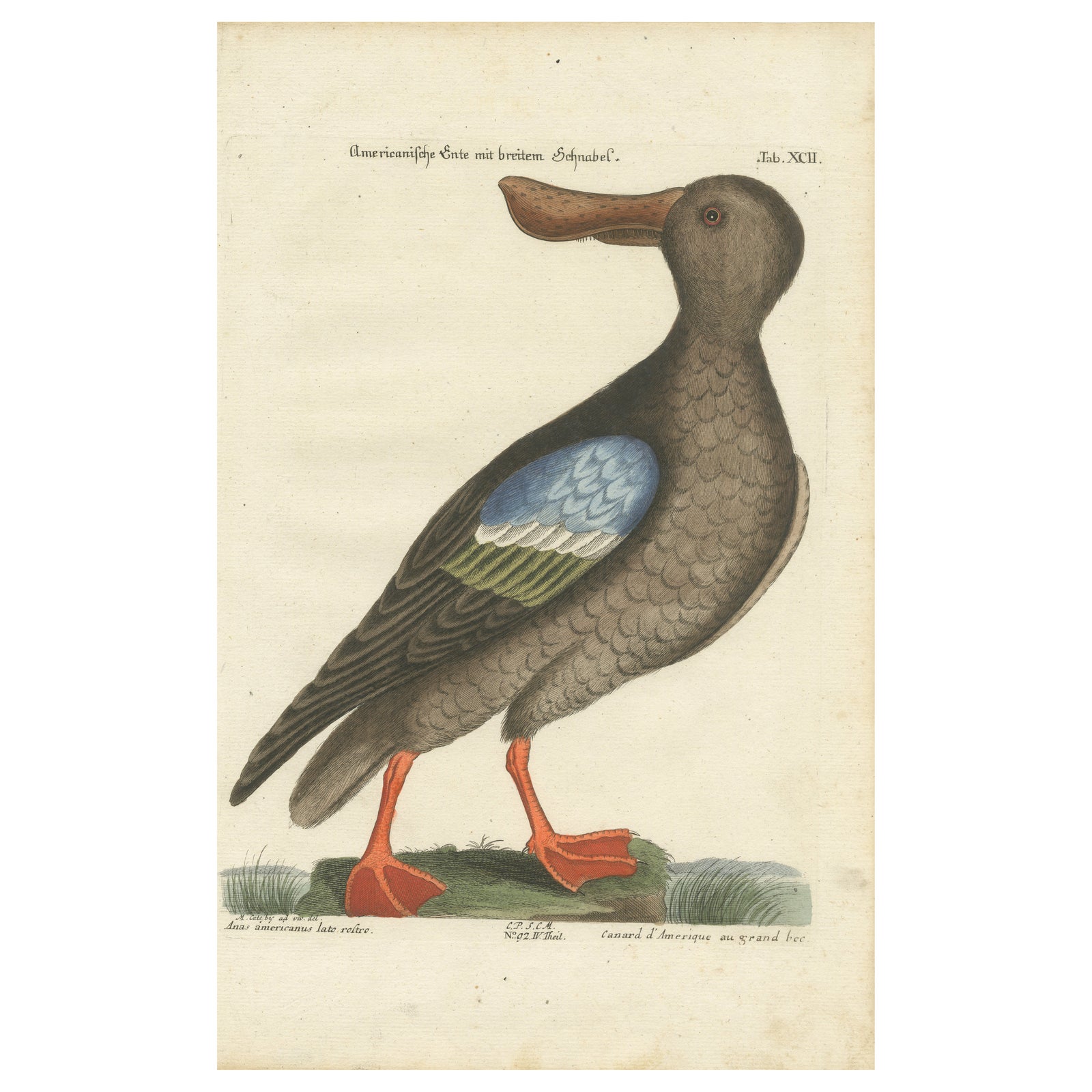
Close-ups
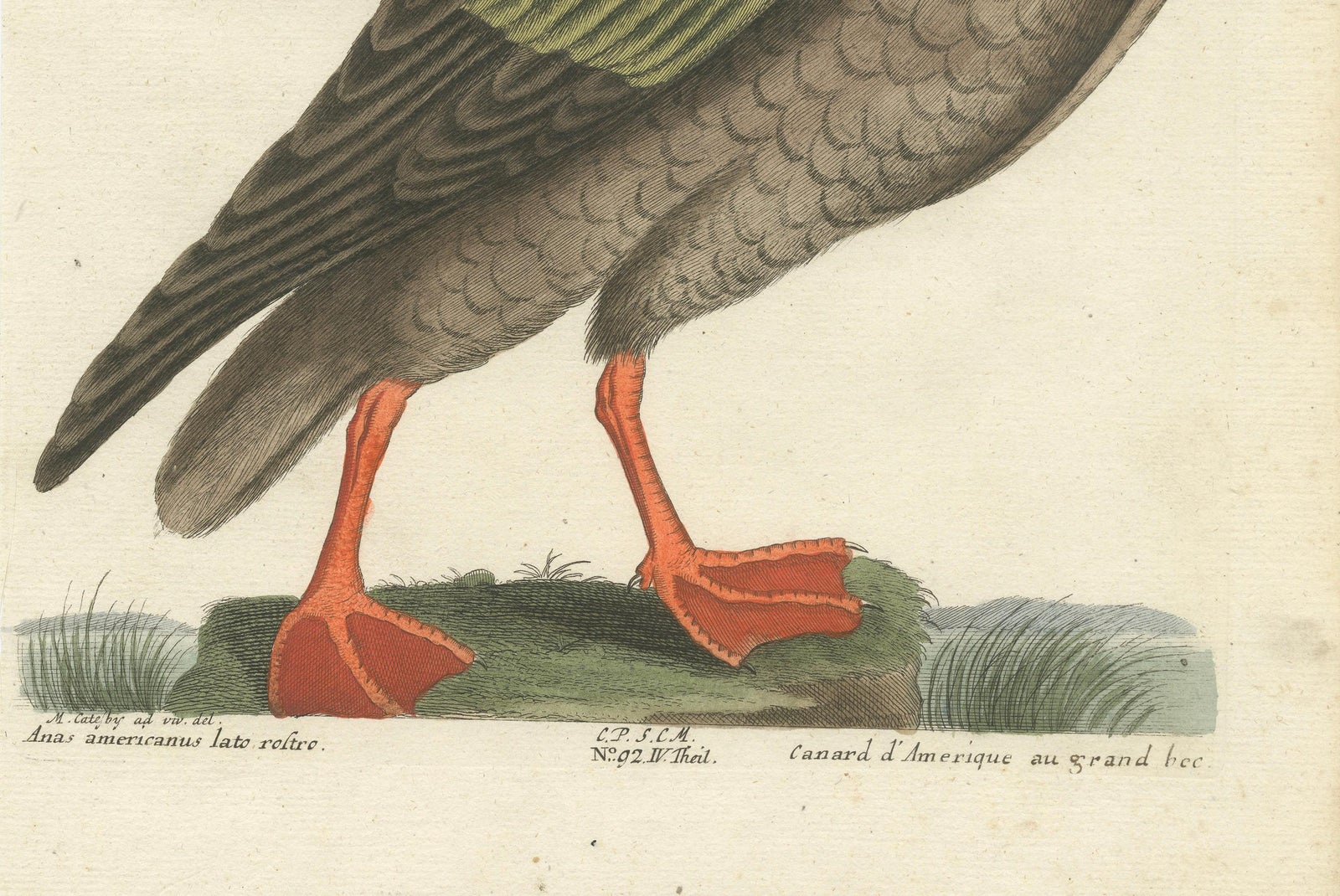
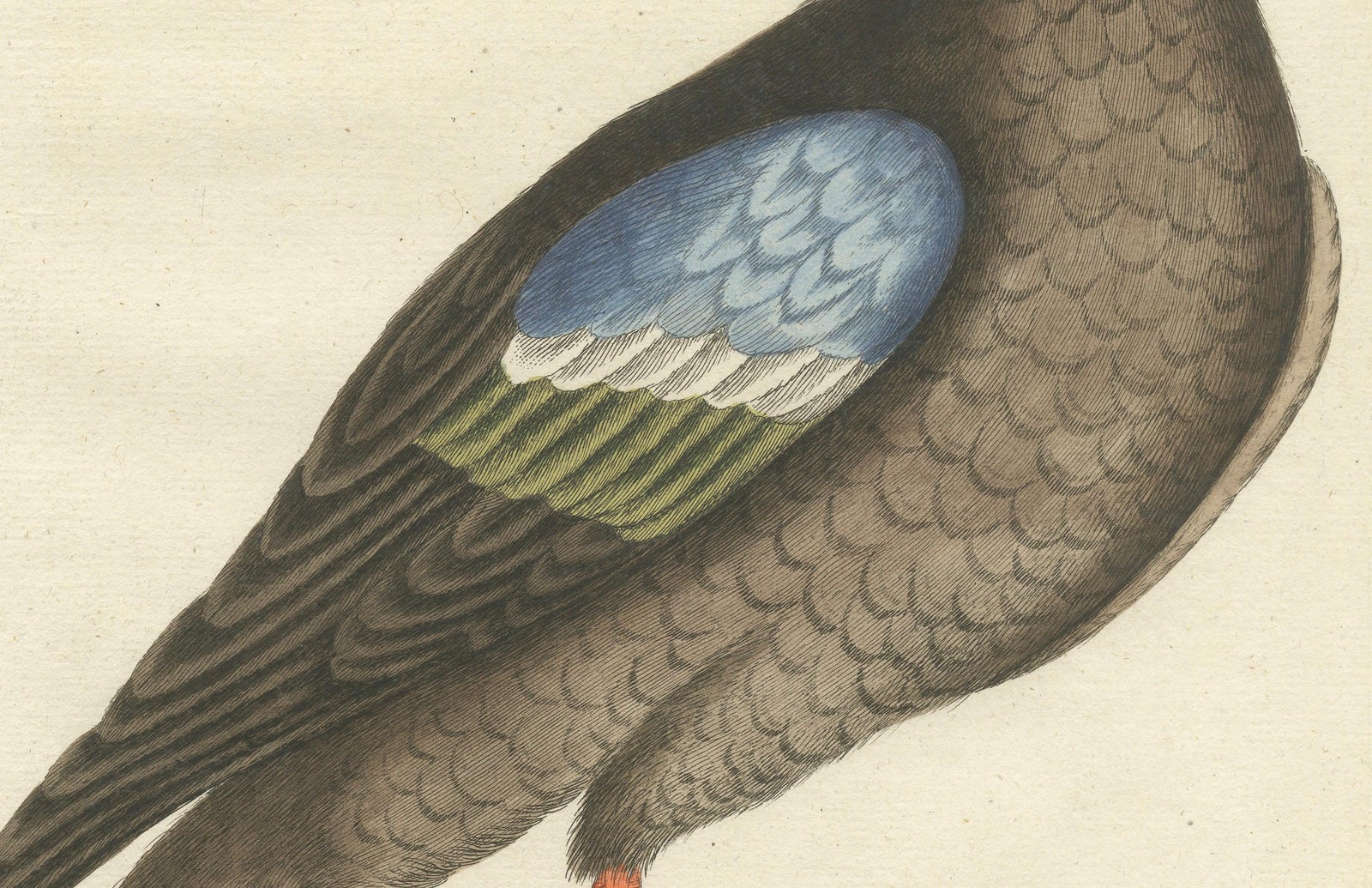
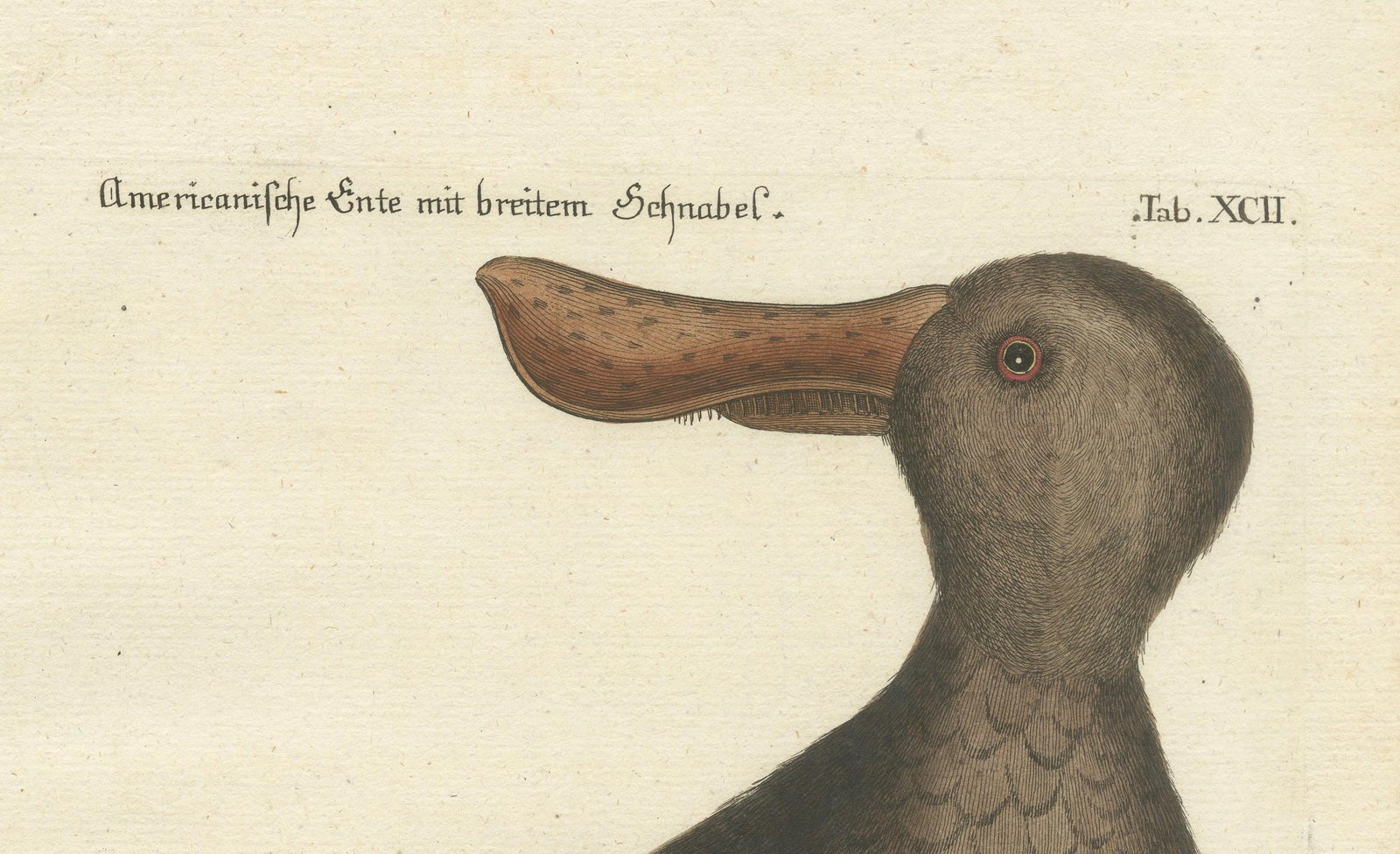
Framed and on the wall
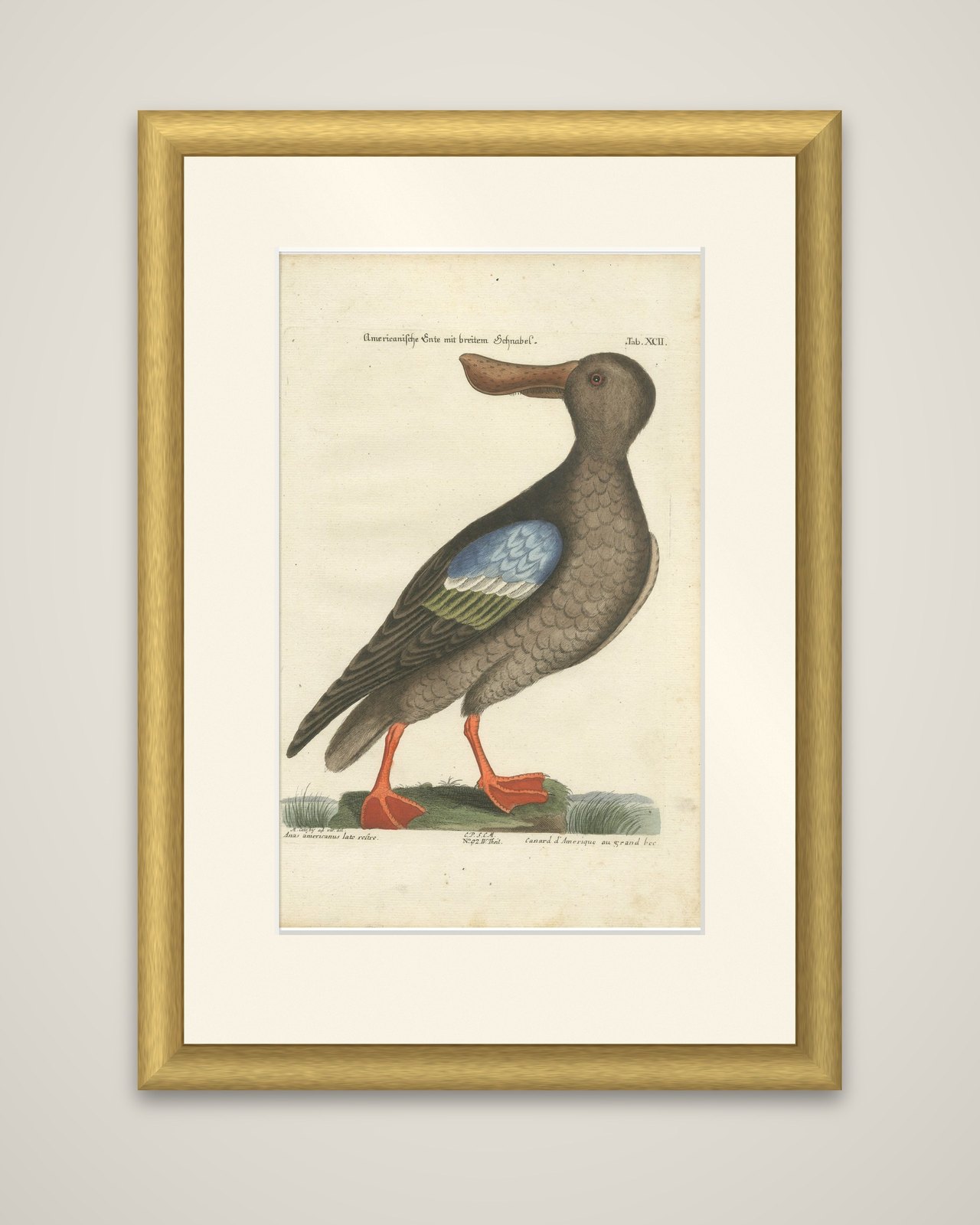


Frame and rooms are illustrations of how the print could look; the description says what is included.
Hand-Colored Engraving of the American Duck with Broad Bill by Seligmann, c.1770
$605 (£455, €540)
Period original, not a reproduction.
Shipped from the Netherlands, flat, insured and tracked, worldwide. Returns accepted within 14 days.
- Date
- 1770
- Size
- 14.6 × 9.8 in (37 × 25 cm)
- Condition
- Good. Vibrant colors, minimal fading. Paper shows light toning and minor foxing. Some handling marks, mostly outside plate-mark, not affecting image quality.
- Period
- 18th century
- Section
- Birds
- Reference
- f_42338292
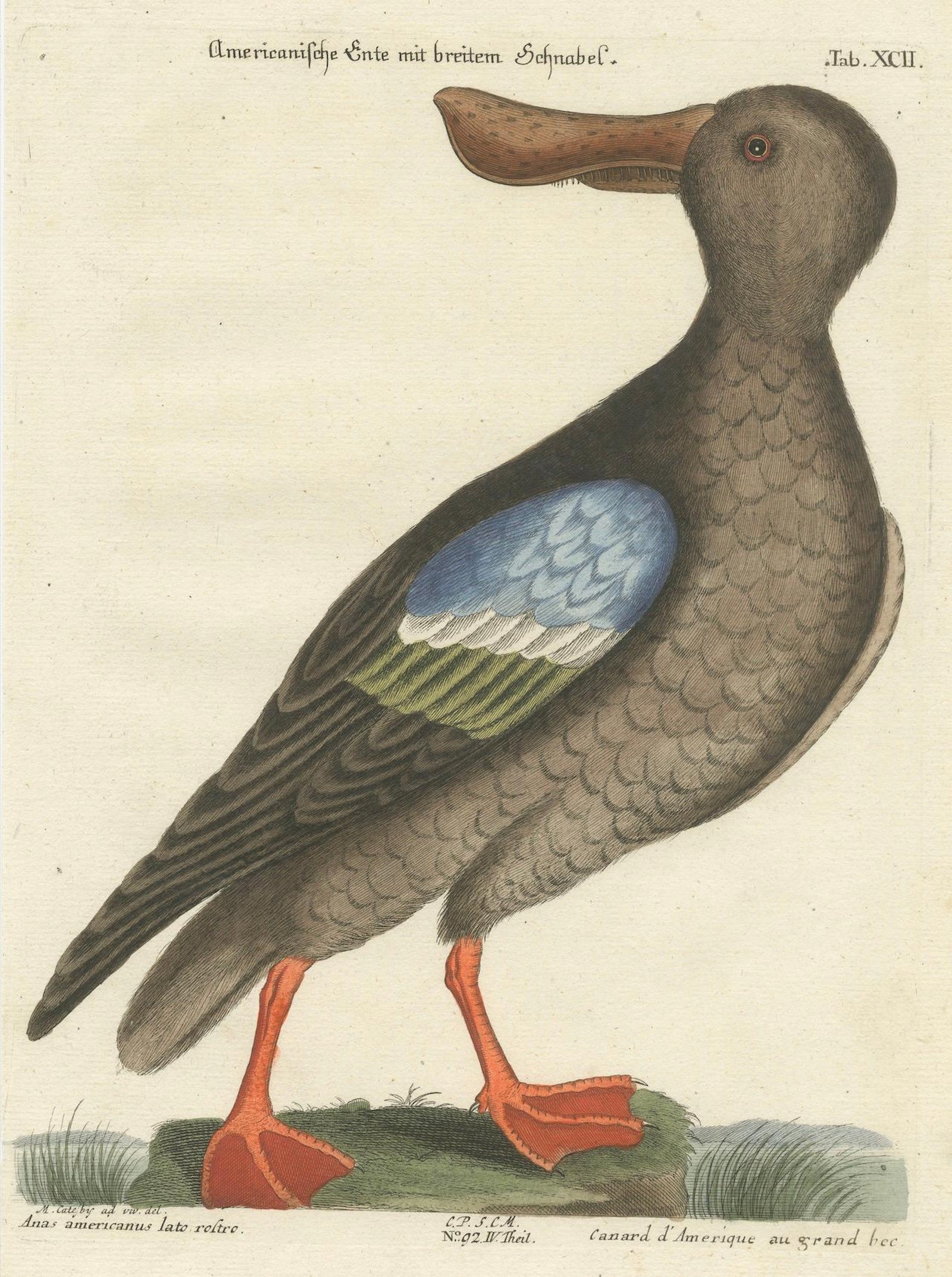
A shoveler, titled "Americanische Ente mit breitem Schnabel", in an original hand-colored copperplate engraving from Johann Michael Seligmann's Sammlung verschiedener ausländischer und seltener Vögel, Nuremberg, circa 1770. The plate is numbered "Tab. XCII" at the upper right and lettered below with the Latin "Anas americanus late rostro", "N° 92 IV Theil" and the French "Canard d'Amerique au grand bec", with a credit line at the lower left that appears to read "M. Catesby ad viv. delin."
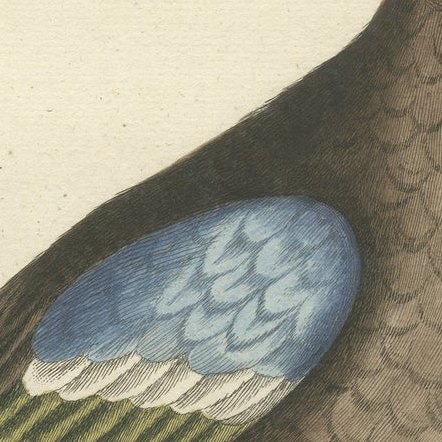
The duck stands on a patch of green ground with tufts of grass at both sides, seen from the side and turned to the right, with its head thrown back and its great spatulate bill raised. The body is drawn in soft brown scalloping, a pale blue patch with a white bar and a band of green marks the folded wing, and the legs and webbed feet are a bright orange-red. The bill is a rounded brown spoon, drawn as wide as the head, which is the feature that gave the bird its German name, "duck with a broad bill."
The shoveler was one of the American waterfowl that Catesby drew in the Carolinas for his Natural History, and Seligmann re-engraved such plates for German readers.