Close-ups
Framed and on the wall

Frame and rooms are illustrations of how the print could look; the description says what is included.
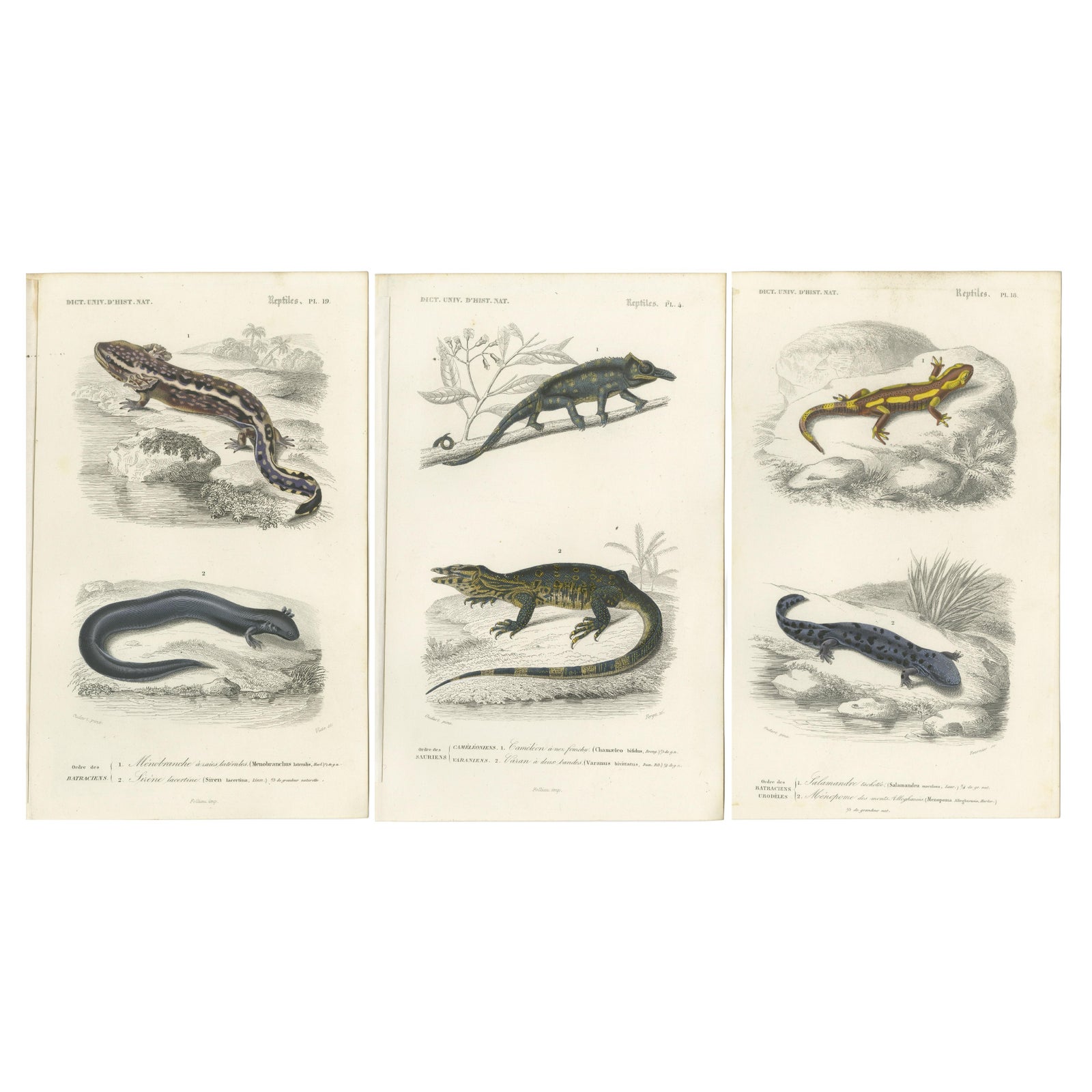
Set of 3 Antique Prints of a Chameleon and Other Reptiles
£475 ($625, €560)
Period original, not a reproduction.
Shipped from the Netherlands, flat, insured and tracked, worldwide. Returns accepted within 14 days.
- Date
- Not stated
- Size
- 9.2 × 6 in (23.4 × 15.3 cm)
- Condition
- Good. General age-related toning. Minor wear and soiling. With original protective sheet attached. Blank verso. Please study image carefully.
- Section
- Reptiles and amphibians
- Reference
- f_34631332
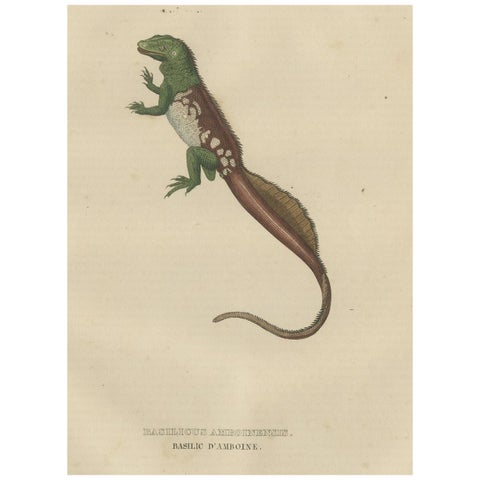
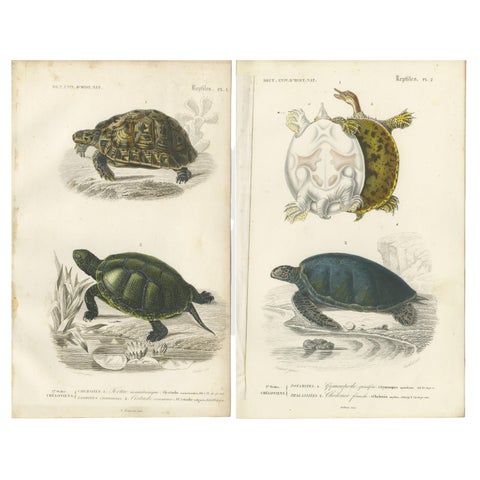
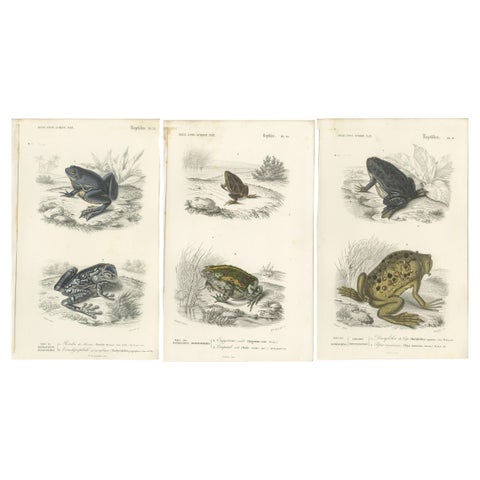
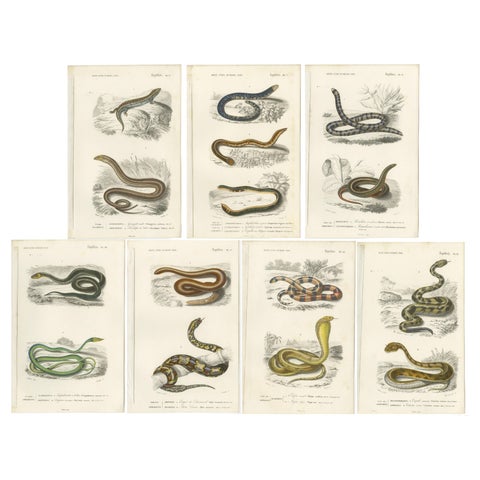
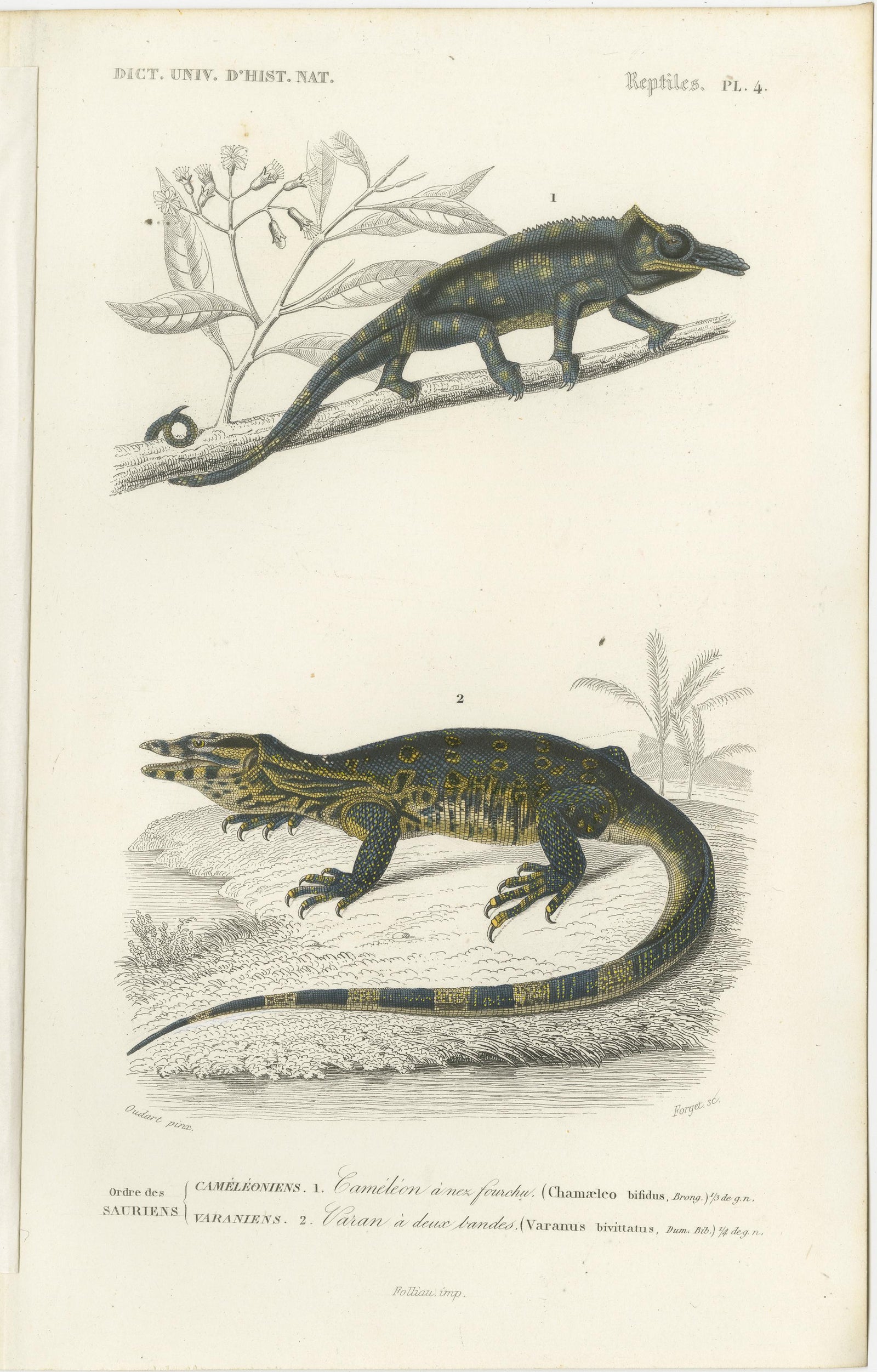
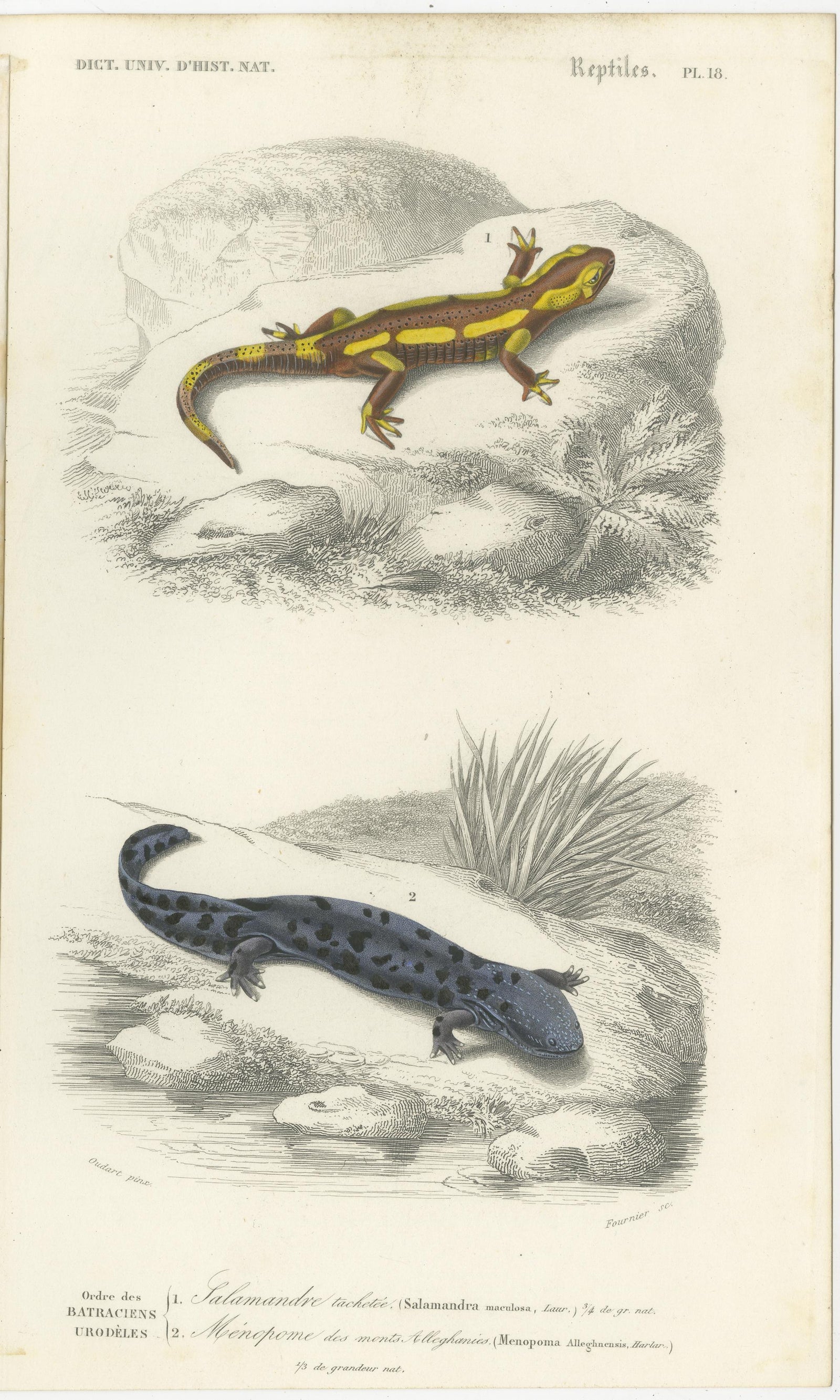
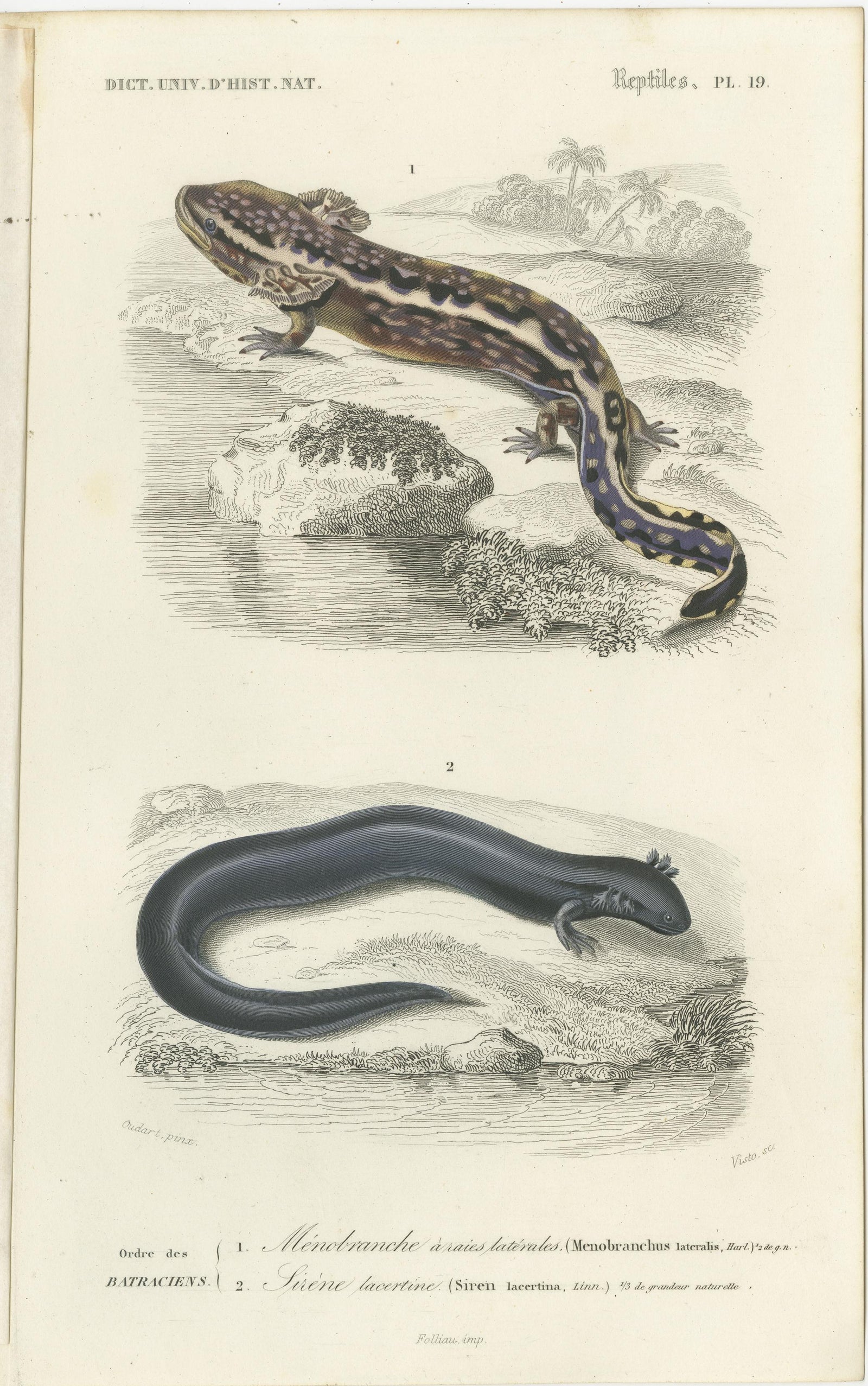
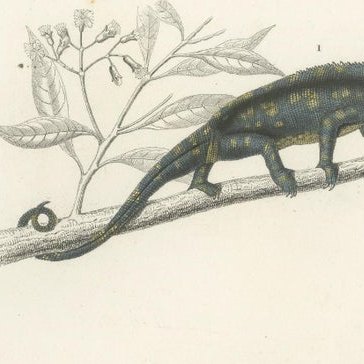
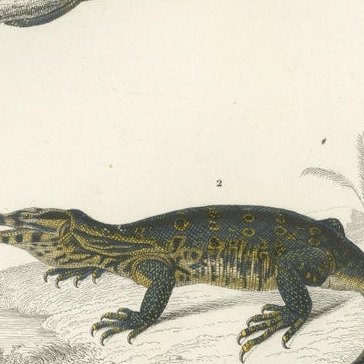
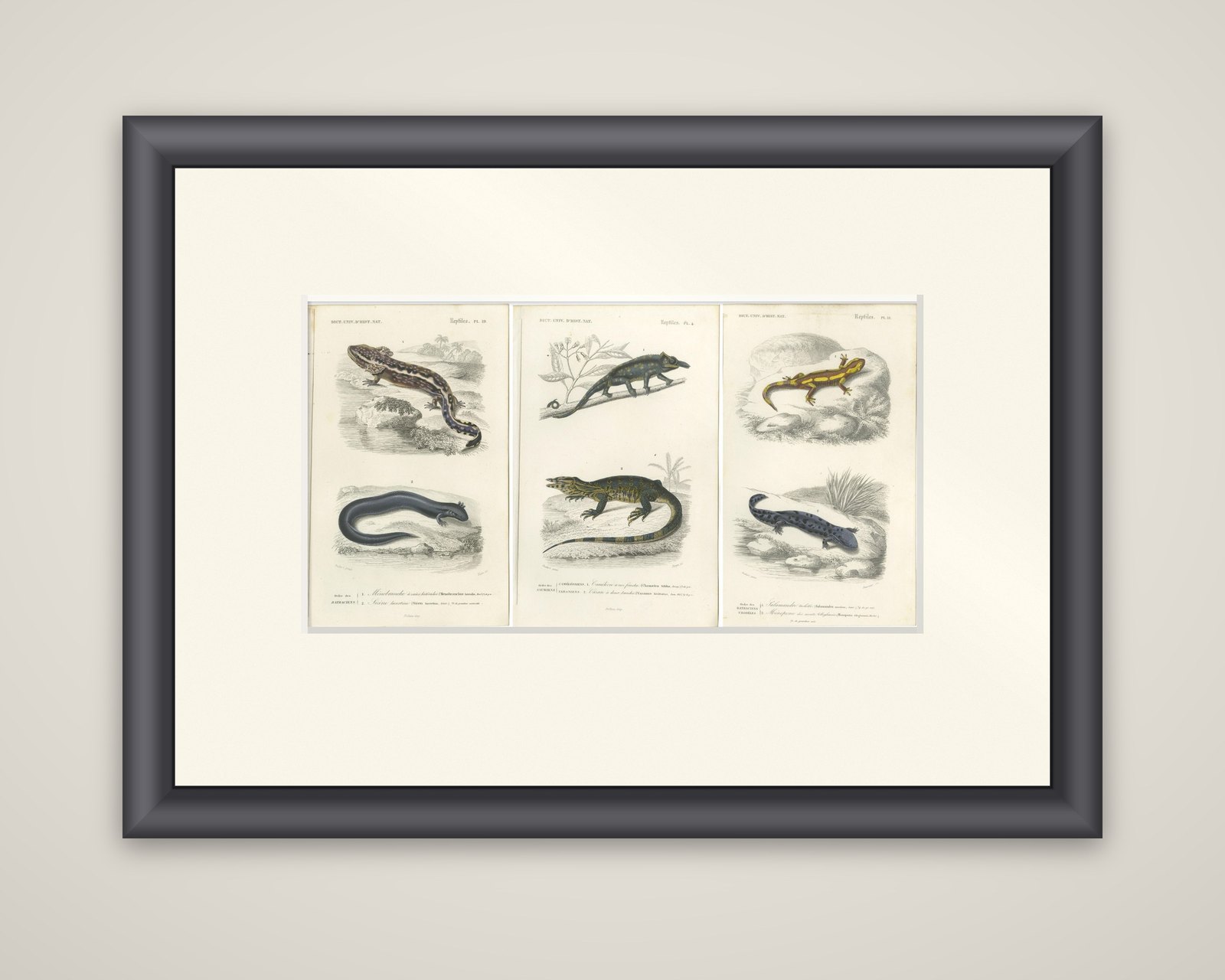
Three plates of reptiles and amphibians from the Dictionnaire universel d'histoire naturelle, edited by Charles Henry Dessalines d'Orbigny and published in 1861. Each is a hand-colored engraving headed "Dict. Univ. d'Hist. Nat." and "Reptiles", with a plate number and a short caption in French and Latin at the foot.
One plate pairs a chameleon with a forked snout, perched on a flowering branch, with a banded monitor lizard beneath it among palms. The second shows a bright yellow-and-black spotted salamander in the upper half over a blue-gray one on a rock, and the third has two aquatic salamanders, a long dark-bodied one in shallows and a spotted one with a fringed head above it. All are drawn with backgrounds of rock, water and tropical or temperate vegetation to suggest their habitats.
D'Orbigny was a French botanist and geologist who identified many of the flowering plant species returned to France from his brother's collecting journeys through South America.