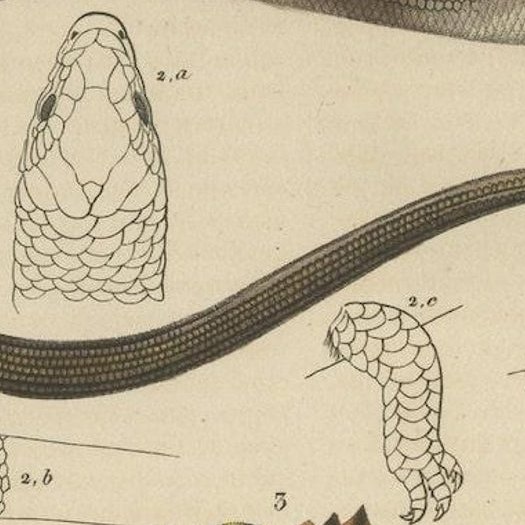
Close-ups
Framed and on the wall
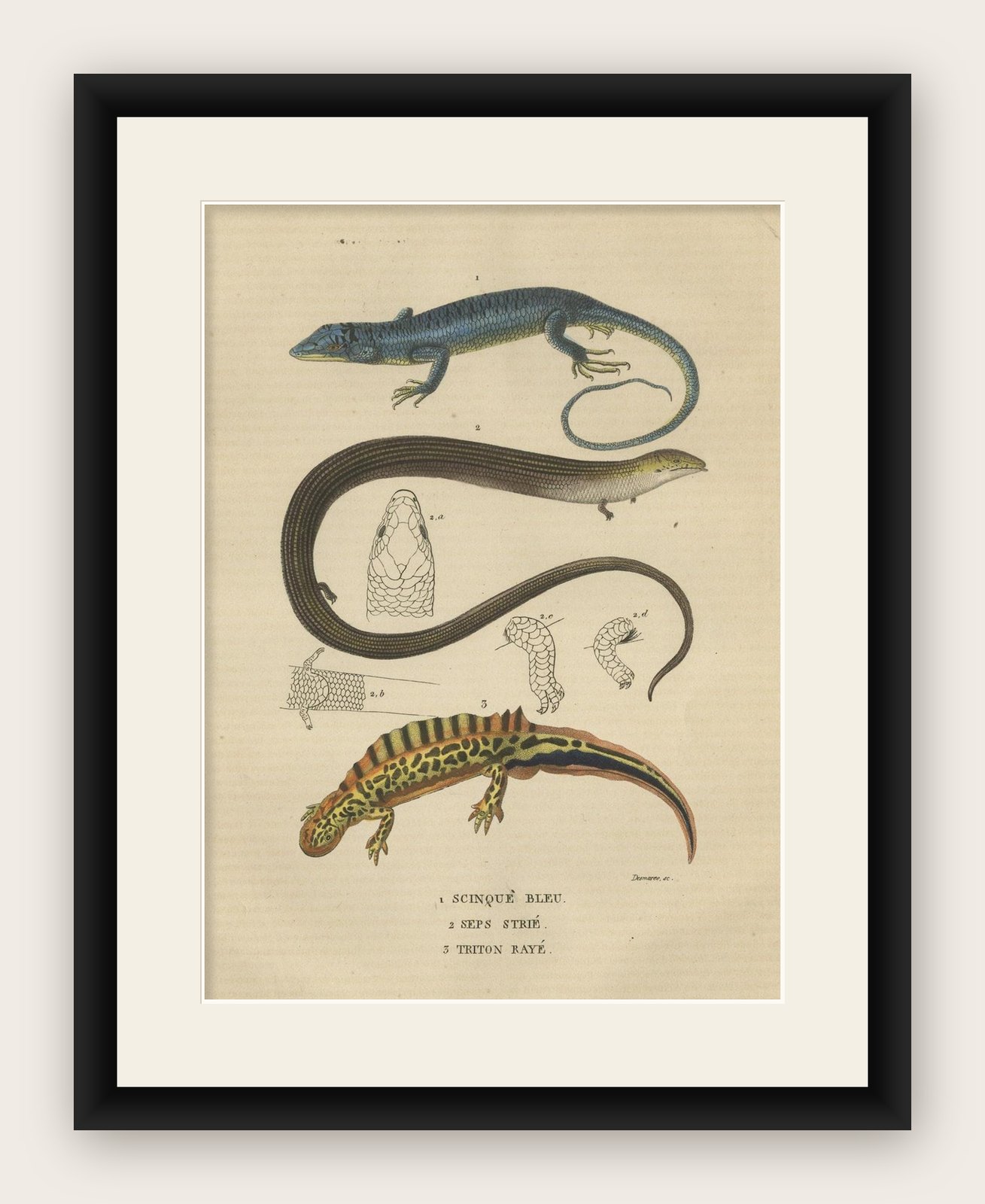


Frame and rooms are illustrations of how the print could look; the description says what is included.
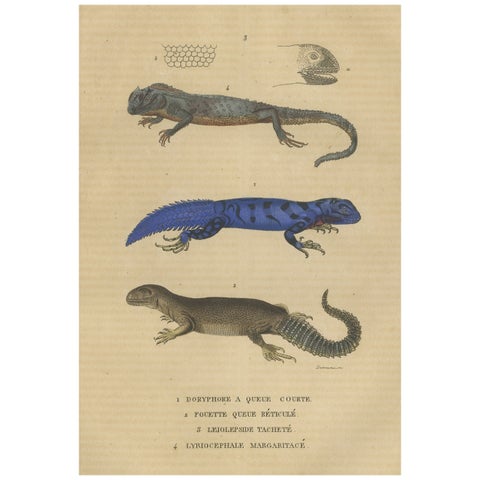
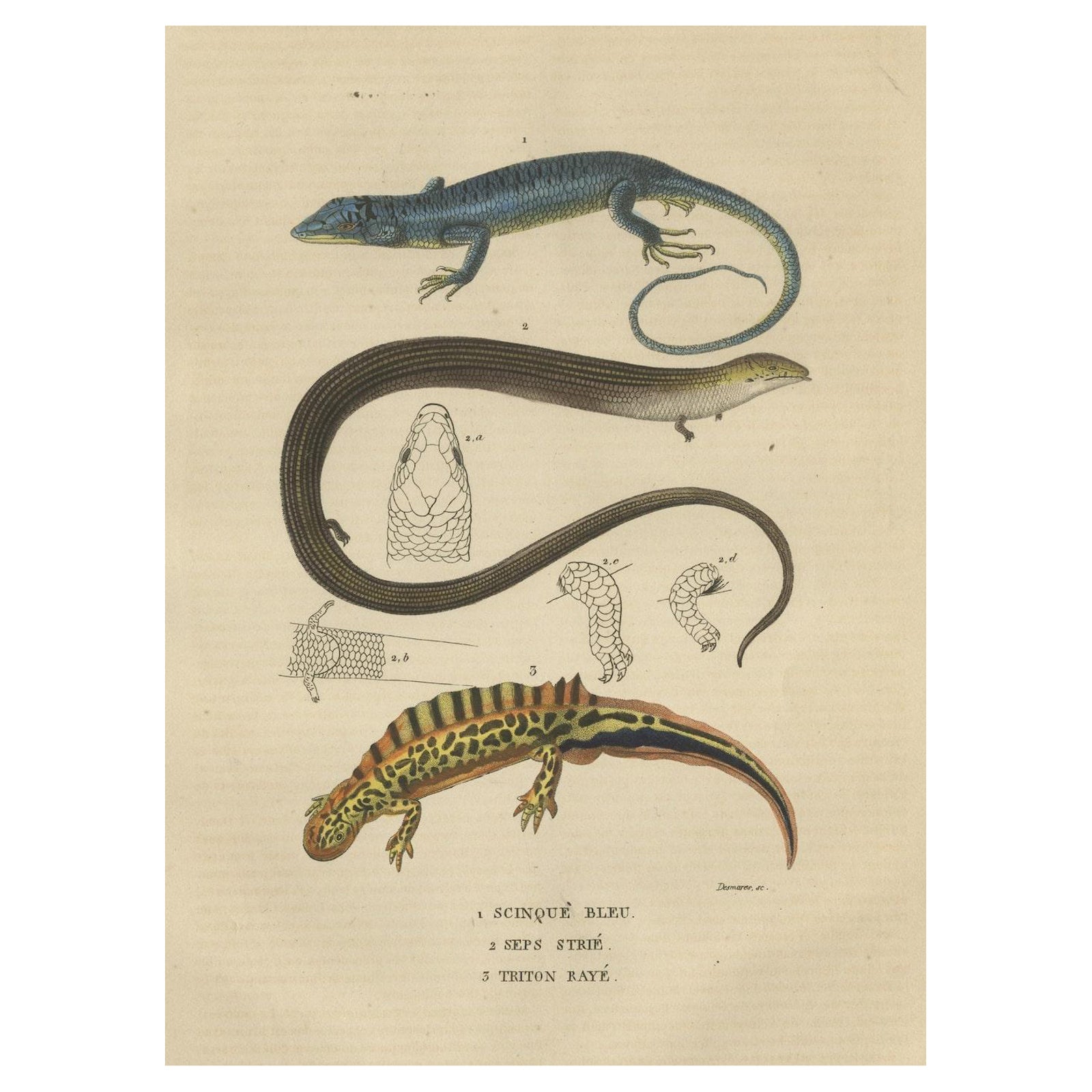
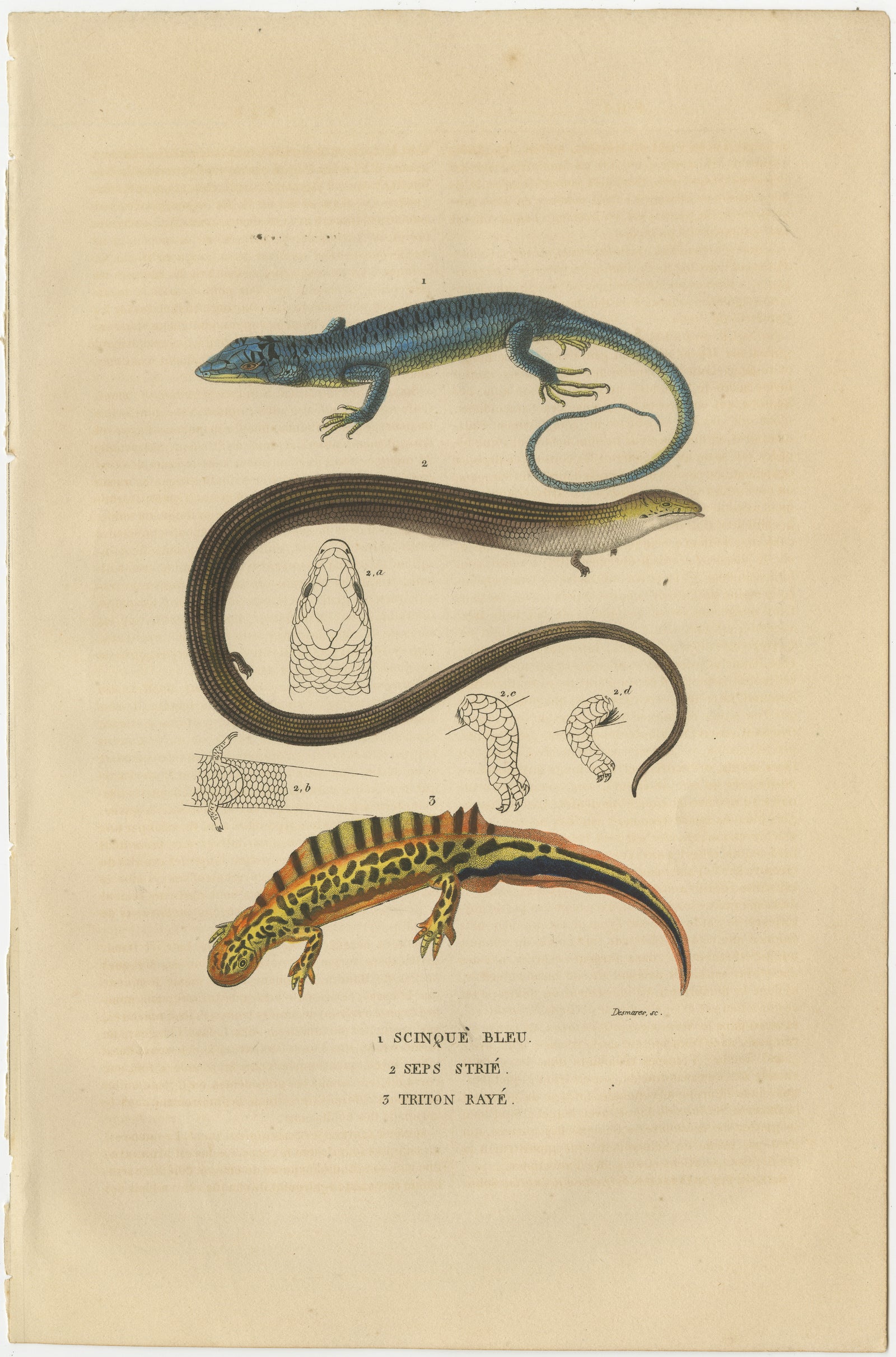
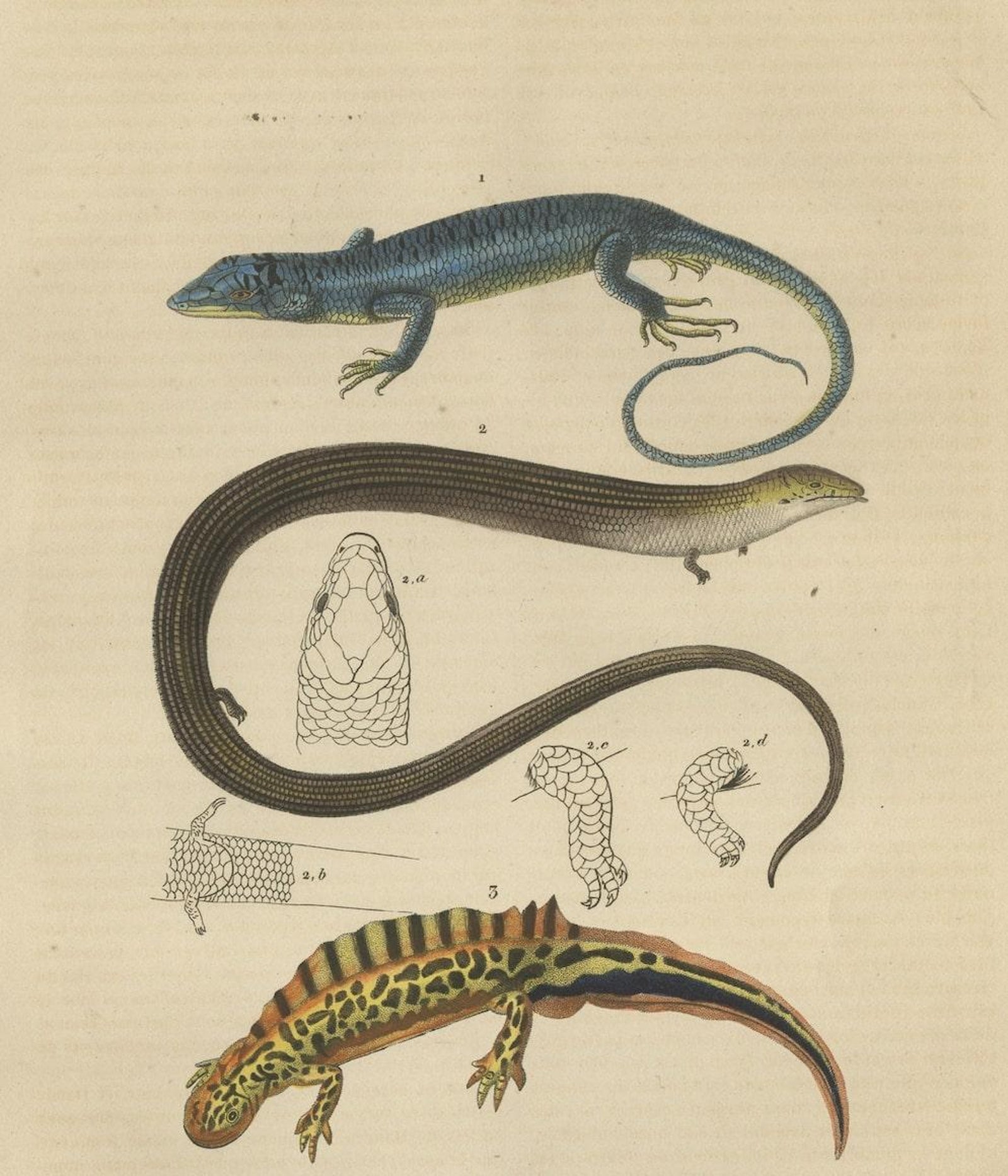
Original Old Print of a Blue Skink Lizard, a Striped Lizard and a Triton Lizard
£135 ($180, €160)
Period original, not a reproduction.
Shipped from the Netherlands, flat, insured and tracked, worldwide. Returns accepted within 14 days.
- Date
- Not stated
- Size
- 10.4 × 6.7 in (26.5 × 17 cm)
- Condition
- Fair, given age. Age-related toning and/or occasional minor defects from handling. Please study scan carefully.
- Section
- Reptiles and amphibians
- Reference
- f_37462332
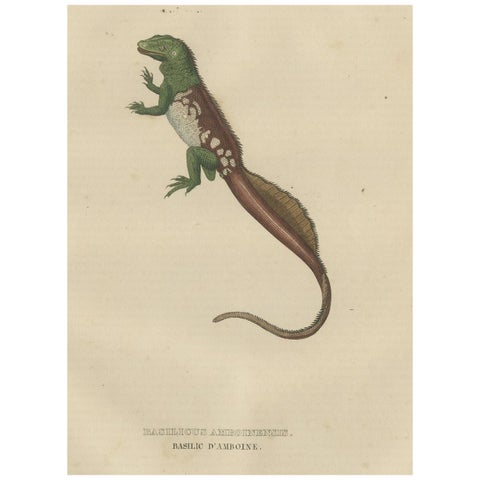
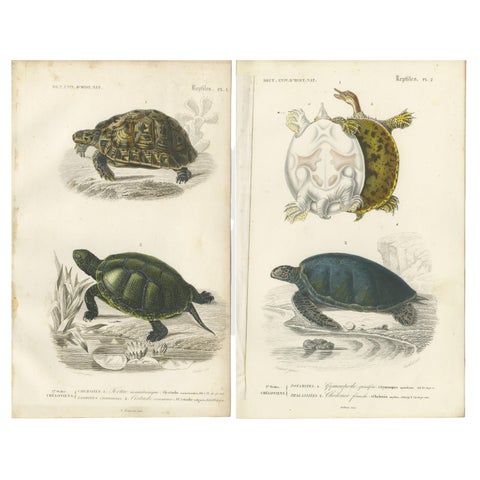
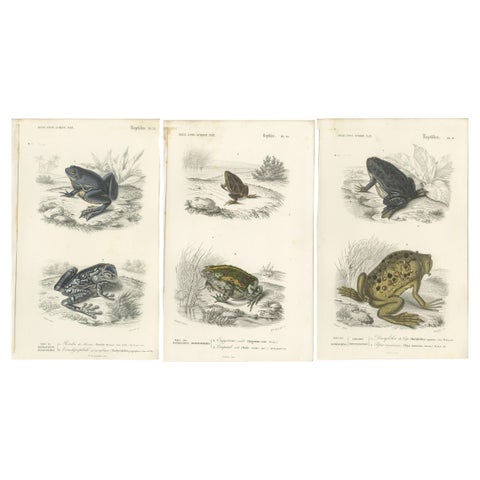
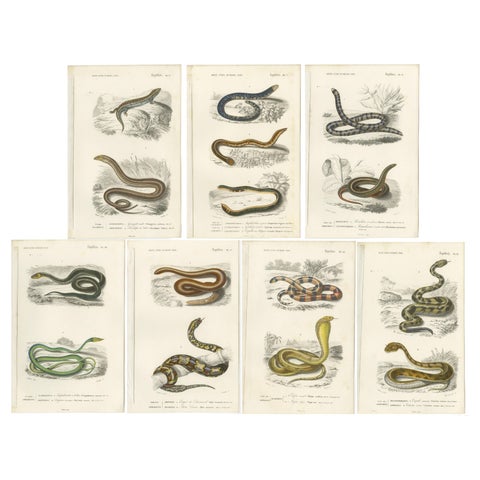
Original beautiful hand-colored print of Lizards.
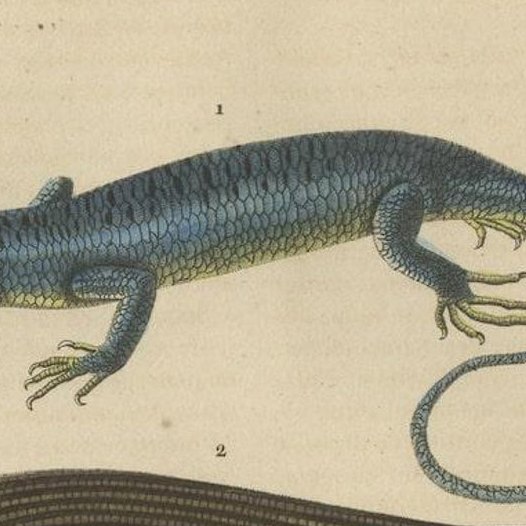
"Scinque bleu" translates to "Blue Skink" in English. The term refers to a type of lizard from the skink family that features a blue coloration. Skinks are a diverse group of lizards known for their varied appearances and can be found in different regions across the world. The "blue skink" likely refers to a specific species or subspecies with distinct blue hues or markings on its body, though the exact species would need further specification for accurate identification.
"Seps Strié" Translates to "Striped Lizard" in English. This term refers to a lizard species recognized for having striped patterns along its body. Lizards with striped markings often use this pattern for camouflage or to signal their species to potential predators or mates.
These antique prints serve as both scientific documentation and artistic representations, reflecting the fascination and exploration of the natural world during the era they were created.
"Triton Bayé" - It's possible that "triton bayé" might be a local or colloquial name for a lizard species in a specific region, but without further context or specific scientific classification, it's challenging to provide detailed information about this particular lizard.
Made by F.J. Desmares after Pierre Auguste Joseph Drapiez (1778-1856).
Engraving with original hand colouring, heightened with arabic gum on wove (vellin) paper.
More info on the book in which it was published:
The 'Dictionnaire Classique des Sciences Naturelles' by Pierre Auguste Joseph Drapiez stands as a remarkable testament to 19th-century natural sciences. Published in Brussels in 1845, this work represents an expansive collation of knowledge, building upon the pioneering works of Buffon, Daubenton, Lacepede, Cuvier, de Jussieu, and other influential naturalists.
The prints within this compendium likely showcase a rich amalgamation of artistic precision and scientific accuracy. Drapiez, himself a Belgian naturalist, would have aimed for detailed representations of flora, fauna, and scientific phenomena, mirroring the illustrative styles prevalent during his time. Given the era's emphasis on illustration, these prints were likely engraved meticulously, possibly portraying intricate anatomical details or lifelike depictions of the natural world.
With Drapiez's background in natural history, the prints might bear testament to his commitment to scientific authenticity, aiming to educate and inspire scholars and enthusiasts alike. These engravings would have complemented the text, offering visual aids that elucidate the concepts and specimens discussed in the volume.
Overall, the prints of 'Dictionnaire Classique des Sciences Naturelles' likely serve as both artistic representations and invaluable scientific resources, encapsulating the essence of 19th-century natural history exploration and documentation.