Close-ups
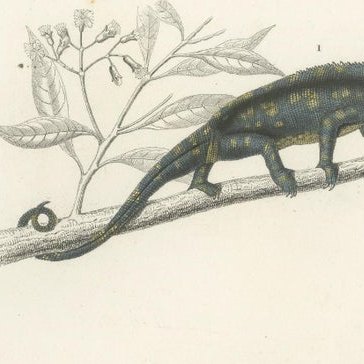
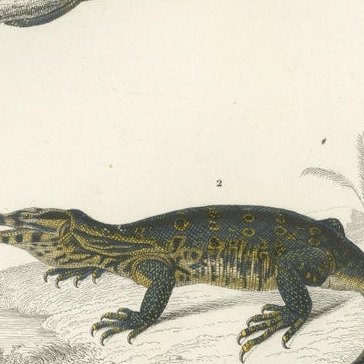
Framed and on the wall
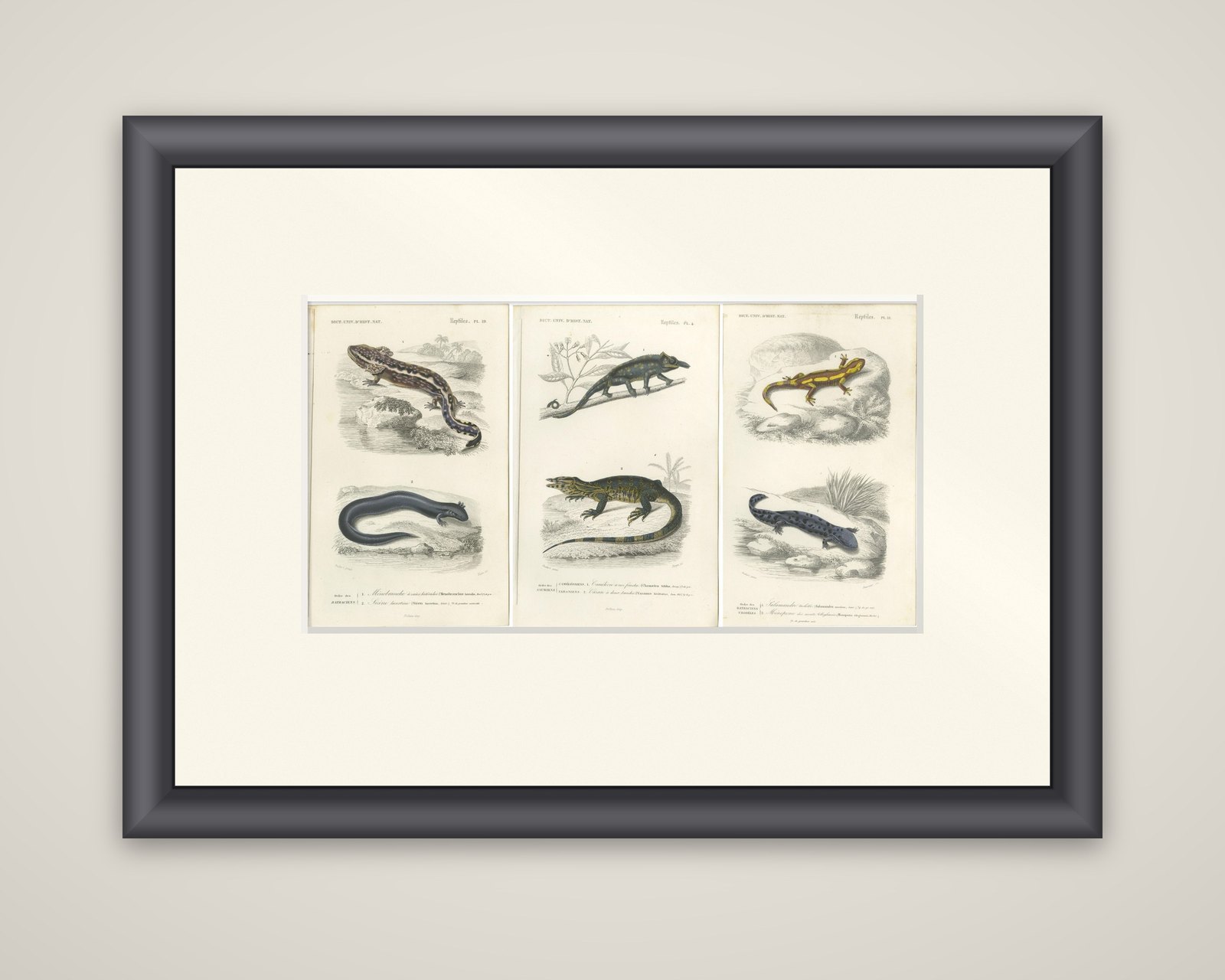

Frame and rooms are illustrations of how the print could look; the description says what is included.
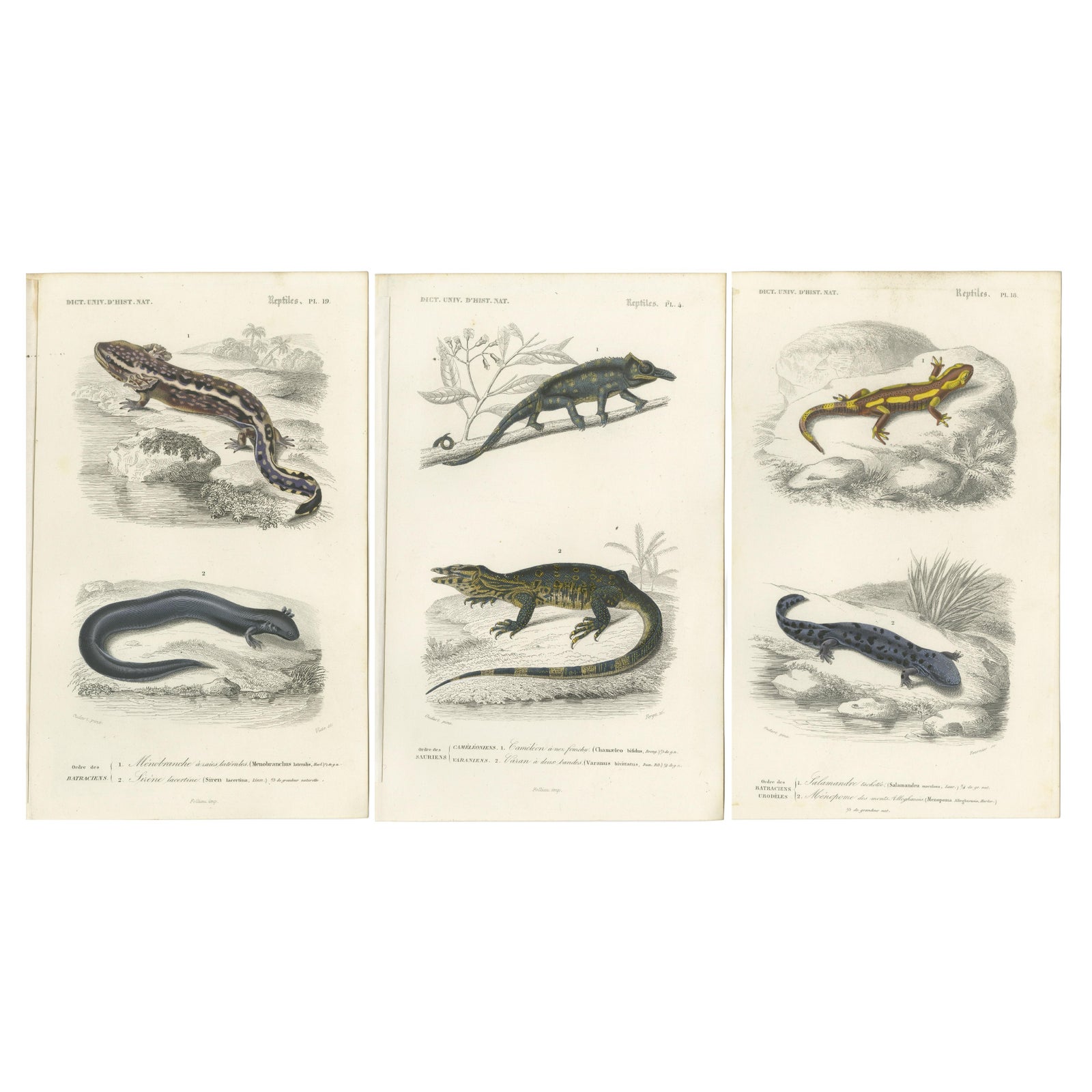
Set of 3 Antique Prints of a Chameleon and Other Reptiles
£475 ($625, €560)
Period original, not a reproduction.
Shipped from the Netherlands, flat, insured and tracked, worldwide. Returns accepted within 14 days.
- Date
- Not stated
- Size
- 9.2 × 6 in (23.4 × 15.3 cm)
- Condition
- Good. General age-related toning. Minor wear and soiling. With original protective sheet attached. Blank verso. Please study image carefully.
- Section
- Reptiles and amphibians
- Reference
- f_34631332
- Colour
- Hand coloured
What the condition grades mean
- Excellent
- Bright and clean, with no faults worth mentioning.
- Very good
- Only light signs of age, such as faint toning.
- Good
- Normal signs of age for a sheet of this period: toning, some foxing, small marks or neat old repairs.
- Fair
- Clear faults such as staining, tears or repairs, priced to match.
Every fault we see is written in the condition note, and the whole sheet is shown uncropped in the photos.
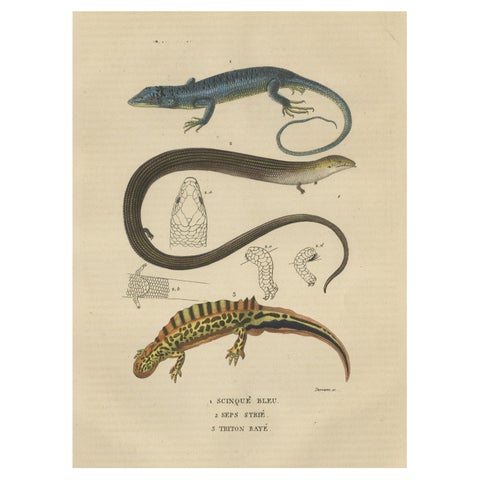
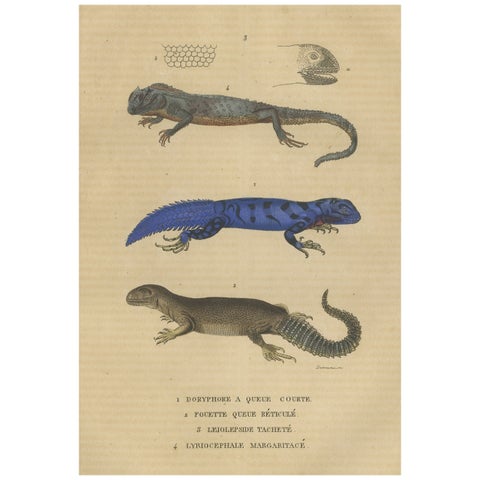
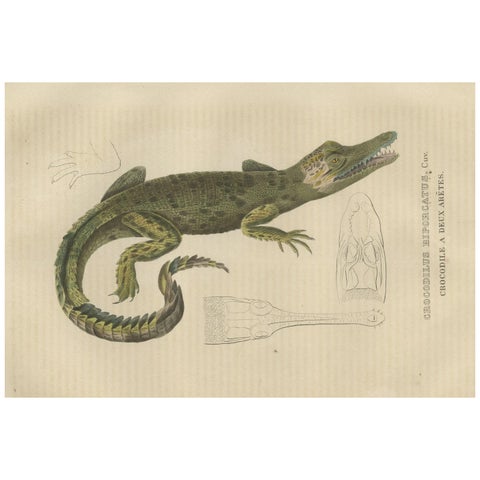
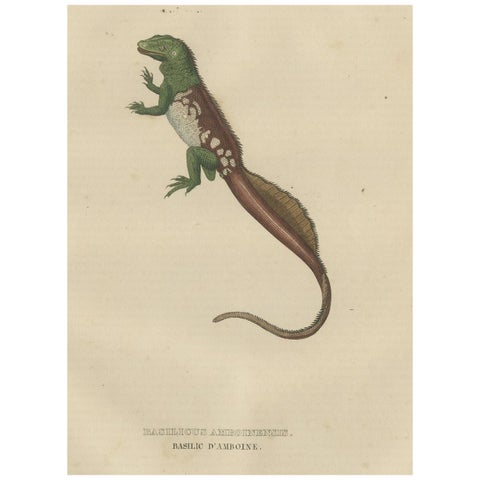
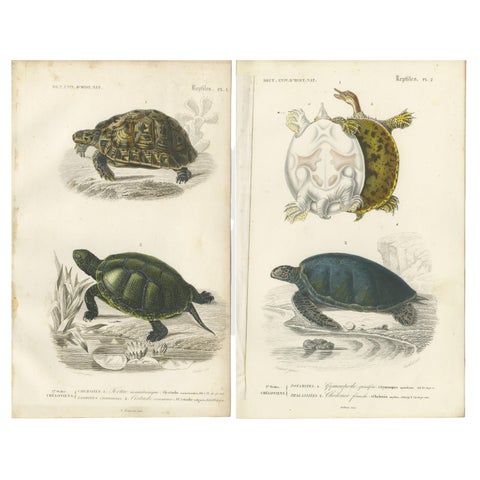
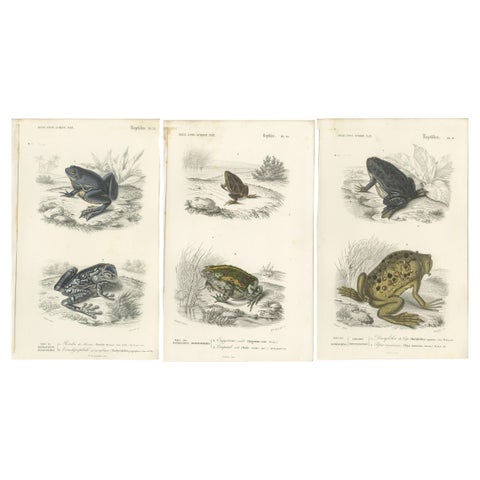
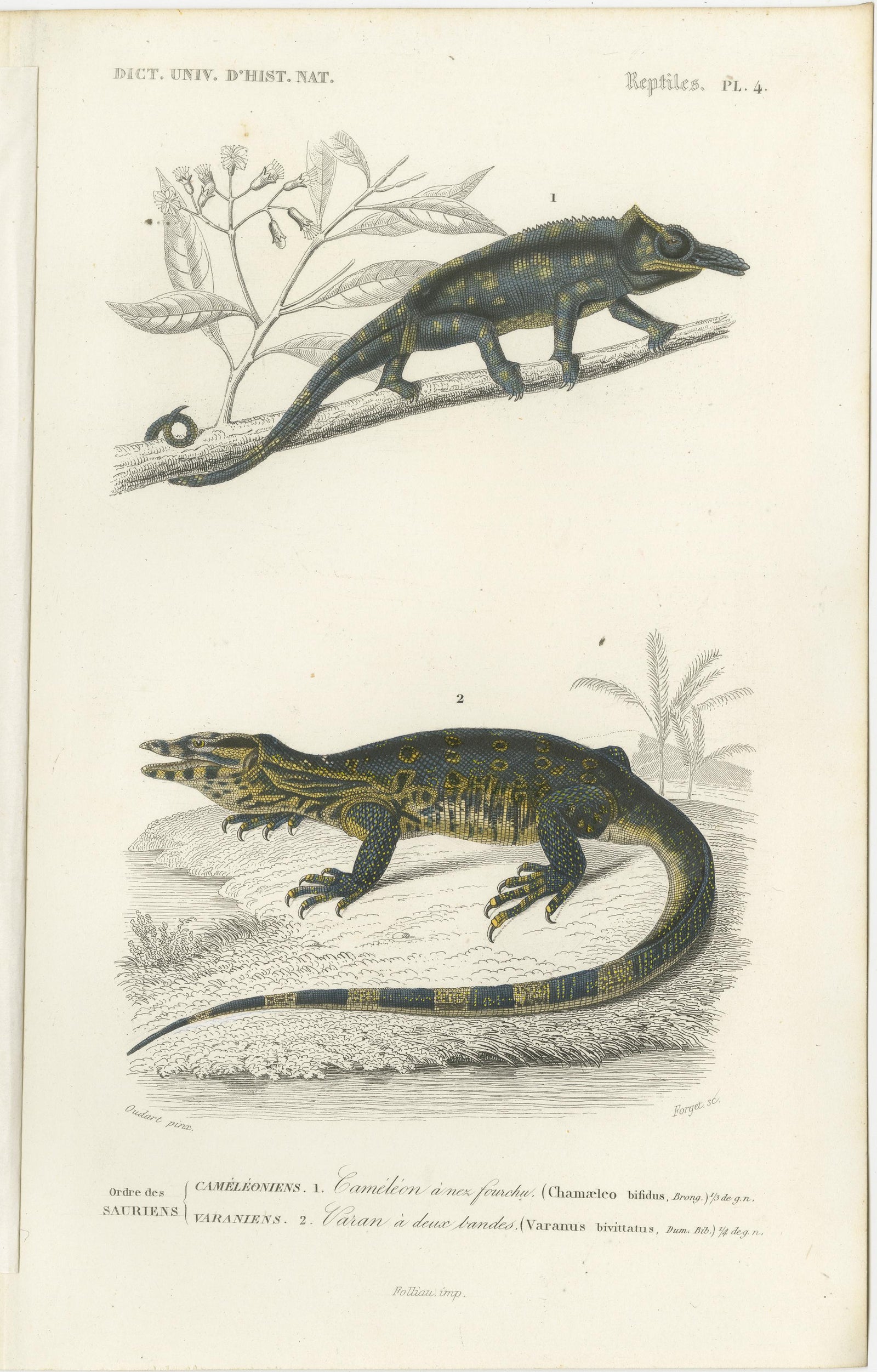
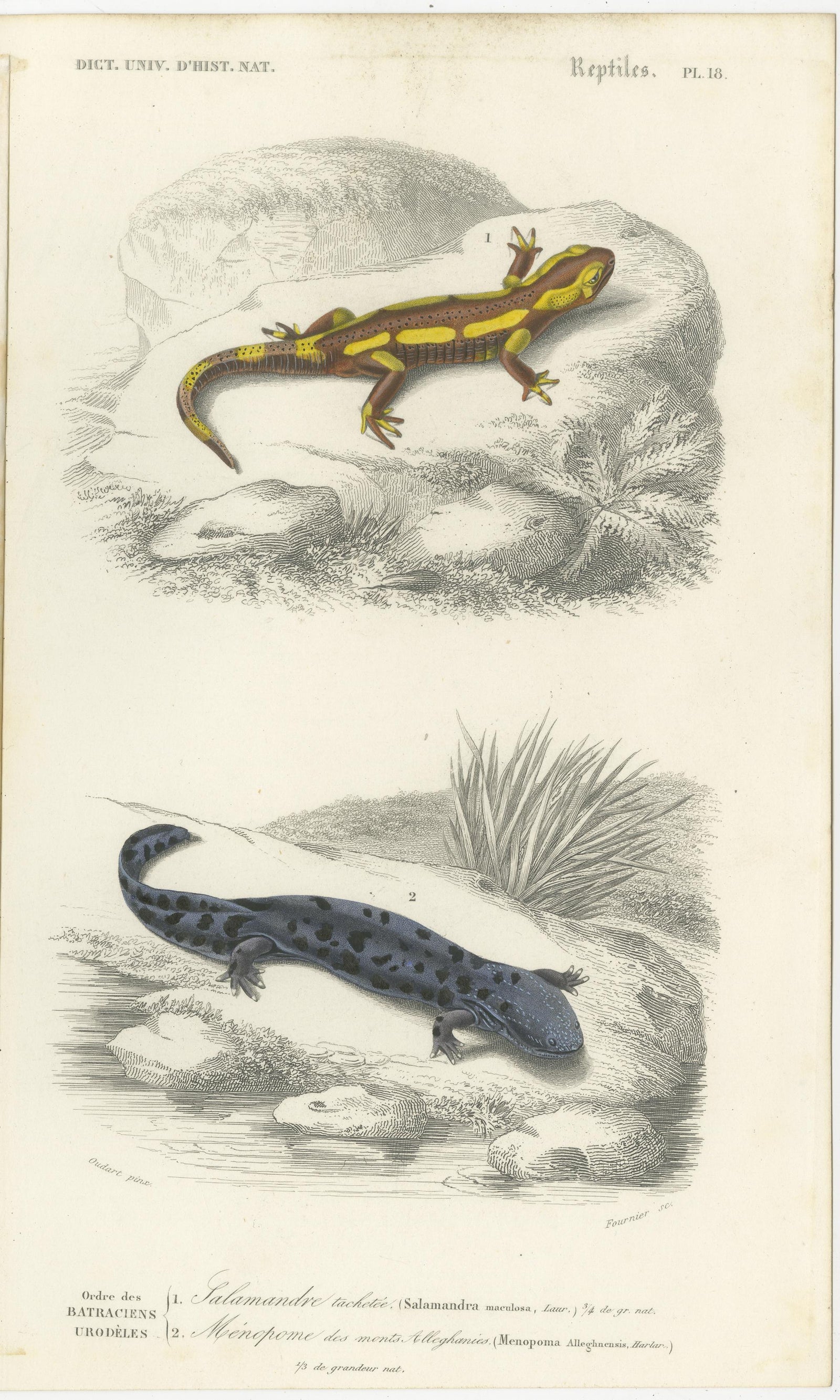
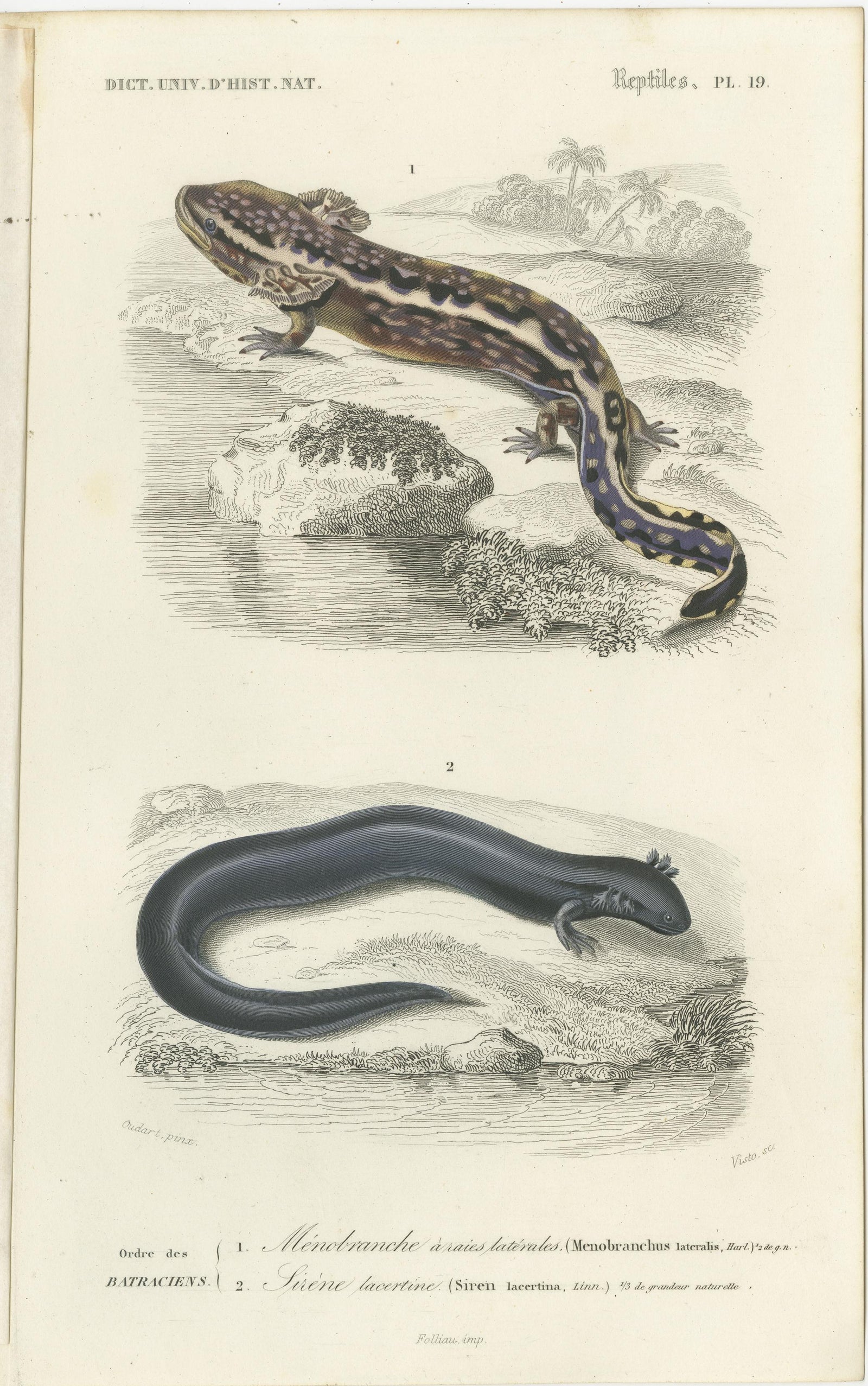
Three plates of reptiles and amphibians from the Dictionnaire universel d'histoire naturelle, edited by Charles Henry Dessalines d'Orbigny and published in 1861. Each is a hand-colored engraving headed "Dict. Univ. d'Hist. Nat." and "Reptiles", with a plate number and a short caption in French and Latin at the foot.
One plate pairs a chameleon with a forked snout, perched on a flowering branch, with a banded monitor lizard beneath it among palms. The second shows a bright yellow-and-black spotted salamander in the upper half over a blue-gray one on a rock, and the third has two aquatic salamanders, a long dark-bodied one in shallows and a spotted one with a fringed head above it. All are drawn with backgrounds of rock, water and tropical or temperate vegetation to suggest their habitats.
D'Orbigny was a French botanist and geologist who identified many of the flowering plant species returned to France from his brother's collecting journeys through South America.