Close-ups
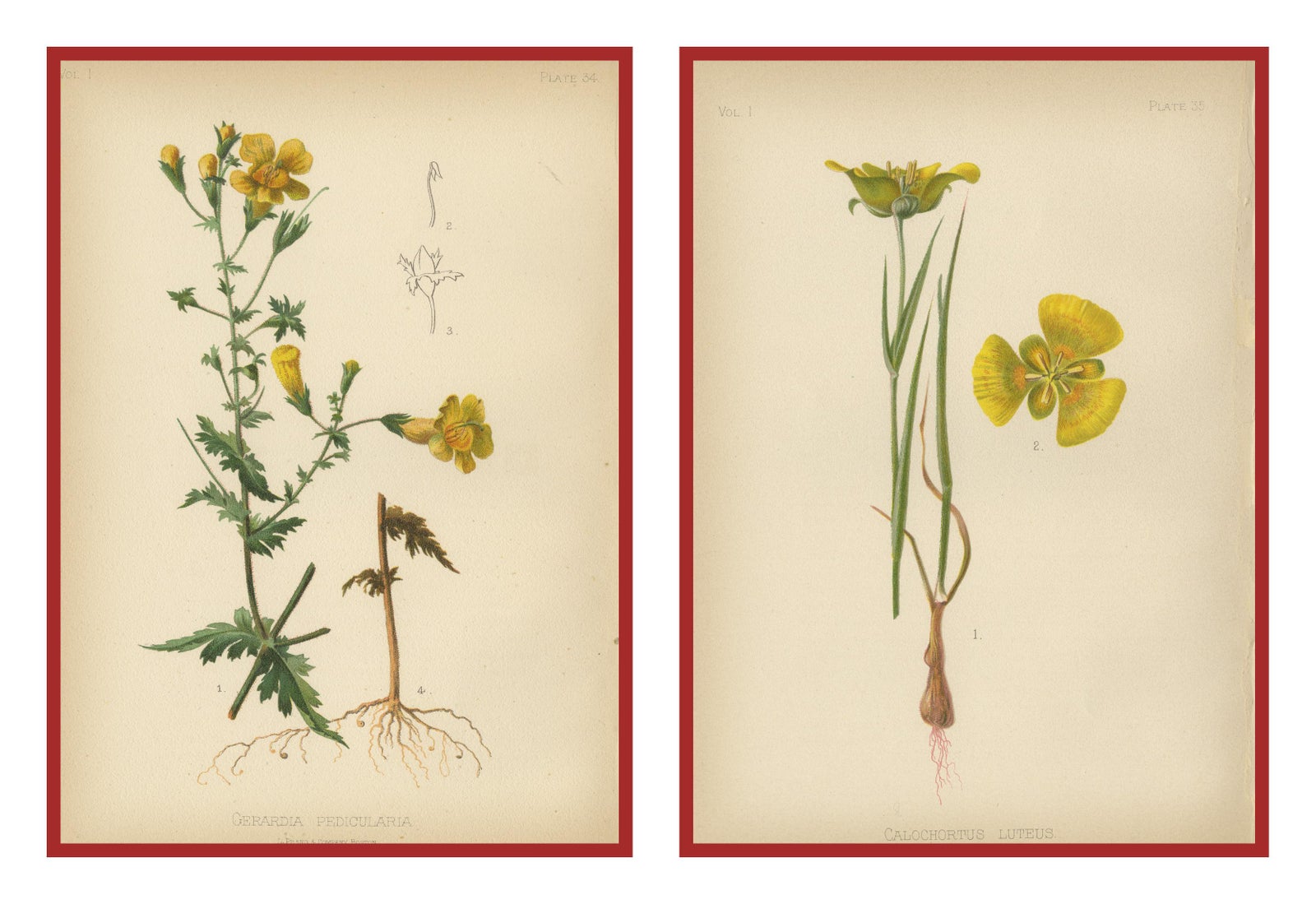
Framed and on the wall
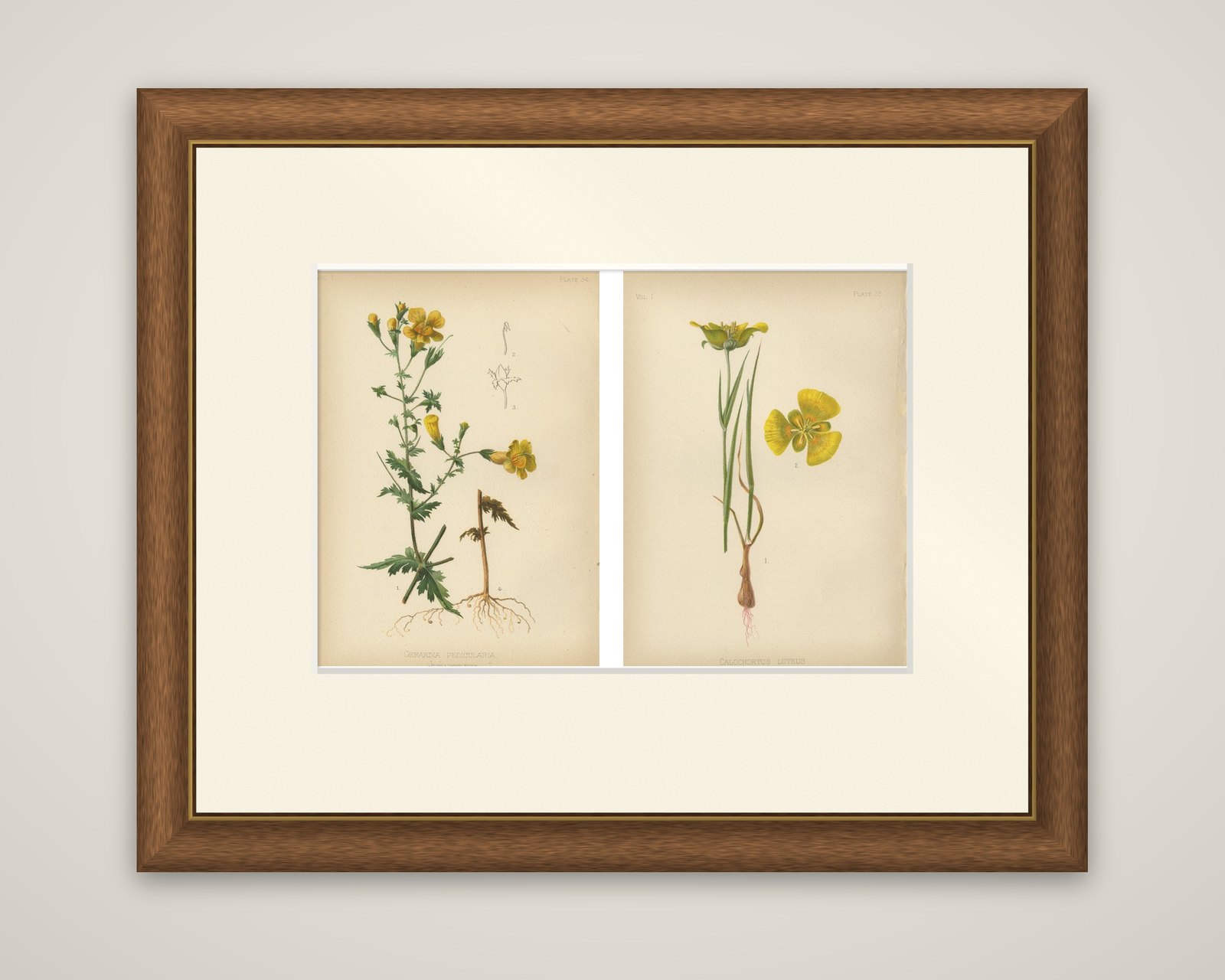


Frame and rooms are illustrations of how the print could look; the description says what is included.
Native US Flora - Two Original Botanical Chromolithograps, 1879
€280€19630% off ($215, £165, €196)
Period original, not a reproduction.
Shipped from the Netherlands, flat or rolled, insured and tracked, worldwide. Returns accepted within 14 days.
- Date
- 1879
- Size
- 9.8 × 7.1 in (25 × 18 cm)
- Condition
- Good. Good condition. Please study the images carefully. Minor toning due to age and handling. Ideal for framing in frames with a dark, muted brown color. Attached you can see a visualization. We do not supply the frames, only the prints.
- Period
- Late 19th century
- Section
- Botanical
- Reference
- f_37619352
- Color
- Printed color
What the condition grades mean
- Excellent
- Bright and clean, with no faults worth mentioning.
- Very good
- Only light signs of age, such as faint toning.
- Good
- Normal signs of age for a sheet of this period: toning, some foxing, small marks or neat old repairs.
- Fair
- Clear faults such as staining, tears or repairs, priced to match.
Every fault we see is written in the condition note, and the whole sheet is shown uncropped in the photos.
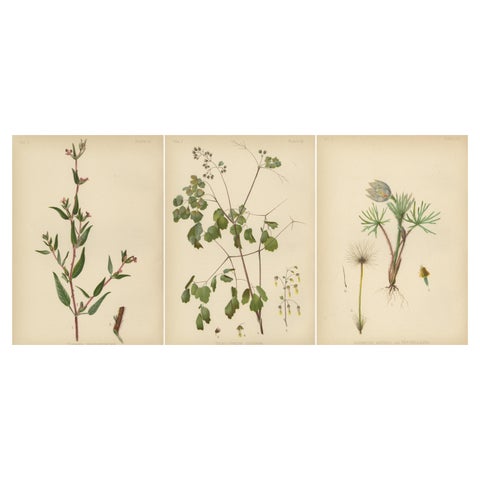
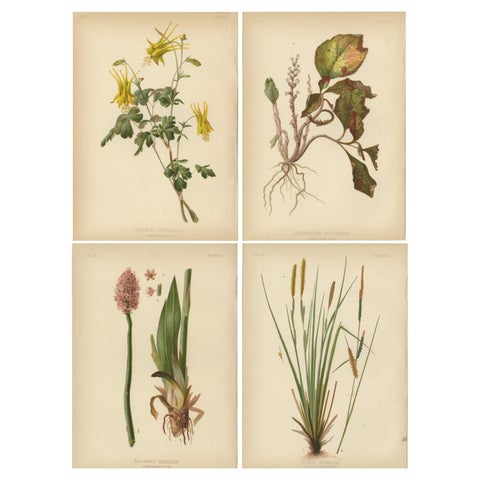
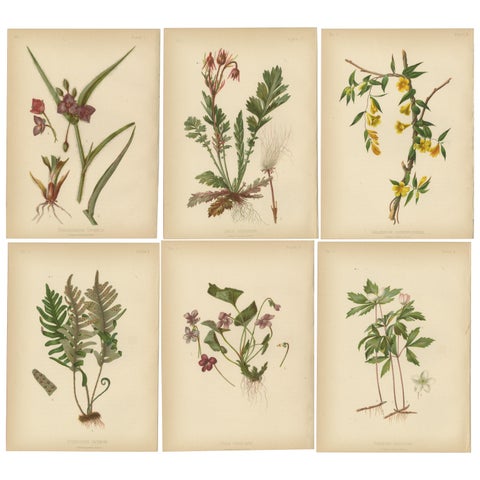
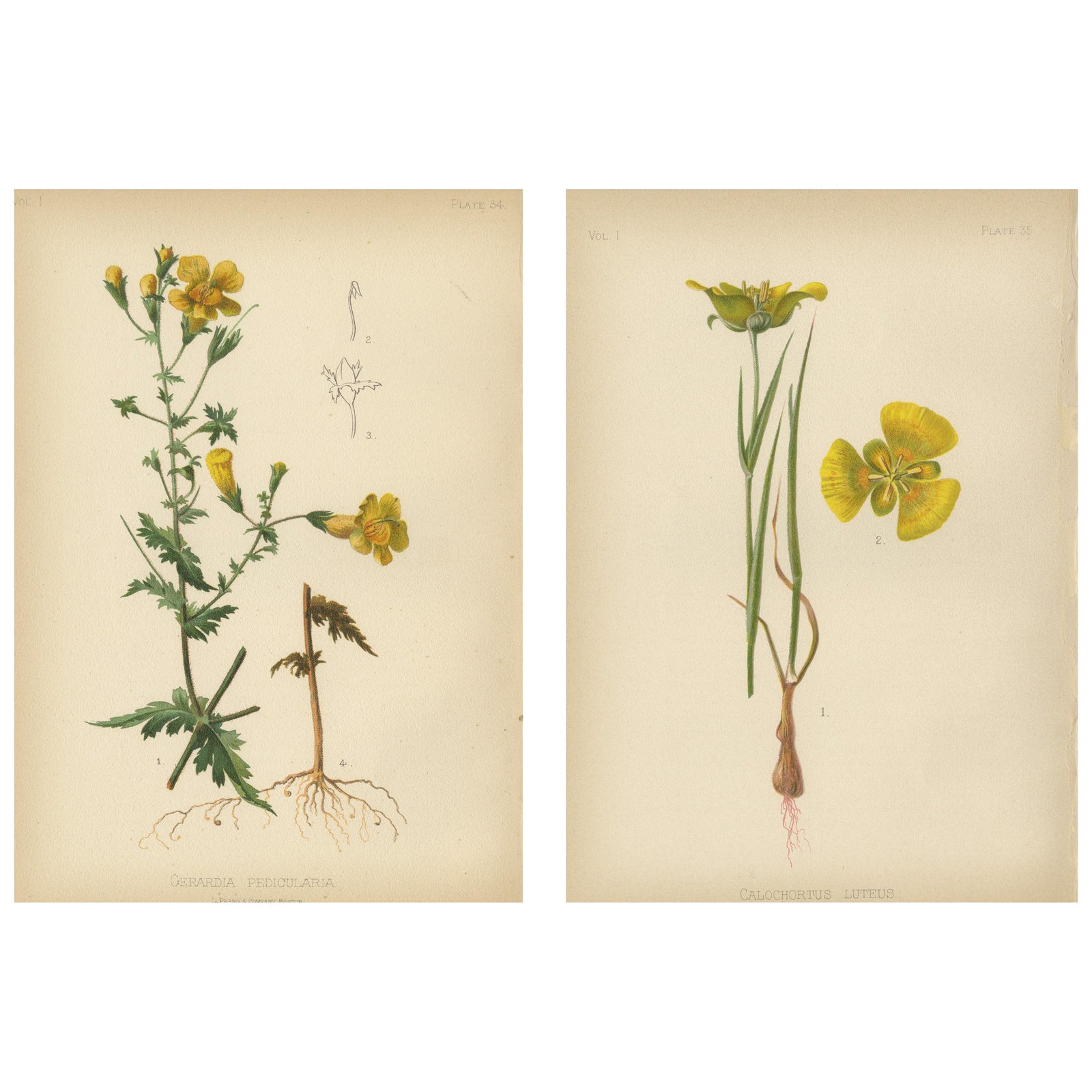
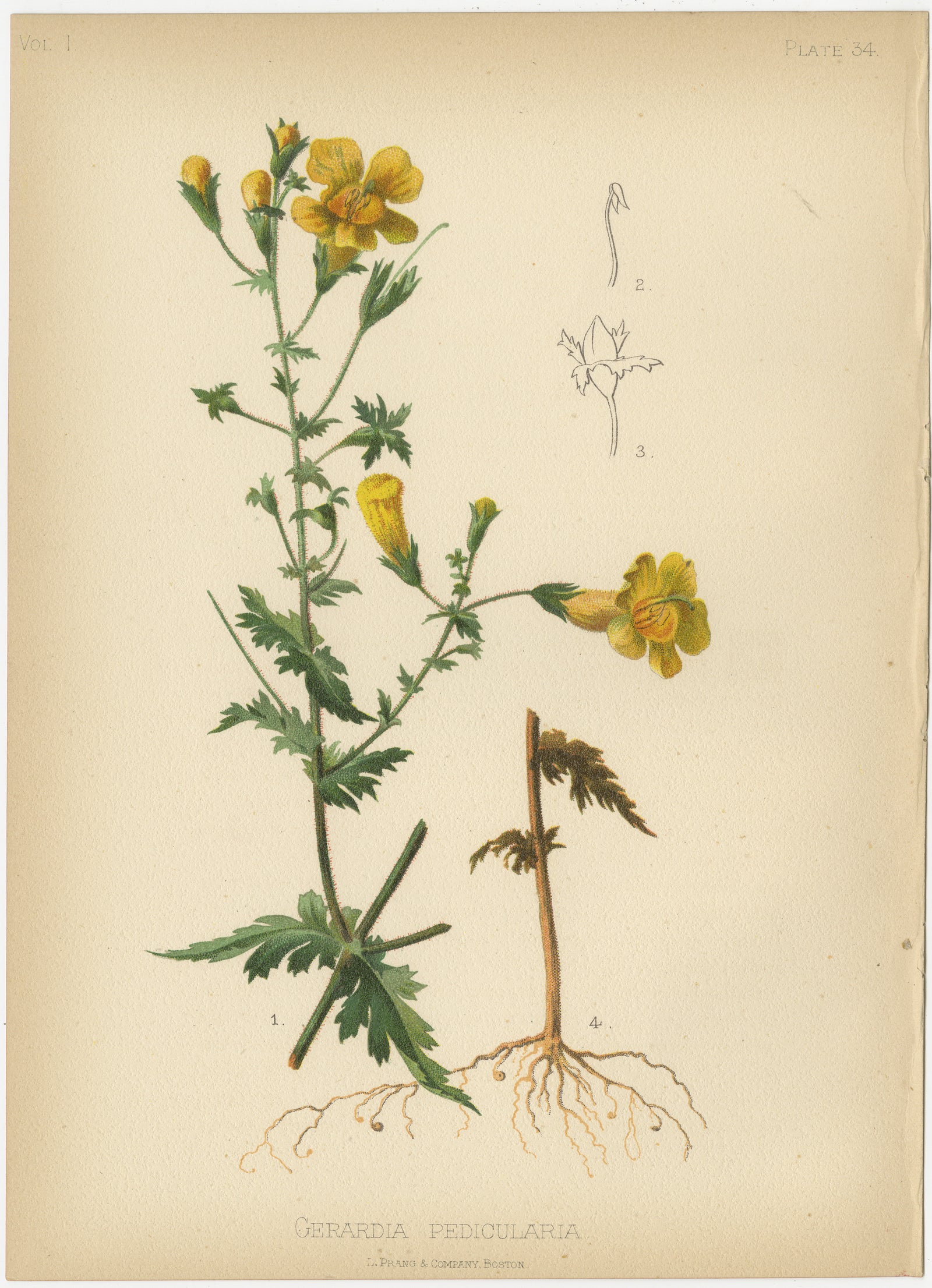
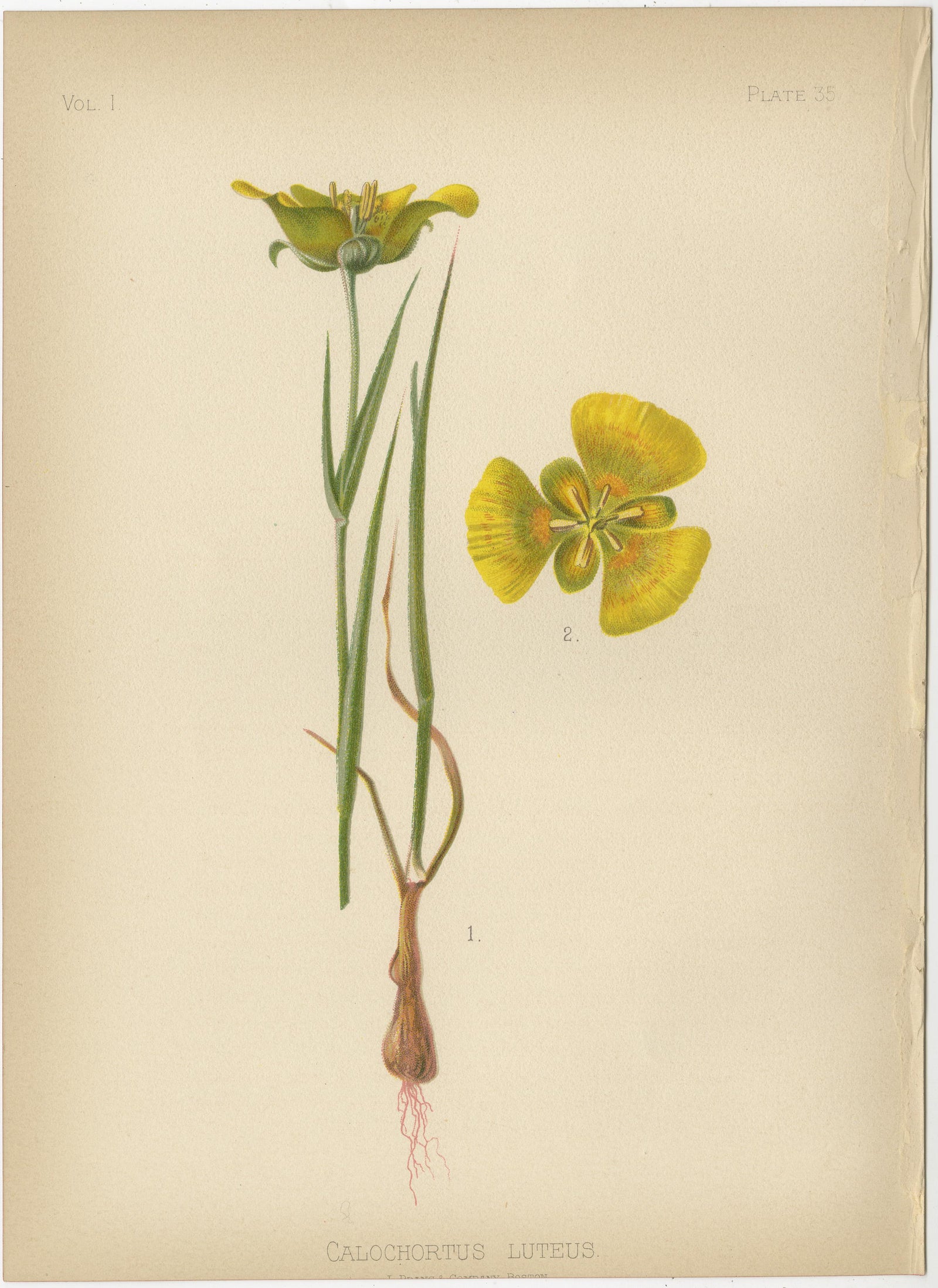
Two botanical chromolithographs of North American wild flowers, from Thomas Meehan's The Native Flowers and Ferns of the United States in Their Botanical, Horticultural, and Popular Aspects, published by L. Prang and Company of Boston in 1879. Each is a full-color plate on its own sheet, with the volume and plate number at the top and the Latin name lettered below.
The left plate is lettered Gerardia pedicularia, the fern-leaved false foxglove: a branching stem with deeply cut leaves and yellow trumpet-shaped flowers, shown above its roots with small details of the flower. The right plate is lettered Calochortus luteus, the yellow mariposa lily, a Californian bulb with grass-like leaves and a cup-shaped yellow flower, drawn with the bulb and a flower opened out to show its center.
The two plates come from the first volume of the work, which was issued by Prang, the Boston firm that was among the best-known American color printers of its day.