Close-ups
Framed and on the wall
Frame and rooms are illustrations of how the print could look; the description says what is included.
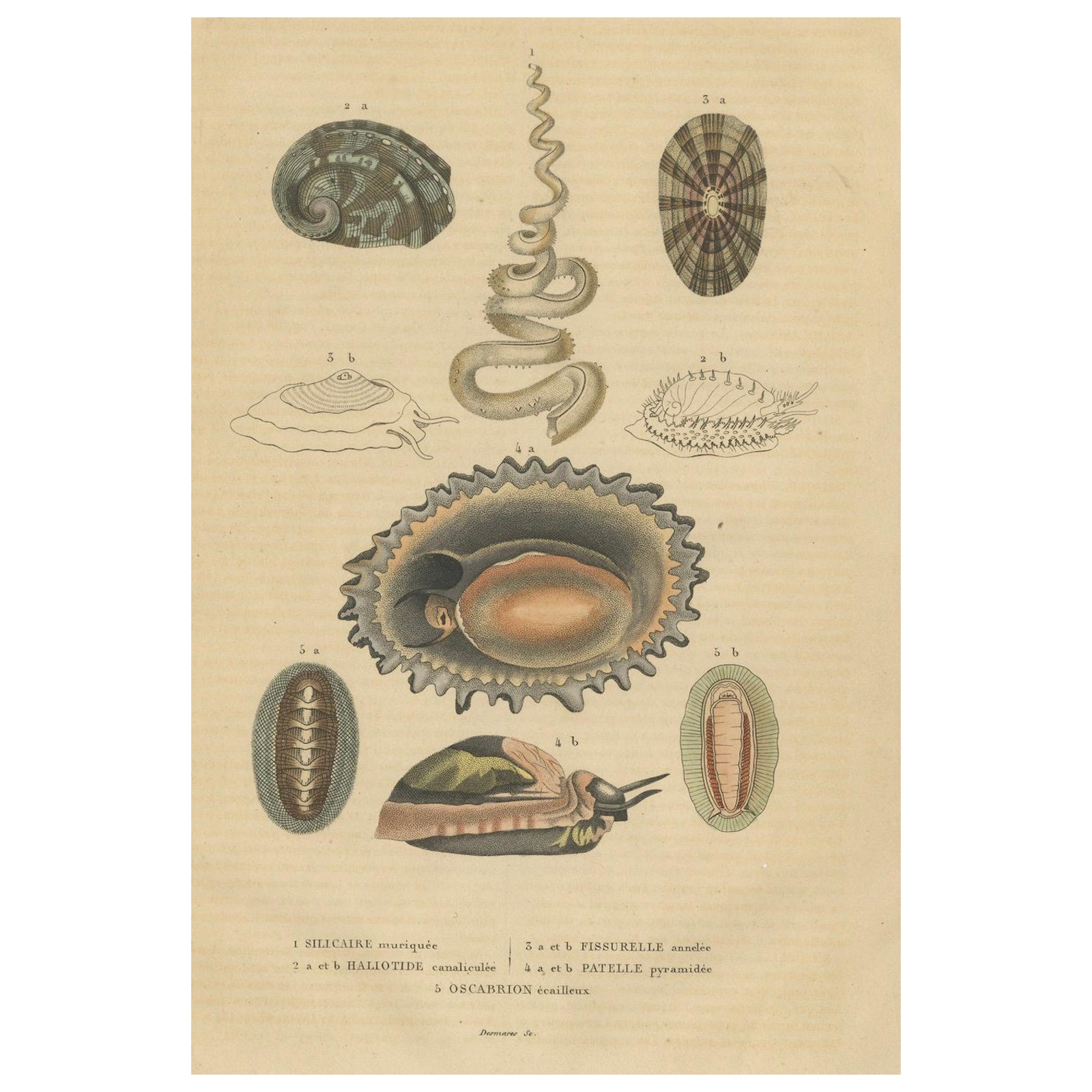
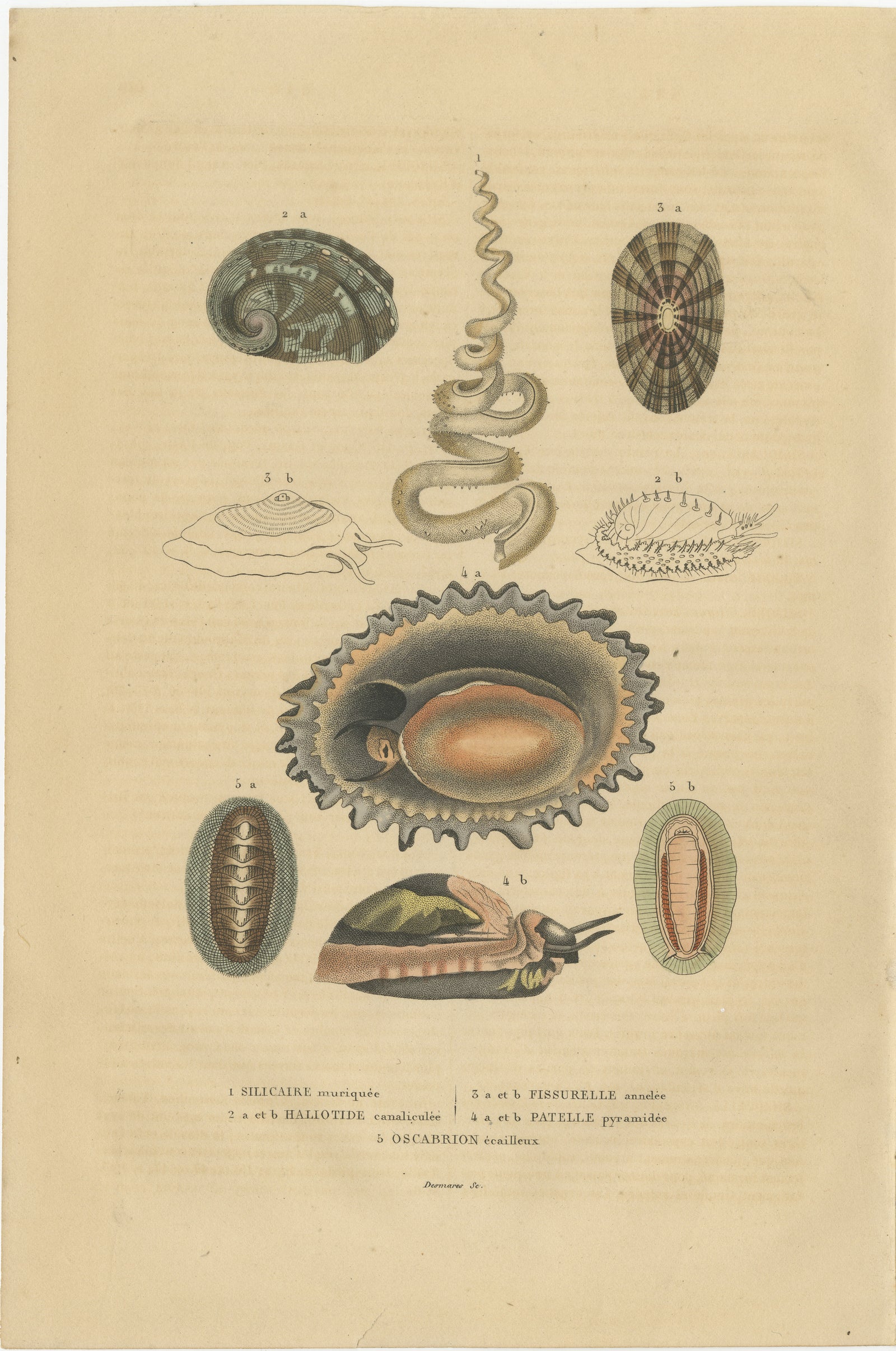
Marine Mollusk Diversity: Sponges, Abalones, Limpets, and Chitons, 1845
€190 ($215, £160, €190)
Period original, not a reproduction.
Shipped from the Netherlands, flat, insured and tracked, worldwide. Returns accepted within 14 days.
- Date
- 1845
- Size
- 10.4 × 6.7 in (26.5 × 17 cm)
- Condition
- Good. Good. Aged paper with typically warm, yellowish-brown hue. Please study the image carefully.
- Period
- Early 19th century
- Section
- Fish and shells
- Reference
- f_37855252
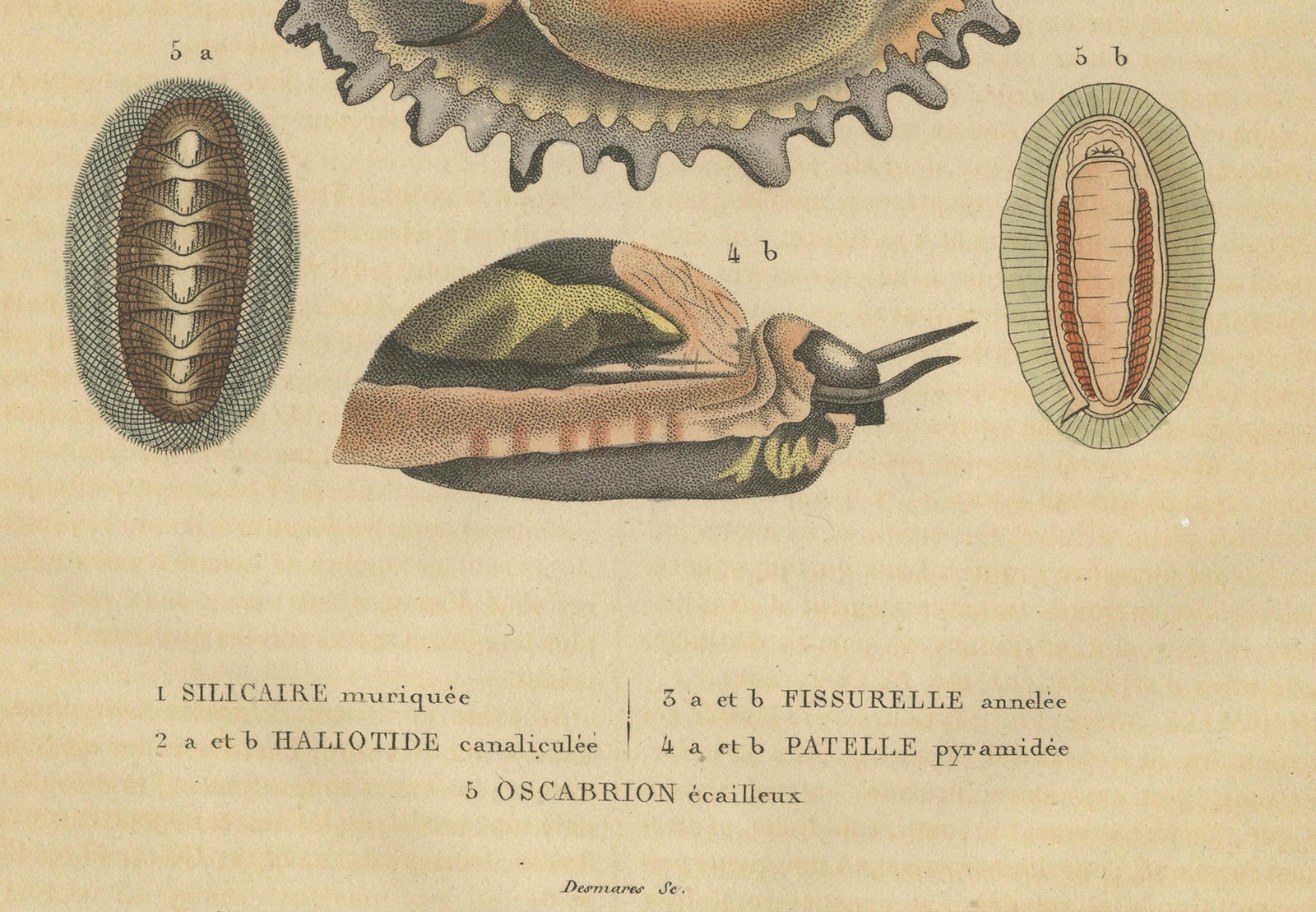
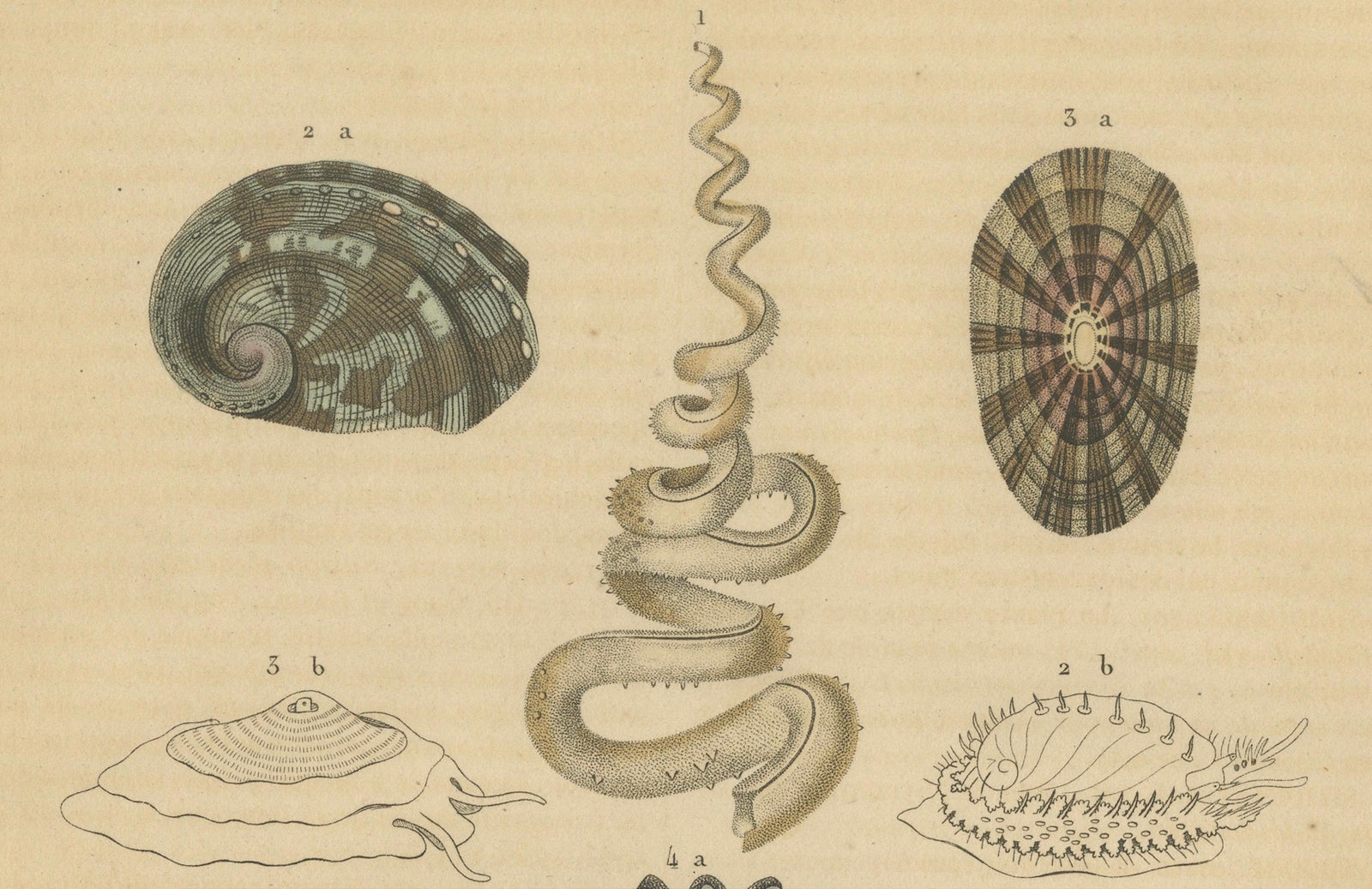
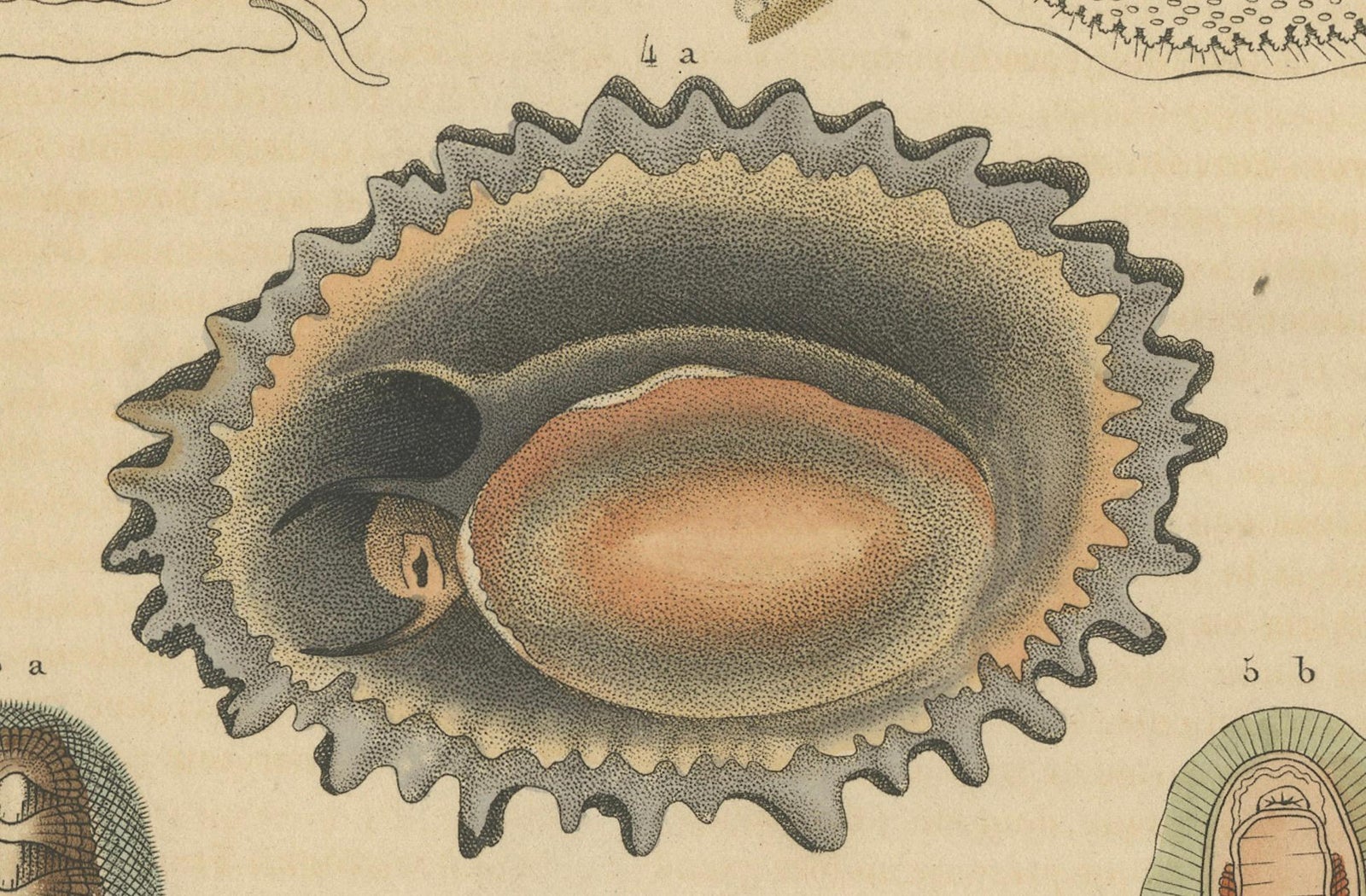
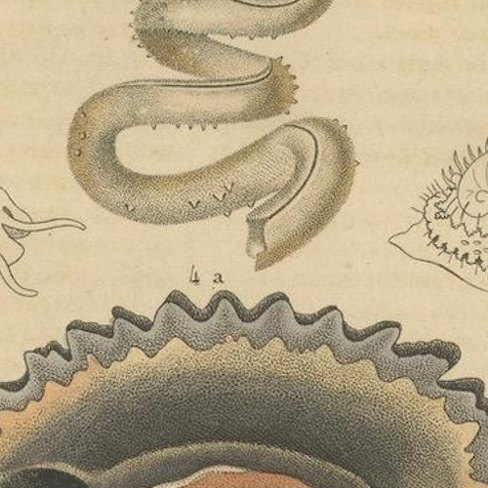
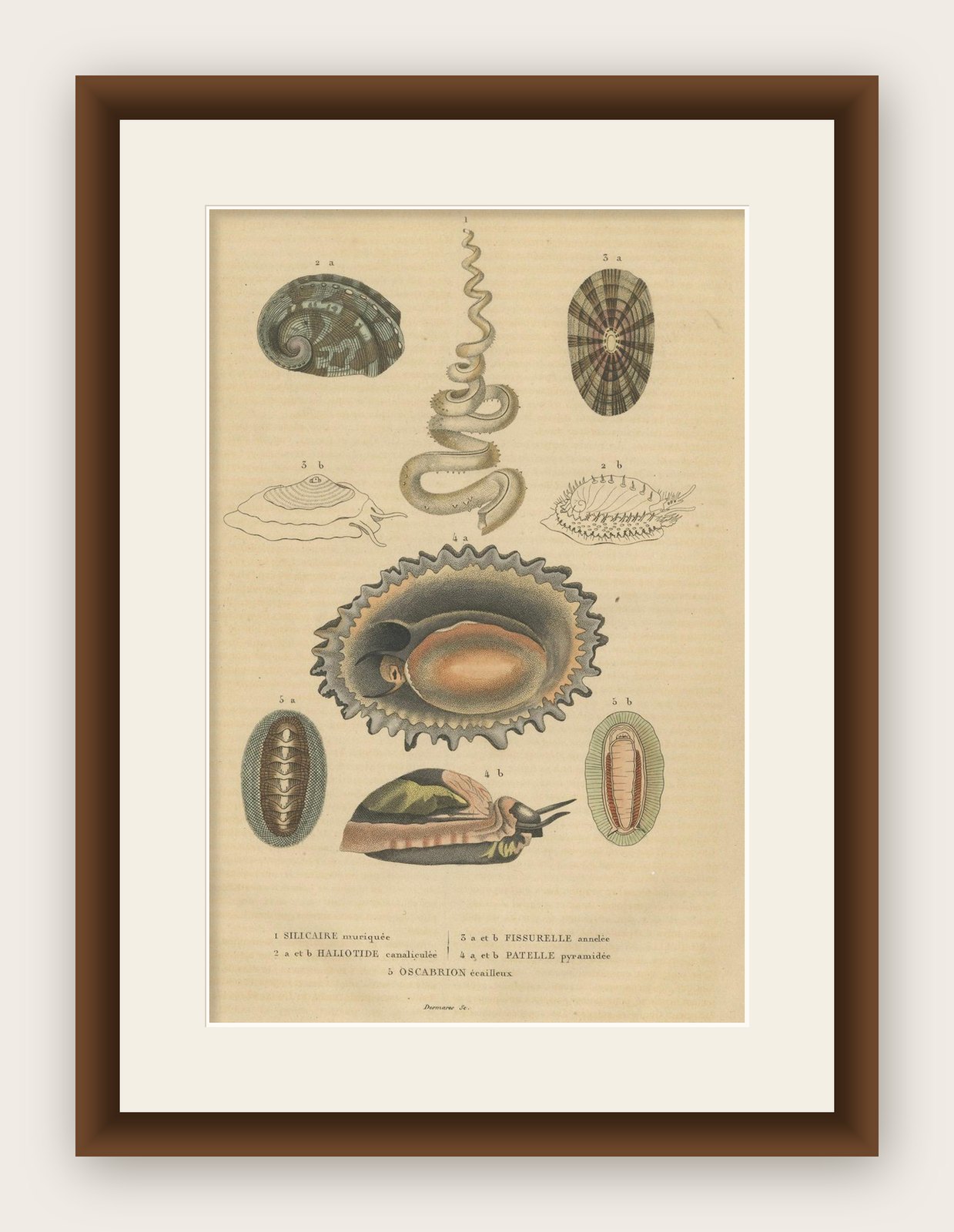
This original antique engraving depicts a collection of marine mollusks, which are a diverse group of invertebrates living mostly in aquatic habitats. These are likely depicted for their shell structures:
1. **Silicaire muriquée** - Possibly referring to a species of siliceous sponge known for their intricate skeletal structures made of silica.
2. **Halioide canaliculée (a & b)** - These are likely representations of abalone (Haliotis species), known for their ear-shaped shells with a row of respiratory pores.
3. **Fissurelle annelée (a & b)** - This refers to a species of keyhole limpet, recognizable by the hole or notch in the apex of their conical shells.
4. **Patelle pyramidée (a, b & c)** - Commonly known as limpets, these marine mollusks have a simple conical shell, which in some species can be quite high and pointed, resembling a pyramid shape.
5. **Oscabrion écaillieux (a & b)** - This could refer to a species of chiton, which have distinctive eight-plated shells.
The print is from the 'Dictionnaire Classique des Sciences Naturelles' by Pierre Auguste Joseph Drapiez, and like other illustrations from this work, it combines scientific accuracy with the artistic rendering of the species. Each mollusk is delicately colored, which would have required skilled craftsmanship and a deep understanding of the subject.