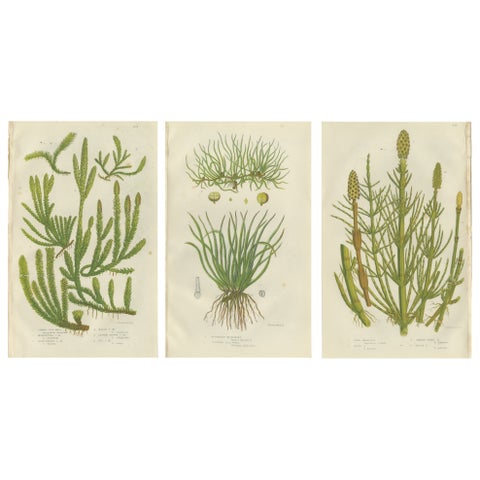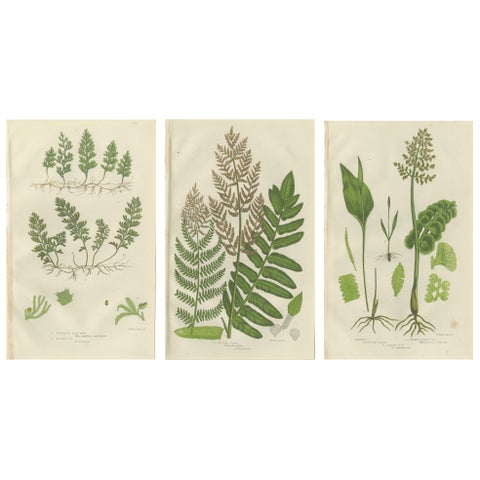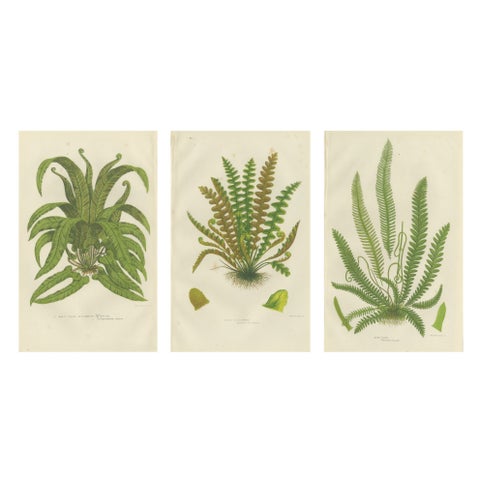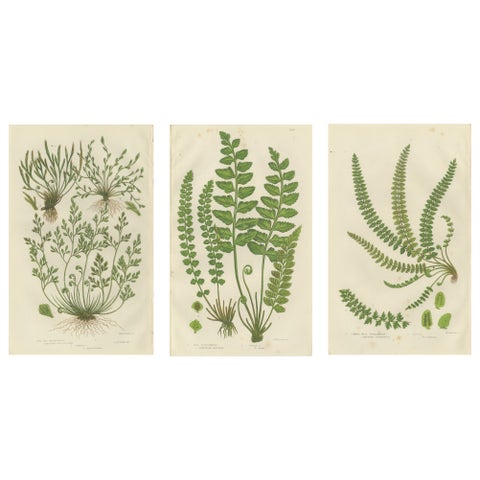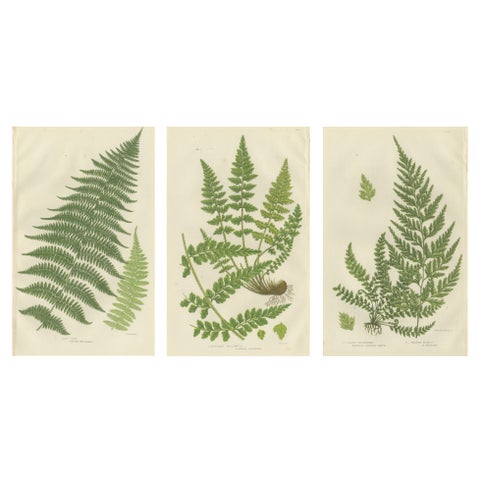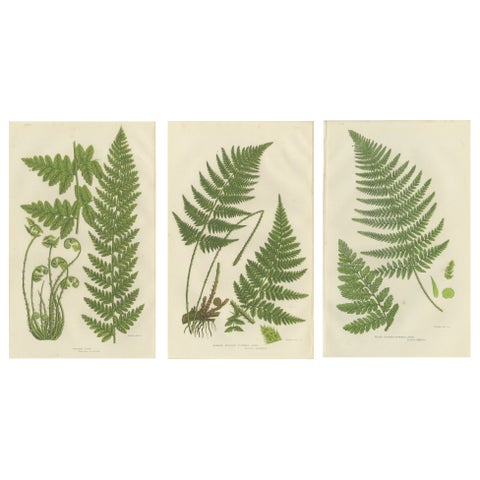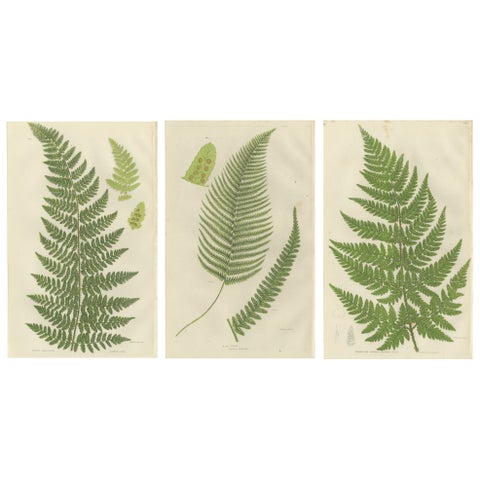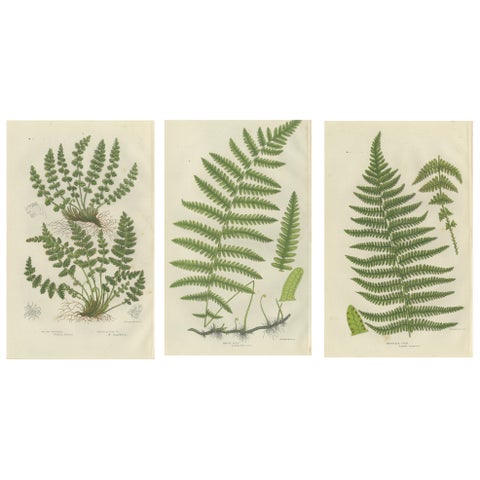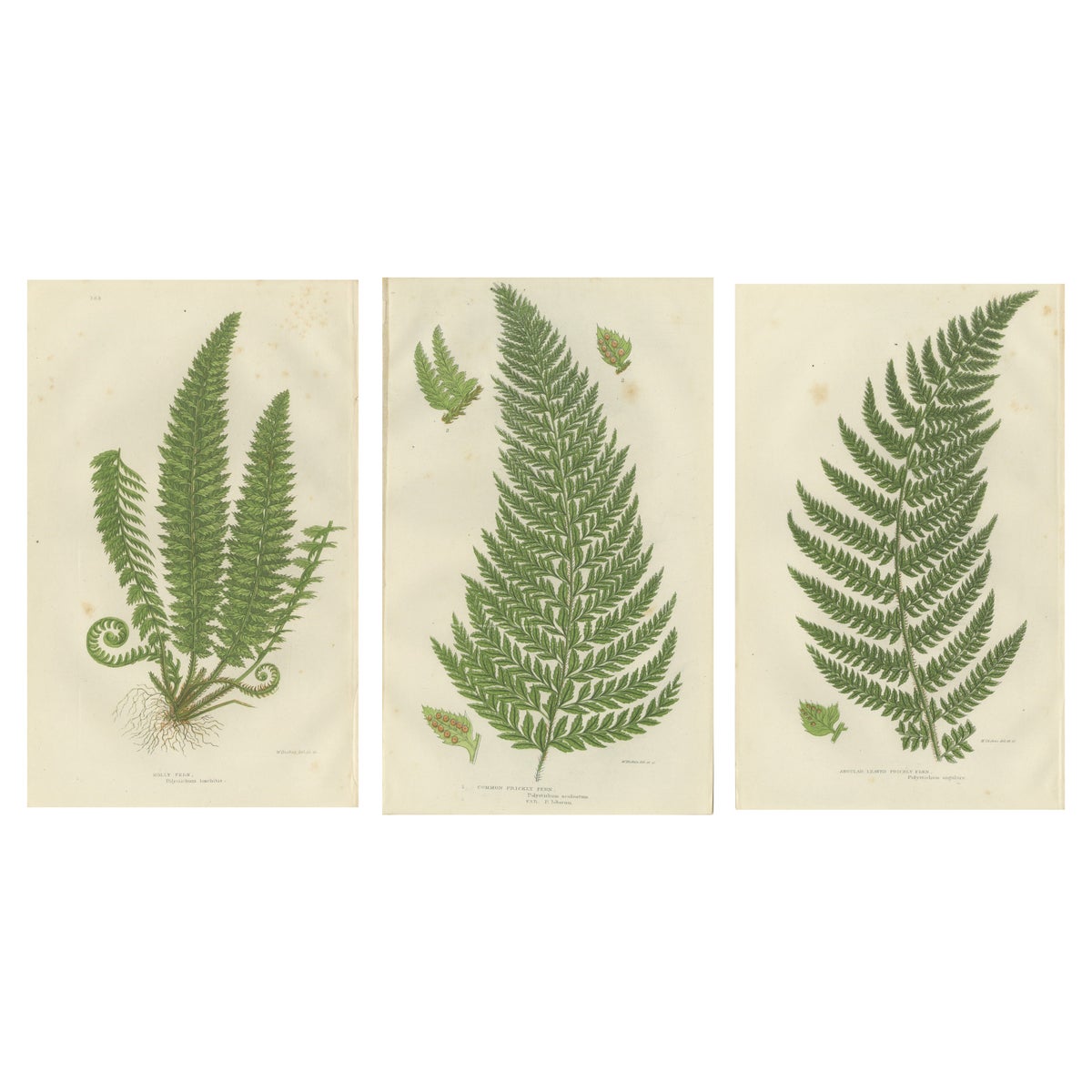
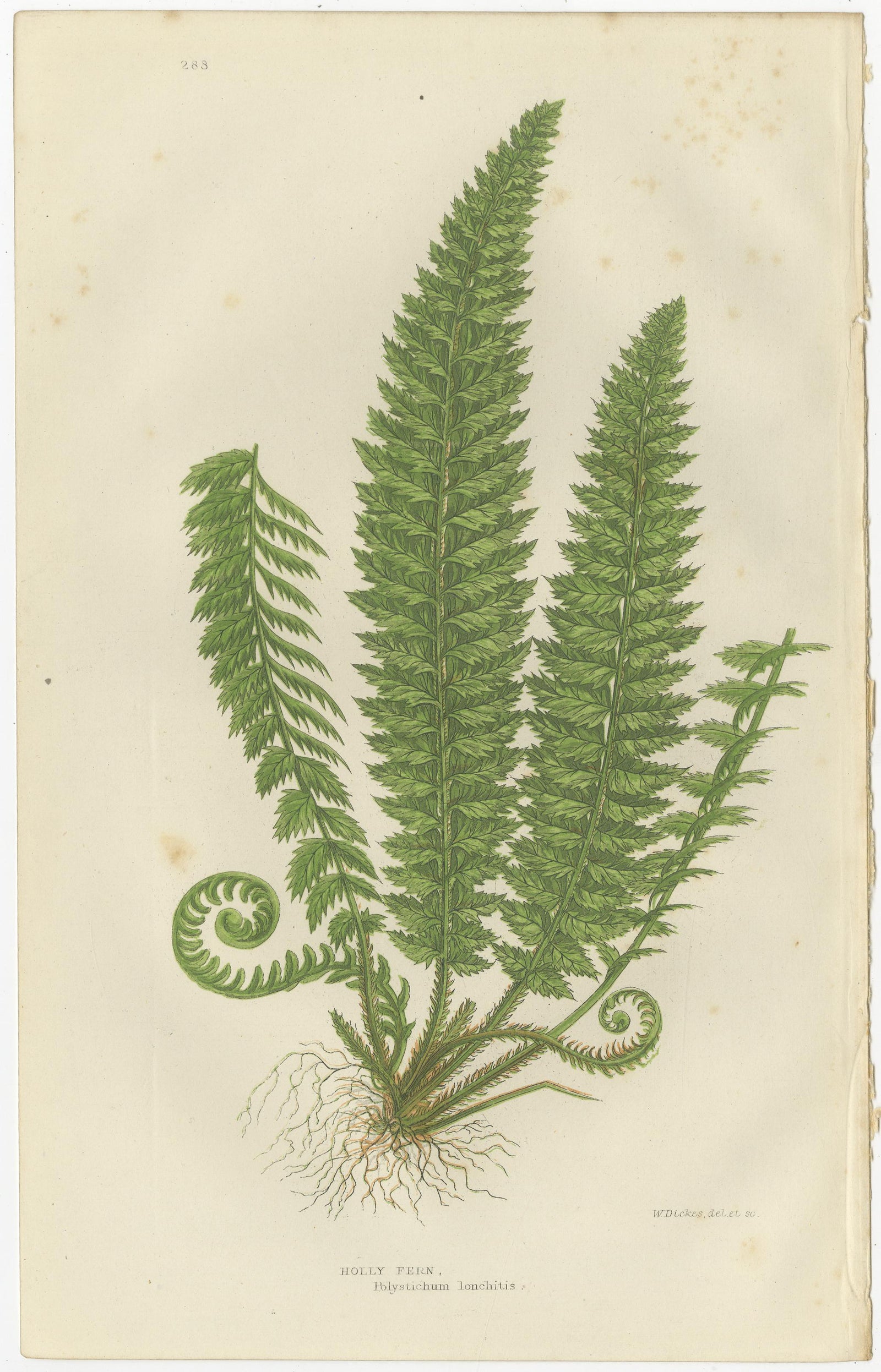
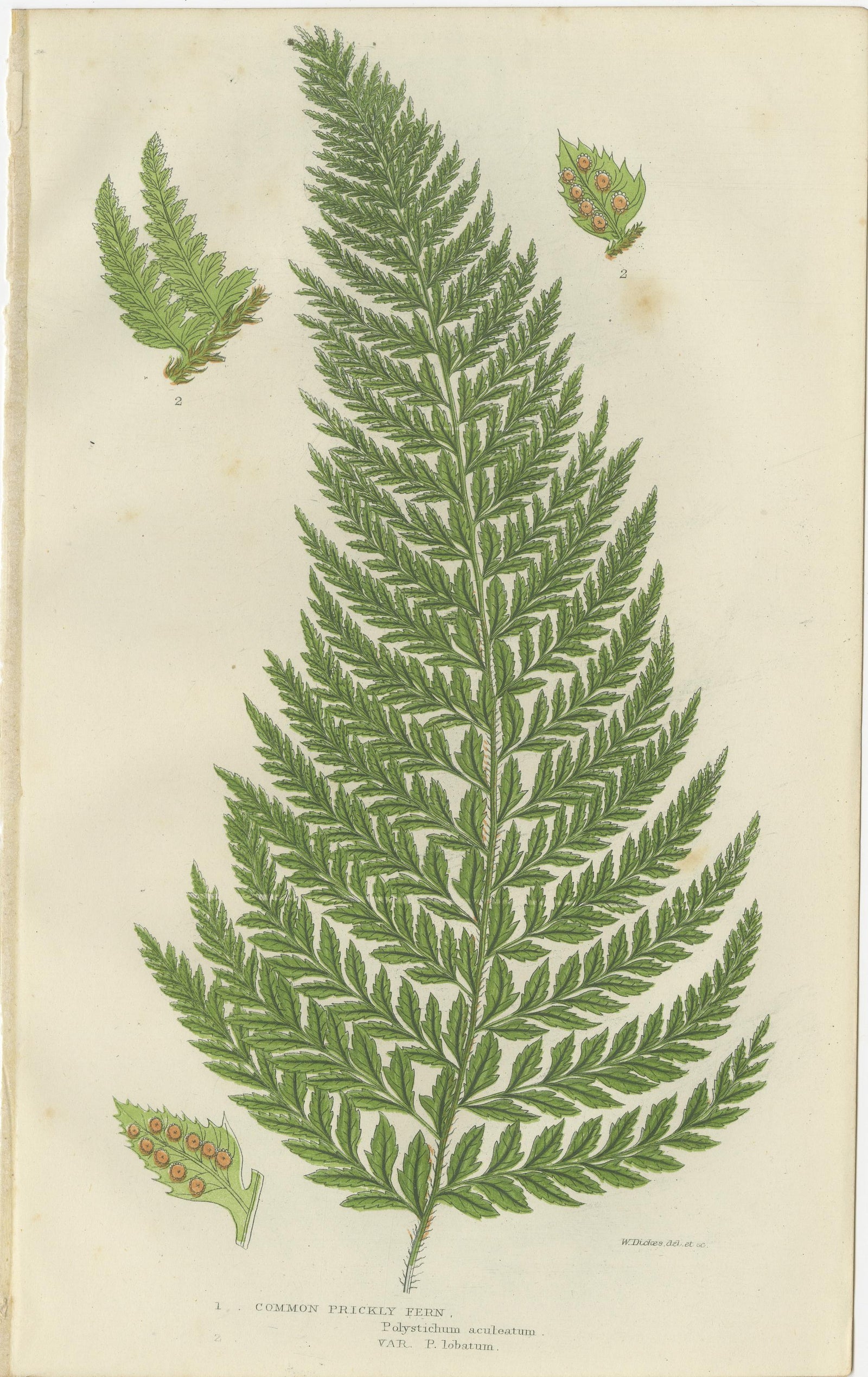
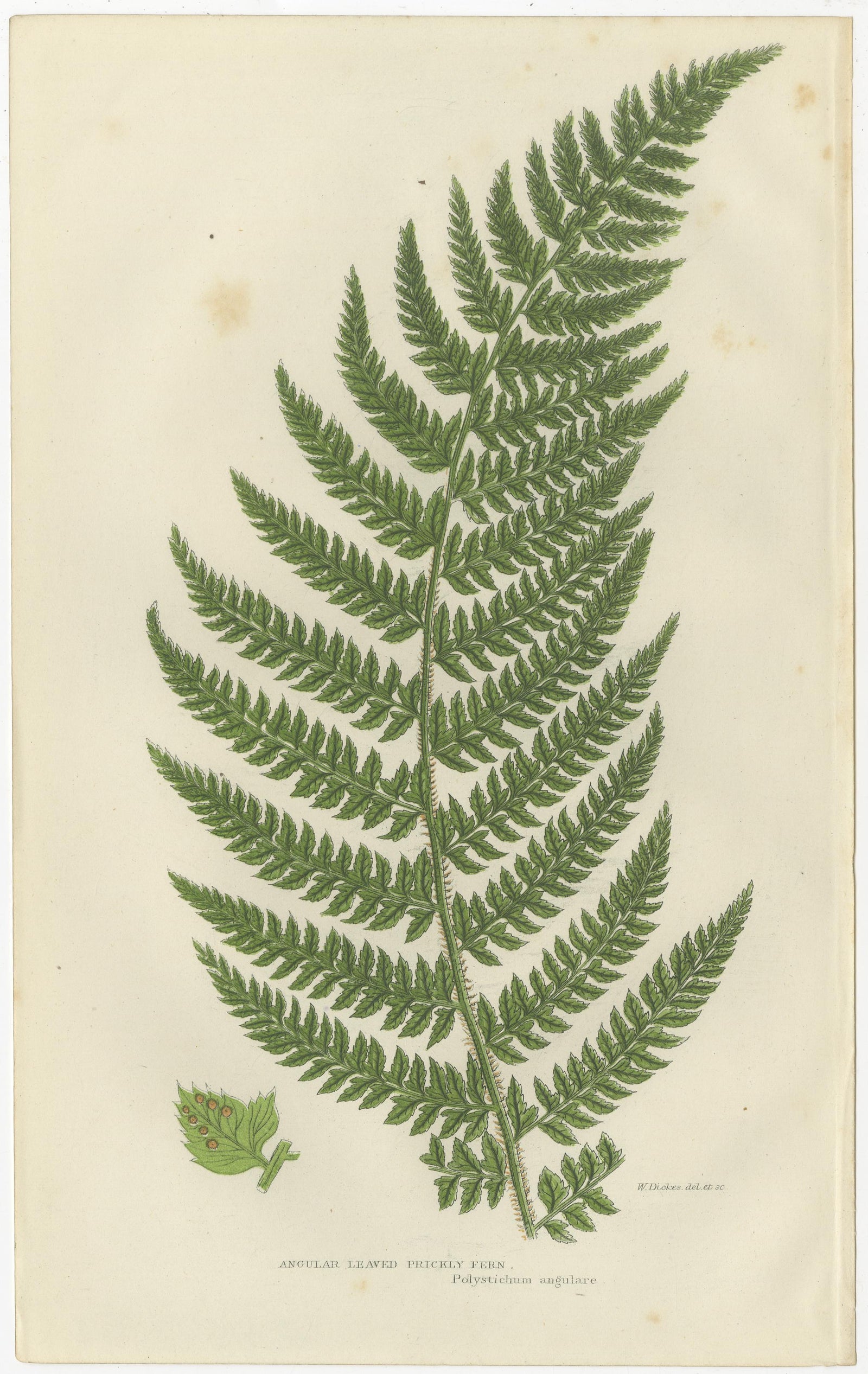
Holly Fern, Common Prickly Fern and Angular-leaved Prickly Fern, Triptych, 1873
$305 (£230, €270)
Period original, not a reproduction.
Shipped from the Netherlands, flat, insured and tracked, worldwide. Returns accepted within 14 days.
- Date
- 1873
- Size
- 9.6 × 5.5 in (24.4 × 14 cm)
- Condition
- Good. Moderate age toning with light scattered foxing, consistent with age; images remain clean and well defined.
- Period
- Late 19th century
- Section
- Botanical
- Reference
- f_48053712
European Quillwort and Creeping Pillwort, Botanical Triptych, 1873
This refined botanical triptych illustrates three closely related aquatic and semi-aquatic plant forms, centred on the European Quillwort and the Creeping Pillwort. The plates emphasise the distinctive growth habits of these ancient fern allies, from the dense, grass-like quills emerging from submerged root systems to the characteristic pill-shaped reproductive structures shown in careful detail. Together, the three prints create a cohesive and quietly elegant wall set, unified by subject, palette, and scale.
Published in 1873 as part of Anne Pratt’s celebrated botanical works, these engravings reflect the Victorian fascination with lesser-known plant species and their precise natural forms. Pratt’s illustrations are admired for their clarity and restraint, combining scientific observation with a refined decorative sensibility. The soft green tones, subtle shading, and generous negative space give this triptych a calm, contemporary feel despite its 19th-century origin.
As a ready-made triptych, this set is especially appealing to collectors and interior designers seeking botanical artwork with a more minimal, organic character. It works beautifully in studies, bathrooms, coastal interiors, or modern spaces where understated natural history imagery is preferred.
Condition report:
Moderate age toning with light scattered foxing, consistent with age; images remain clean and well defined.
Framing tips:
Use matching mats in warm ivory, pale sand, or soft grey. Frames in light oak, natural ash, or slim painted frames will complement the subtle botanical character.
Technique: Hand-colored engraving
Maker: Anne Pratt, England, published 1873