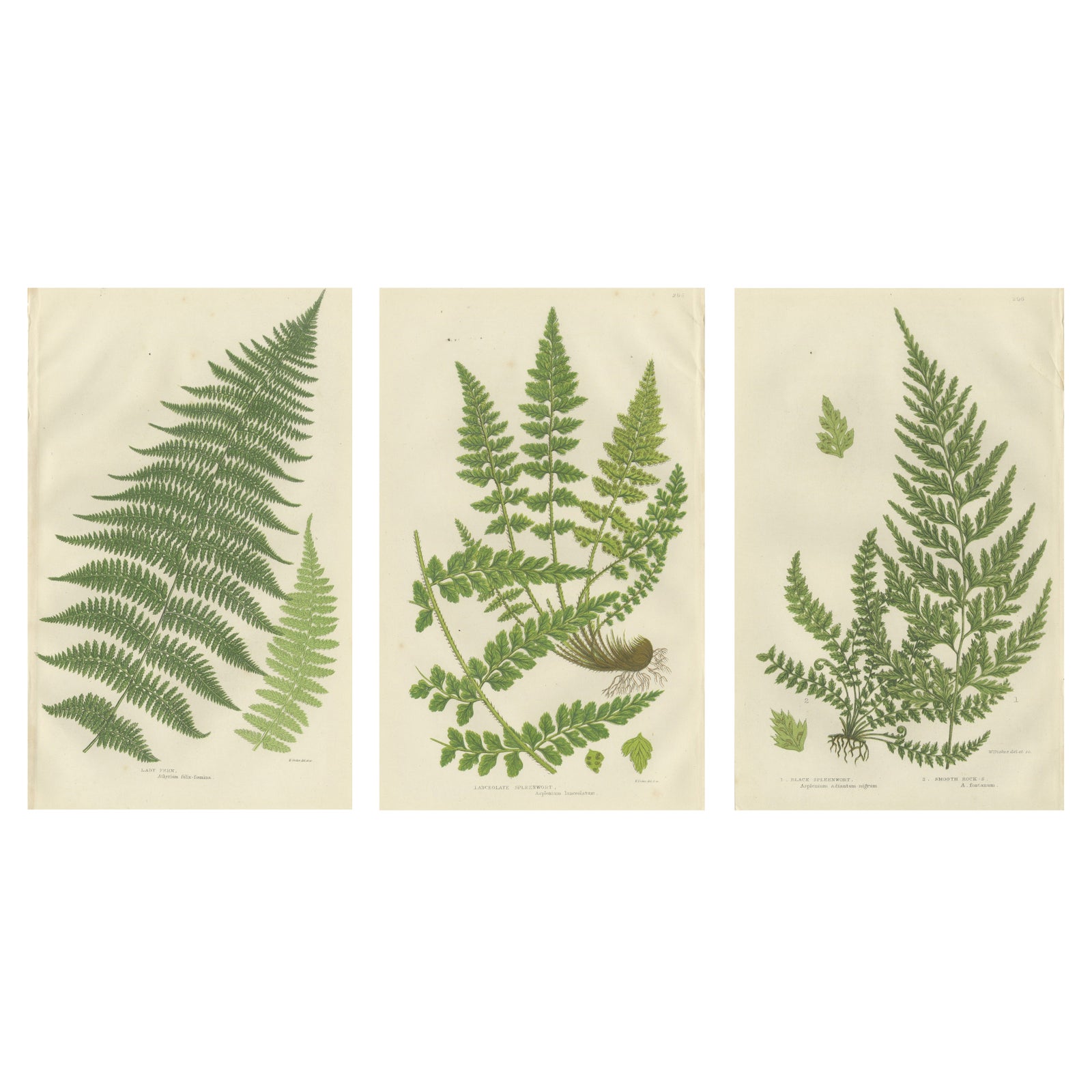
Framed and on the wall
Frame and rooms are illustrations of how the print could look; the description says what is included.
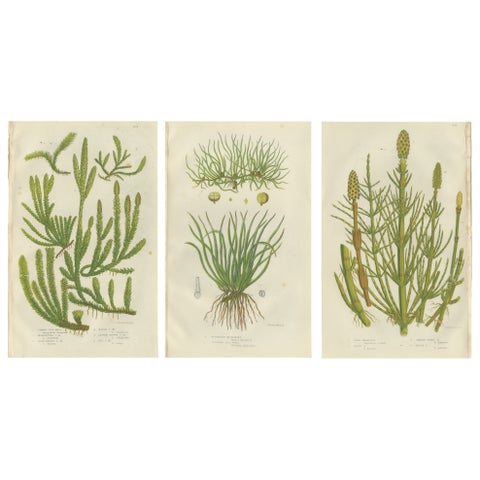
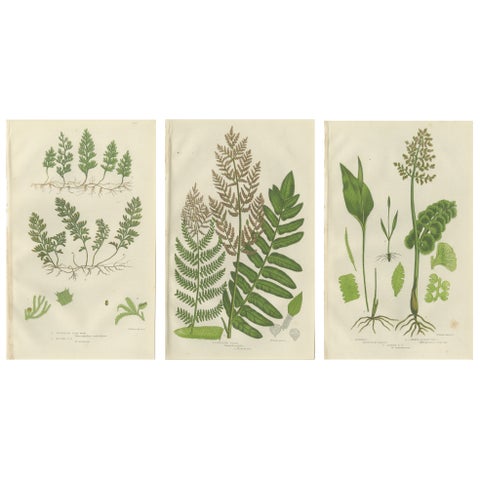
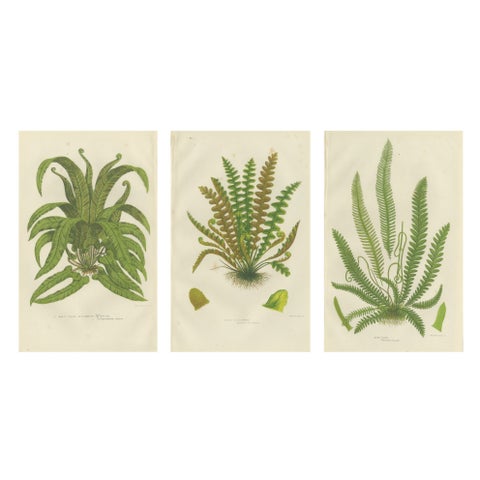
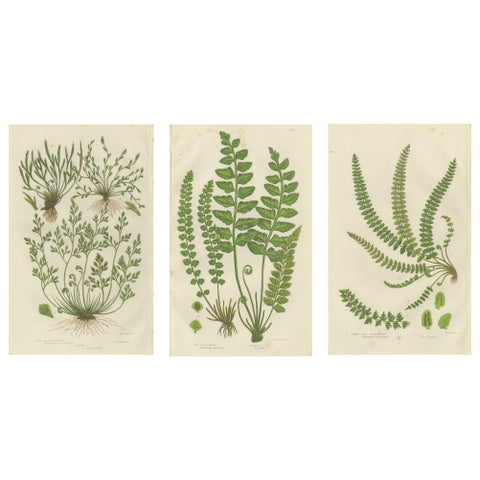
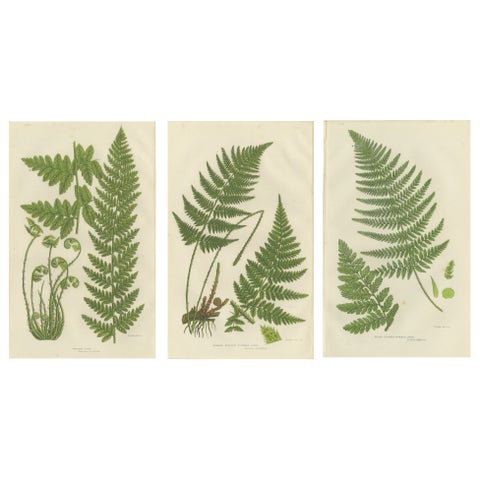
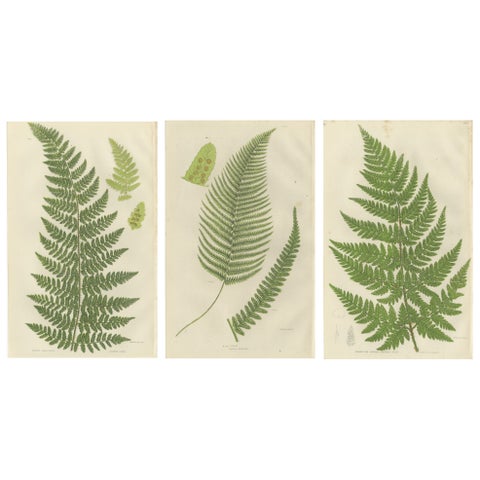
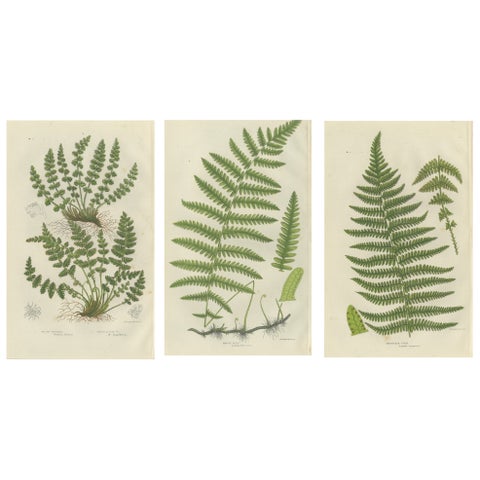
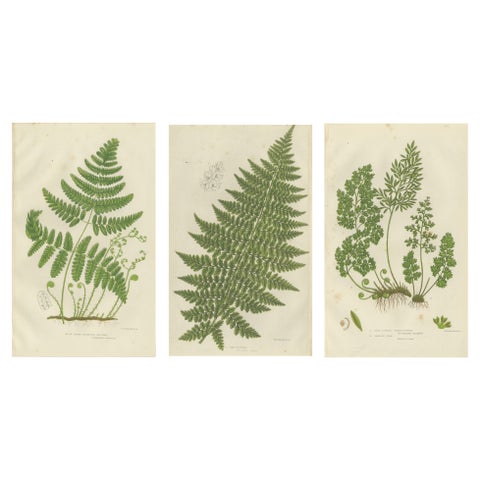
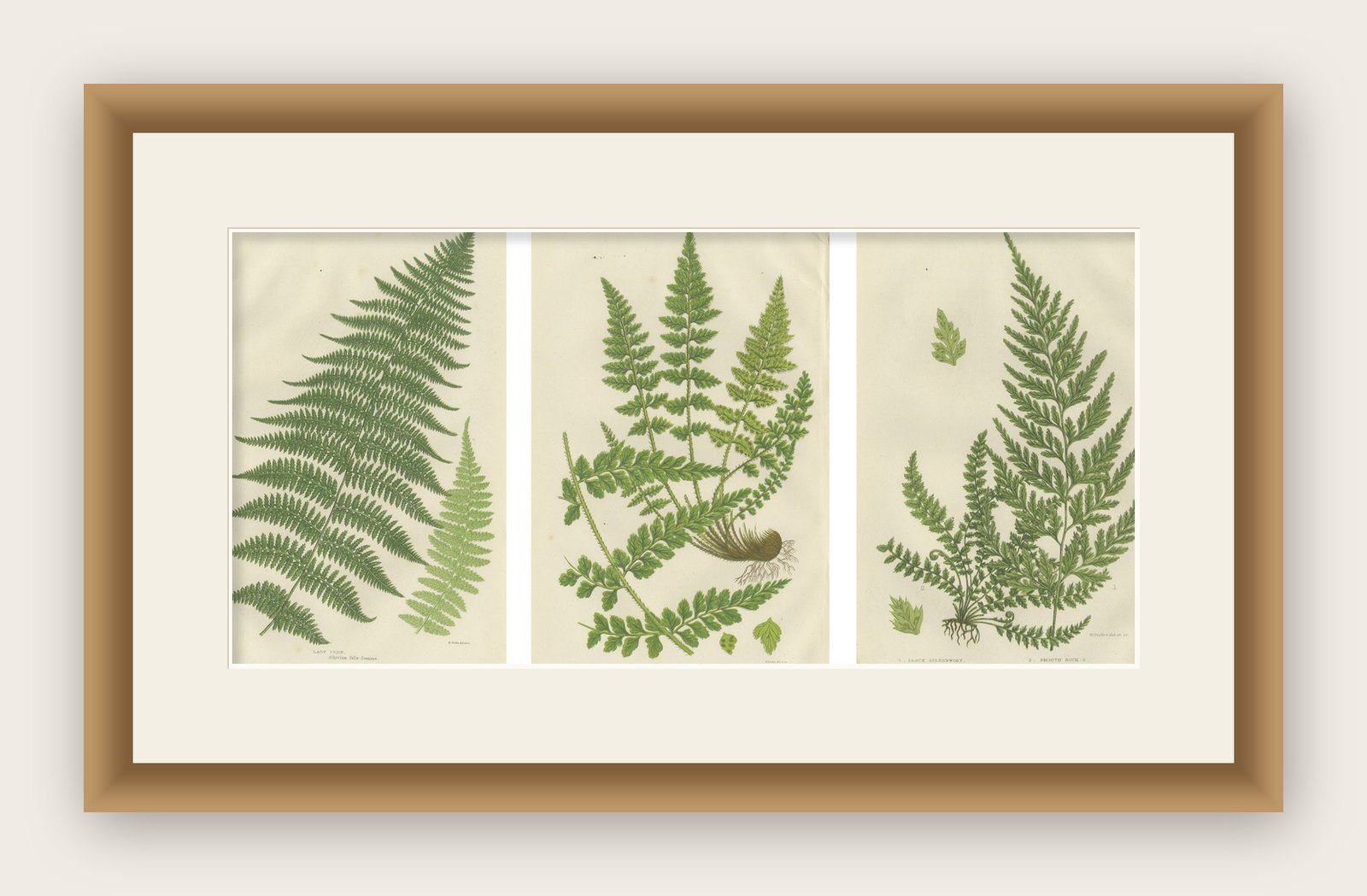
Lanceolate, Black Spleenwort & Wall Rue, Botanical Triptych, 1873
$305 (£230, €270)
Period original, not a reproduction.
Shipped from the Netherlands, flat, insured and tracked, worldwide. Returns accepted within 14 days.
- Date
- 1873
- Size
- 9.6 × 5.5 in (24.4 × 14 cm)
- Condition
- Good. Moderate age toning with light scattered foxing, consistent with age; overall well preserved with clear impressions.
- Period
- Late 19th century
- Section
- Botanical
- Reference
- f_48053782
Lanceolate Spleenwort, Black Spleenwort and Wall Rue, Botanical Triptych, 1873
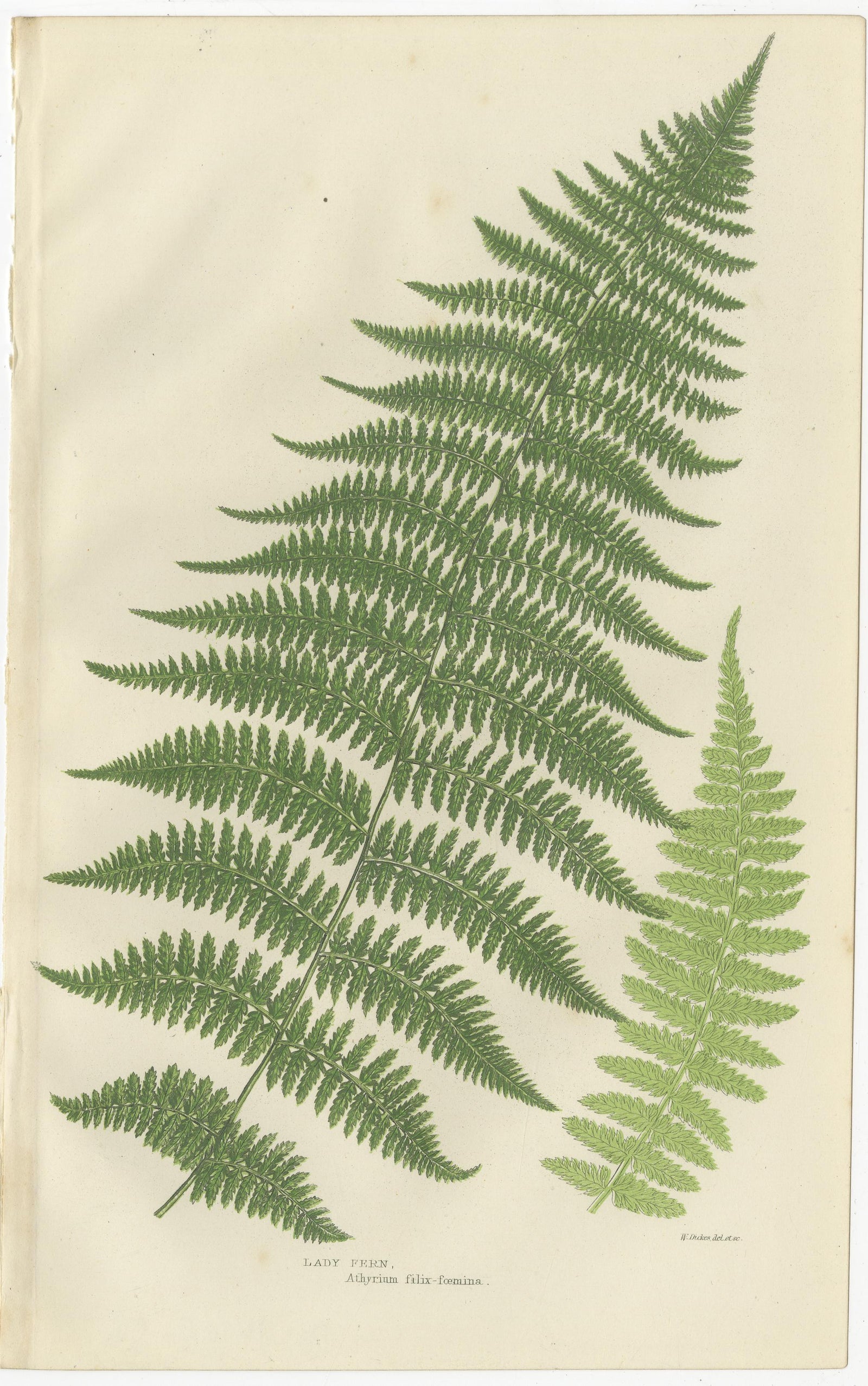
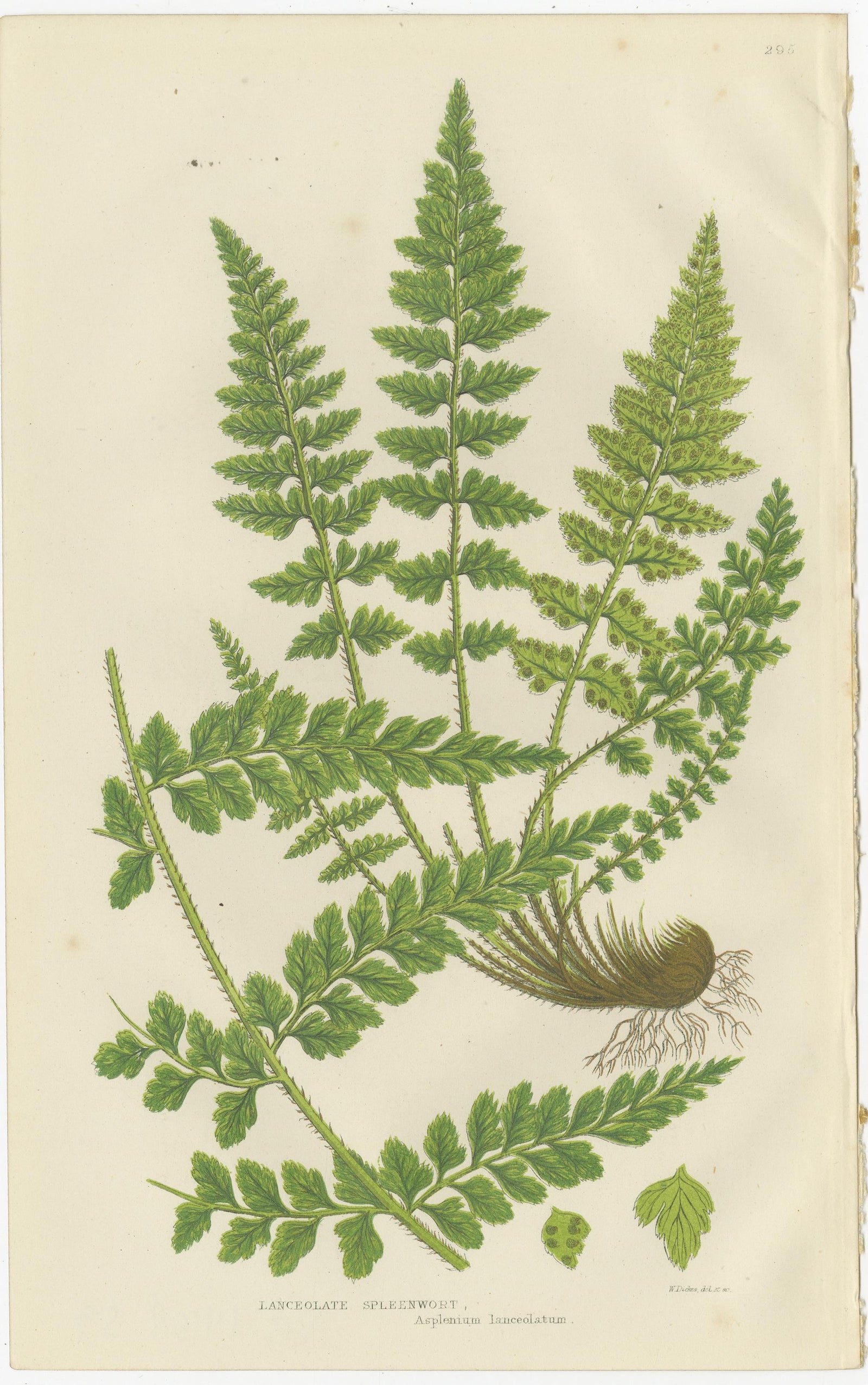
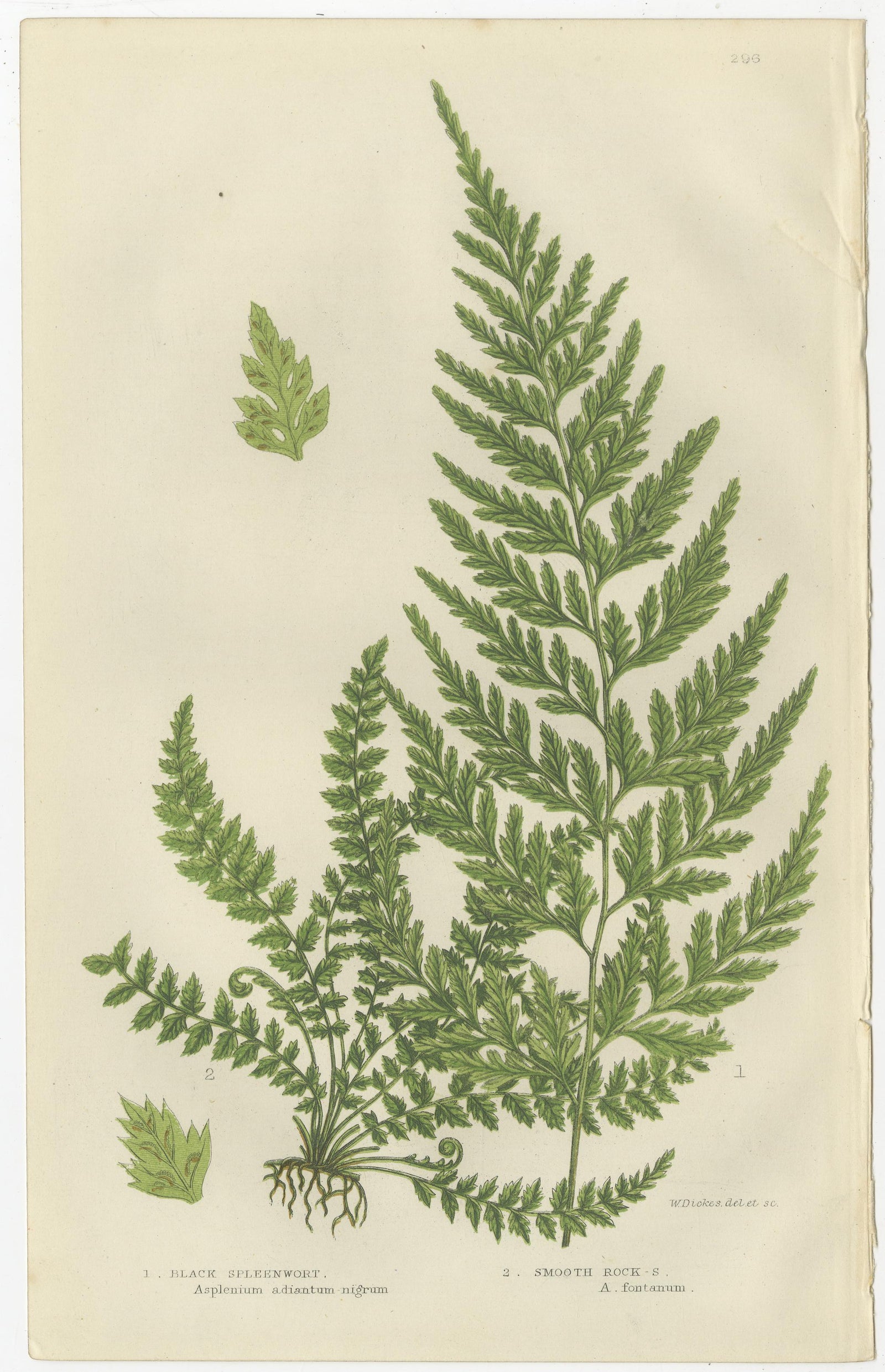
This refined botanical triptych brings together three closely related spleenwort species, illustrated with clarity, restraint, and precise botanical detail. The Lanceolate Spleenwort, Black Spleenwort, and Wall Rue are shown with slender fronds and distinctive growth habits, creating a visually cohesive set defined by elegance and subtle variation. Displayed side by side, the three prints form a calm, balanced composition that rewards closer inspection without overwhelming the space.
The engravings were published in 1873 as part of Anne Pratt’s respected botanical publications, admired in the Victorian period for their educational clarity and decorative refinement. Spleenworts were of particular interest to 19th-century botanists for their ability to thrive in rocky and wall-bound environments, and these illustrations clearly convey their structural character. The restrained green tones and generous negative space give the triptych a timeless quality that works well in both traditional and contemporary interiors.
As a ready-made triptych, this set is especially appealing to collectors and interior designers seeking botanical artwork with a quieter, more scholarly elegance. It is well suited for studies, libraries, hallways, or curated gallery walls where subtle natural history imagery is desired.
Condition report:
Moderate age toning with light scattered foxing, consistent with age; overall well preserved with clear impressions.
Framing tips:
Use matching mats in warm ivory, soft parchment, or pale stone. Frames in light walnut, natural oak, or slim dark-stained wood will complement the refined linear forms.
Technique: Hand-colored engraving
Maker: Anne Pratt, England, published 1873