Close-ups
Framed and on the wall
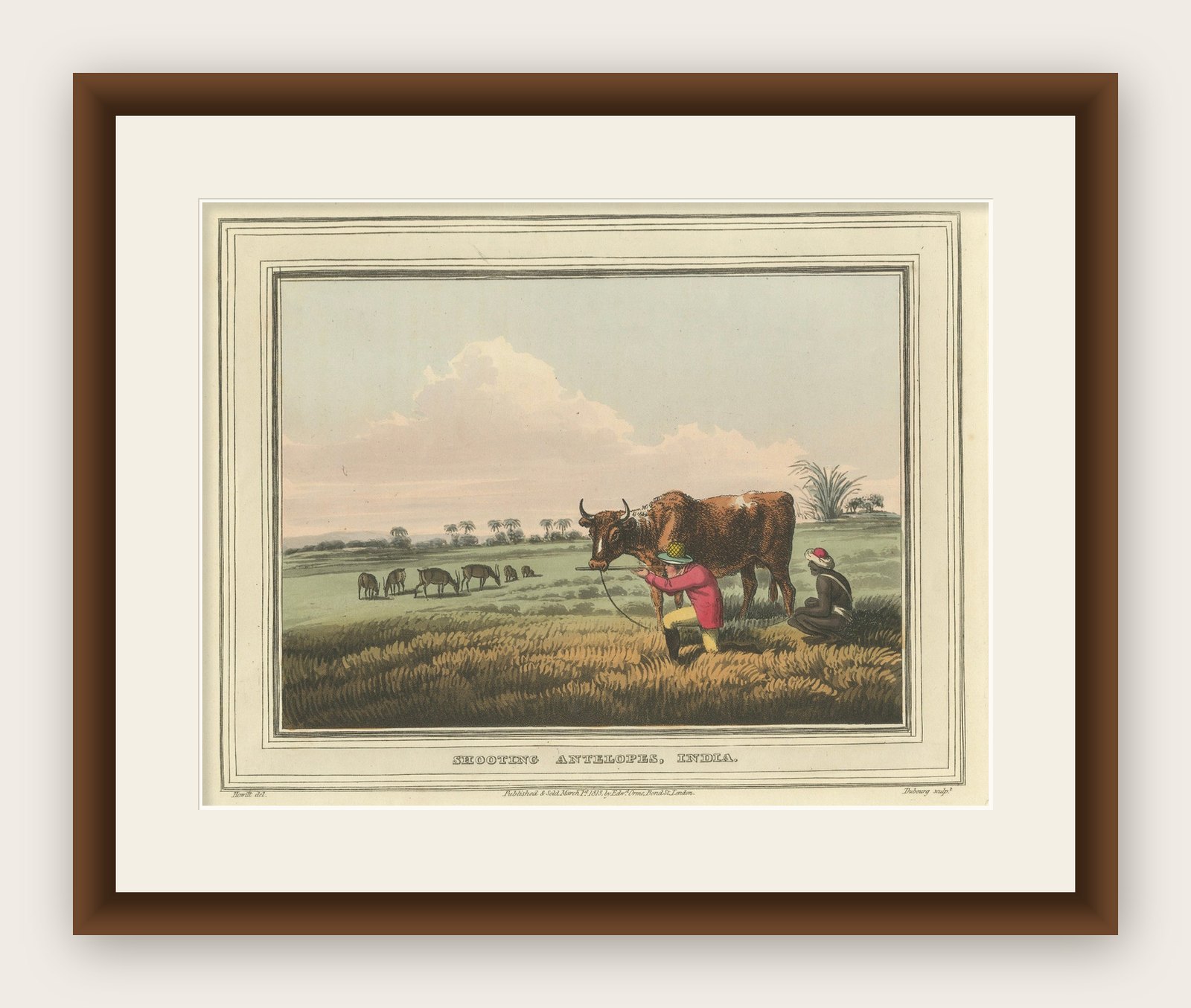
Frame and rooms are illustrations of how the print could look; the description says what is included.
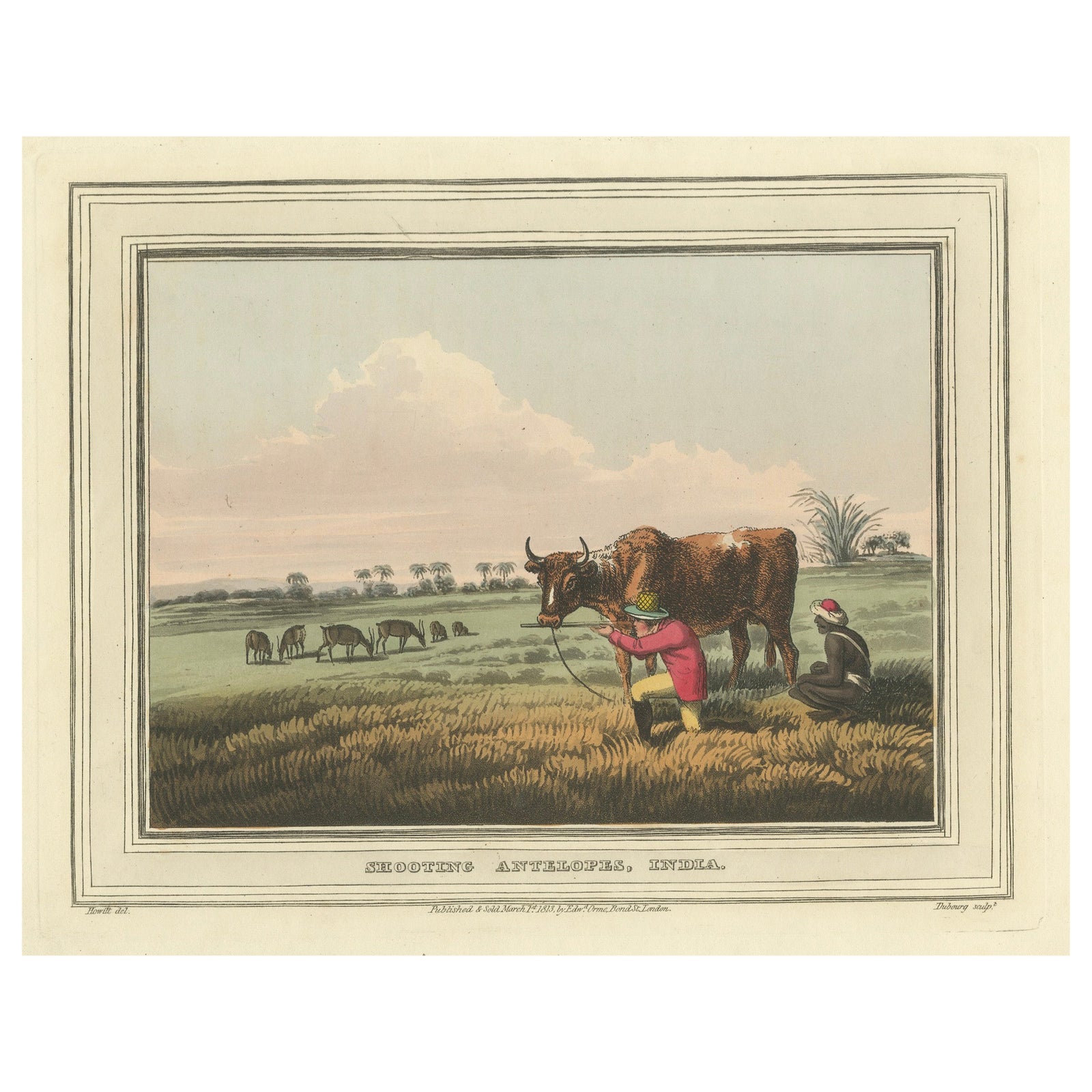
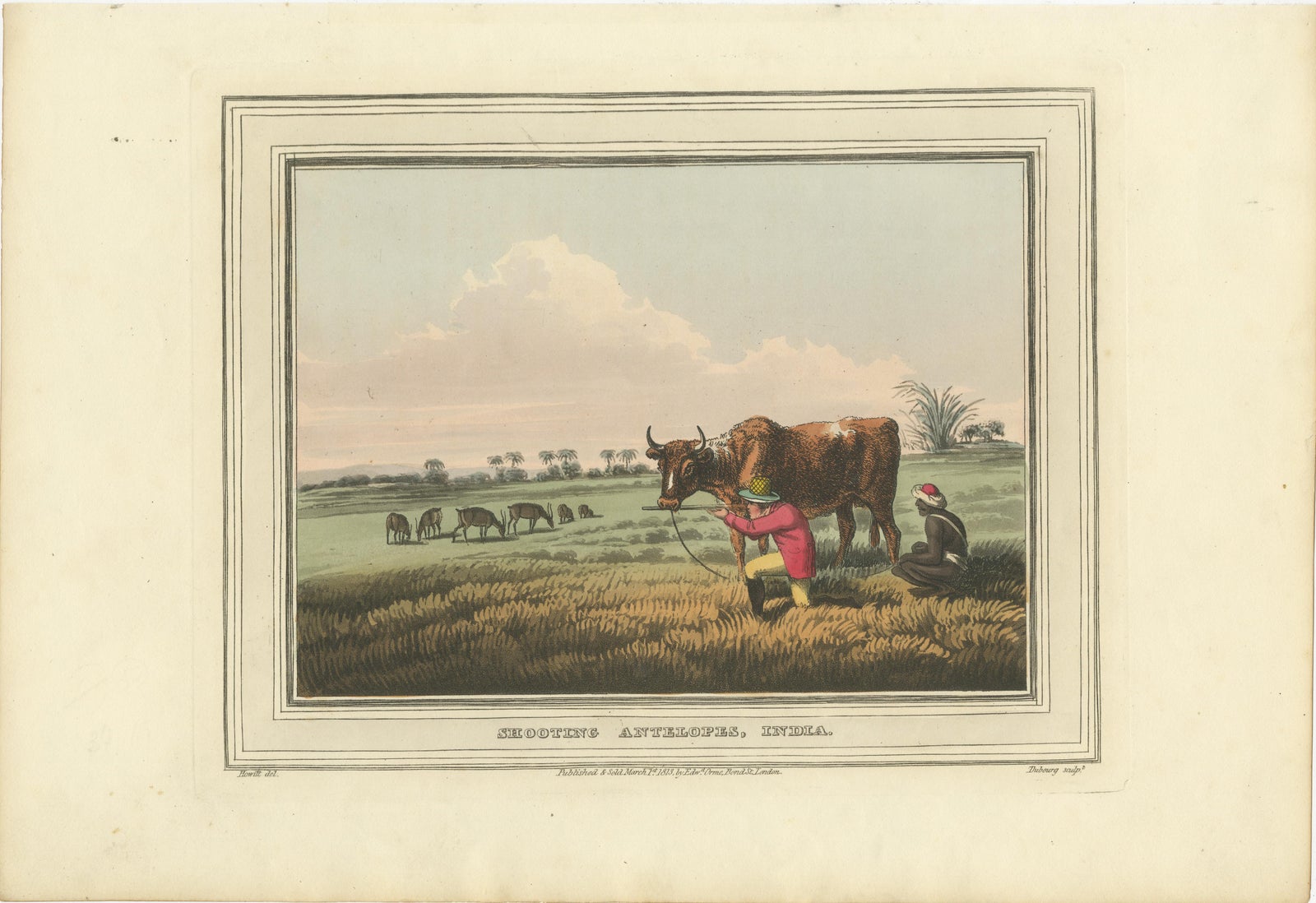
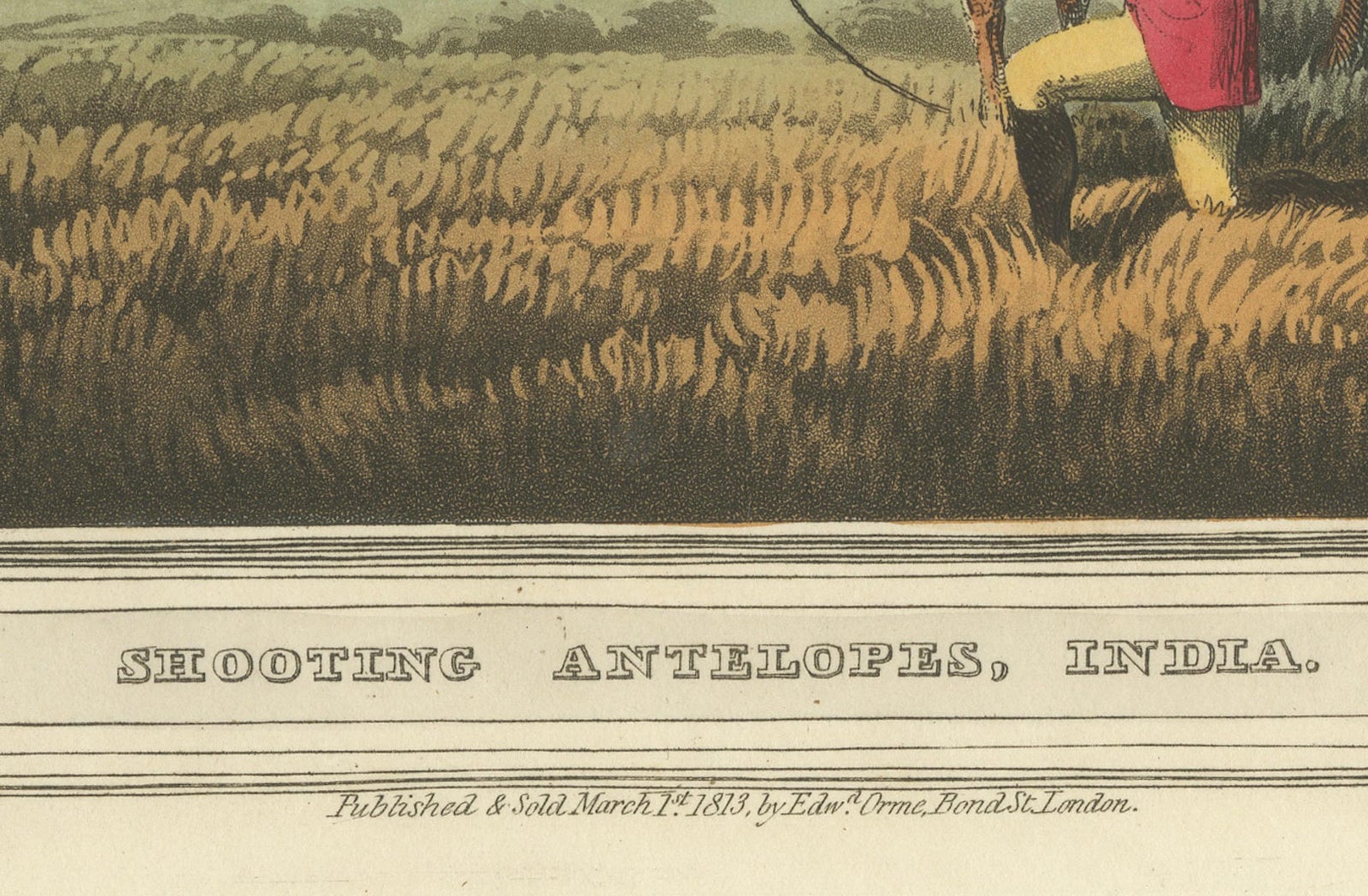
Foreign Field Sports: Shooting Antelopes in India, Aquatint, 1813
£205 ($270, €240)
Period original, not a reproduction.
Shipped from the Netherlands, flat, insured and tracked, worldwide. Returns accepted within 14 days.
- Date
- 1813
- Size
- 8.7 × 13 in (22.2 × 33 cm)
- Condition
- In good condition given age. General age related toning due to age and handling. Please study scan carefully.
- Period
- Early 19th century
- Section
- Mammals
- Reference
- f_40470142
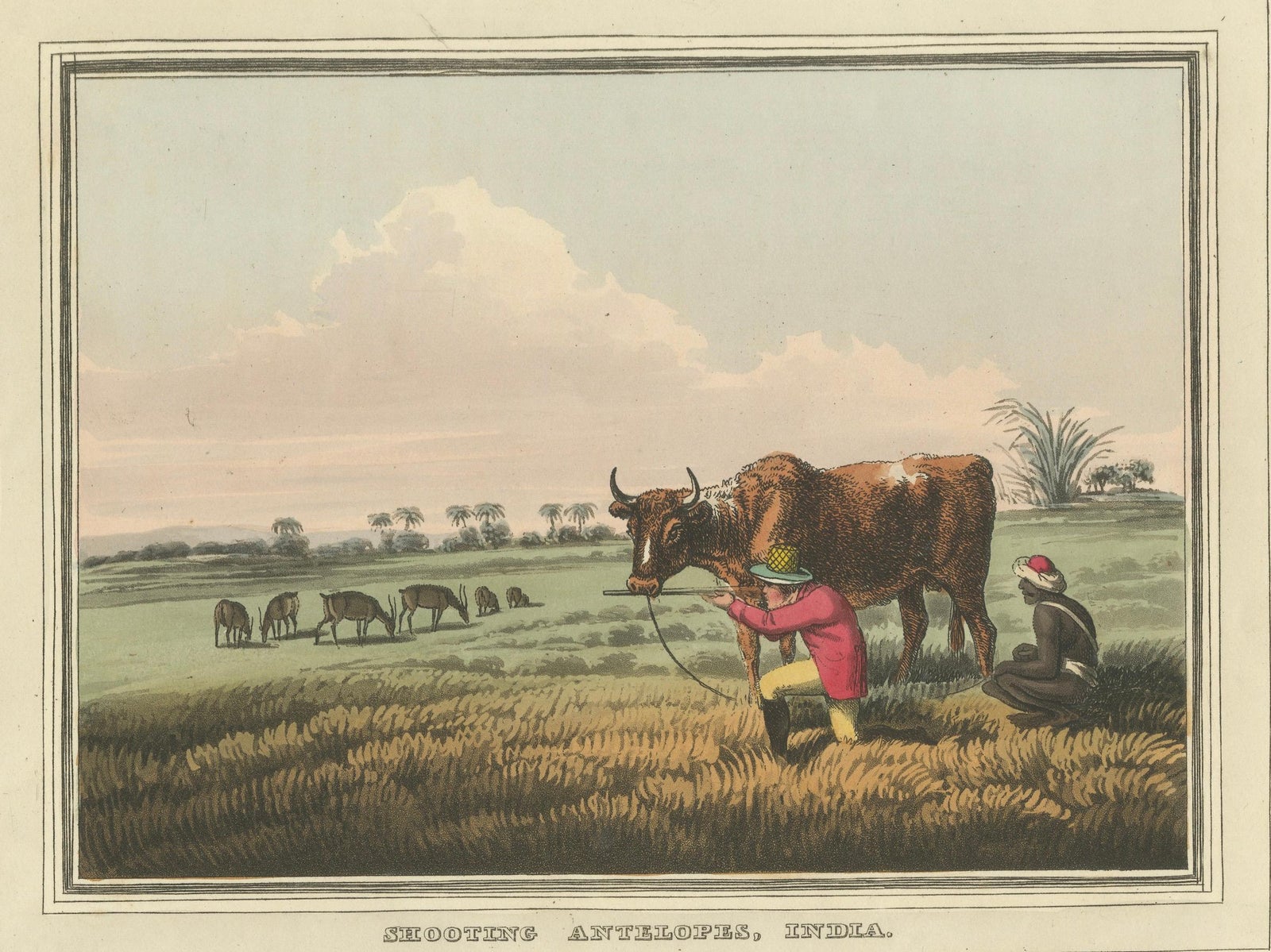
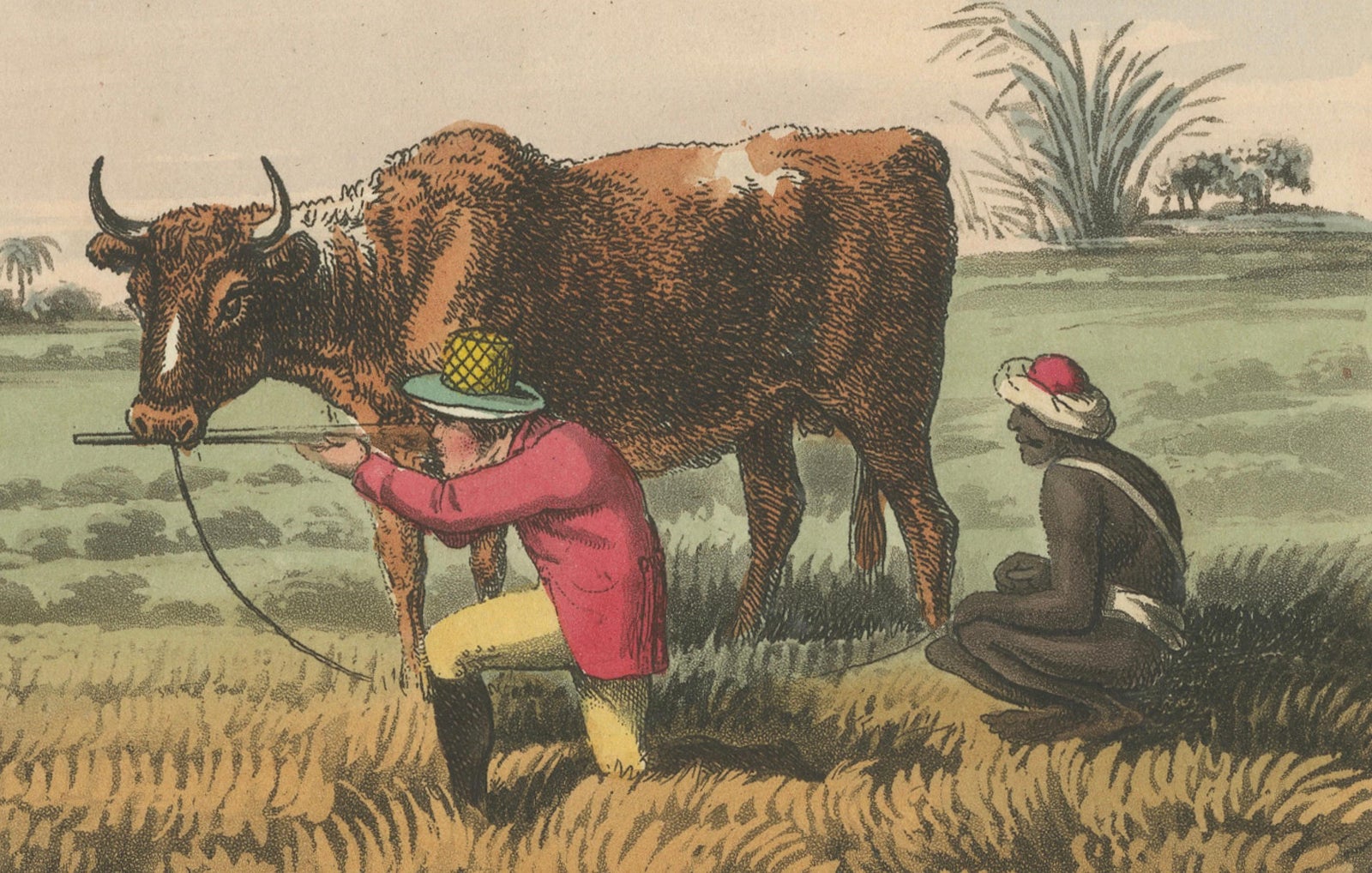
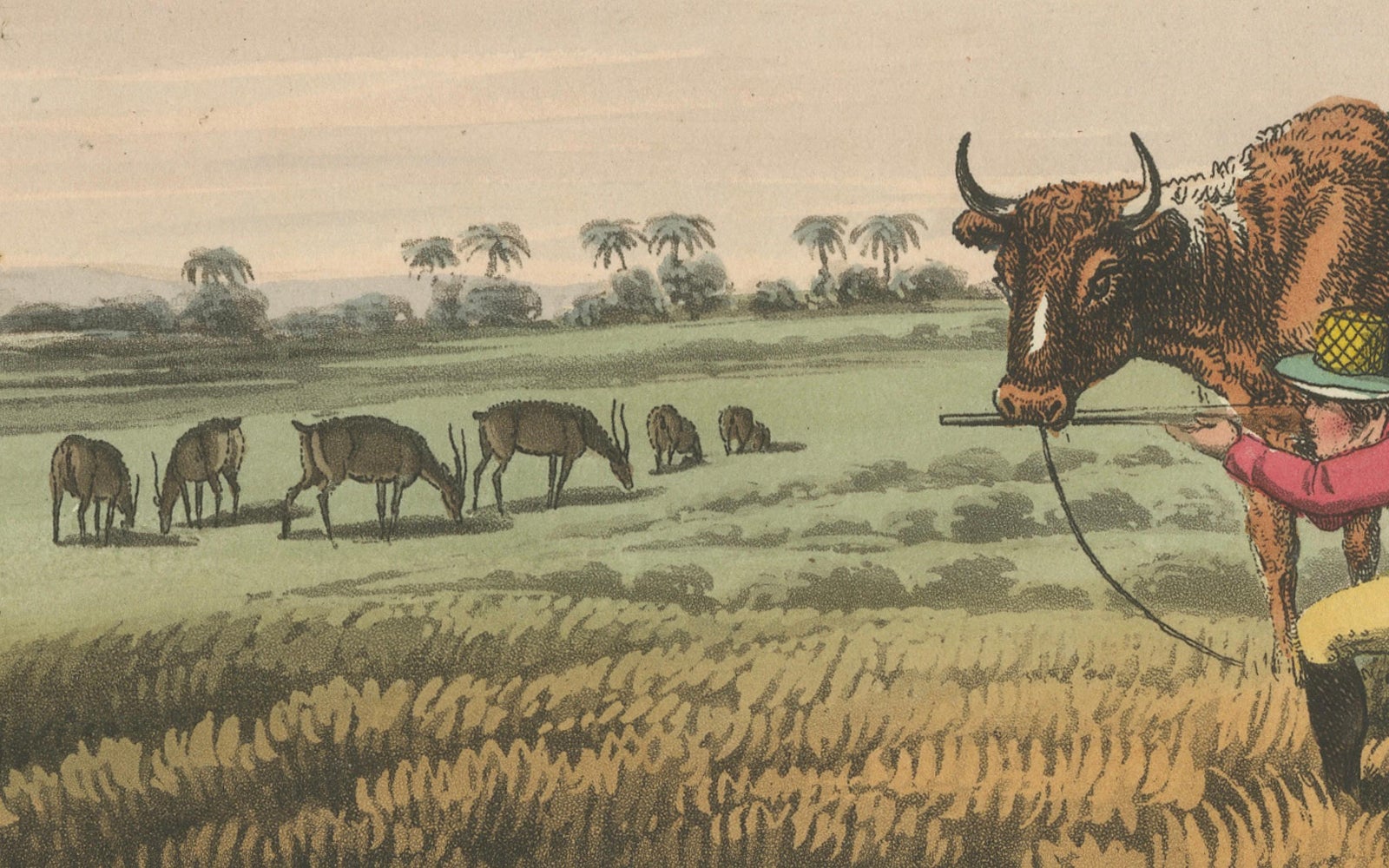
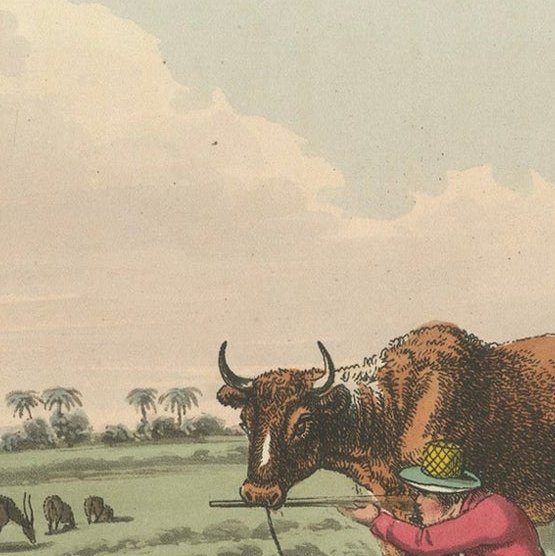
This print titled "Shooting Antelopes, India" depicts a hunting scene in the Indian grasslands. In the foreground, a hunter dressed in a pink coat and yellow pants is using a cow as cover to stealthily approach a group of grazing antelopes. The hunter is in a crouched position, aiming his rifle over the cow’s back. Next to him, a local assistant in traditional attire is kneeling, seemingly guiding or assisting in the hunt. The background shows a serene landscape with palm trees, a distant herd of antelopes grazing peacefully, and a pastel sky indicating either dawn or dusk. The hand-coloring of the aquatint brings life to the detailed portrayal of the figures and the natural surroundings.
Countries Where This Happened:
Antelope hunting, as depicted in this print, was common in various regions of India, particularly during the British colonial period. British officers and local hunters often engaged in hunting expeditions, and the Indian subcontinent was known for its rich wildlife, including various species of antelope such as the blackbuck and chinkara.
Today, hunting of antelopes in India is largely banned and regulated to protect wildlife populations. India has established numerous wildlife sanctuaries and national parks to conserve its rich biodiversity. Hunting is prohibited under the Wildlife Protection Act of 1972.
In summary, while antelope hunting was historically practiced in India, contemporary conservation laws have significantly restricted such activities to protect and preserve wildlife populations.