Close-ups
Framed and on the wall
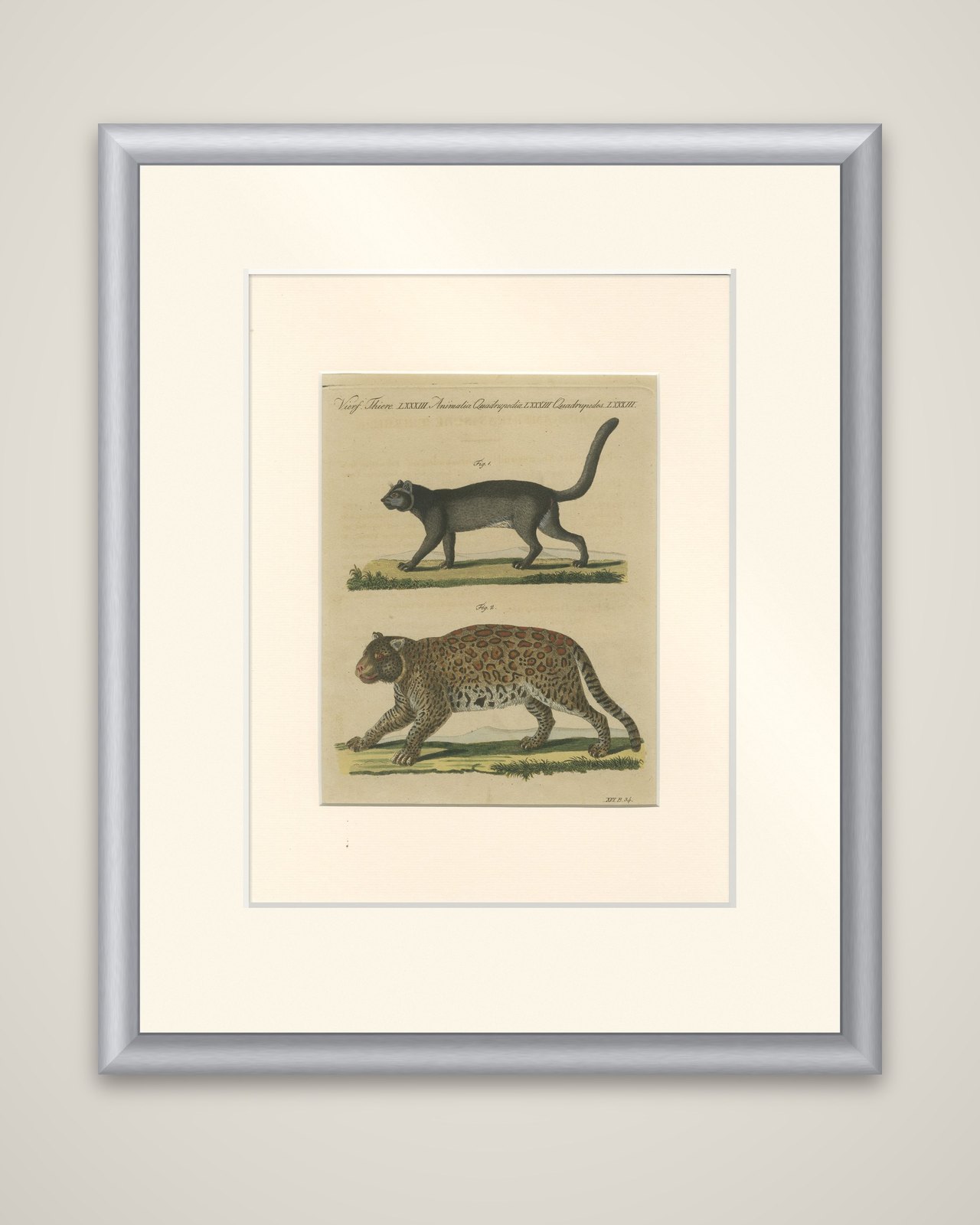
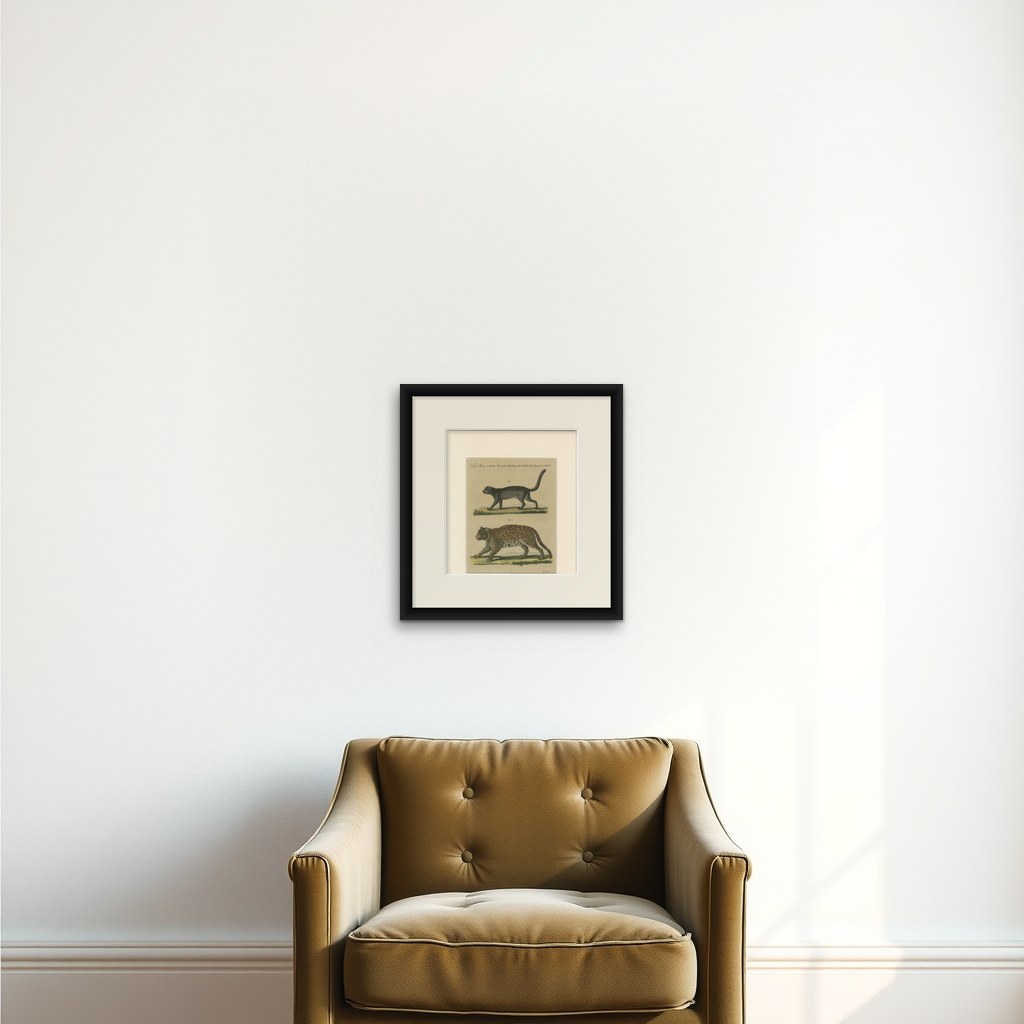

Frame and rooms are illustrations of how the print could look; the description says what is included.
Antique Jaguar & Jaguarundi Engraving, Bertuch, 1813
$380 (£290, €340)
Period original, not a reproduction.
Shipped from the Netherlands, flat, insured and tracked, worldwide. Returns accepted within 14 days.
- Date
- 1813
- Size
- 11.8 × 9.4 in (30 × 24 cm)
- Condition
- Good. Wear consistent with age and use. Good antique condition with overall age-related toning, scattered foxing and spotting and some visible show-through or offsetting from printed text. Minor marks and imperfections are present consistent with a print more than 200 years old.
- Period
- Early 19th century
- Artist or book
- Bertuch
- Section
- Mammals
- Reference
- f_51467122
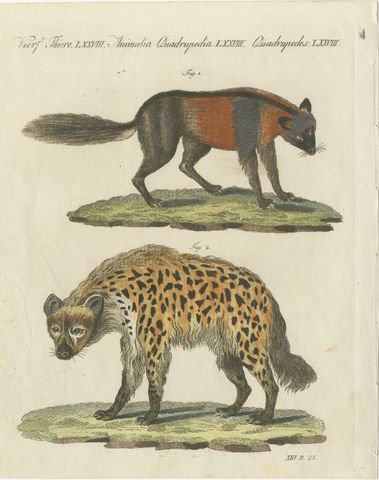
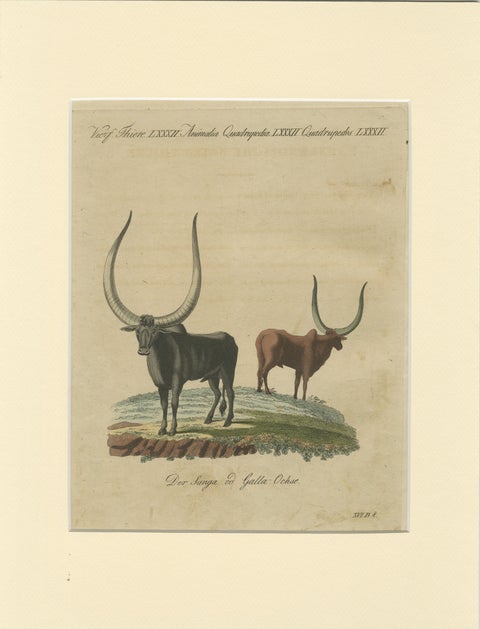
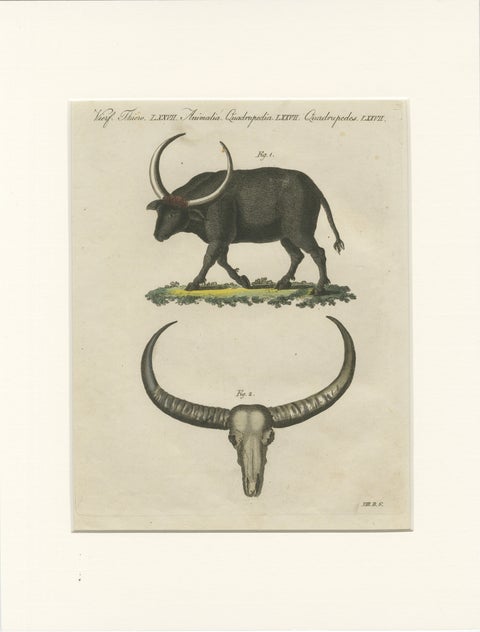
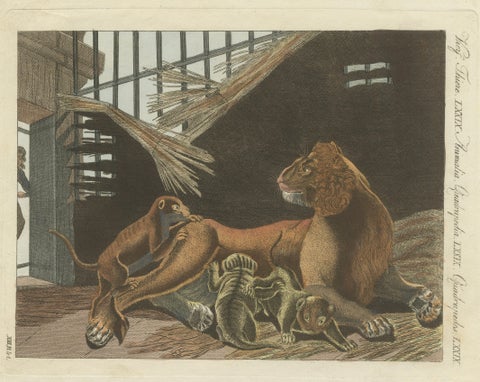
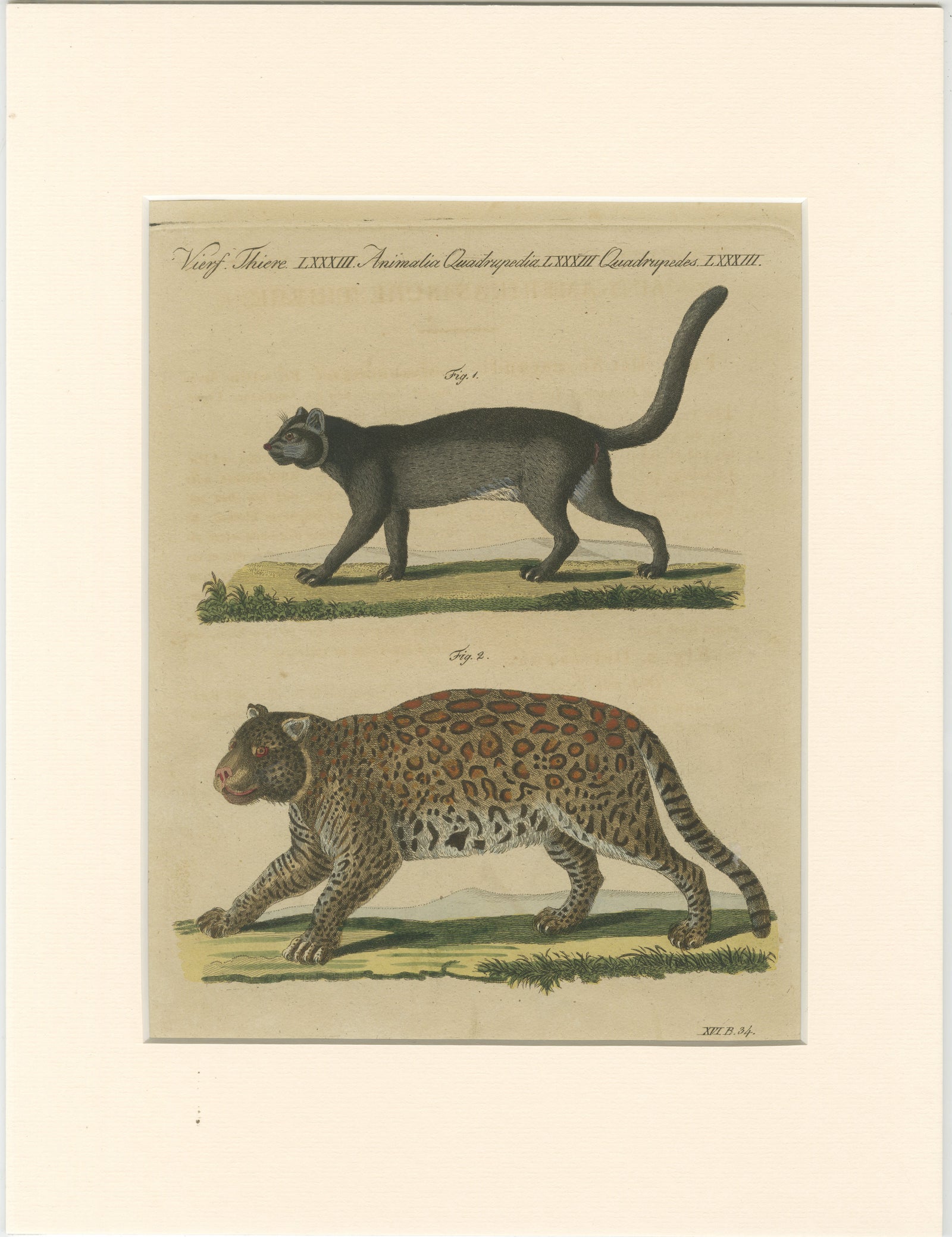
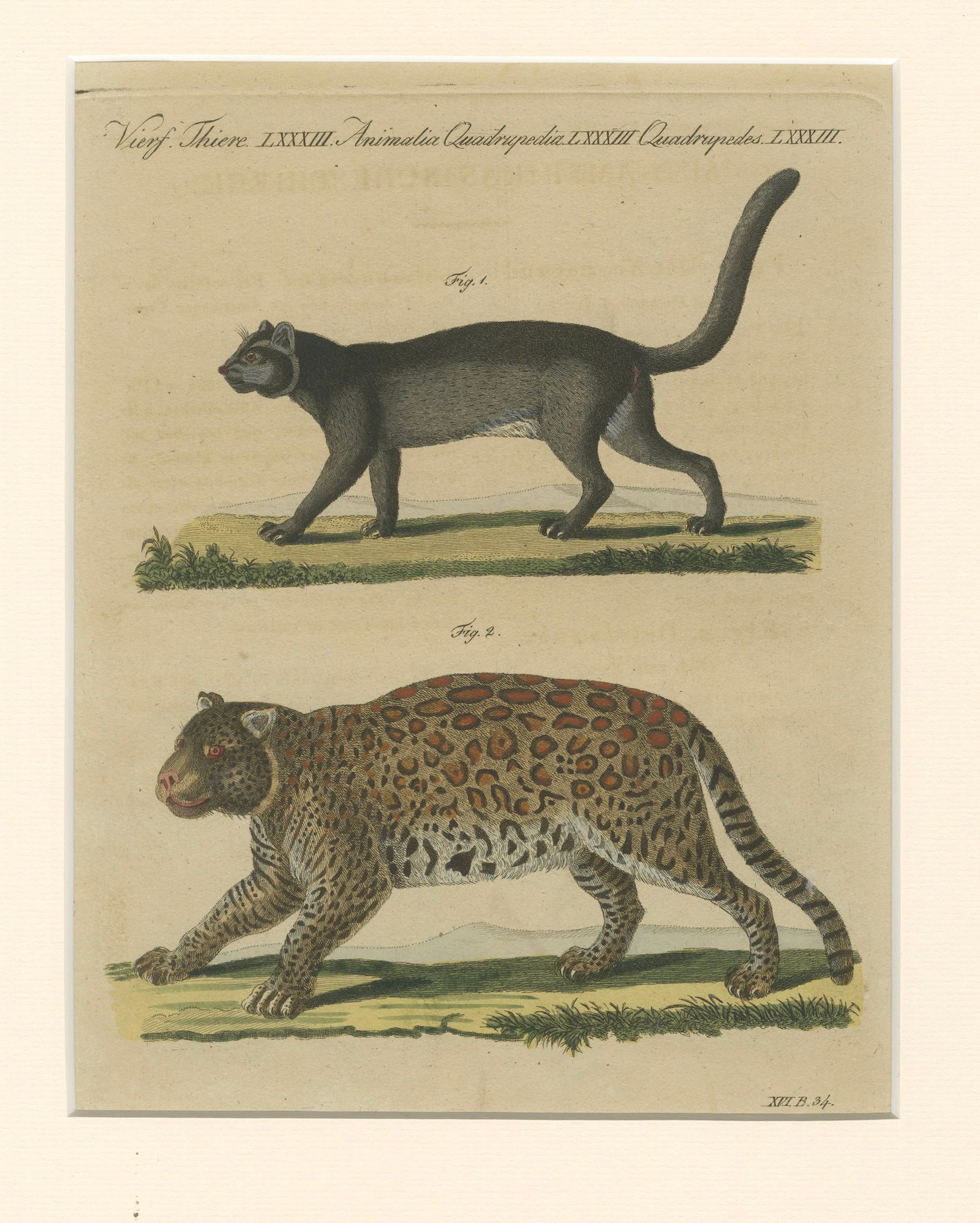
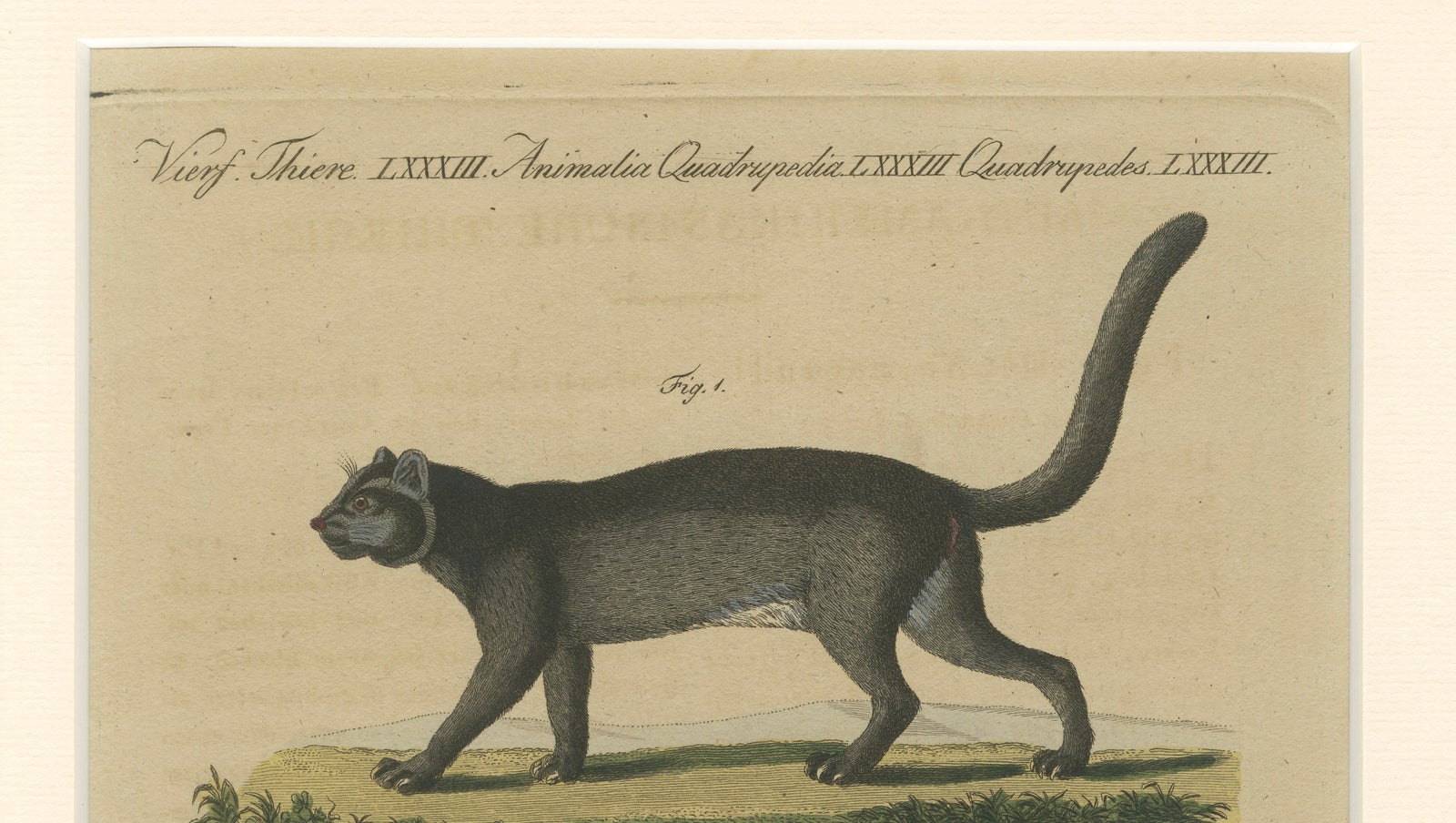
Two South American cats on one plate, an original hand-colored copper engraving from Friedrich Justin Bertuch's Bilderbuch für Kinder, published in Weimar in 1813. The plate is headed "Vierf. Thiere LXXXIII", "Animalia Quadrupedia LXXXIII" and "Quadrupèdes LXXXIII", and Bertuch's title for it is "Südamericanische Thiere".
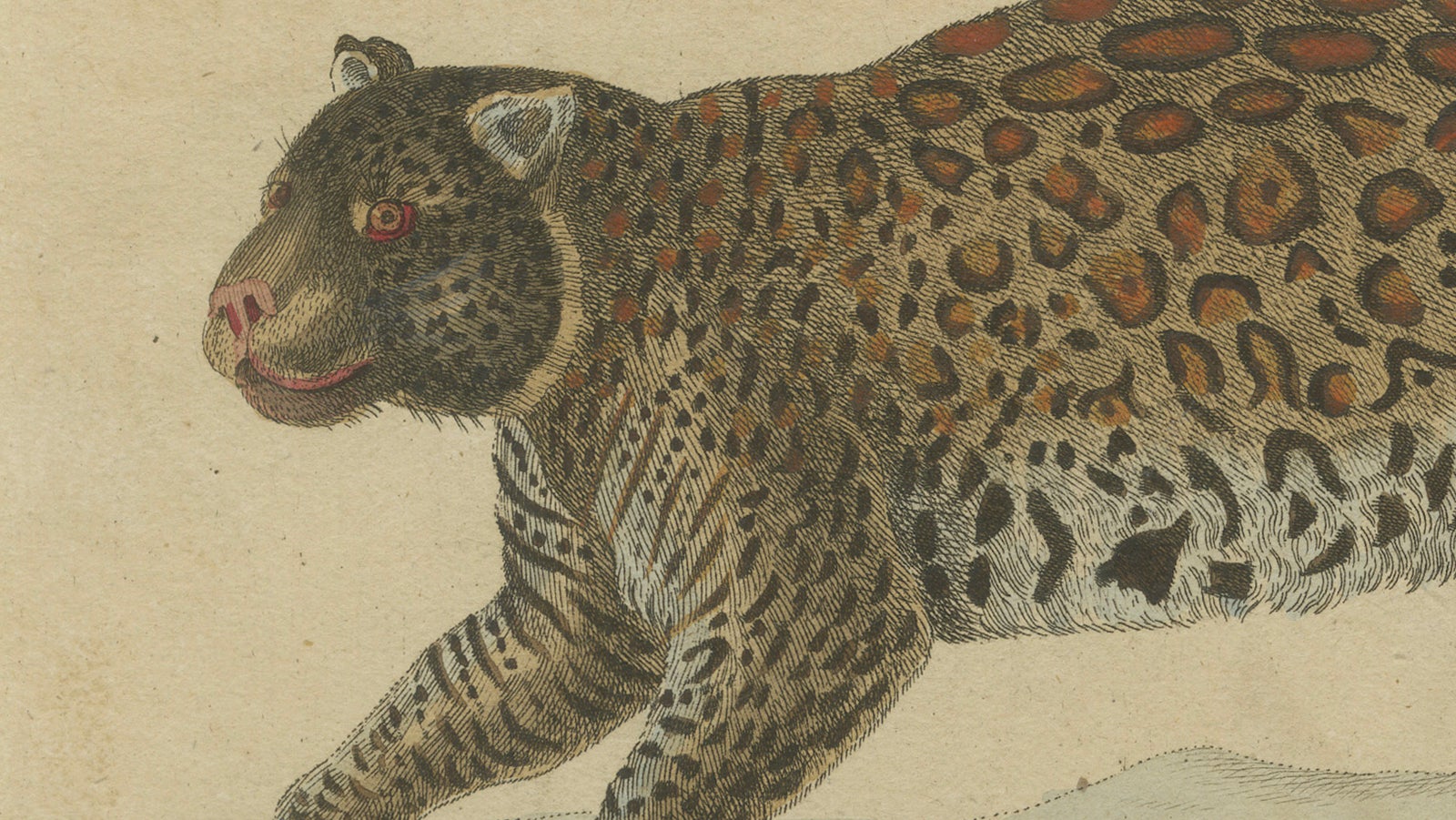
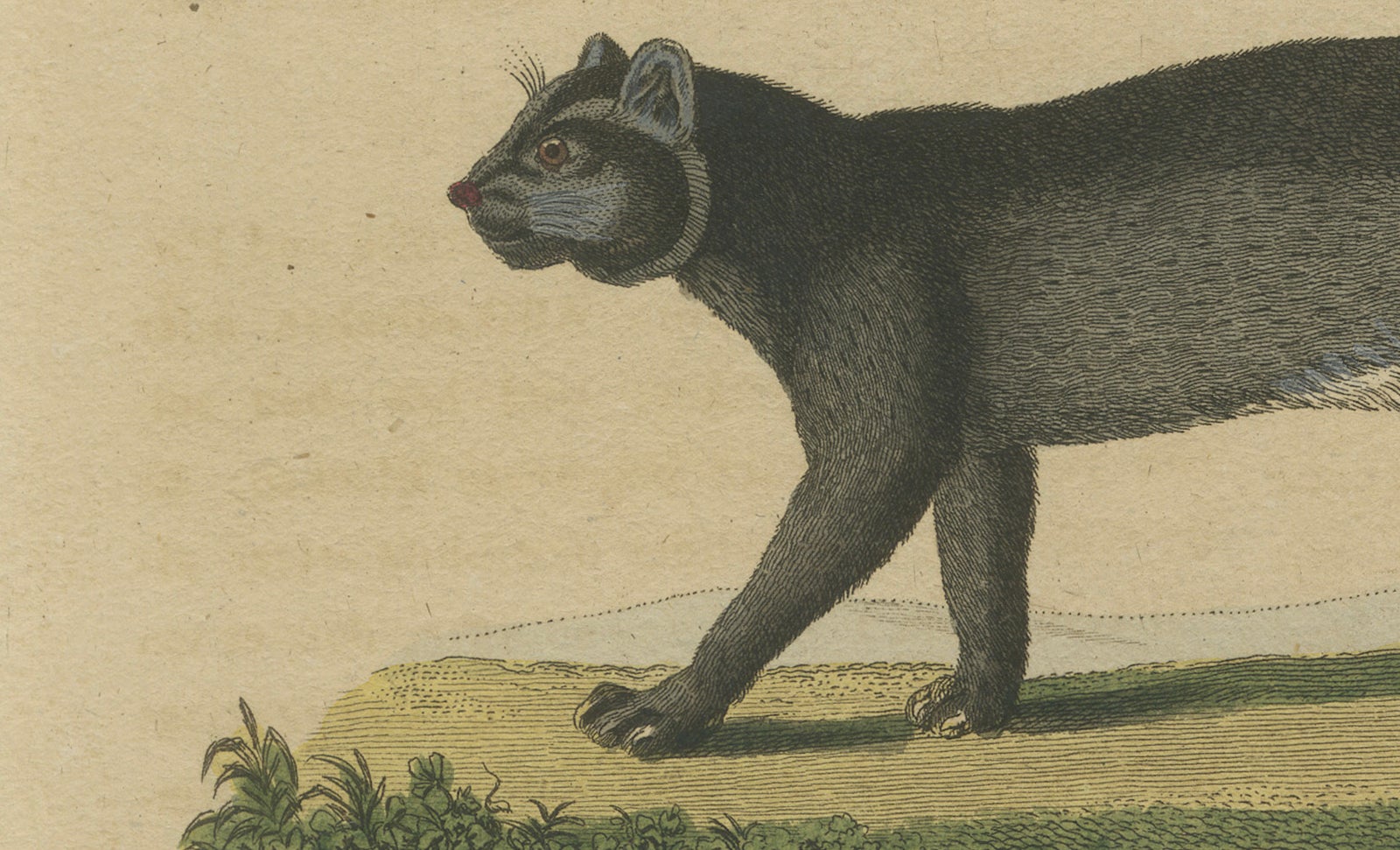
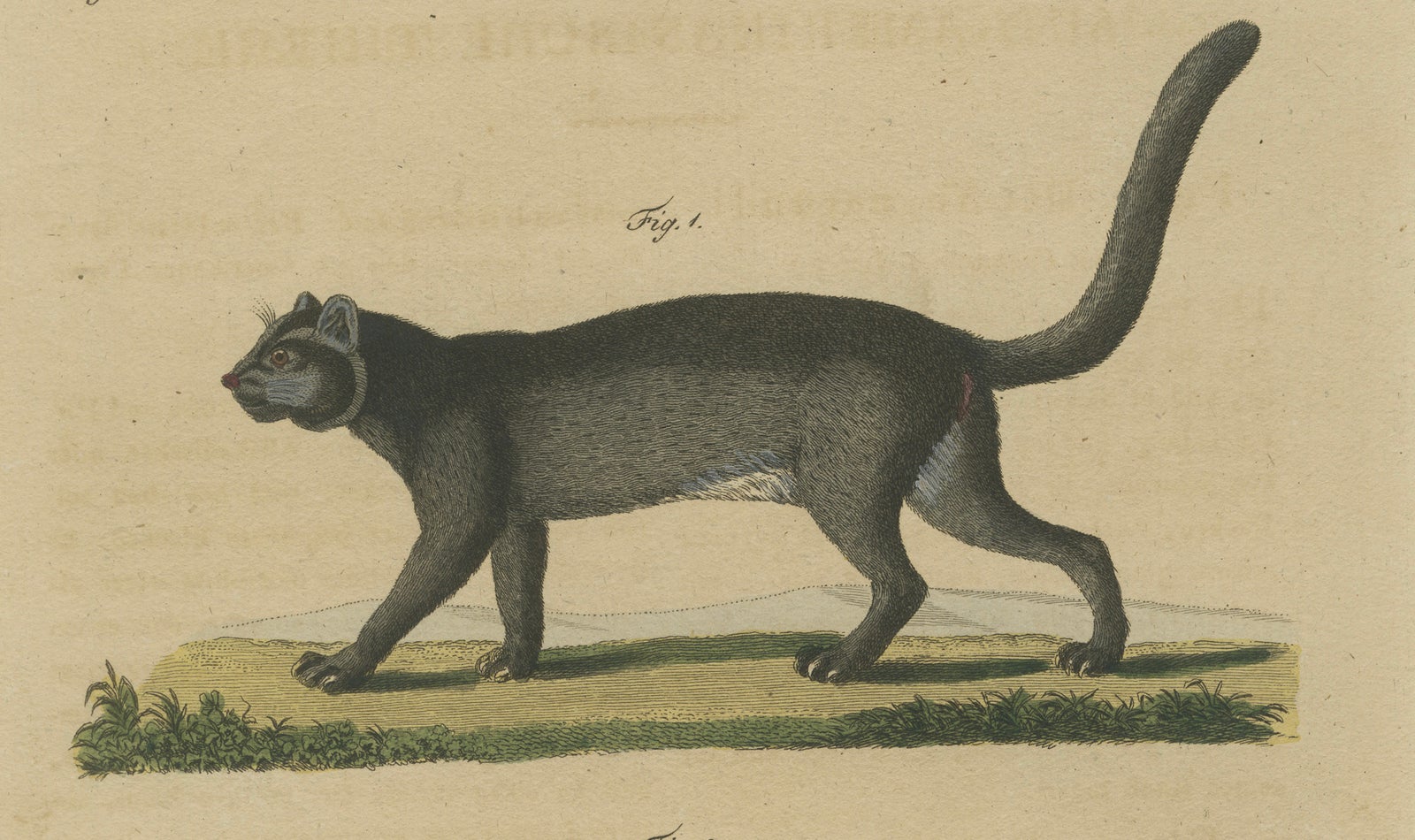
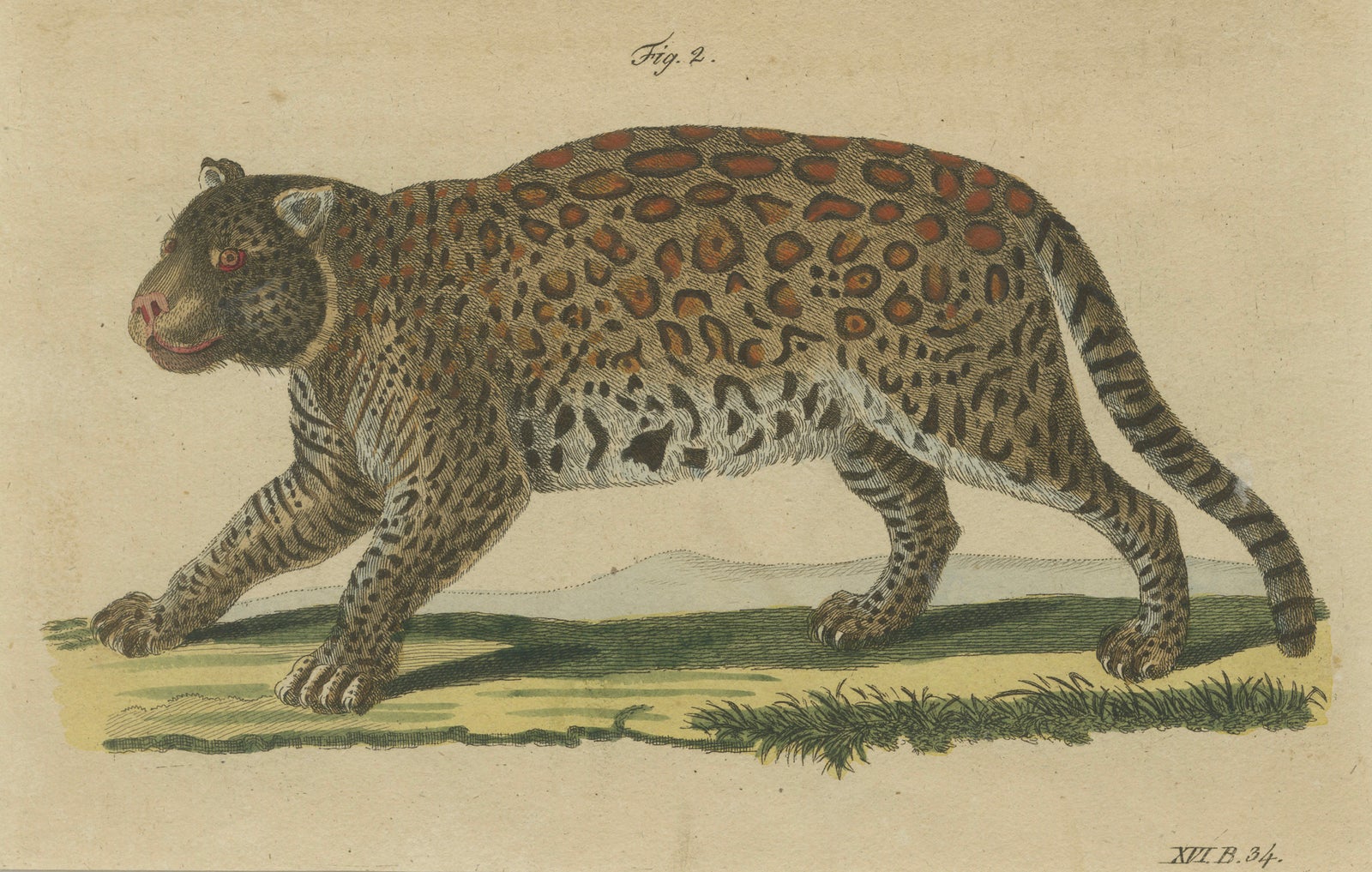
Figure 1, in the upper half, is the jaguarundi, which Bertuch calls the "Yaguarundi" (Felis Yaguarundi): a slender dark gray cat with a small head, short legs and a very long tail raised in a curve, walking over a strip of grass. Figure 2 below is the jaguar (Felis onza in Bertuch's naming), heavily built and drawn with its head lowered, its tawny coat covered with dark rosettes and spots. Pale distant hills are indicated behind both animals.
Bertuch's text, according to the old description, notes the jaguar's abundance in Brazil and compares its size and coloring with the panthers of Africa and the East Indies. The plate belongs to his long series of natural-history plates for children, issued from 1790 in Weimar.