Close-ups
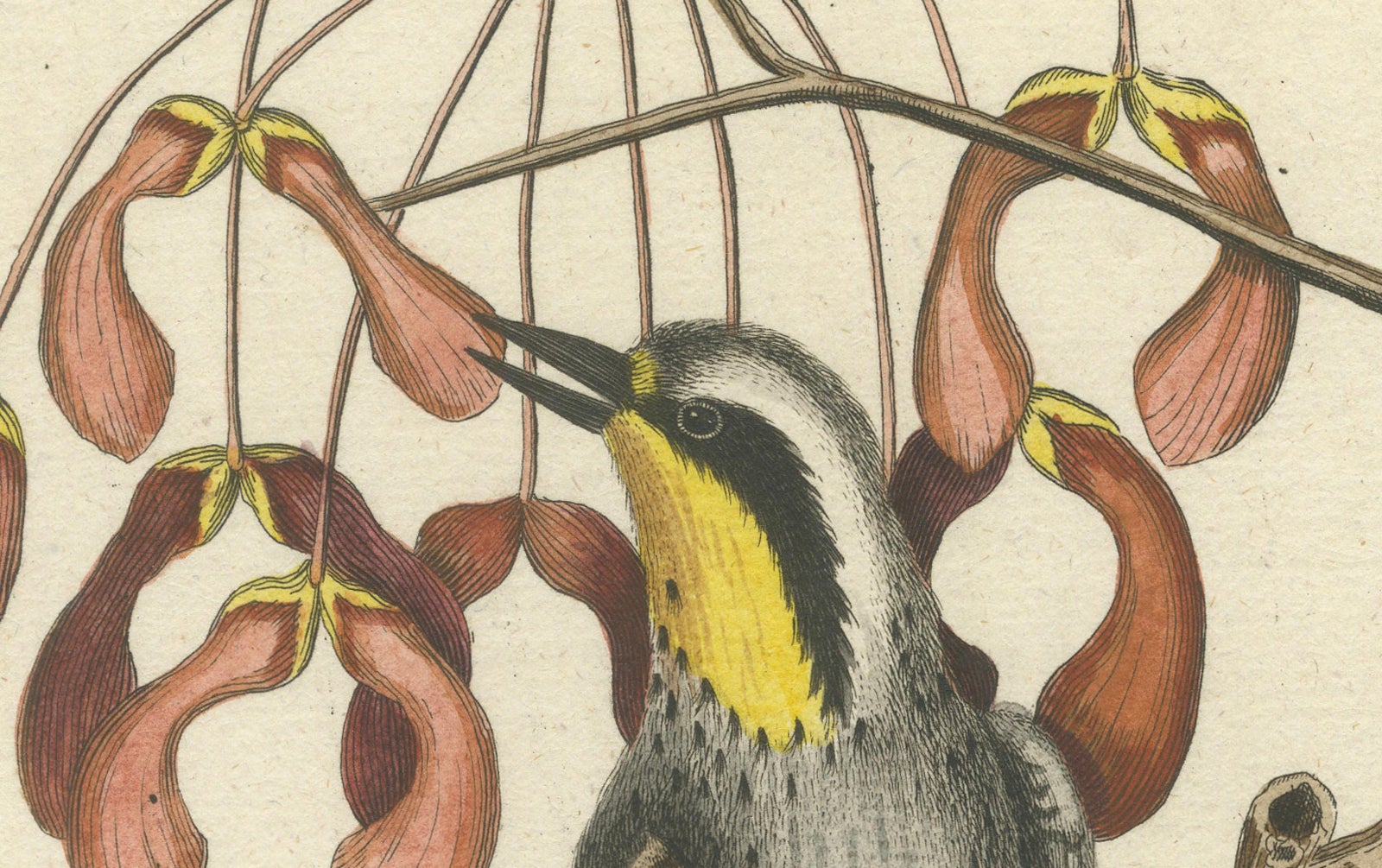
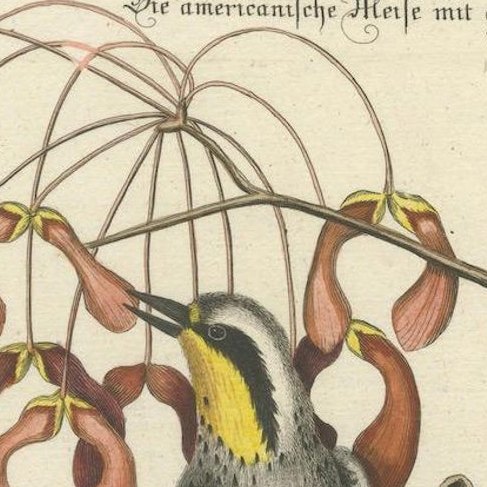
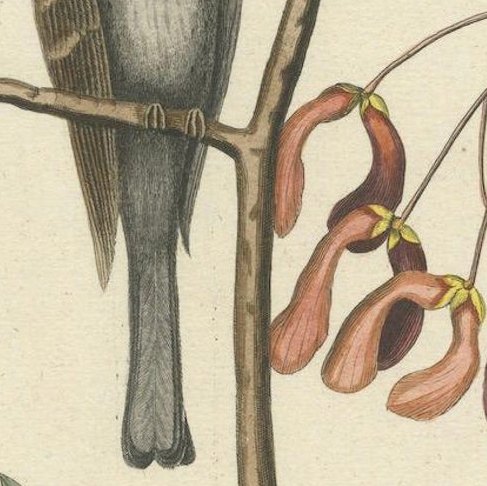
Framed and on the wall
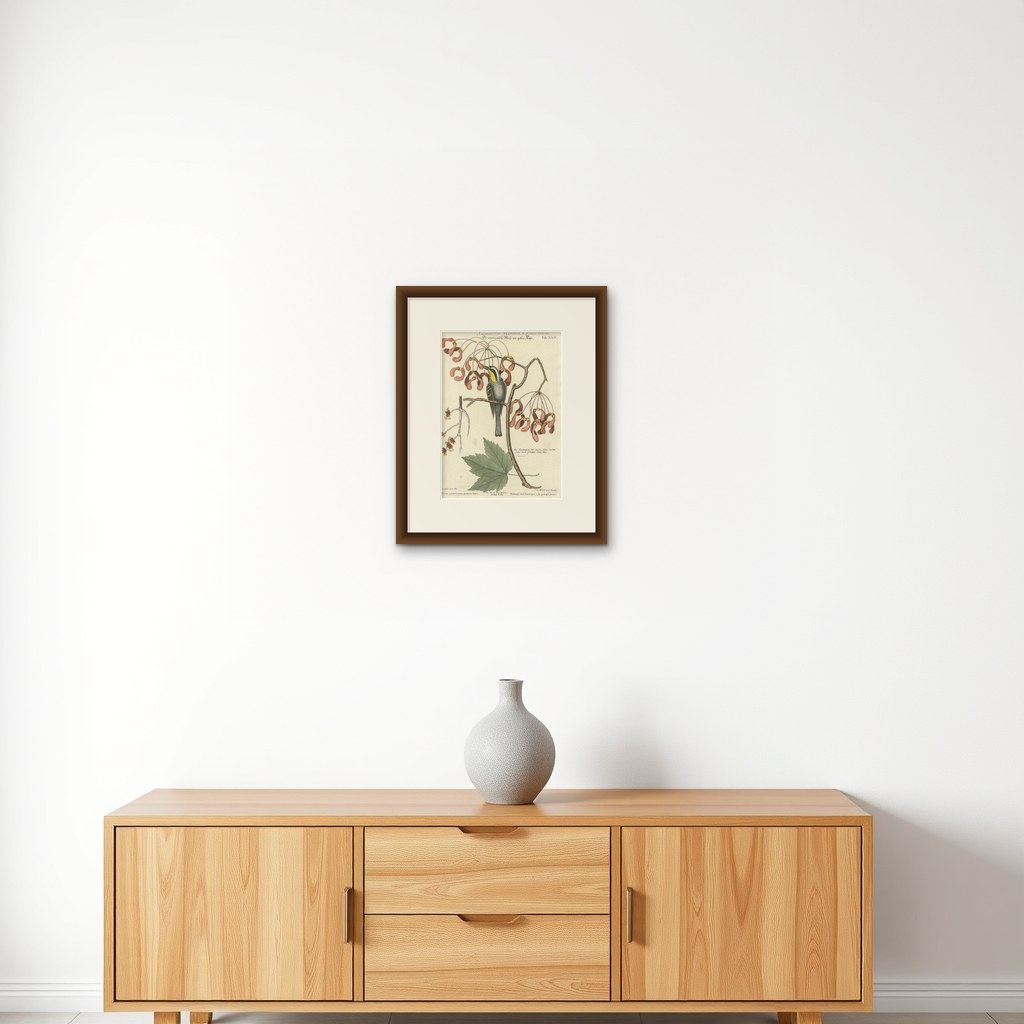

Frame and rooms are illustrations of how the print could look; the description says what is included.
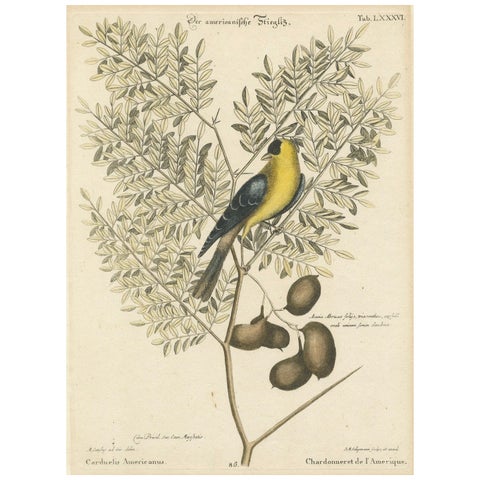
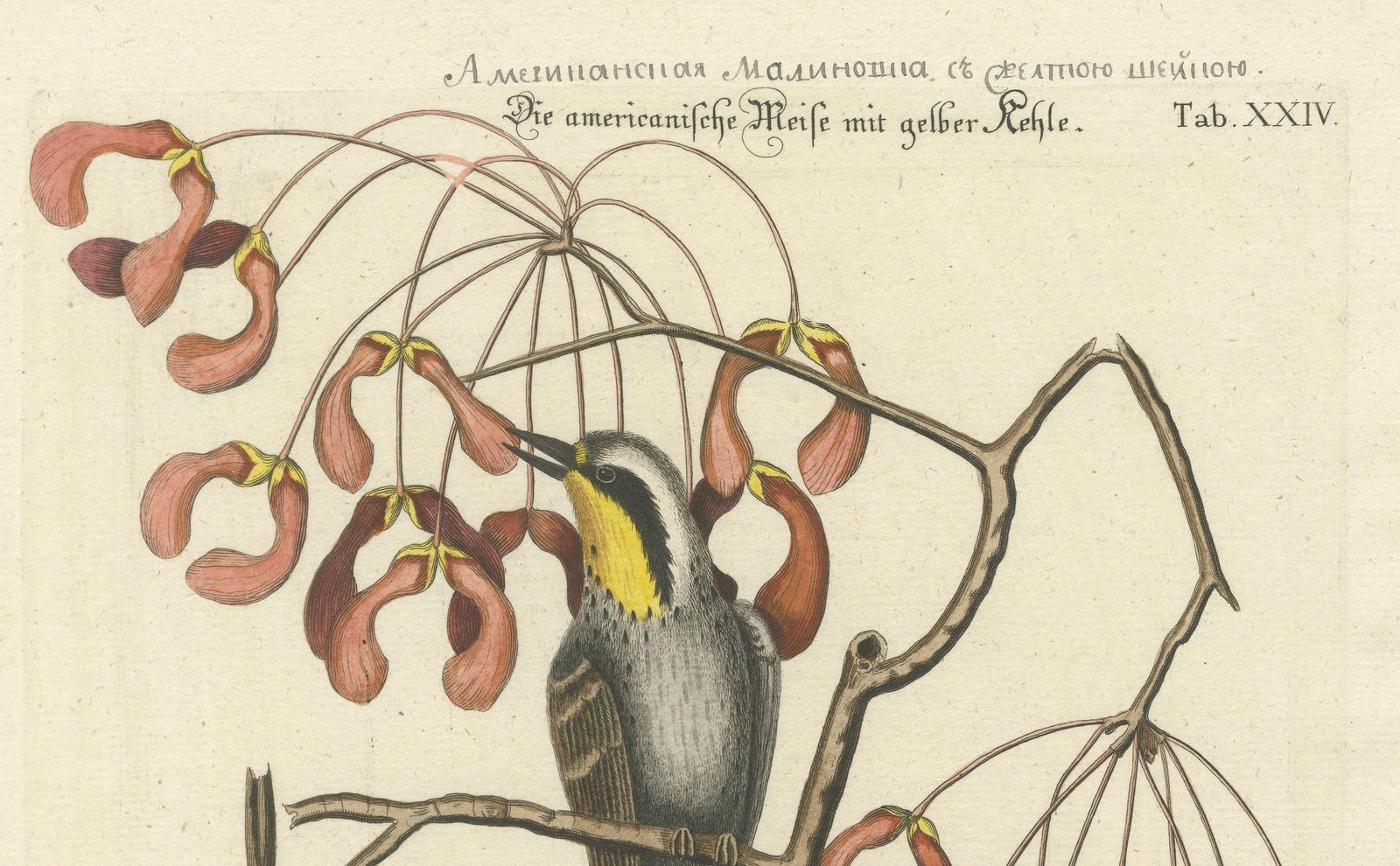
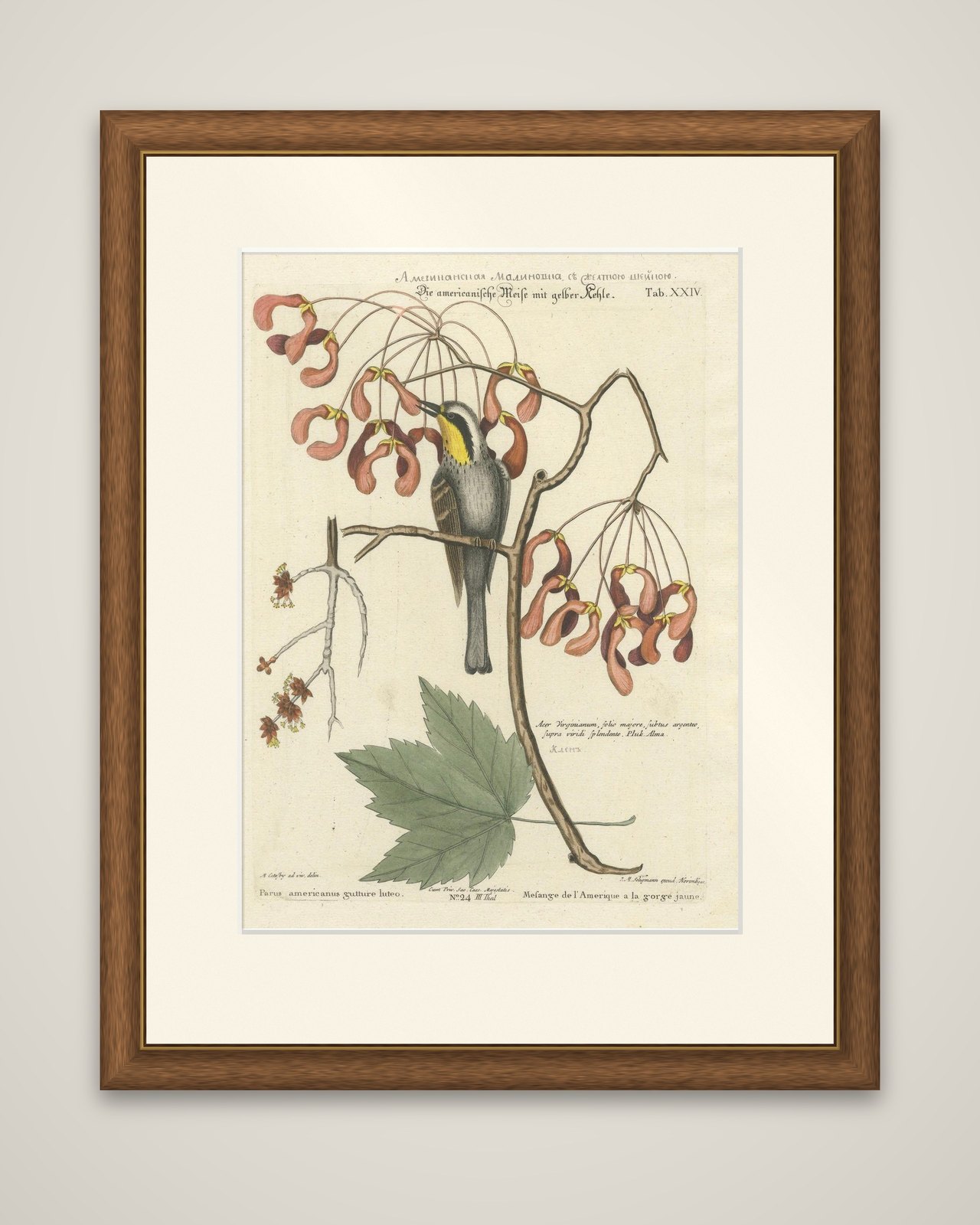
Engraving of The American Tit Bird with Yellow Throat in Old Handcoloring, 1749
£500 ($660, €590)
Period original, not a reproduction.
Shipped from the Netherlands, flat, insured and tracked, worldwide. Returns accepted within 14 days.
- Date
- 1749
- Size
- 14.6 × 9.8 in (37 × 25 cm)
- Condition
- Good. Good to almost excellent condition with the original hand colouring still very vivid and vibrant. Russian text above the title. General age related toning.
- Period
- 18th century
- Section
- Birds
- Reference
- f_38315372
- Colour
- Hand coloured
What the condition grades mean
- Excellent
- Bright and clean, with no faults worth mentioning.
- Very good
- Only light signs of age, such as faint toning.
- Good
- Normal signs of age for a sheet of this period: toning, some foxing, small marks or neat old repairs.
- Fair
- Clear faults such as staining, tears or repairs, priced to match.
Every fault we see is written in the condition note, and the whole sheet is shown uncropped in the photos.
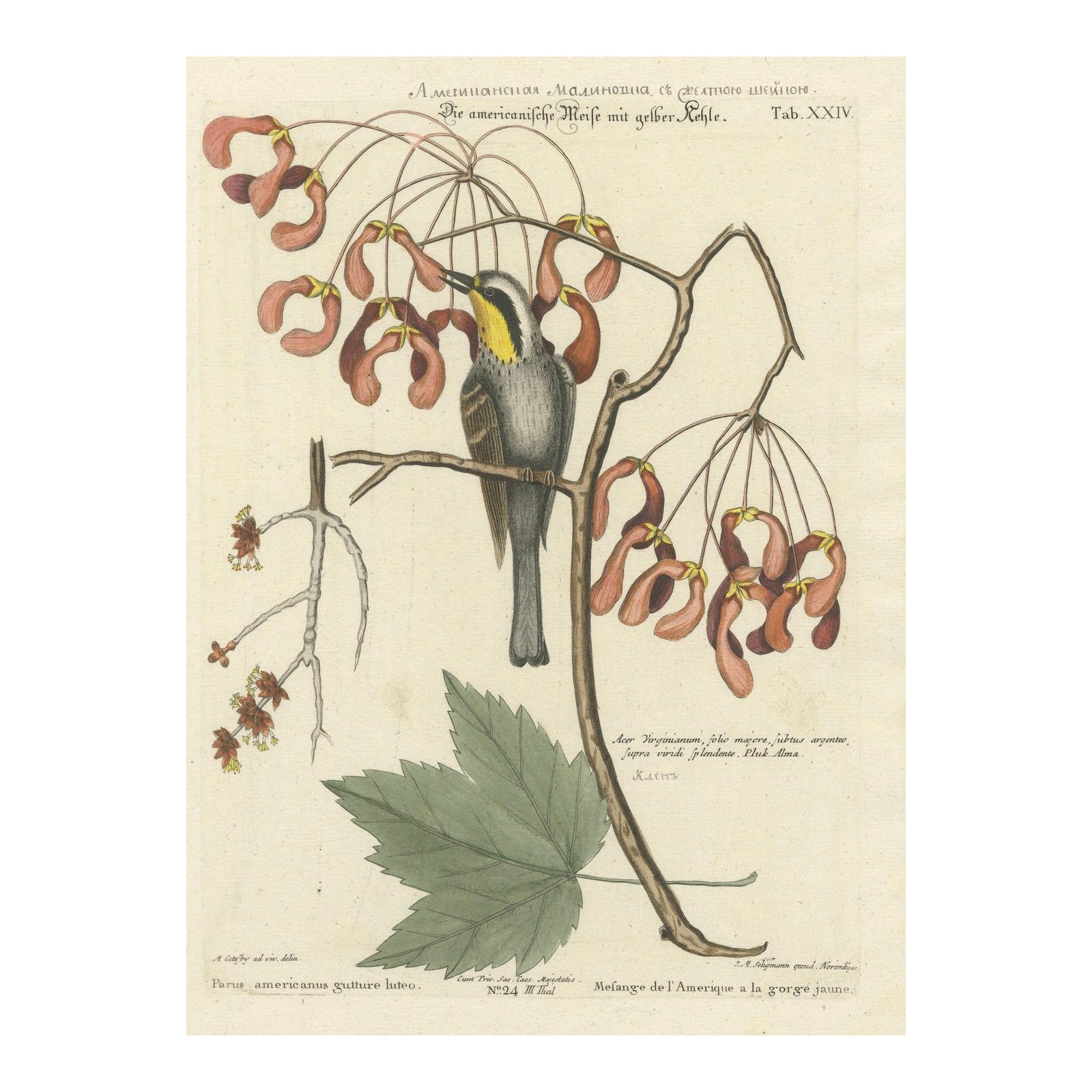
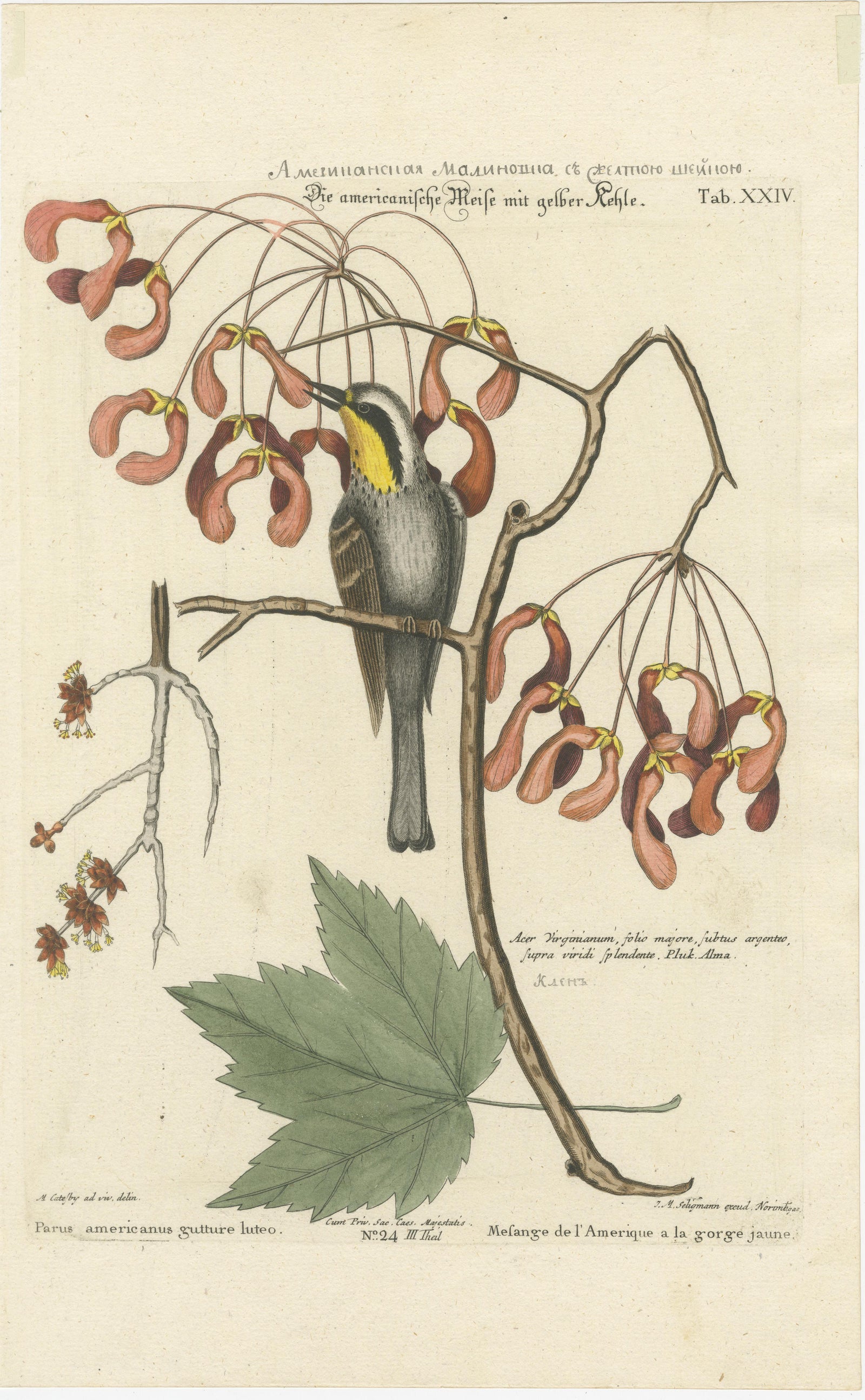
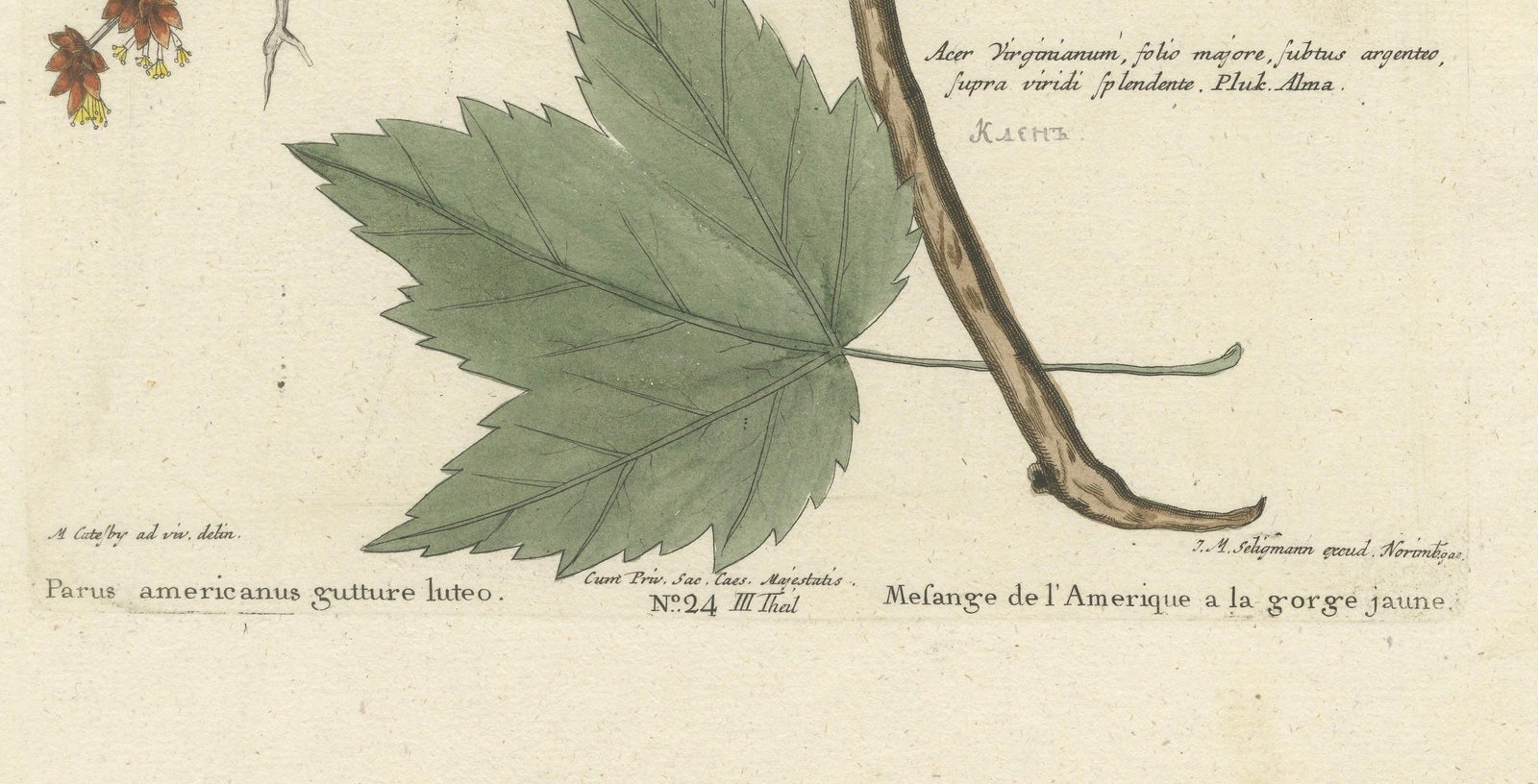
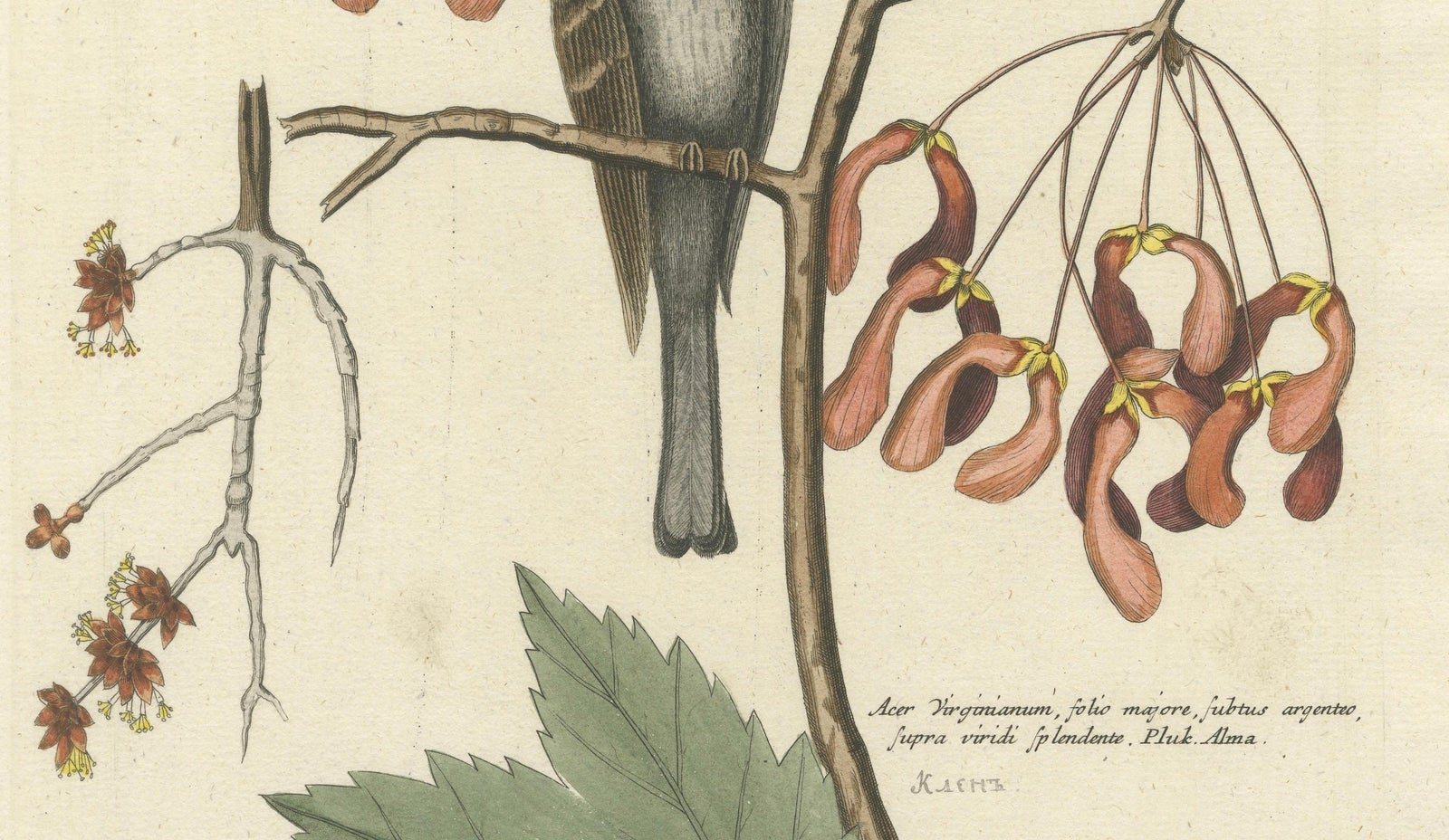
American tit with a yellow throat on a Virginia maple, an original hand-colored copper engraving from Johann Michael Seligmann's natural history series, published in Nuremberg in 1749. The plate is lettered "Tab. XXIV." at the upper right, "Die americanische Meise mit gelber Kehle." with a Russian line above it, and below the image "Parus americanus gutture luteo." and "Mésange de l'Amérique à la gorge jaune."
A small gray bird with a bright yellow throat and a black-and-white striped face clings head down to the maple branch, which hangs with clusters of pink-red winged seeds. At the lower left a bare twig bears small red flowers, and a single large lobed maple leaf in green fills the foot of the sheet. A Latin label identifies the tree as "Acer Virginianum, folio majore, subtus argenteo, supra viridi splendente. Pluk. Alma.", an old botanical name for the silver maple of eastern North America.
The credit at lower left reads "M. Catesby ad viv. delin.", so the bird and plant were drawn after Mark Catesby, whose Natural History of Carolina, Florida and the Bahama Islands was the first illustrated survey of the birds and plants of the American South.