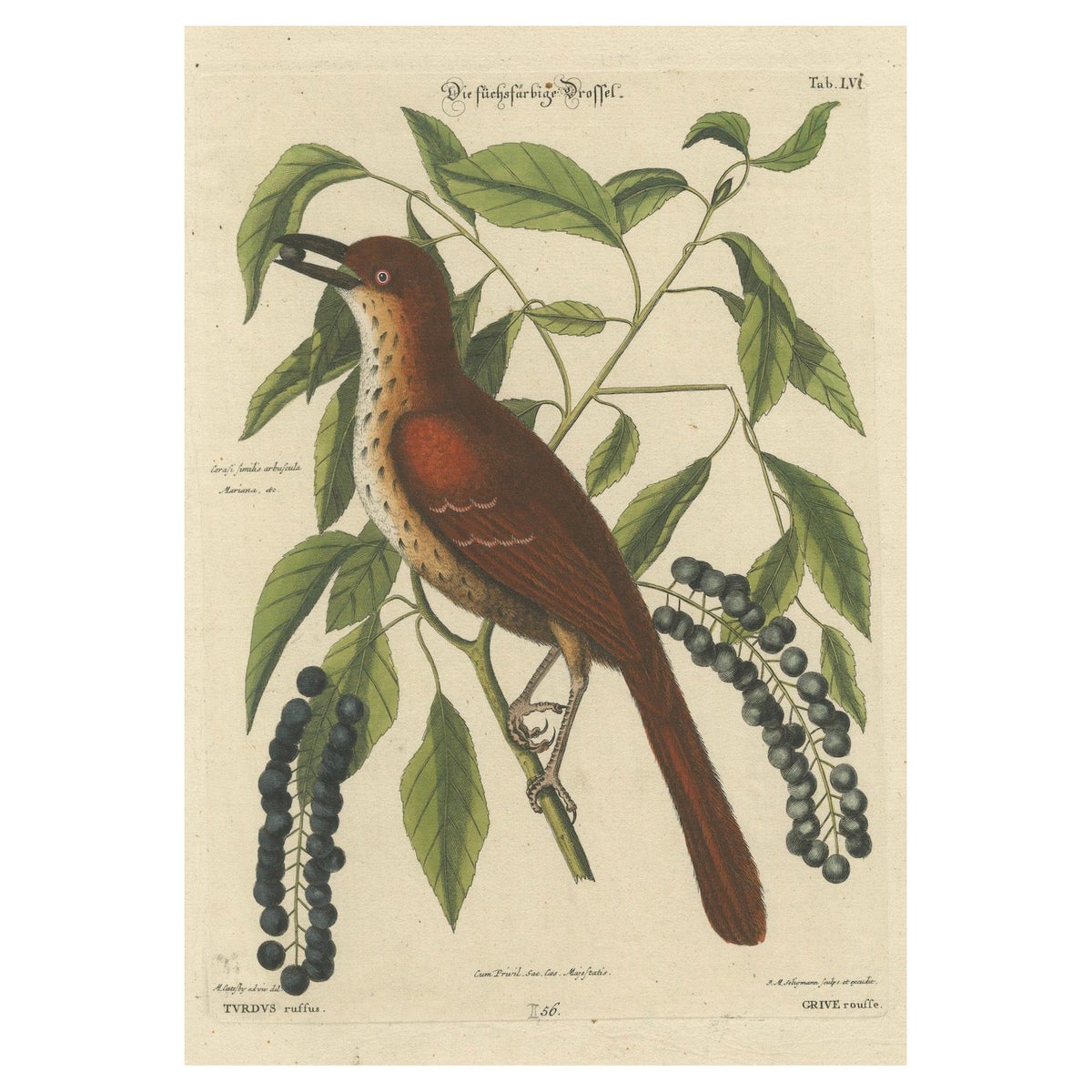


Original Antique Hand-Colored Engraving of The Fox-Colored Thrush, 1749
$660 (£500, €590)
Period original, not a reproduction.
Shipped from the Netherlands, flat, insured and tracked, worldwide. Returns accepted within 14 days.
- Date
- 1749
- Size
- 14.6 × 9.8 in (37 × 25 cm)
- Condition
- Good. Good condition with the original hand coloring still very vivid and vibrant. The paper is chain-lined with strong plate marks and watermark. General age related toning and minor foxing. Left border a bit creased. Study the images carefully.
- Period
- 18th century
- Section
- Birds
- Reference
- f_38314672
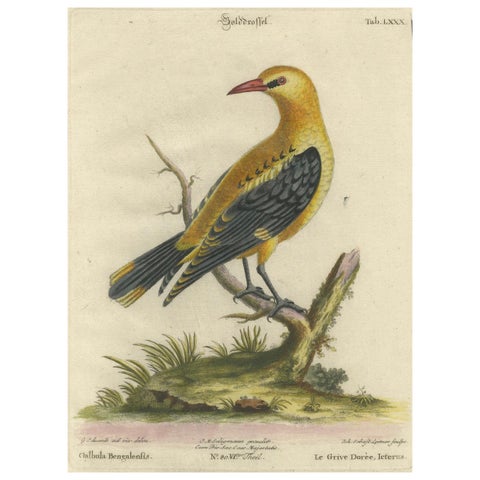
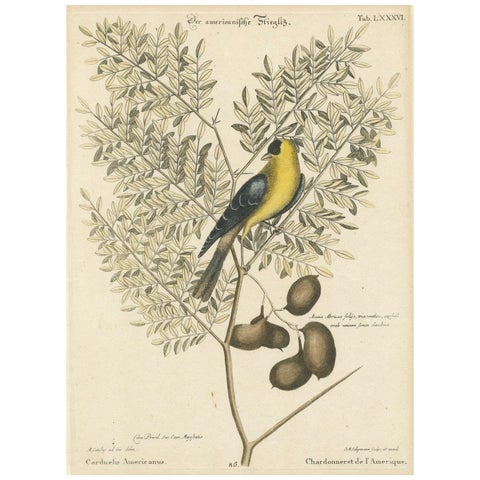
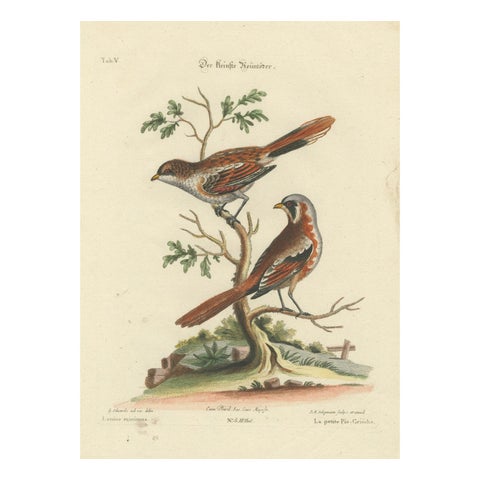
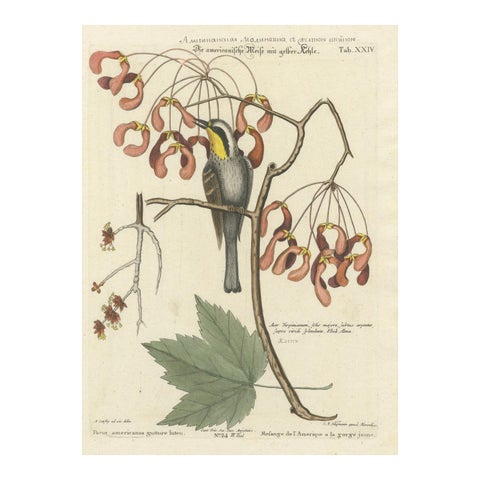
A beautiful hand-colored engraving from Johann Michael Seligmann's collection, which was based on the earlier works of George Edwards.
The text on this image is in German, Latin, and French, which were commonly used languages in scientific texts of that era to reach a broad academic audience.
Here’s the transcription and translation of the visible text:
- "Die fuchs-farbige Drossel." - In German, this translates to "The fox-colored thrush."
- "TURDUS rufus." - This is the Latin name for the species, translating to "Red Thrush," which is likely an old scientific name corresponding to a species of thrush with reddish plumage.
- "I. 56." - This notation typically refers to the plate number or figure number in the series.
- "CRIVE rousse." - This is French for "Russet Thrush."
The image features a bird with a rich reddish-brown plumage, which dominates the overall coloration, with darker flight feathers and tail. The bird's underparts are a lighter shade, providing a gentle contrast. It is perched among green leaves with dark berries, which adds a naturalistic touch and suggests the bird's habitat and possibly its diet. The artwork is finely detailed, capturing the texture of the feathers and the character of the bird, typical of the high standards of avian illustration in the 18th century. This illustration would have been used for both scientific study and public education, as it combines accurate representation with aesthetic appeal.