Close-ups
Framed and on the wall
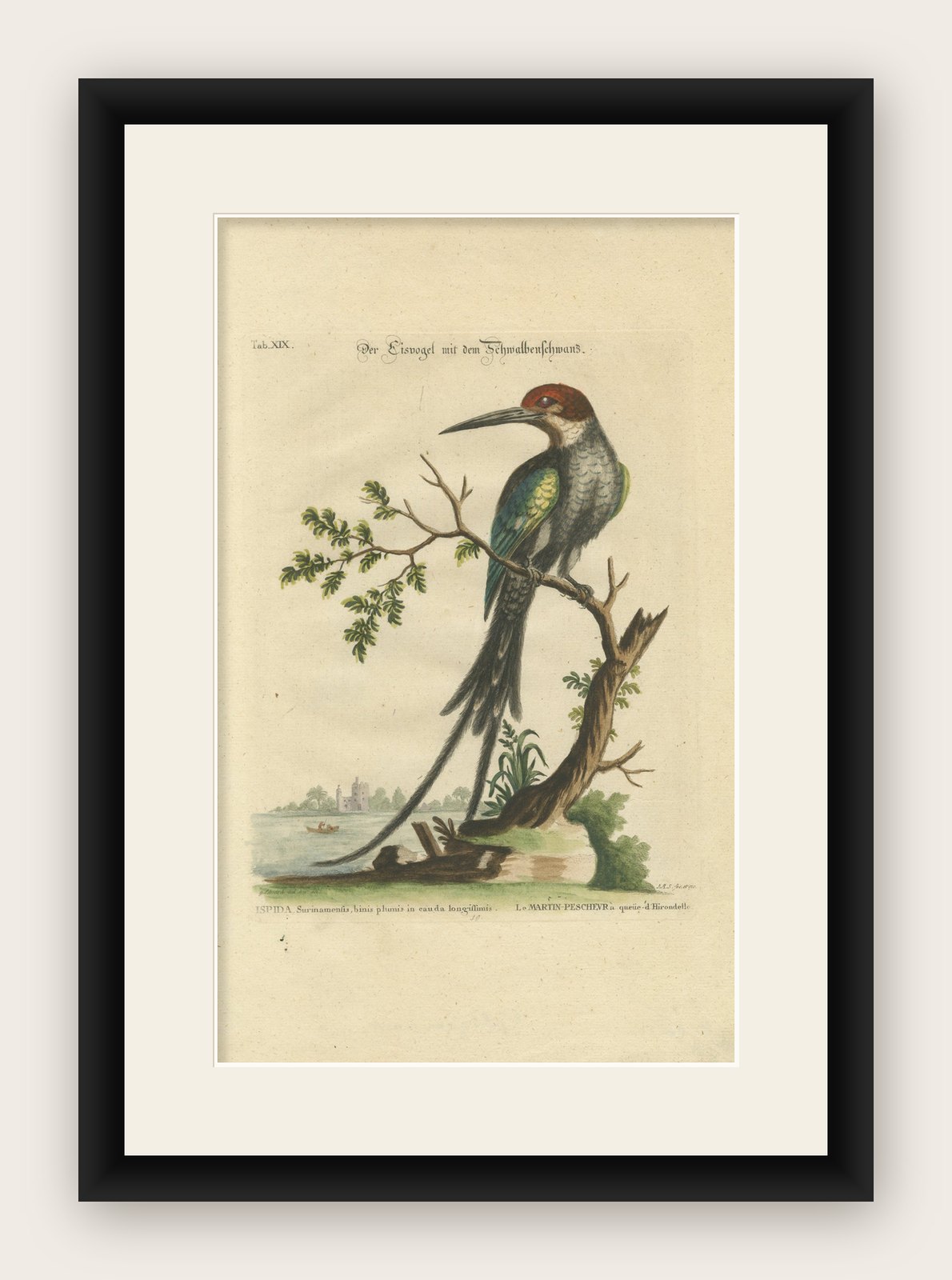
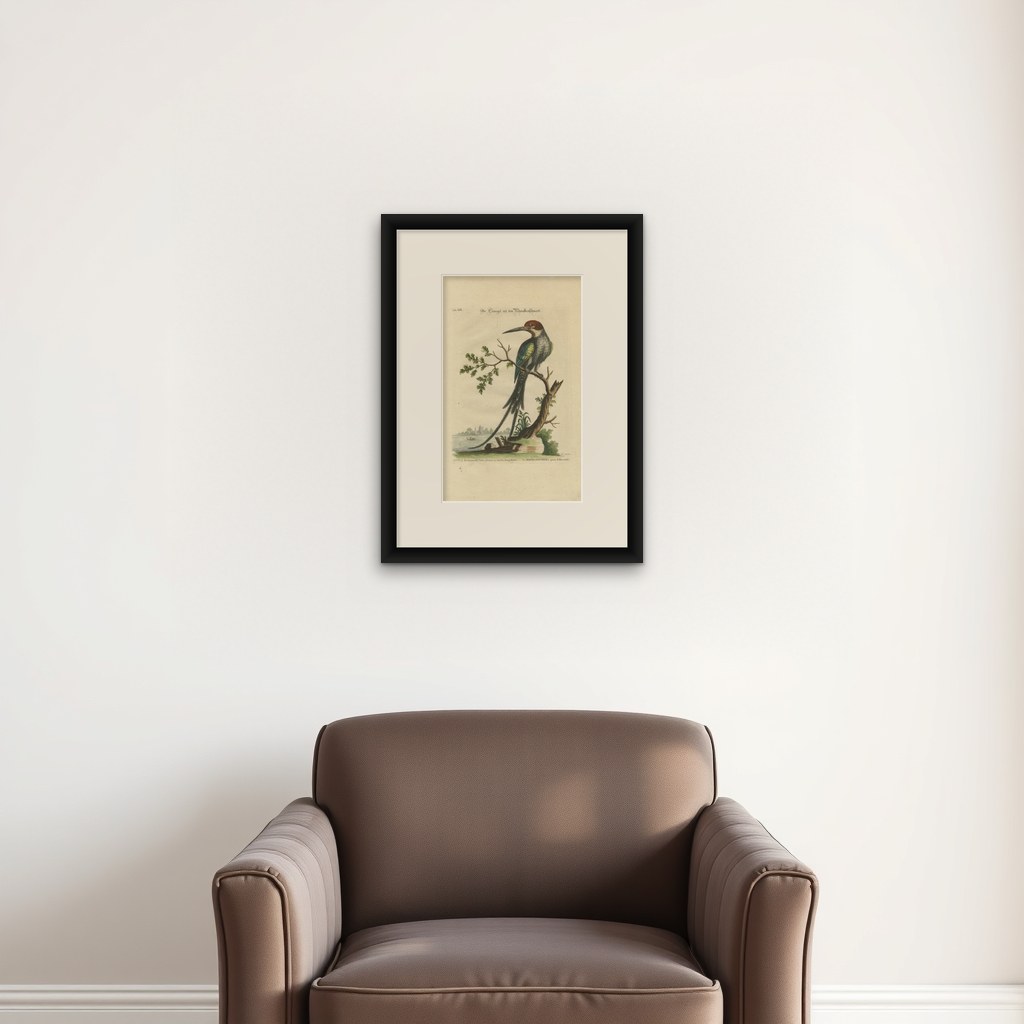

Frame and rooms are illustrations of how the print could look; the description says what is included.
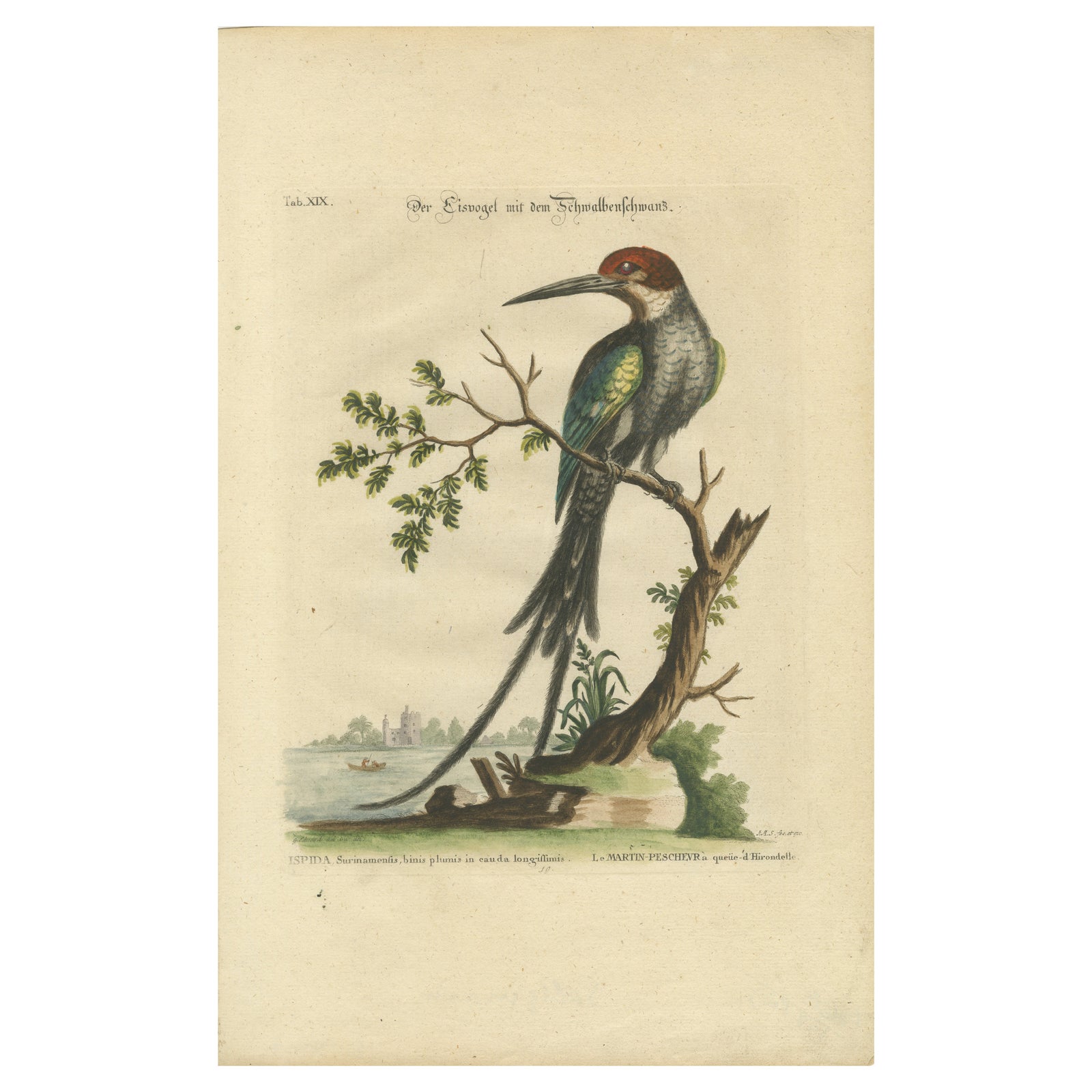
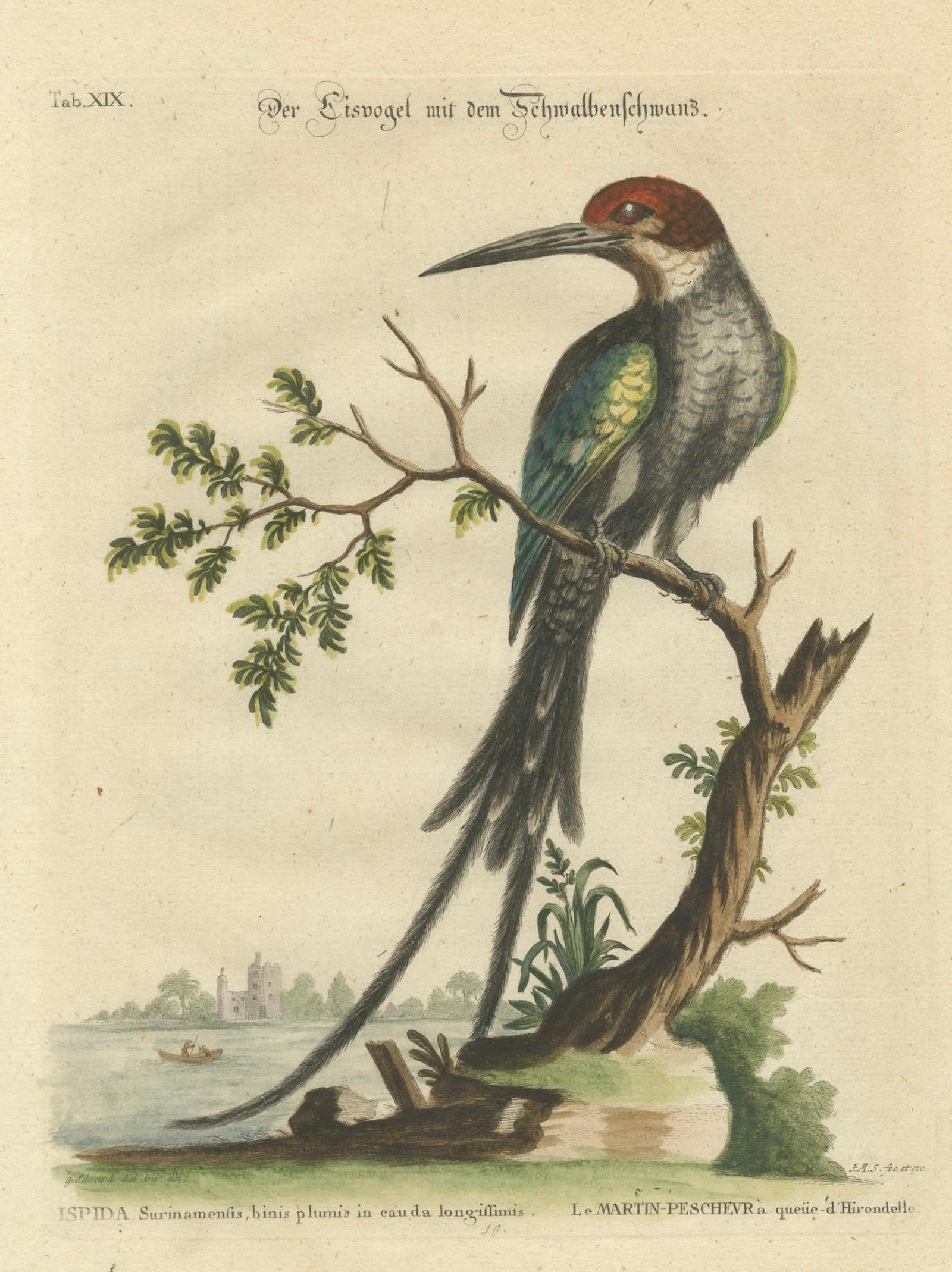
The Surinamese Kingfisher Bird with the Swallow Tail - Engraved in 1749
£500 ($660, €590)
Period original, not a reproduction.
Shipped from the Netherlands, flat, insured and tracked, worldwide. Returns accepted within 14 days.
- Date
- 1749
- Size
- 14.6 × 9.8 in (37 × 25 cm)
- Condition
- Good. Good condition with the original hand coloring still very vivid and vibrant. The paper is chain-lined with strong plate marks and watermark. General age related toning and minor foxing. Study the images carefully.
- Period
- 18th century
- Section
- Birds
- Reference
- f_38314322
This engraving is from the Johann Michael Seligmann's collection, based on the works of George Edwards that was published in 1743.
The text in the image is in both German and Latin, with a French name included as well, which was a common practice in natural history works of the time to cater to a broad European audience.
Here’s the transcription and translation of the visible text:
- "Tab. XIX." - This is shorthand for "Table 19," indicating the plate number in the collection.
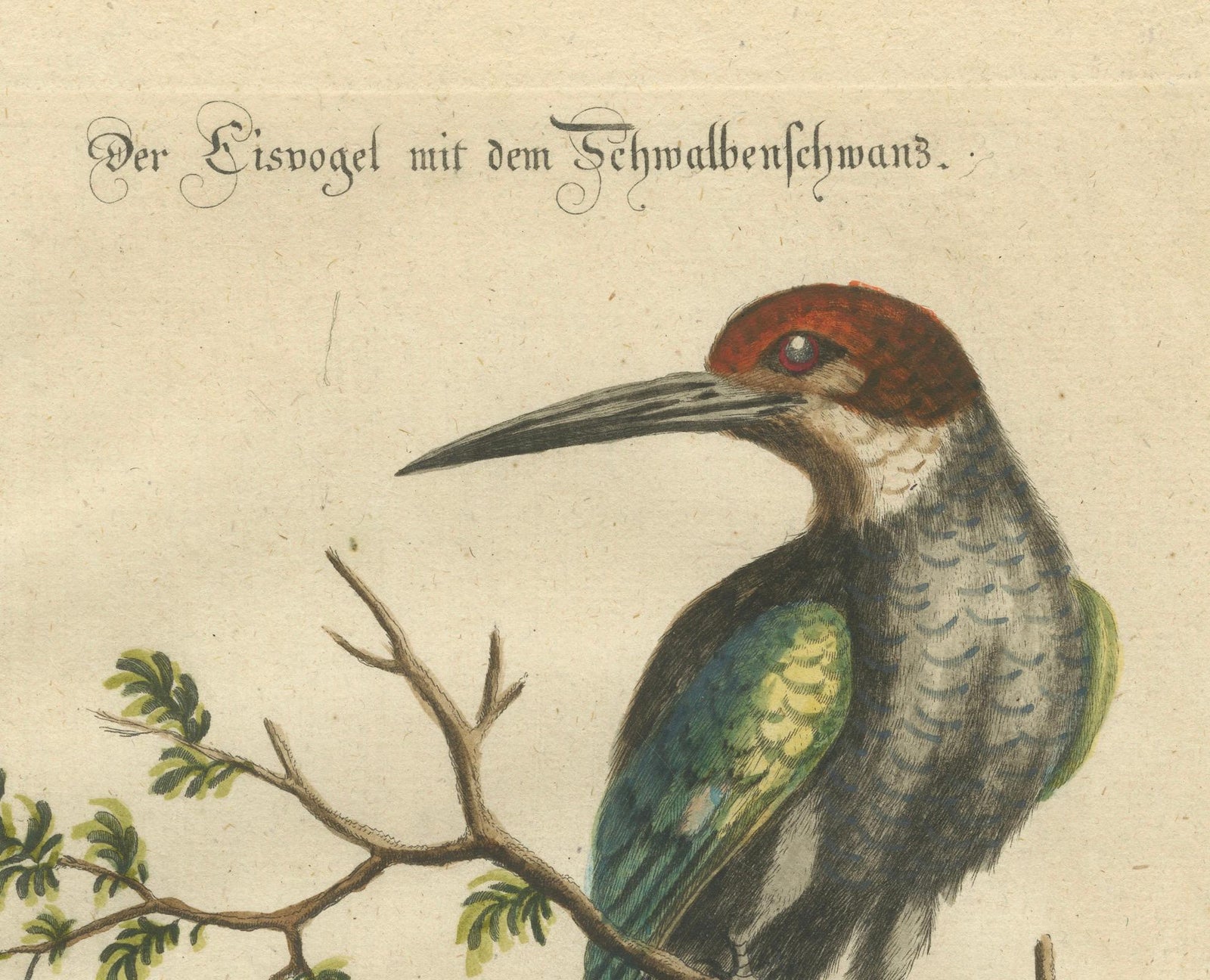
- "Der Eisvogel mit dem Schwalbenschwanz." - In German, this means "The Kingfisher with the Swallow Tail."
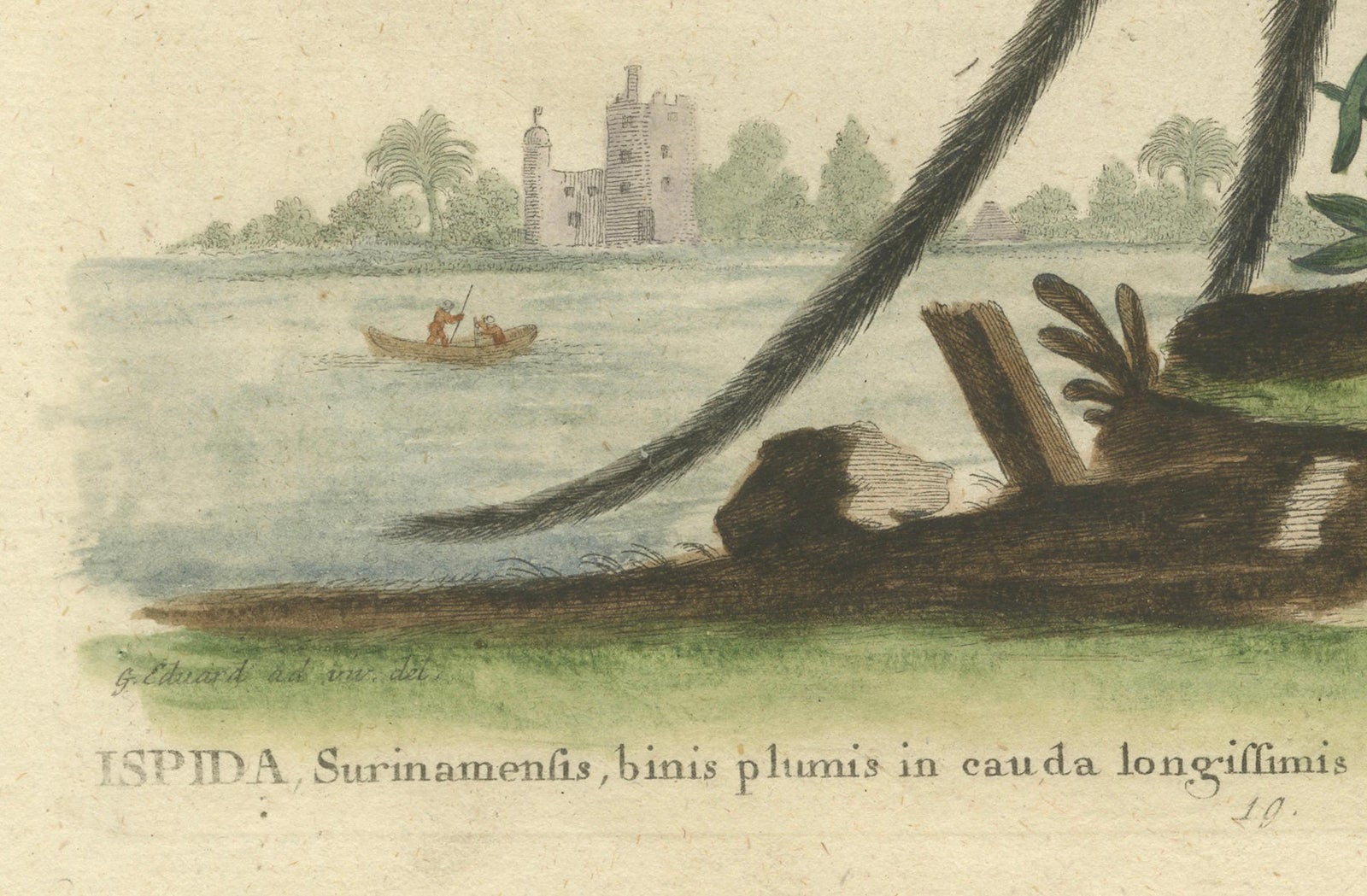
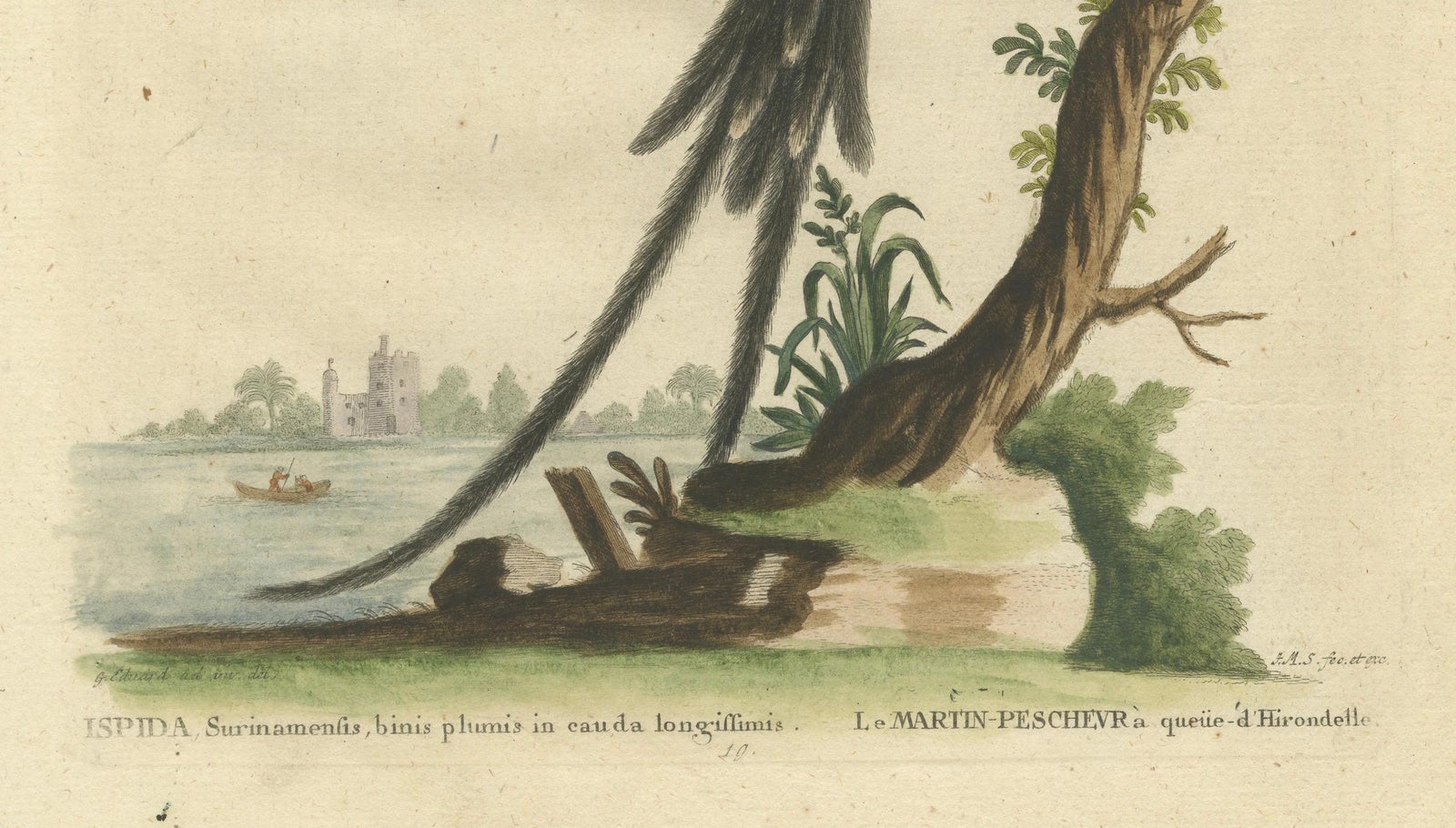
- "ISPIDA. Surinamensis, binis plumis in cauda longissimis." - This Latin translates to "The Surinamese Kingfisher, with two very long feathers in the tail."
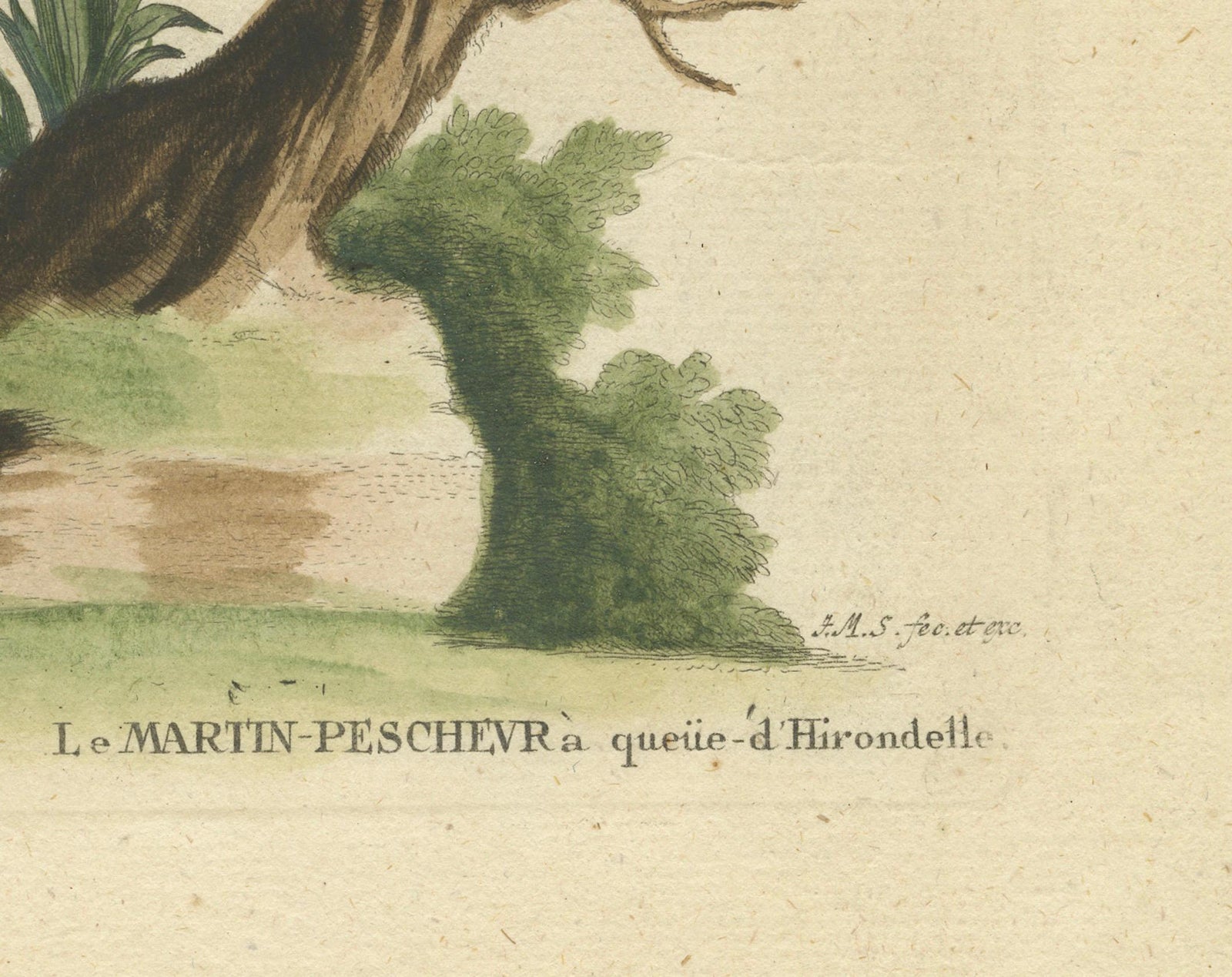
- "Le MARTIN-PESCHEVR à queue-tié Hirondele." - This is French for "The Swallow-tailed Kingfisher."
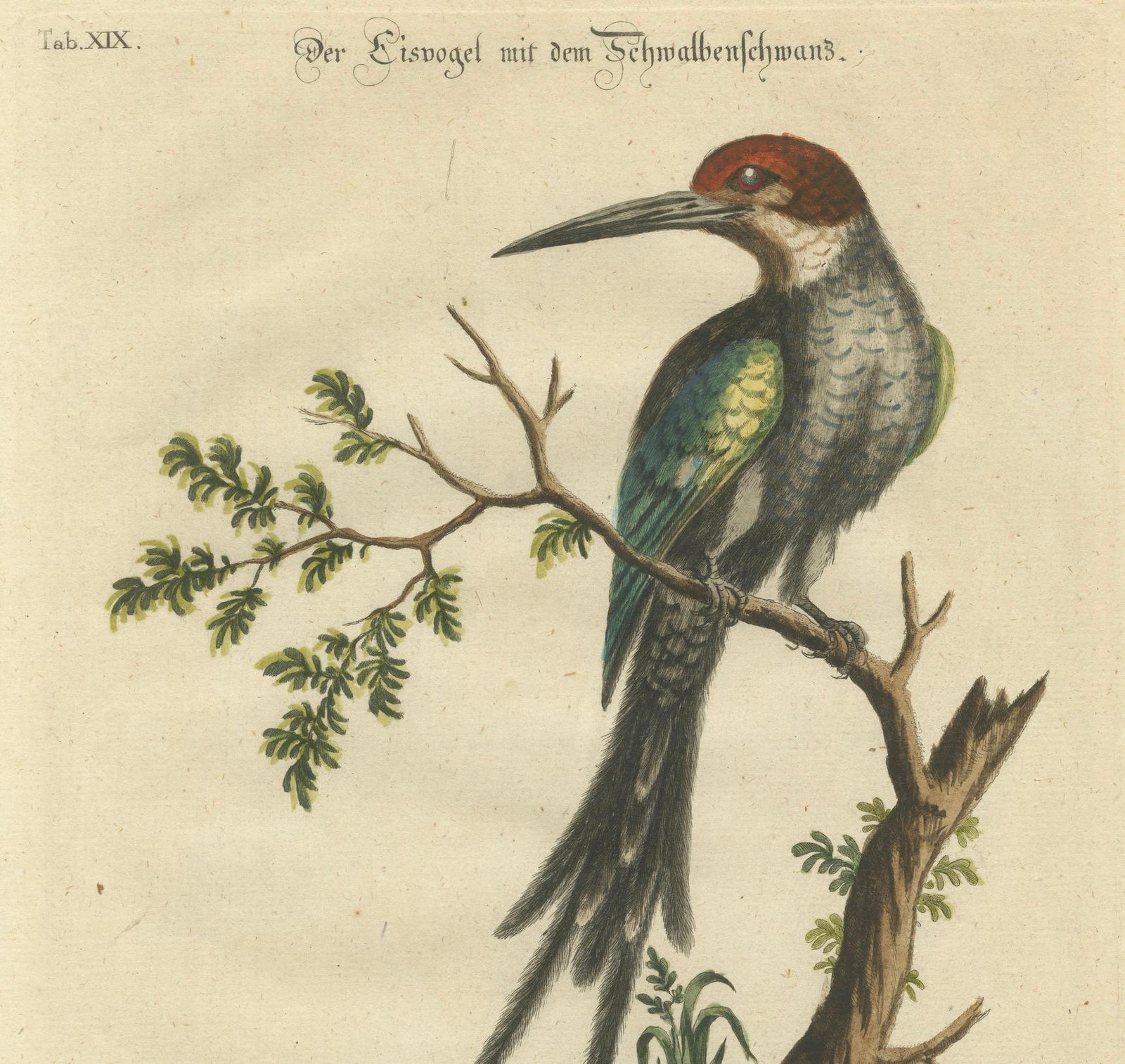
The image itself shows a bird with a long, forked tail, which is characteristic of the Swallow-tailed Kingfisher. The bird's plumage is depicted with vibrant colors, including shades of green and blue on the wings and back, and a reddish hue on the head and neck, indicative of the colorful nature of kingfishers. It's perched on a branch overhanging water, with a small boat and a building in the background, which suggests the bird's habitat might be near human settlements or in a landscape altered by human activity. The fine detail and artistry of the engraving are notable, capturing both the bird's elegance and the tranquility of its surroundings. This work exemplifies the blend of scientific interest and aesthetic appreciation that characterizes 18th-century natural history illustration.