Close-ups
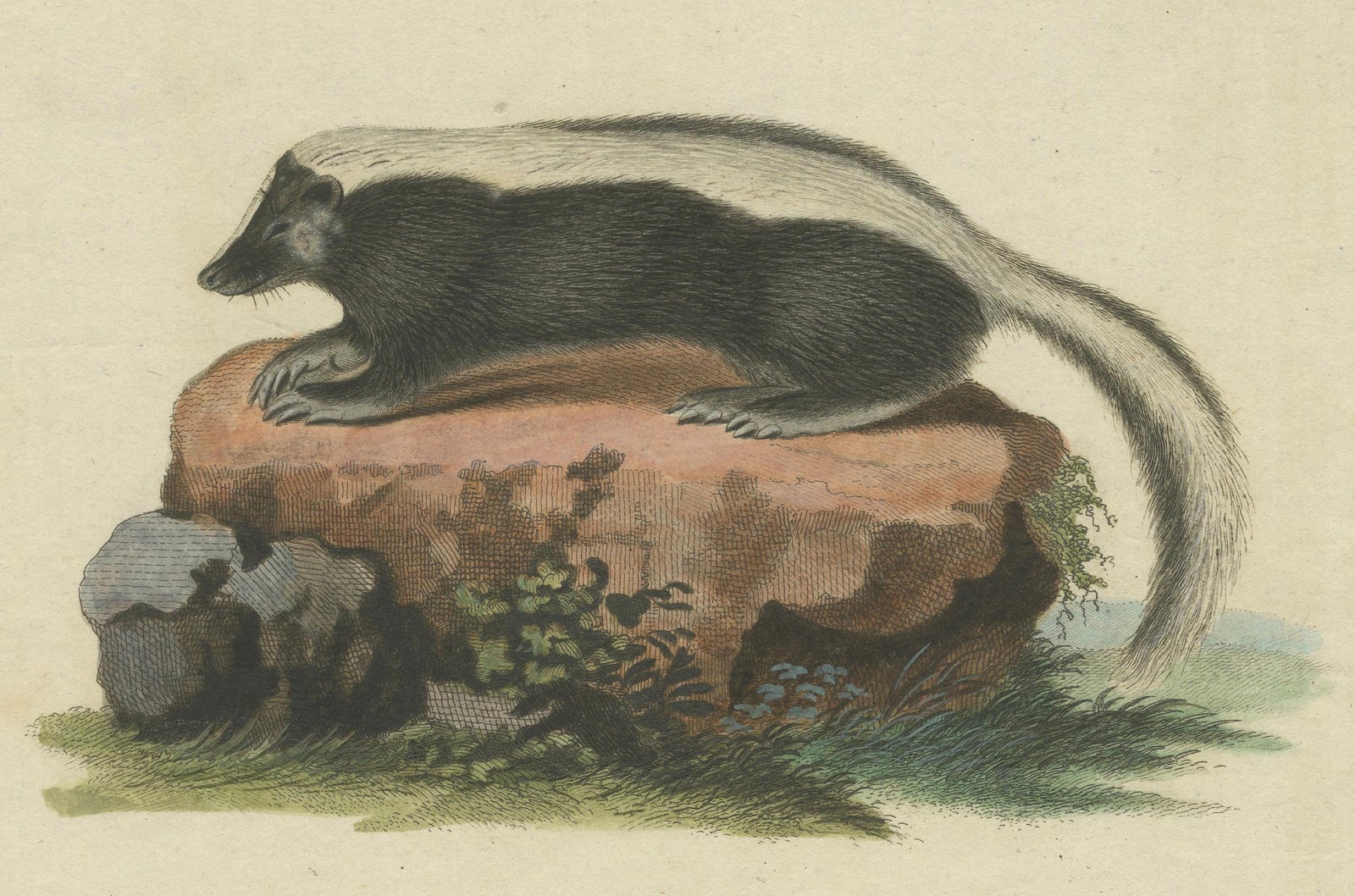
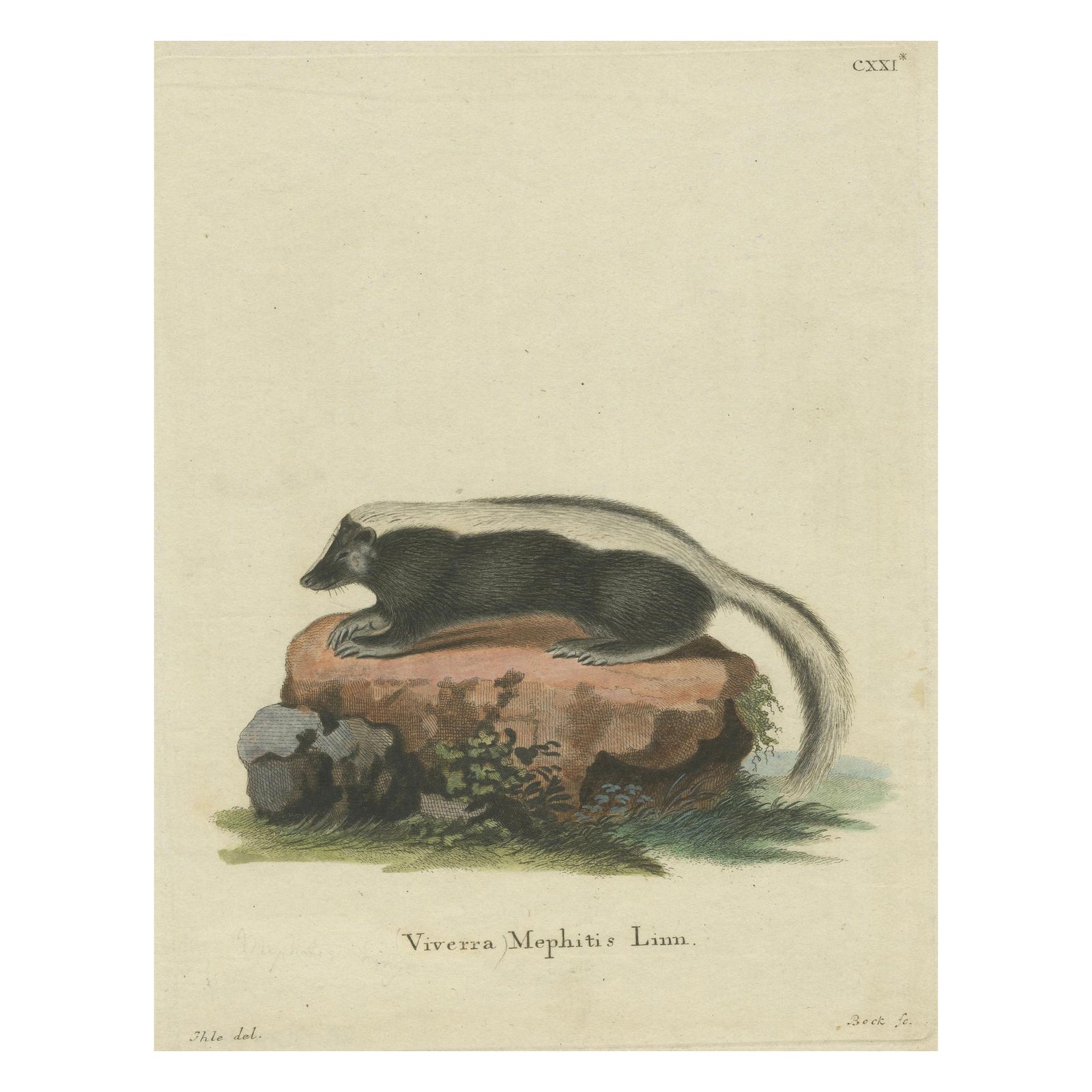
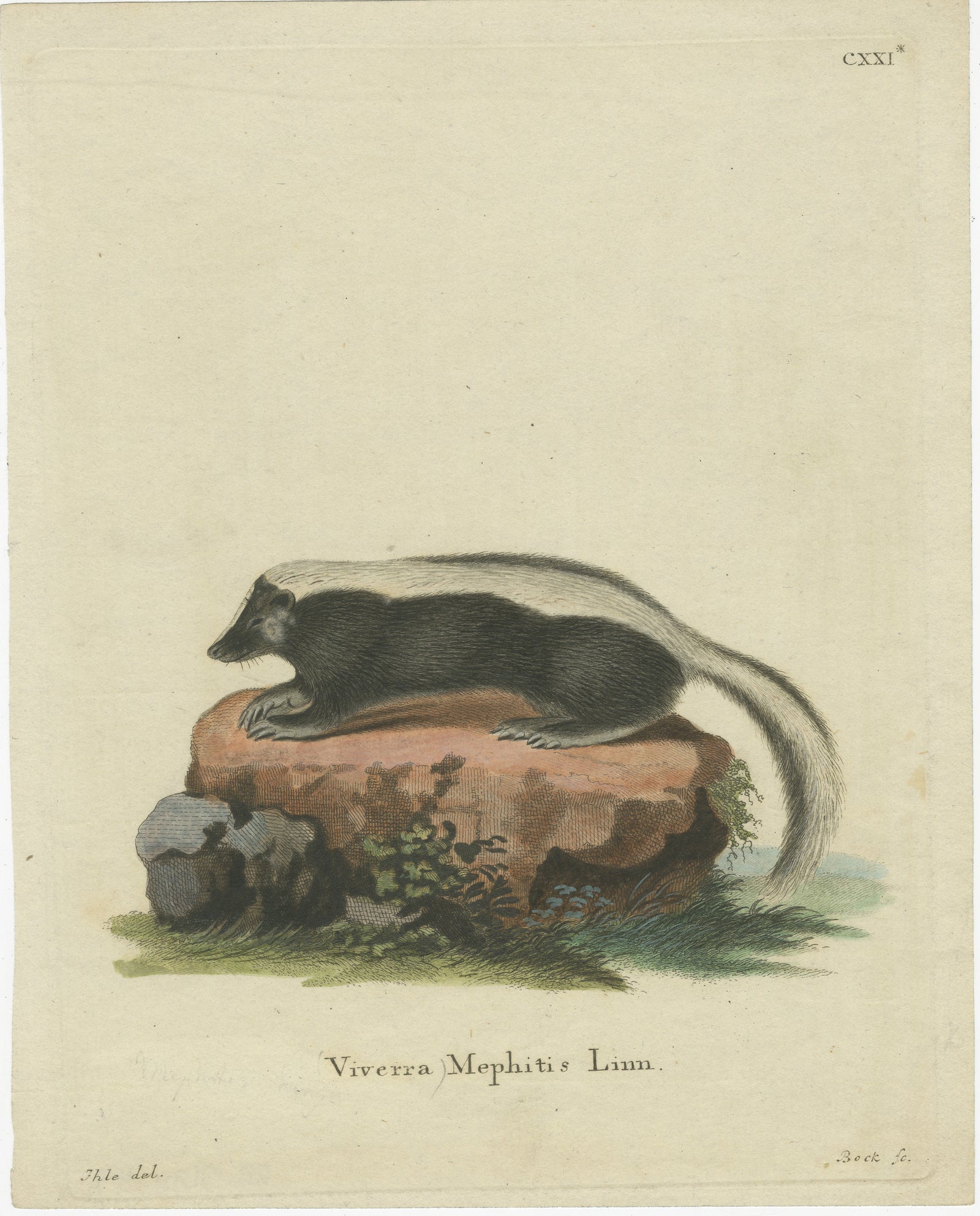
Elegance in Black and White: the Striped Skunk Engraved, circa 1774
$270 (£205, €240)
Period original, not a reproduction.
Shipped from the Netherlands, flat, insured and tracked, worldwide. Returns accepted within 14 days.
- Date
- 1774
- Size
- 10.4 × 7.9 in (26.5 × 20 cm)
- Condition
- Good. Good. Overall minor soiling due to handling and age, especially around the edges. A brown glow overall. The image itself is beautiful hand-colored. Study the images carefully.
- Period
- 18th century
- Section
- Mammals
- Reference
- f_38278982
- Color
- Hand colored
What the condition grades mean
- Excellent
- Bright and clean, with no faults worth mentioning.
- Very good
- Only light signs of age, such as faint toning.
- Good
- Normal signs of age for a sheet of this period: toning, some foxing, small marks or neat old repairs.
- Fair
- Clear faults such as staining, tears or repairs, priced to match.
Every fault we see is written in the condition note, and the whole sheet is shown uncropped in the photos.
Title: "Elegance in Black and White: Viverra Mephitis Linn."
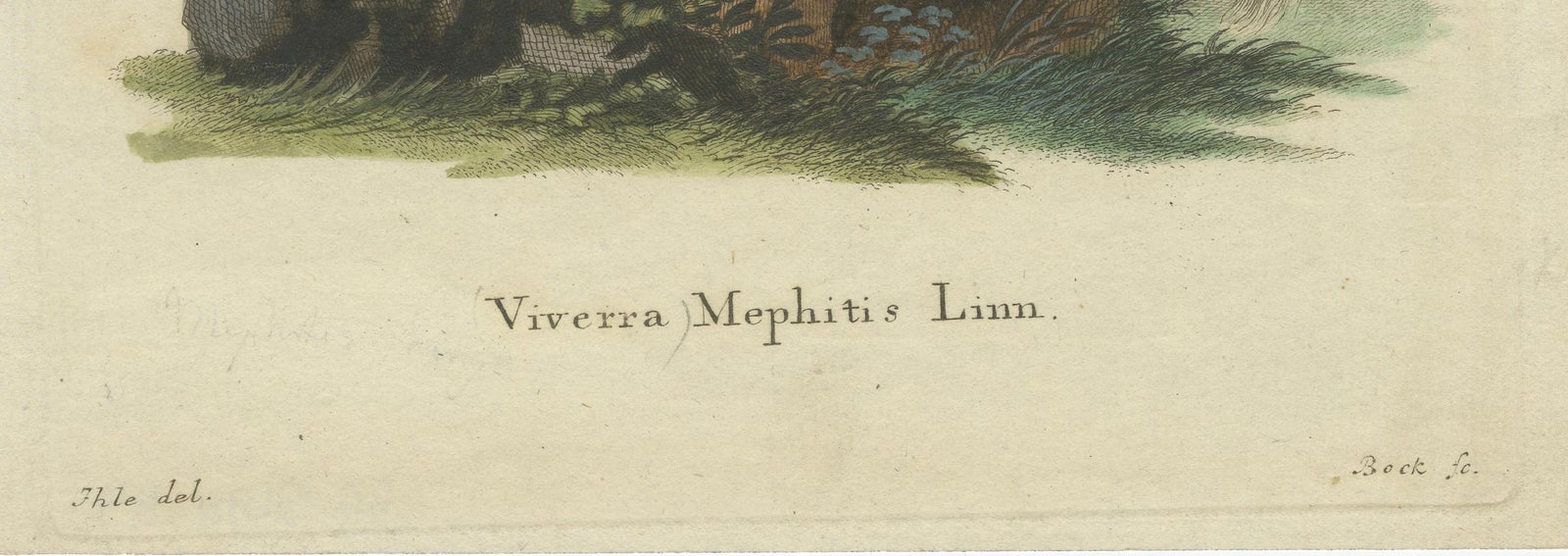
Description: This hand-colored print, meticulously drawn by J. Hle and engraved by J. Beck, features 'Viverra Mephitis Linnaeus', a term once used to classify what is commonly known as the striped skunk.
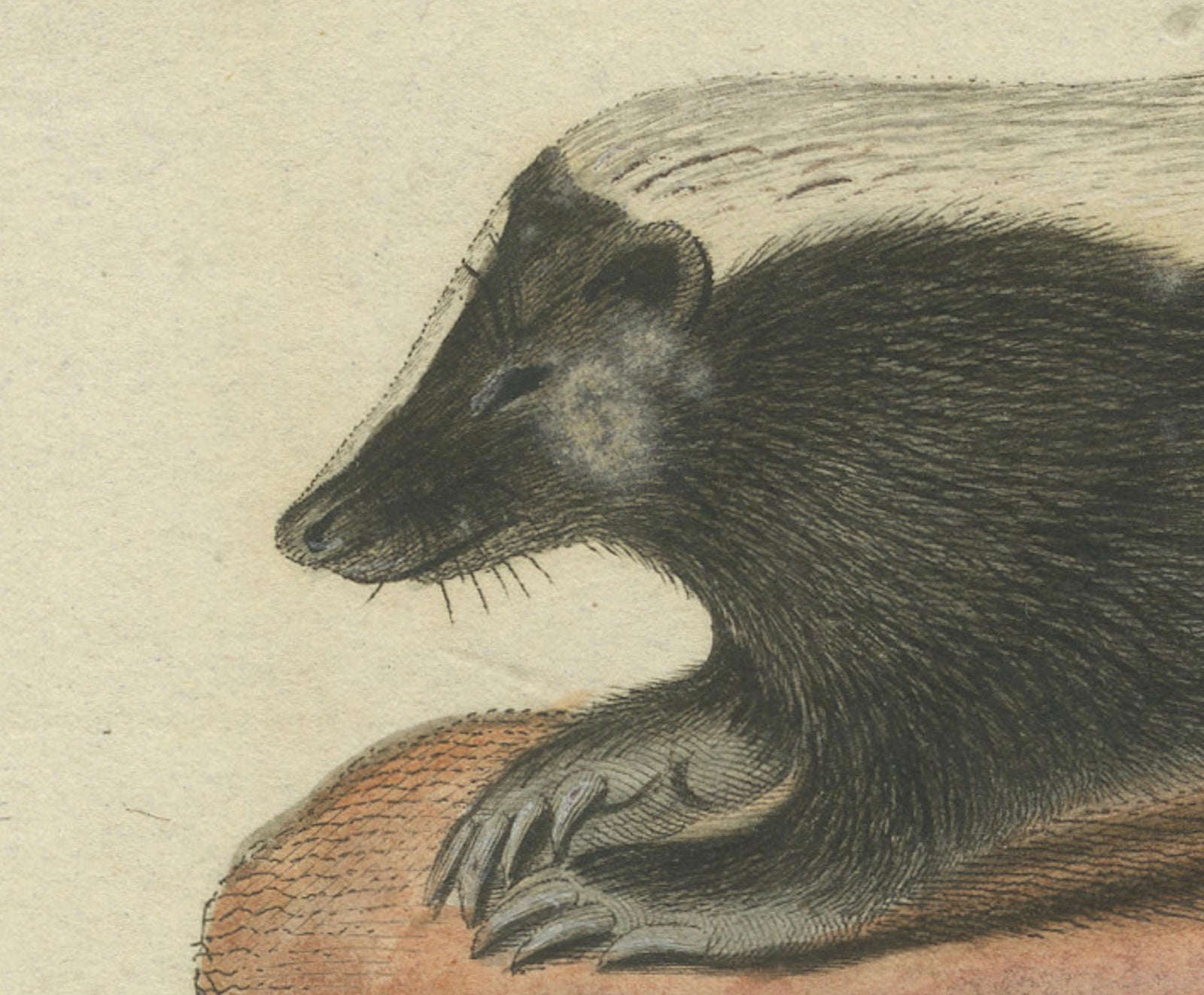
Resting atop a rock, the skunk is depicted with its characteristic black and white coloring, its bushy tail elegantly arched. The precision of the engraving captures the fine details of the skunk's fur and the serene, natural setting in which it is placed. The illustration reflects the scientific and artistic practices of the late 18th century, where natural history was as much an art as it was a science. This portrayal not only captures the skunk's physical attributes but also conveys a sense of its place within the natural world, making it a captivating representation of wildlife from a bygone era.
The print is from a work that is characteristic of the late 18th to early 19th-century natural history collections, such as "Die Säugthiere in Abbildungen nach der Natur mit Beschreibungen" (The Mammals in Illustrations According to Nature with Descriptions), compiled by Johann Christian Daniel von Schreber. Schreber's work was a seminal collection documenting a wide range of mammalian species, each meticulously described and illustrated.
These works were part of a broader movement during the Enlightenment where natural history became a significant field of study. Illustrators and naturalists aimed to systematically catalog the natural world, often for the first time in such detail. The illustrations were typically created by skilled artists who often worked closely with scientists to ensure accuracy in the representation of each species. The drawings were then engraved onto copper plates, printed, and sometimes hand-colored in a production process that combined the efforts of various craftsmen and artists.
"Die Säugthiere" is considered an important contribution to zoological literature and is known for its comprehensive treatment of mammalian species, including taxonomy, behavior, and habitat information. The texts were often accompanied by high-quality illustrations that were both scientifically valuable and aesthetically pleasing. Such works were instrumental in spreading scientific knowledge to a broader audience and remain valuable historical records of scientific and artistic endeavors of their time.