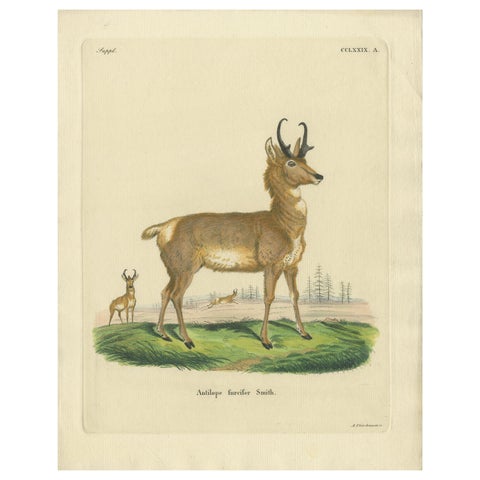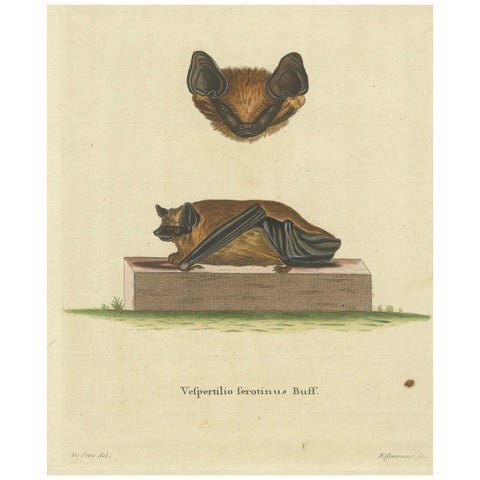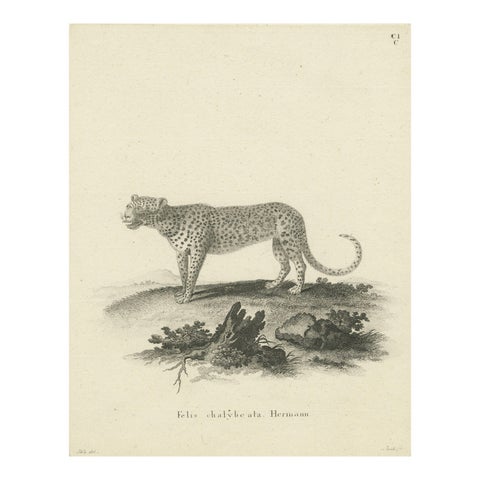
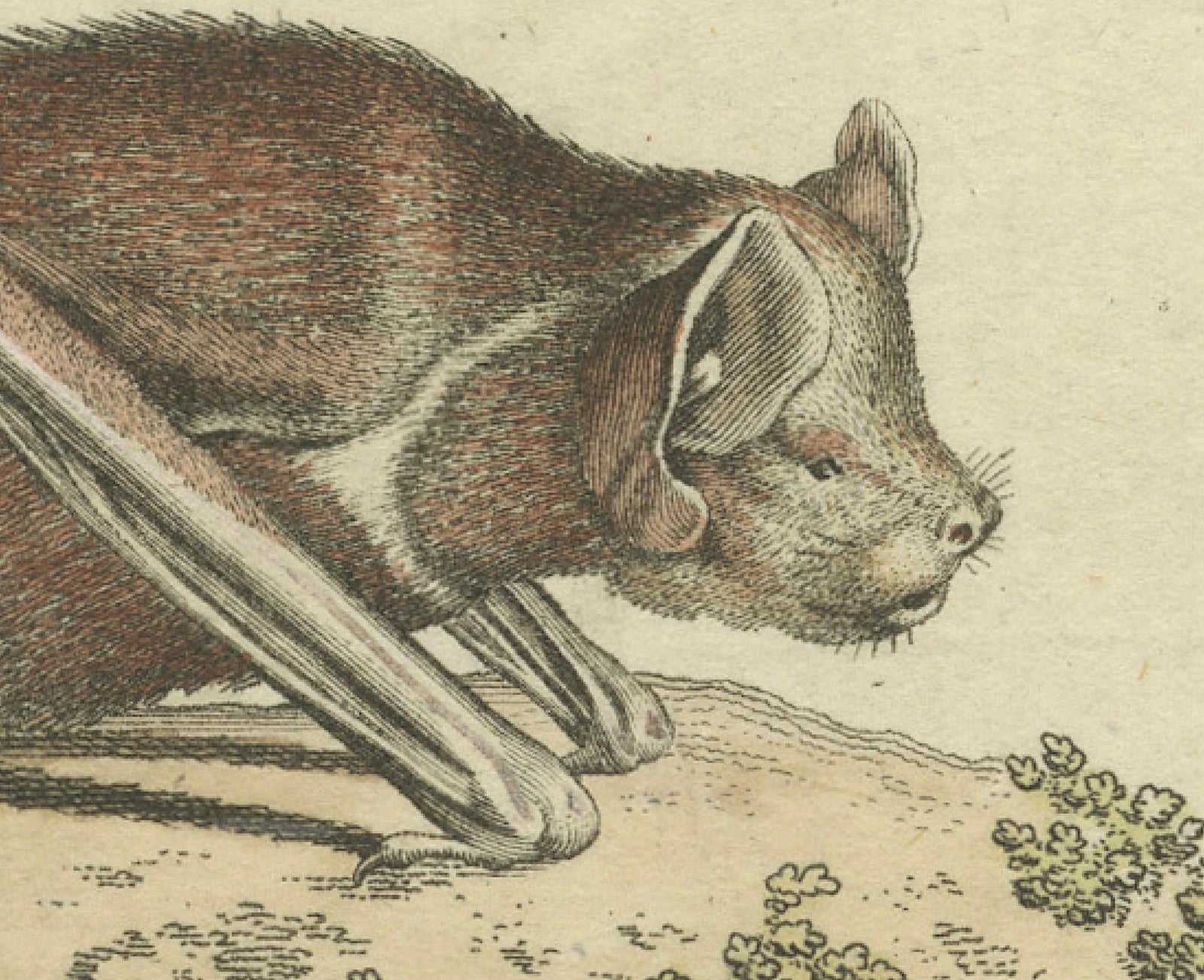
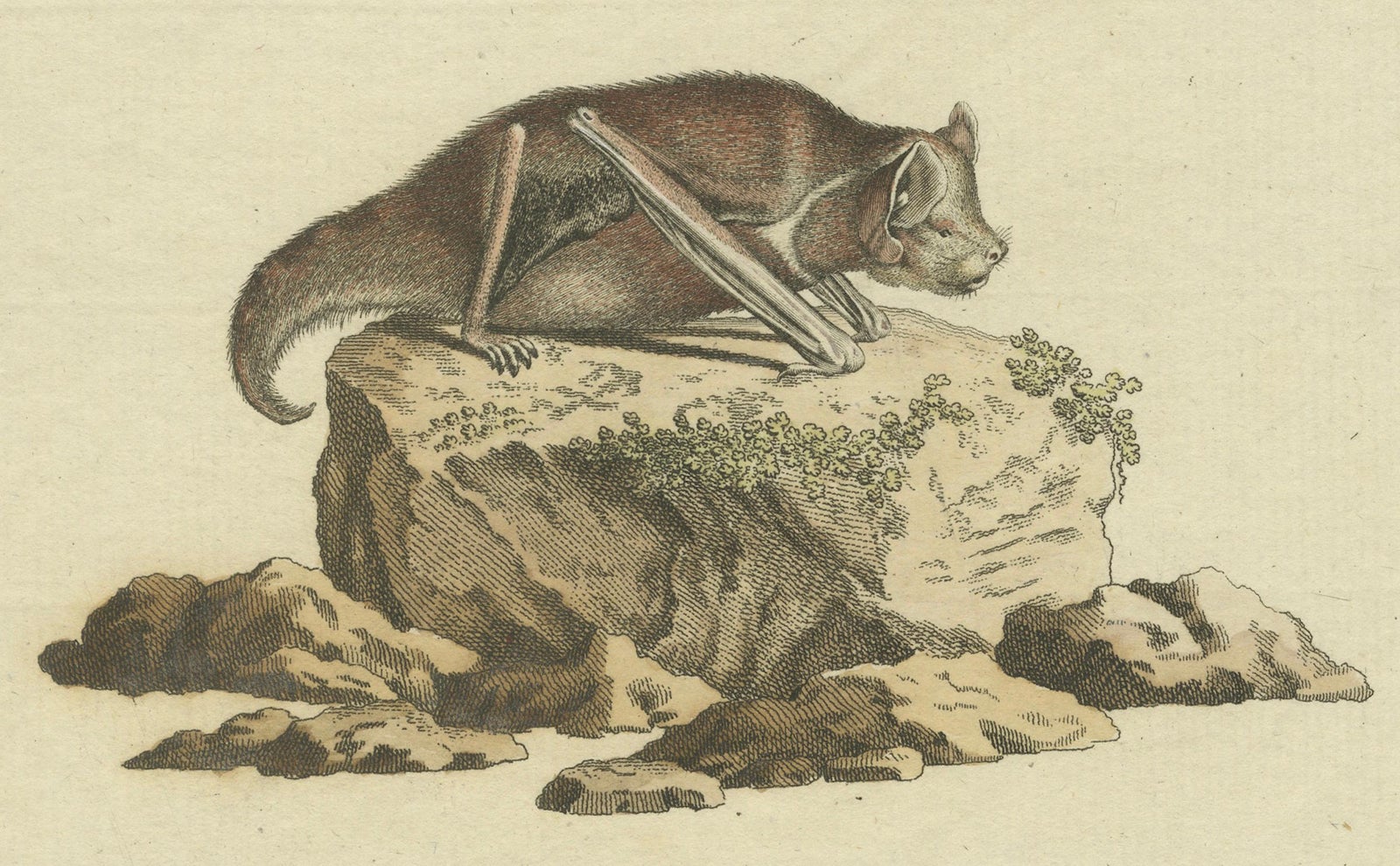
Close-ups
Framed and on the wall
Frame and rooms are illustrations of how the print could look; the description says what is included.
An Engraved Glimpse into the Nocturnal Ballet of Bats, circa 1774
$245 (£185, €220)
Period original, not a reproduction.
Shipped from the Netherlands, flat, insured and tracked, worldwide. Returns accepted within 14 days.
- Date
- 1774
- Size
- 10.4 × 7.9 in (26.5 × 20 cm)
- Condition
- Good. Fair. Overall minor soiling due to handling and age, especially around the edges. One print show foxing on the plate and black inkt spots. The other plate cut short on the left side.The images are beautiful hand-colored. Study the images carefully.
- Period
- 18th century
- Artist or book
- Schreber
- Section
- Mammals
- Reference
- f_38279072
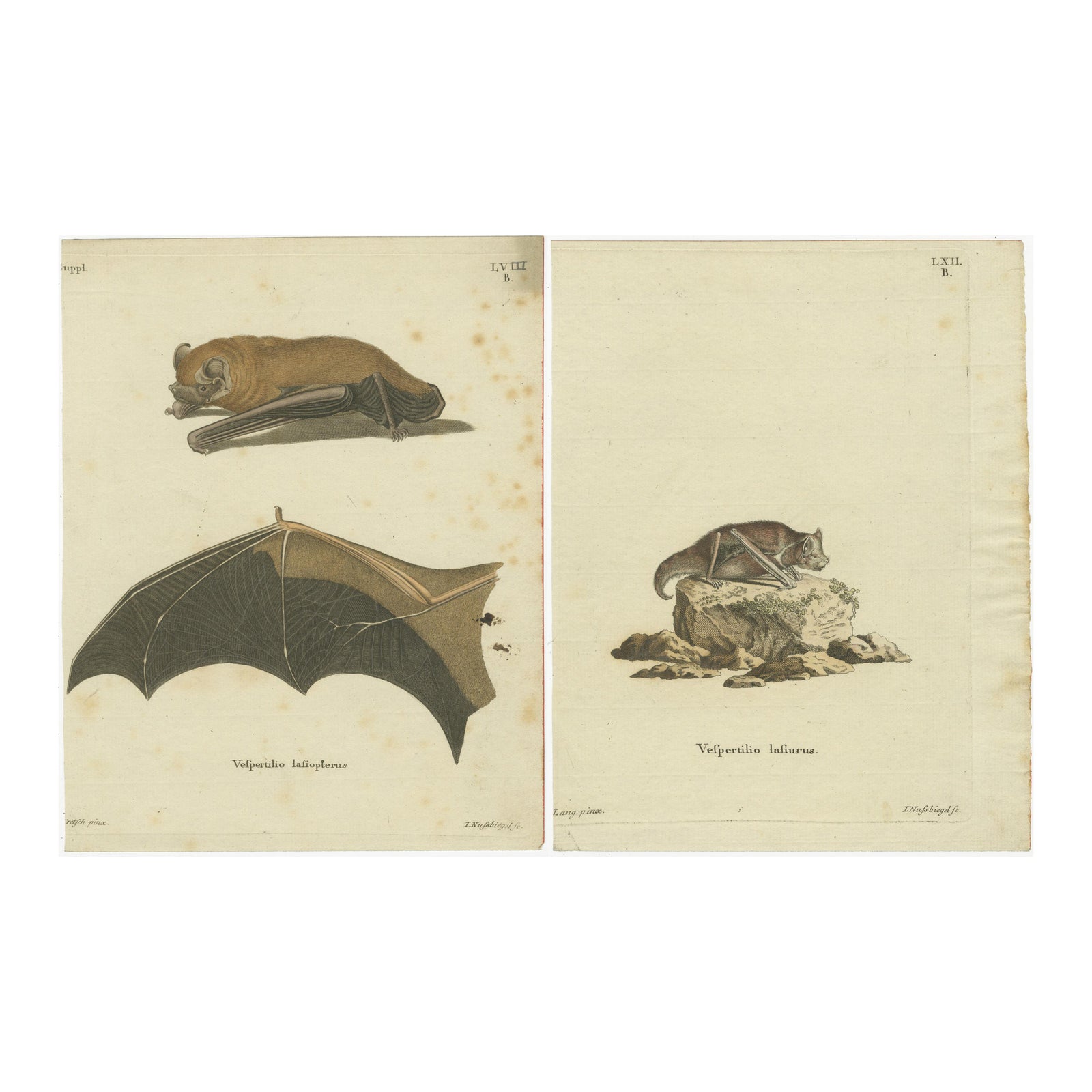
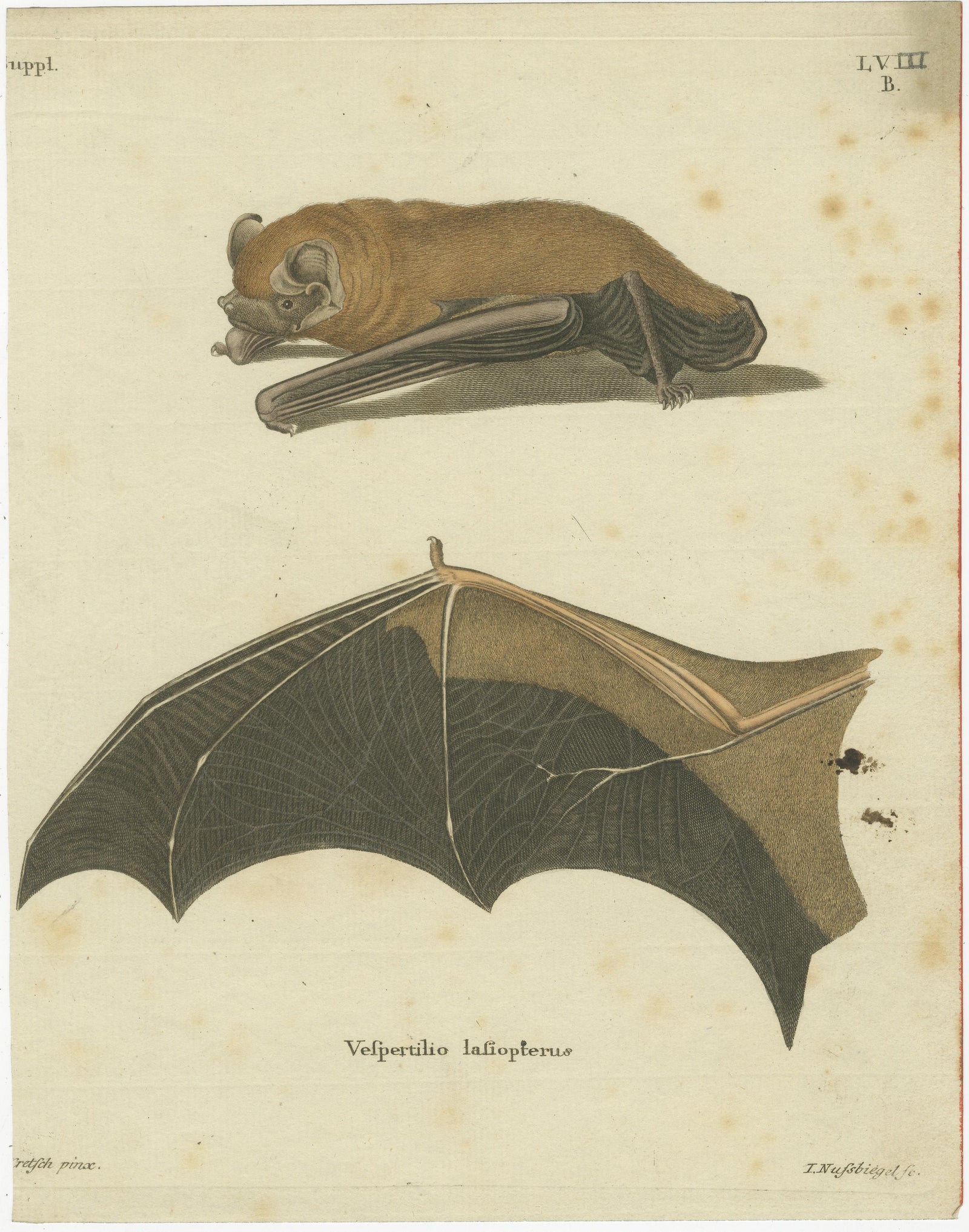
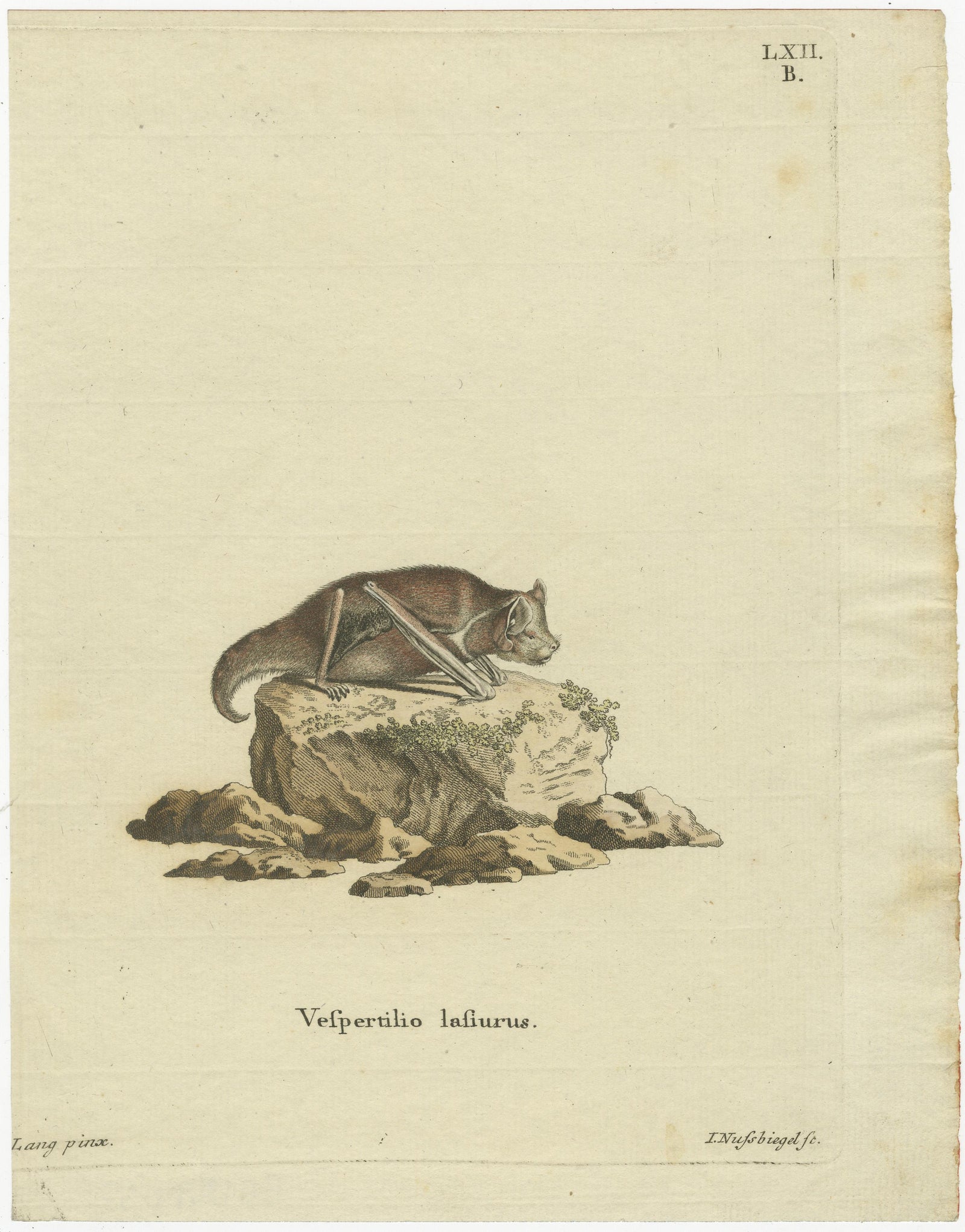
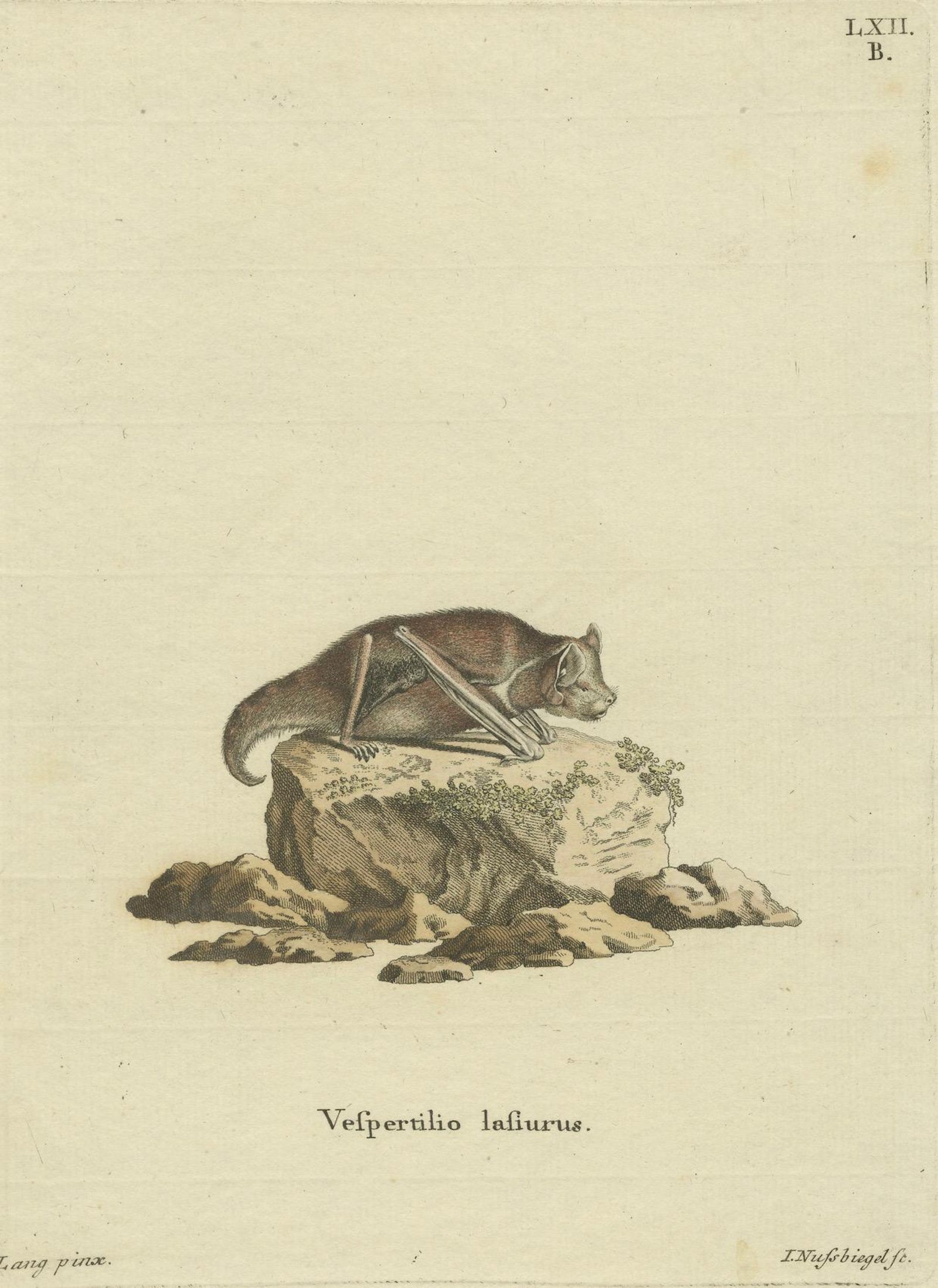
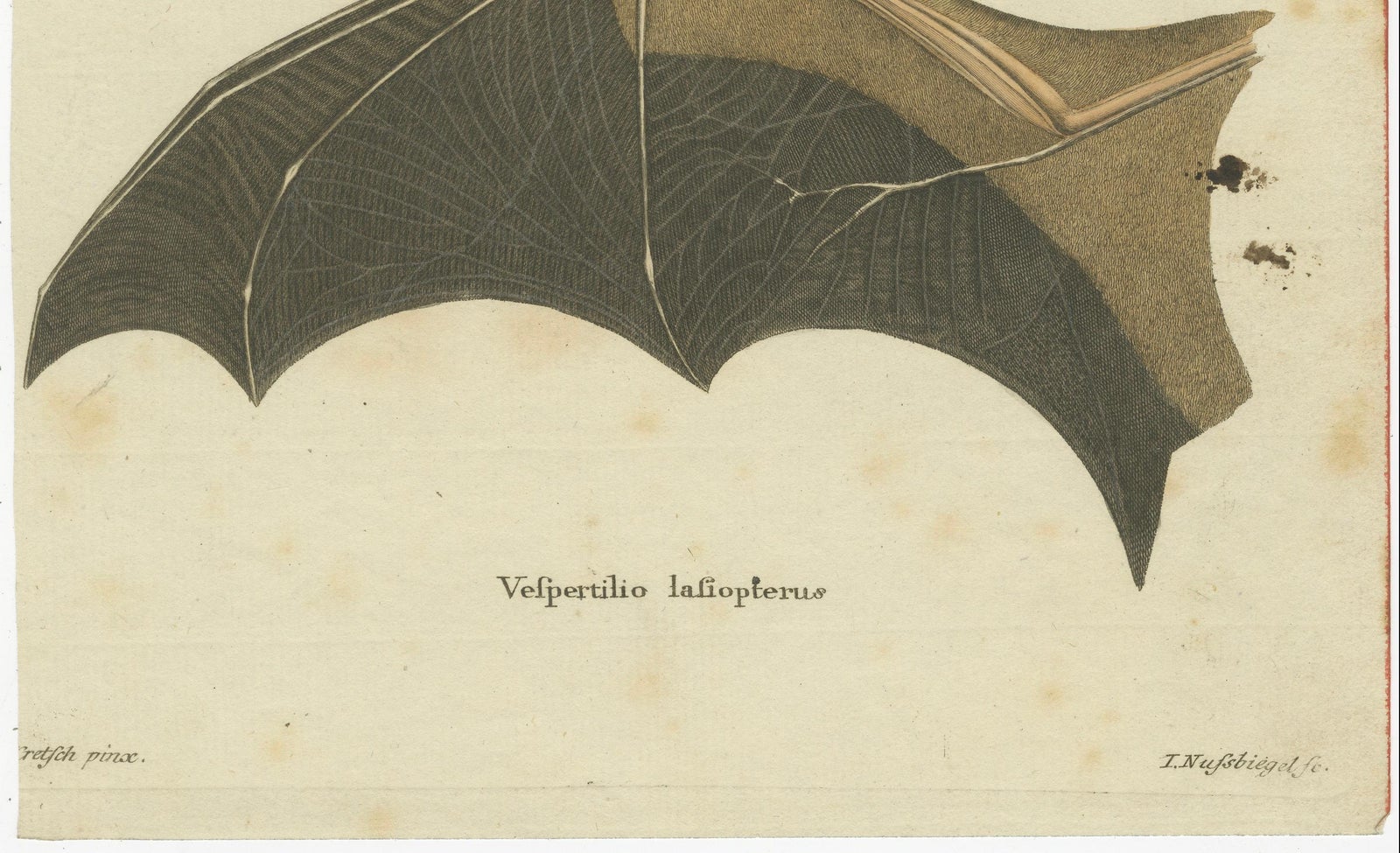
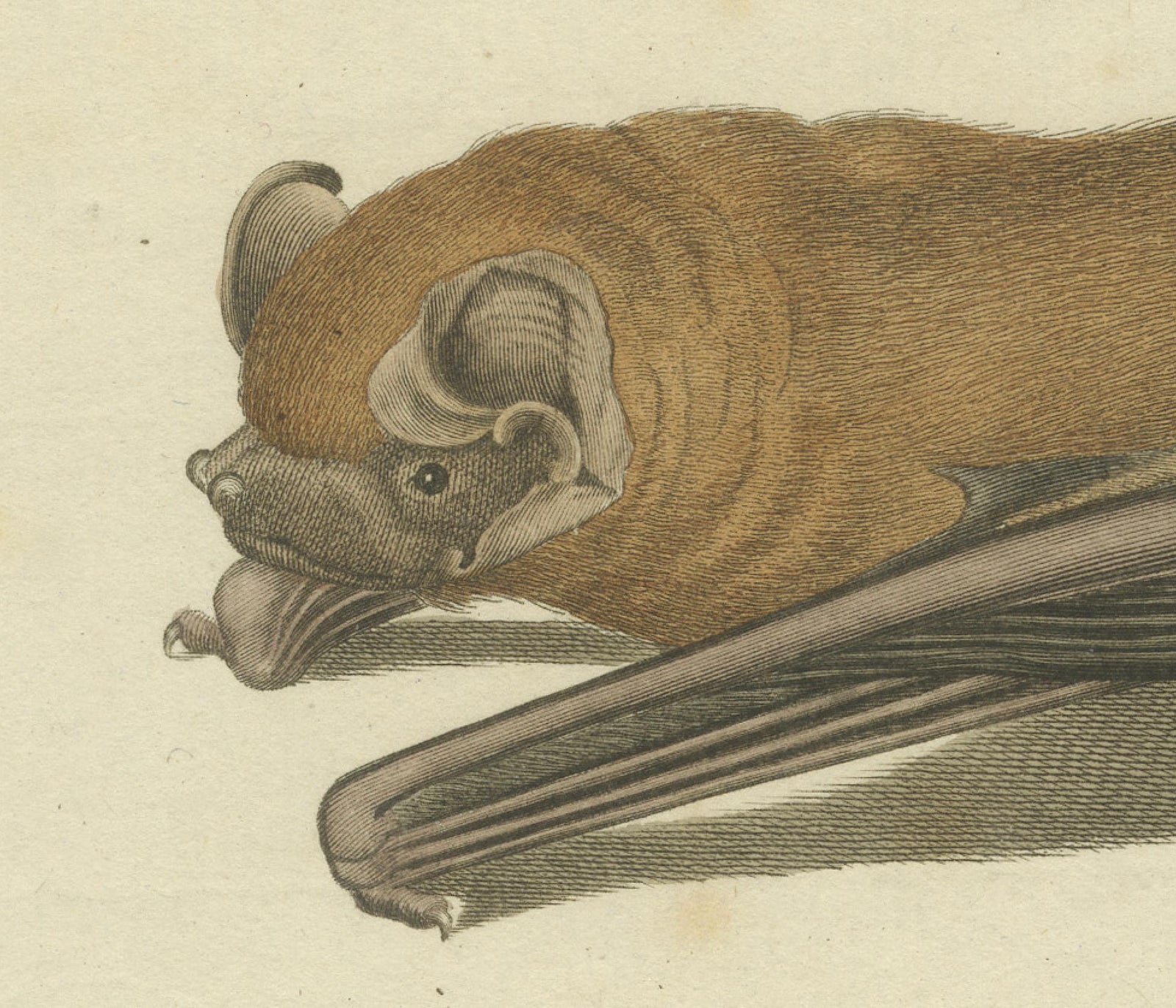
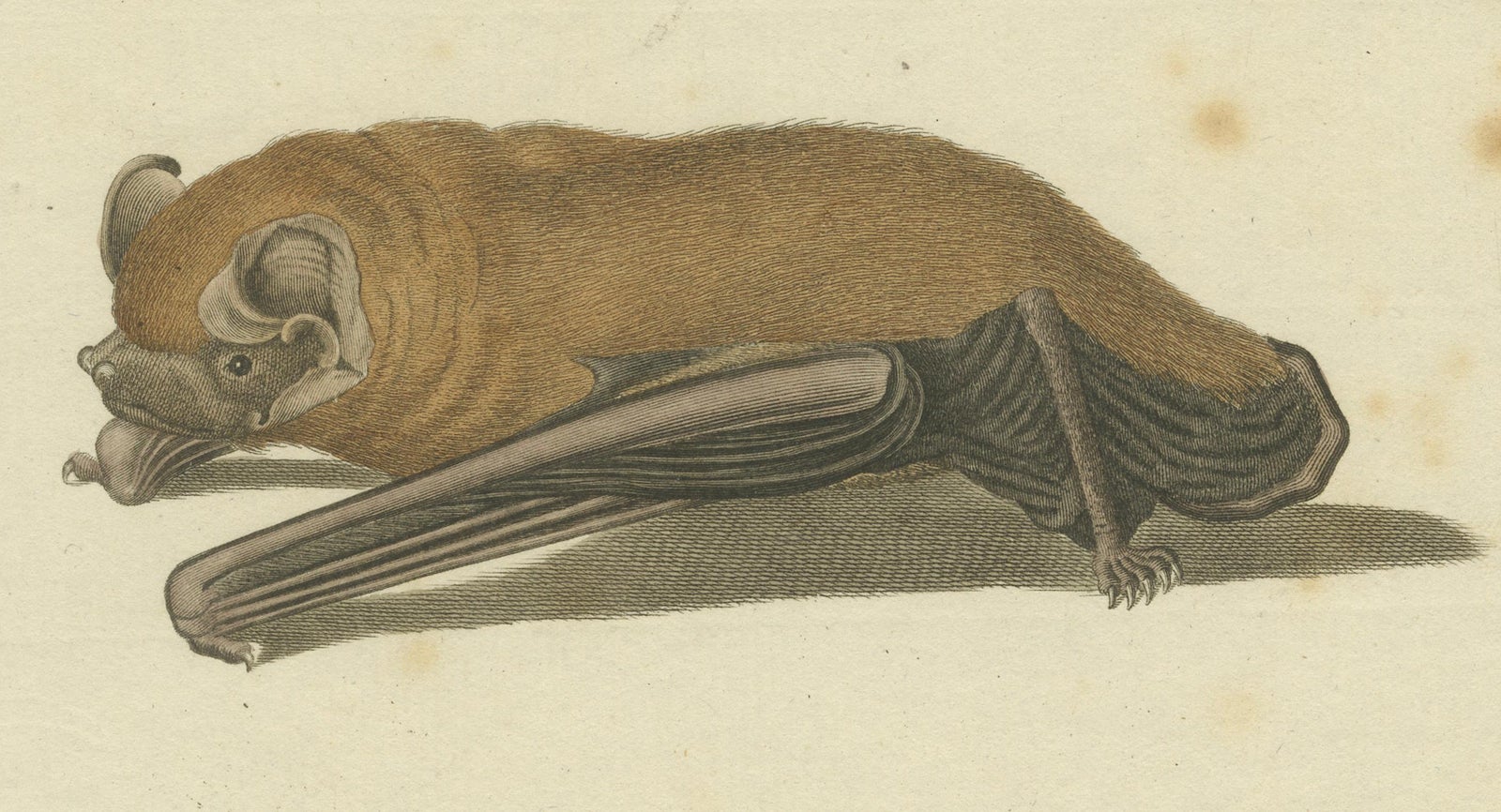
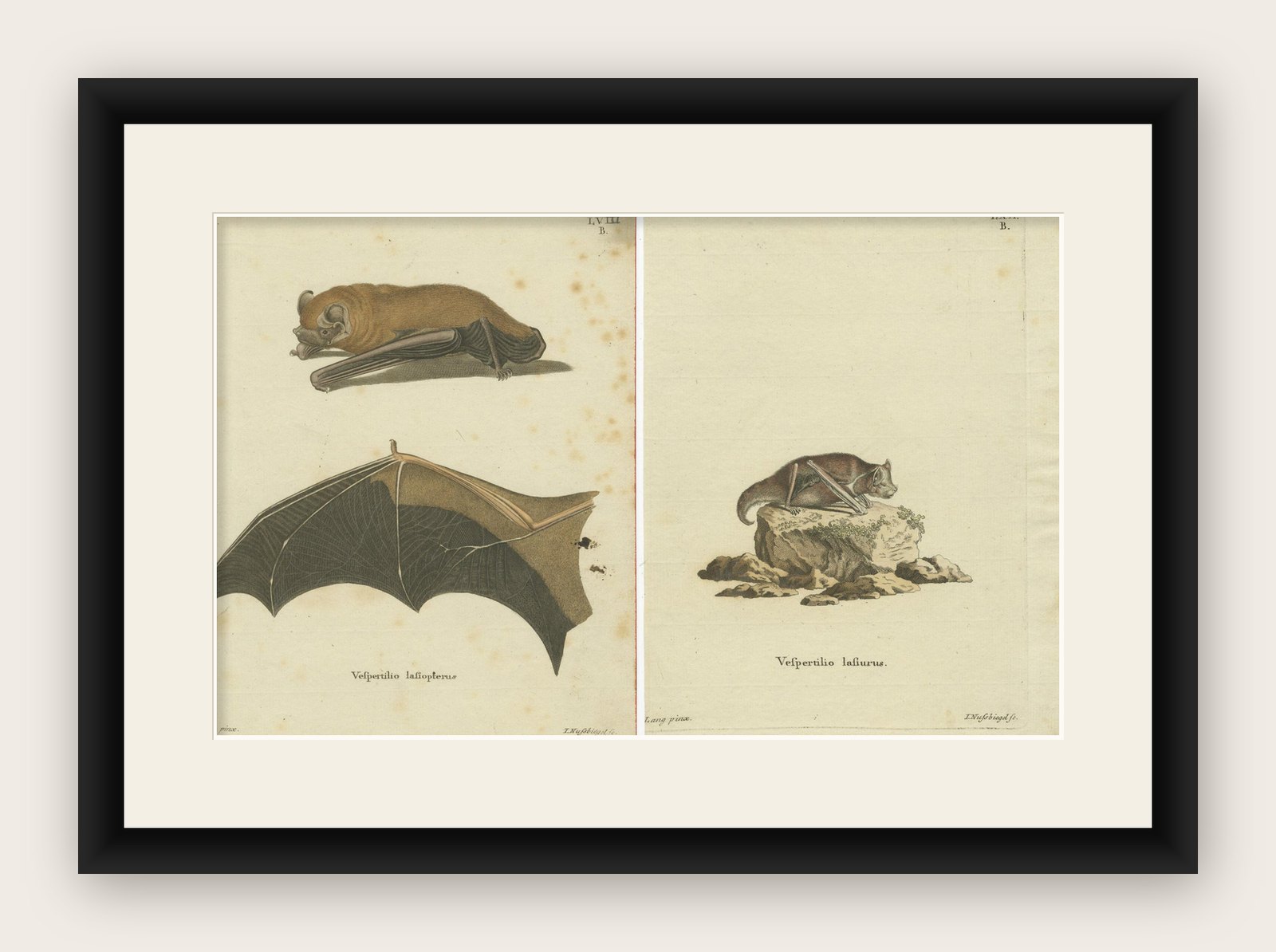
The prints depict two different bat species, both intricately illustrated with a level of detail that suggests they come from Johann Christian Daniel von Schreber's "Die Säugthiere in Abbildungen nach der Natur mit Beschreibungen".
The first image shows a bat in flight with its wings fully extended, showcasing the delicate membrane structure and bone support of the wings. This bat is labeled "Vespertilio lasiopterus," which could refer to a species of bat with hairy or shaggy wings.
The second image presents another bat, labeled "Vespertilio lasiurus," perched upon a rock, possibly indicating a species with a hairy tail. The term "Vespertilio" is Latin for bat and was commonly used in the Linnaean system of taxonomy.
Both prints are by the artist Lang pinx., with the engraving done by I.Nussbiegel fec., indicating the artist responsible for the original painting and the engraver respectively. The detailed artwork suggests these images were produced for scientific documentation with a focus on the natural history and anatomy of bats. Such works were significant for their contribution to the biological sciences, as well as for the artistry involved in rendering the subjects. They represent a blend of scientific interest and aesthetic appeal, serving both educational and decorative purposes during their time.