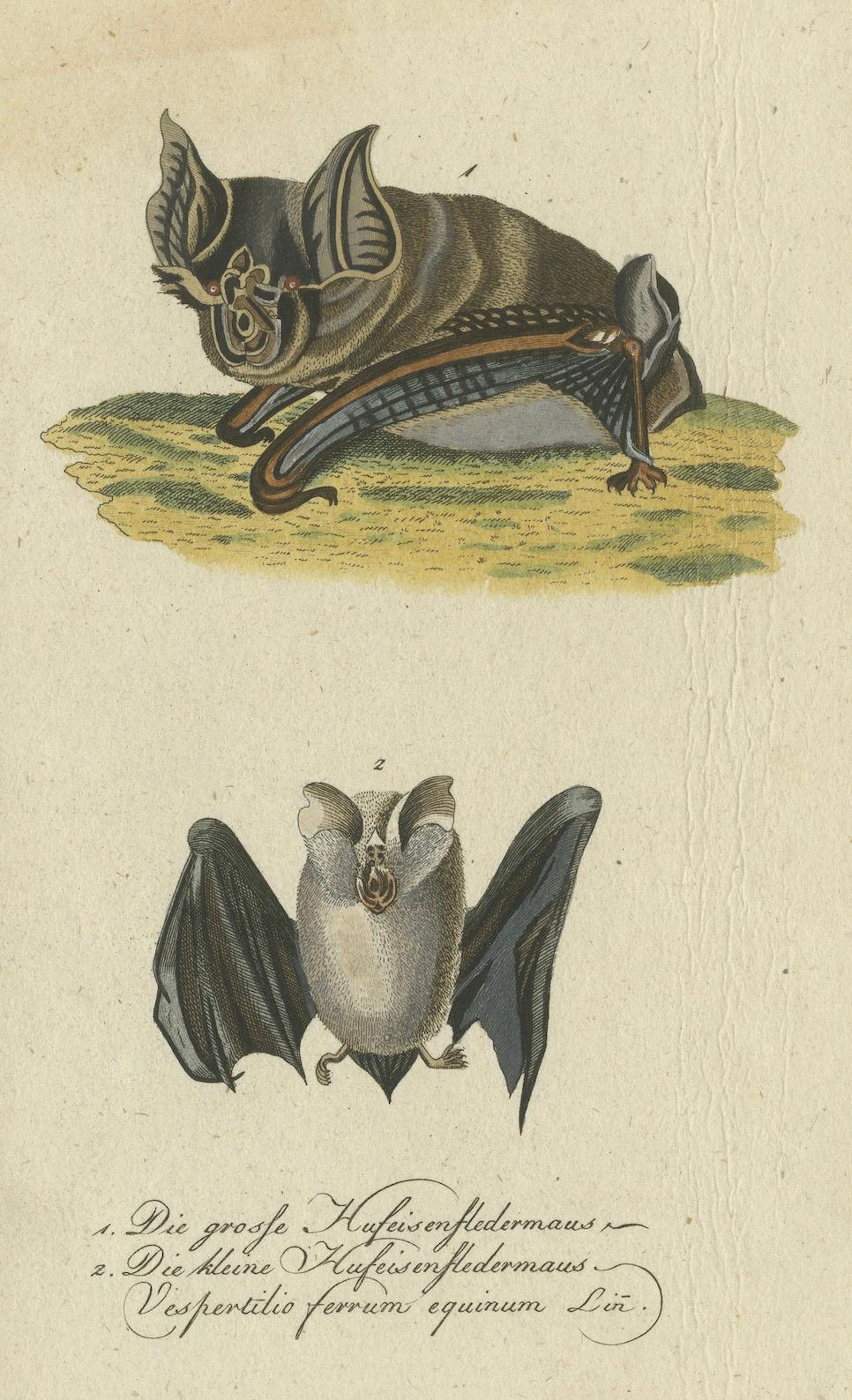
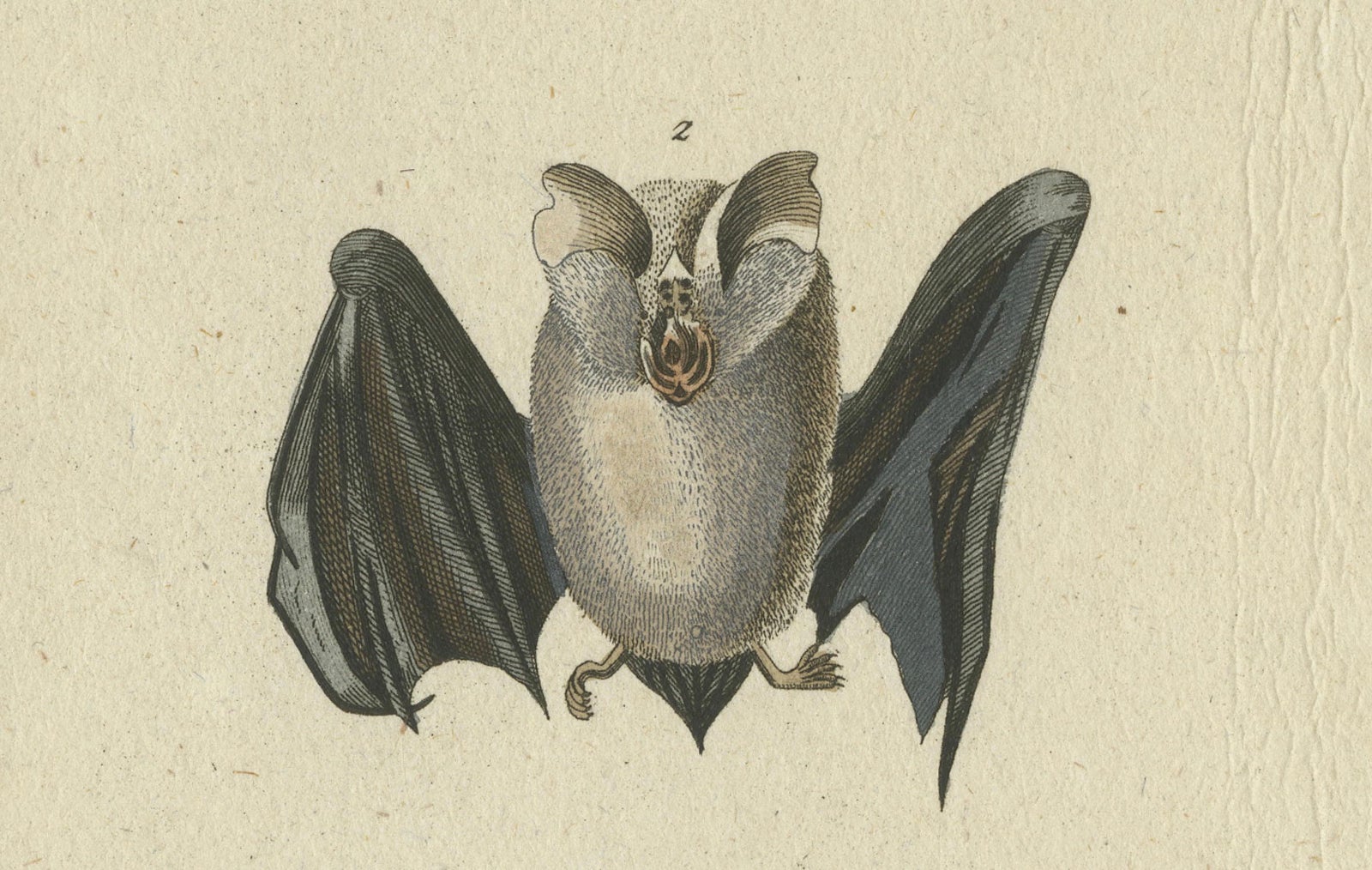
Close-ups
Framed and on the wall
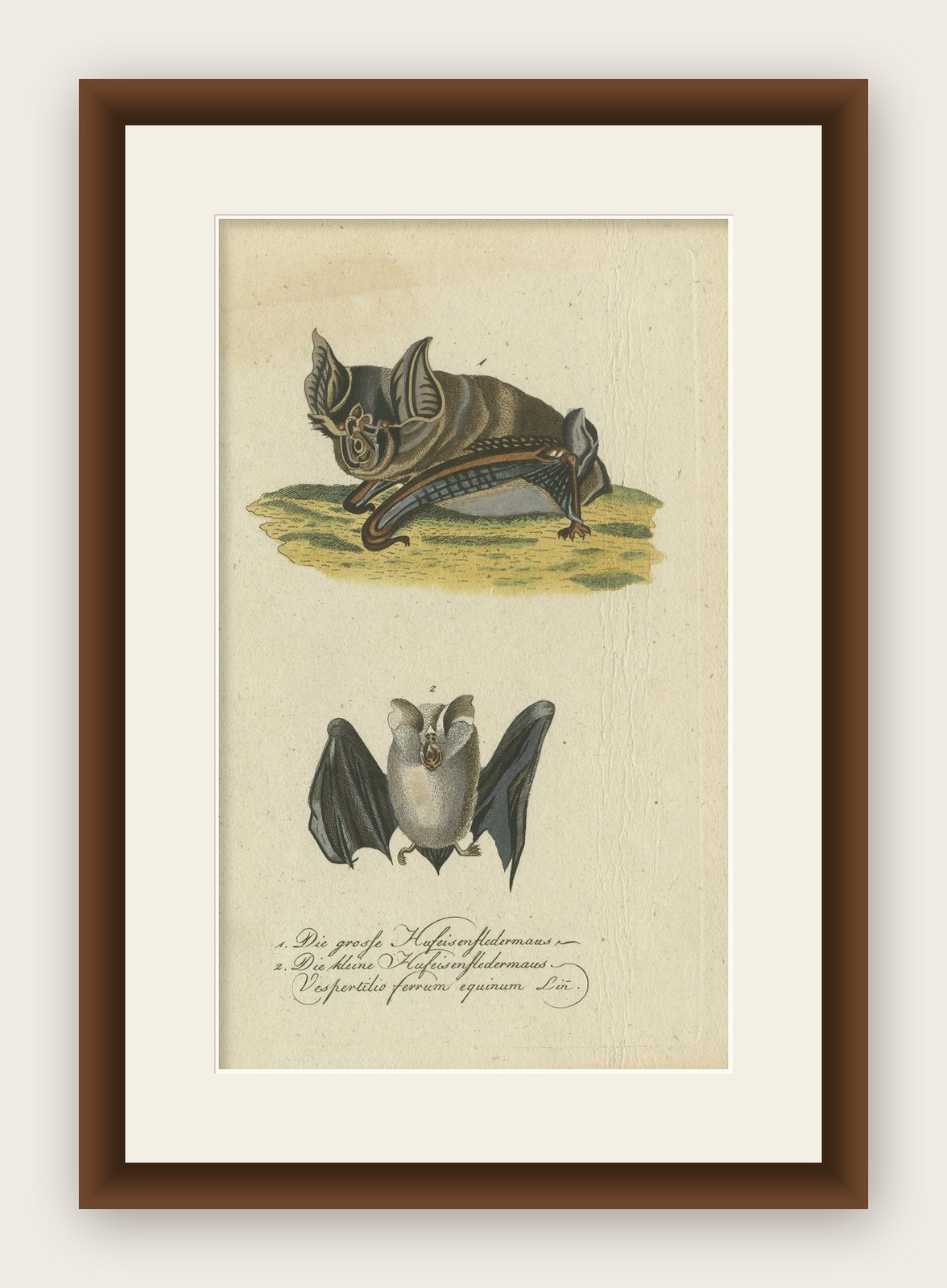


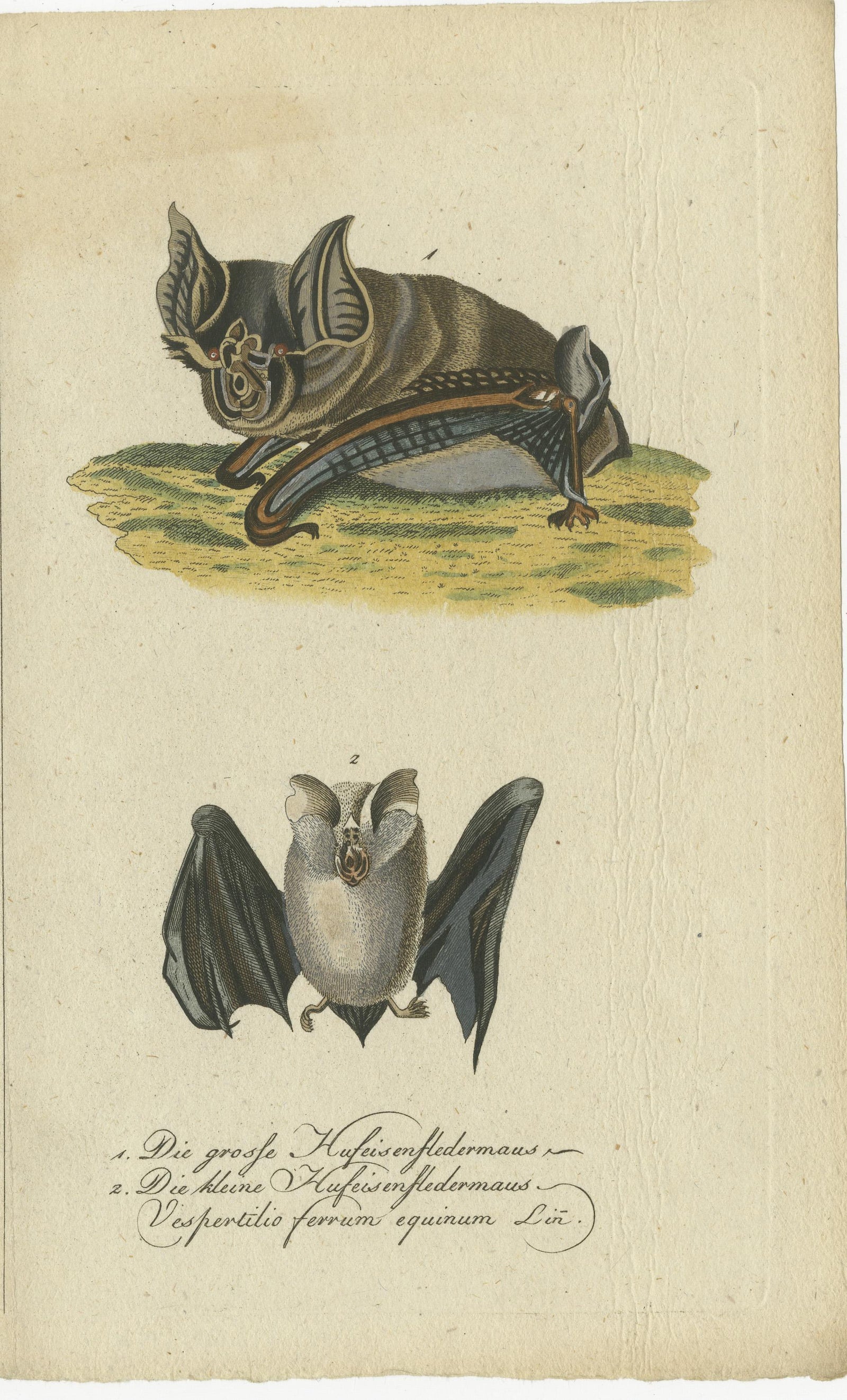
Frame and rooms are illustrations of how the print could look; the description says what is included.
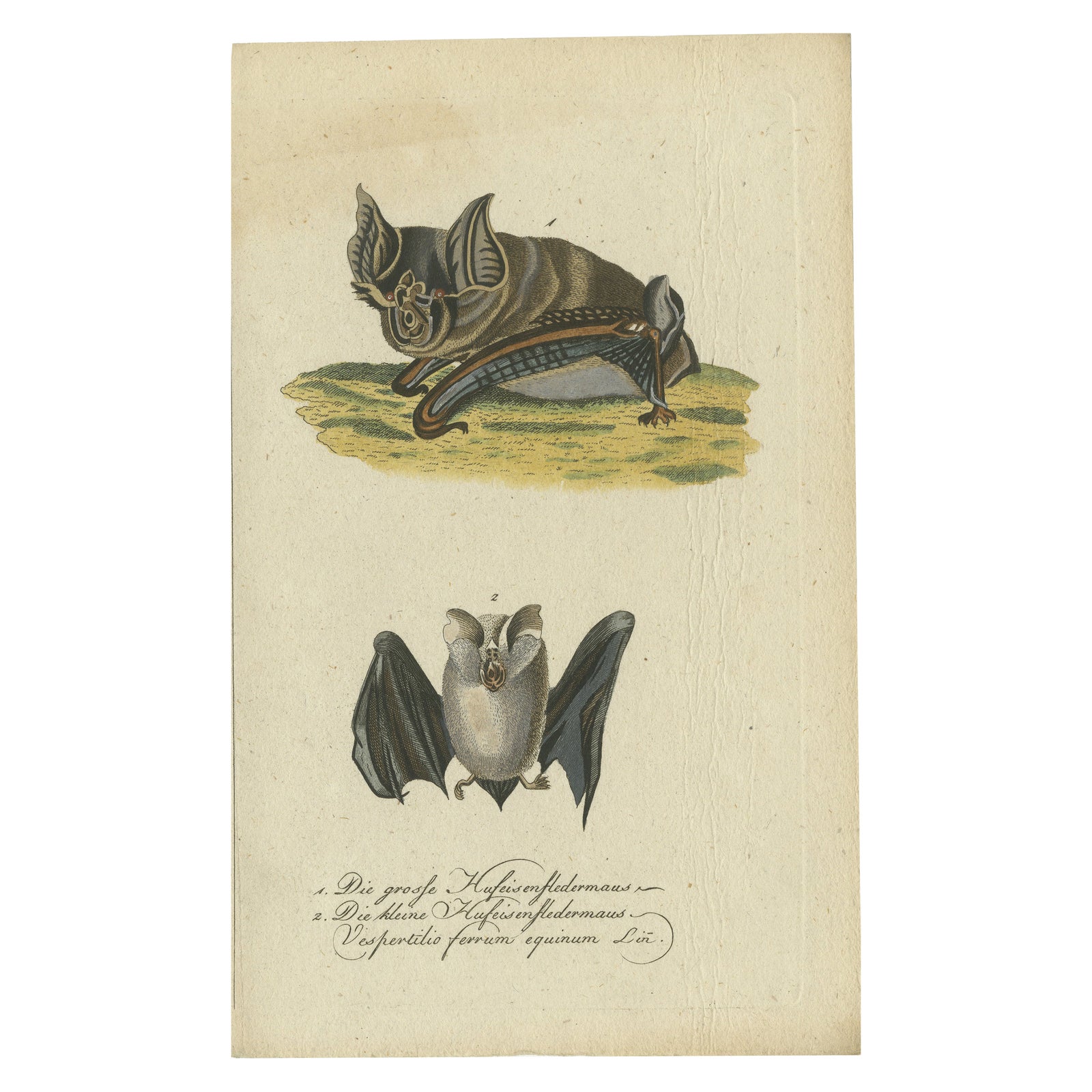
Whispers of the Night: Anatomical Elegance of Horseshoe Bats, 1775
€220 ($250, £185, €220)
Period original, not a reproduction.
Shipped from the Netherlands, flat, insured and tracked, worldwide. Returns accepted within 14 days.
- Date
- 1775
- Size
- 7.7 × 5.3 in (19.5 × 13.5 cm)
- Condition
- Good. Good. Original old handcoloring on handpressed paper. A lightly discolored brown area to the left tiop corner and some light soiling overall due to age, adding to its patina. Study the images carefully.
- Period
- 18th century
- Section
- Mammals
- Reference
- f_41193212
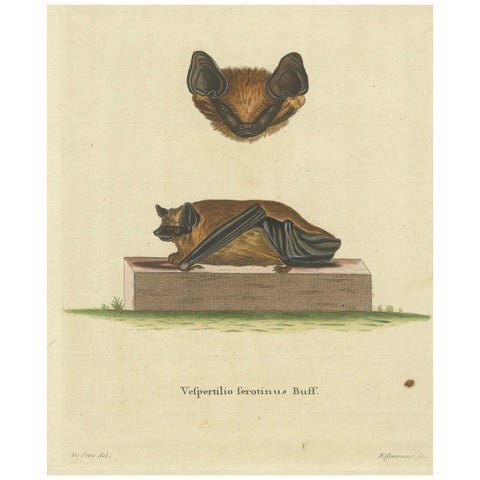
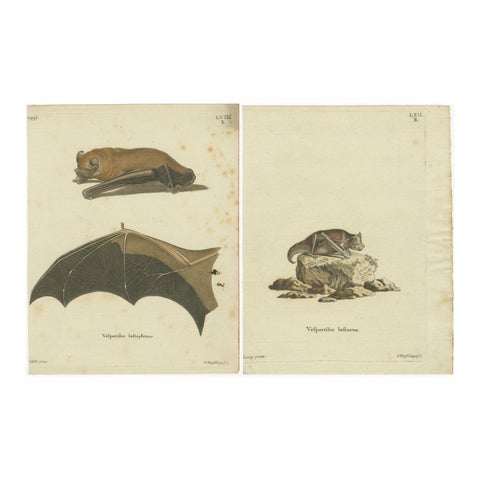
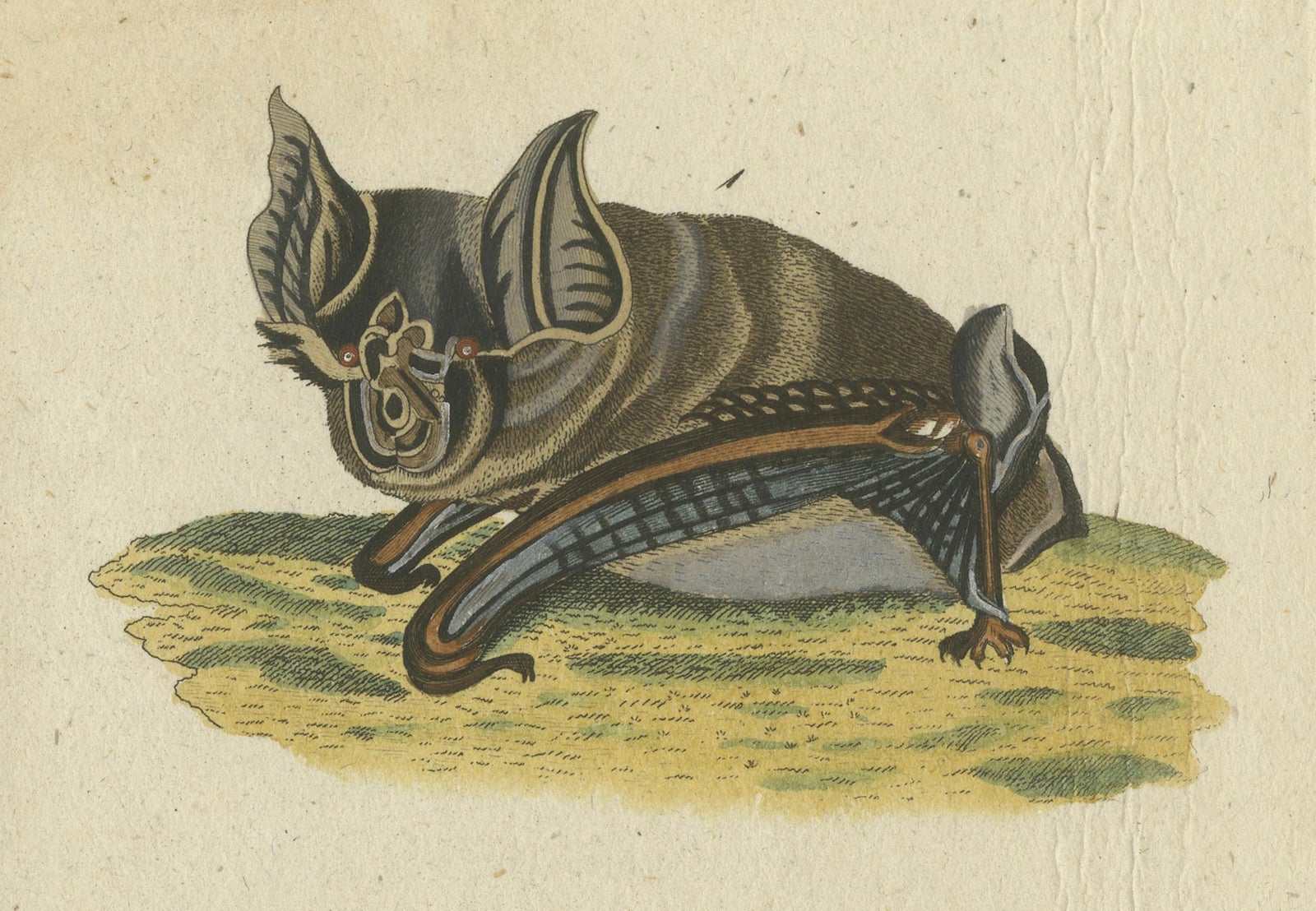
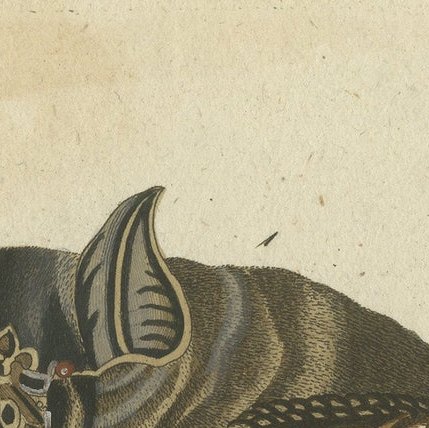
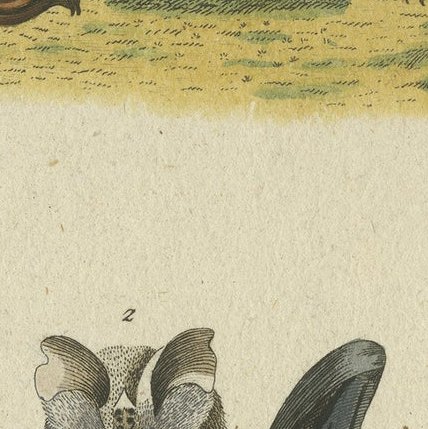
Two species of horseshoe bats, as indicated by the characteristic horseshoe-shaped structure around their noses. This anatomical feature is typical of the horseshoe bat genus (Rhinolophus), which is known for its role in echolocation.
- Upper Image: This depicts a larger horseshoe bat, likely in a resting posture with its wings closed around its body. The detailed portrayal highlights the distinctive facial structure and the textured fur.
- Lower Image: Shows a smaller horseshoe bat, captured in flight with wings fully extended, showcasing the wing structure and the lighter coloration of the fur on the underparts.
- Artistic Style: The illustration is executed with fine detail and precision, using a naturalistic style that was typical of scientific illustrations from the 18th and 19th centuries. The colors are subtle yet distinguish the key features clearly.
- Scientific Labeling: The text below identifies the species in Latin, suggesting the educational or scientific purpose of the illustration. The names given are in the format used for scientific classification, pointing to their genus and species.
Makers:
Johann Christian Daniel von Schreber (1739-1810): A German naturalist known for his comprehensive work in documenting mammalian species.
Jakob Andreas Eisenmann: The engraver responsible for the hand-colored copperplate engravings found in Schreber's work. His engravings are based on illustrations provided by artists such as Jacques Bruvée.
- **"Die Säugethiere in Abbildungen nach der Natur mit Beschreibungen" (Animal Illustrations after Nature):** This is the title of Schreber's work, which translates to "The Mammals in Illustrations According to Nature with Descriptions." It is a significant collection of mammalian illustrations from the 18th century.
The publisher responsible for the distribution of Schreber's collection.
Year of Publication: The work was published over an extended period, from 1775 to 1792.
Place of Publication: The work was published in Erlangen, Germany by Wolfgang Walther
Technique: The artworks are hand-colored copper engravings, a popular and detailed technique of the time, allowing for the precise and vibrant depiction of various species.