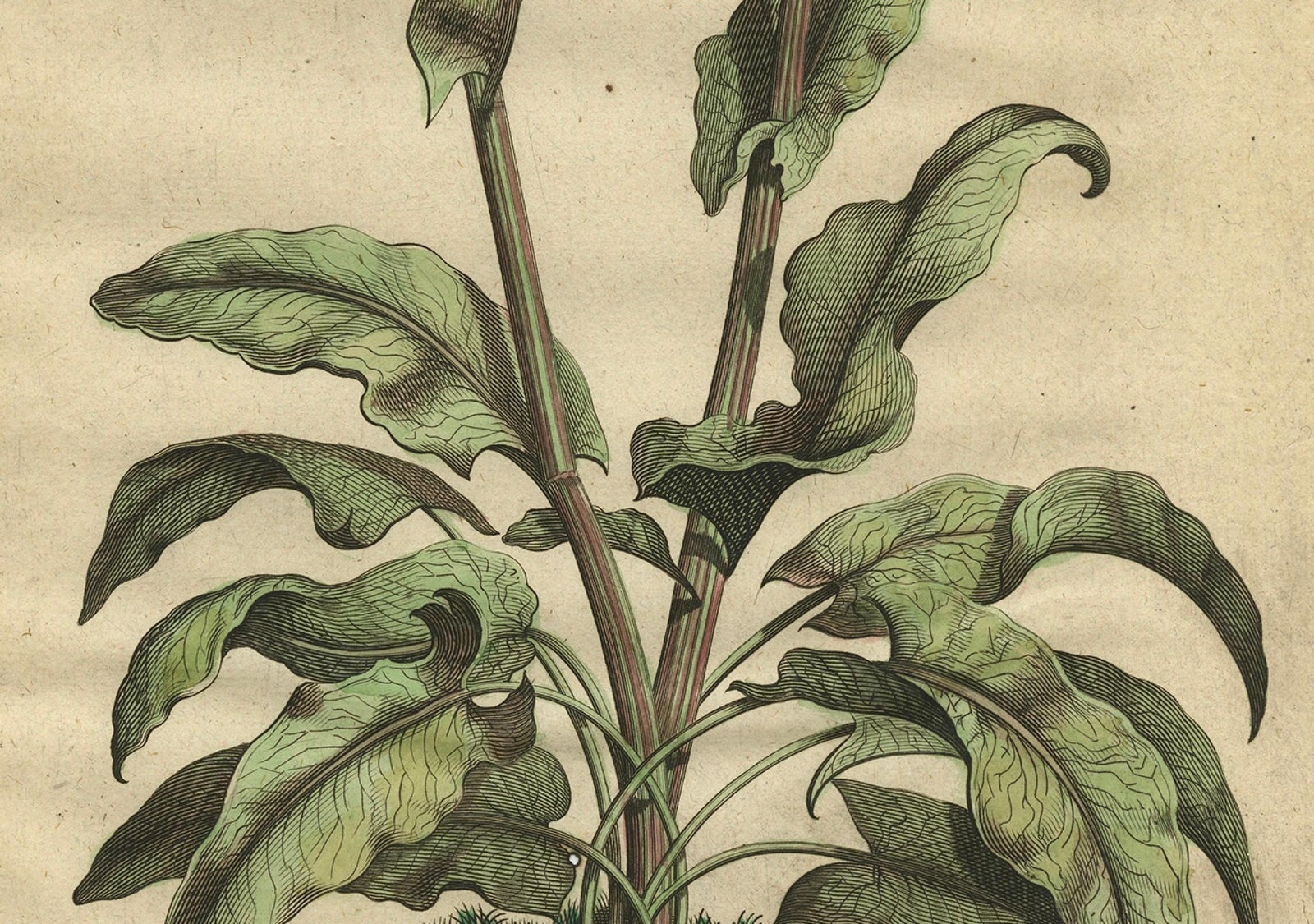
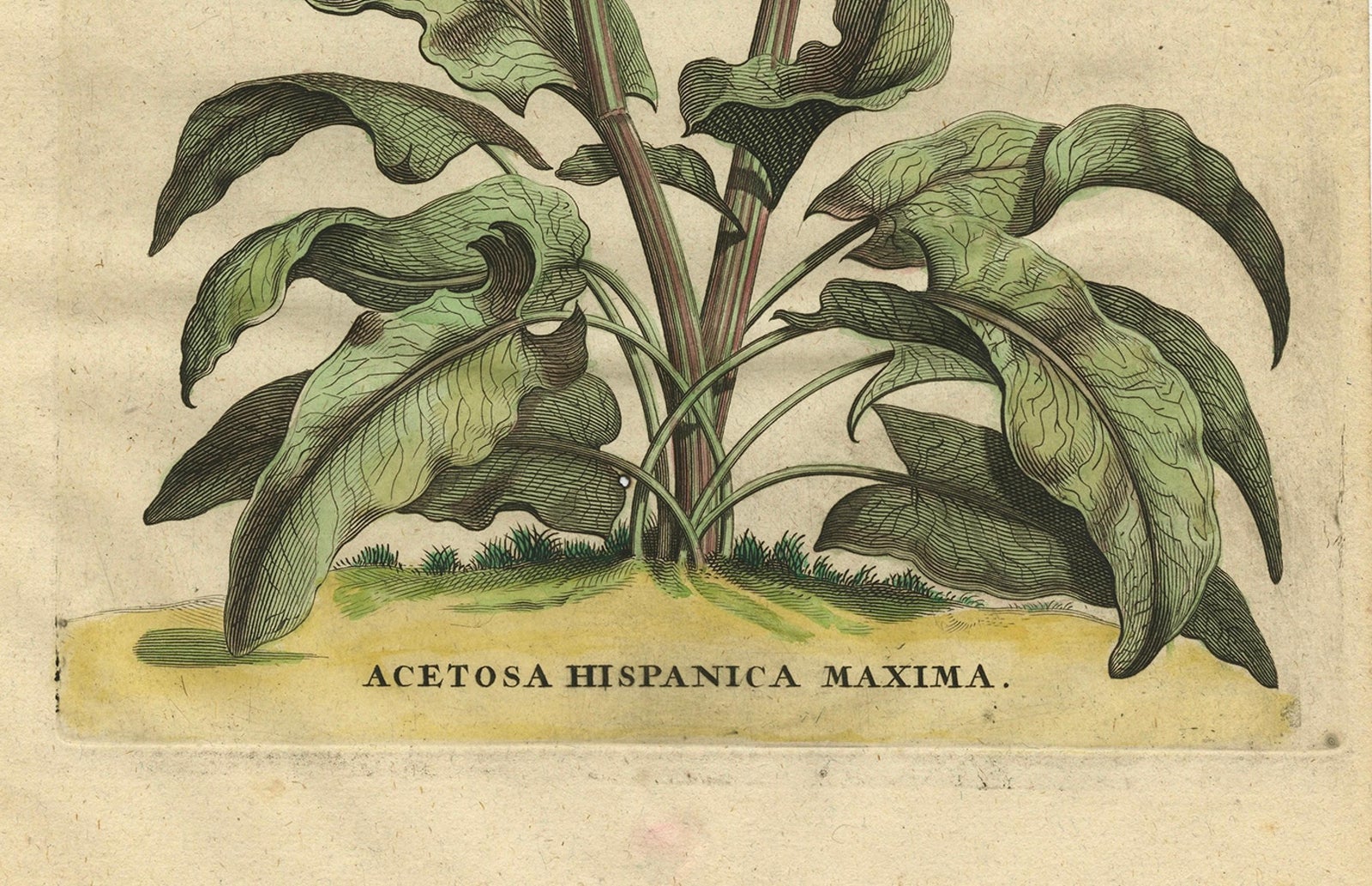
Close-ups
Framed and on the wall
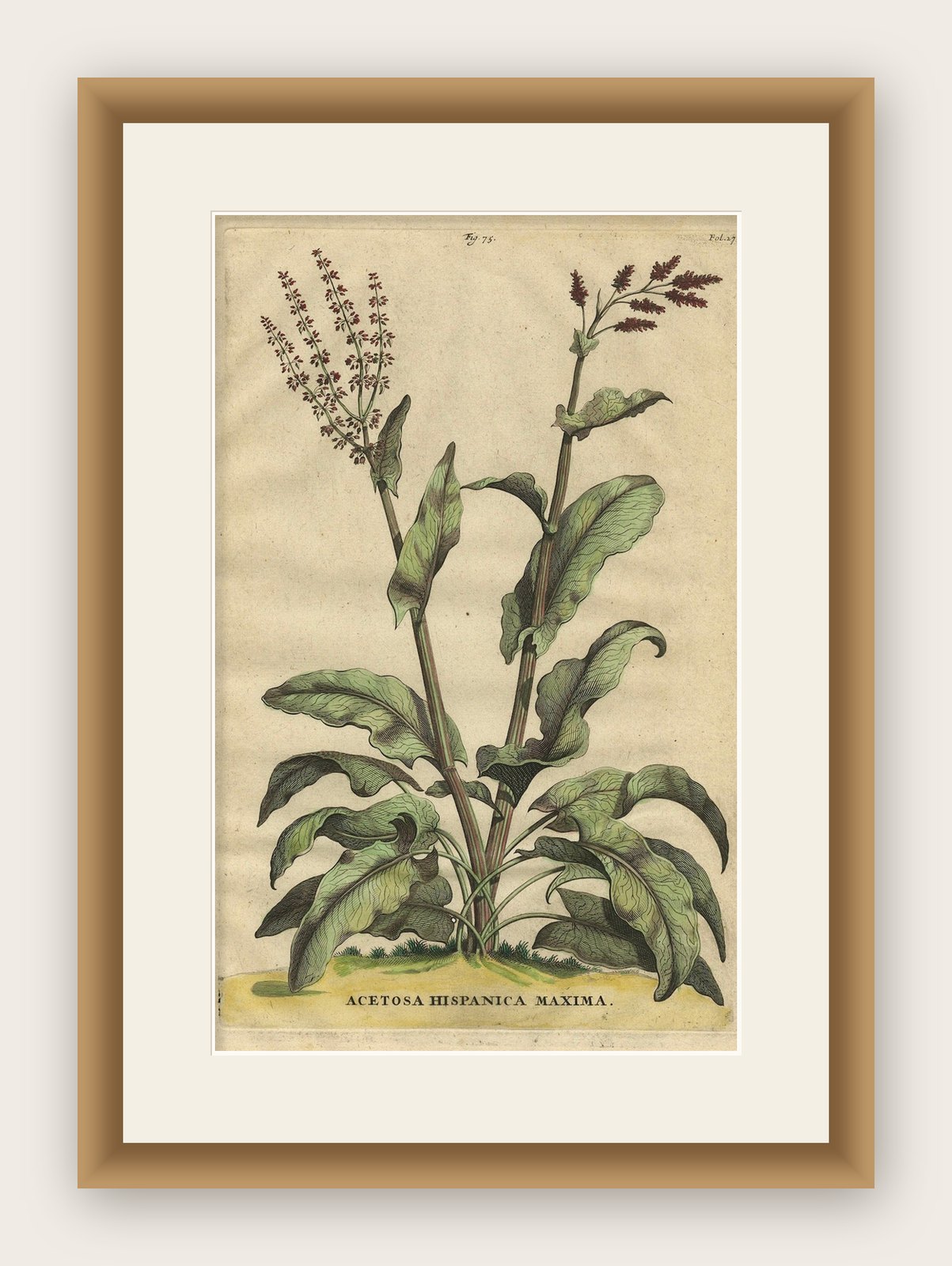


Frame and rooms are illustrations of how the print could look; the description says what is included.
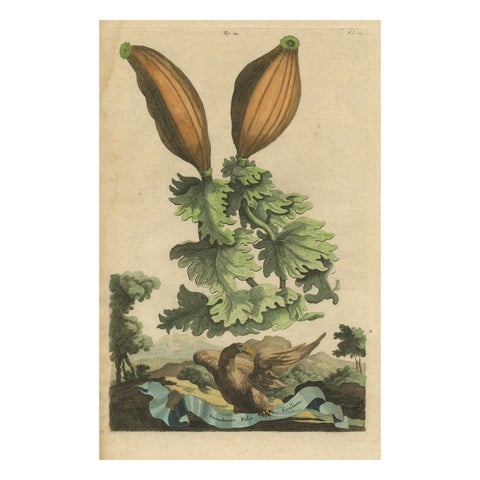
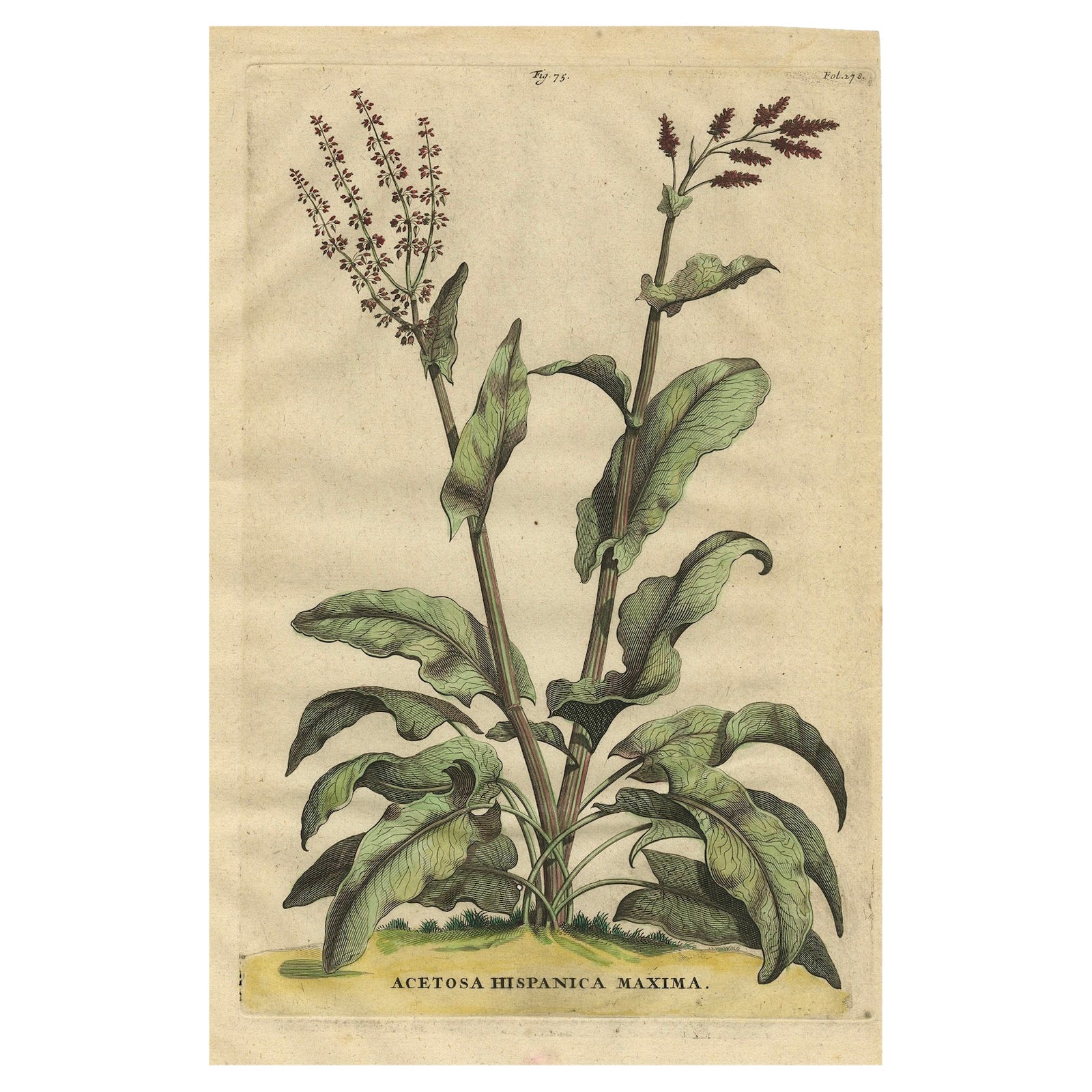
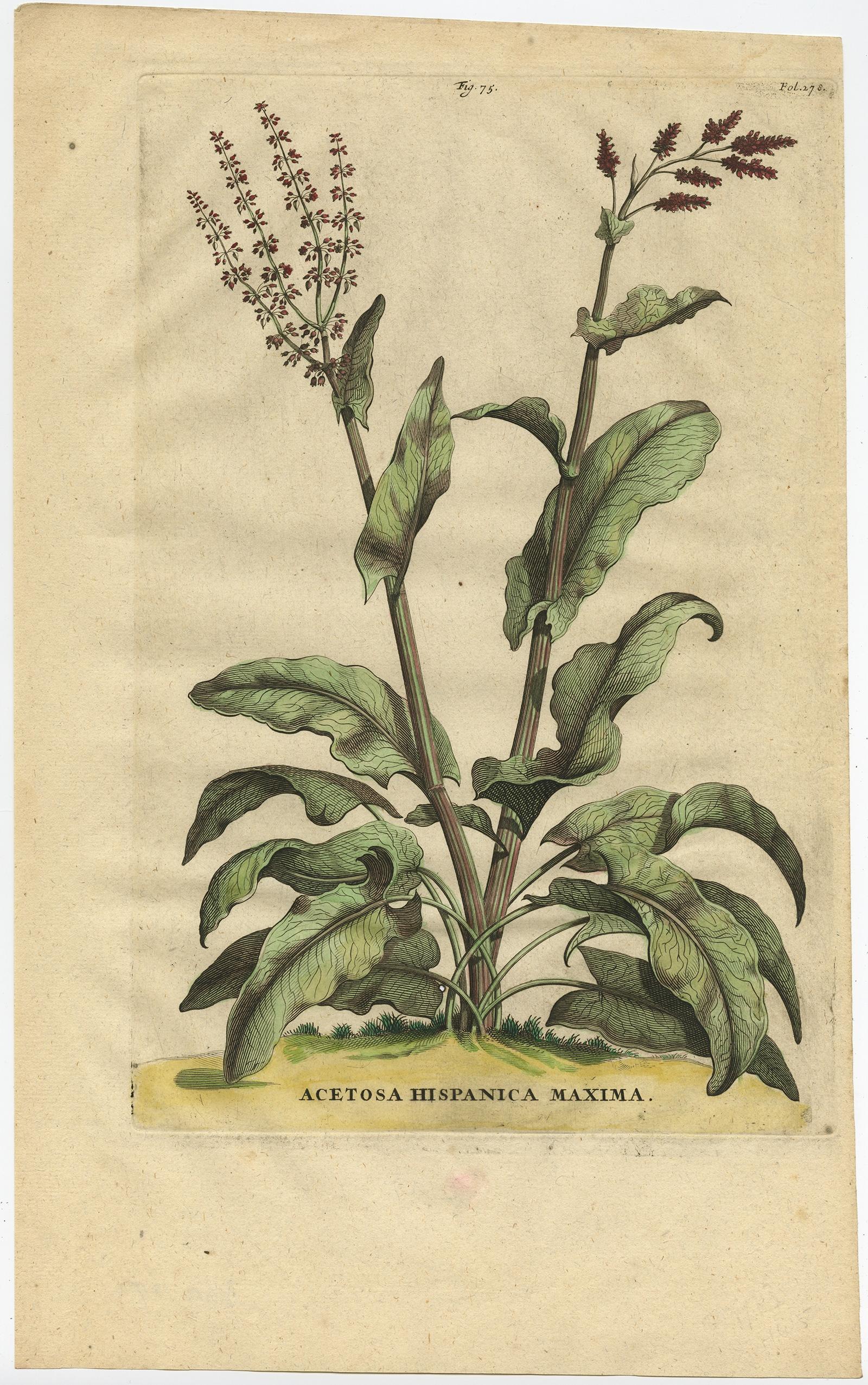
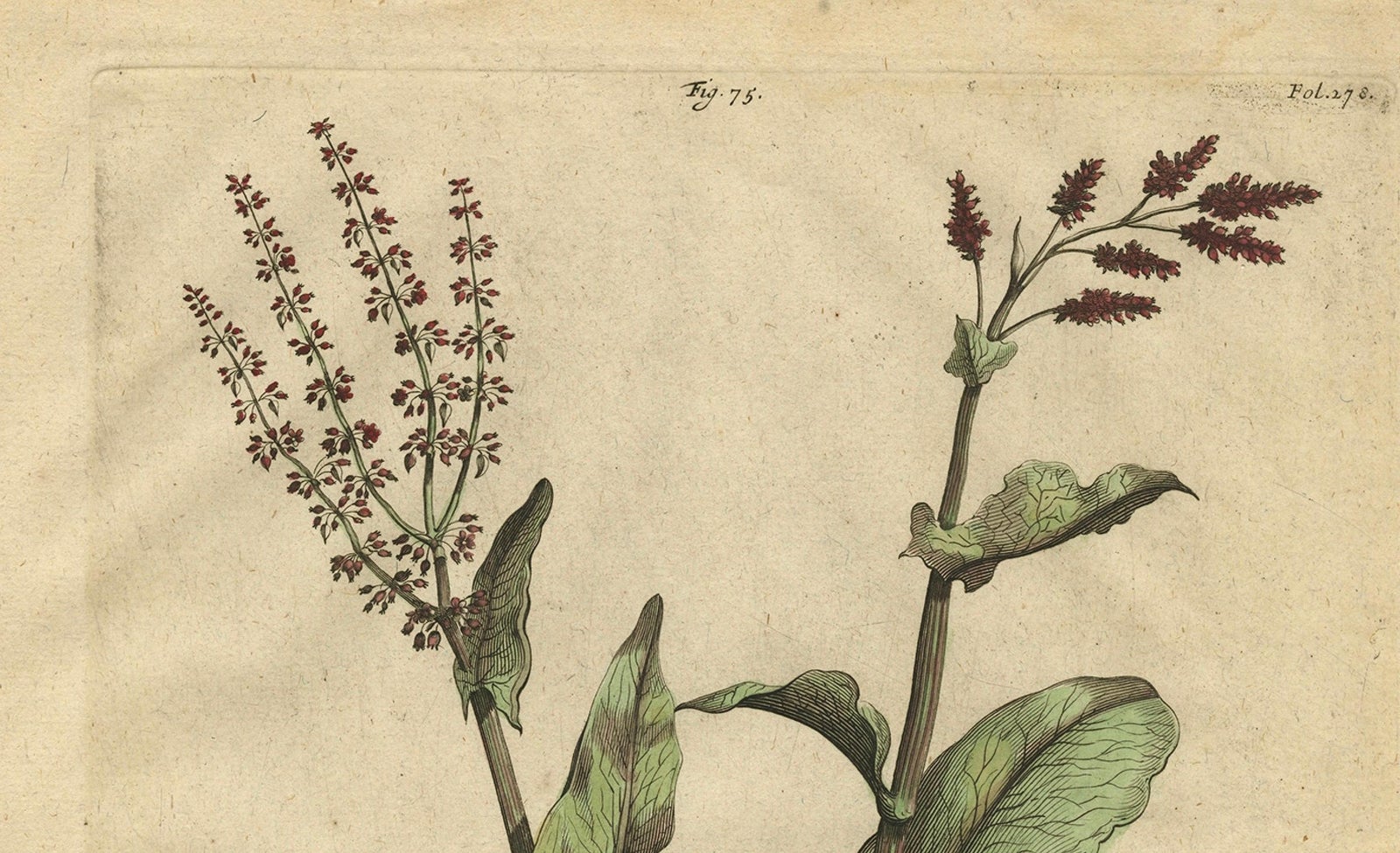
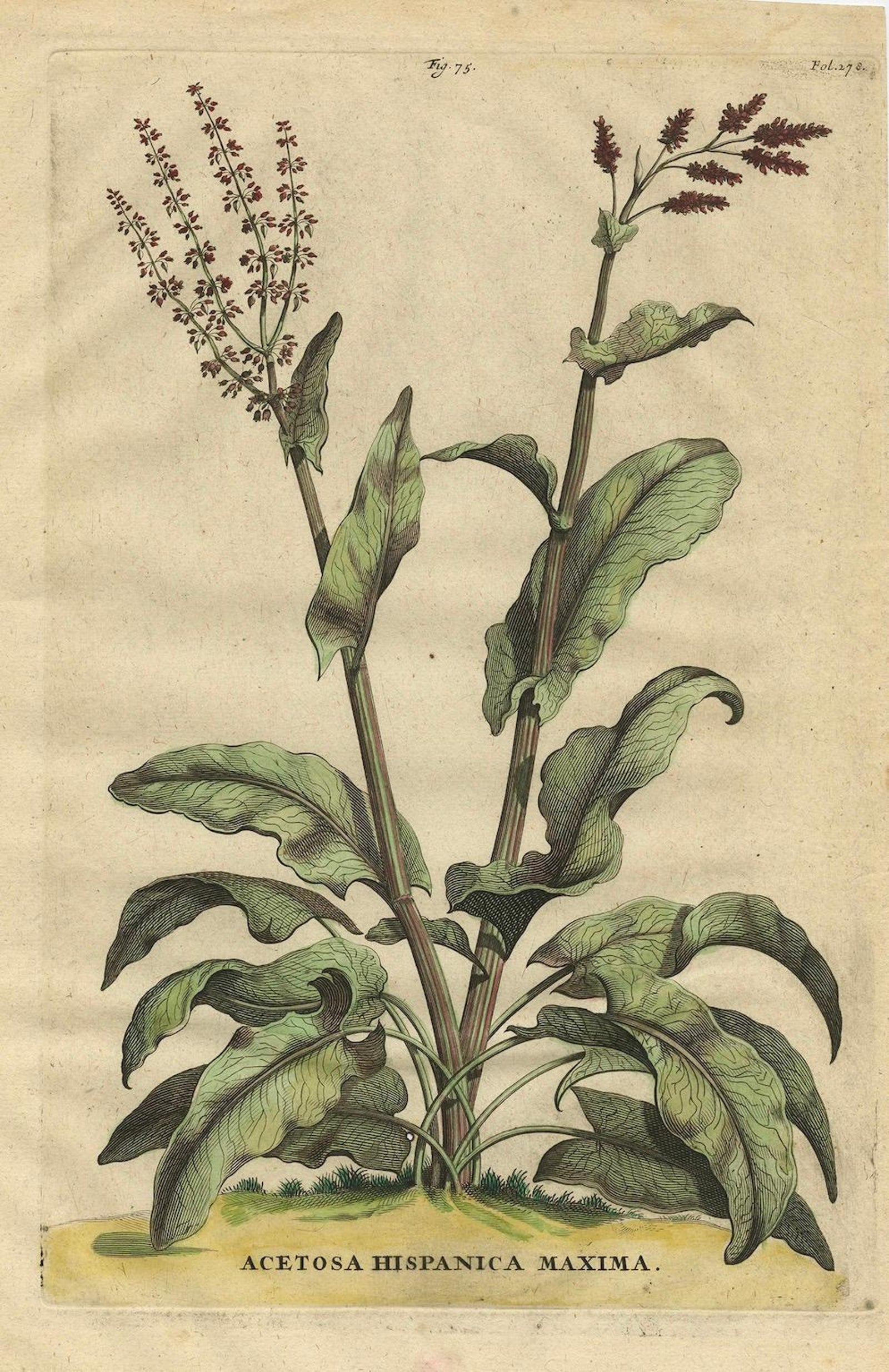
Botanical Illustration of Large Spanish Sorrel (Acetosa Hispanica Maxima), 1696
€340 ($385, £290, €340)
Period original, not a reproduction.
Shipped from the Netherlands, flat, insured and tracked, worldwide. Returns accepted within 14 days.
- Date
- 1696
- Size
- 15.8 × 9.8 in (40.2 × 25 cm)
- Condition
- Good. Good, given age. A few tiny spots. Narrow right margin. General age-related toning and/or occasional minor defects from handling. Please study scan carefully.
- Period
- Before 1700
- Section
- Botanical
- Reference
- f_41503802
This antique print, titled "Acetosa Hispanica Maxima," depicts the Acetosa plant, commonly known as Sorrel. It belongs to the Plantago or Rumex genus, known for their edible leaves with a sour taste due to oxalic acid. Historically, sorrel has been used both for culinary and medicinal purposes, including as an herb to treat inflammation and digestive issues.
The plant thrives in temperate regions across Europe, including the Iberian Peninsula, where this particular species, Acetosa Hispanica Maxima, was likely found. It is known for growing in moist, nutrient-rich soils.
The maker Abraham Munting (1626–1683) was a Dutch botanist who contributed significantly to plant taxonomy and botanical gardens. His posthumously published work gained popularity for its unique artistic style, blending scientific illustrations with creative depictions.