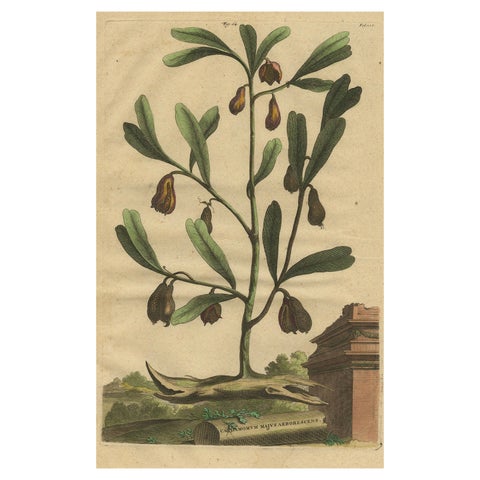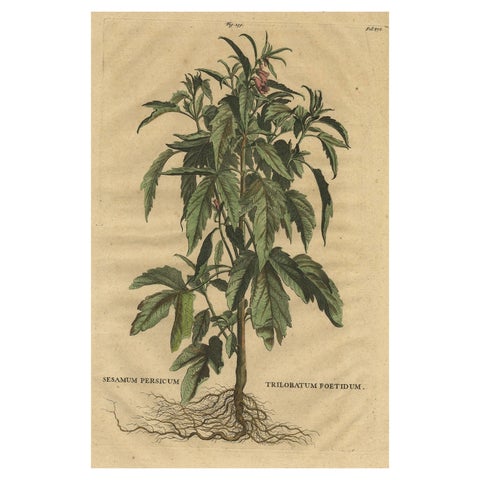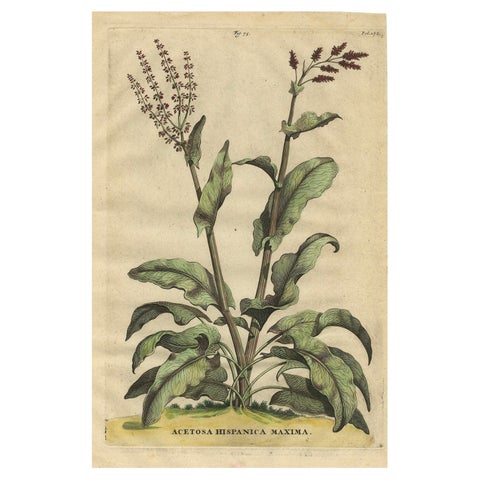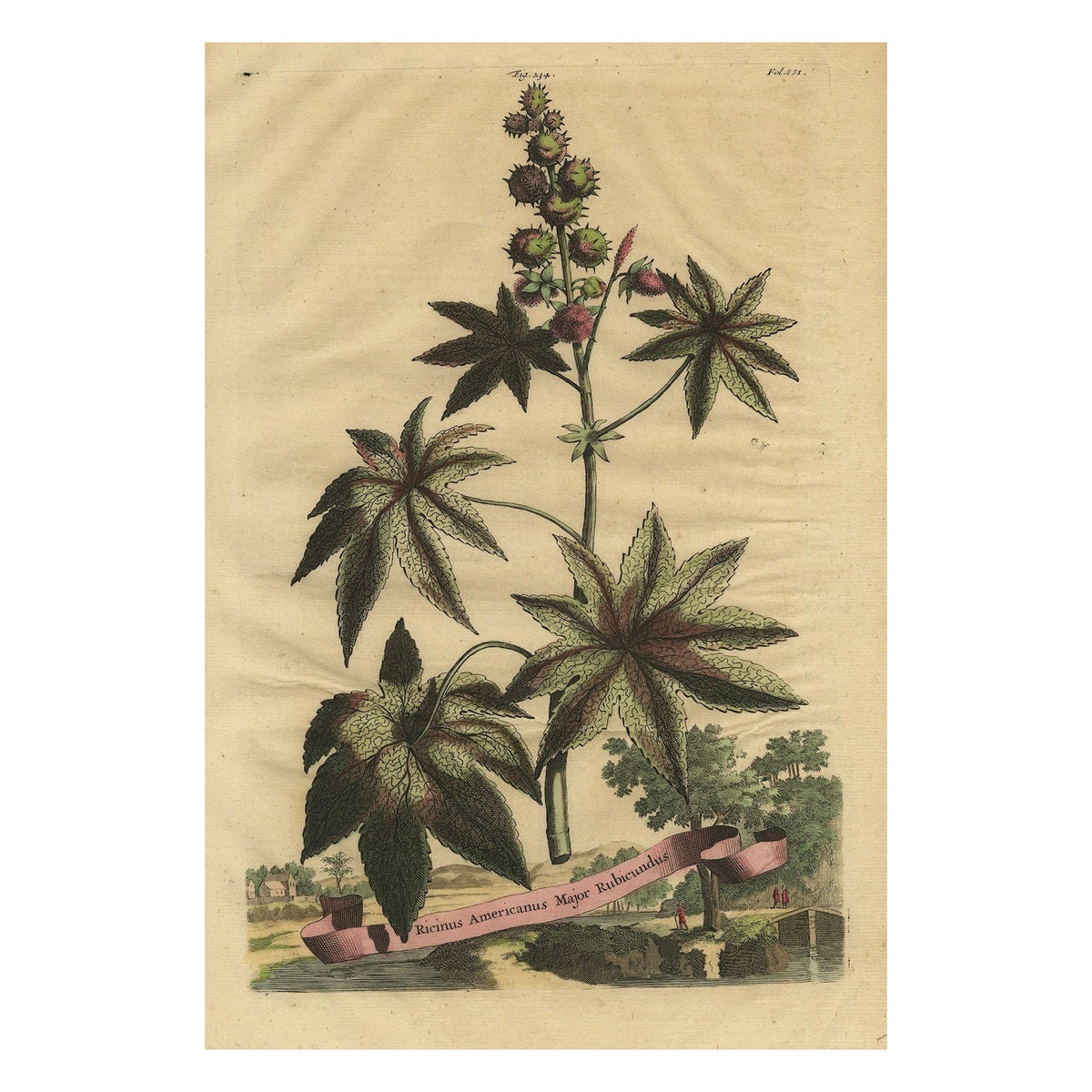


Botanical Illustration of the Castor Oil Plant (Ricinus communis), 1696
$605 (£455, €540)
Period original, not a reproduction.
Shipped from the Netherlands, flat, insured and tracked, worldwide. Returns accepted within 14 days.
- Date
- 1696
- Size
- 14.9 × 10.1 in (37.8 × 25.7 cm)
- Condition
- Good. Good, given age. Some minor crinkles. A few tiny unobtrusive spots. General age-related toning and/or occasional minor defects from handling. Please study scan carefully.
- Period
- Before 1700
- Section
- Botanical
- Reference
- f_41503632
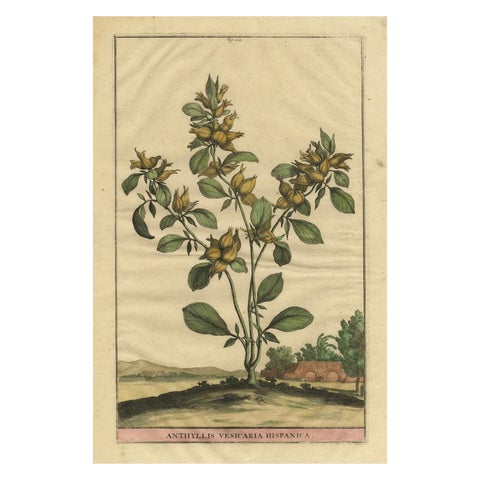
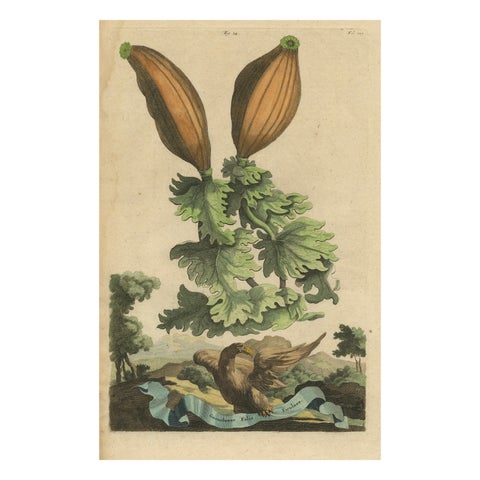
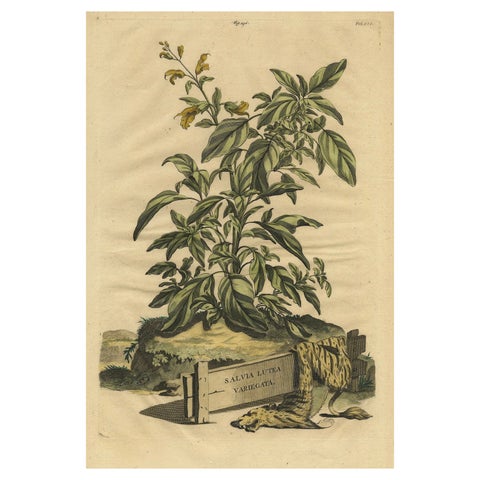
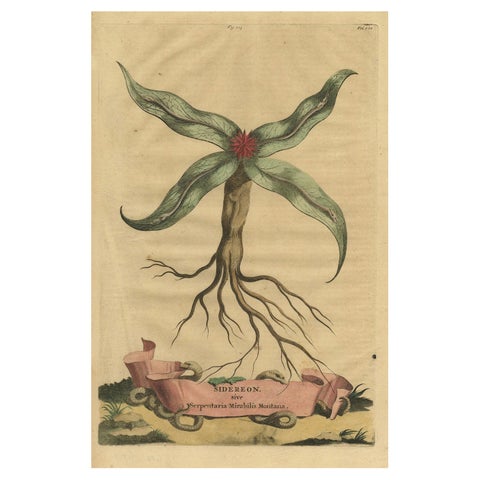
The print titled "Ricinus Americanus Major Rubicundus" depicts the Ricinus communis plant, commonly known as the castorbean or castor-oil-plant. This plant is notable for its large, star-shaped leaves and spiky seed pods, which produce castor oil, a substance historically used for medicinal purposes and as a lubricant. The illustration, from Abraham Munting's 1696 botanical work, is unique for its blend of scientific accuracy and an imaginative landscape setting, deviating from more traditional botanical depictions.
Abraham Munting (1626–1683) was a Dutch botanist and professor who became well-known for his work in plant taxonomy and botanical studies. He served as a professor of botany at the University of Groningen, where he established a botanical garden, which became one of the most famous in Europe at the time. His extensive studies and experiments with plants culminated in his posthumously published work, "Naauwkeurige Beschryving der Aardgewassen" (1696), which became a significant reference for botanical art and plant knowledge in the 17th century.
The castor-oil-plant is native to tropical Africa but has been naturalized in many regions around the world due to its diverse uses, including medicinal, industrial, and ornamental purposes. The plant can be toxic if ingested due to the presence of ricin, a highly potent toxin found in its seeds.
Collectors or researchers might search for terms like antique botanical print, Ricinus communis, castor oil plant, and Munting engraving to find similar works.