Close-ups
Framed and on the wall


Frame and rooms are illustrations of how the print could look; the description says what is included.
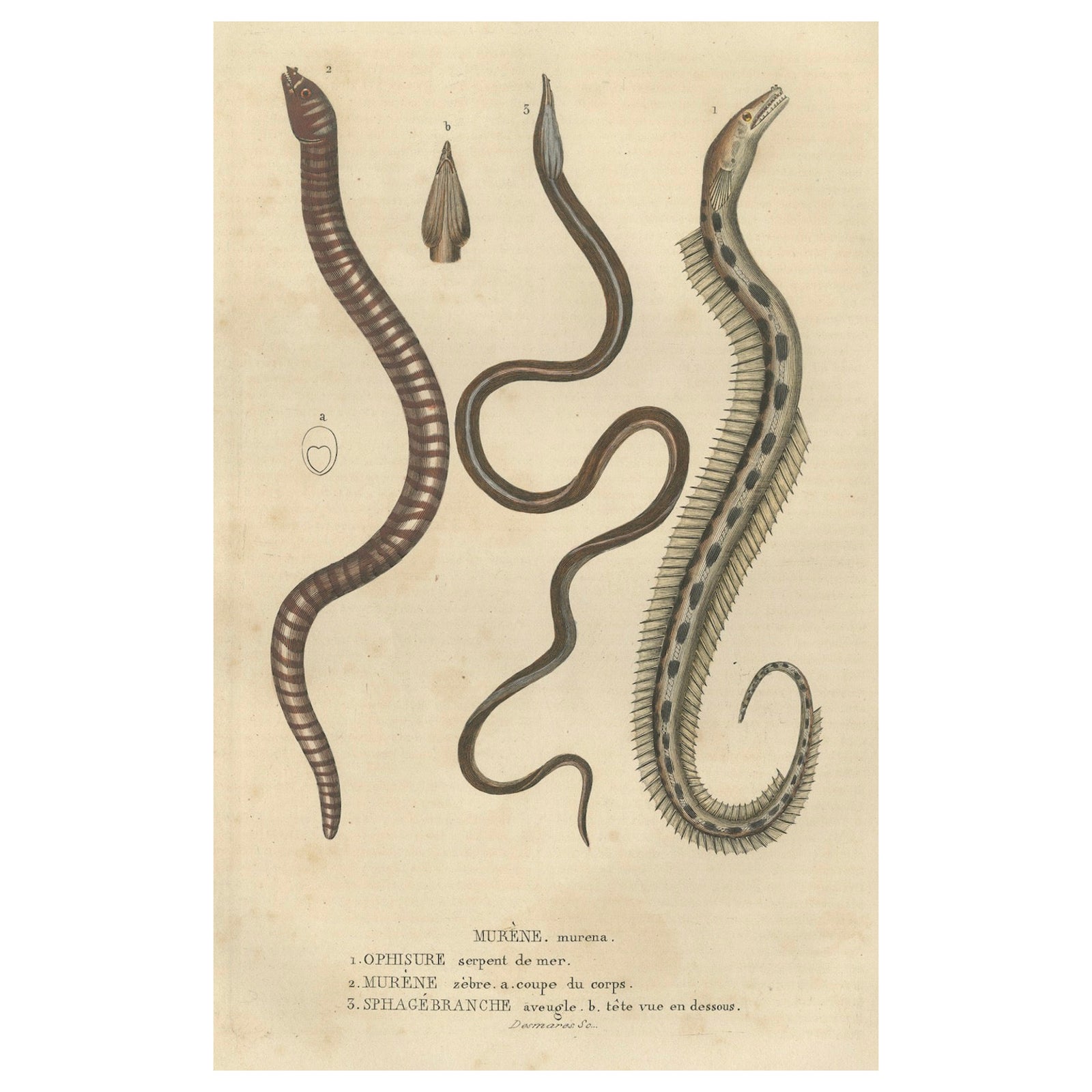
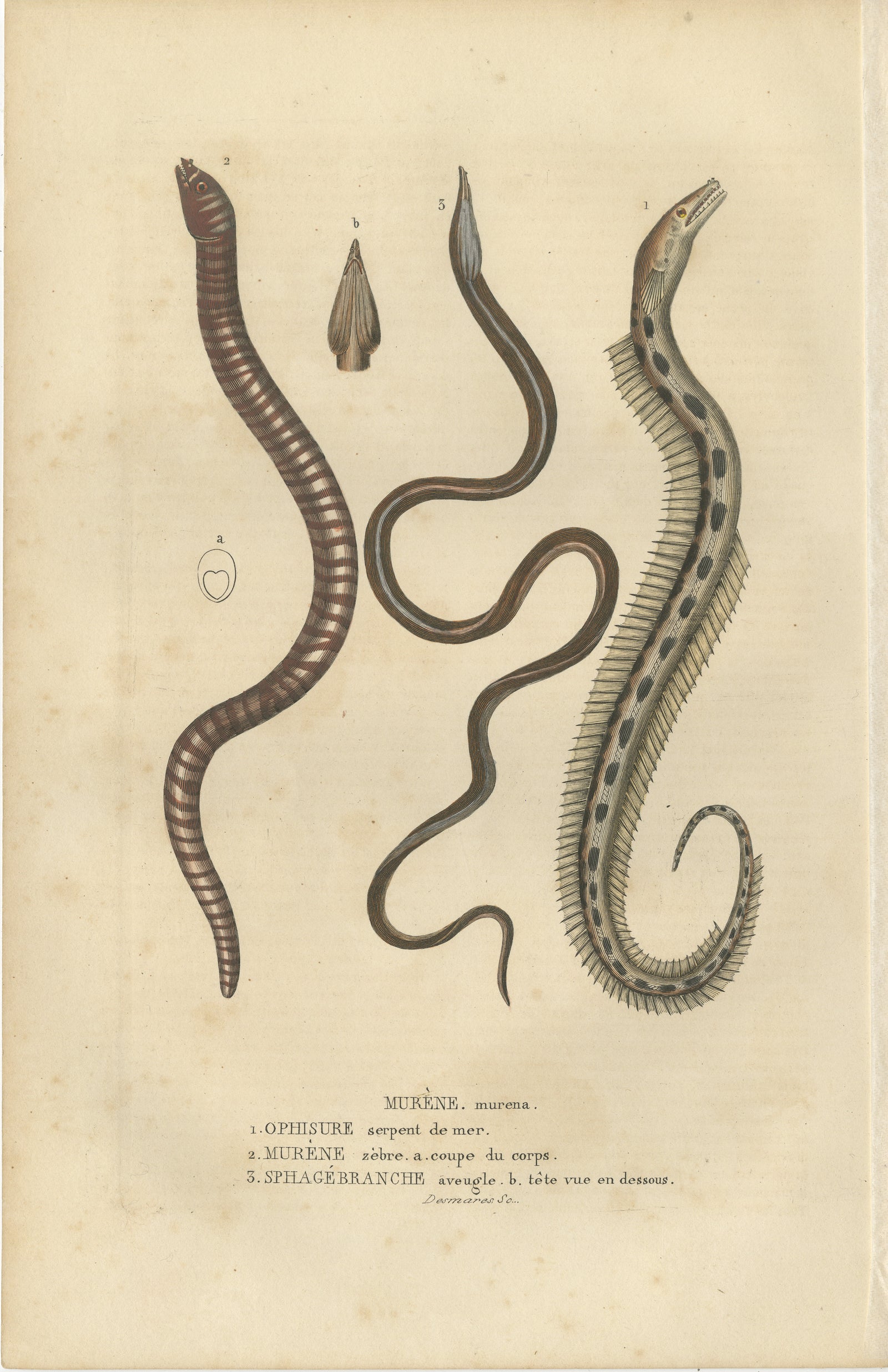
Aquatic Elegance: Brittle Star, Zebra Moray Eel, and Blind Cave Eel, 1845
$265$18530% off (£140, €168)
Period original, not a reproduction.
Shipped from the Netherlands, flat or rolled, insured and tracked, worldwide. Returns accepted within 14 days.
- Date
- 1845
- Size
- 10.4 × 6.7 in (26.5 × 17 cm)
- Condition
- Good. Good. Aged paper with typically warm, yellowish-brown hue. Some soiling or light foxing, due to age and handling. Please study the image carefully.
- Period
- Early 19th century
- Section
- Fish and shells
- Reference
- f_37855242
- Color
- Hand colored
What the condition grades mean
- Excellent
- Bright and clean, with no faults worth mentioning.
- Very good
- Only light signs of age, such as faint toning.
- Good
- Normal signs of age for a sheet of this period: toning, some foxing, small marks or neat old repairs.
- Fair
- Clear faults such as staining, tears or repairs, priced to match.
Every fault we see is written in the condition note, and the whole sheet is shown uncropped in the photos.
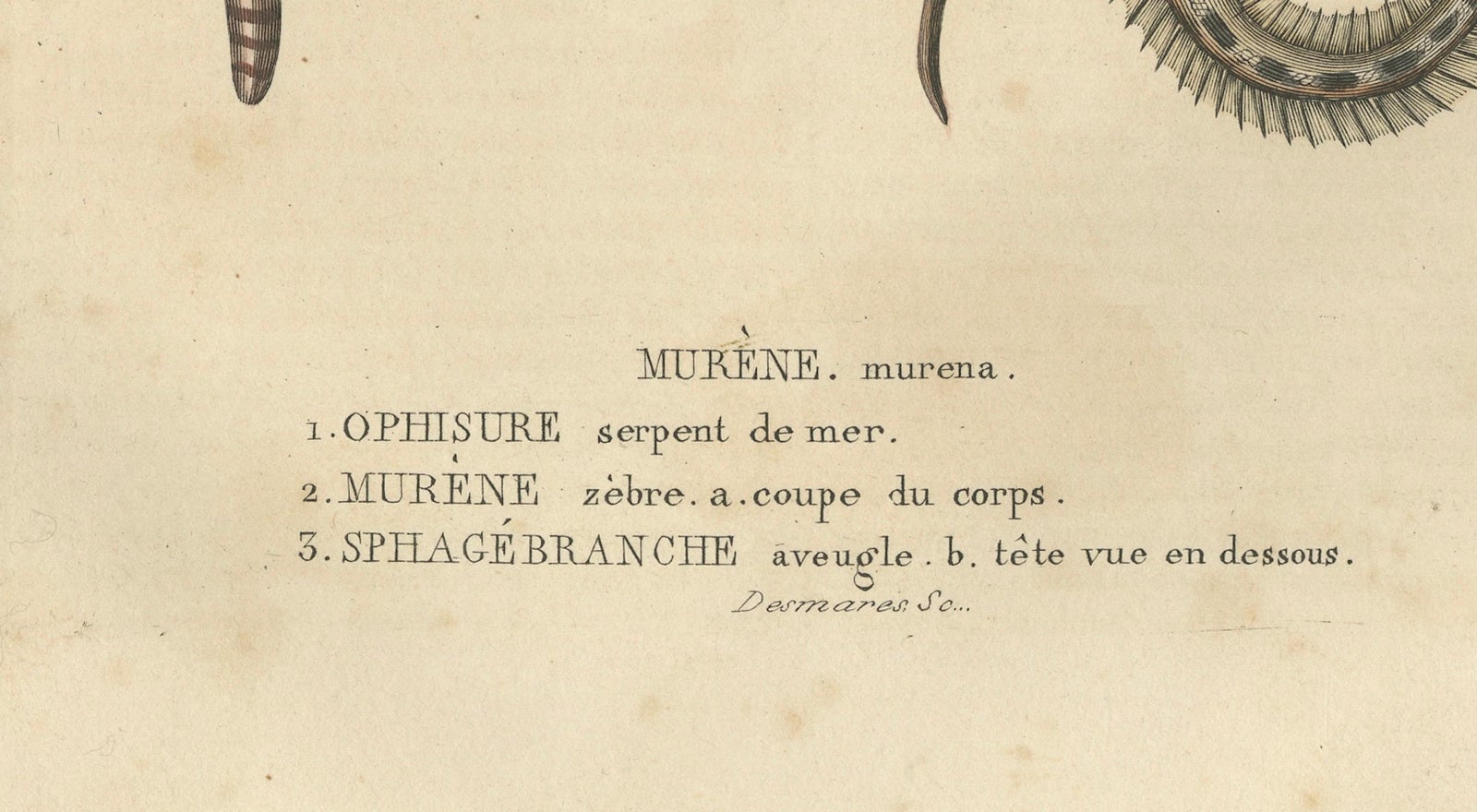
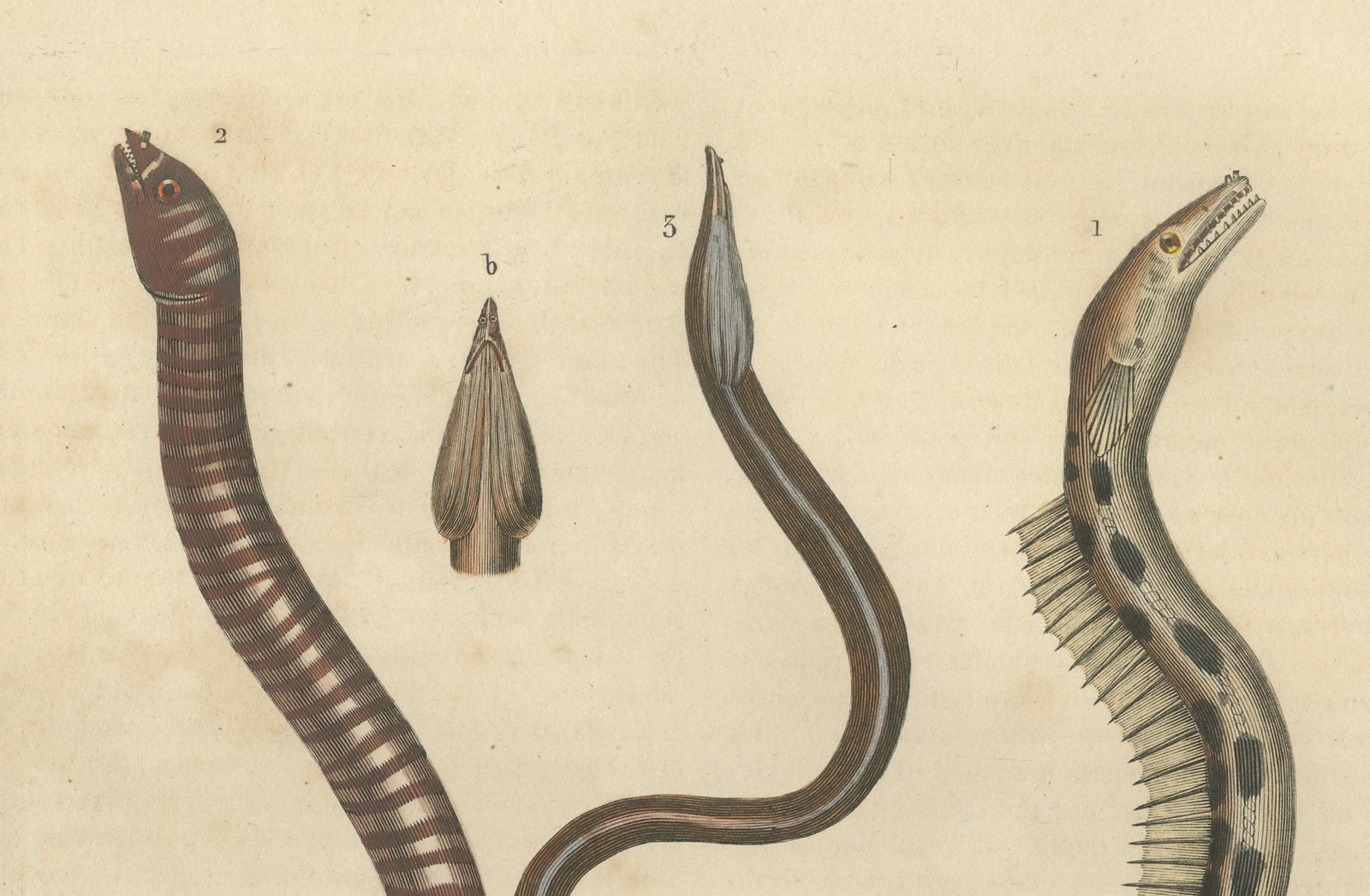
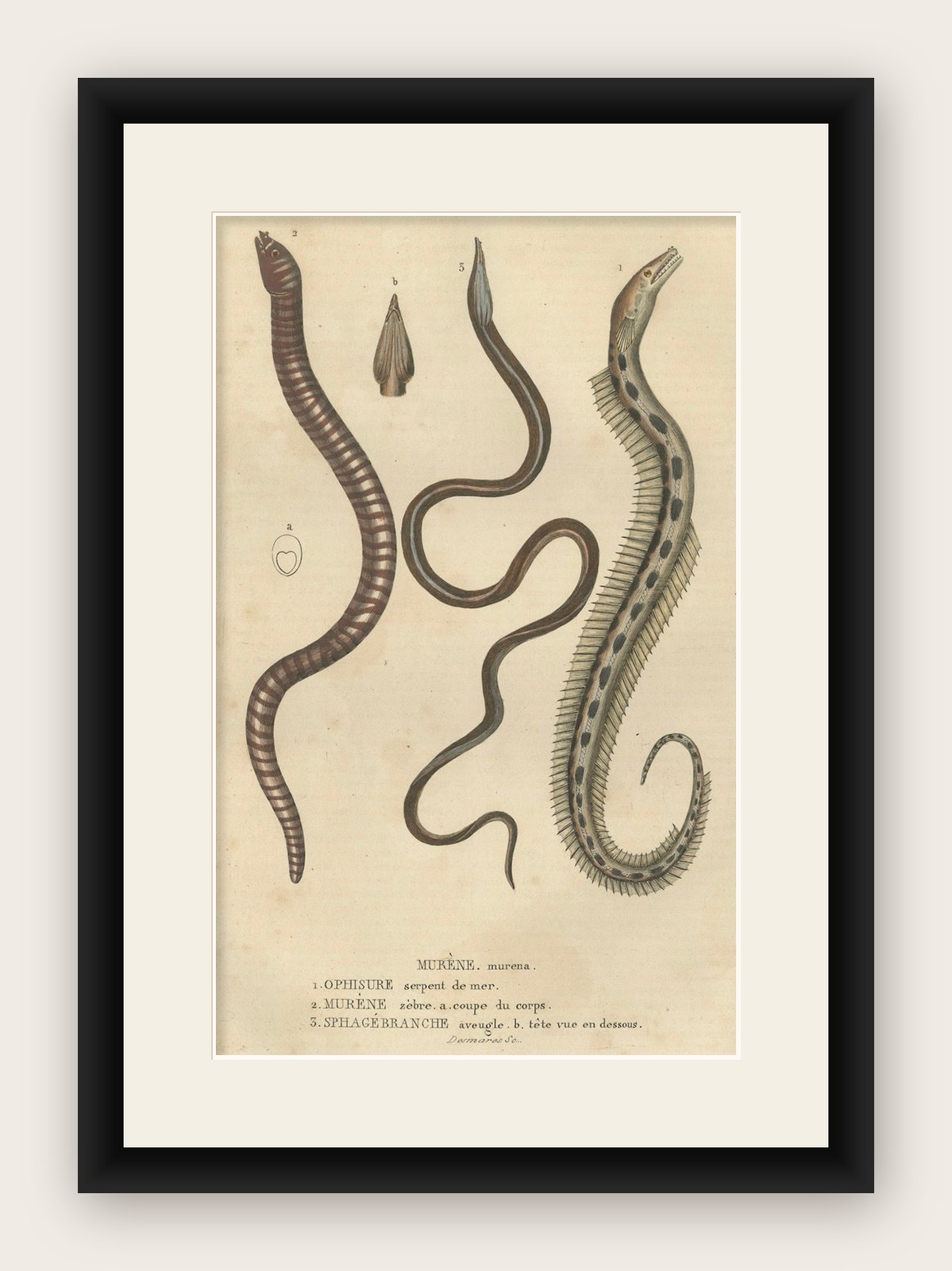
The engraving illustrates three marine creatures:
1. Ophiure serpent de mer - This is likely an ophiuroid, commonly known as a brittle star. These are echinoderms, related to starfish, with long, slender arms that are distinct from the central disc.
2. Murène zèbre, a. coupe du corps - This represents a zebra moray eel, known for its strikingly patterned body and elongated shape. Moray eels are a type of fish with a dorsal fin that extends almost the entire length of the body.
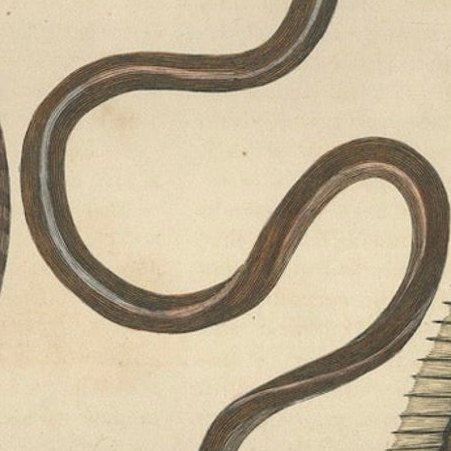
3. Sphagebranchè aveugle, b. tête vue en dessous - This could refer to a blind cave eel or a similar species, which are characterized by reduced eyes and pigmentation due to living in darkness.
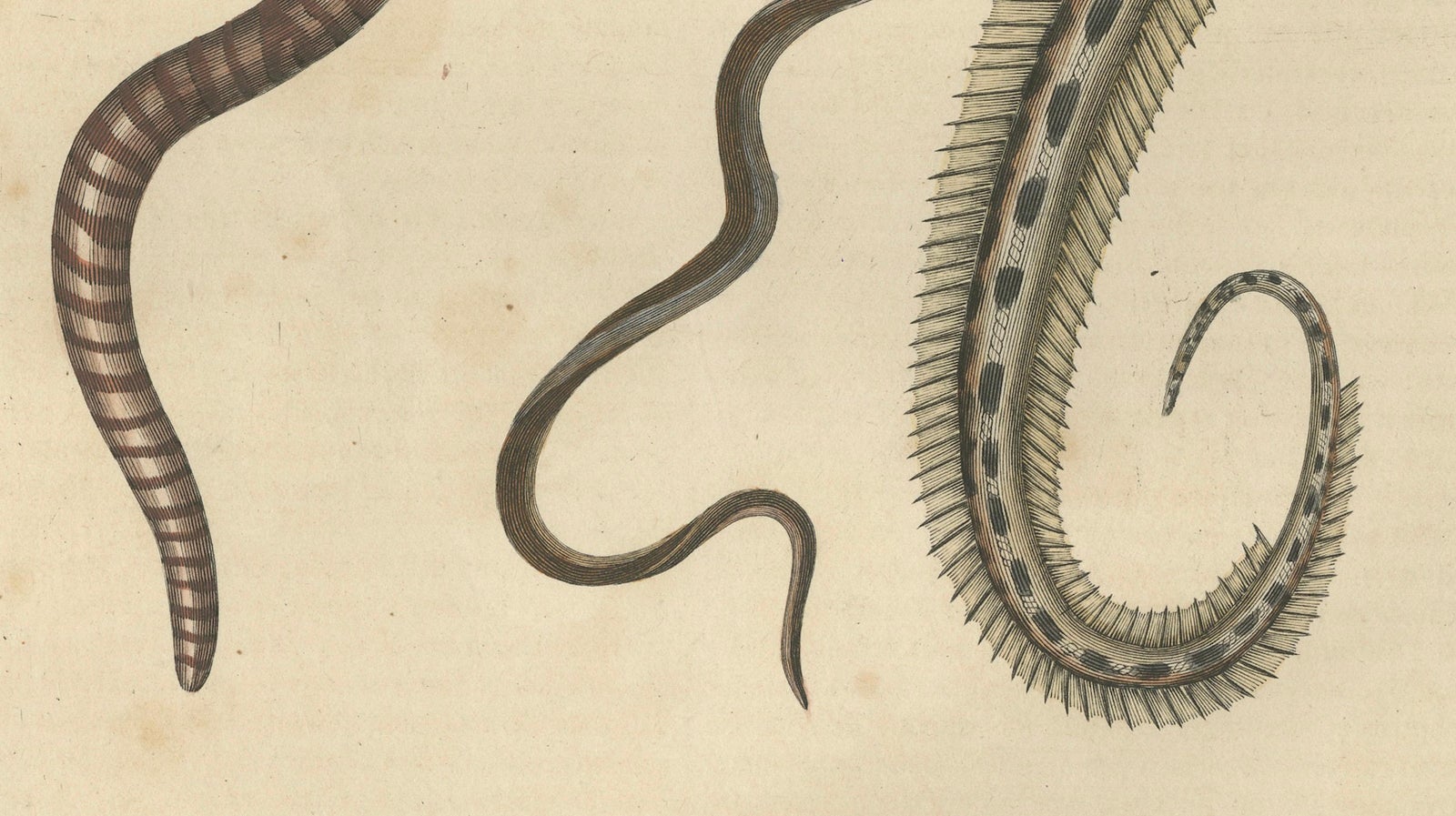
The print itself is part of a series from the 'Dictionnaire Classique des Sciences Naturelles', which aimed to document and illustrate a variety of species for scientific and educational purposes. The hand-coloring adds detail and realism to the creatures, which would have been particularly important for enhancing understanding at a time when color photography was not available.