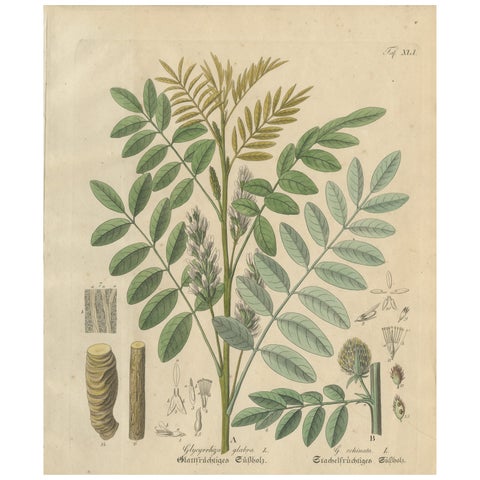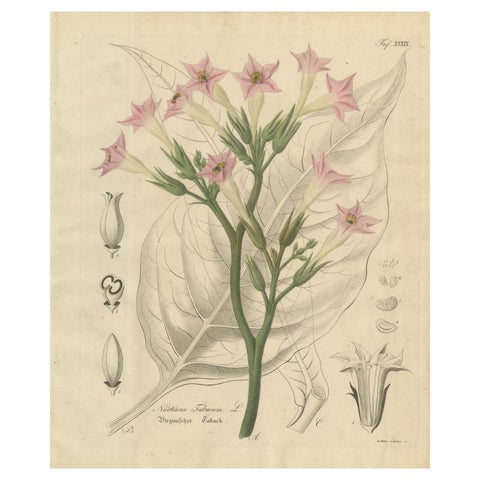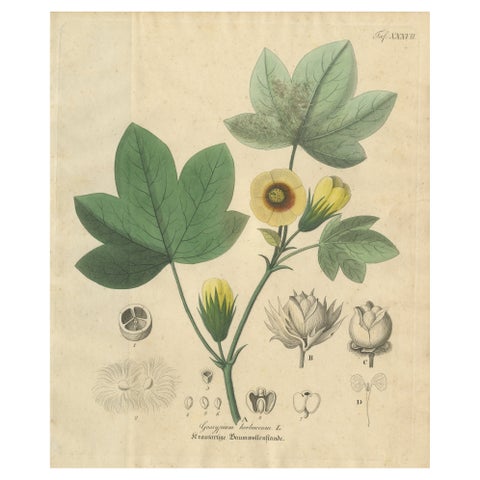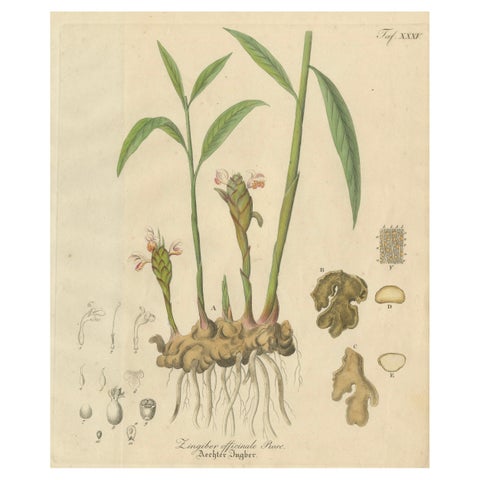
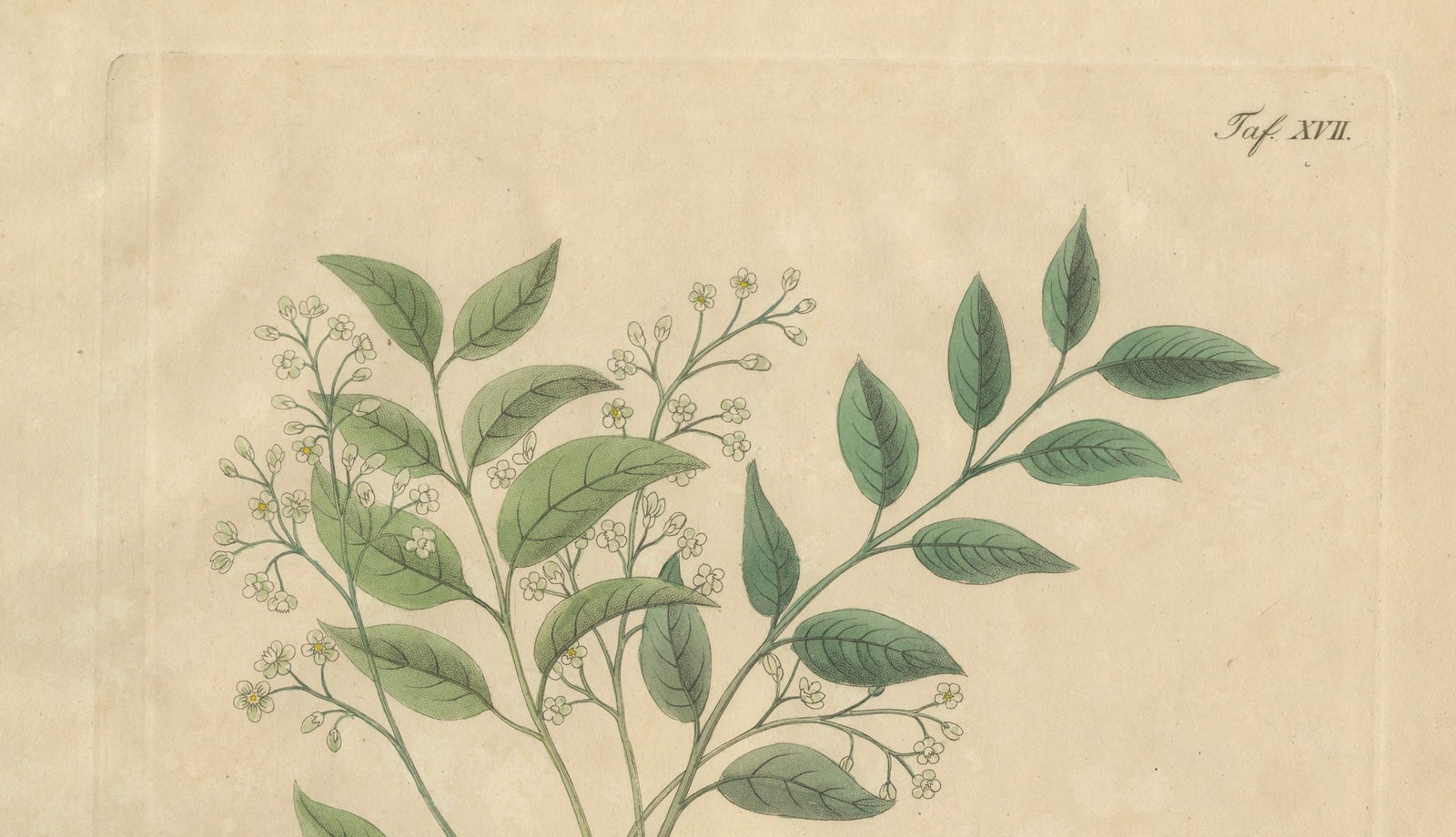
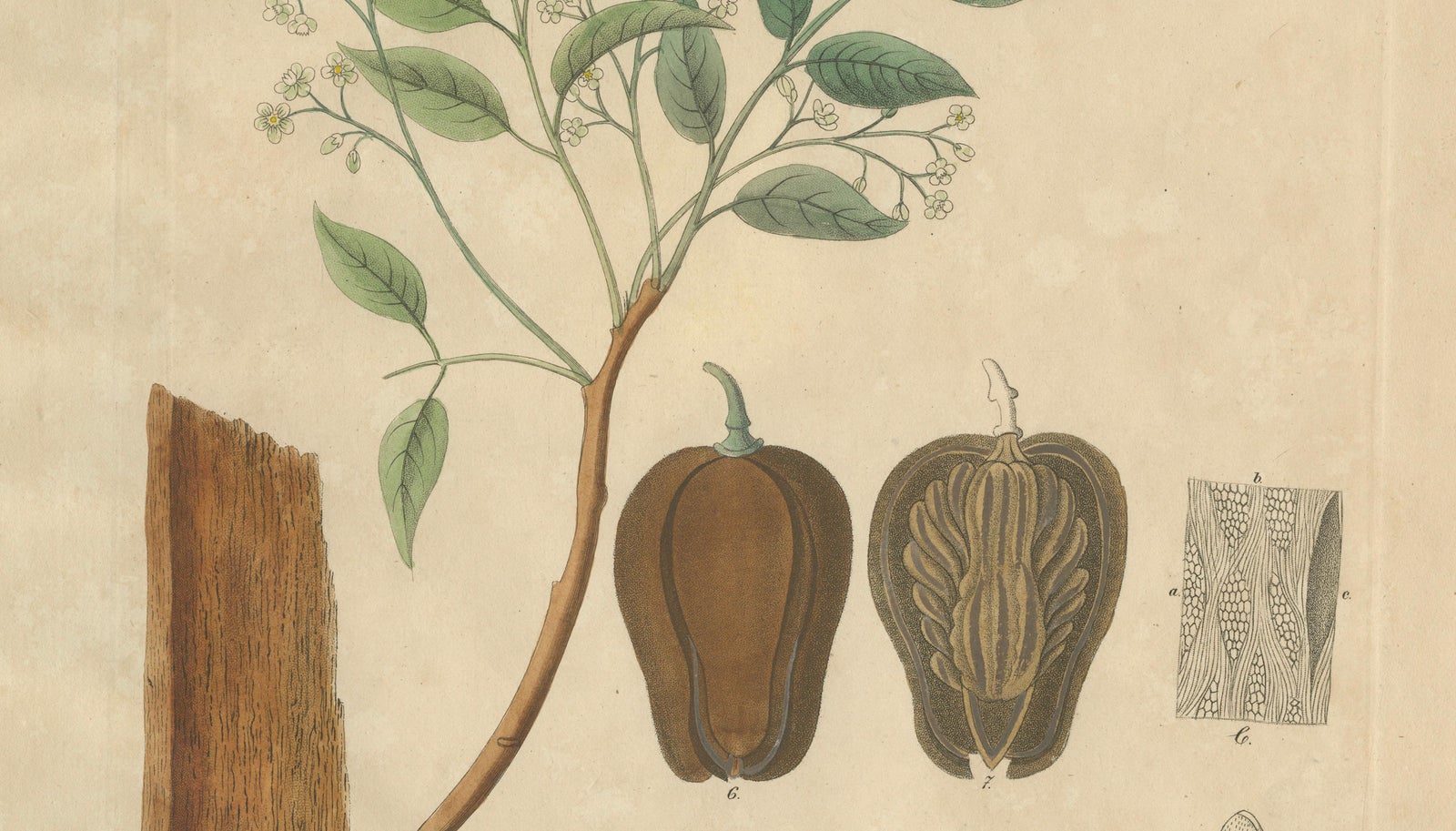
Close-ups
Framed and on the wall
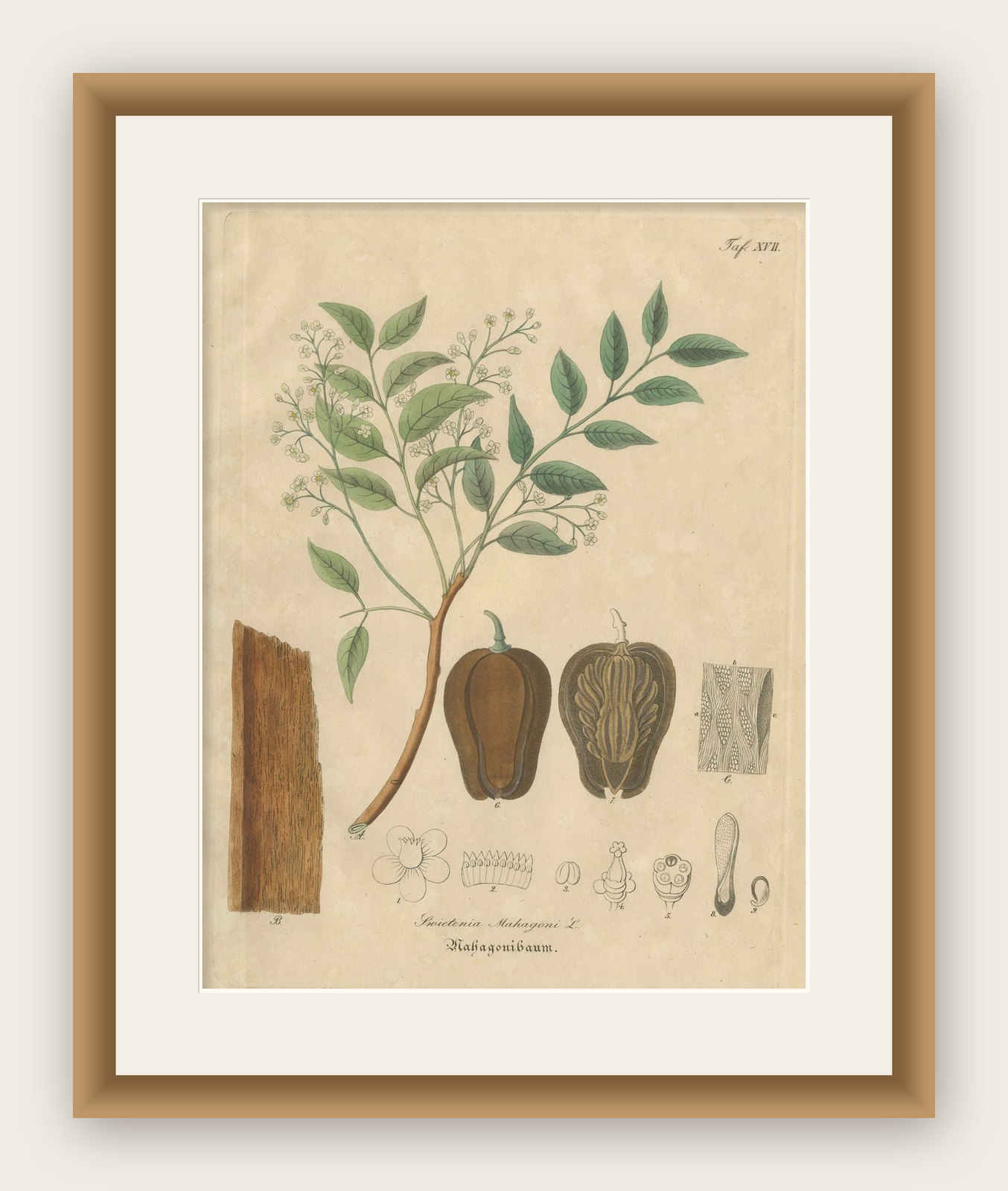
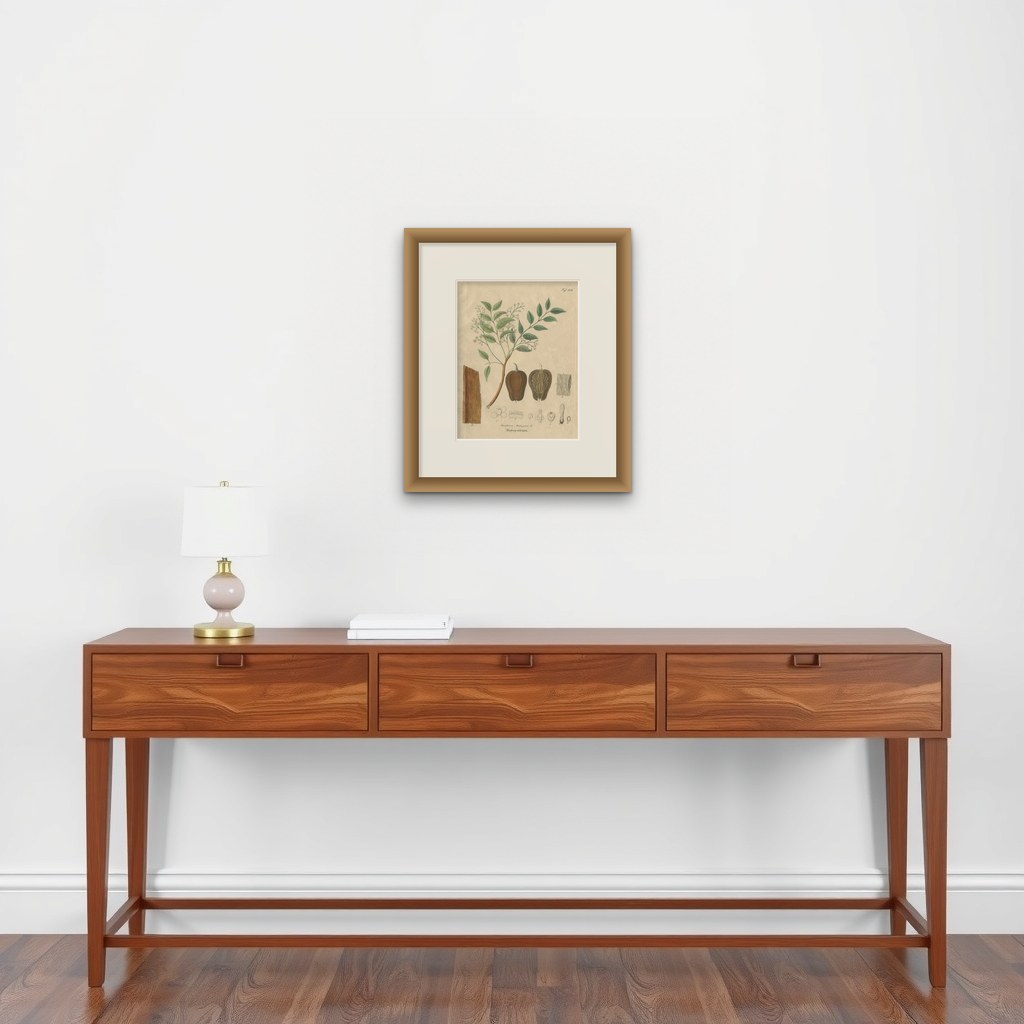

Frame and rooms are illustrations of how the print could look; the description says what is included.
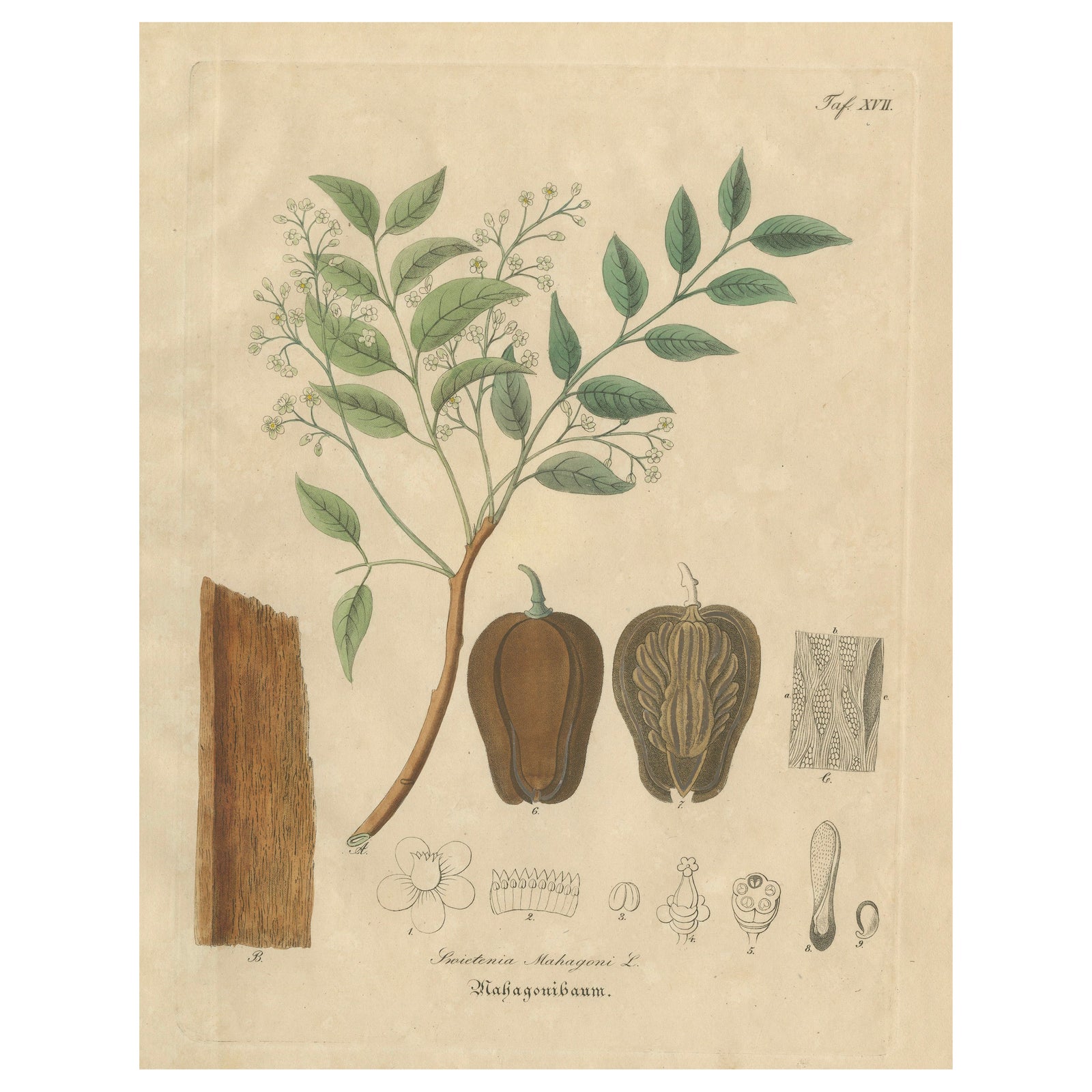
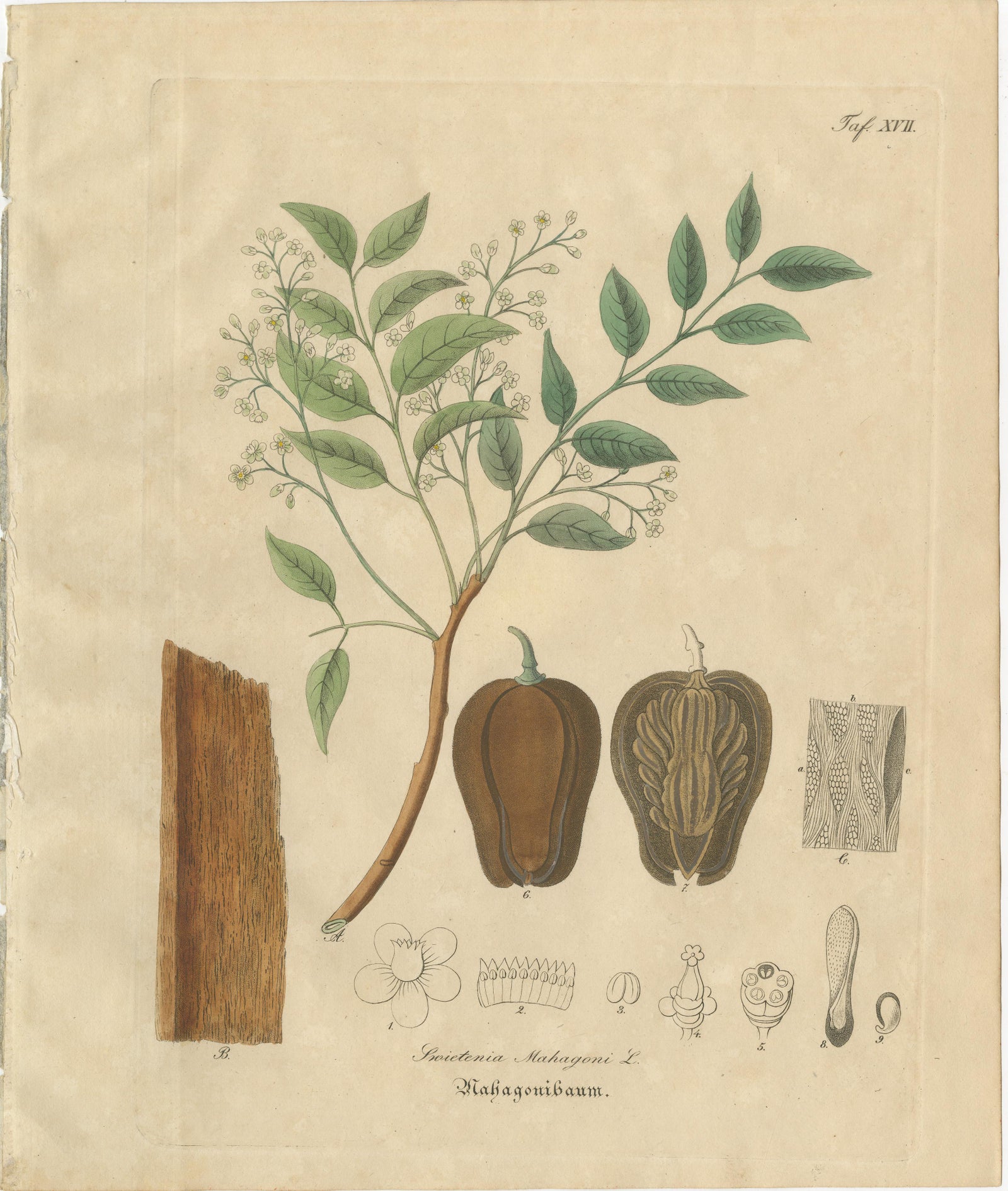
Antique Mahogany Botanical Print, Swietenia Mahagoni, c.1831
$890 (£670, €790)
Period original, not a reproduction.
Shipped from the Netherlands, flat, insured and tracked, worldwide. Returns accepted within 14 days.
- Date
- 1831
- Size
- 10.7 × 8.9 in (27.1 × 22.7 cm)
- Condition
- Good. Moderate toning with light discoloration consistent with age. Image remains clear and intact.
- Period
- Early 19th century
- Section
- Botanical
- Reference
- f_48074382
Antique Mahogany Botanical Print, Swietenia Mahagoni, c.1831
Description:
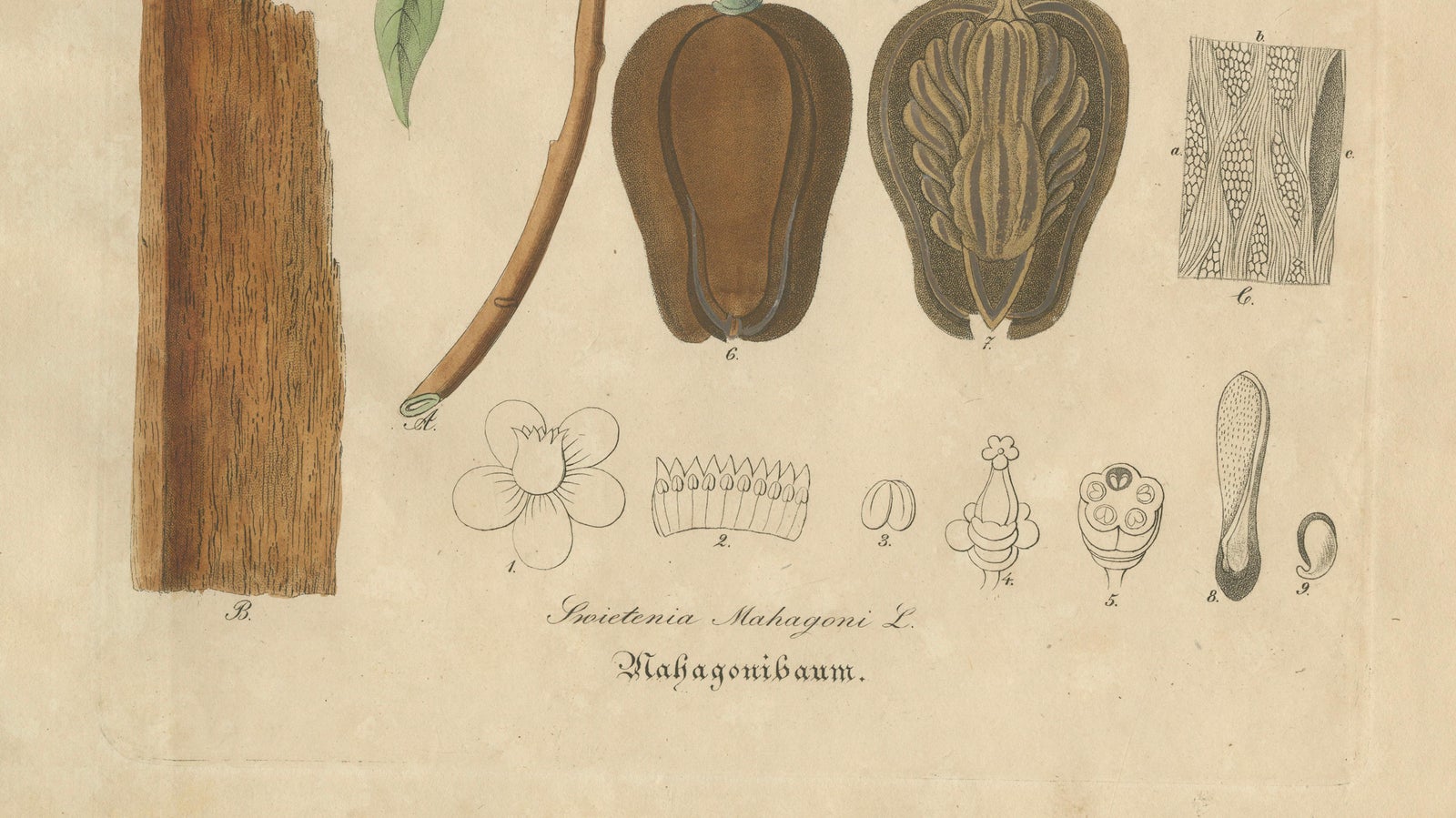
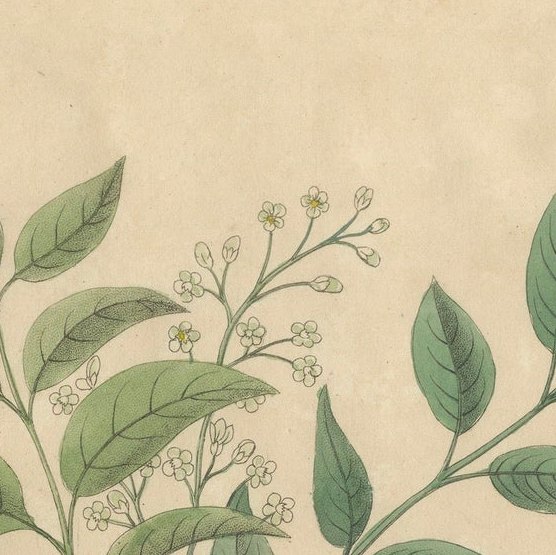
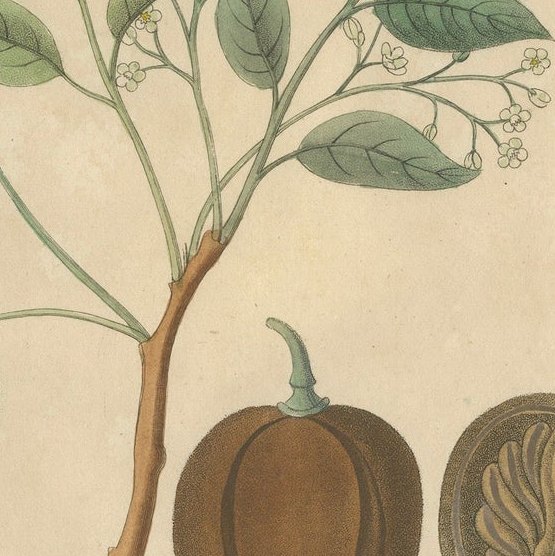
This finely detailed botanical engraving illustrates Swietenia Mahagoni, the mahogany tree, including its distinctive fruit and seed structures. Mahogany was among the most prized timbers of the 18th and 19th centuries, valued for furniture, shipbuilding, and architectural use.
The plate comes from Zenker’s Merkantilische Waarenkunde, where it represents plants of material and economic importance rather than purely ornamental interest. The emphasis on structure and usable material reflects the practical concerns of merchants, craftsmen, and manufacturers of the period.
Original hand coloring supports the clarity of the engraving without excessive ornament, resulting in a dignified and architectural image. This plate appeals particularly to interior designers, furniture historians, and collectors interested in material culture.
Condition report:
Moderate toning with light discoloration consistent with age. Image remains clear and intact.
Framing tips:
A natural linen mat and a walnut or dark oak frame complement the subject’s association with fine woodwork.
Technique: Copper engraving with original hand coloring
Maker: Jonathan Carl Zenker, Germany, 1831–1832