Close-ups
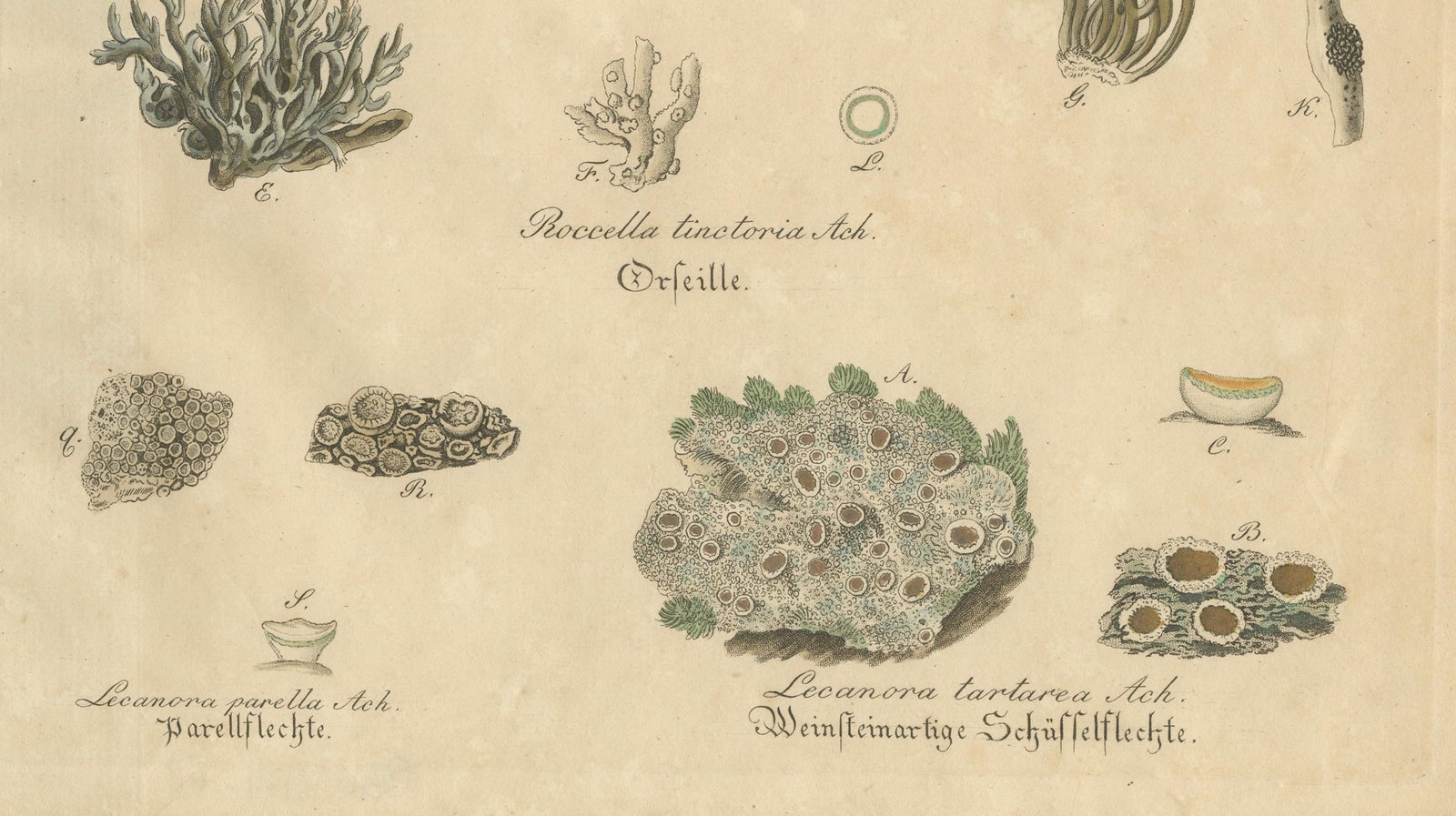
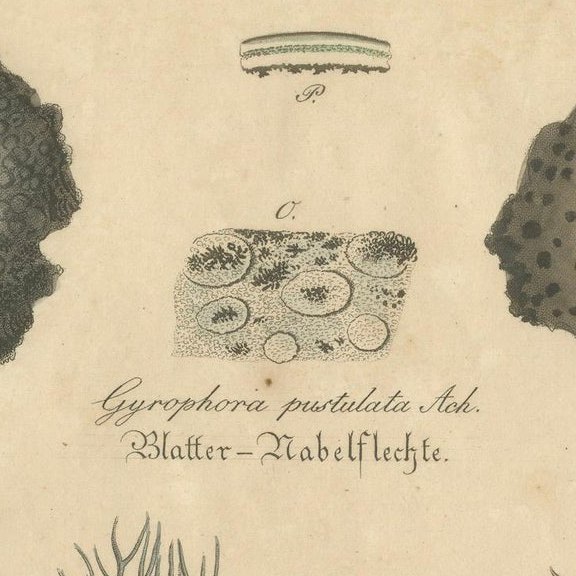
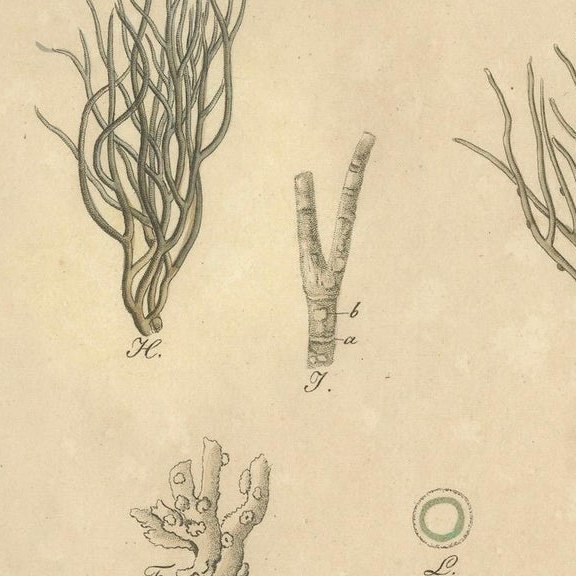
Framed and on the wall
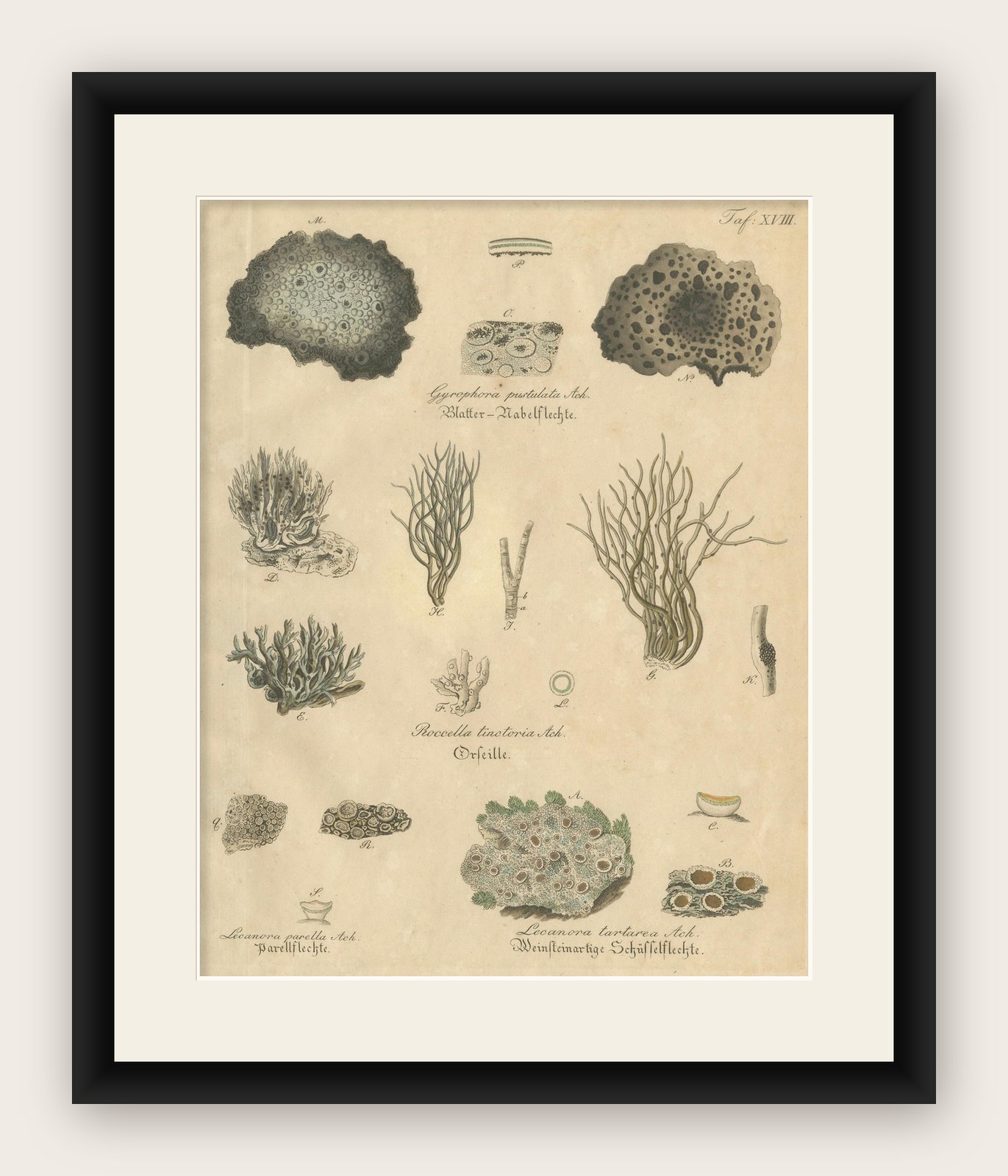
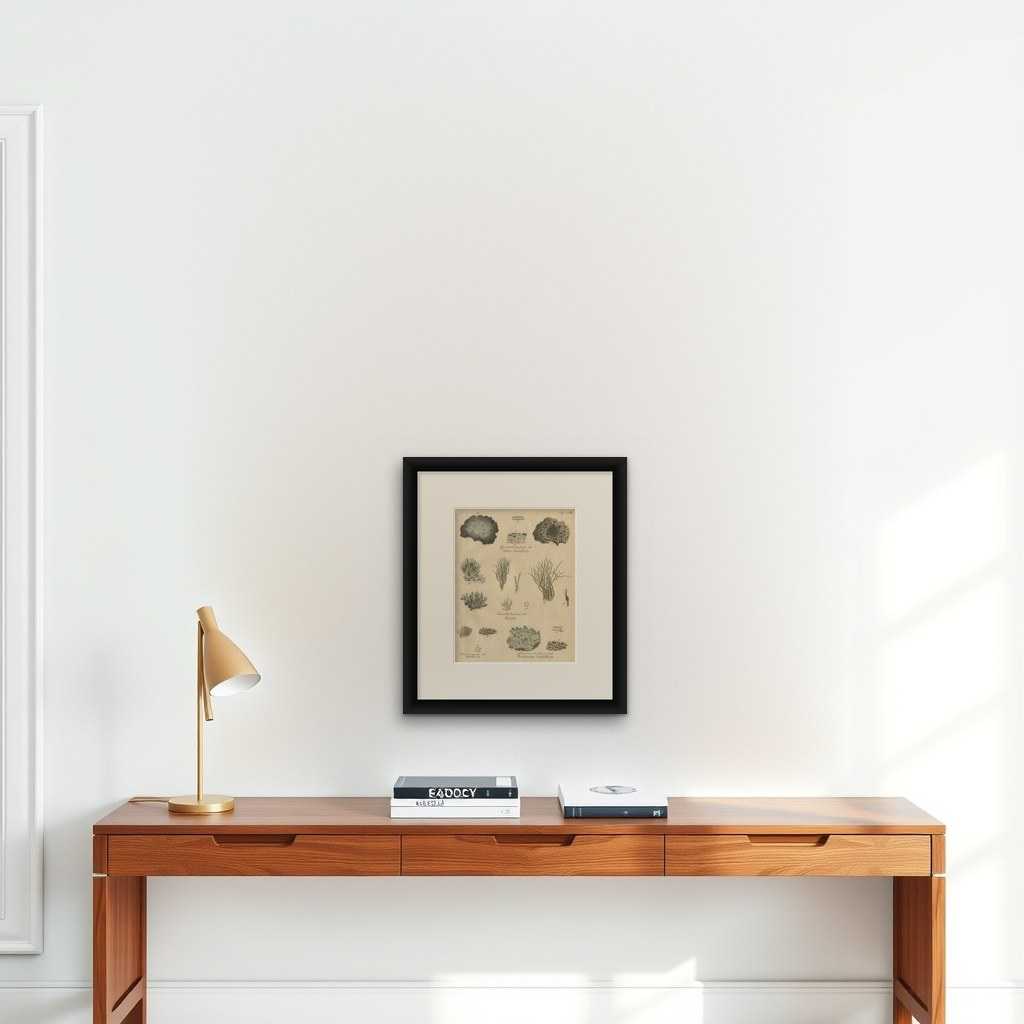

Frame and rooms are illustrations of how the print could look; the description says what is included.
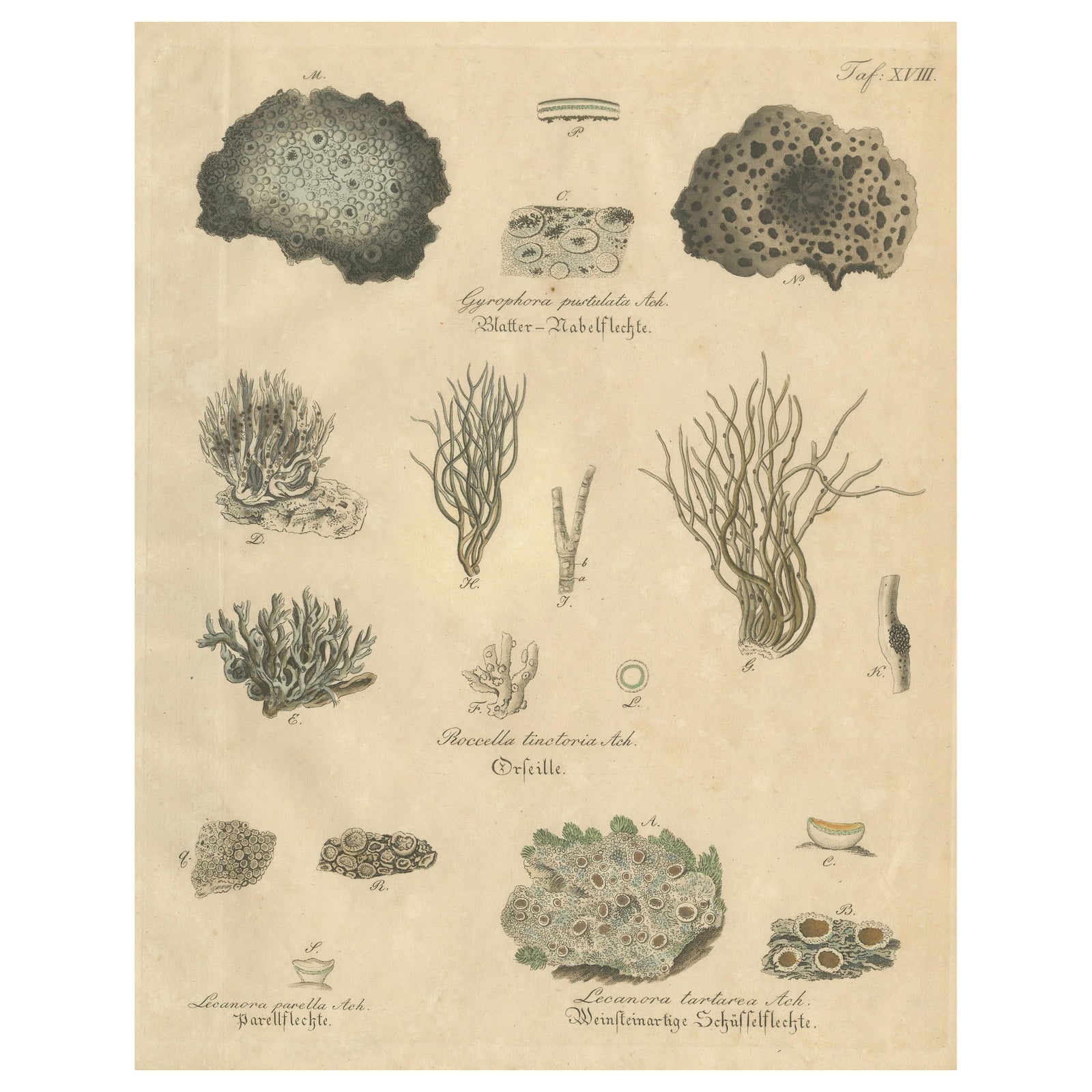
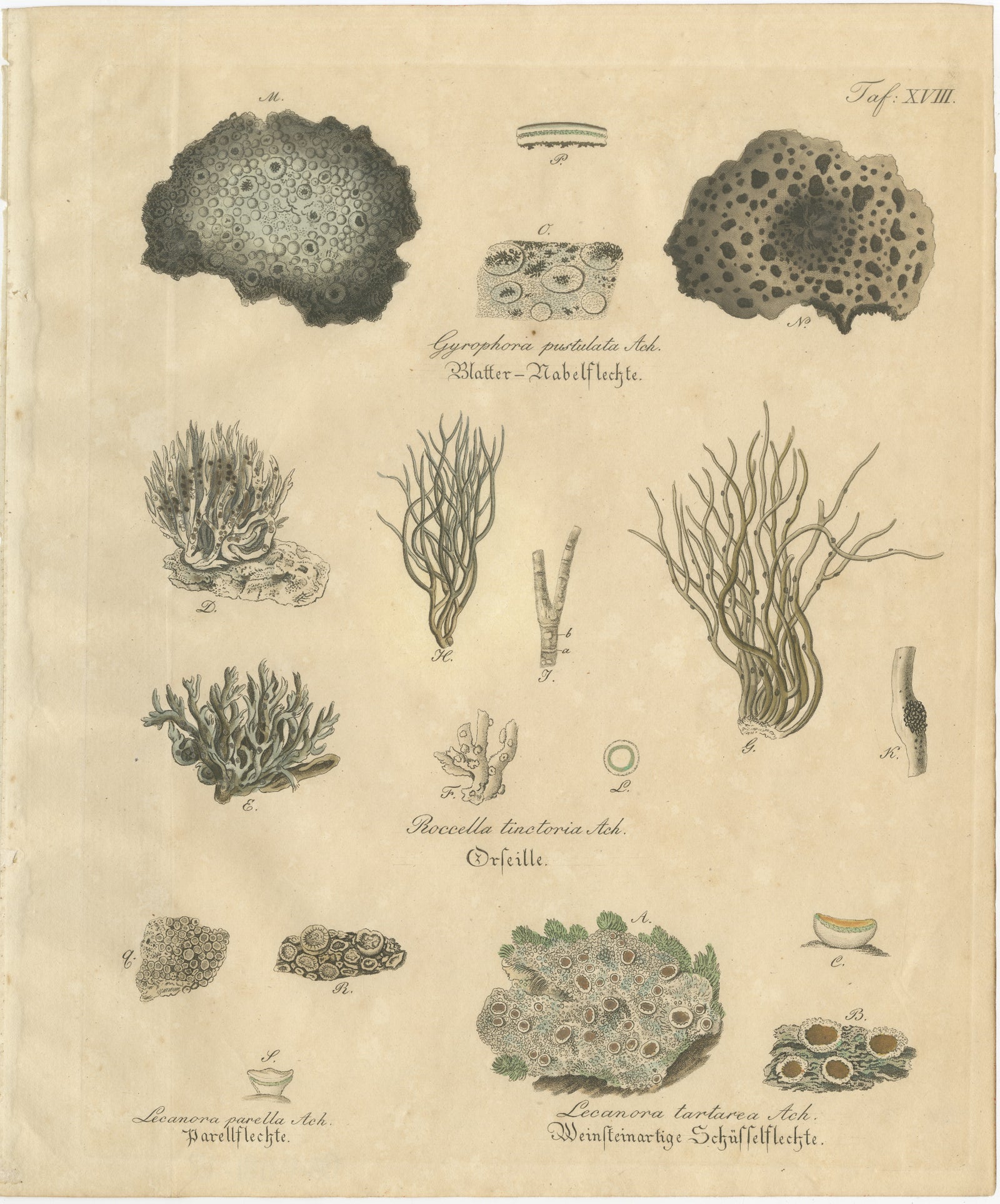
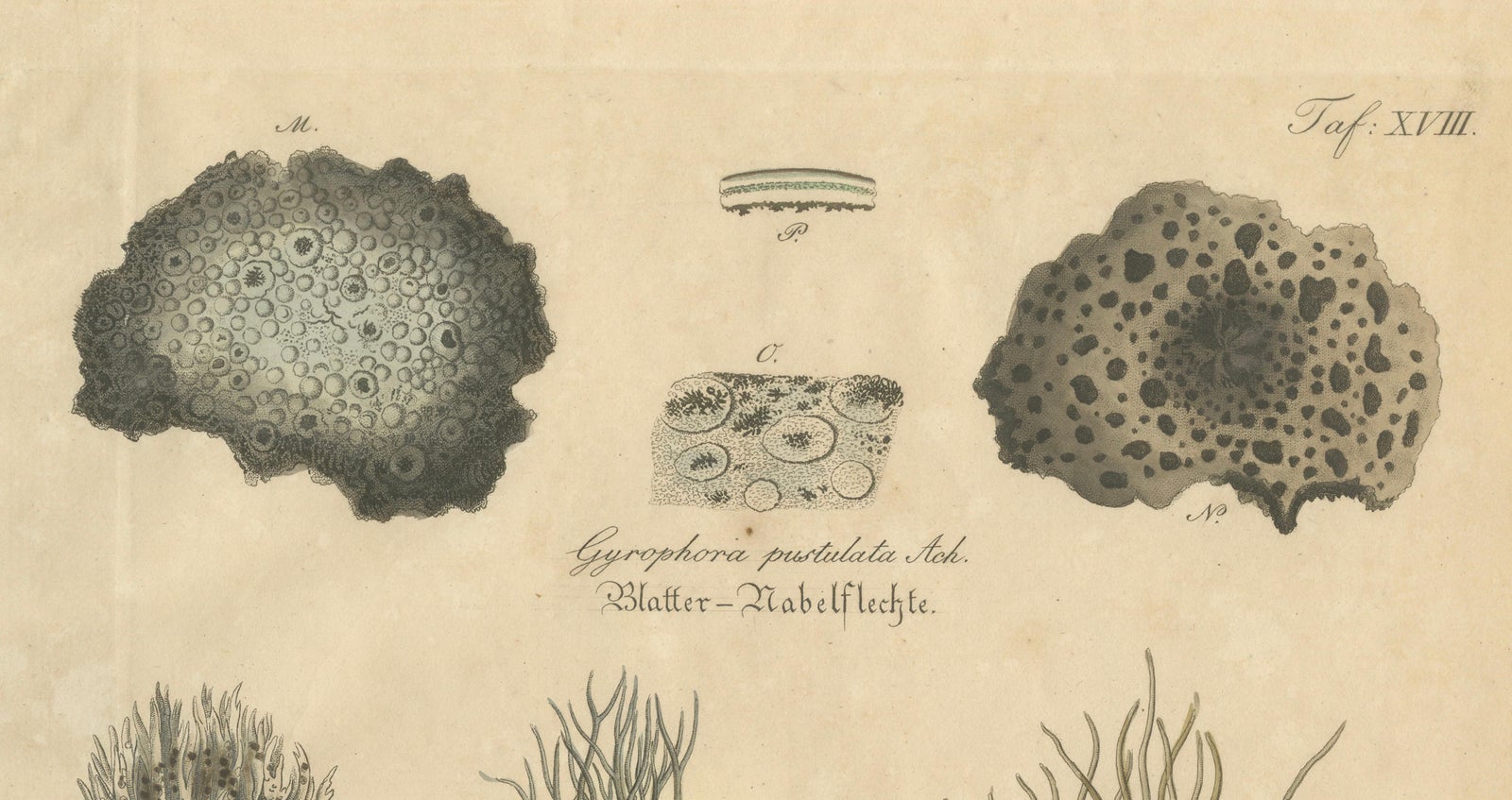
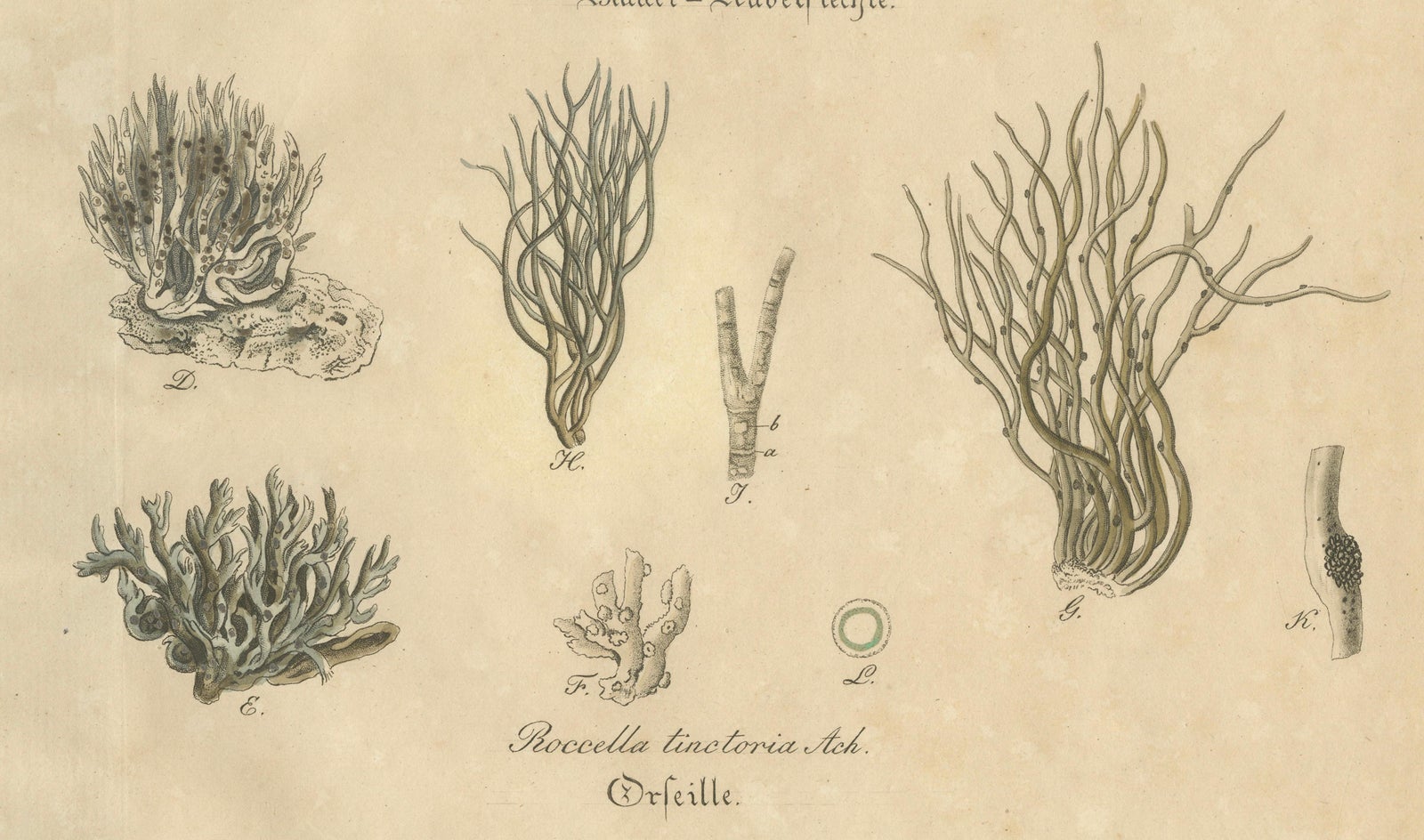
Antique Lichen Botanical Print, Dye & Chemical Species, c.1831
$550 (£415, €490)
Period original, not a reproduction.
Shipped from the Netherlands, flat, insured and tracked, worldwide. Returns accepted within 14 days.
- Date
- 1831
- Size
- 10.7 × 8.9 in (27.1 × 22.7 cm)
- Condition
- Good. Moderate toning and surface marks consistent with age. Image remains clear and intact.
- Period
- Early 19th century
- Section
- Botanical
- Reference
- f_48074412
Antique Logwood Botanical Print, Haematoxylon Campechianum, c.1831
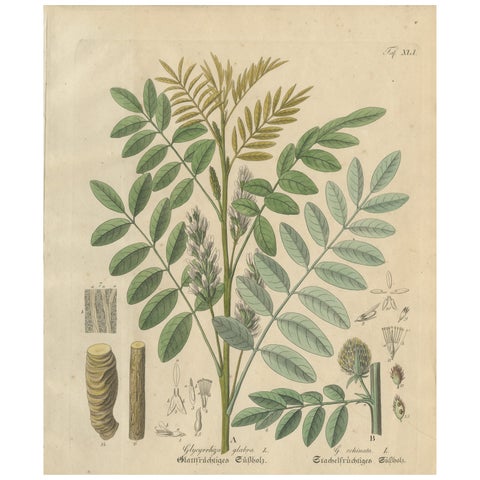
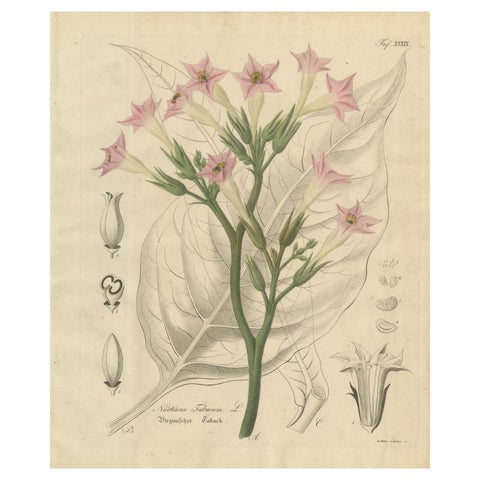
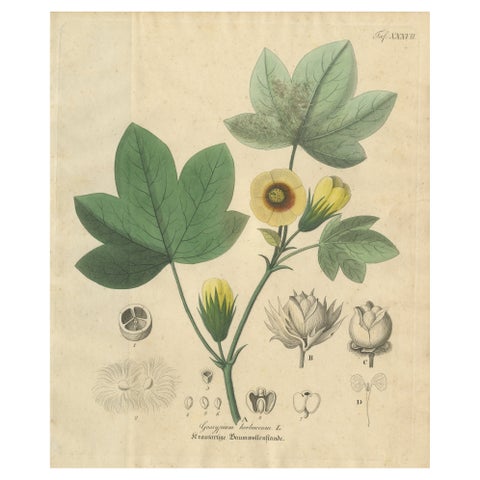
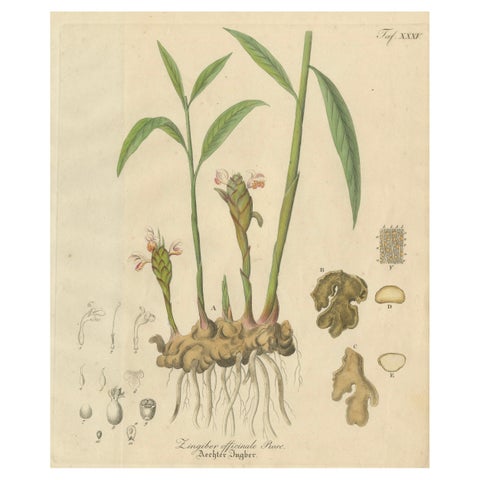
This distinctive botanical engraving depicts Haematoxylon Campechianum, commonly known as logwood, a tree valued for its use in producing red and purple dyes. Logwood played a crucial role in the textile and dye industries of the 18th and early 19th centuries, particularly in Europe and the Americas.
The plate originates from Zenker’s Merkantilische Waarenkunde and exemplifies the work’s focus on plants of industrial and commercial importance. The depiction emphasizes the structure of the tree and its material properties rather than floral display, giving the image a sober, utilitarian character.
Original hand coloring is applied sparingly, reinforcing the seriousness of the subject. This plate appeals strongly to collectors interested in textile history, material culture, and early industrial processes.
Condition report:
Moderate toning and surface marks consistent with age. Image remains clear and intact.
Framing tips:
A natural linen or light taupe mat paired with a dark wood frame suits the industrial nature of the subject.
Technique: Copper engraving with original hand coloring
Maker: Jonathan Carl Zenker, Germany, 1831–1832