Close-ups
Framed and on the wall
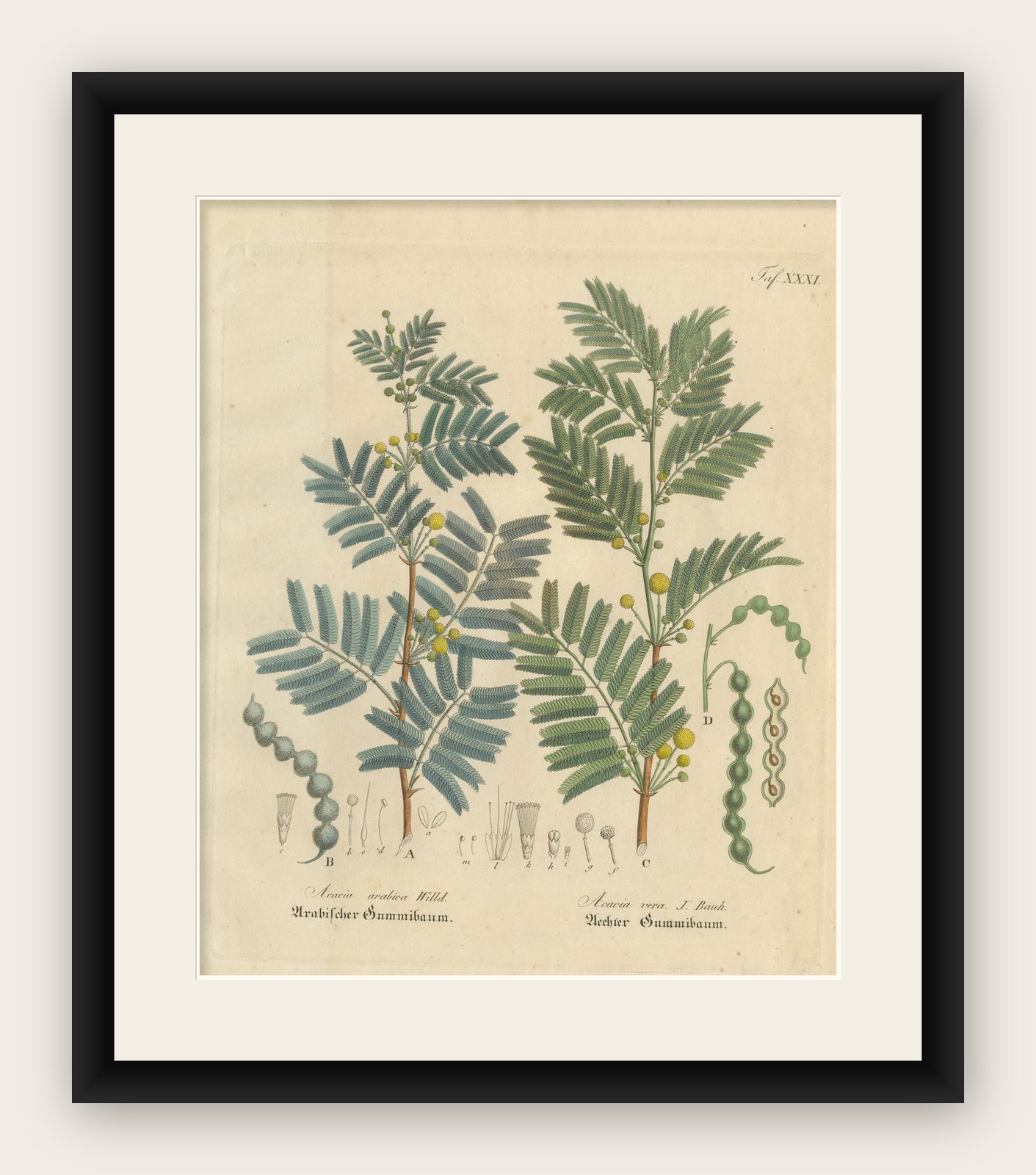
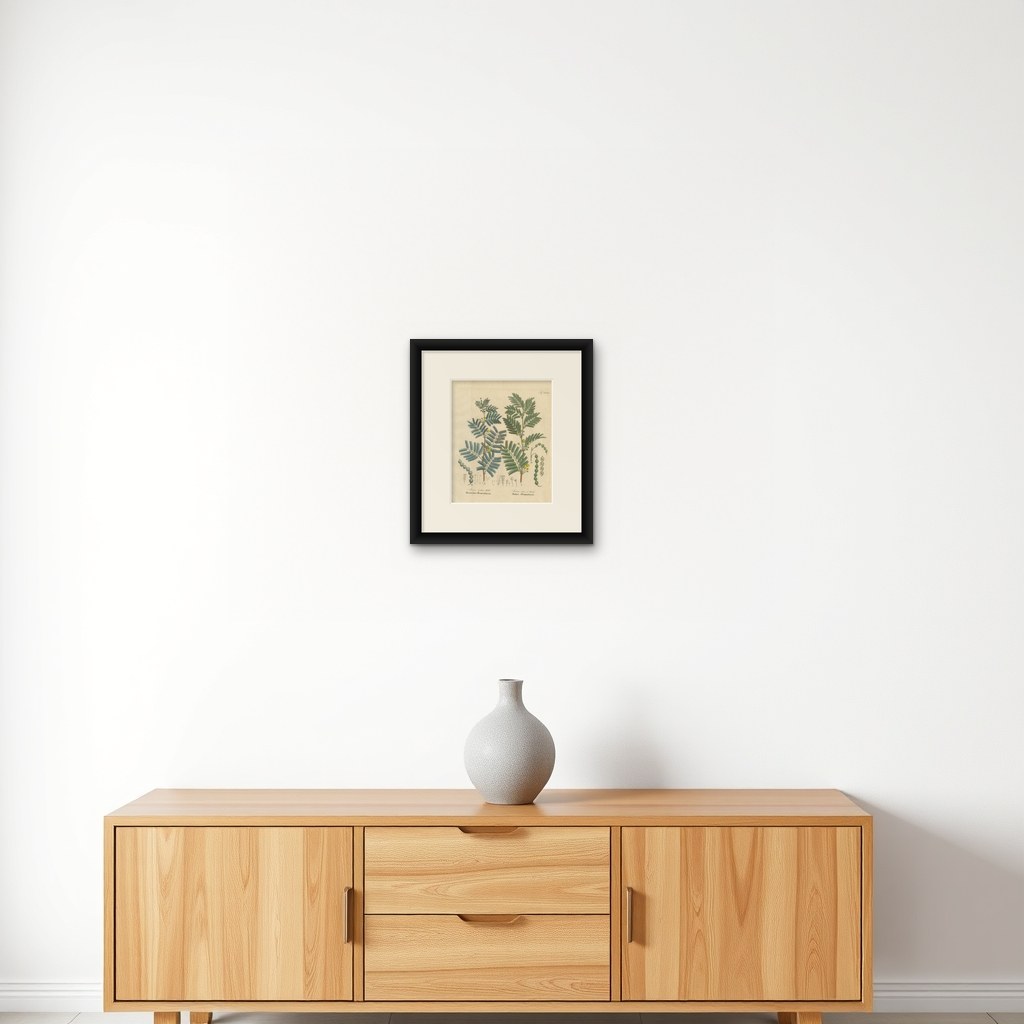

Frame and rooms are illustrations of how the print could look; the description says what is included.
Antique Gum Arabic Botanical Print, Acacia Arabica & Acacia Vera, c.1831
$1,050 (£795, €940)
Period original, not a reproduction.
Shipped from the Netherlands, flat, insured and tracked, worldwide. Returns accepted within 14 days.
- Date
- 1831
- Size
- 10.7 × 8.9 in (27.1 × 22.7 cm)
- Condition
- Good. Moderate age-related toning and scattered light spotting, consistent with the series. No tears or losses.
- Period
- Early 19th century
- Section
- Botanical
- Reference
- f_48093432
- Colour
- Hand coloured
What the condition grades mean
- Excellent
- Bright and clean, with no faults worth mentioning.
- Very good
- Only light signs of age, such as faint toning.
- Good
- Normal signs of age for a sheet of this period: toning, some foxing, small marks or neat old repairs.
- Fair
- Clear faults such as staining, tears or repairs, priced to match.
Every fault we see is written in the condition note, and the whole sheet is shown uncropped in the photos.
Antique Gum Arabic Botanical Print, Acacia Arabica & Acacia Vera, c.1831
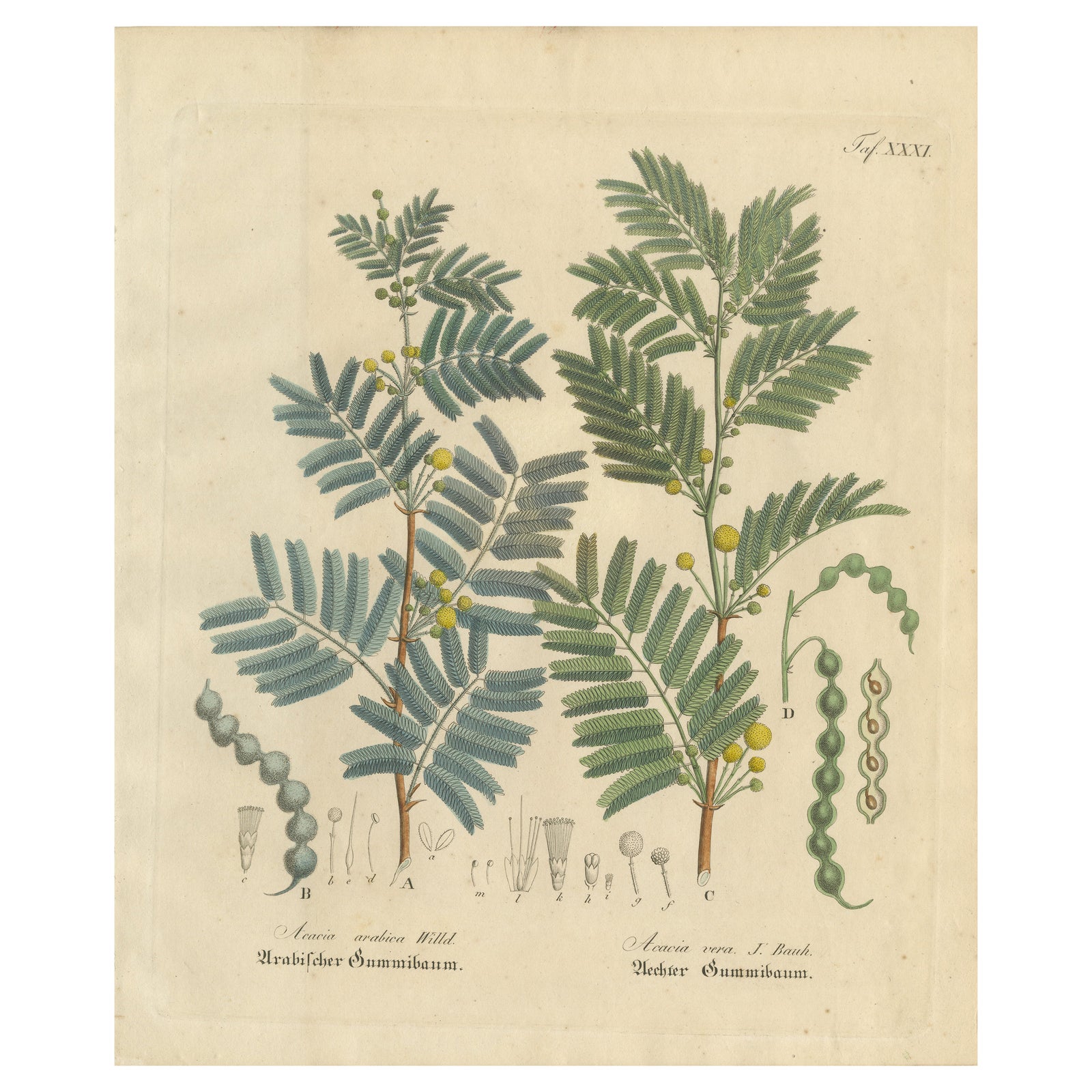
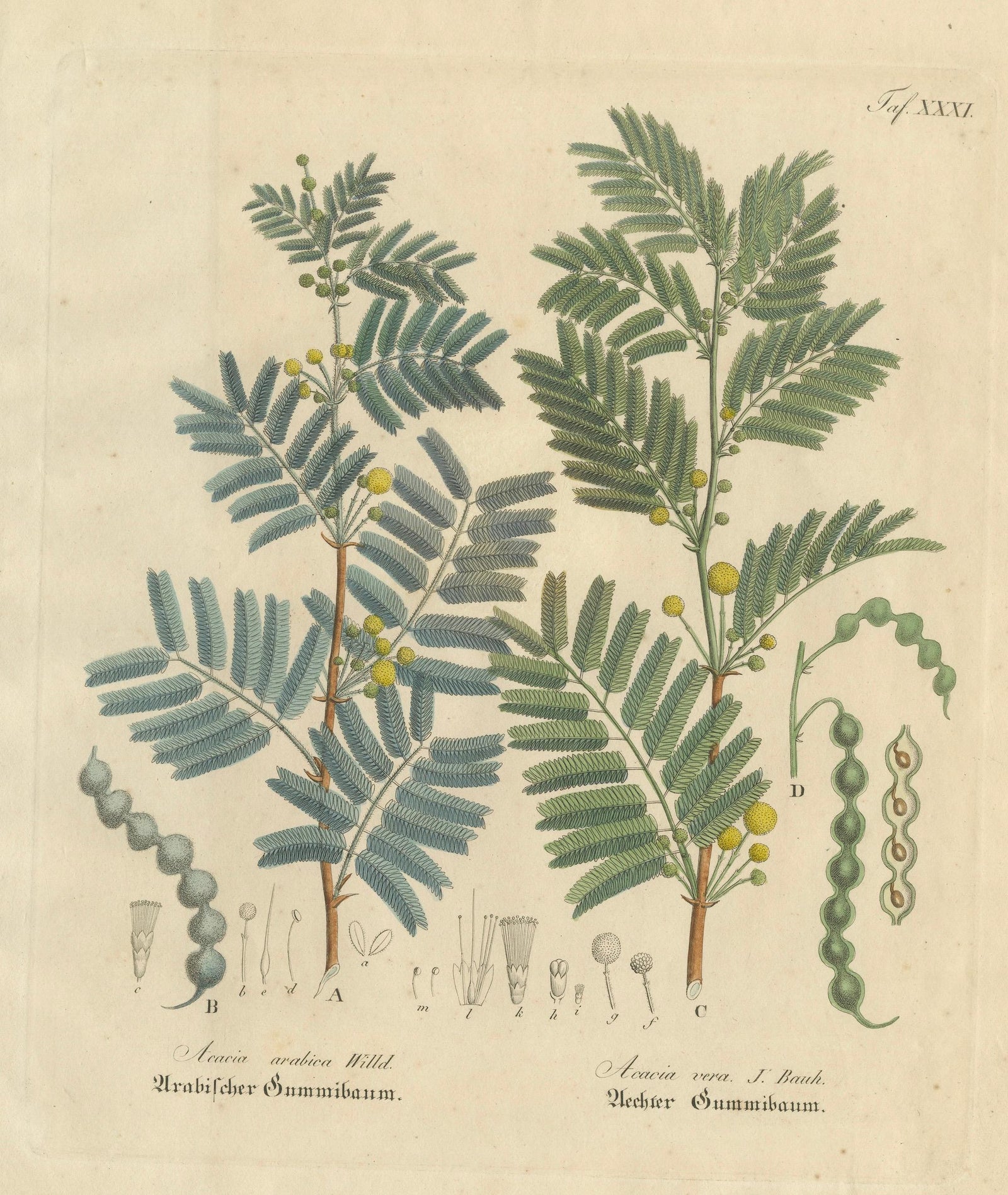
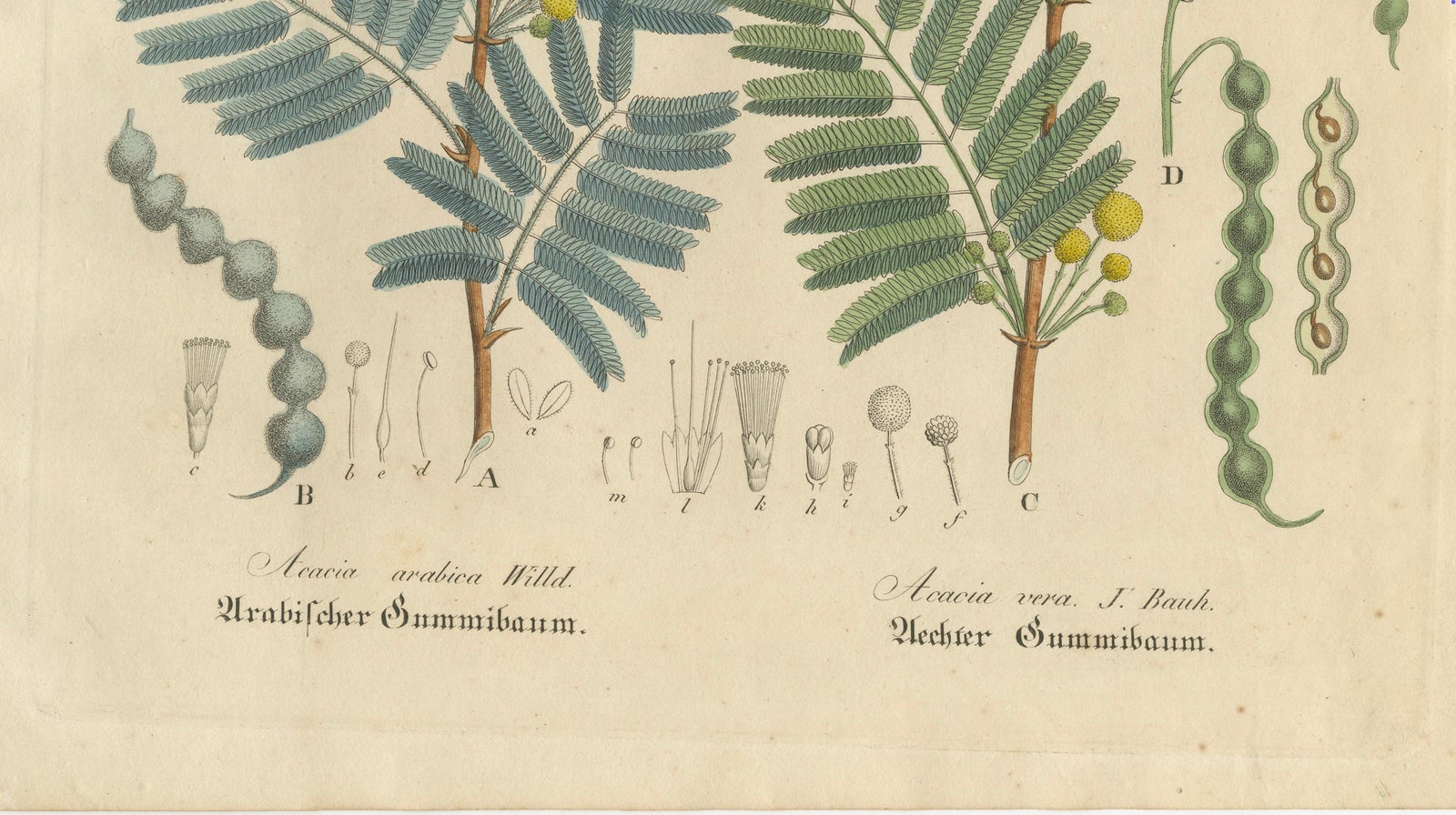
This original botanical engraving depicts two important gum-producing trees: Acacia arabica and Acacia vera, shown side by side with foliage, seed pods, and analytical details. These species were the principal sources of gum arabic, a key material used in food preparation, pharmaceuticals, printing, watercolor painting, and bookbinding.
The plate was published in Jonathan Carl Zenker’s Merkantilische Waarenkunde, a foundational early 19th-century work devoted to plants of commercial and industrial value. Gum arabic was a vital global commodity, traded extensively from Africa and the Middle East into Europe.
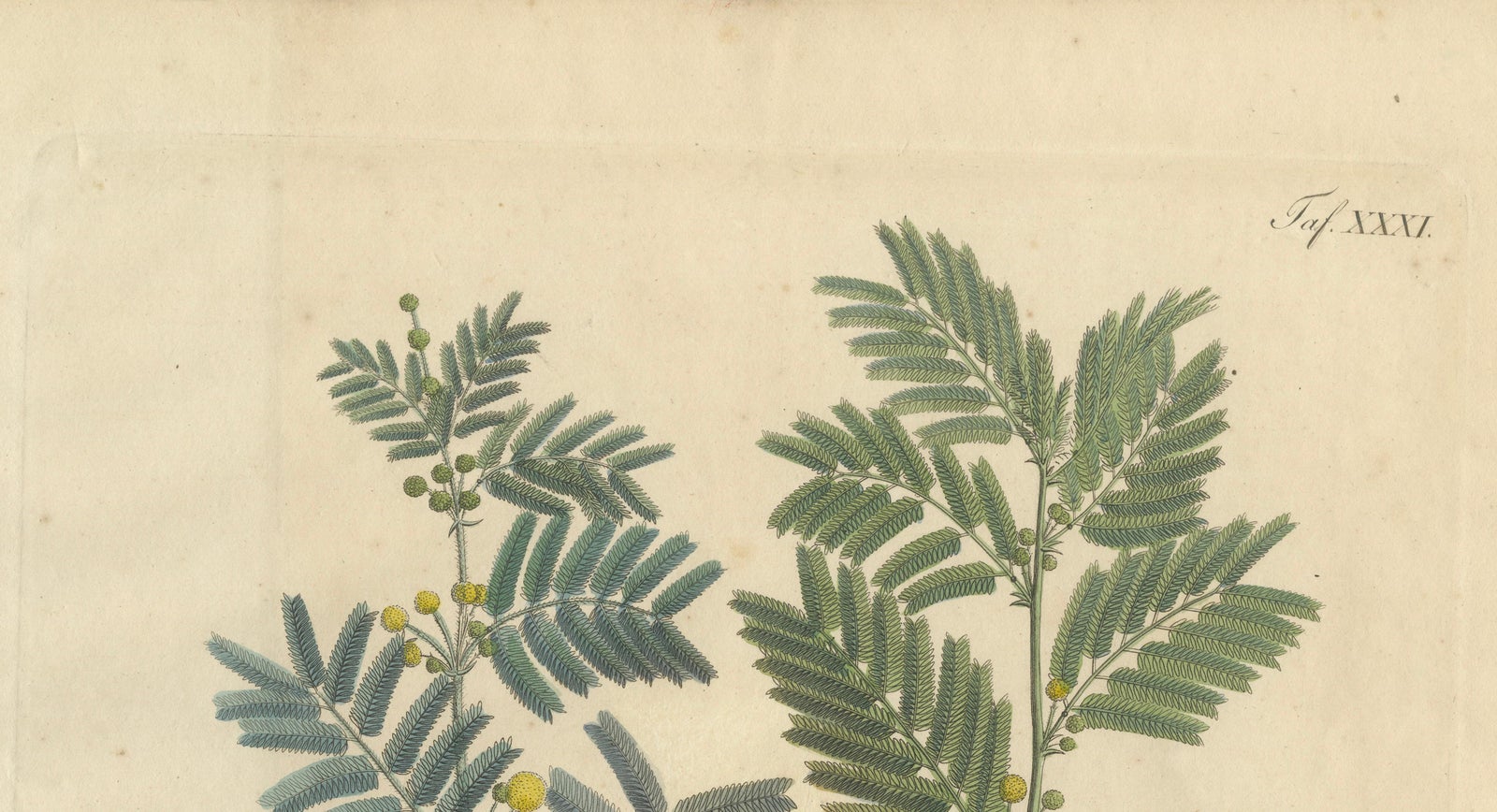
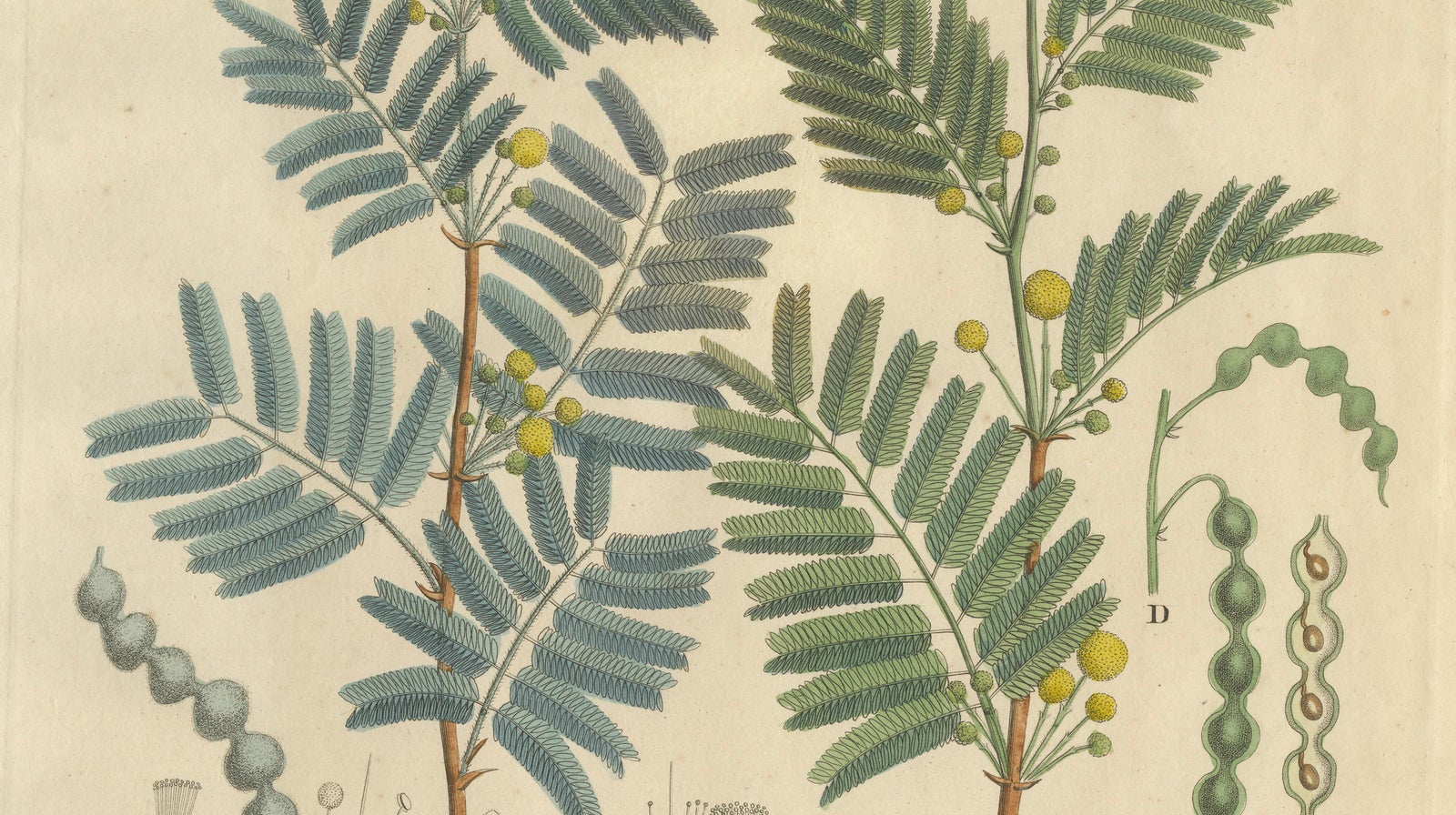
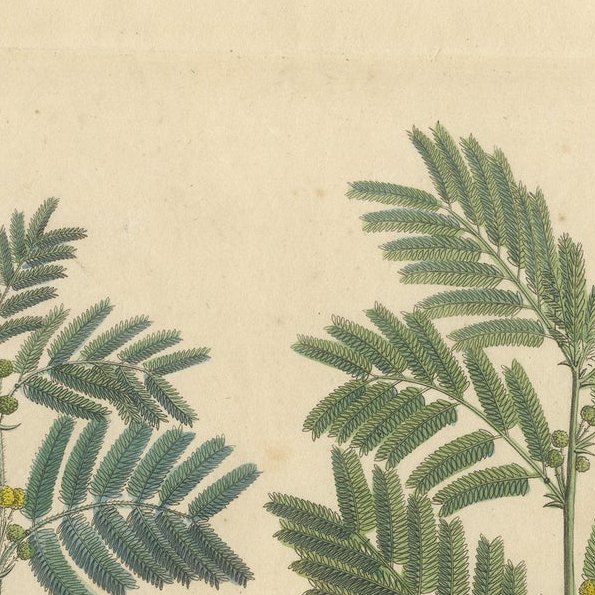
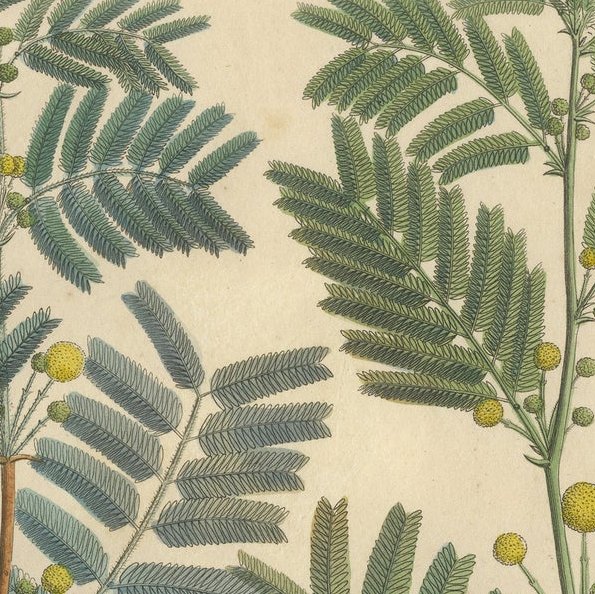
Original hand coloring is carefully applied in cool green tones, with yellow highlights on the blossoms and pods. The dual composition gives the plate strong visual balance and makes it particularly attractive as a statement piece.
Condition report:
Moderate age-related toning and scattered light spotting, consistent with the series. No tears or losses.
Framing tips:
A warm ivory mat with a dark wood or ebonized frame enhances contrast and emphasizes the paired composition.
Technique: Copper engraving with original hand coloring
Maker: Jonathan Carl Zenker, Germany, 1831–1832