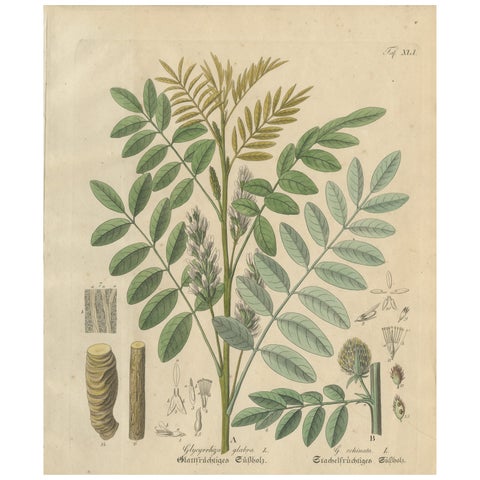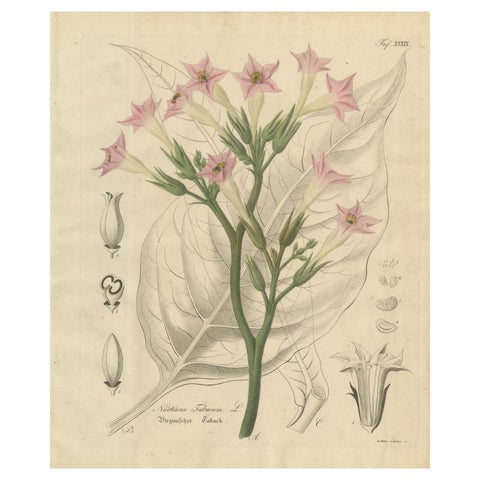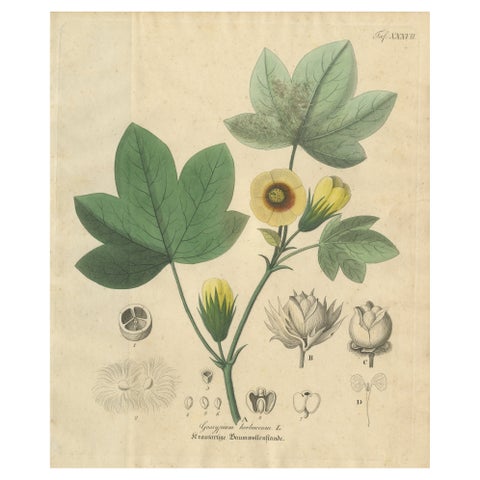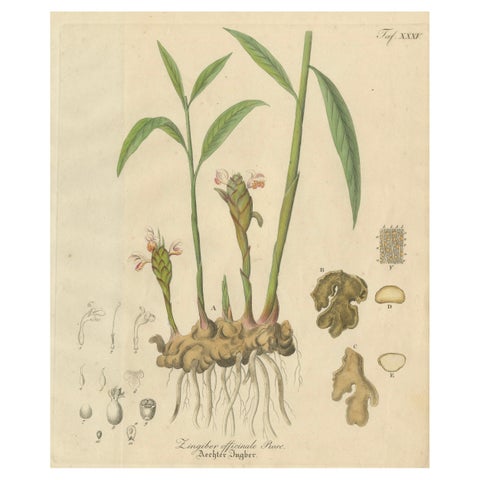
Close-ups
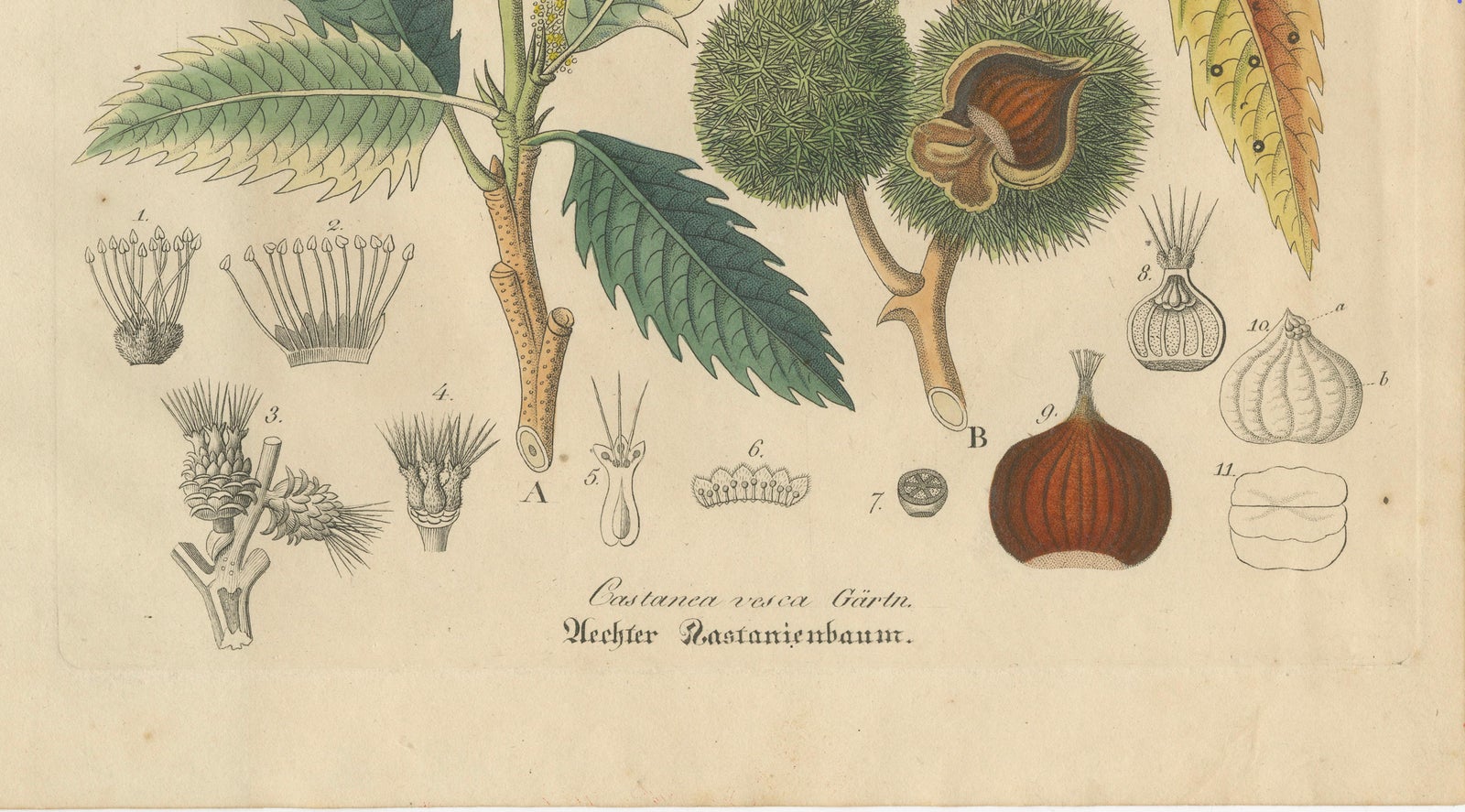
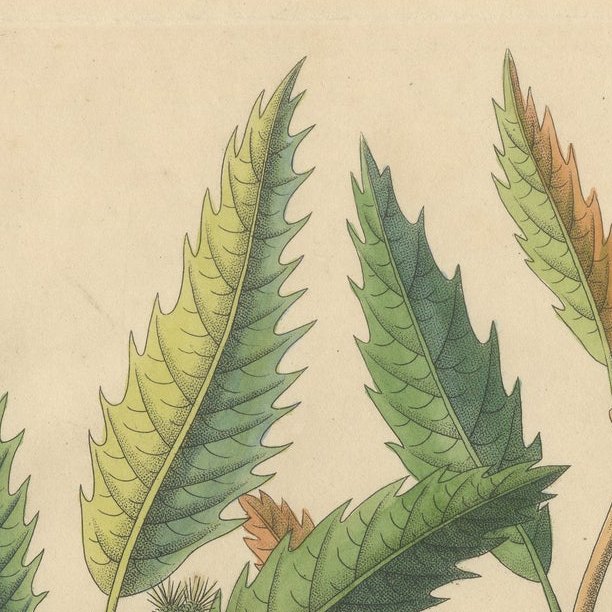
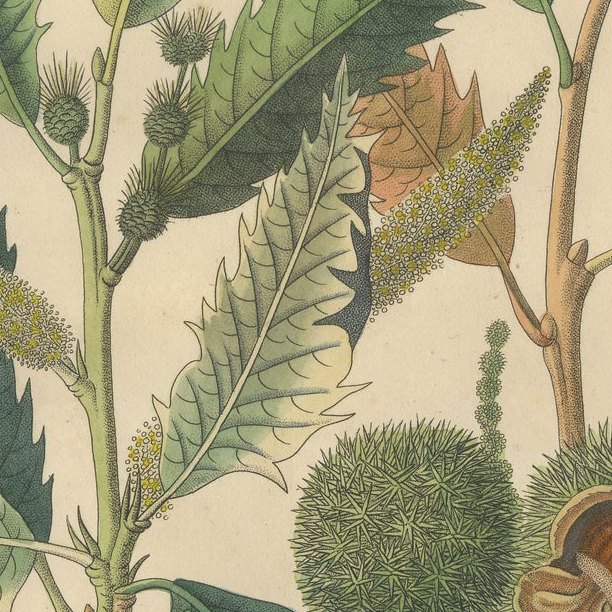
Framed and on the wall
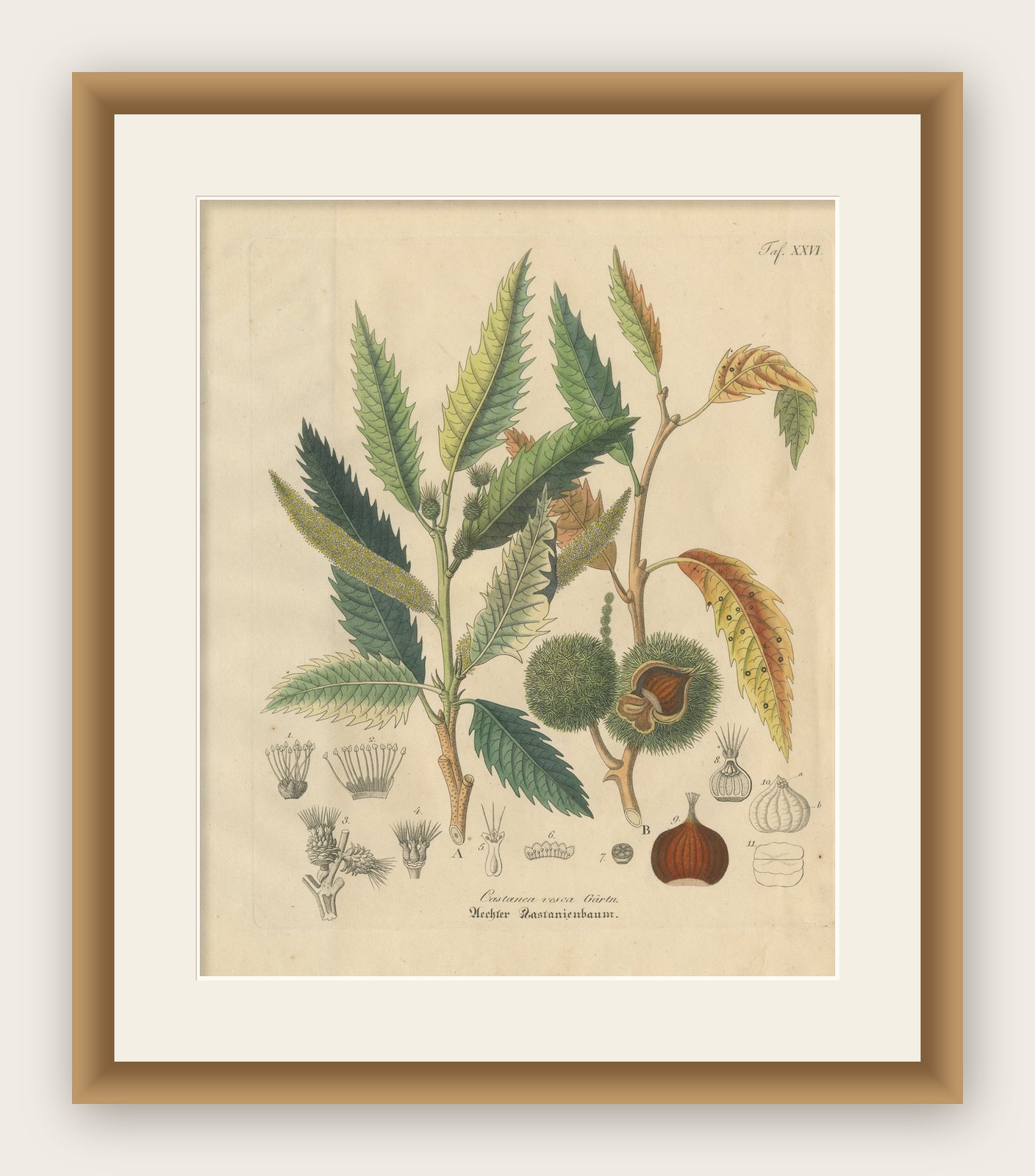


Frame and rooms are illustrations of how the print could look; the description says what is included.
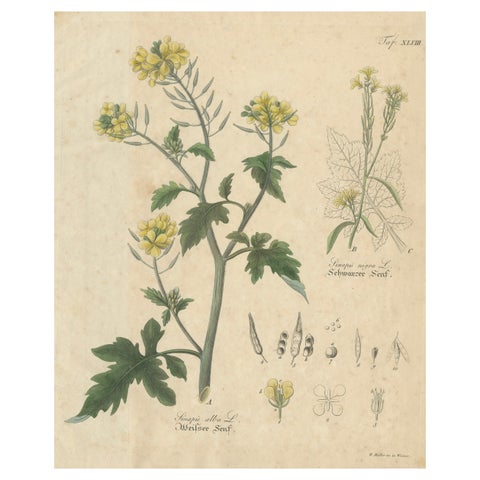
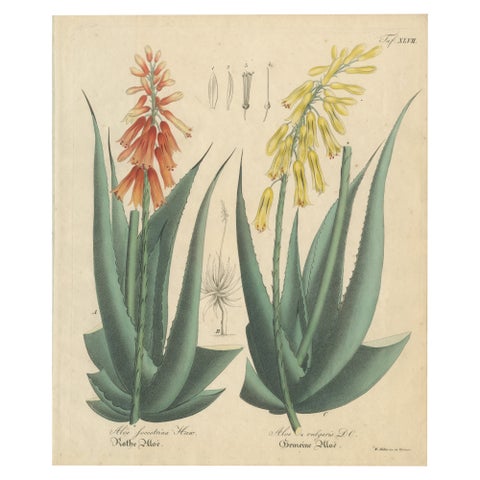
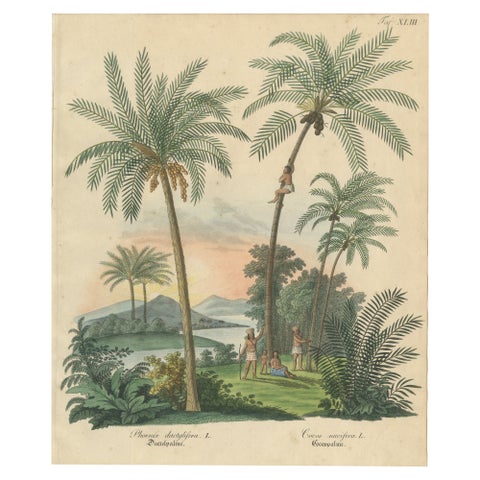
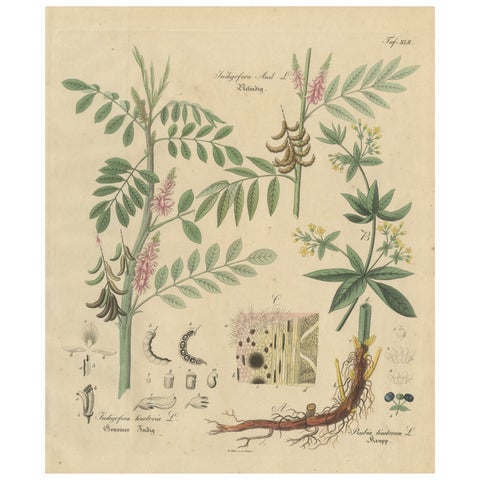
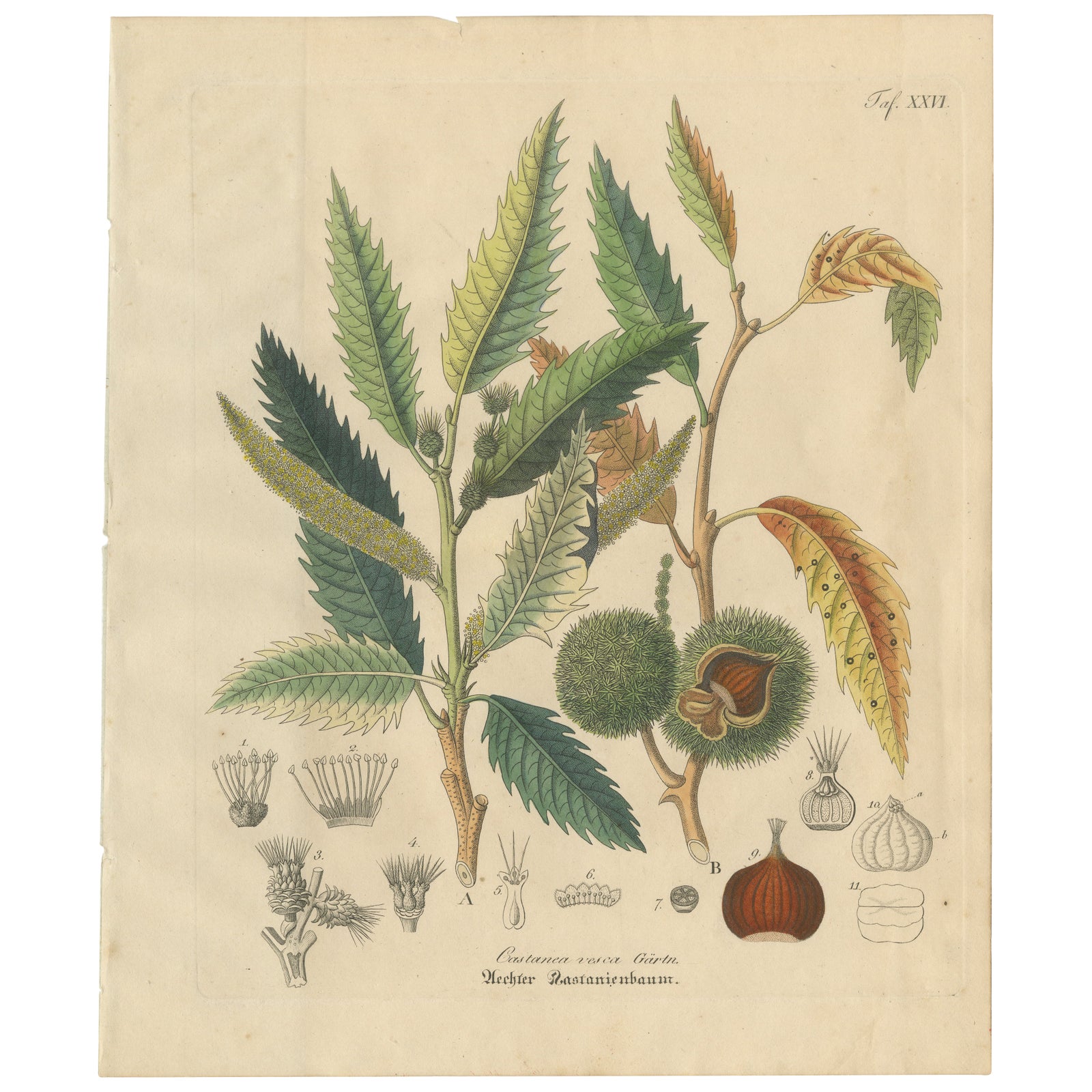
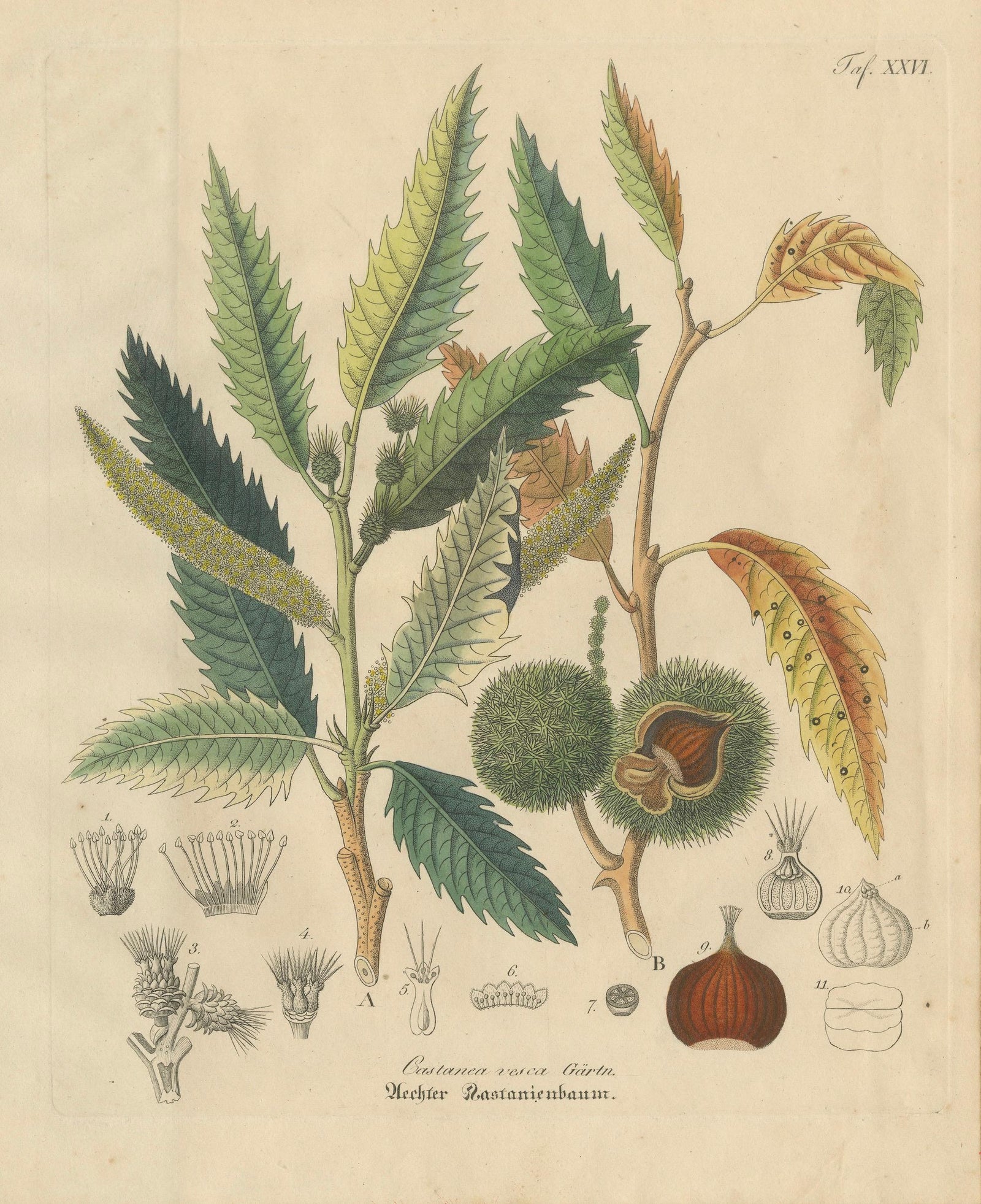
Antique Chestnut Botanical Print, Castanea Vesca, Hand Colored, c.1831
€650 ($730, £550, €650)
Period original, not a reproduction.
Shipped from the Netherlands, flat, insured and tracked, worldwide. Returns accepted within 14 days.
- Date
- 1831
- Size
- 10.7 × 8.9 in (27.1 × 22.7 cm)
- Condition
- Good. Moderate age-related toning and light surface soiling. No tears or losses.
- Period
- Early 19th century
- Section
- Botanical
- Reference
- f_48077242
Antique Chestnut Botanical Print, Castanea Vesca, Hand Colored, c.1831
Description:
This original botanical engraving depicts Castanea Vesca, the sweet chestnut tree, shown with foliage and fruiting burrs. Chestnuts were an important food source across Europe, particularly in rural economies where they served as both sustenance and trade commodity.
The plate originates from Jonathan Carl Zenker’s Merkantilische Waarenkunde, a publication focused on plants of economic and mercantile relevance. The inclusion of chestnut reflects its role as a staple crop rather than a luxury good, offering insight into everyday agricultural life of the early 19th century.
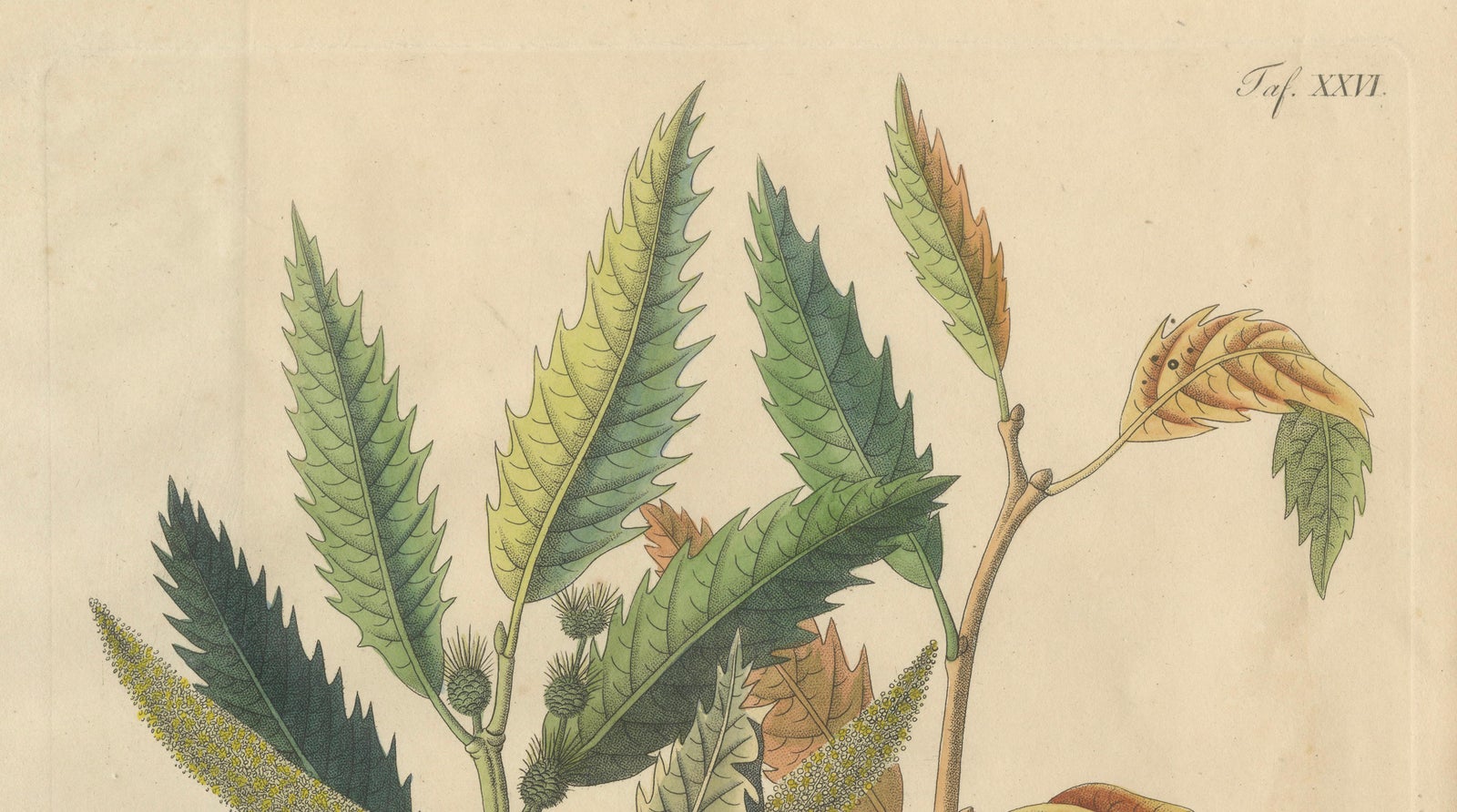
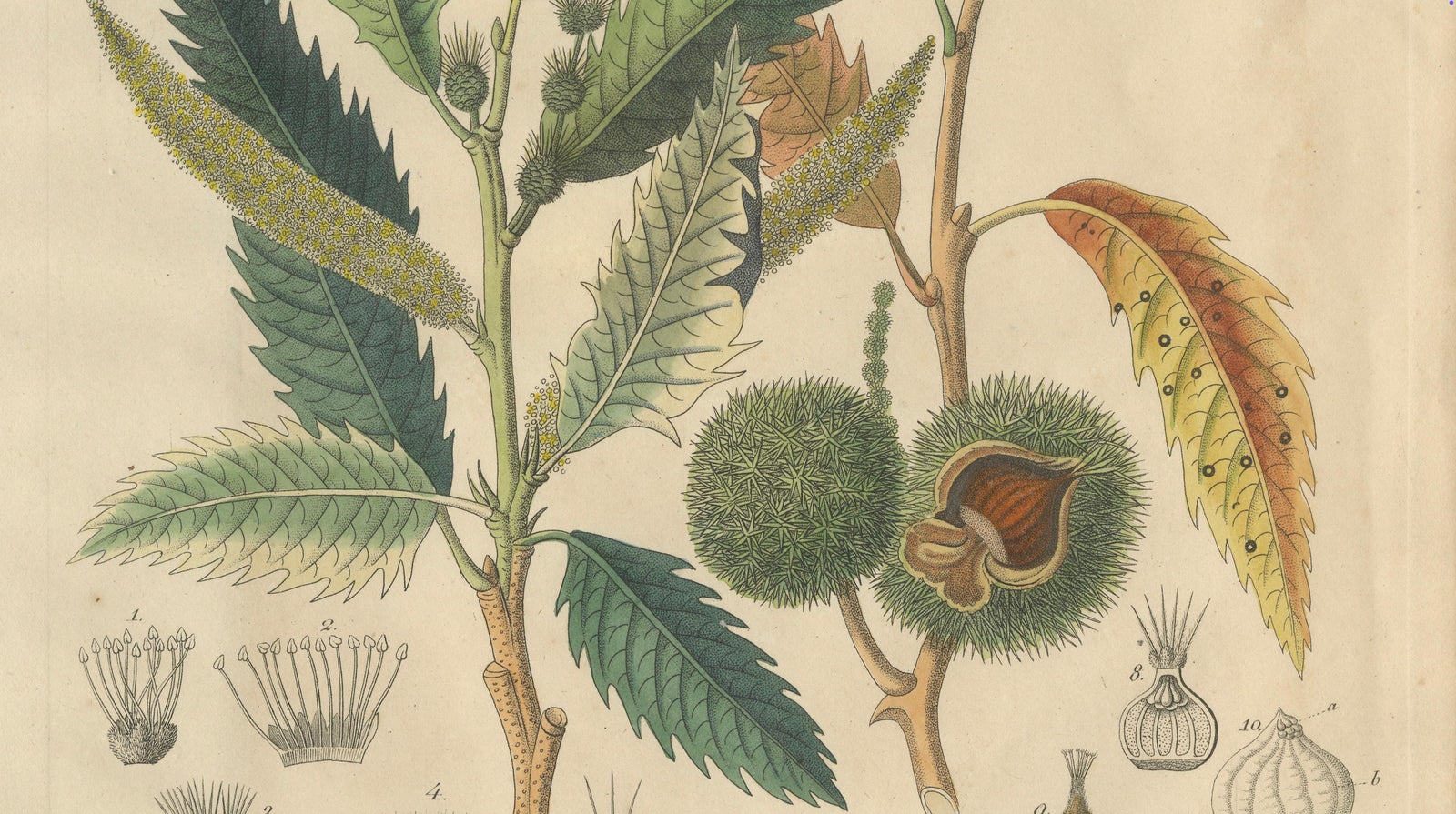
Original hand coloring lends warmth to the composition, with earthy greens and browns applied in a restrained manner. The overall effect is rustic and balanced, making the plate well suited for kitchens, country interiors, or collections focused on traditional food crops.
Condition report:
Moderate age-related toning and light surface soiling. No tears or losses.
Framing tips:
A warm cream or light taupe mat paired with an oak or walnut frame complements the natural character of the subject.
Technique: Copper engraving with original hand coloring
Maker: Jonathan Carl Zenker, Germany, 1831–1832