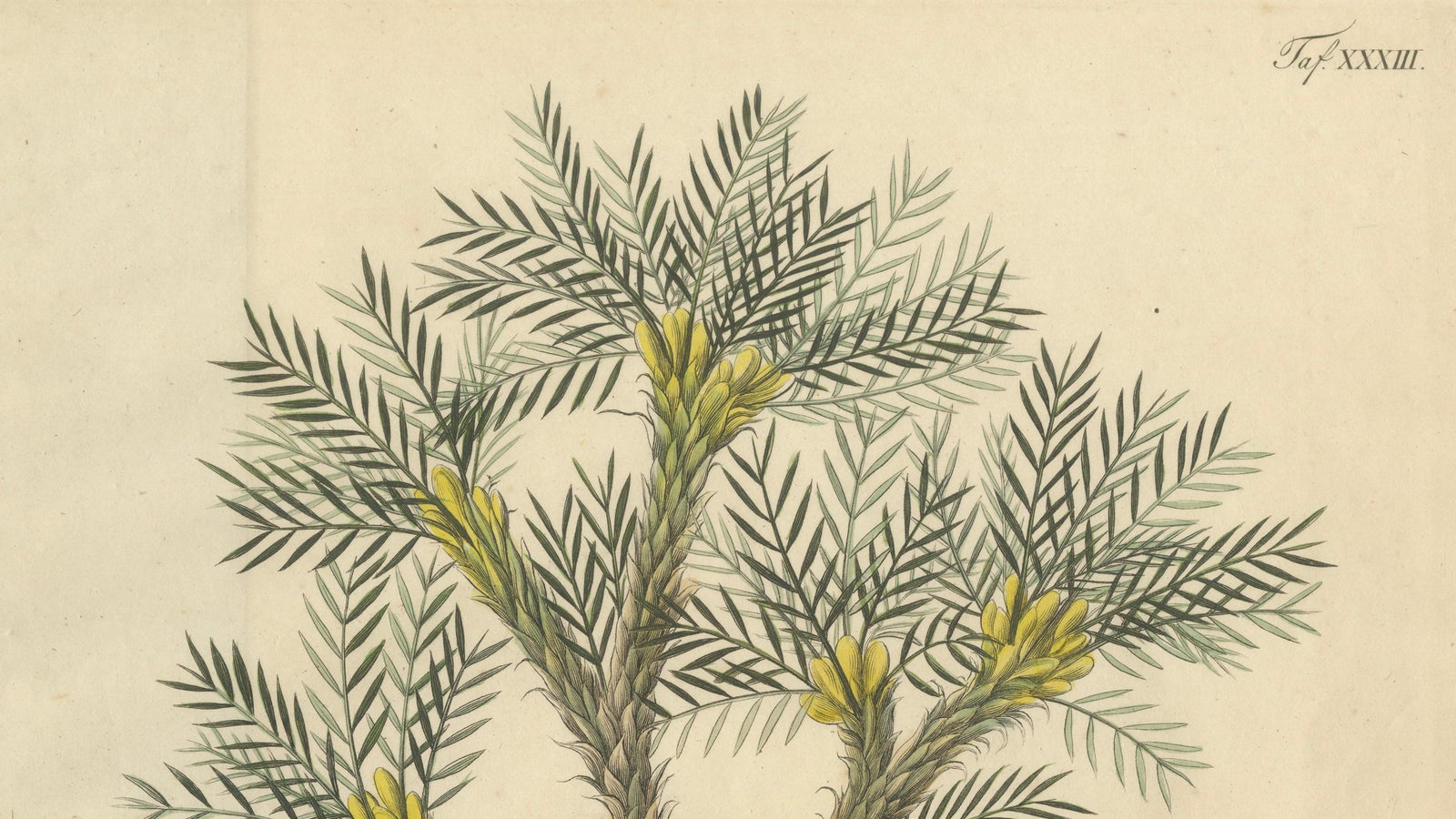
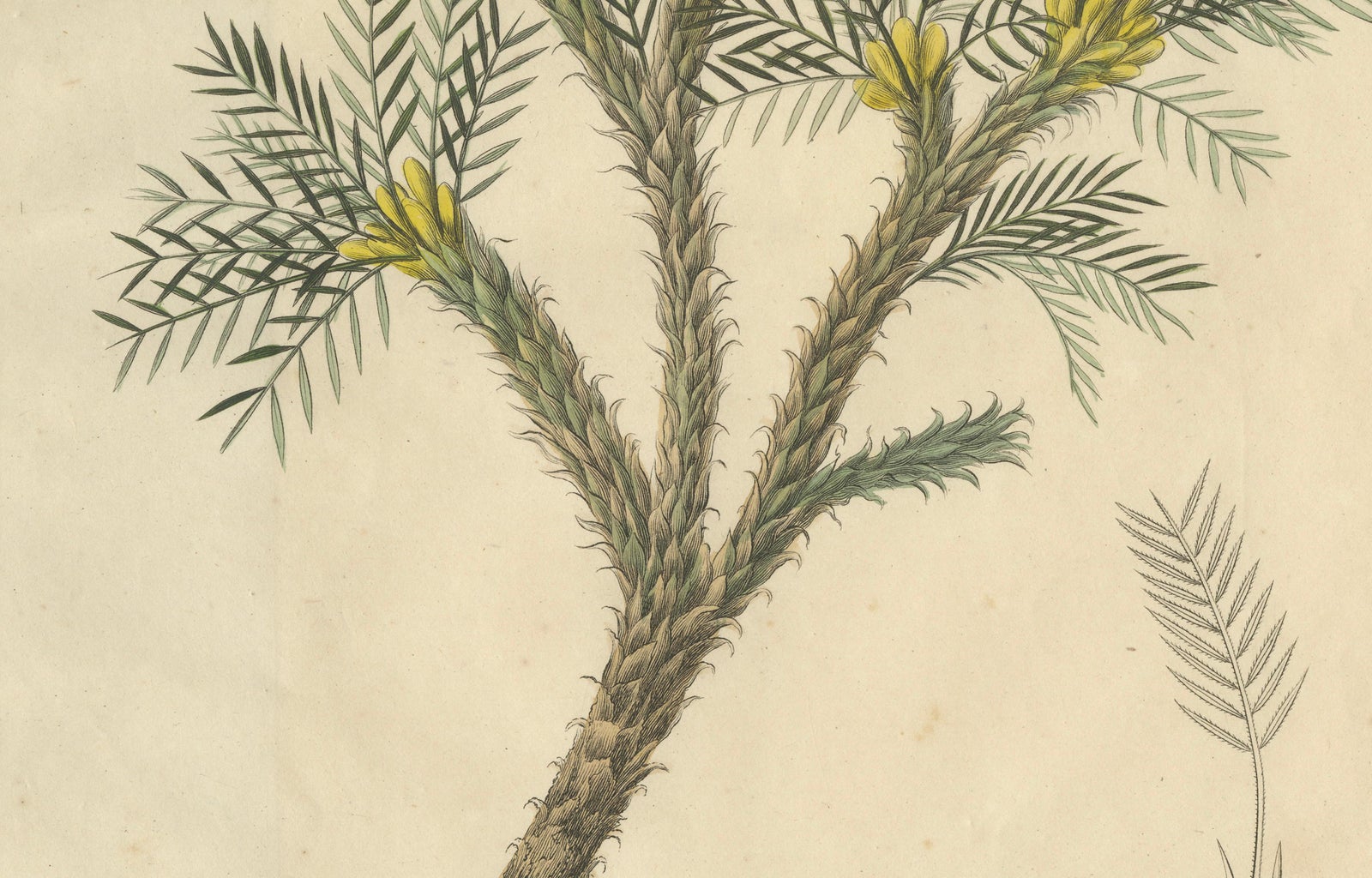
Close-ups
Framed and on the wall
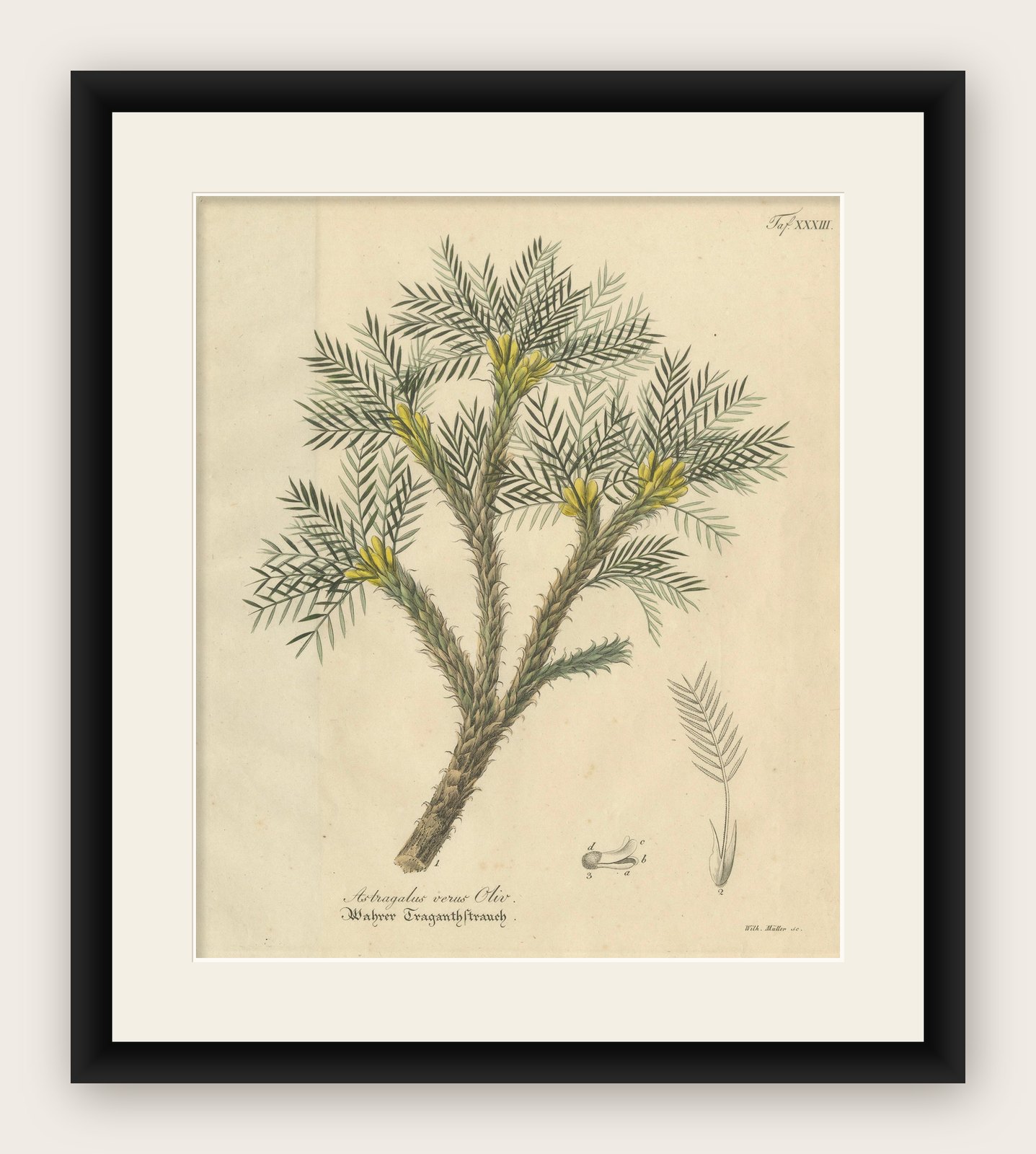


Frame and rooms are illustrations of how the print could look; the description says what is included.
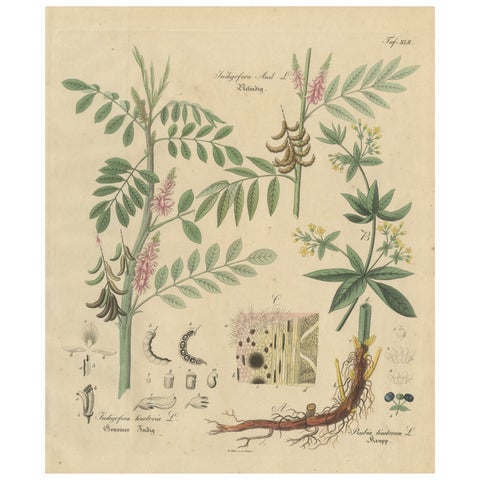
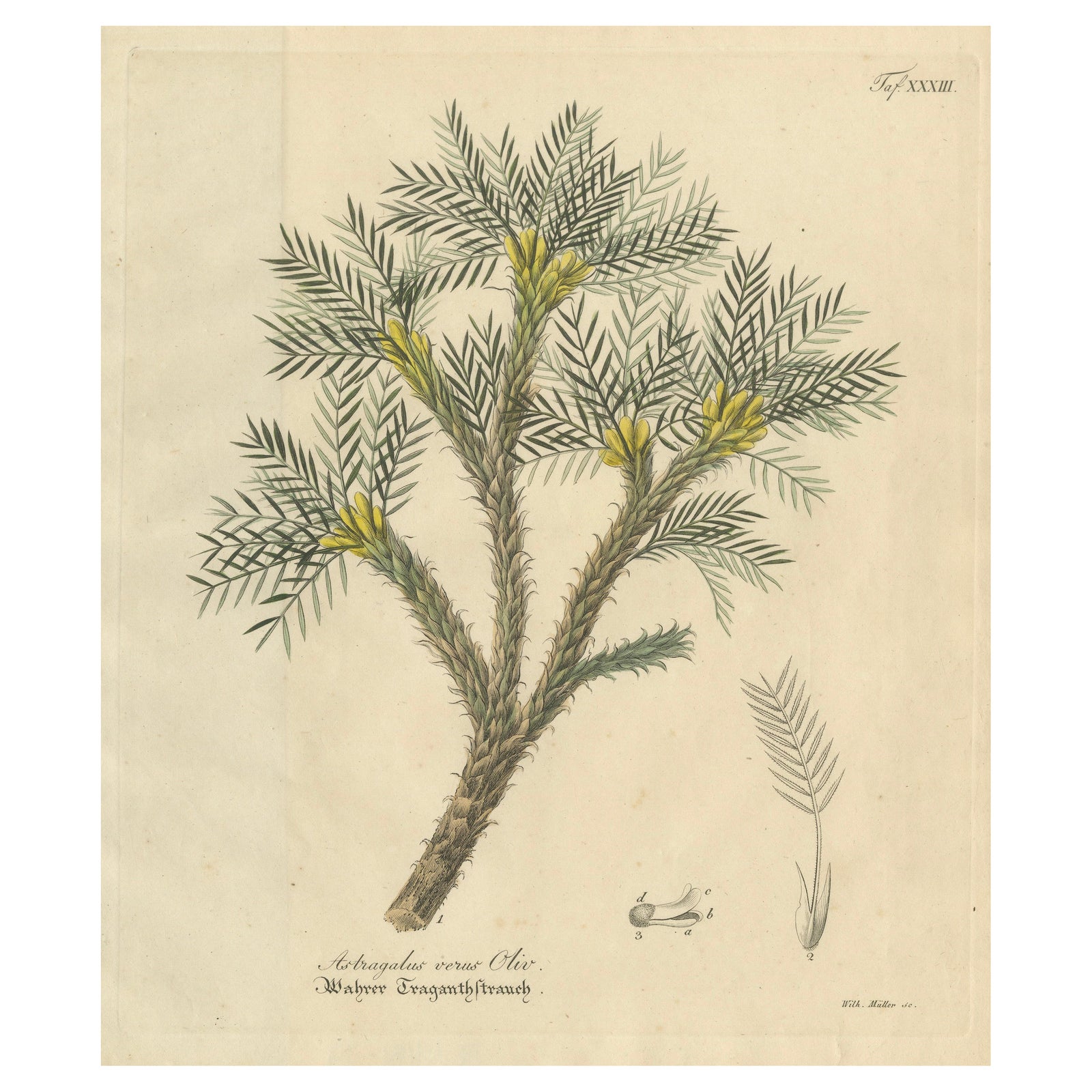
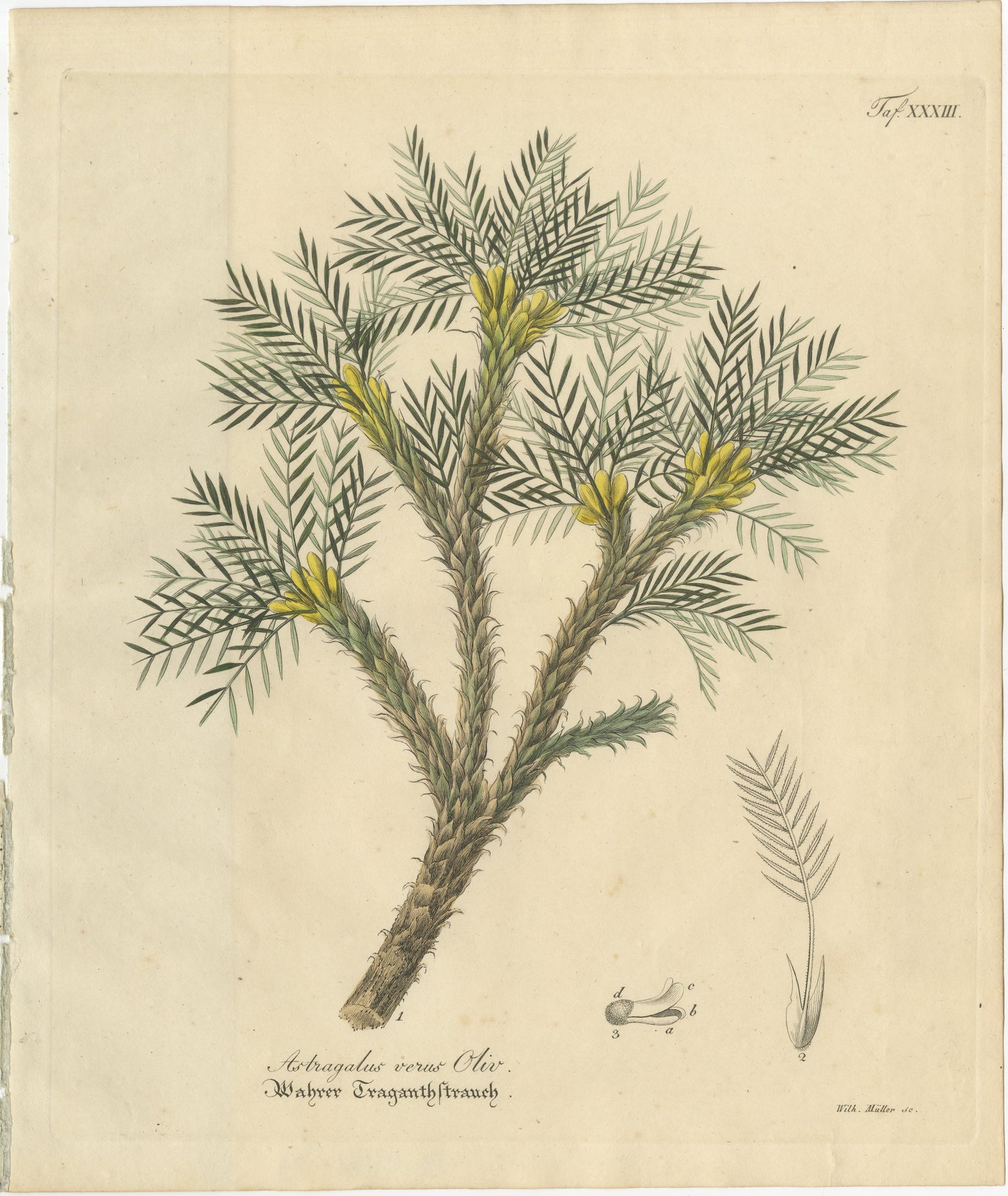
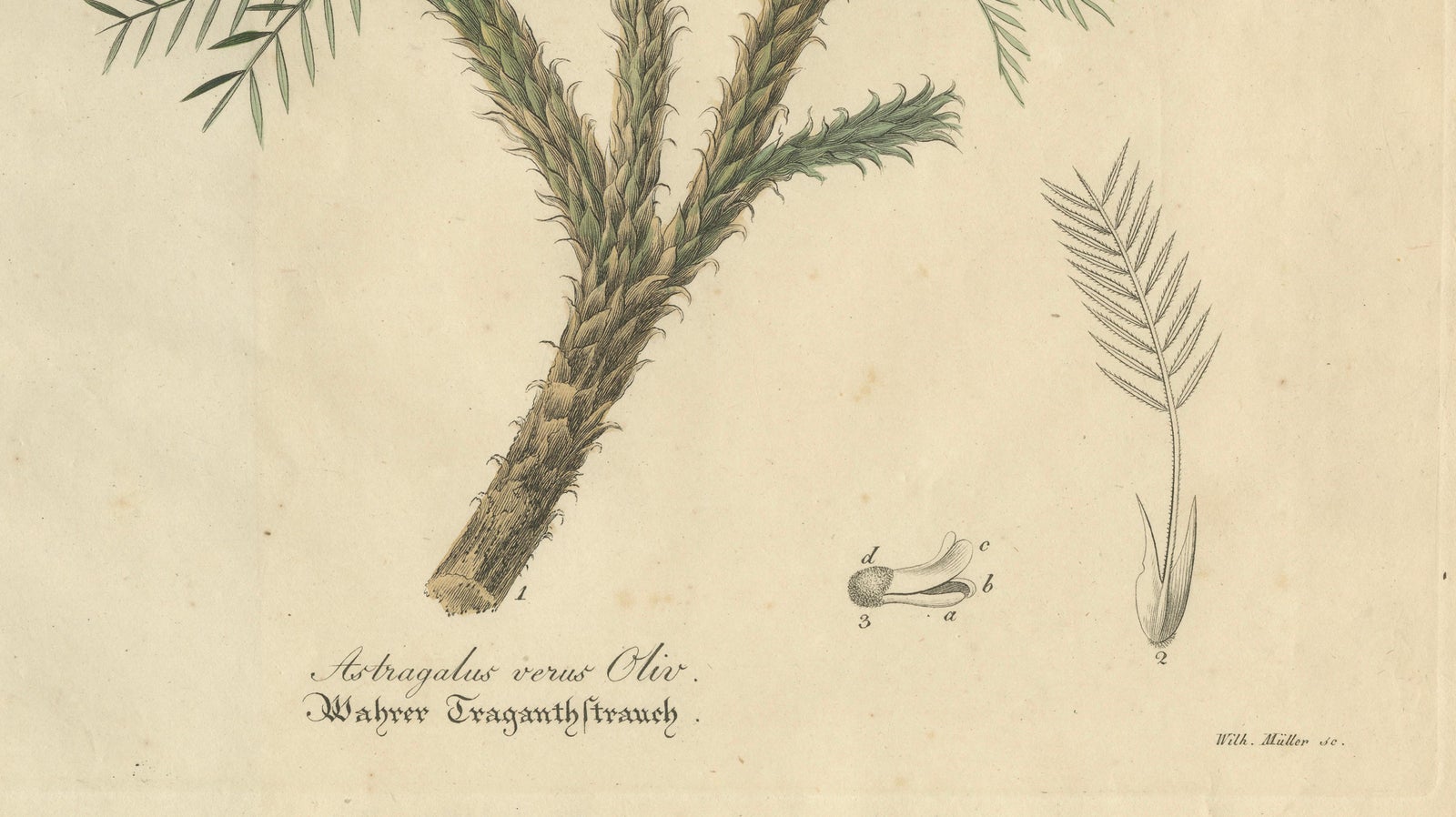
Antique Botanical Print of Astragalus Verus, Copper Engraving, c.1831
$715 (£540, €640)
Period original, not a reproduction.
Shipped from the Netherlands, flat, insured and tracked, worldwide. Returns accepted within 14 days.
- Date
- 1831
- Size
- 10.7 × 8.9 in (27.1 × 22.7 cm)
- Condition
- Good. Moderate toning and light surface dirt. Overall well preserved.
- Period
- Early 19th century
- Section
- Botanical
- Reference
- f_48093622
Antique Tragacanth Botanical Print, Astragalus Verus, c.1831
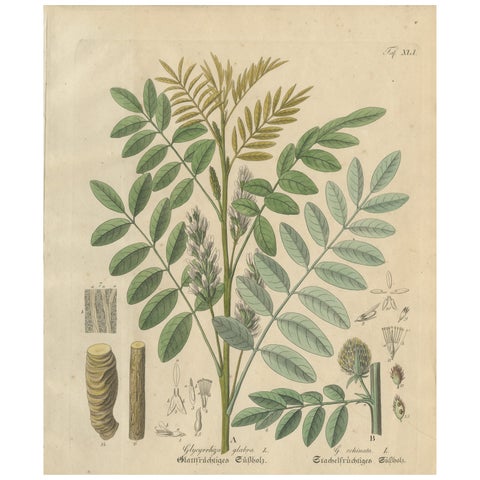
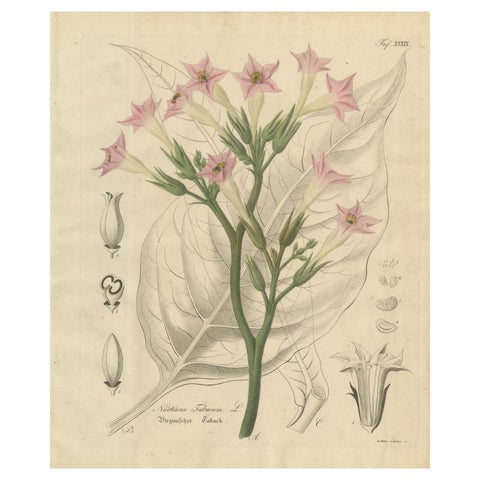
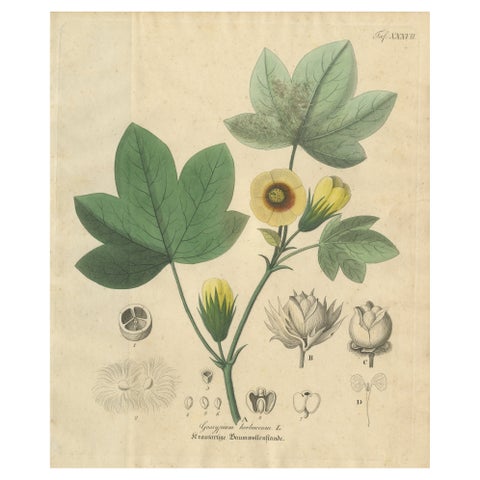
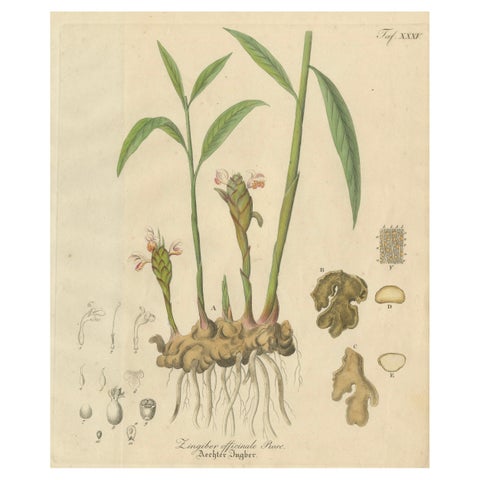
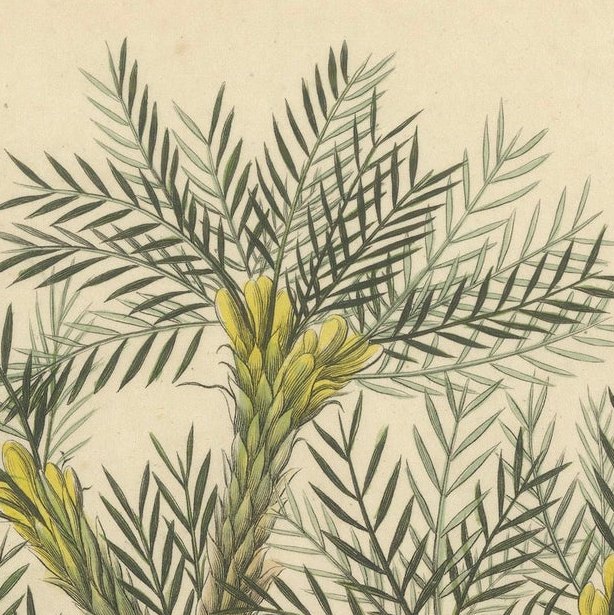
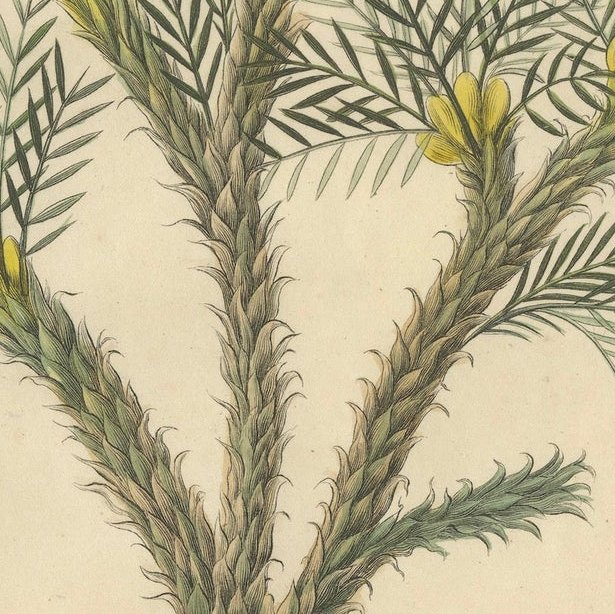
This striking botanical engraving depicts Astragalus verus, the plant from which gum tragacanth is derived. The plant is shown with branching stems and flowering heads, accompanied by analytical details of structure.
The plate originates from Zenker’s Merkantilische Waarenkunde and documents one of the most important binding and thickening agents used in pharmacy, confectionery, and early industrial processes. Gum tragacanth was especially valued for its stability and purity.
Original hand coloring is restrained, lending the plate a refined and slightly austere appearance that suits its technical subject. This is an excellent example of early industrial botany.
Condition report:
Moderate age-related toning with light spotting. No damage.
Framing tips:
A pale grey or parchment mat with a simple dark frame complements the scientific elegance of the plate.
Technique: Copper engraving with original hand coloring
Maker: Jonathan Carl Zenker, Germany, 1831–1832