Close-ups
Framed and on the wall
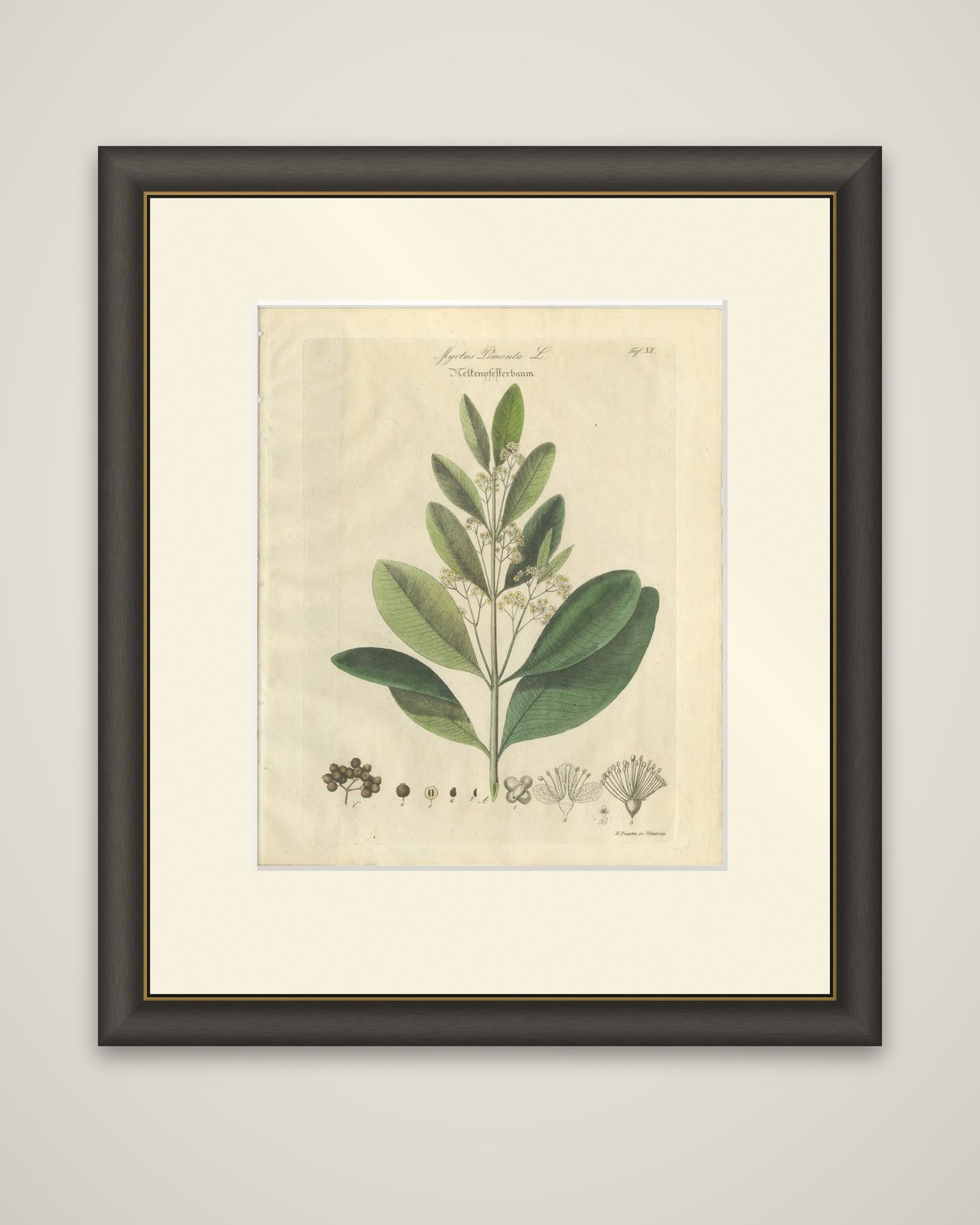


Frame and rooms are illustrations of how the print could look; the description says what is included.
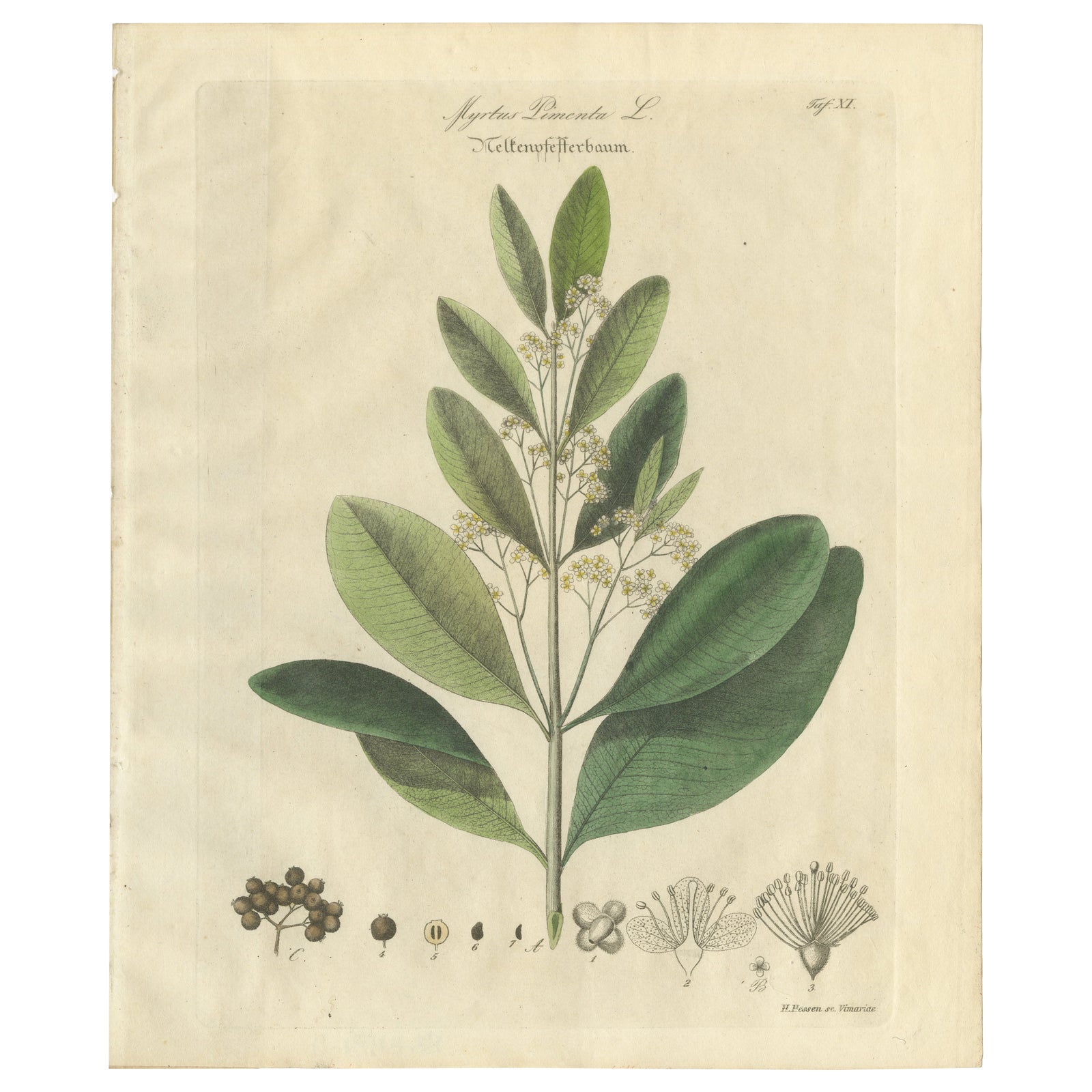
Antique Allspice Botanical Print, Myrtus Pimenta, Hand Colored, c.1831
€690 ($775, £585, €690)
Period original, not a reproduction.
Shipped from the Netherlands, flat, insured and tracked, worldwide. Returns accepted within 14 days.
- Date
- 1831
- Size
- 10.7 × 8.9 in (27.1 × 22.7 cm)
- Condition
- Good. Moderate age-related toning and light surface dirt, consistent with early 19th-century material. No tears or losses.
- Period
- Early 19th century
- Section
- Botanical
- Reference
- f_48074122
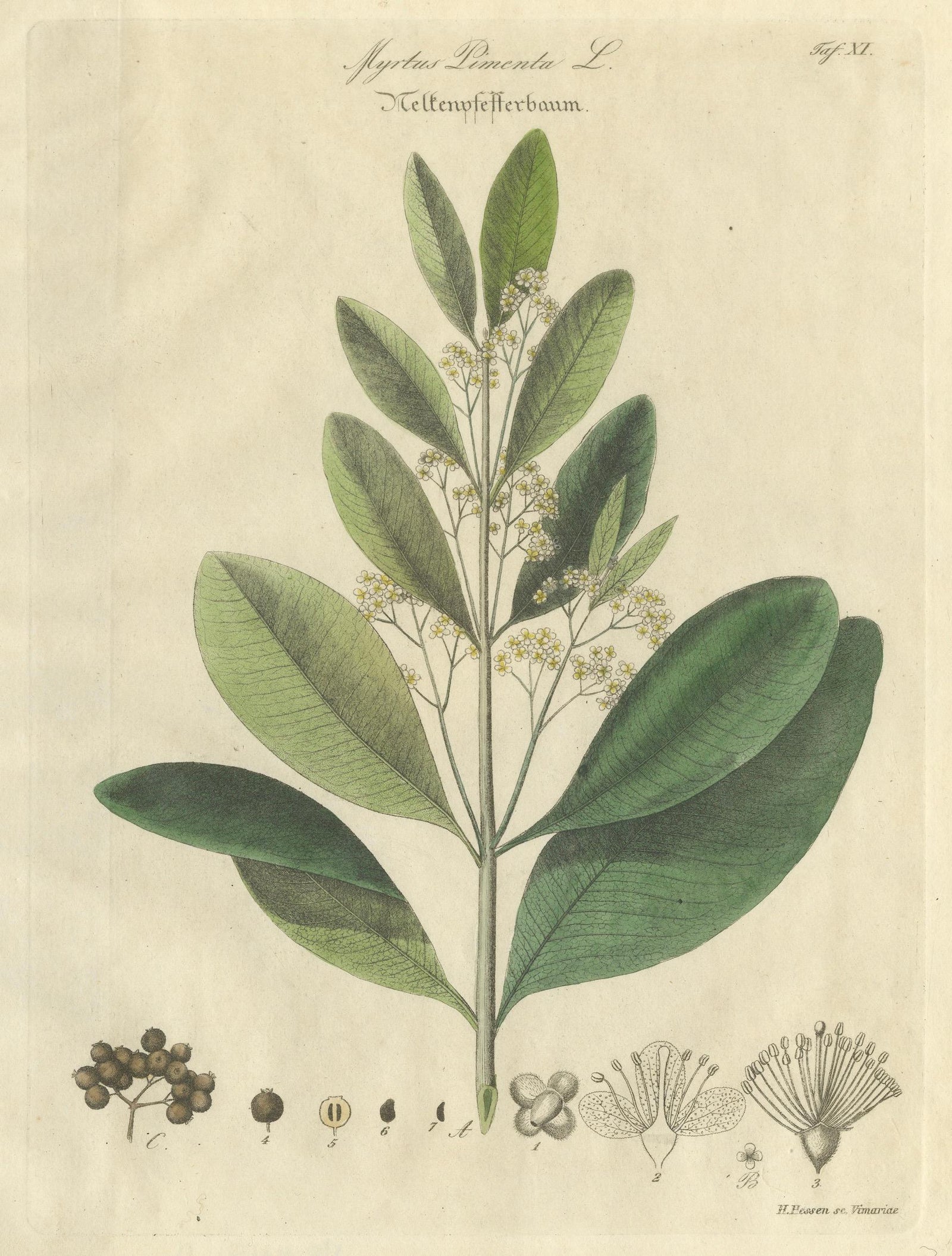
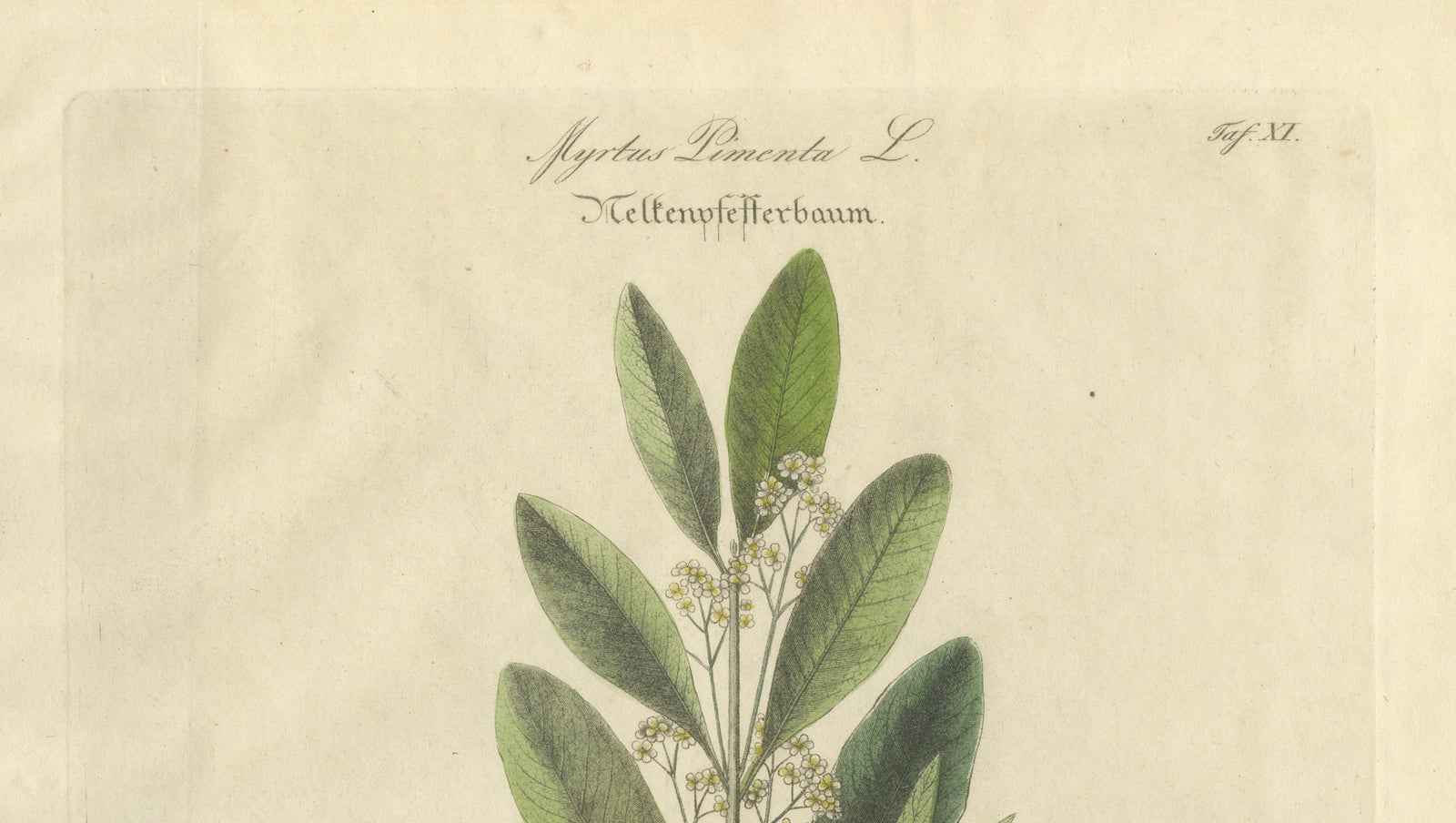
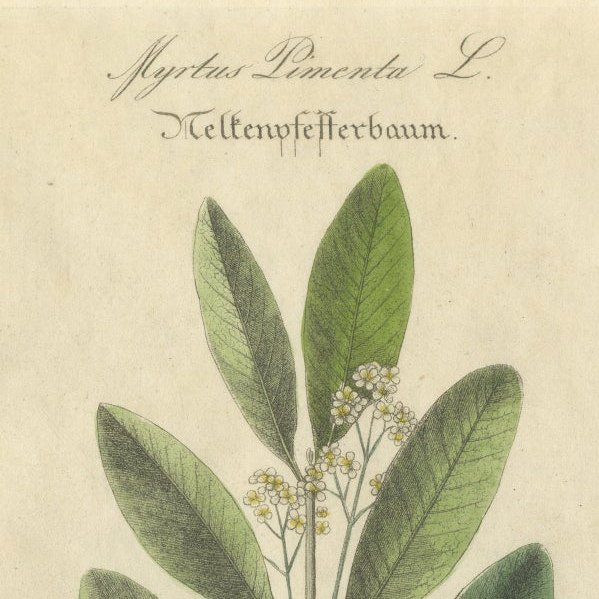
Allspice, Myrtus Pimenta, a hand-colored copper engraving from Jonathan Carl Zenker's Merkantilische Waarenkunde, c.1831. The Latin name "Myrtus Pimenta L." is lettered at the head with "Taf. XI" at the upper right.
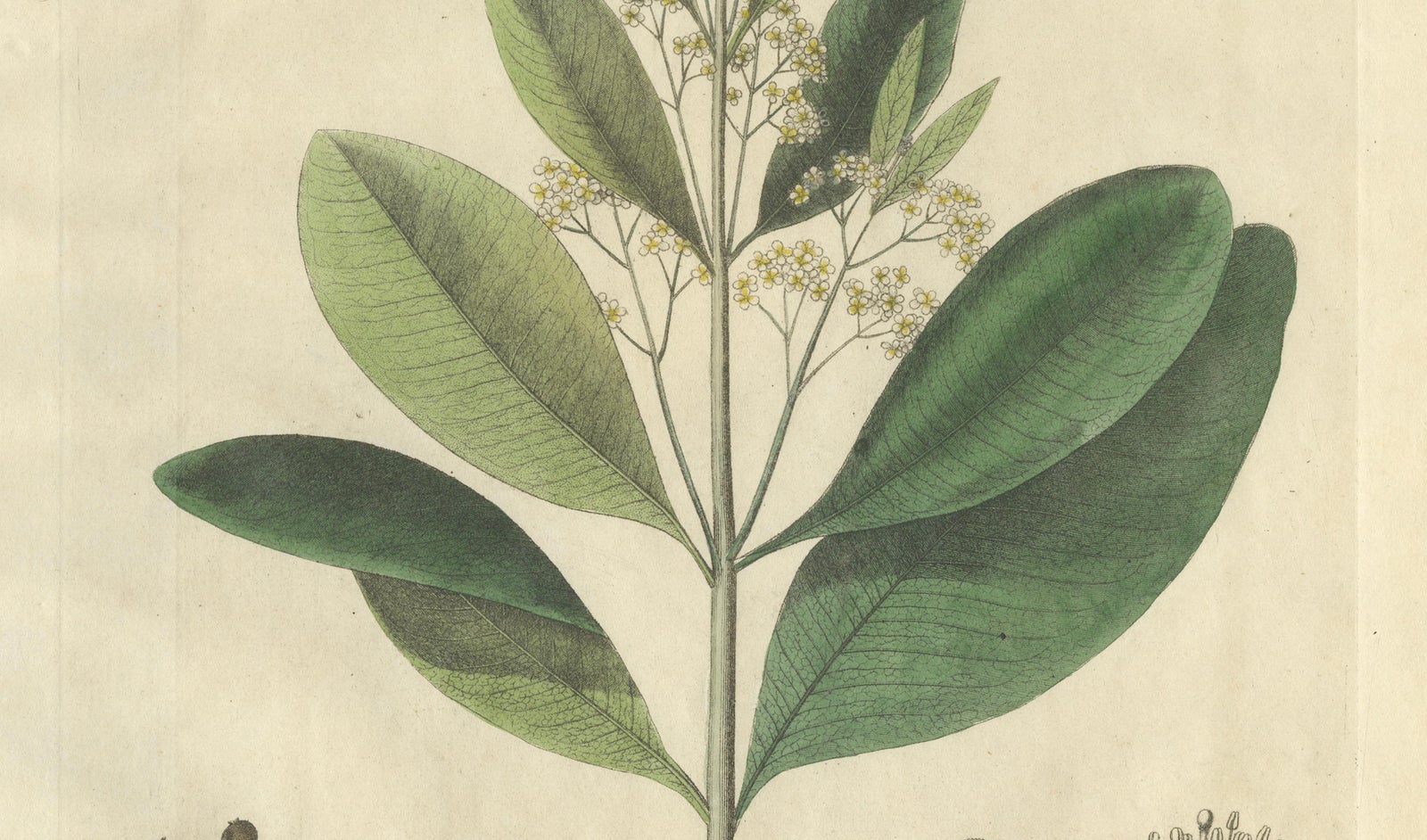
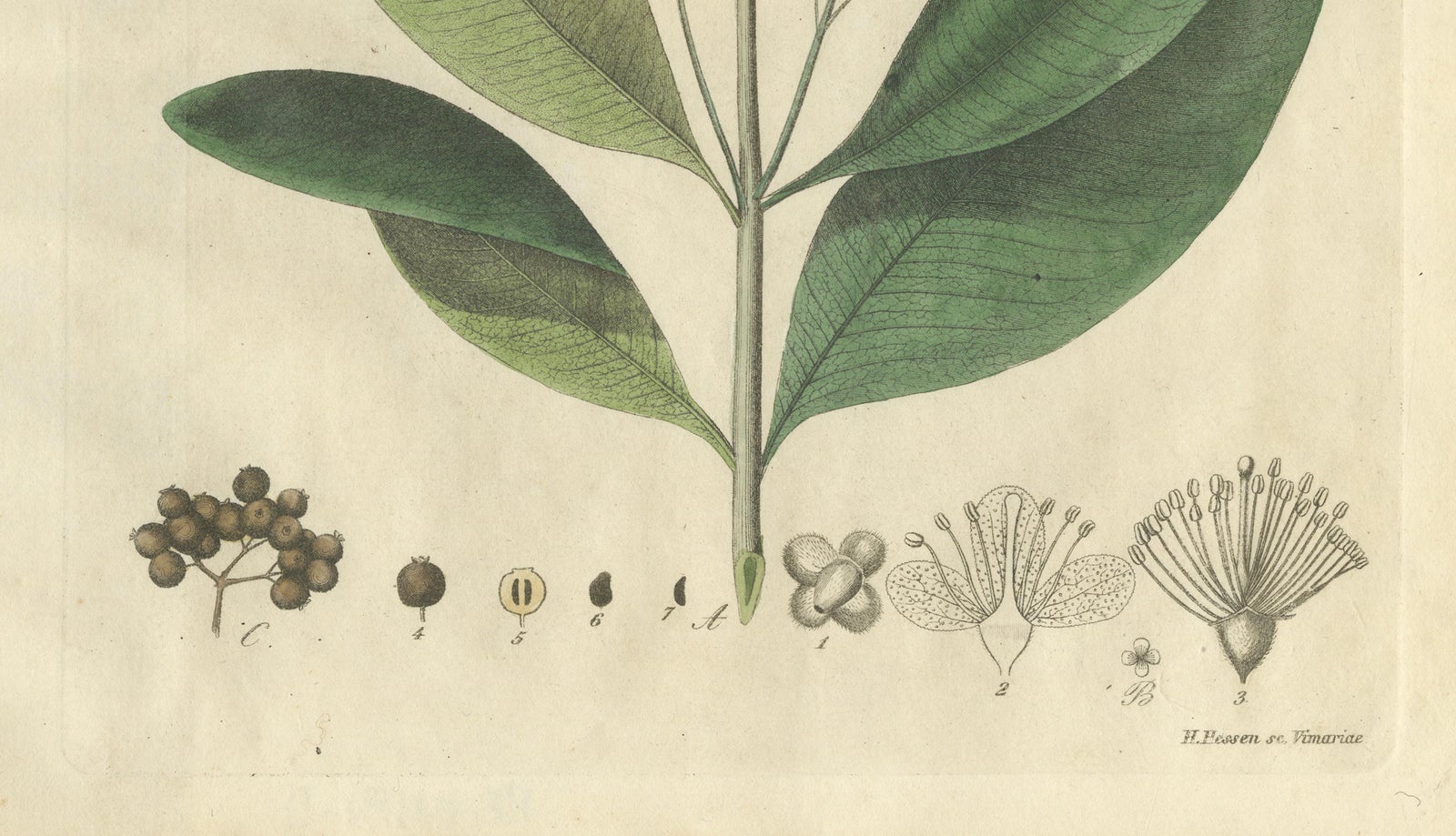
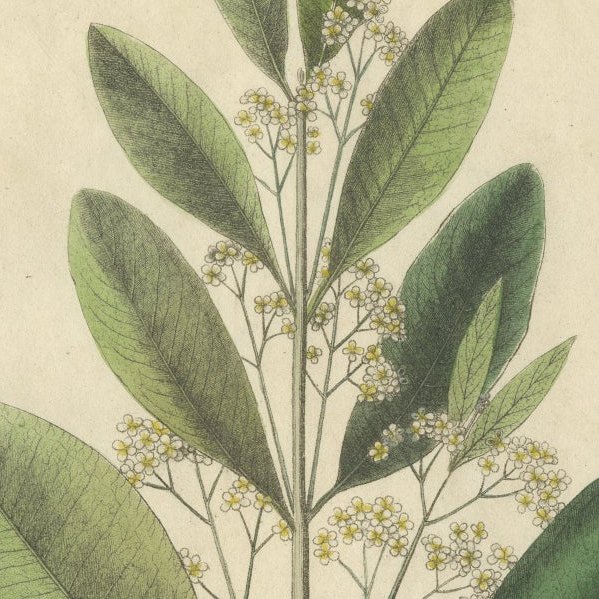
A flowering branch is drawn at full height, with large oval leaves in greens of different tones and branched clusters of small white flowers at the tips. Below it, in a row along the bottom edge, are numbered details: a sprig of ripe berries, a single berry whole and in section, a seed, and the parts of the flower opened out, including the many stamens. The coloring is limited to green on the foliage and a warm brown on the fruit, and the engraved line is left clear.
Allspice, or pimento, is native to the Caribbean and Central America, and its dried unripe berries were an important article of trade to Europe. Zenker's work belongs to the commercial botany of the early 19th century, and it described the plants behind the goods that merchants dealt in.