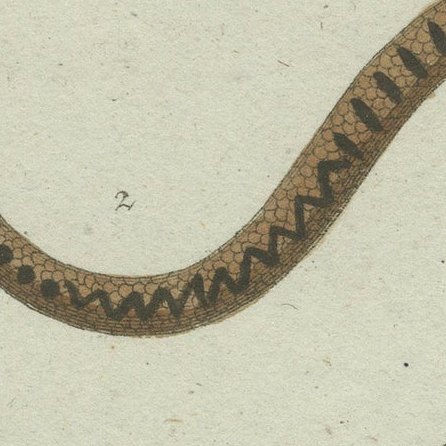
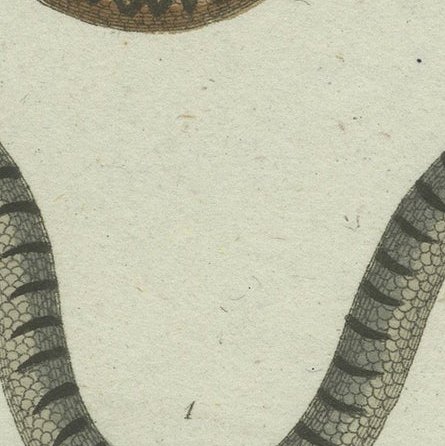
Close-ups
Framed and on the wall
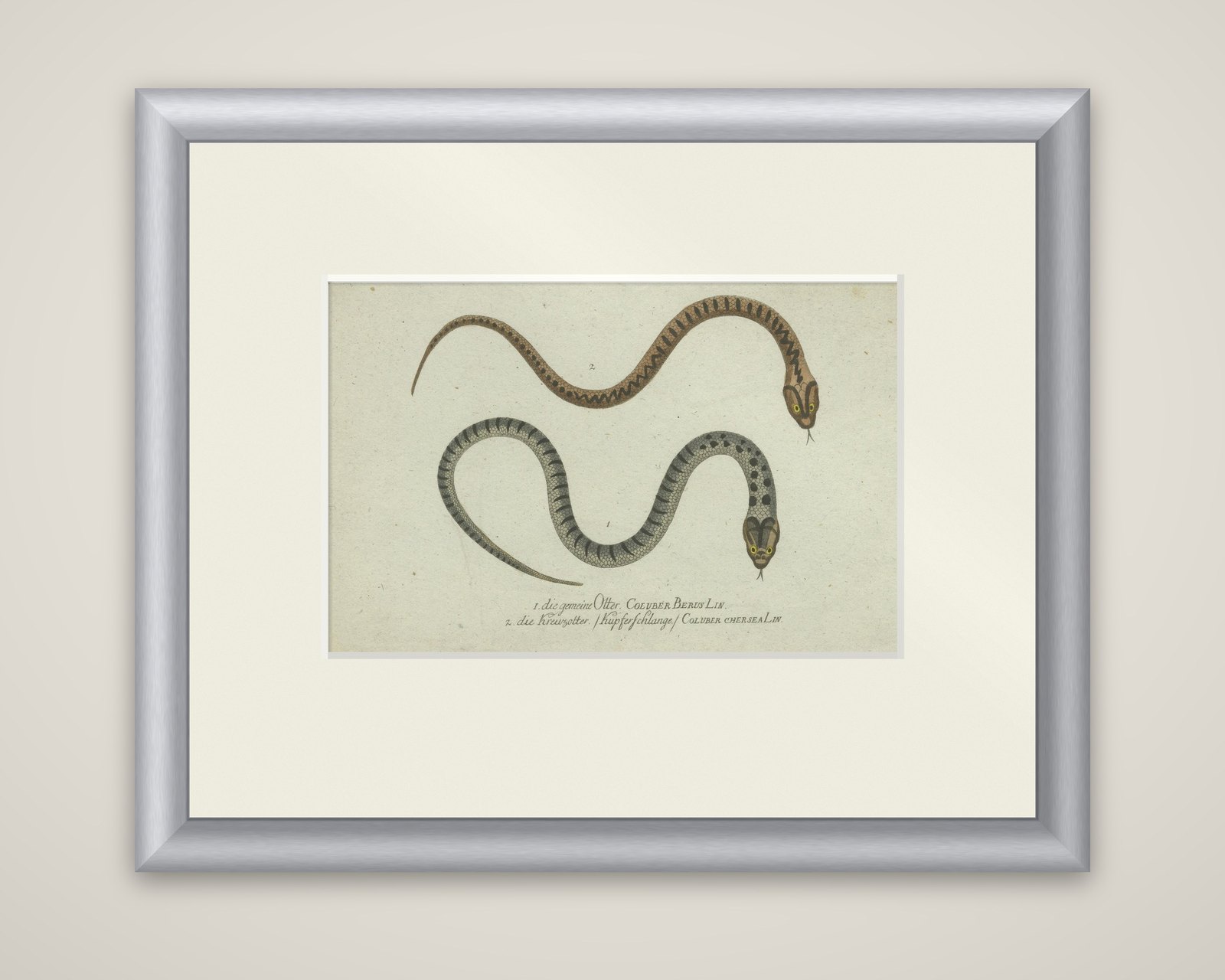


Frame and rooms are illustrations of how the print could look; the description says what is included.
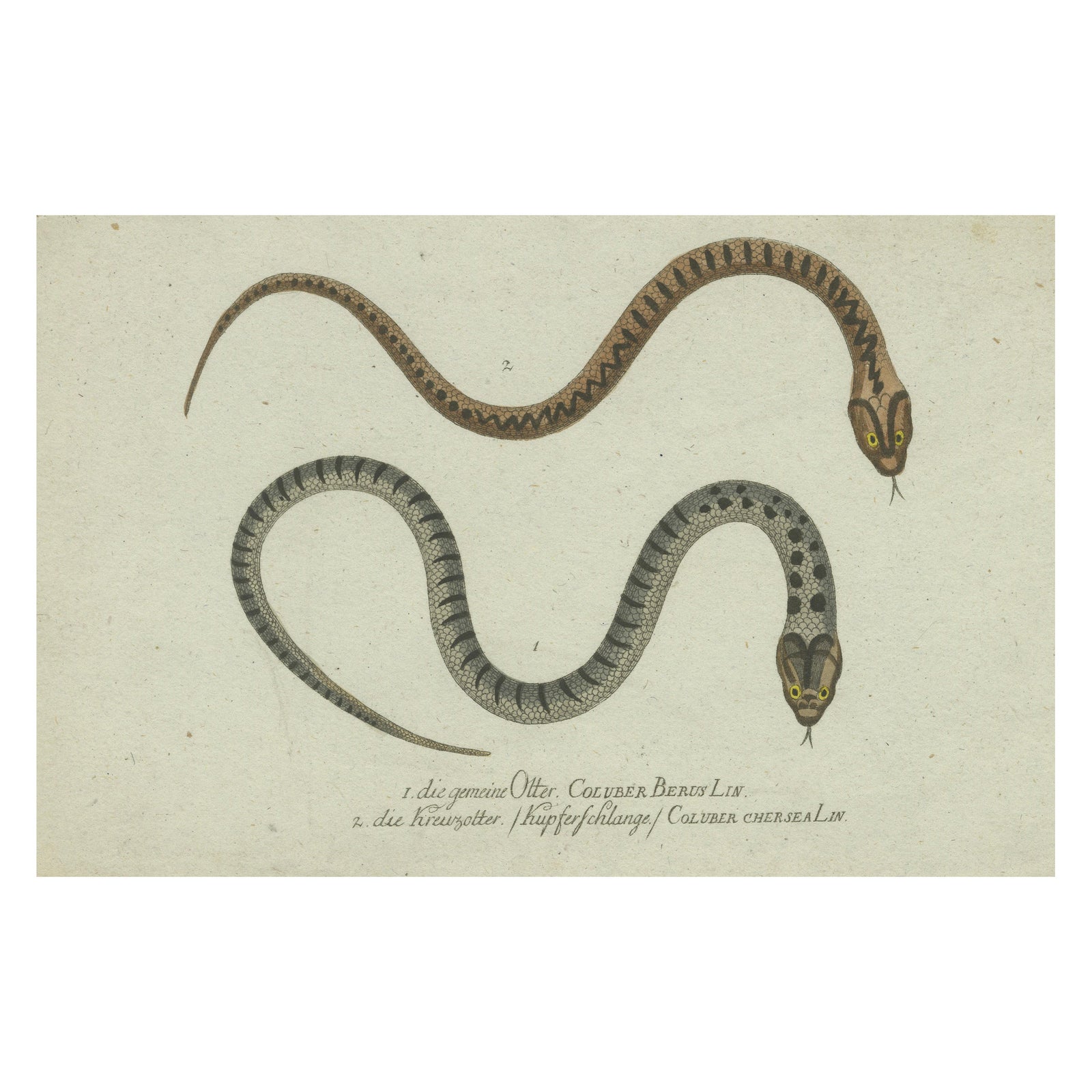
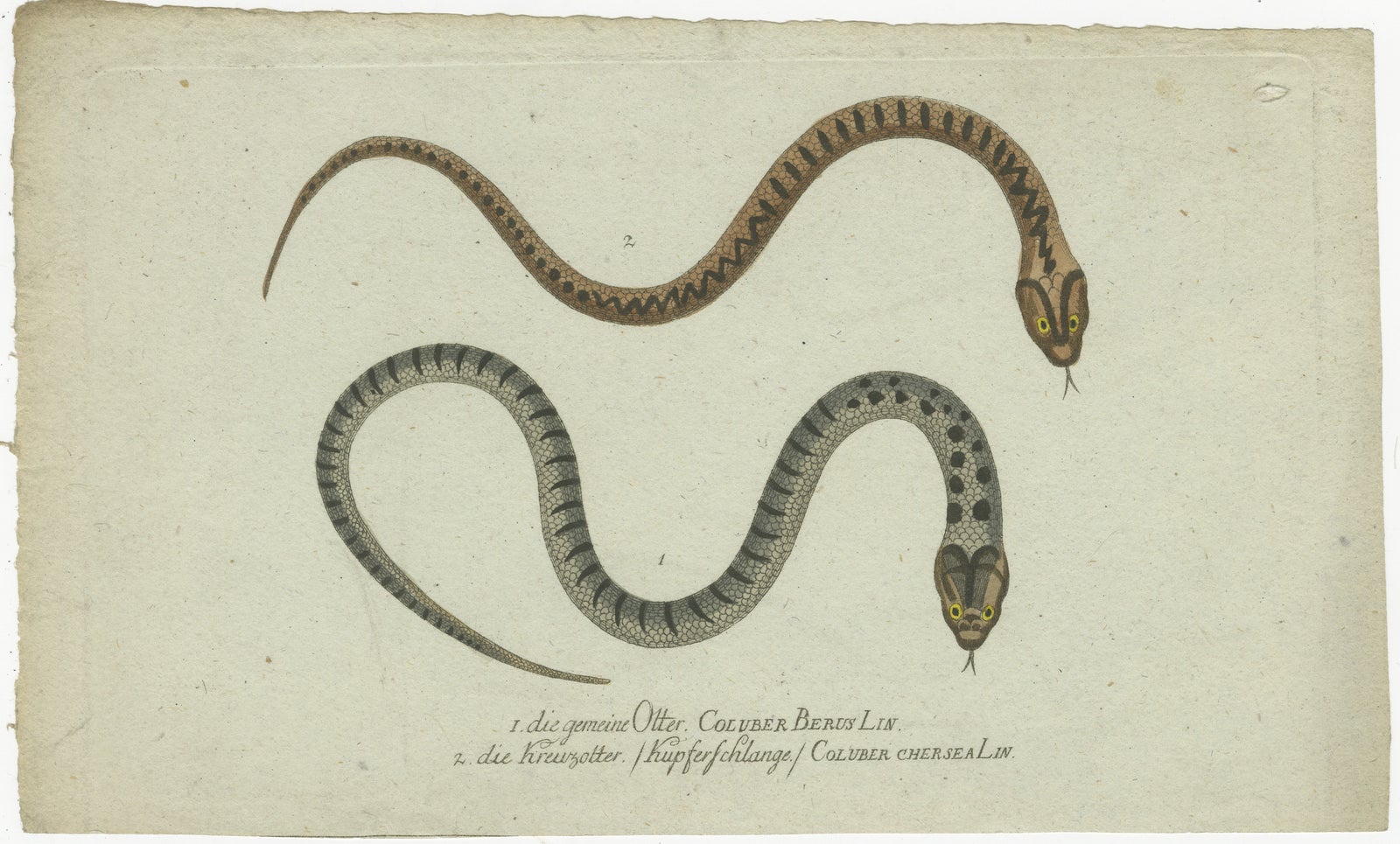
Venom & Vibrance: A Study of European Vipers & North American Copperheads, 1780
£170 ($225, €200)
Period original, not a reproduction.
Shipped from the Netherlands, flat, insured and tracked, worldwide. Returns accepted within 14 days.
- Date
- 1780
- Size
- 5.1 × 8.3 in (13 × 21 cm)
- Condition
- Good. Condition is good. Lower margin cut short. Overall toning and other small incorrections due to age and handling over a few hundred years. Please study the images carefully.
- Period
- 18th century
- Section
- Reptiles and amphibians
- Reference
- f_41193792
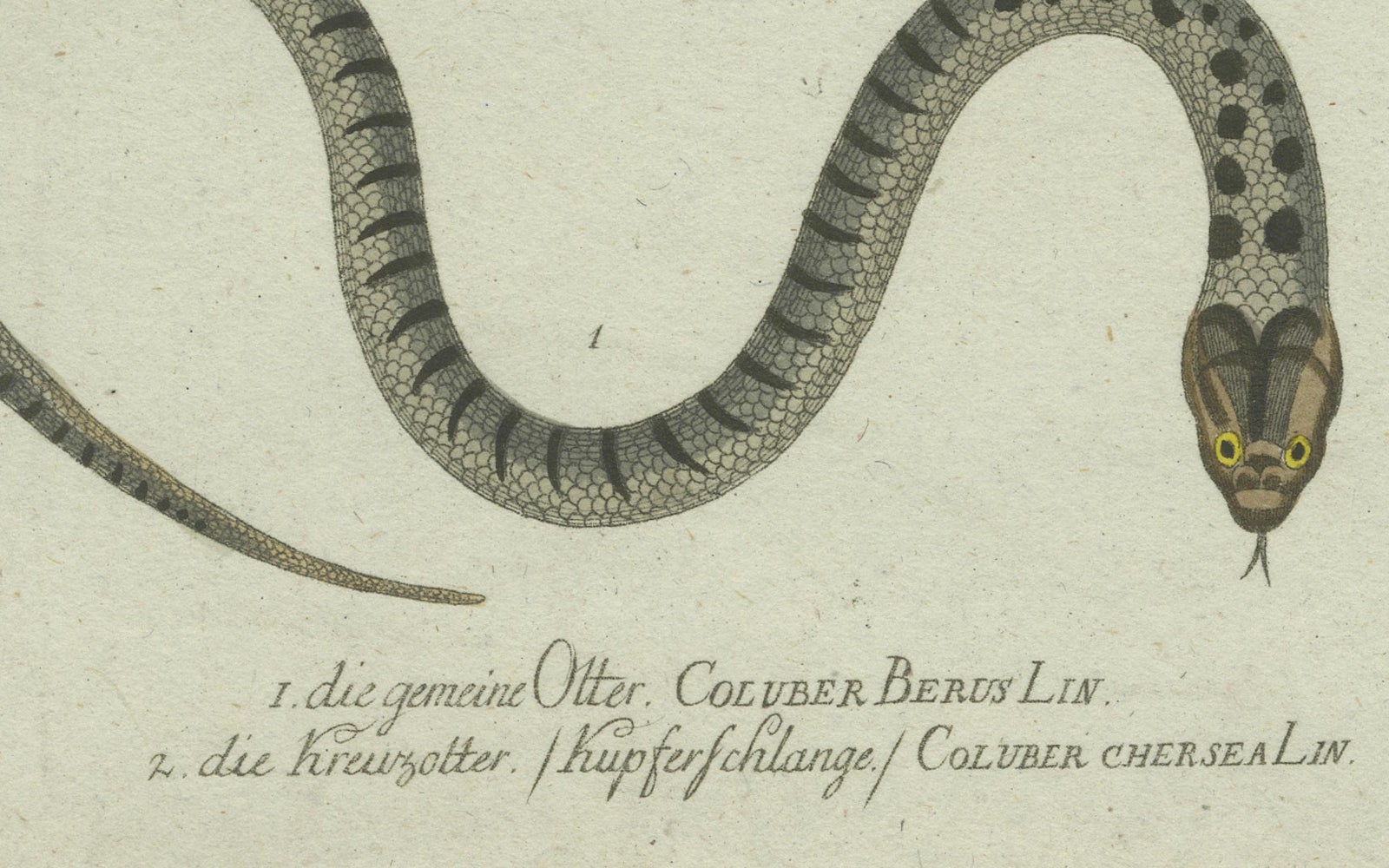
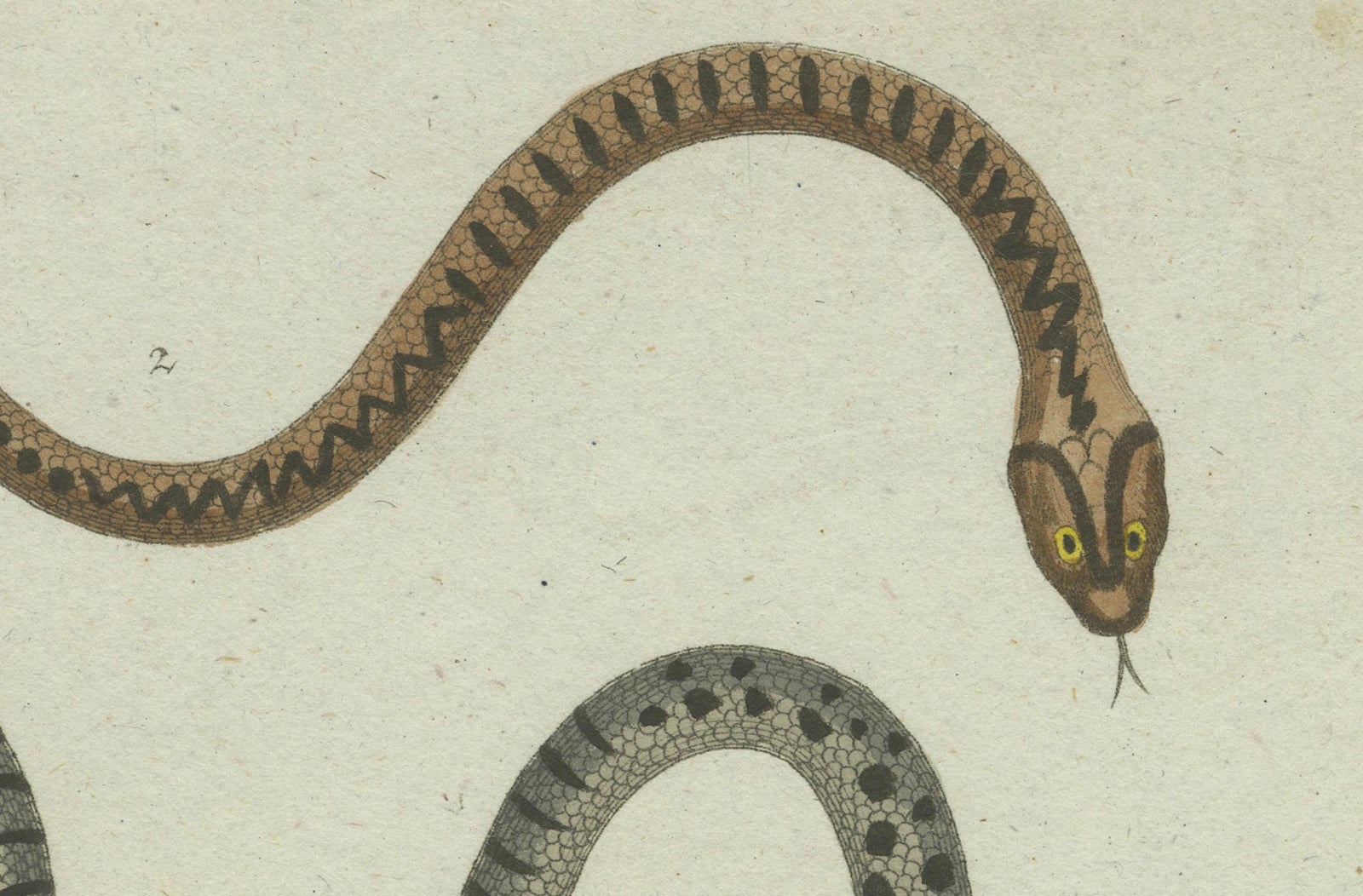
Two snakes on a hand-colored copper engraving, dated 1780 and captioned in German. The lettering reads "1. die gemeine Otter. Coluber Berus Lin." and "2. die Kreuzotter, Kupferschlange, Coluber Chersea Lin.". The sheet carries the credits "I. E. Ihle del." and "L. C. Bock fc.", the draughtsman and the engraver.
Each snake is drawn full length in a sinuous curve against the plain ground of the page, with a flicking tongue and a yellow eye. The upper one, number 2, is a coppery brown with a dark zigzag band running down its back and a darker head with a V-shaped mark. The lower one, number 1, is silvery gray with a row of dark bars across the body and a spotted neck, the scales shown in a fine net. Both are named according to the Linnaean system, with the old genus Coluber that Linnaeus used for most snakes.
The plates come from a German natural history of the late eighteenth century.