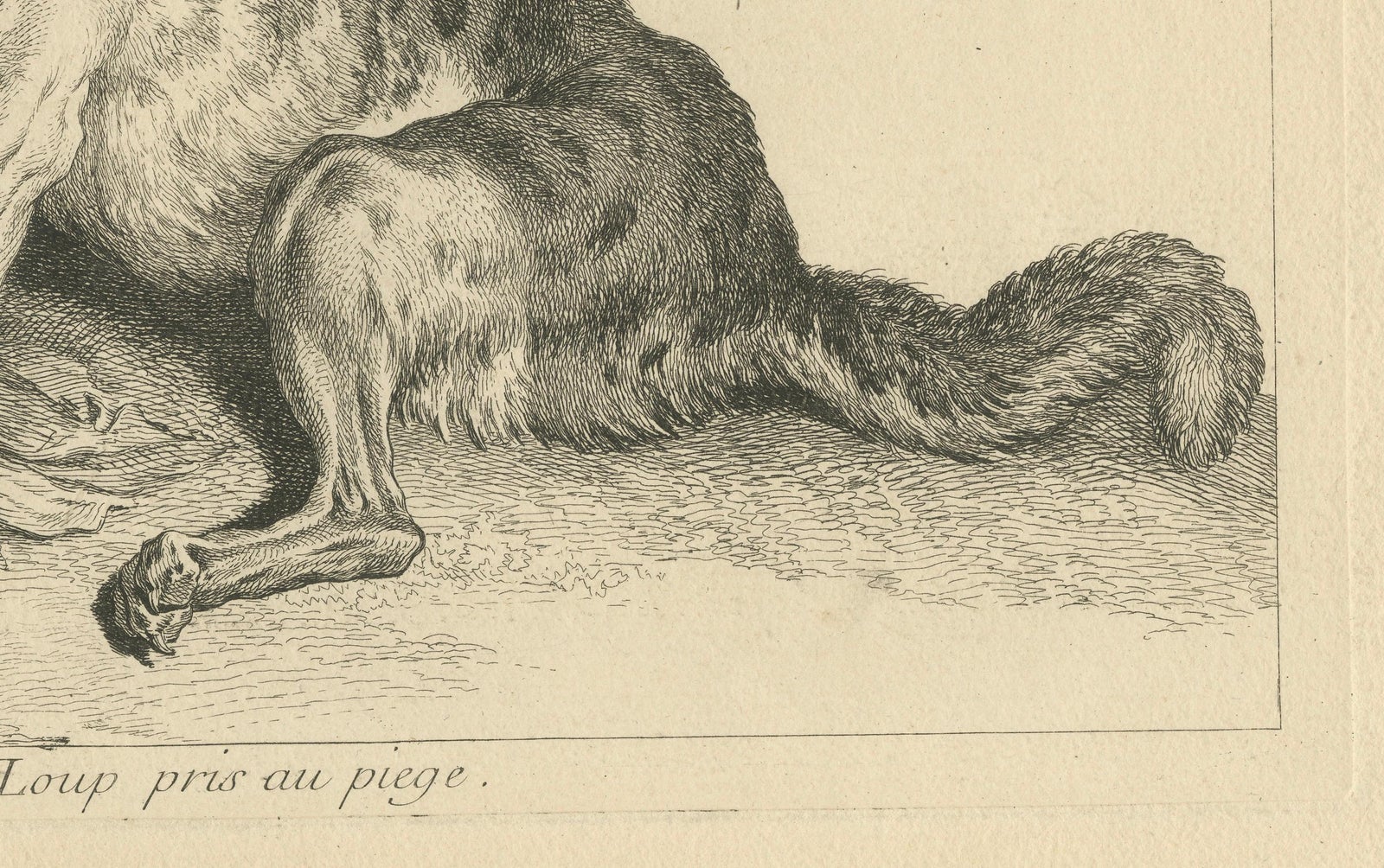
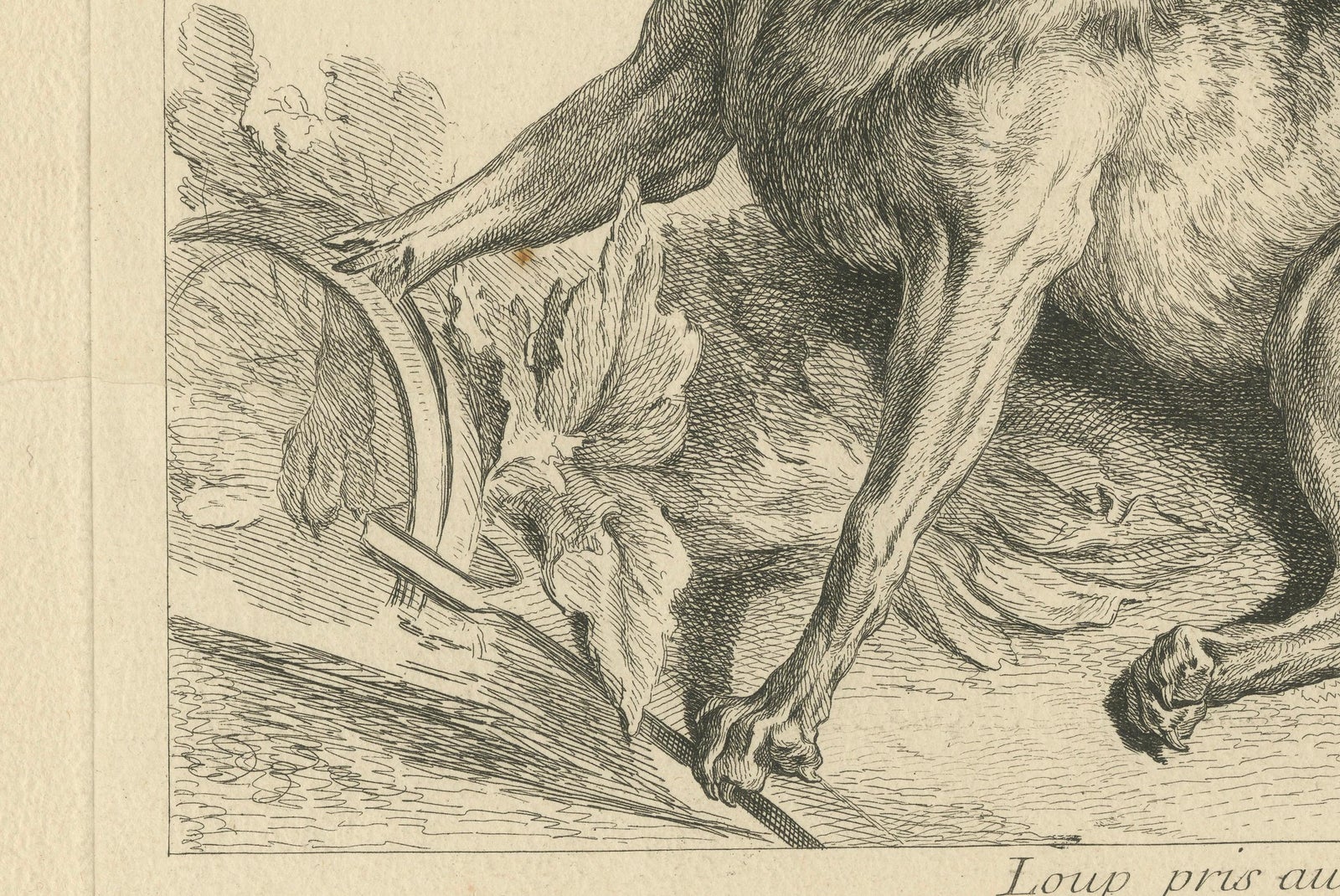
Close-ups
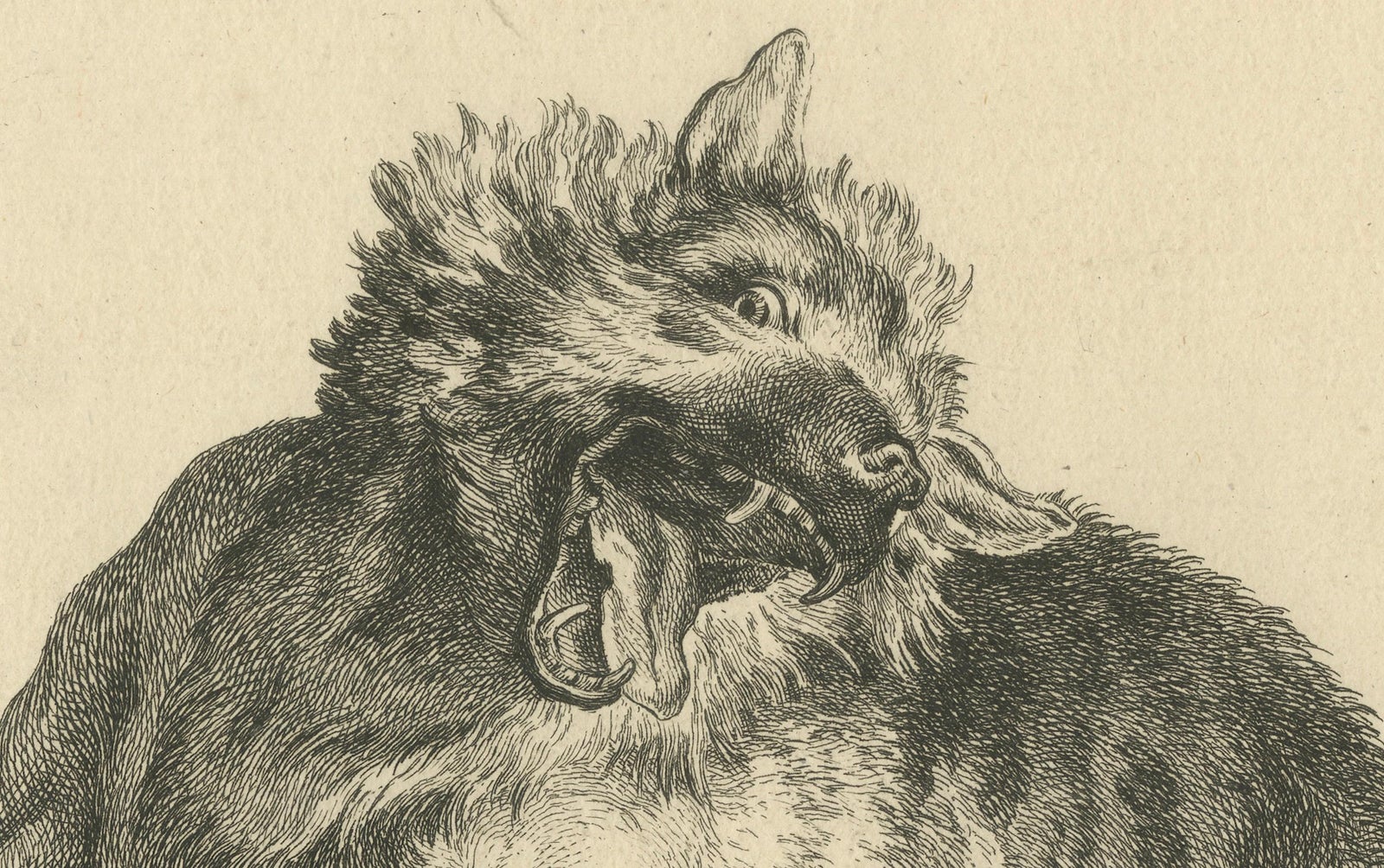
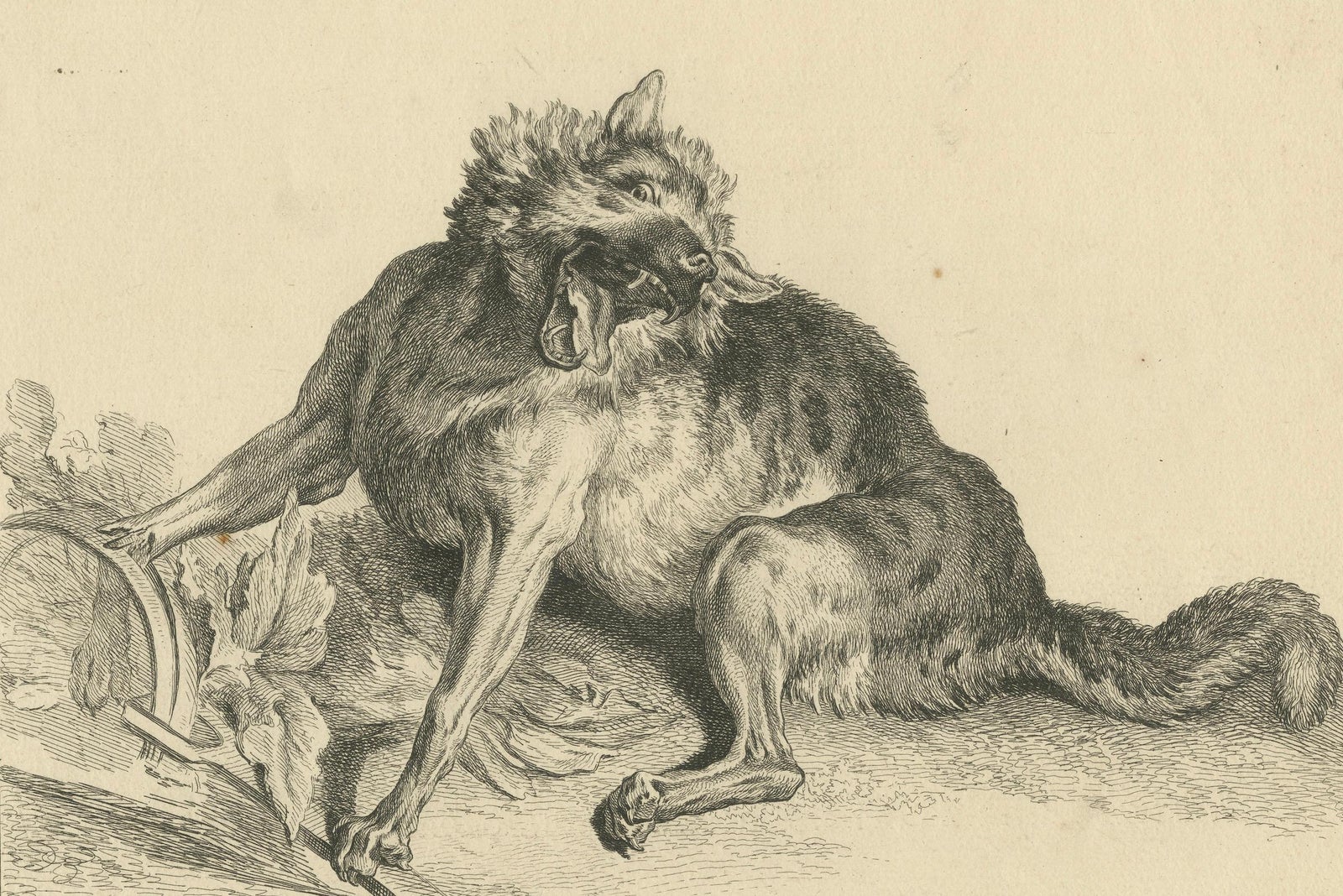
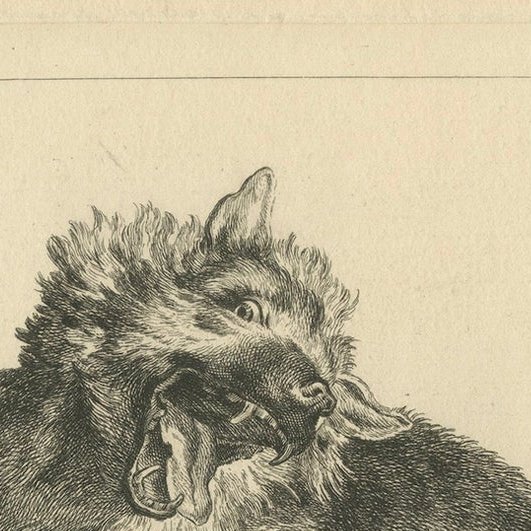
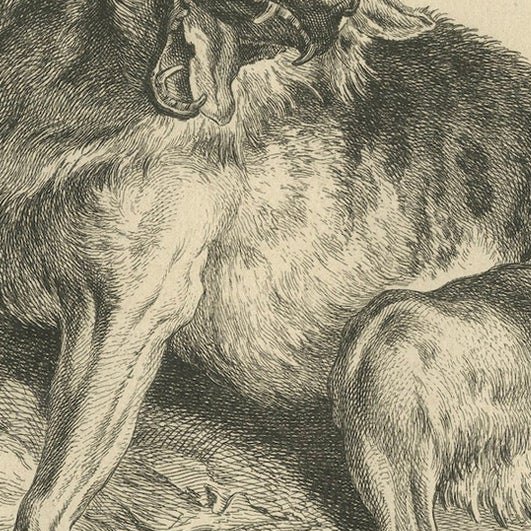
Framed and on the wall
Frame and rooms are illustrations of how the print could look; the description says what is included.
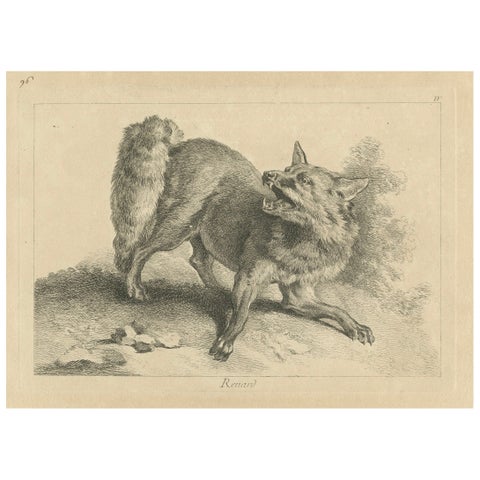
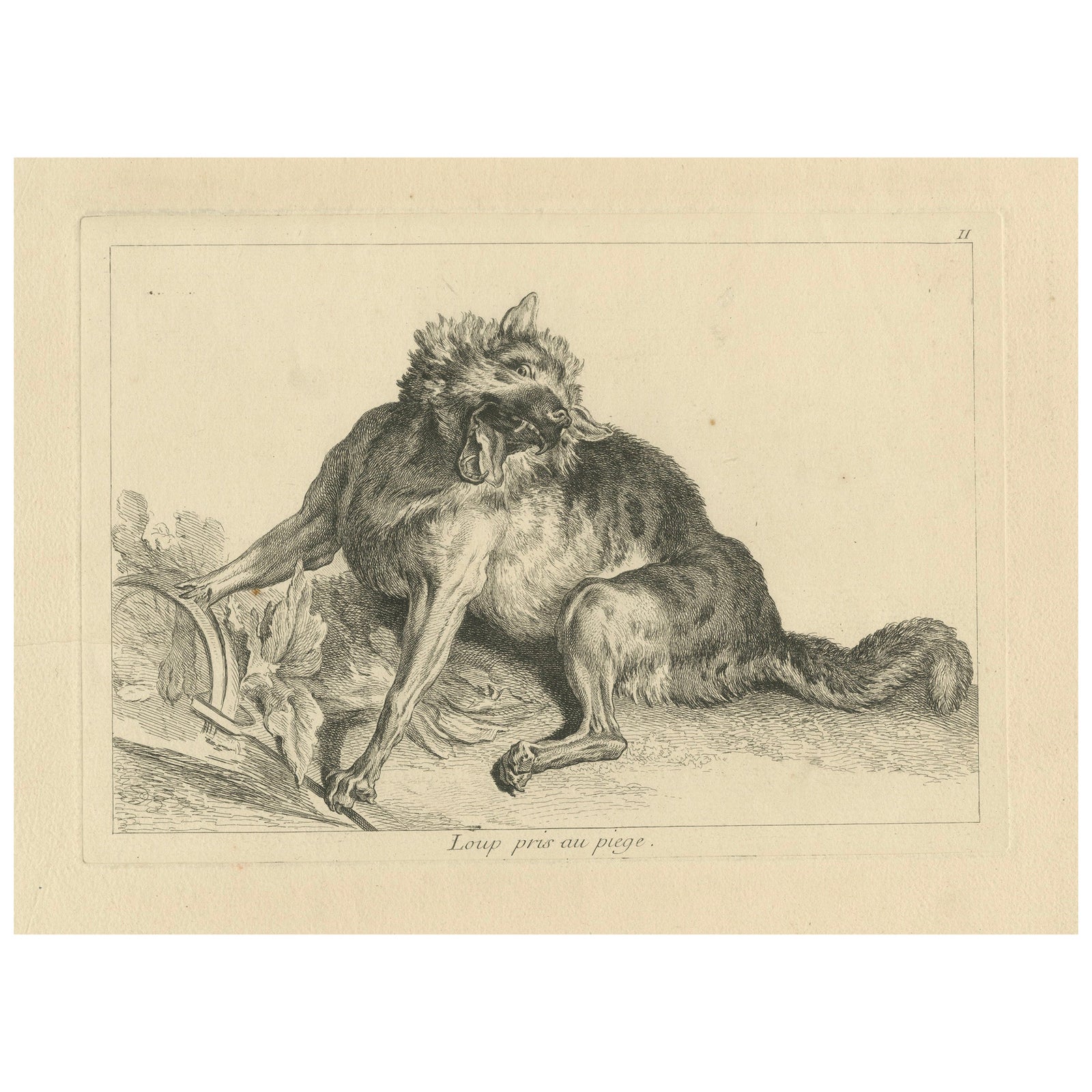
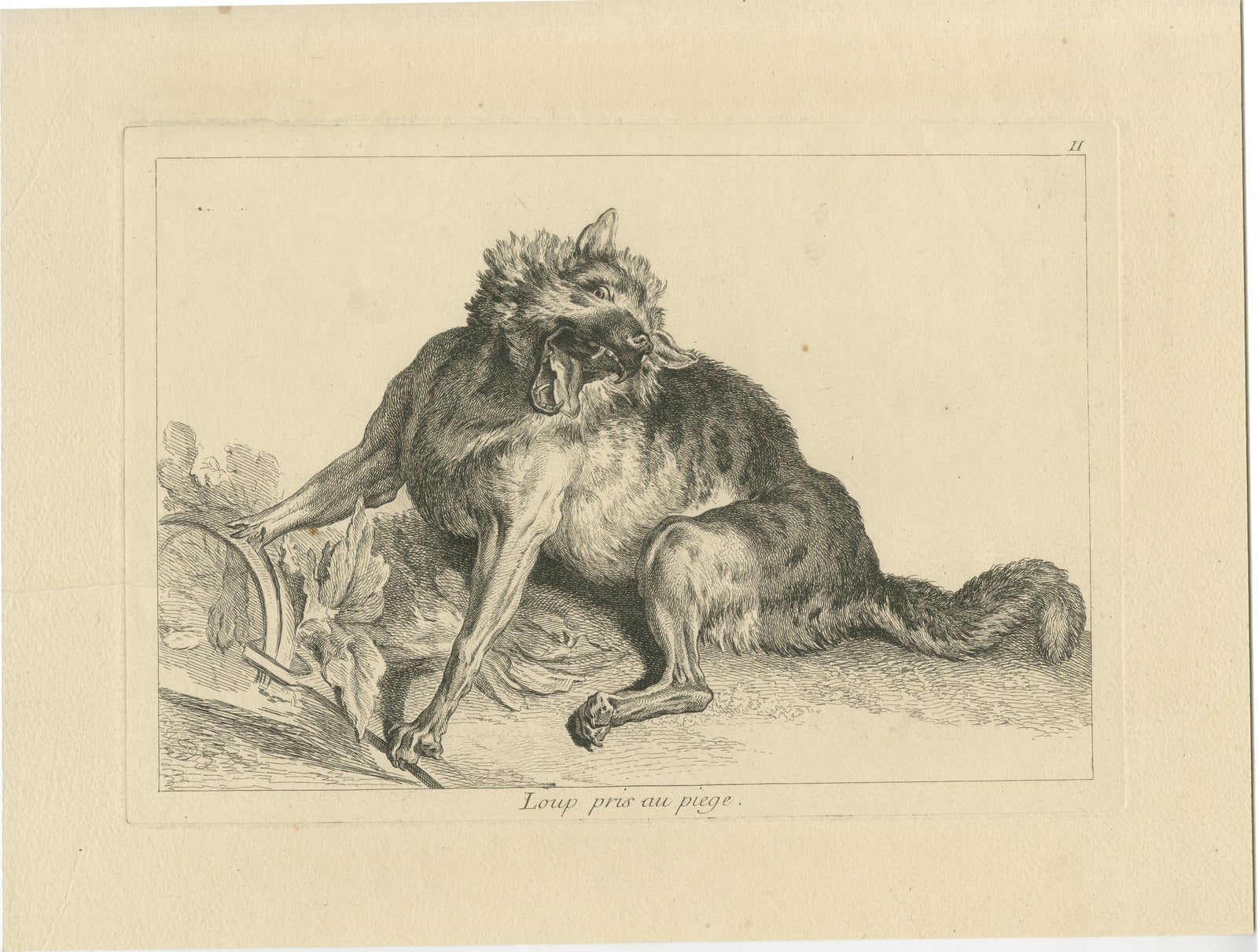
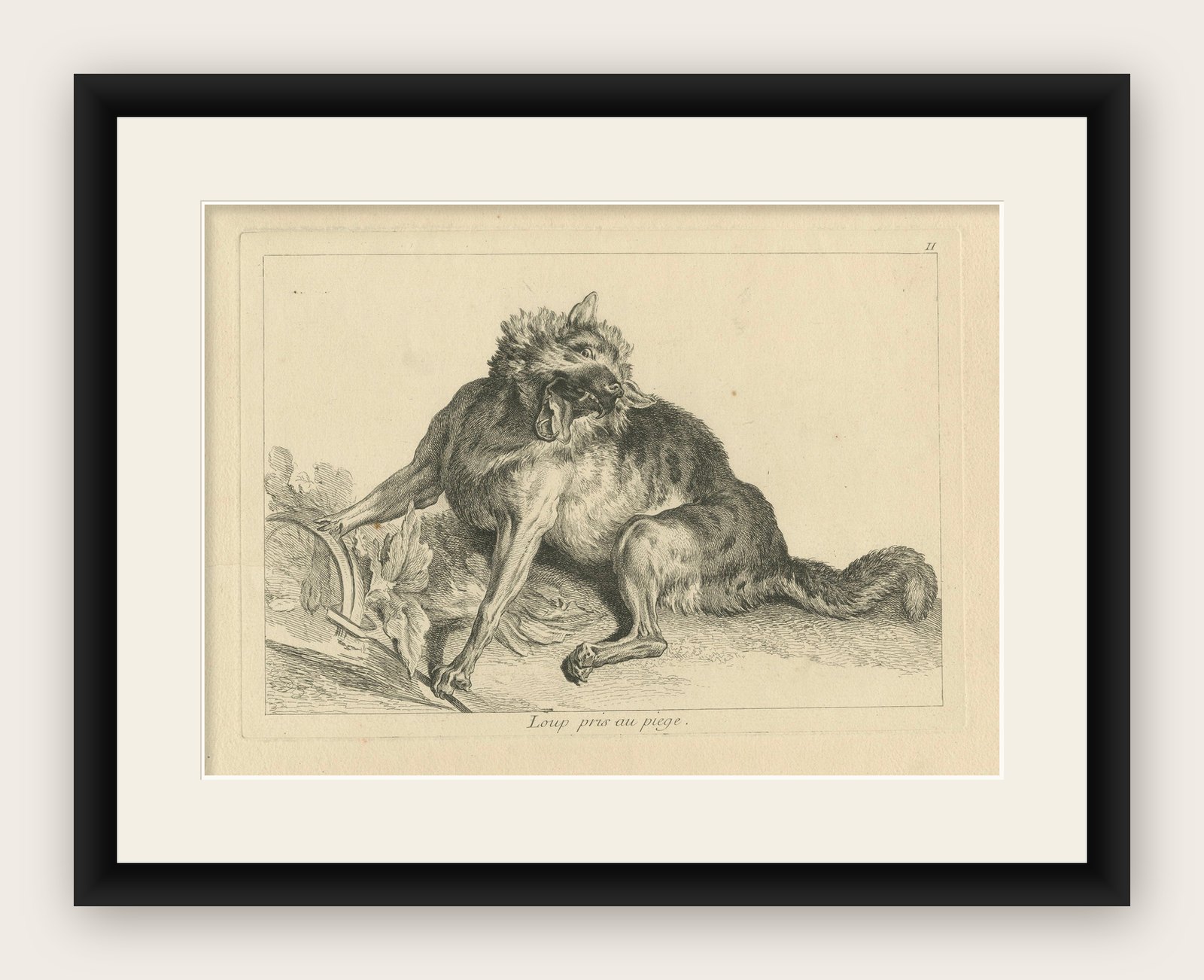
Trapped Wolf: A Detailed Etching - circa 1740
£375 ($495, €440)
Period original, not a reproduction.
Shipped from the Netherlands, flat, insured and tracked, worldwide. Returns accepted within 14 days.
- Date
- 1740
- Size
- 12 × 15.9 in (30.5 × 40.3 cm)
- Condition
- Good. Given age. Strong paper. General age-related toning and/or occasional minor defects from handling. One repaired tear into the image on the left. Please study the scans carefully.
- Period
- 18th century
- Section
- Mammals
- Reference
- f_40614082
This etching and engraving, titled "Loup pris au piège" (Wolf Caught in a Trap), depicts a wolf ensnared in a trap. The artwork captures the wolf's struggle and distress with precise detailing of its fur, muscles, and expression. The scene is dramatic, showing the animal’s tension and pain as it attempts to free itself. The background includes elements of foliage, enhancing the setting of the scene. This print is a striking representation of the wild, showcasing the artist's ability to convey emotion and movement through detailed engraving.
The animal depicted, known as a wolf, belongs to the species *Canis lupus*. Wolves are found in various habitats including forests, tundras, grasslands, and deserts across North America, Europe, Asia, and the Middle East. They are known for their pack behavior, intelligence, and adaptability to different environments.
The makers of the etching are Jacques-Philippe Le Bas and Jean Eric Rehn, based on the work of Jean-Baptiste Oudry. These artists collaborated to create detailed and elegant engravings of various animals.