Close-ups
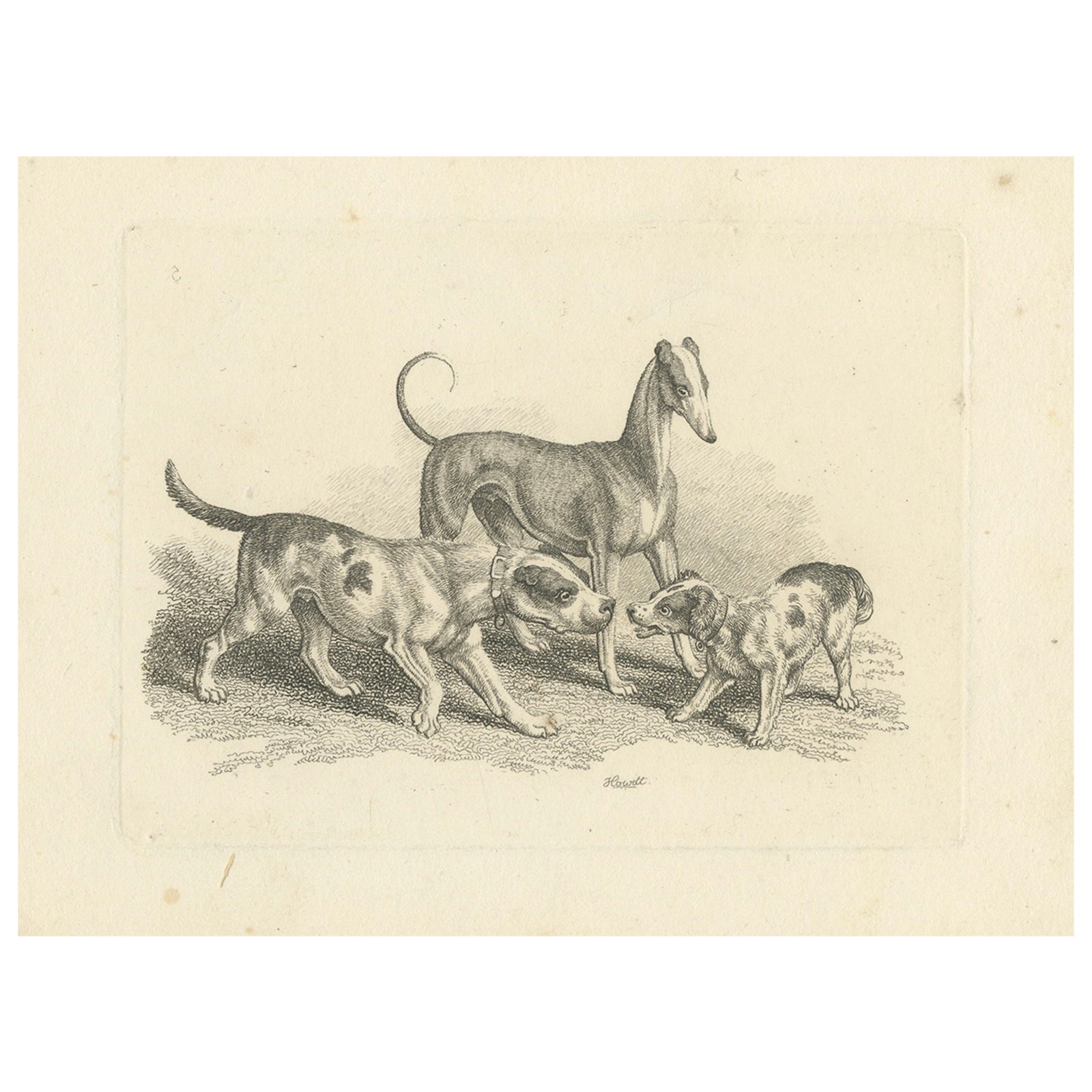
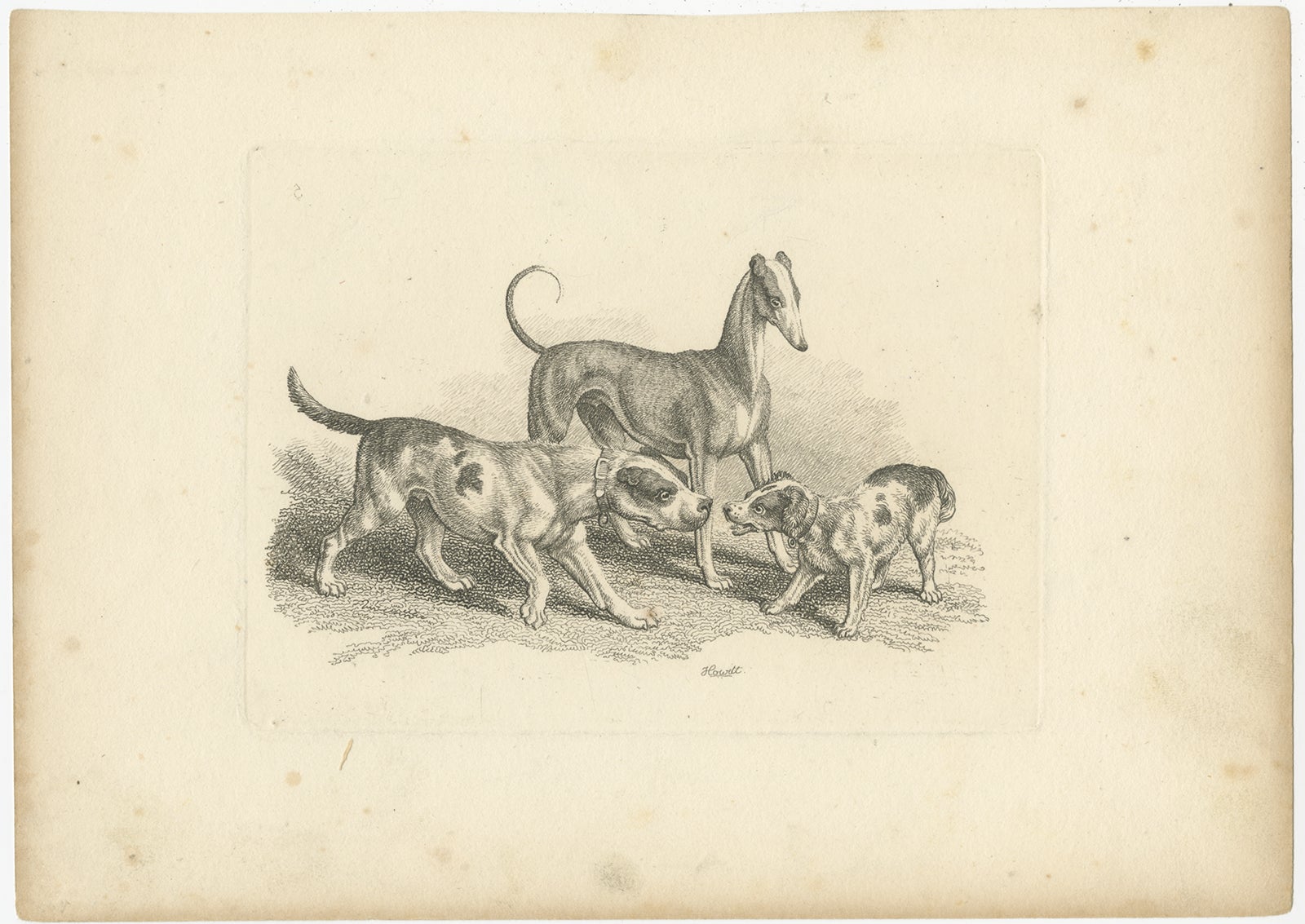
Three Dogs, Antique Etching by Samuel Howitt from Miscellaneous Etchings, 1812
$215 (£160, €190)
Period original, not a reproduction.
Shipped from the Netherlands, flat, insured and tracked, worldwide. Returns accepted within 14 days.
- Date
- 1812
- Size
- 8.1 × 11.3 in (20.5 × 28.7 cm)
- Condition
- Good. For age. Light toning to the sheet, a few small scattered fox marks, and minimal handling signs. Strong impression with good plate mark and ample margins.
- Period
- Early 19th century
- Section
- Mammals
- Reference
- f_46235772
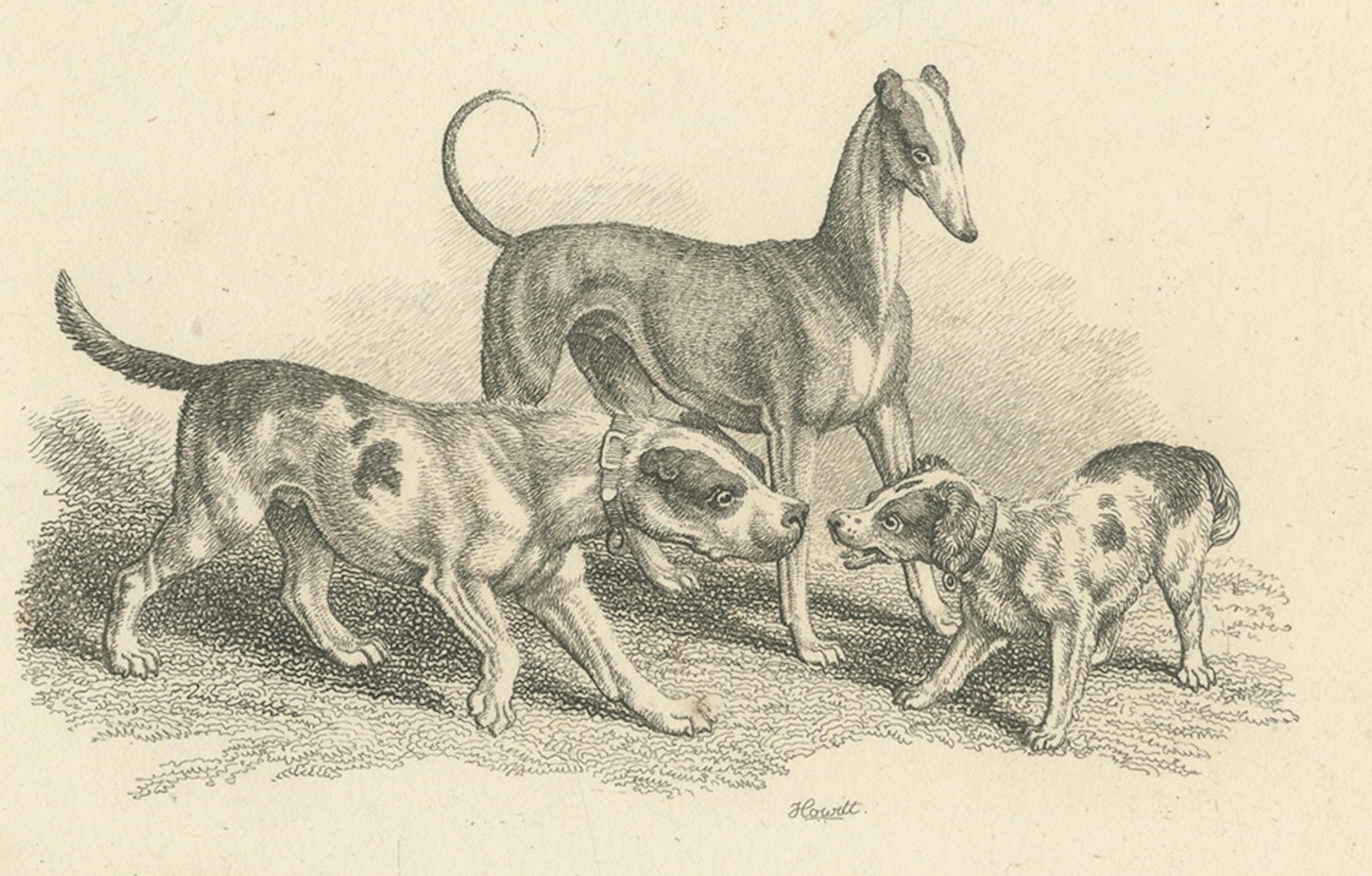
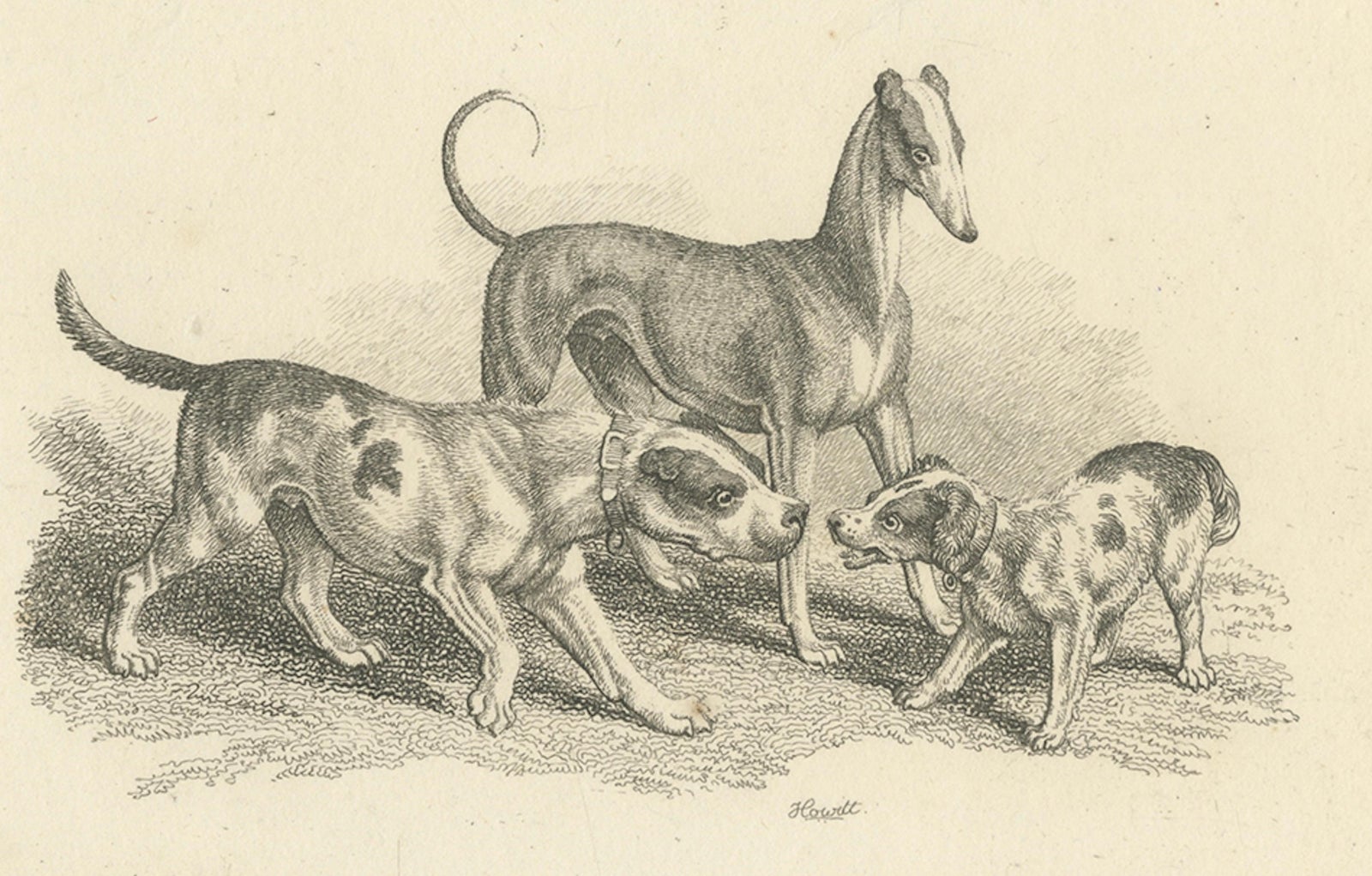
Three Dogs, Antique Etching by Samuel Howitt from 'Miscellaneous Etchings', 1812
This charming early 19th-century etching by Samuel Howitt (1756–1822) depicts three dogs in a moment of alert interaction. At the centre, a tall greyhound-like hound stands poised and watchful, flanked by two shorter, muscular dogs, one advancing with measured curiosity, the other leaning in to meet its gaze. The scene captures not only the physical form of each animal but also a subtle narrative of movement, character, and mutual awareness.
The central dog is a Greyhound, tall, slender, deep-chested, with a narrow head, long legs, a tucked-up abdomen, and a curved tail. The dog on the left is a Bulldog-type, medium height, muscular build, square muzzle, drooping ears, strong forequarters, and a short coat with patches. Early 19th-century Bulldogs were leaner and taller than the modern breed. The smaller dog on the right is a Spaniel, likely an early working type such as a Springer Spaniel or Field Spaniel, with a compact body, slightly domed head, shorter muzzle, dropped ears, and some feathering on the tail and legs.
These three breeds would have been associated with different sporting purposes in Howitt’s time: the Greyhound for coursing, the Bulldog-type for bull-baiting and guarding, and the Spaniel for flushing game in the field.
Samuel Howitt was one of Britain’s foremost sporting and animal artists of his day. Known for his dynamic yet naturalistic compositions, he had a rare ability to portray both domestic and wild animals with anatomical accuracy and a keen sense of personality. His work was widely published in books and collections, often appealing to sportsmen, naturalists, and lovers of fine animal portraiture.
This print comes from the Miscellaneous Etchings, Old & New (new edition, 1812), a compilation “containing fifty designs” that features dogs, pigs, cattle, sheep, deer, and horses. Howitt’s etchings in this volume are highly regarded for their confident linework, lively shading, and the way they combine technical skill with an obvious affection for the subjects.
Printed on laid paper with generous margins, this impression retains fine detail in the dogs’ coats and the subtle textures of the ground. It is an excellent example of Howitt’s artistry and a desirable piece for collectors of canine art, sporting history, or early 19th-century British prints.
Condition: Good for age. Light toning to the sheet, a few small scattered fox marks, and minimal handling signs. Strong impression with good plate mark and ample margins.
Framing tips: A pale cream mount with a narrow dark wood or ebonized frame will enhance the etching’s contrast and highlight the fine lines, while keeping focus on the dogs’ lively expressions.
Technique: Etching
Maker: Samuel Howitt, England, 1812