Close-ups
Framed and on the wall
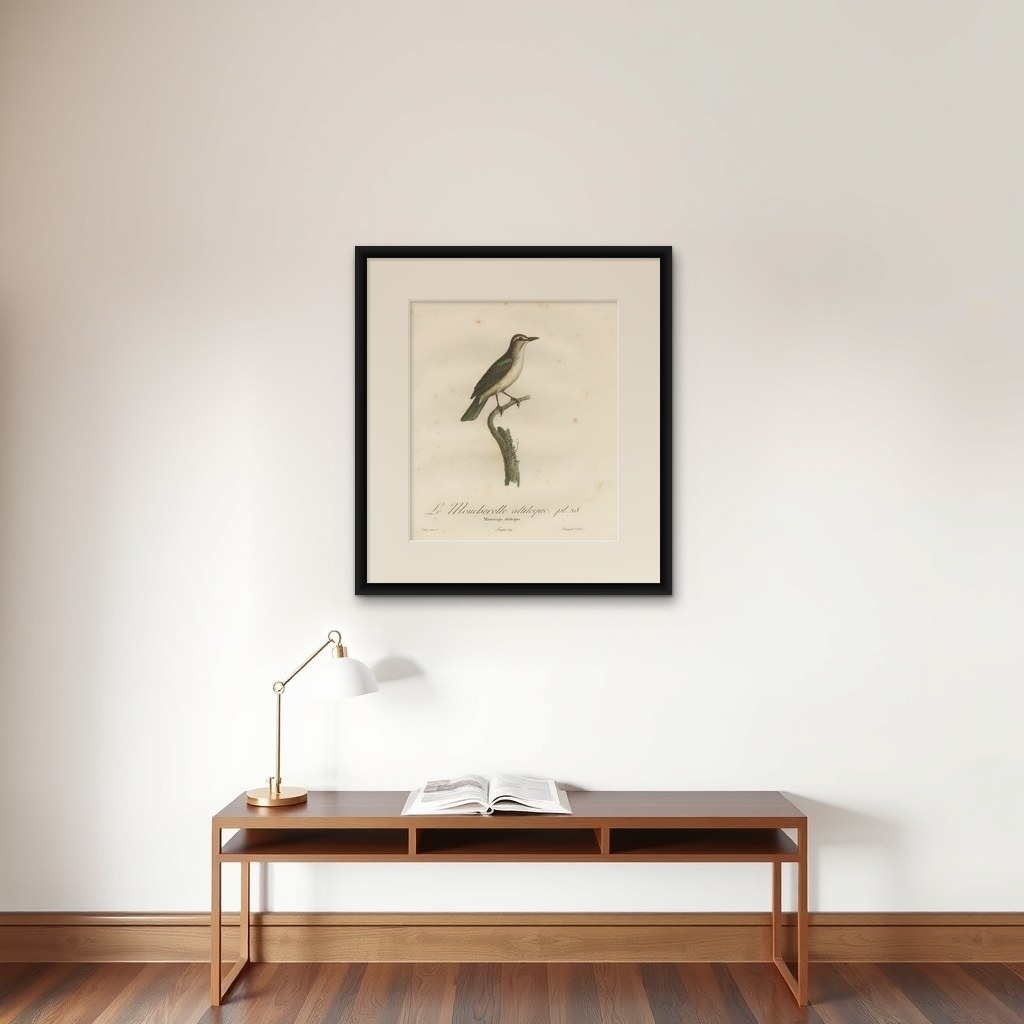

Frame and rooms are illustrations of how the print could look; the description says what is included.
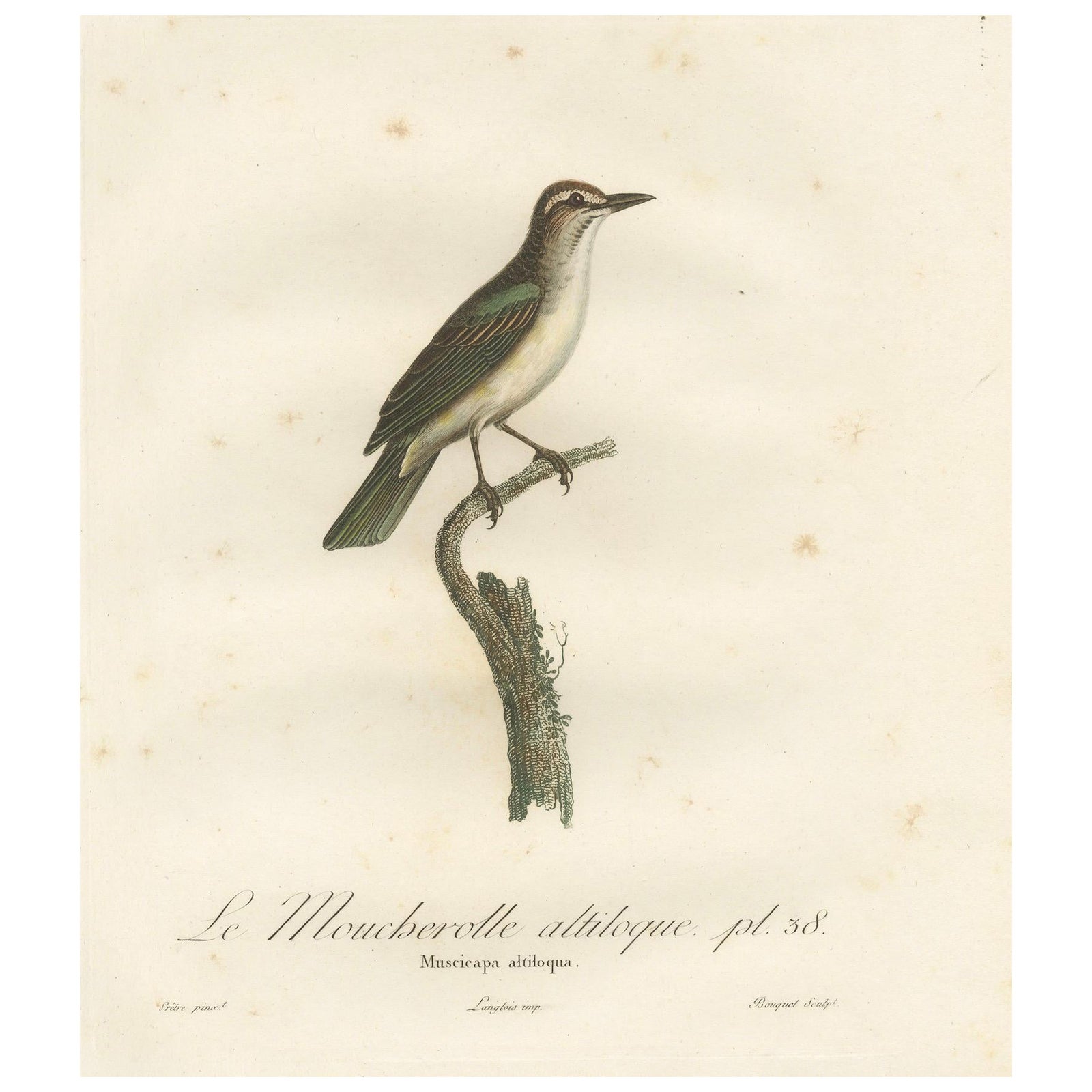
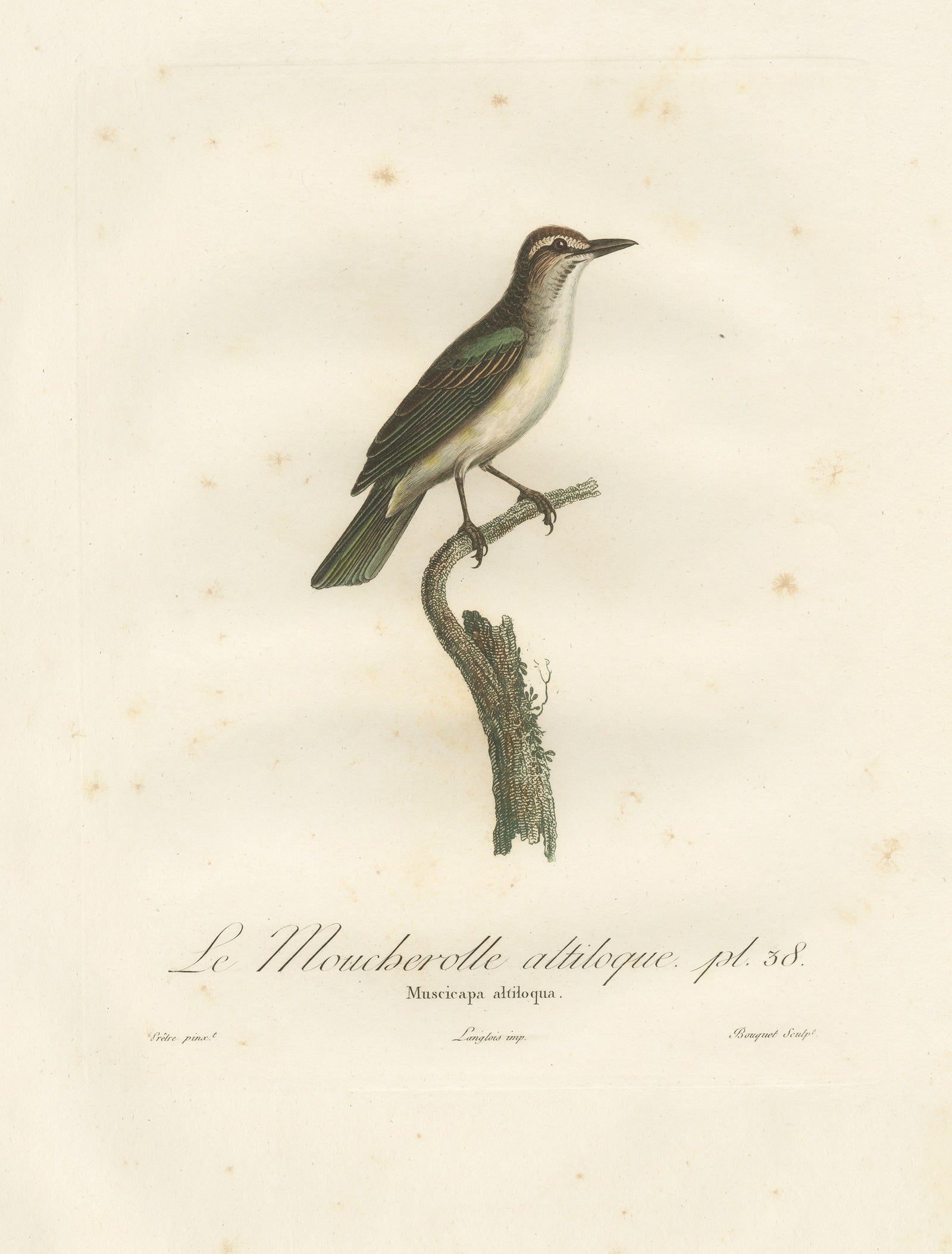
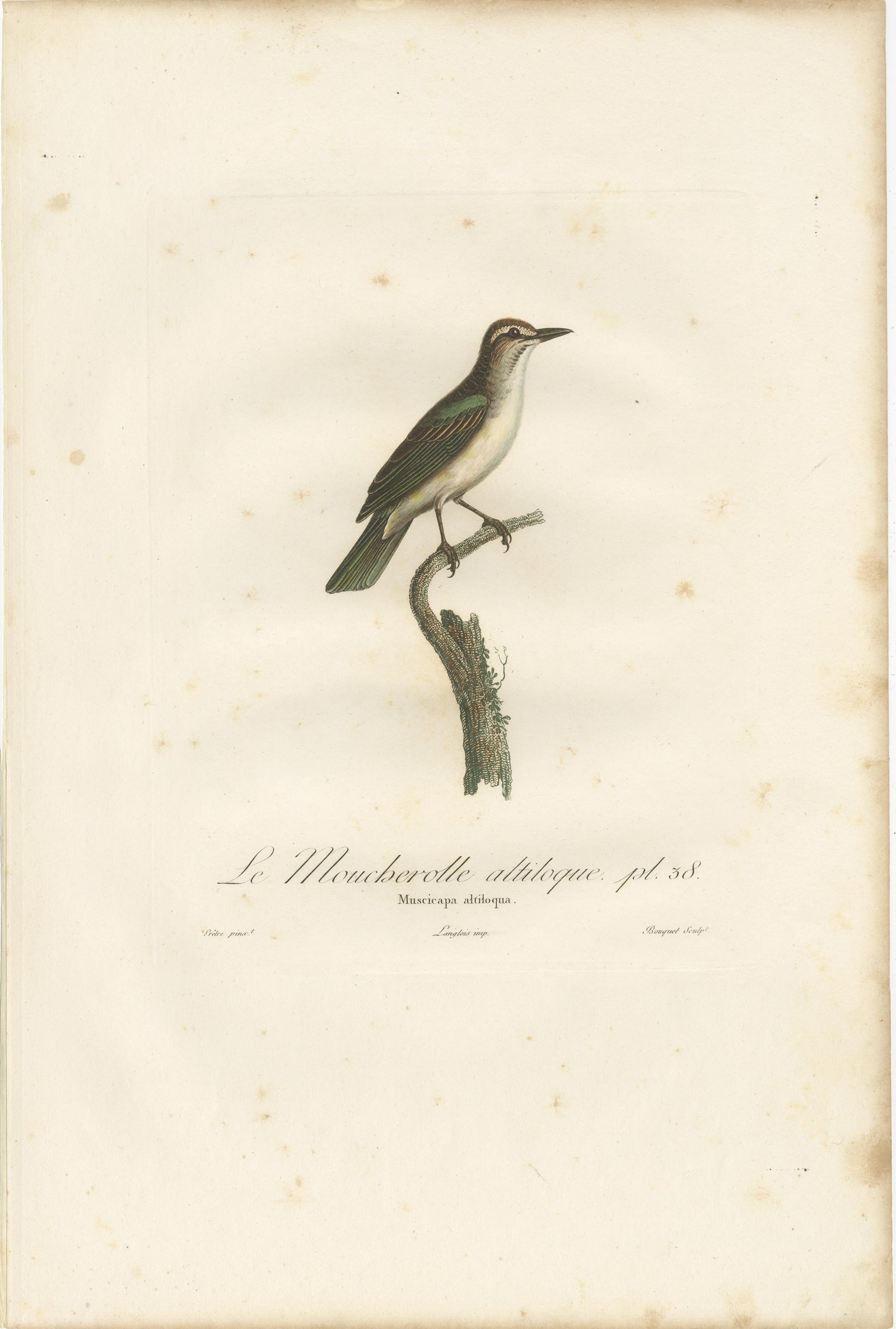
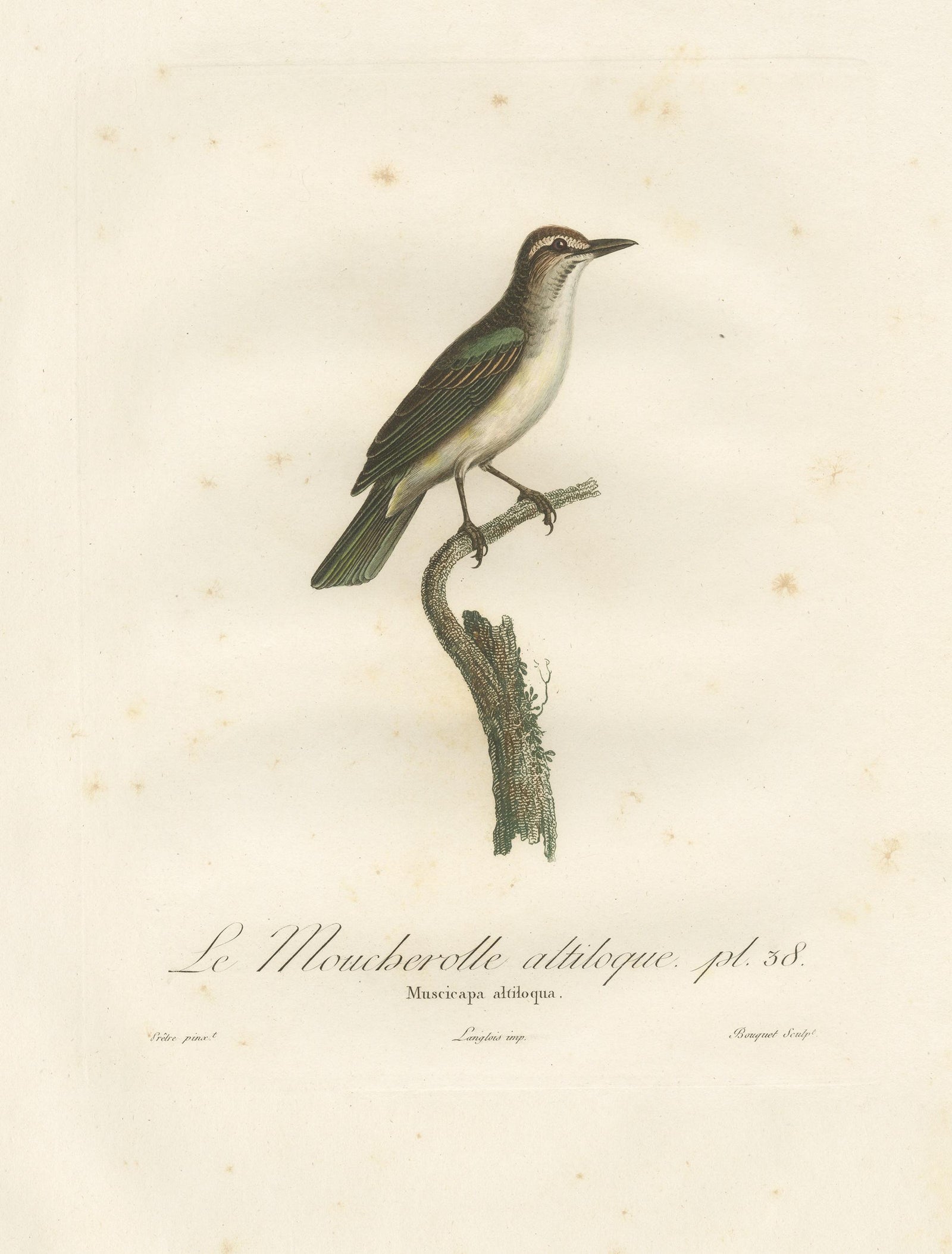
The Black-Whiskered Vireo, An 1807 Large Hand-Colored Ornithological Print
€499 ($560, £420, €499)
Period original, not a reproduction.
Shipped from the Netherlands, flat, insured and tracked, worldwide. Returns accepted within 14 days.
- Date
- 1807
- Size
- 20.3 × 13.5 in (51.5 × 34.4 cm)
- Condition
- Good. General age-related toning, adding to its patina. Minor wear and foxing, blank verso. Please study image carefully.
- Period
- Early 19th century
- Section
- Birds
- Reference
- f_39082752
- Colour
- Hand coloured
What the condition grades mean
- Excellent
- Bright and clean, with no faults worth mentioning.
- Very good
- Only light signs of age, such as faint toning.
- Good
- Normal signs of age for a sheet of this period: toning, some foxing, small marks or neat old repairs.
- Fair
- Clear faults such as staining, tears or repairs, priced to match.
Every fault we see is written in the condition note, and the whole sheet is shown uncropped in the photos.
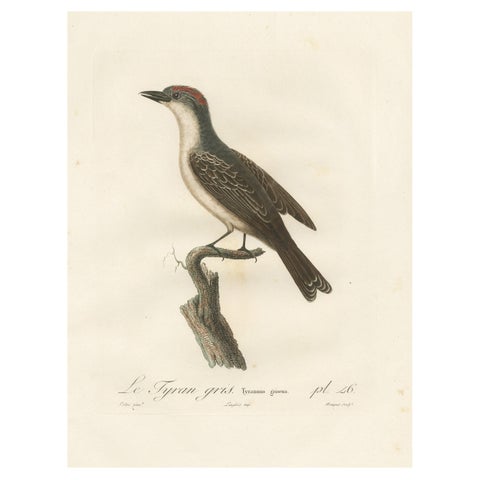
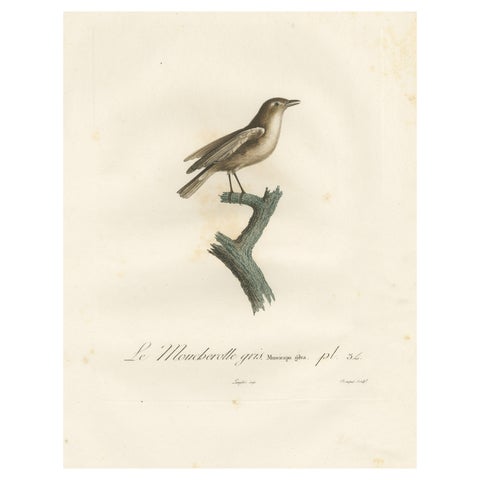
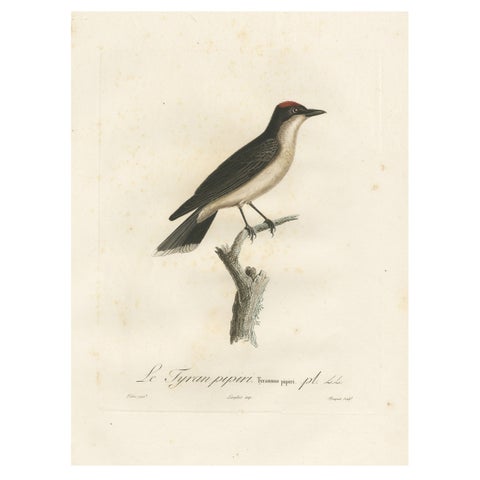
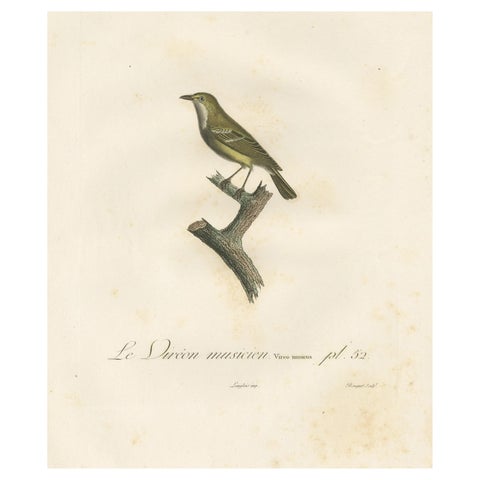
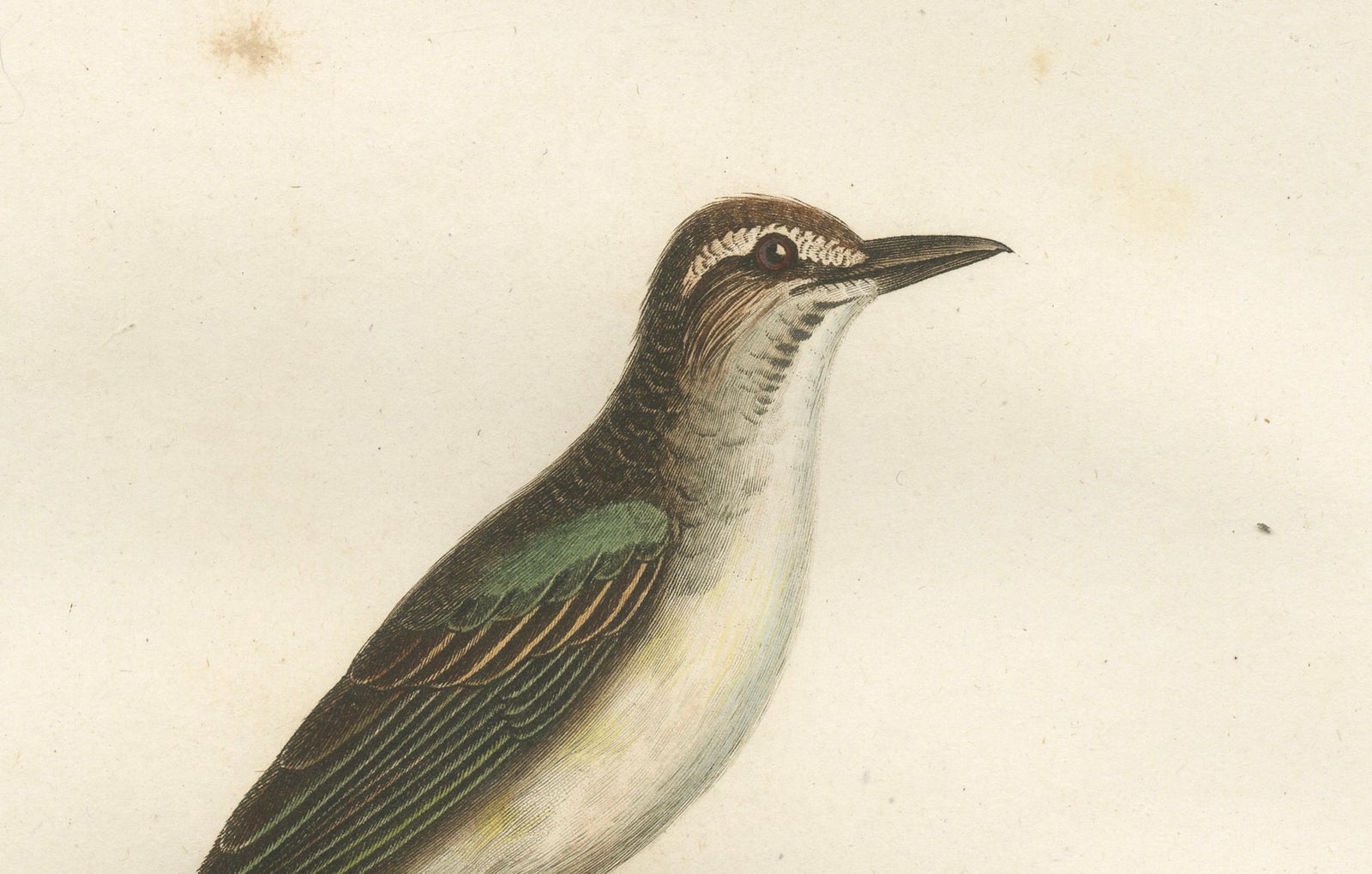
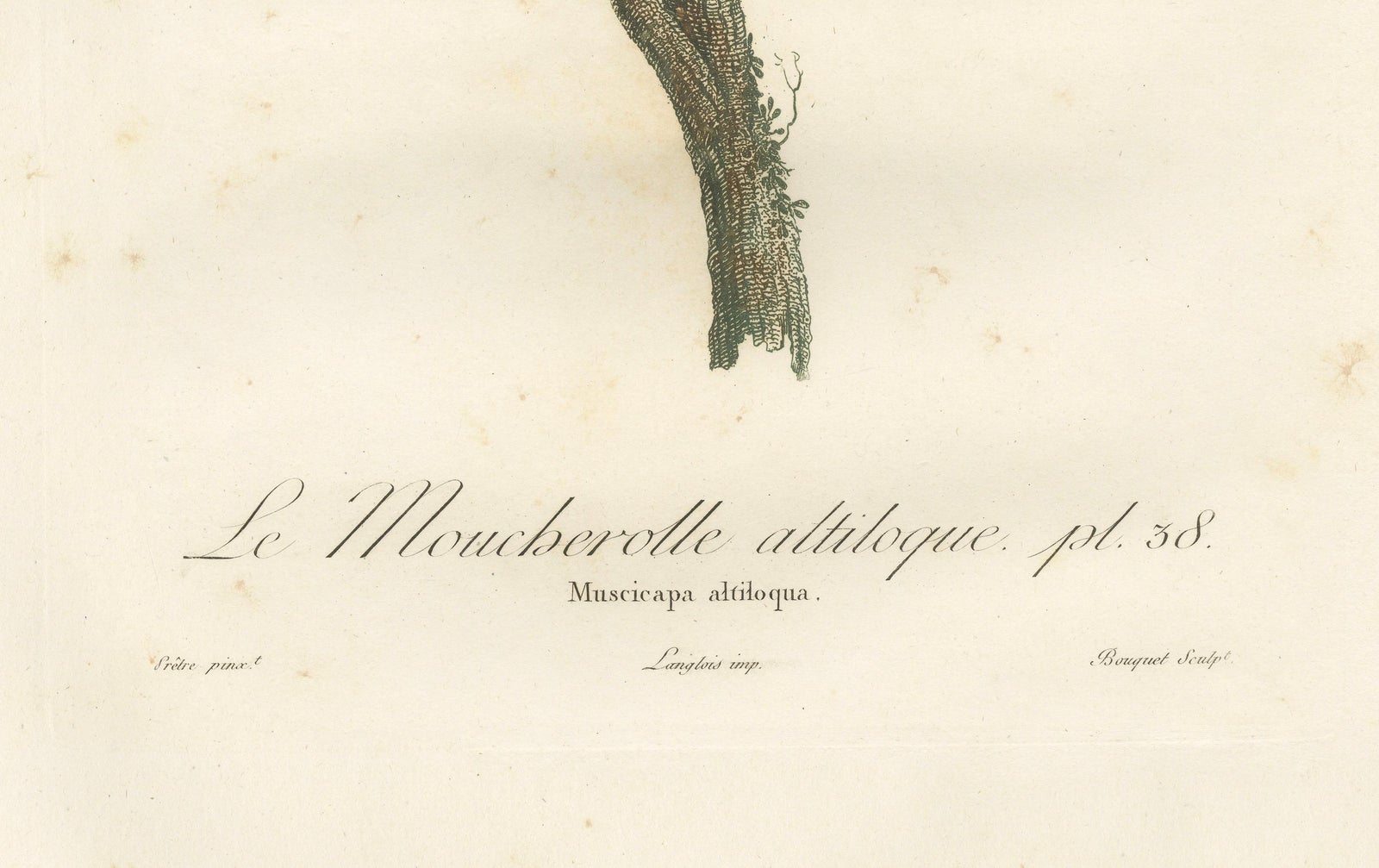
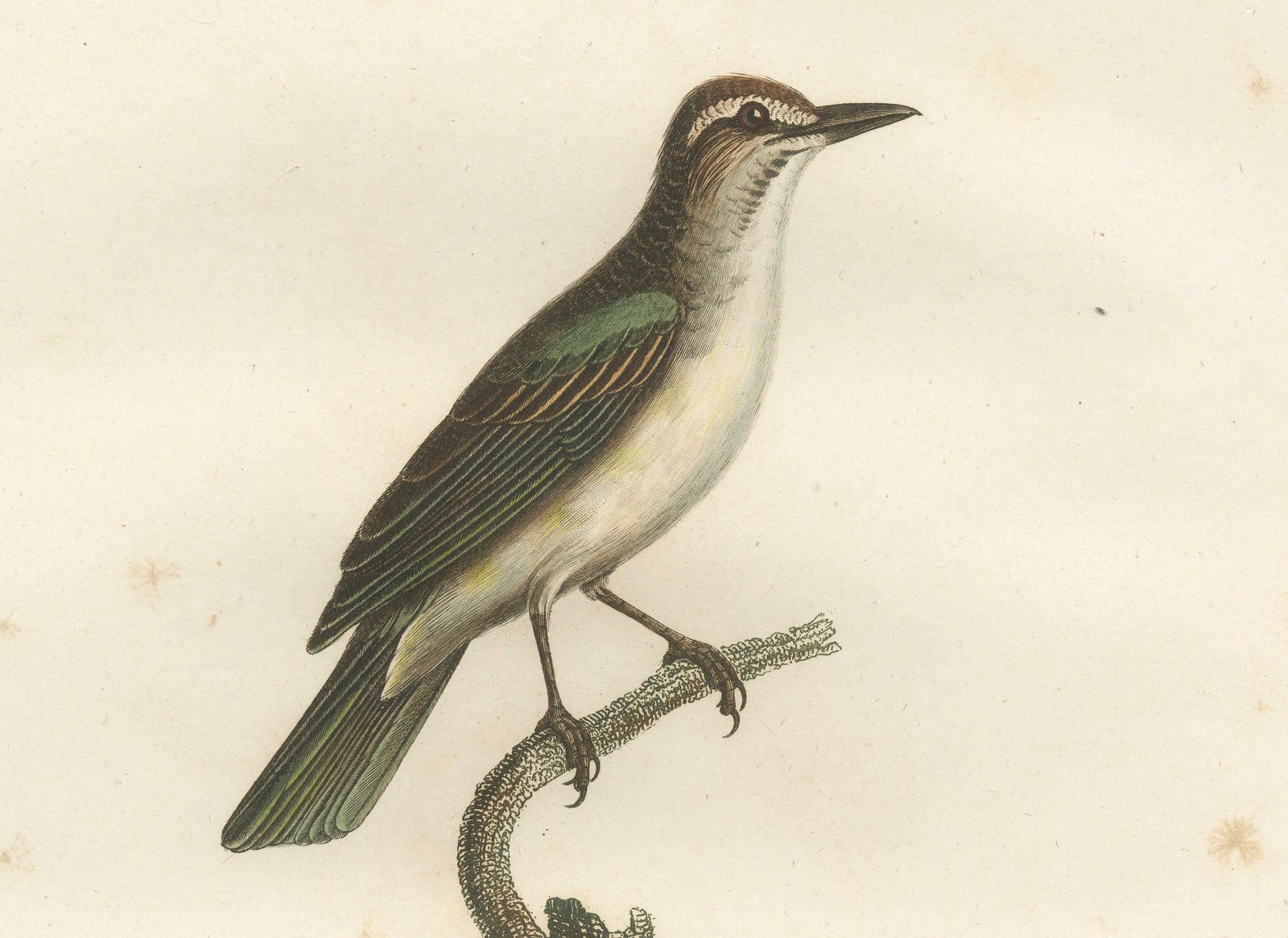
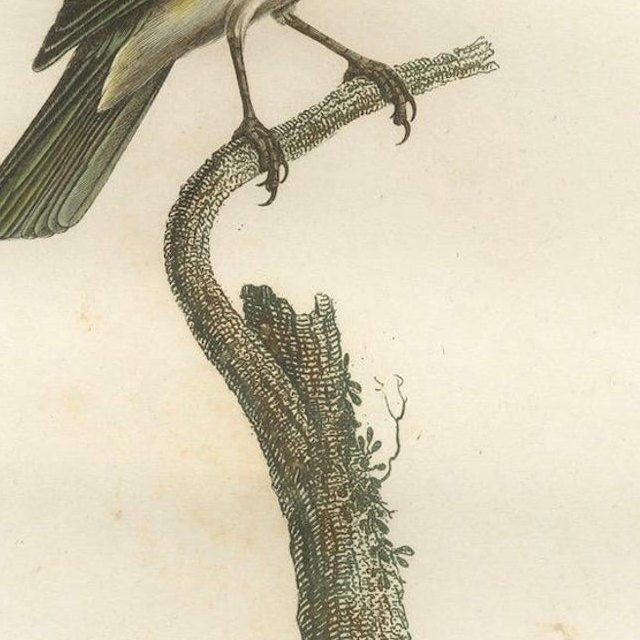
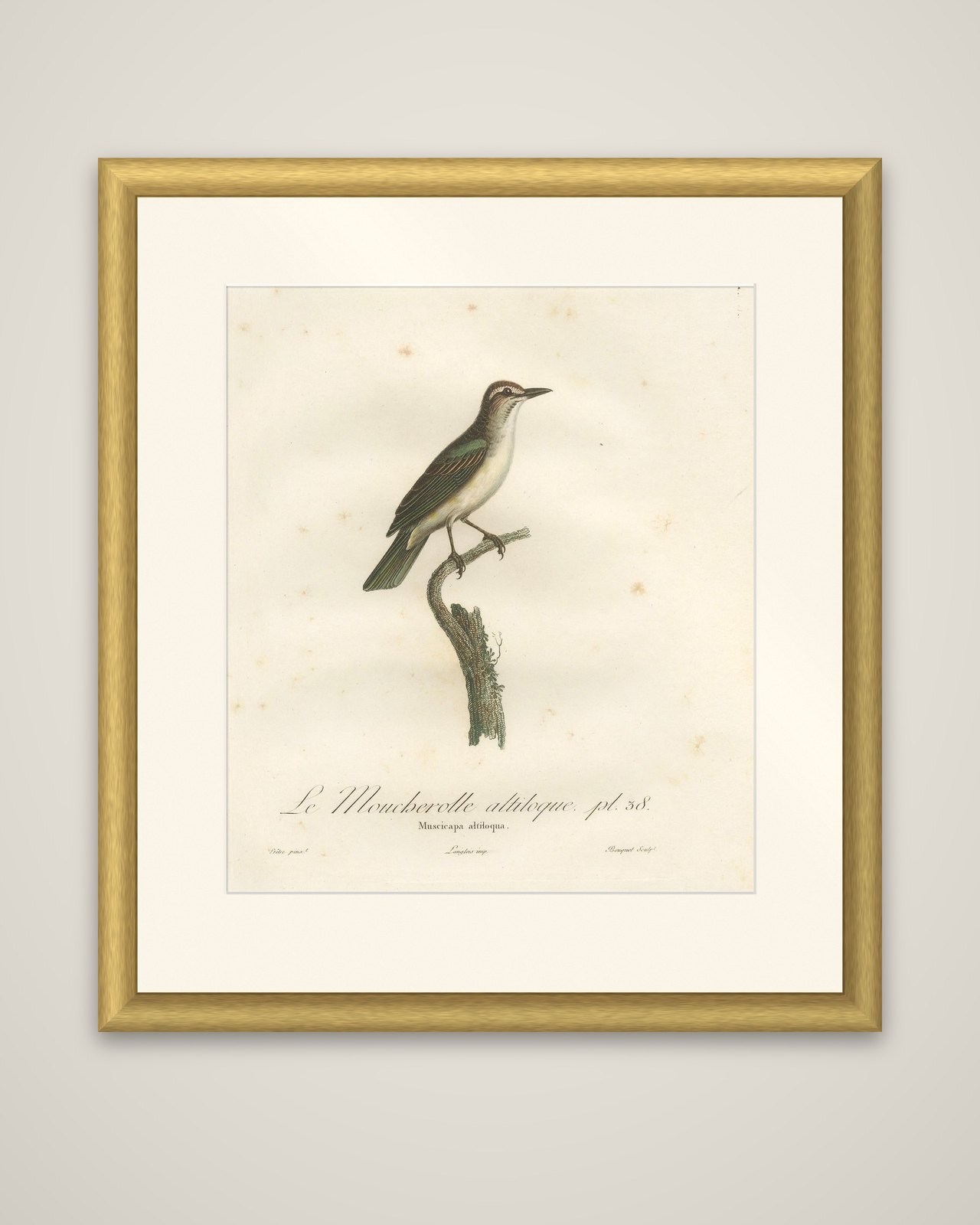
The black-whiskered vireo, an original hand-colored engraving titled "Le Moucherolle altiloque", with the Latin name "Muscicapa altiloqua", from Louis Jean Pierre Vieillot's Histoire naturelle des oiseaux de l'Amérique septentrionale, published about 1807. The plate is lettered "pl. 38", and the credits below read "Prêtre pinx.", "Langlois imp." and "Bouquet sculp.", naming the painter, the printer and the engraver.
The small bird perches near the end of a lichen-covered branch, turned to the left, with a pale eyebrow stripe over a brown crown, an olive-green back and tail, and a white breast and belly shaded with pale yellow. The wing feathers are drawn in fine detail, with warm edging, and the whole is shown at close to life size on a large sheet of cream paper.
The species is now Vireo altiloquus, a migrant that breeds in southern Florida and across the West Indies and winters in northern South America. Vieillot placed it with the flycatchers, as the Latin name on the plate shows.