Close-ups
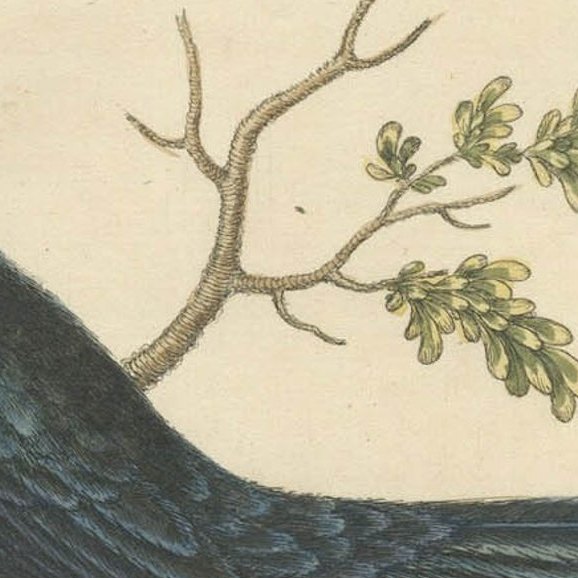
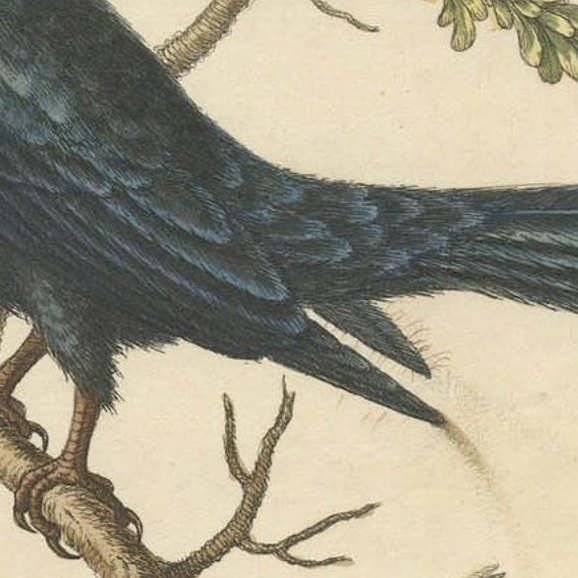
Framed and on the wall
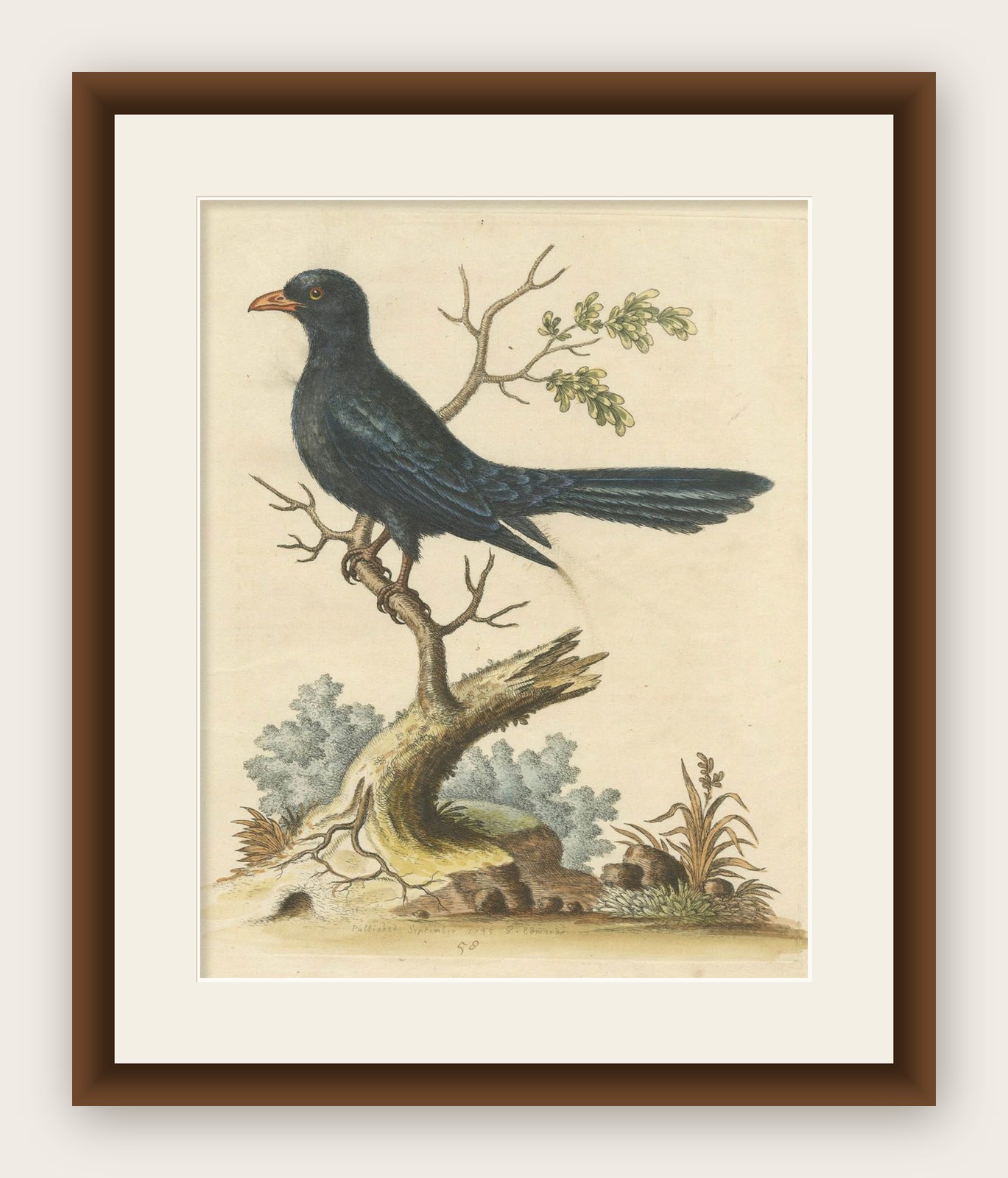
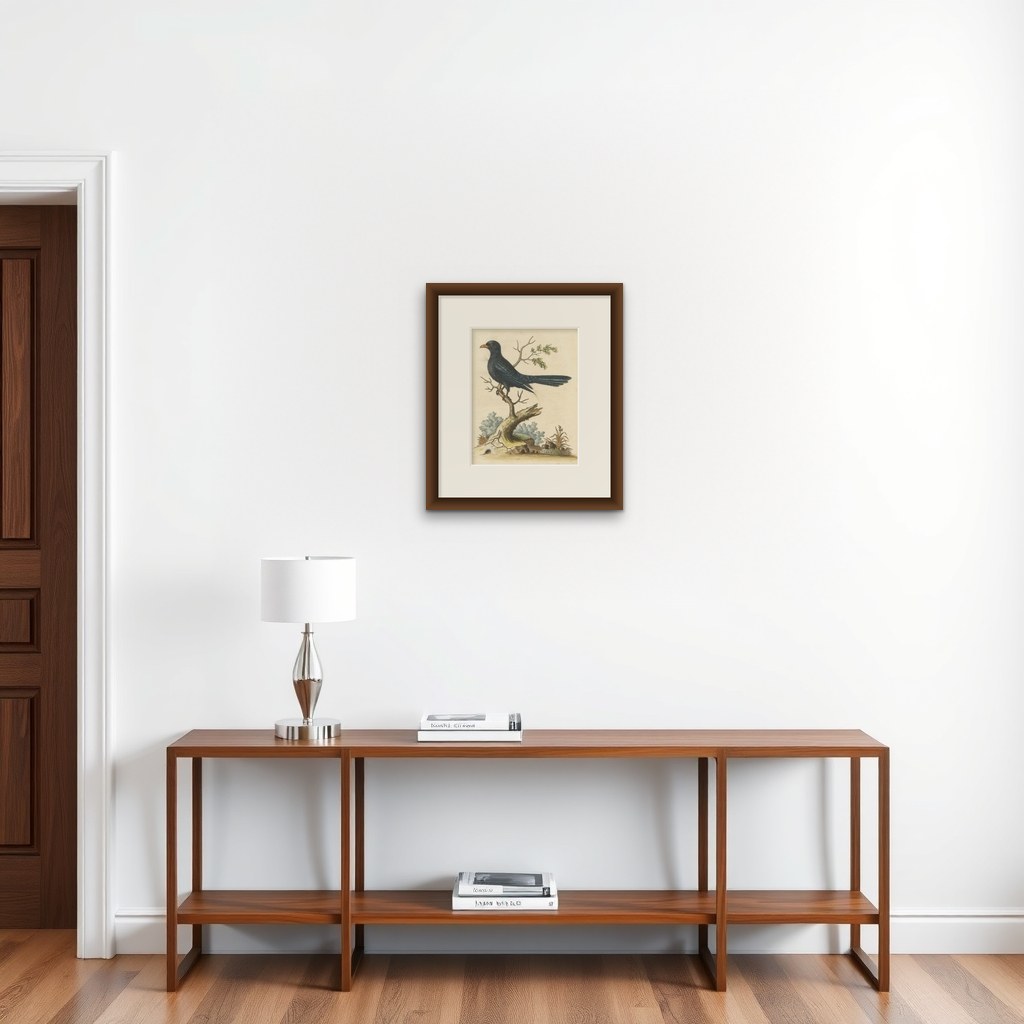

Frame and rooms are illustrations of how the print could look; the description says what is included.
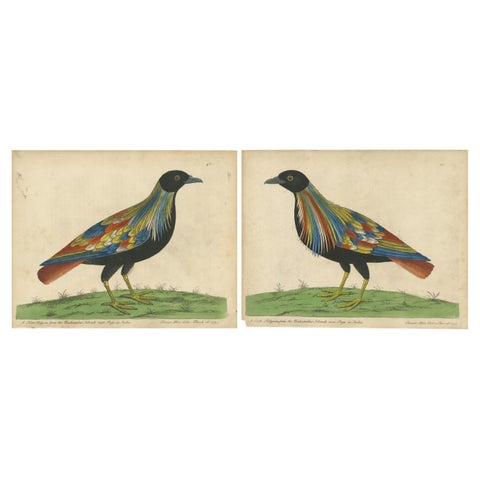
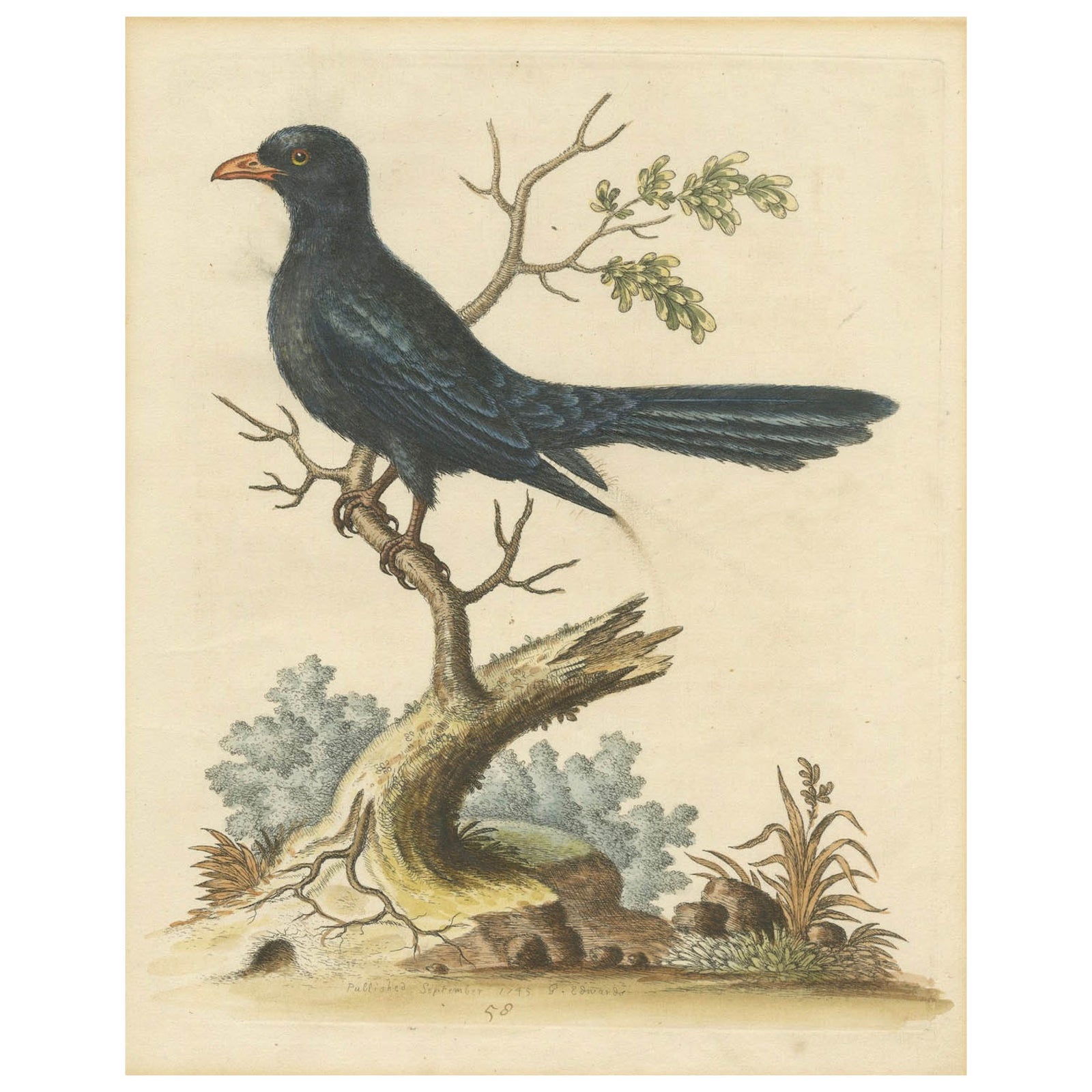
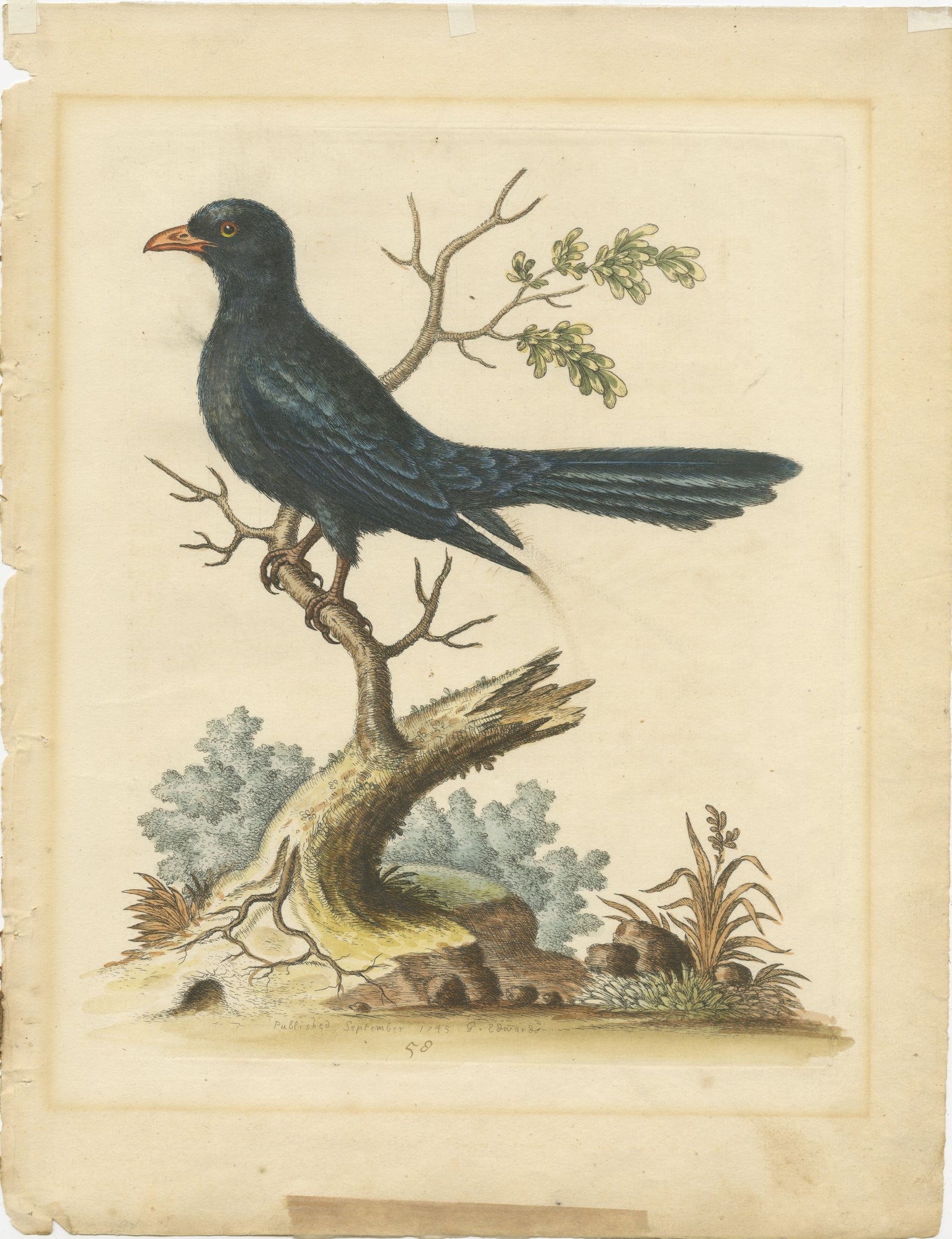
The Black Indian from George Edwards' A Natural History of Uncommon Birds (1743)
£230 ($300, €270)
Period original, not a reproduction.
Shipped from the Netherlands, flat, insured and tracked, worldwide. Returns accepted within 14 days.
- Date
- 1743
- Size
- 11 × 8.8 in (28 × 22.3 cm)
- Condition
- Good. The print has a strong plate mark, excellent paper quality with chain-lining, and minimal foxing. General age-related toning and/or occasional minor defects from handling. Brown borders from earlier frame. Edges rough with tape remains.
- Period
- 18th century
- Section
- Birds
- Reference
- f_41606152
What the condition grades mean
- Excellent
- Bright and clean, with no faults worth mentioning.
- Very good
- Only light signs of age, such as faint toning.
- Good
- Normal signs of age for a sheet of this period: toning, some foxing, small marks or neat old repairs.
- Fair
- Clear faults such as staining, tears or repairs, priced to match.
Every fault we see is written in the condition note, and the whole sheet is shown uncropped in the photos.
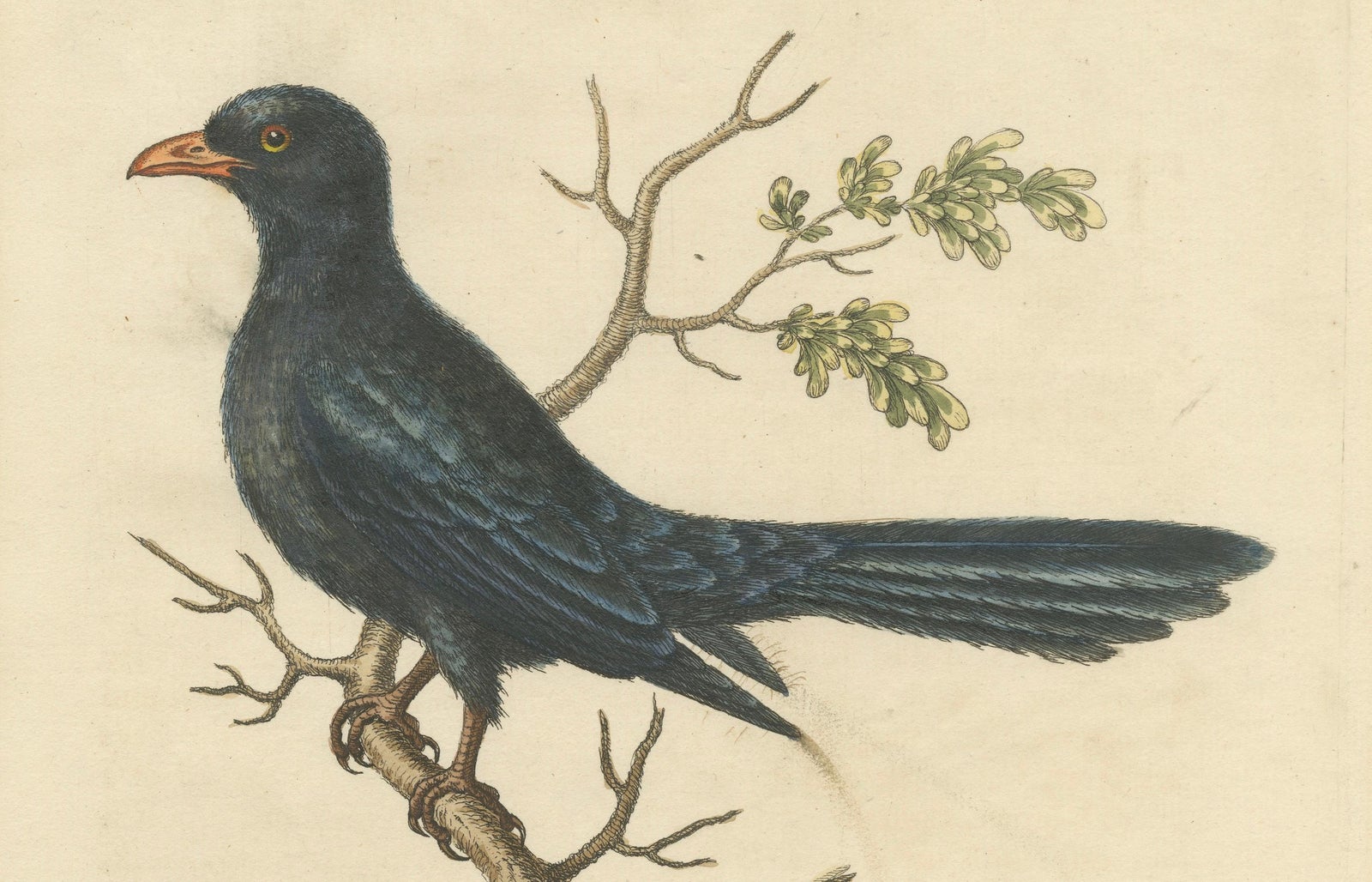
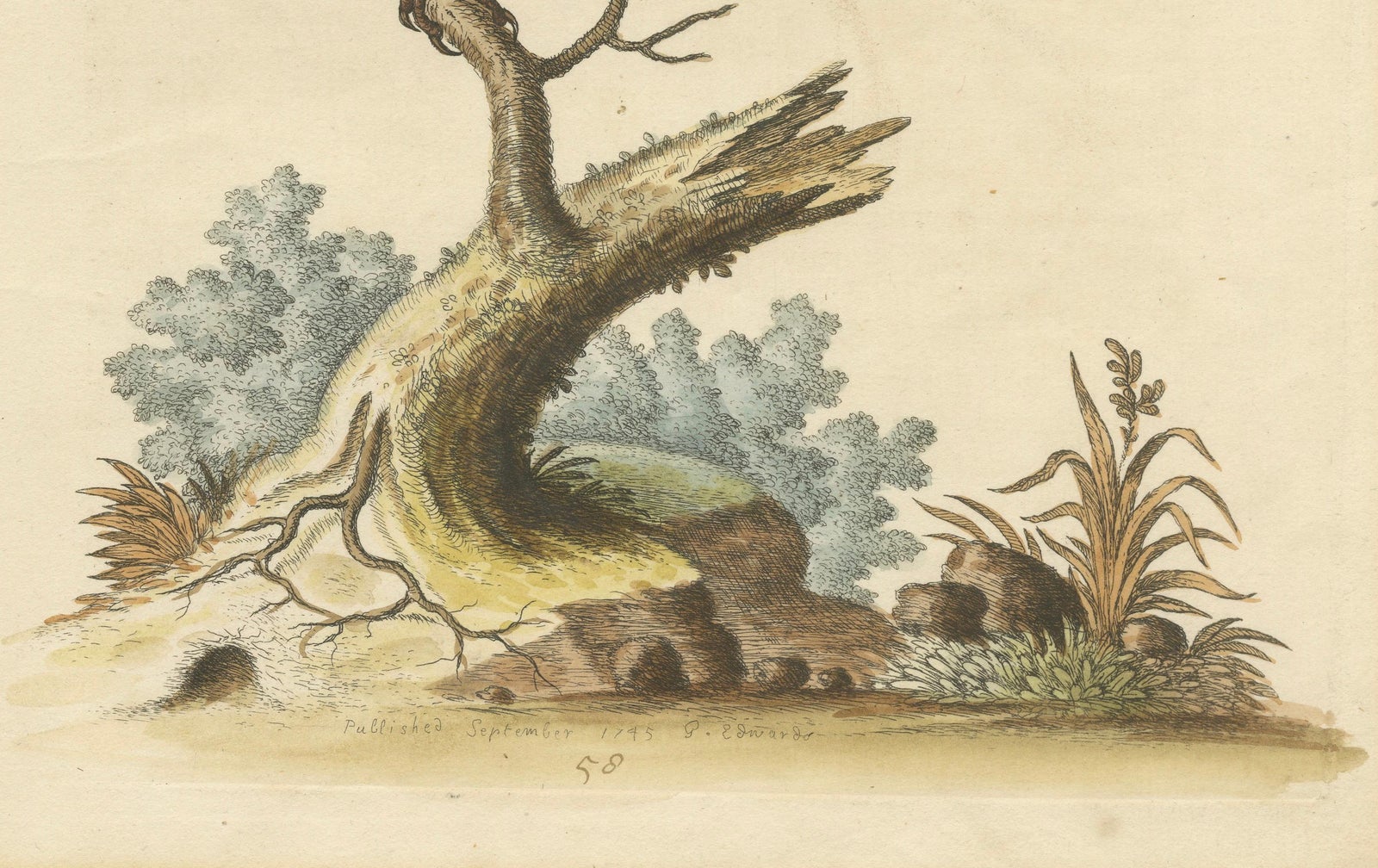
This engraving of the Black Indian Cuckoo is a fine example from George Edwards' ornithological works, part of his A Natural History of Uncommon Birds or Gleanings of Natural History. This bird is depicted perched on a branch with a delicate, detailed background, demonstrating Edwards’ characteristic attention to natural settings and the birds' natural environments.
The inscription at the bottom states Published September 1743, further confirming its origin from one of Edwards' earlier works. The bird depicted might be a species native to Europe or possibly an exotic bird drawn from live specimens in captivity, as Edwards often had access to rare and foreign animals in London.
The bird you are referring to, "The Black Indian Cuckow," is likely the *Eudynamys scolopaceus*, also known as the Asian Koel. This bird was probably documented by George Edwards in one of his famous works, *A Natural History of Uncommon Birds* or *Gleanings of Natural History*. Edwards often included exotic species, such as those from India and other parts of Asia, in his ornithological studies.
Features of the Black Indian Cuckoo (Koel):
1. Species: The Eudynamys scolopaceus, commonly known as the Asian Koel, belongs to the cuckoo family (Cuculidae). It is known for its glossy black appearance in males and spotted brown coloration in females.
2. Diet: Koels are primarily frugivorous, feeding on fruits and insects, which is typical for birds of the cuckoo family.
3. Brood Parasitism: As with other koel species, the Black Indian Cuckoo lays its eggs in the nests of other birds (often crows or other large birds), allowing the host species to raise its chicks.
4. Calls: The bird is famous for its distinct and repetitive calls, which can be heard especially during the breeding season.
George Edwards' Representation:
In his work, Edwards was meticulous in capturing the likeness of birds from across the globe, and the Black Indian Cuckoo would have been an exotic and fascinating subject for European naturalists and collectors. Edwards' illustrations typically show the birds in their naturalistic poses, with fine details on their feathers, colors, and the environment.
Importance in Ornithology:
The Black Indian Cuckoo was one of many foreign species that George Edwards brought to the attention of European scientists and bird enthusiasts. His ability to accurately depict such birds in both anatomical and behavioral aspects helped elevate the study of ornithology in Europe during the 18th century.
The Black Indian Cuckoo, depicted in Edwards' works, would have been highly valued both as a work of art and as a scientific record of a bird not commonly seen in Europe at the time. His meticulous documentation helped solidify his reputation as "The Father of British Ornithology."