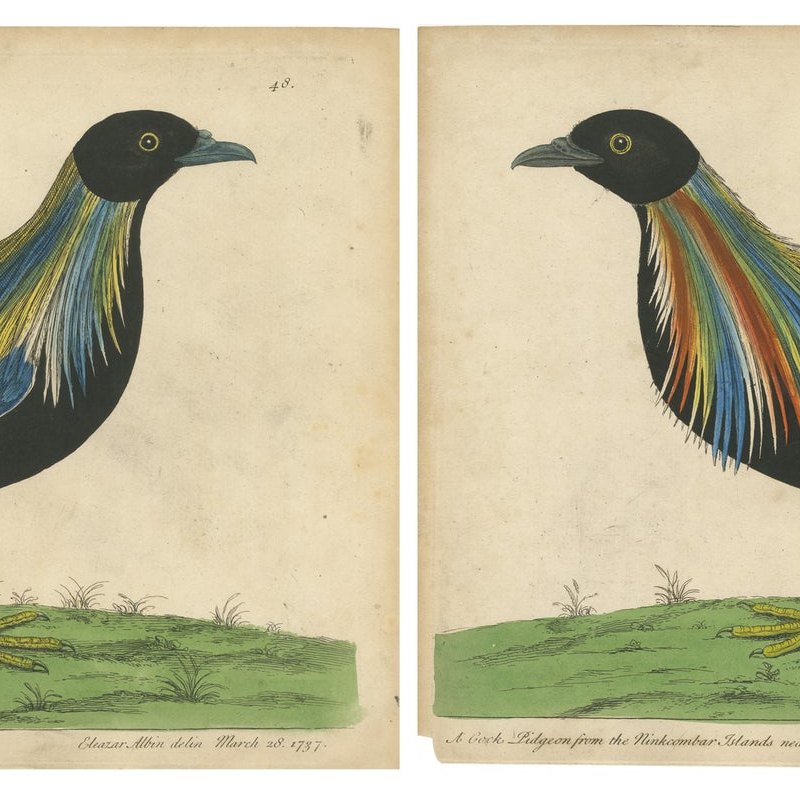
Close-ups
Framed and on the wall
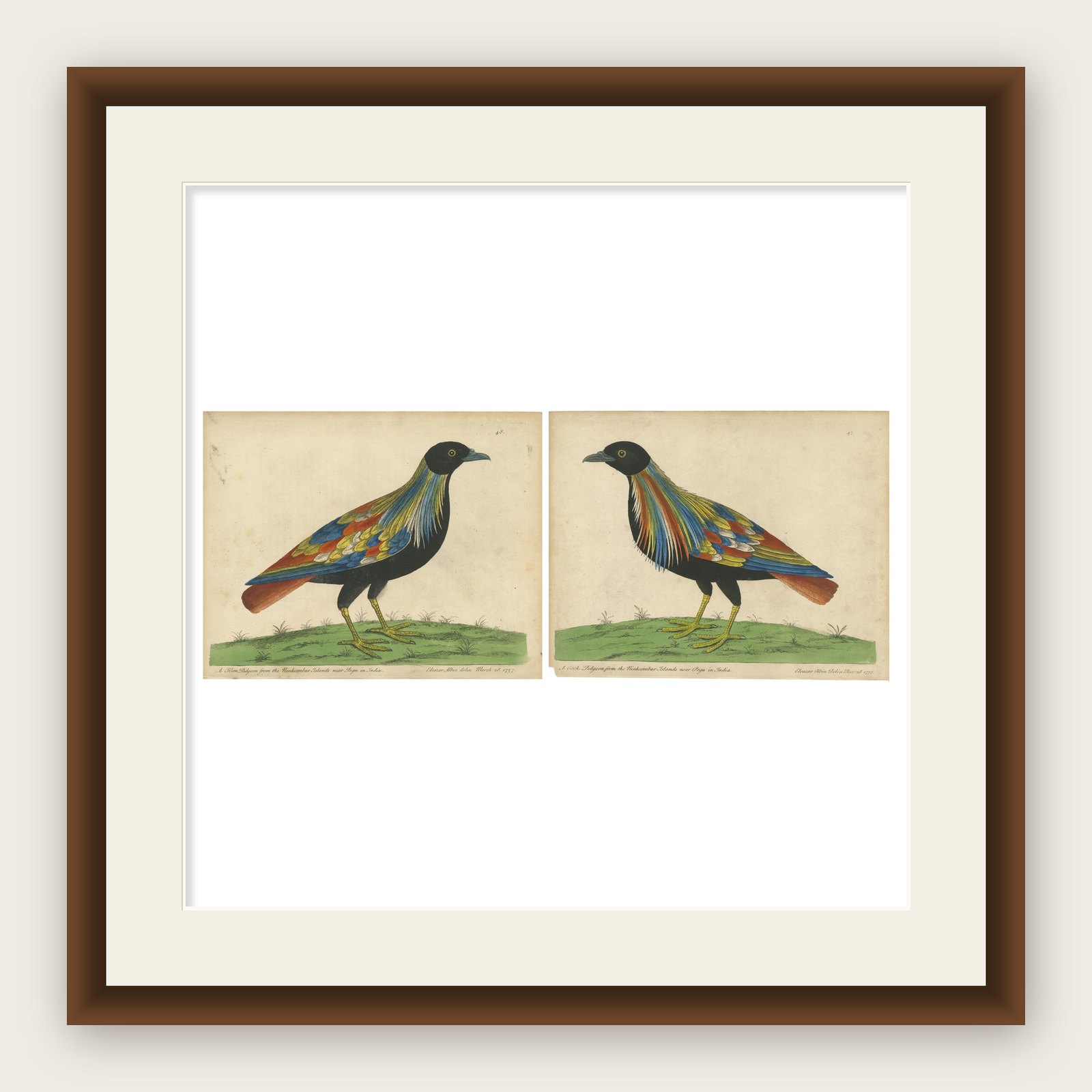
Frame and rooms are illustrations of how the print could look; the description says what is included.
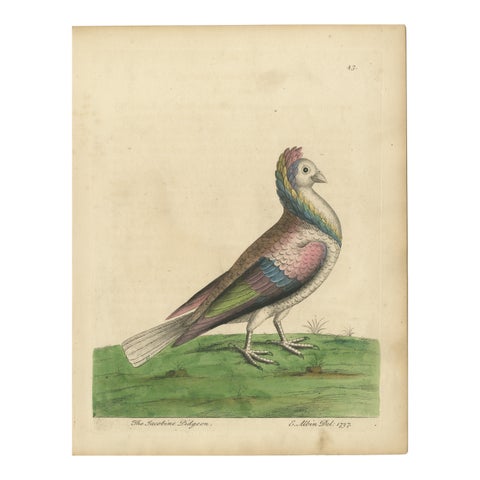
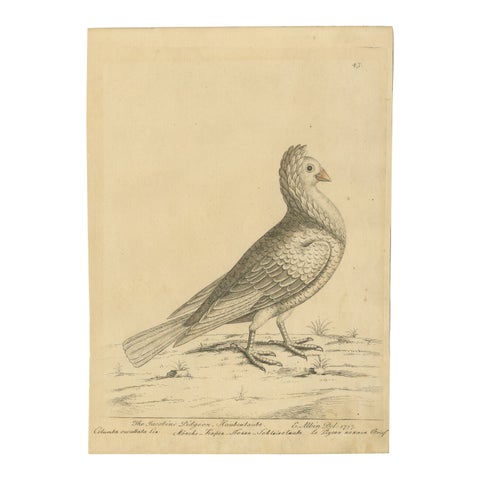
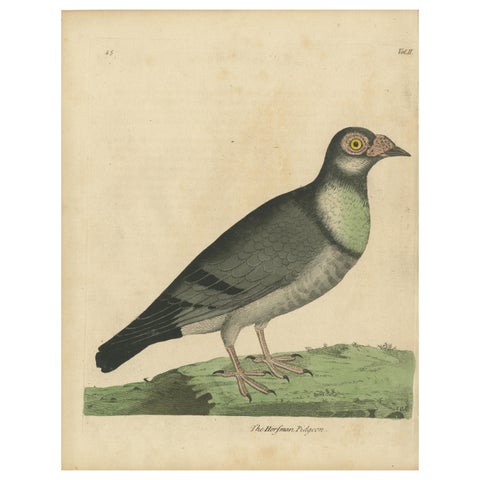
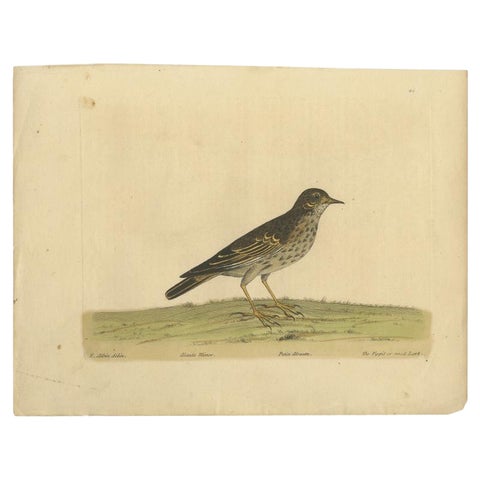
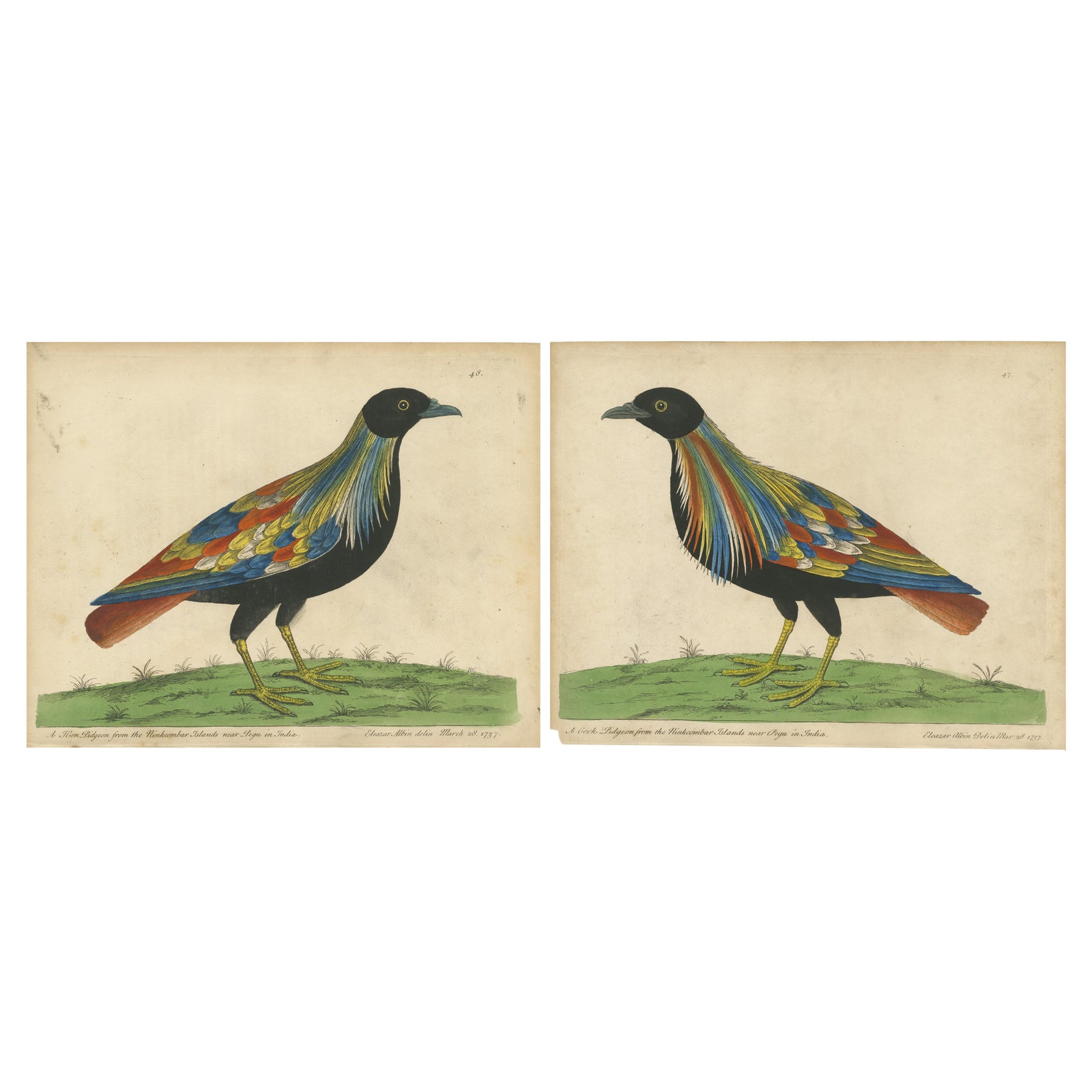
Set of 2 Antique Bird Prints of Pigeons from the region of Pegu, Myanmar, 1740
£745 ($985, €880)
Period original, not a reproduction.
Shipped from the Netherlands, flat, insured and tracked, worldwide. Returns accepted within 14 days.
- Date
- 1740
- Size
- 8.8 × 11.3 in (22.4 × 28.7 cm)
- Condition
- Fair. General age-related toning. Closed tear in the right margin of the male pigeon print, also small defect lower left corner. Shows wear and soiling. Blank verso. Please study images carefully.
- Period
- 18th century
- Section
- Birds
- Reference
- f_35780112
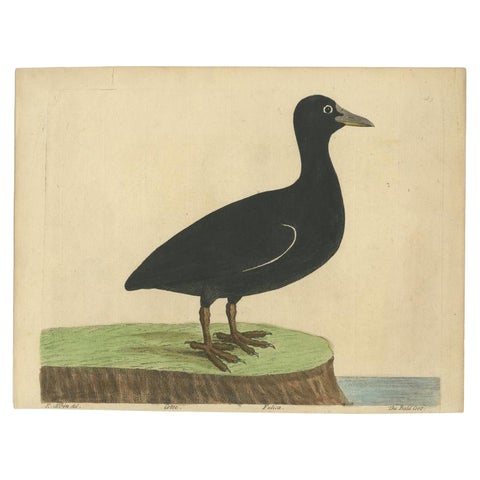
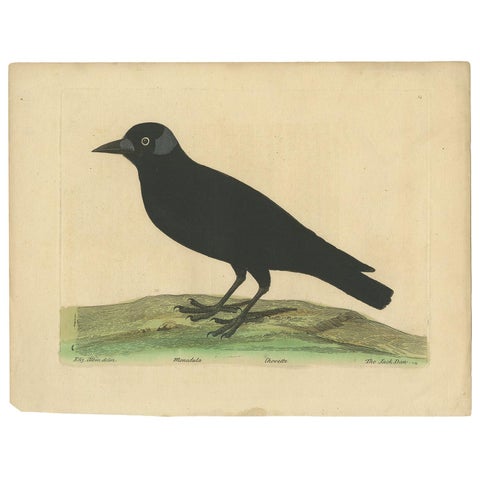
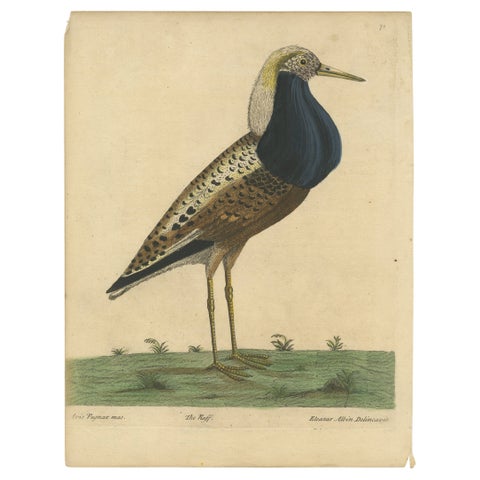
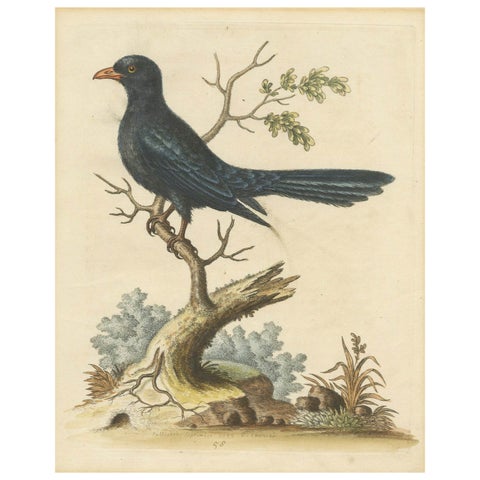
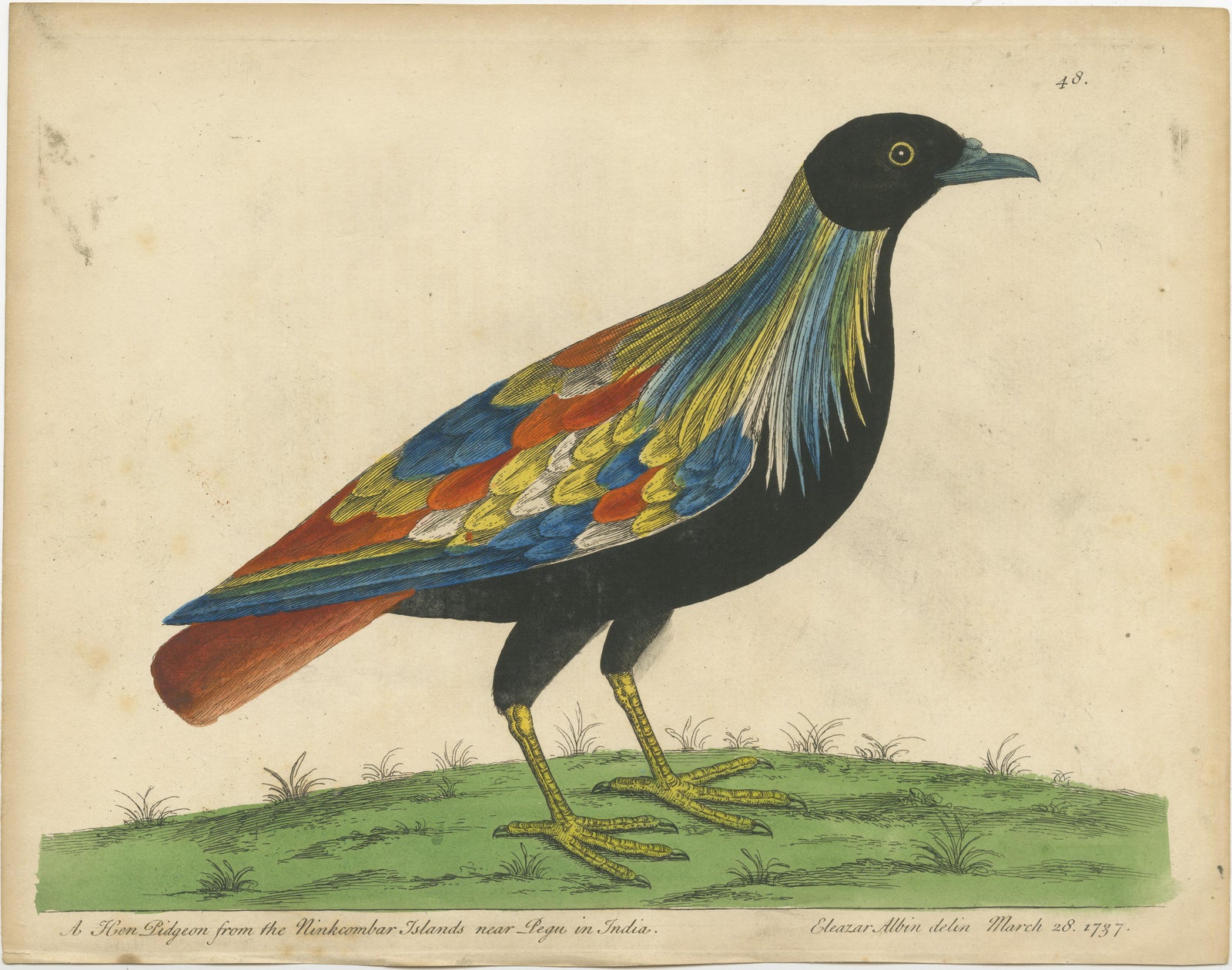
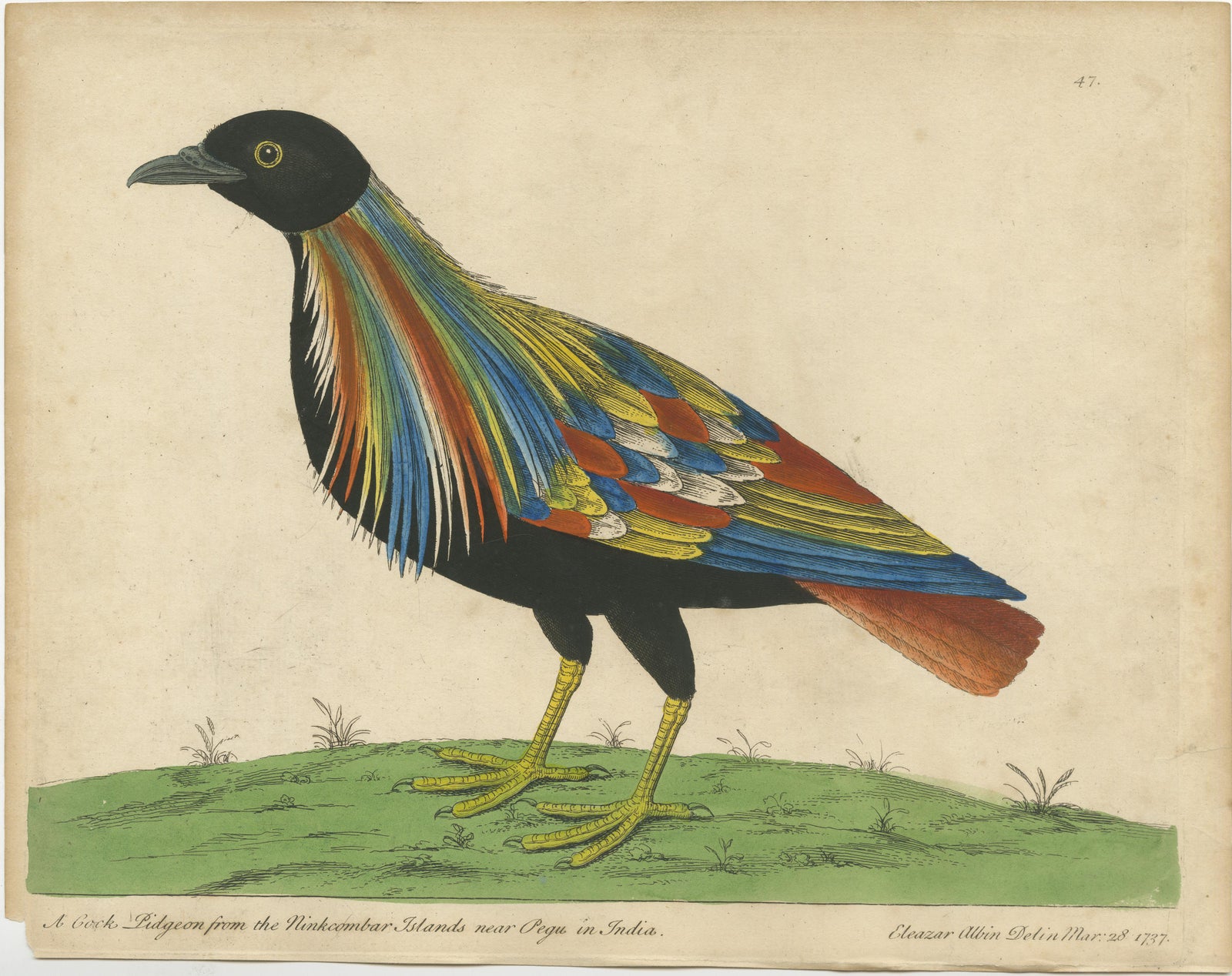
Set of 2 original antique bird prints titled 'A Hen Pidgeon from the Ninkcombar Islands near Pegu in India' and 'A Cock Pidgeon from the Ninkcombar Islands near Pegu in India'. These prints originate from 'A Supplement to the Natural History of Birds illustrated with an Hundred and One Copper Plates (..)' by Eleazar Albin. Published 1740.
Eleazar Albin was a German professional painter who settled in England in 1707, where he married and raised a family, changing his name from Weiss to Albin. He illustrated works on insects and spiders, earning his living by making watercolors of the collections of wealthy patrons, including Sir Hans Sloane, whose collection founded the British Museum. His work on birds was done late in his life & was the first large English work on ornithology, hand-colored by Albin and his daughter Elizabeth & published initially in London from 1731-1738.