Close-ups
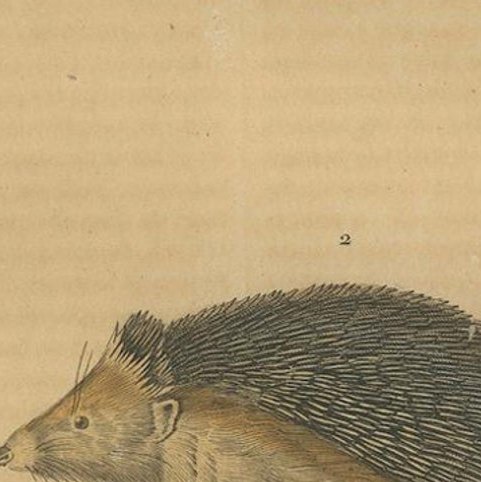
Framed and on the wall
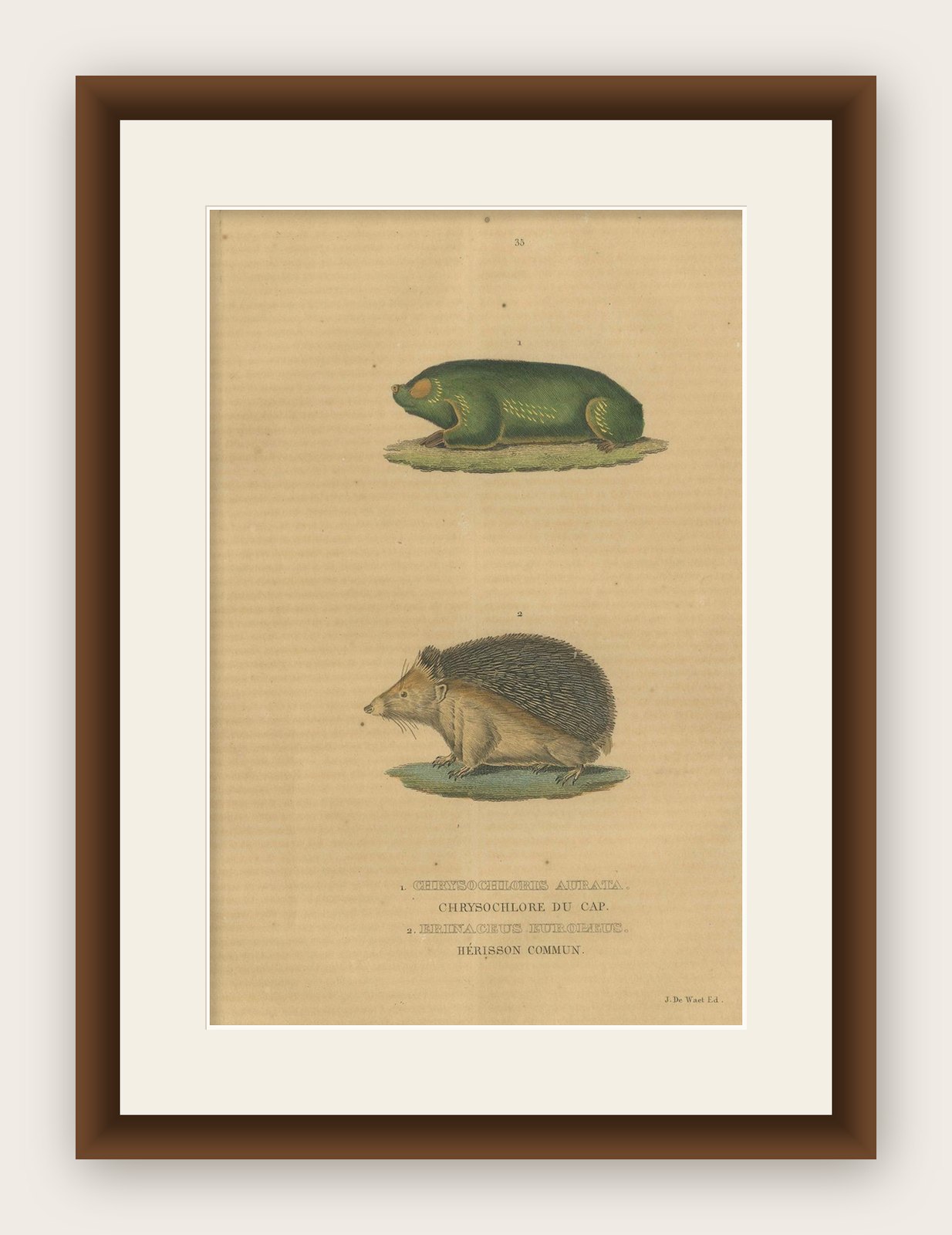


Frame and rooms are illustrations of how the print could look; the description says what is included.
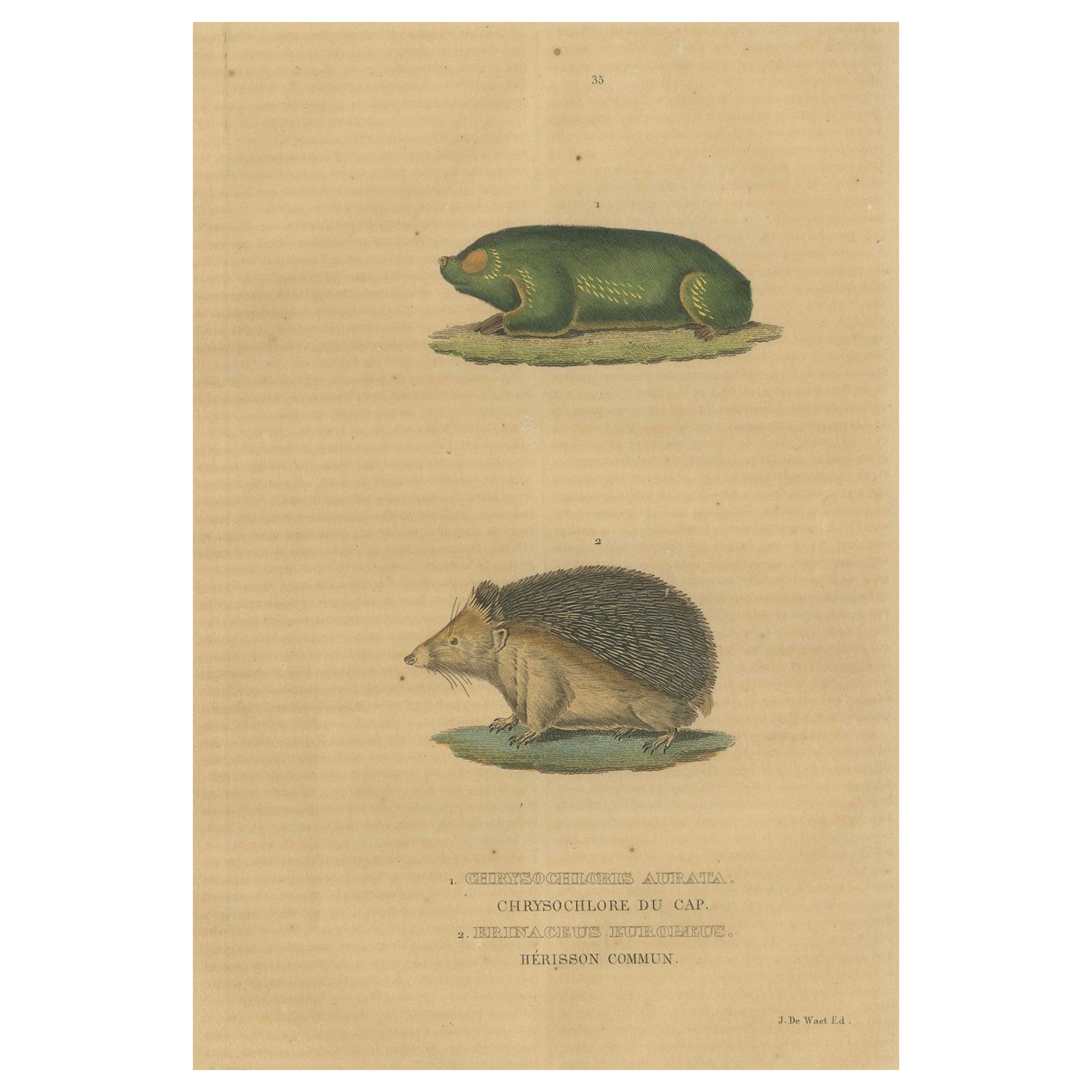
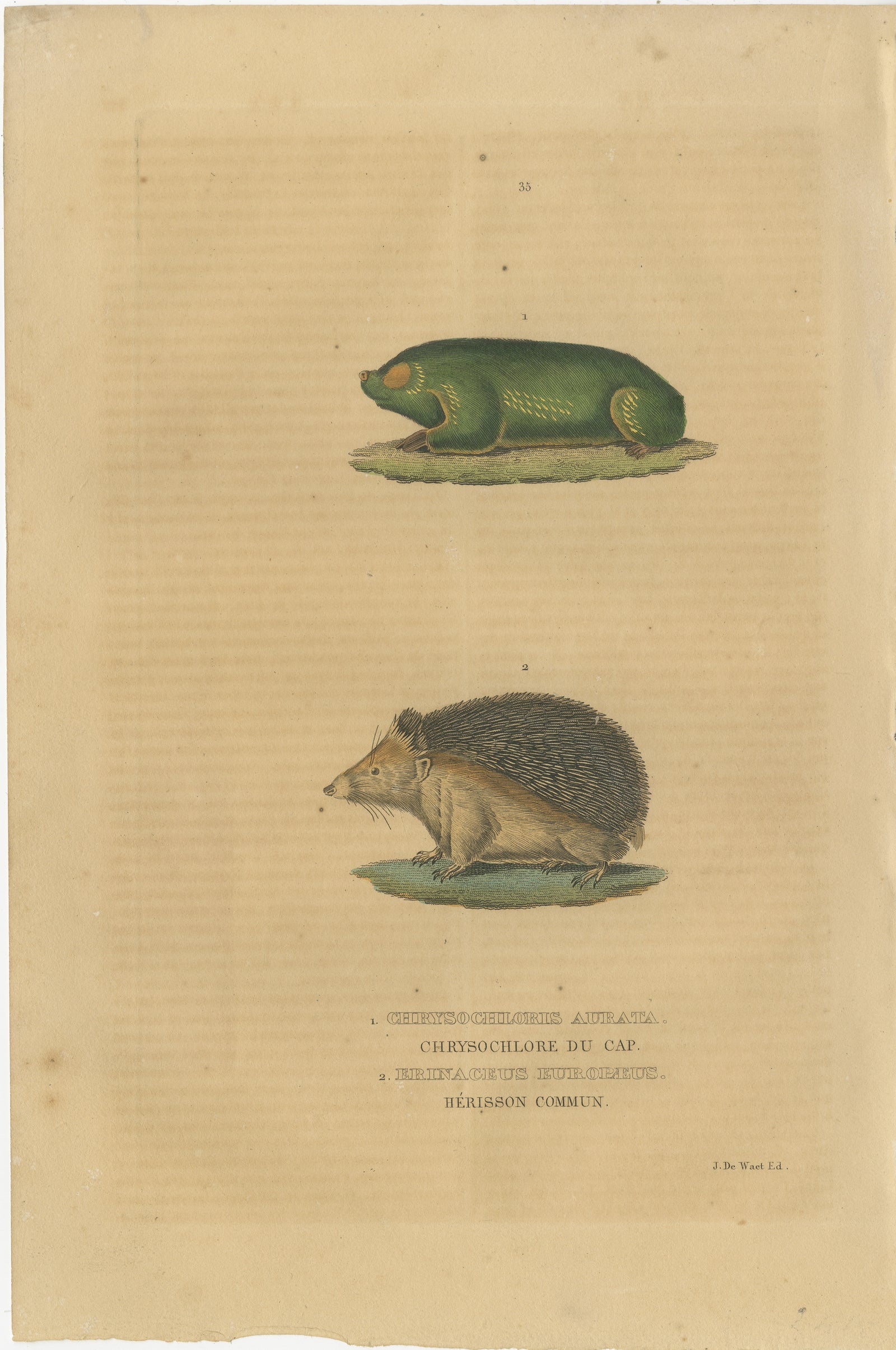
Subterranean Marvels: The Cape Golden Mole and the Common Hedgehog, 1845
£235 ($315, €280)
Period original, not a reproduction.
Shipped from the Netherlands, flat, insured and tracked, worldwide. Returns accepted within 14 days.
- Date
- 1845
- Size
- 10.4 × 6.7 in (26.5 × 17 cm)
- Condition
- Good. Good. Edge on the right side roughly cut. Some offsetting and around the edges some soiling and browning due to age and handling. Please study the image carefully.
- Period
- Early 19th century
- Section
- Mammals
- Reference
- f_37842972
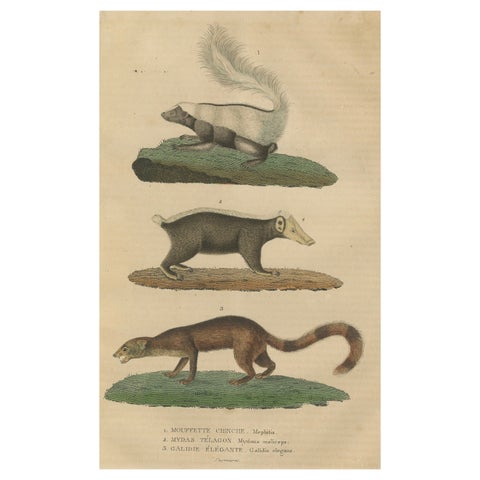
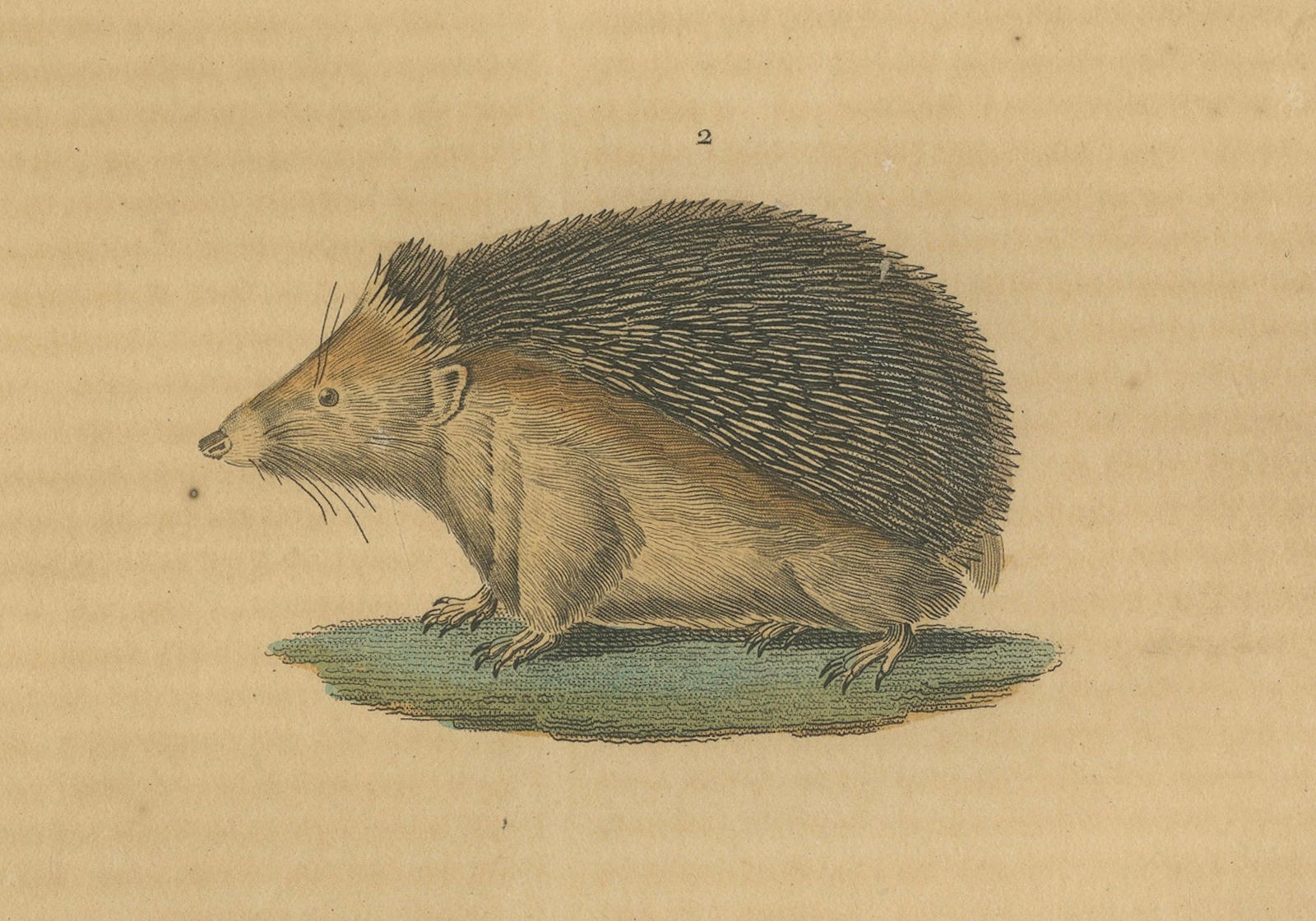
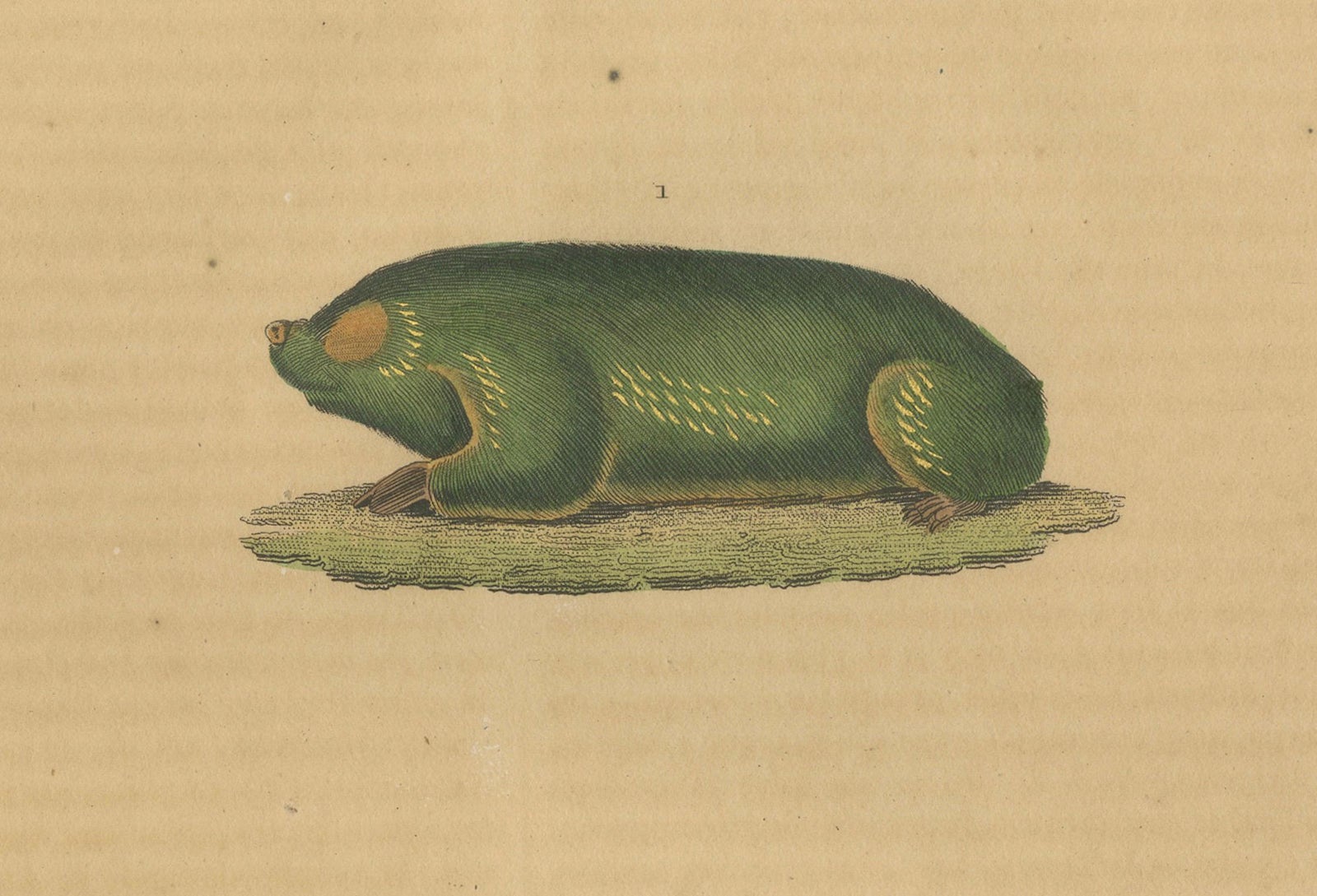
The image depicts two different animals, each labeled in French:
1. **Chrysochloris aurata** - This is commonly known as the Cape golden mole. It is characterized by its cylindrical body covered in dense, soft fur that can appear iridescent, hence the name 'golden'. Golden moles are small, burrowing mammals native to South Africa, and their eyes are often covered by skin and fur, rendering them virtually blind.
2. **Erinaceus europaeus** - Known as the common hedgehog. It is distinguished by its spiny coat and short limbs. The illustration shows the hedgehog's characteristic protective posture, with its spines protruding as a defense mechanism.
The print is a hand-colored engraving, a technique that was popular in the 19th century for scientific publications. The colors are used to enhance the detail of the engravings and provide a more realistic depiction of the animals. The engraving shows the animals in a simplistic natural setting, which would have been typical for zoological illustrations of that time.
Given the style and the period, this print would have been used for educational and reference purposes, providing a visual guide to accompany the textual descriptions of the species in Drapiez's 'Dictionnaire'.