Close-ups
Framed and on the wall


Frame and rooms are illustrations of how the print could look; the description says what is included.
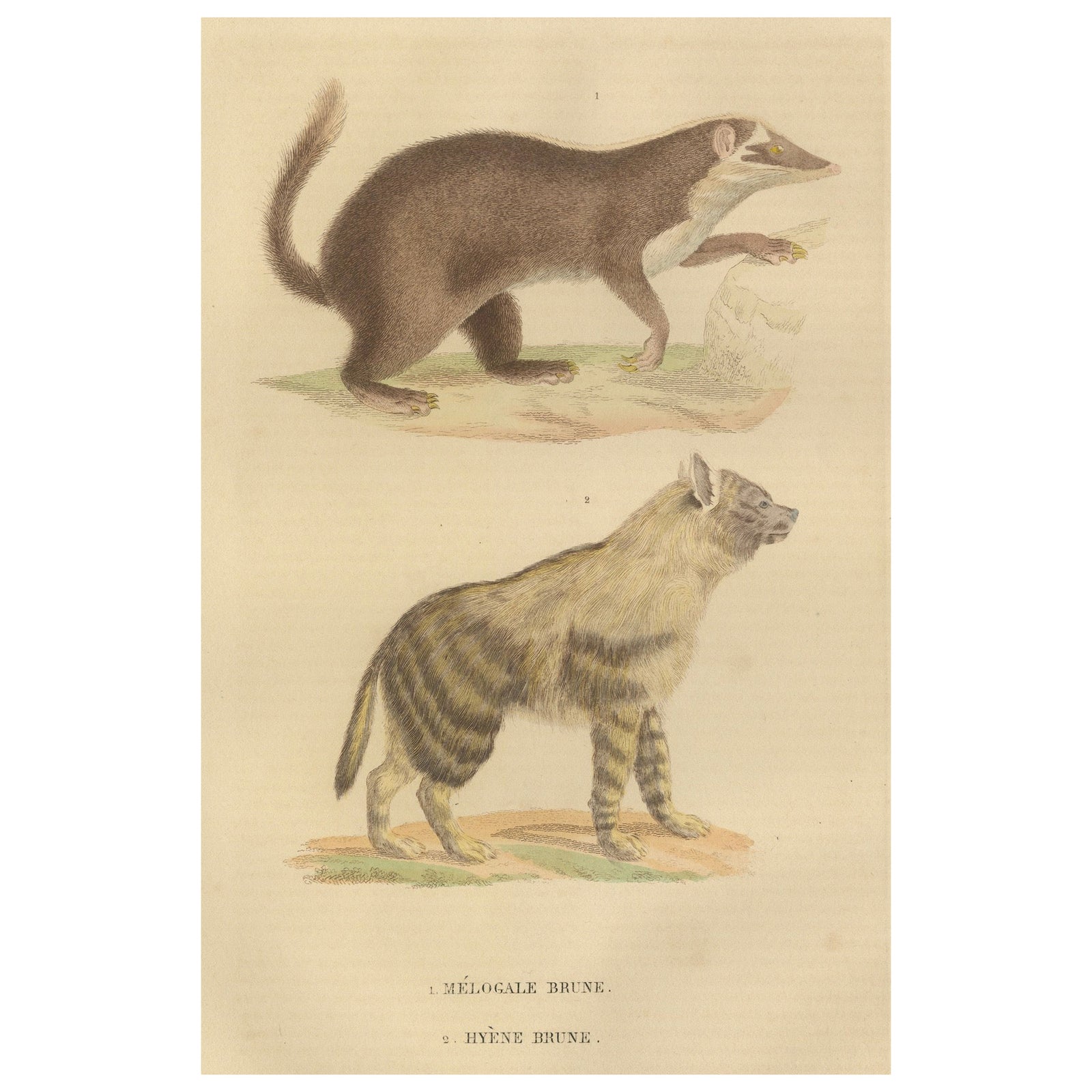
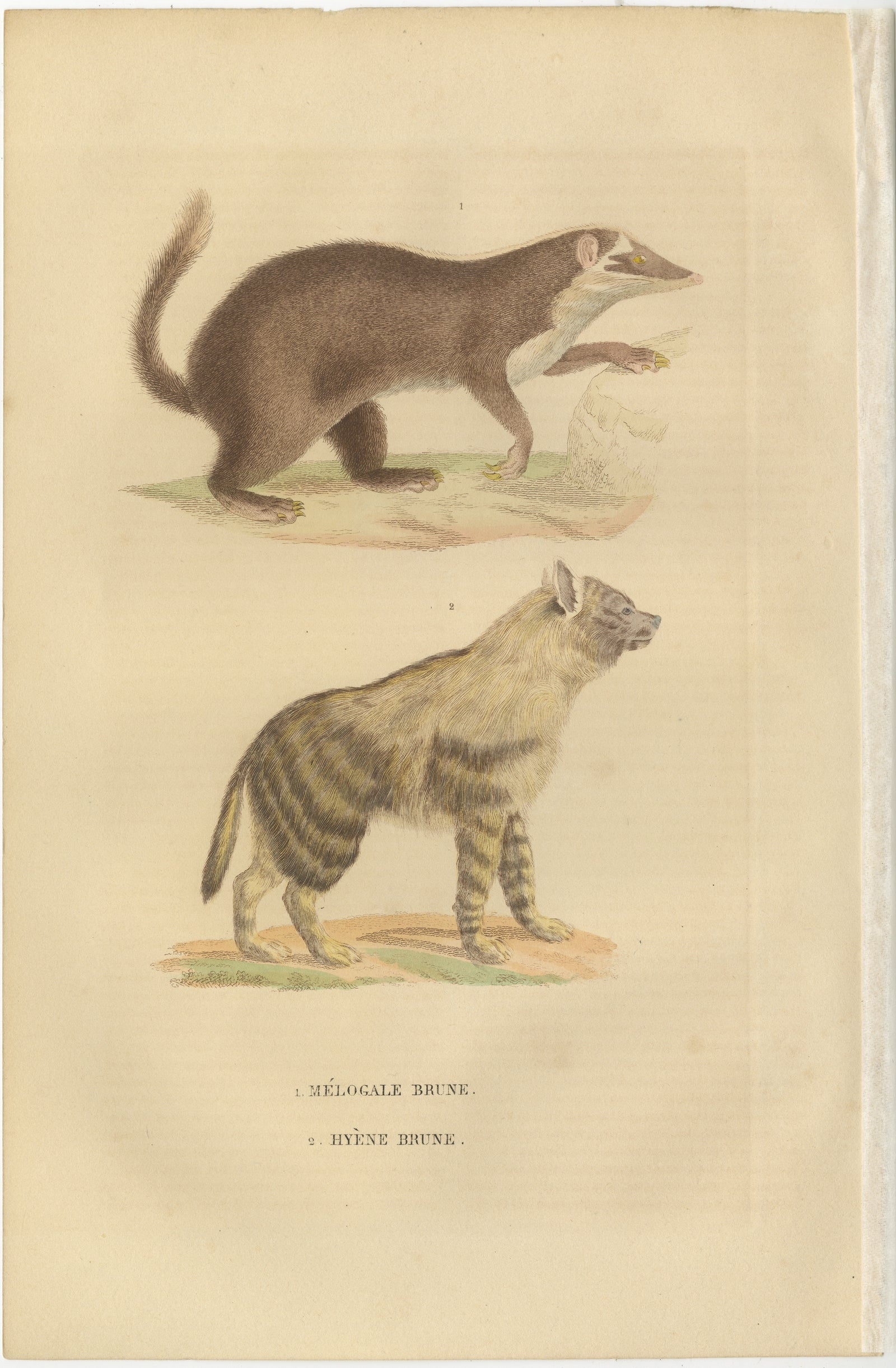
Contrasts in Mammalia: The Brown-Tailed Mongoose and the Brown Hyena, 1845
£270 ($360, €320)
Period original, not a reproduction.
Shipped from the Netherlands, flat, insured and tracked, worldwide. Returns accepted within 14 days.
- Date
- 1845
- Size
- 10.4 × 6.7 in (26.5 × 17 cm)
- Condition
- Good. Good. Aged paper with typically warm, yellowish-brown hue. Please study the image carefully.
- Period
- Early 19th century
- Section
- Mammals
- Reference
- f_37855192
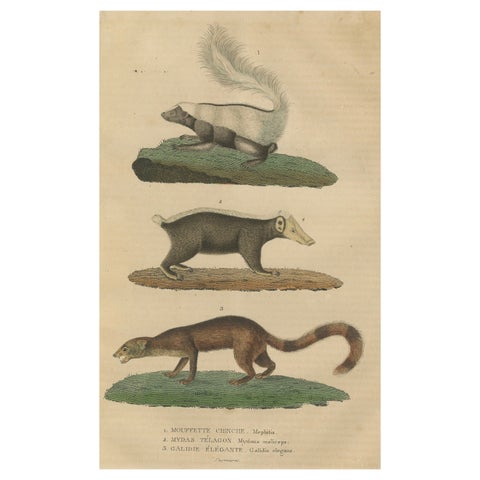
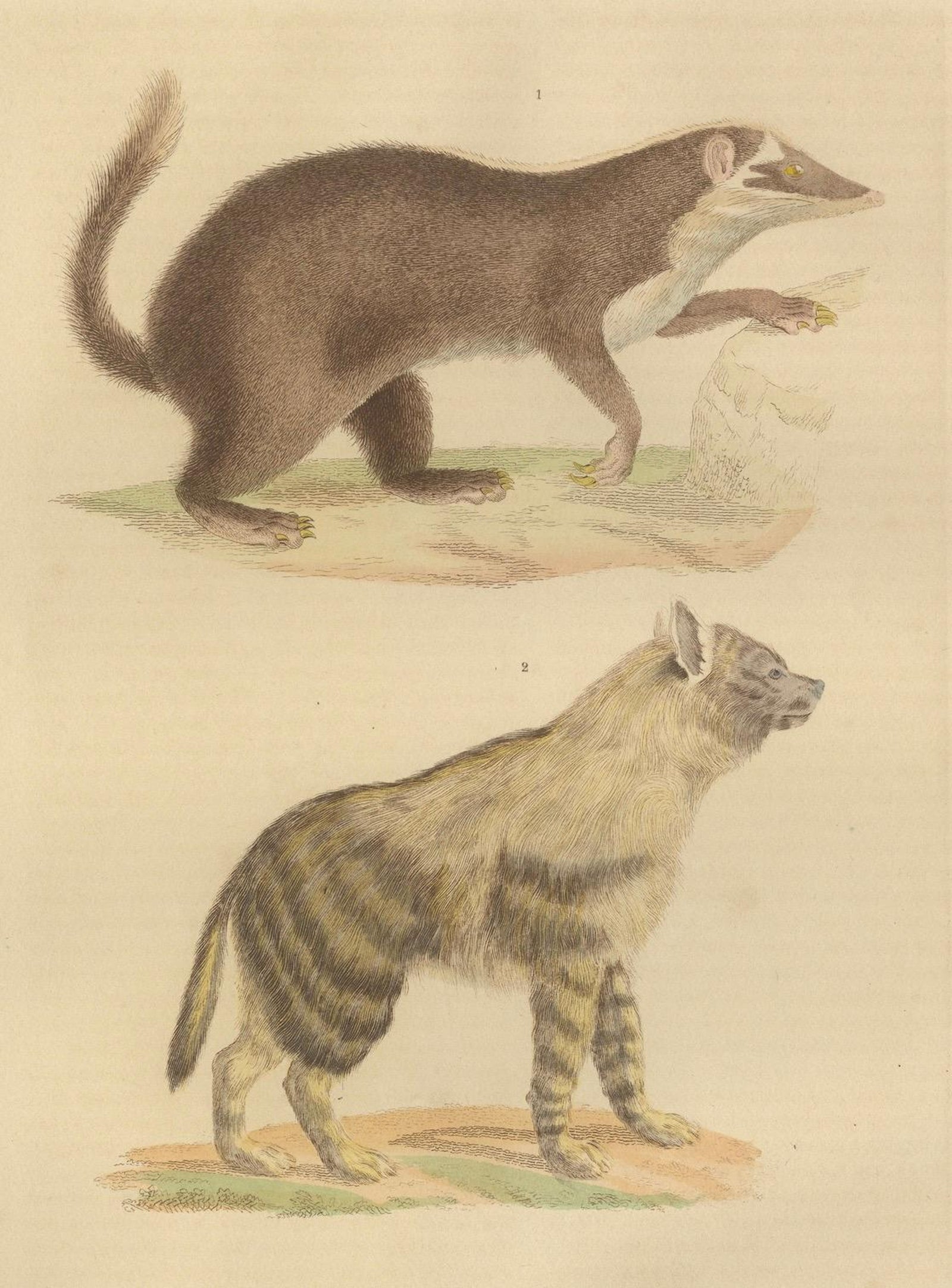
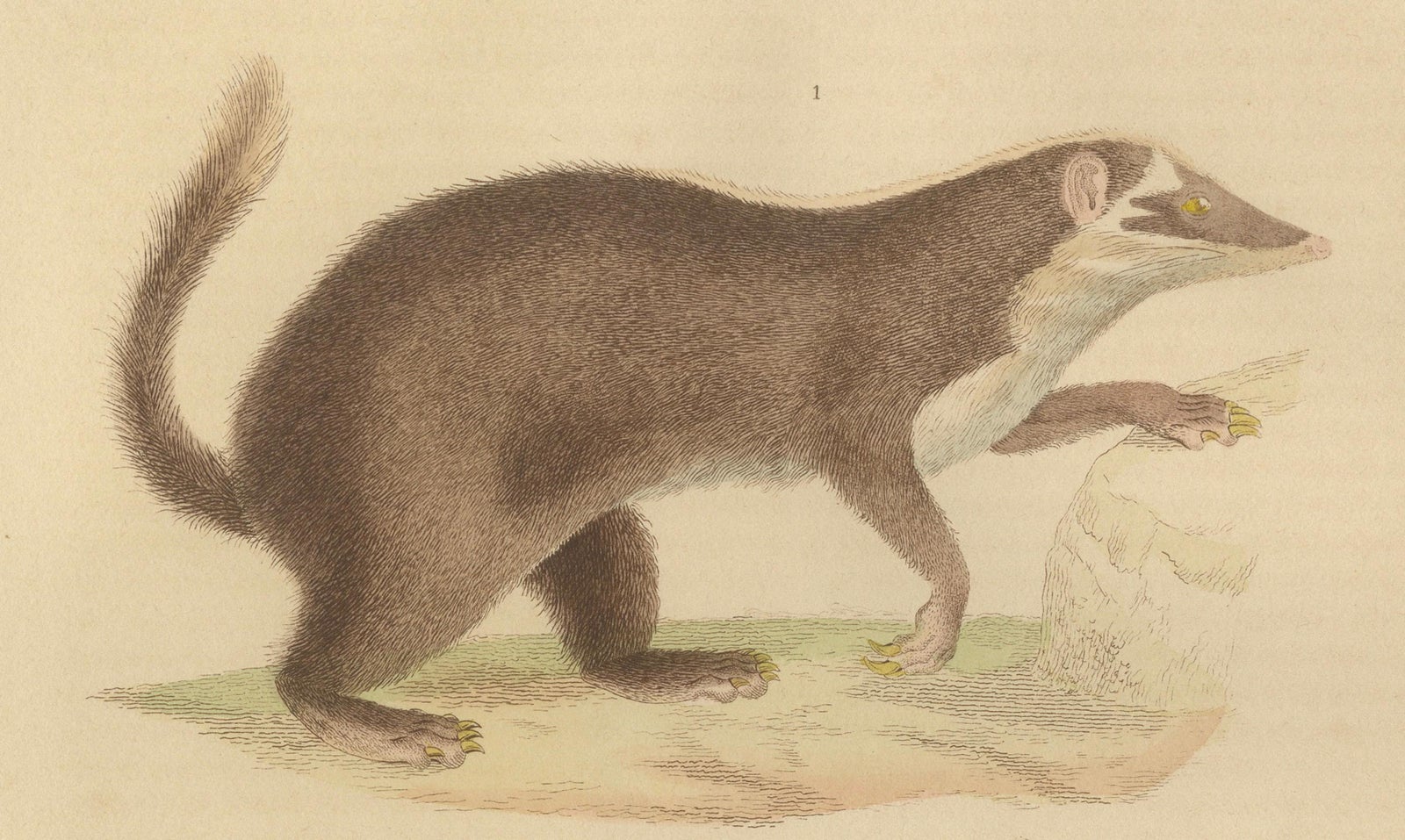
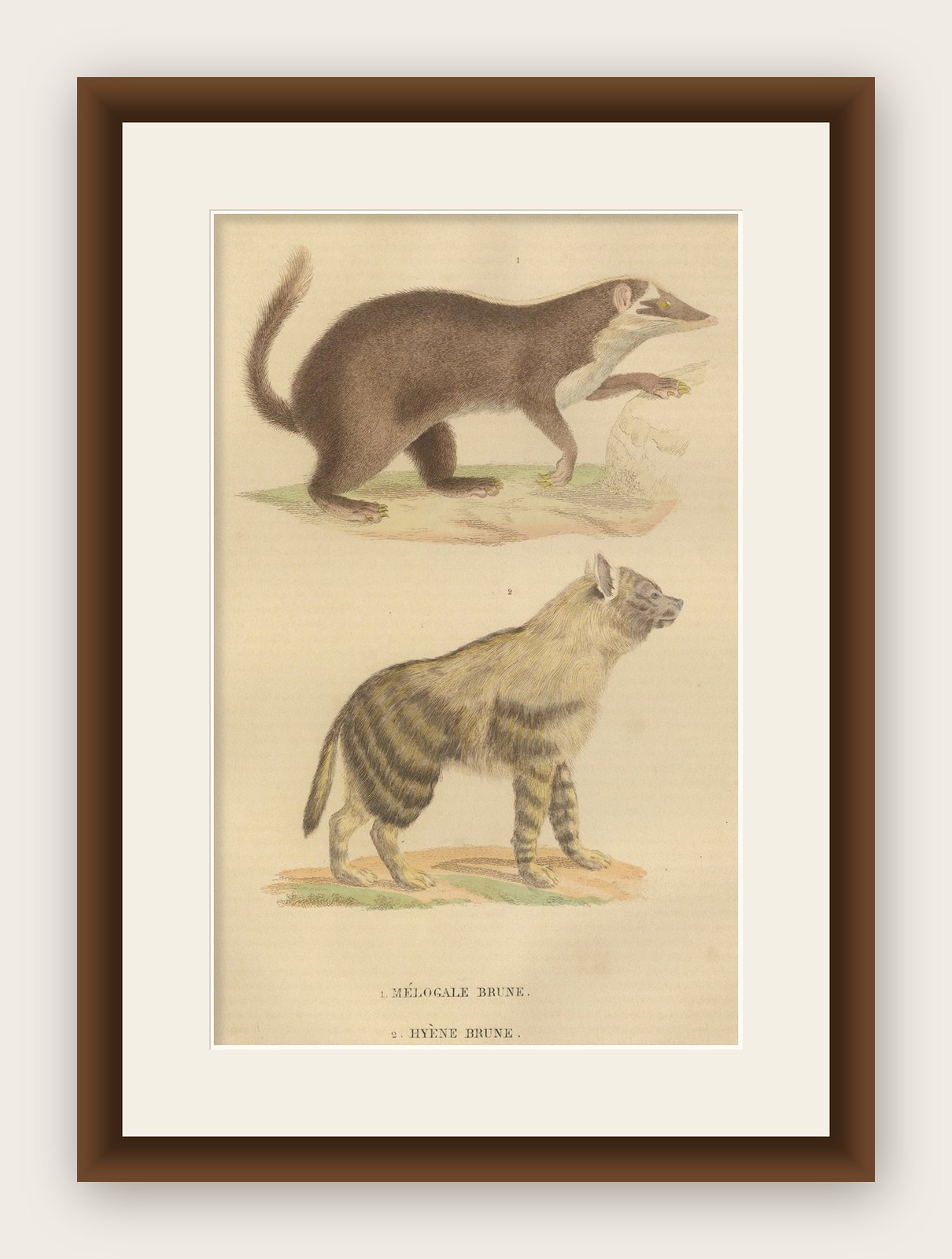
This engraving showcases two distinct animals:
1. **Meilogale Brune** - This is likely the brown-tailed mongoose (Meilogale moschata), recognizable by its elongated body, short legs, and distinctive brown and white facial markings. Its tail is bushy, similar to that of a squirrel.
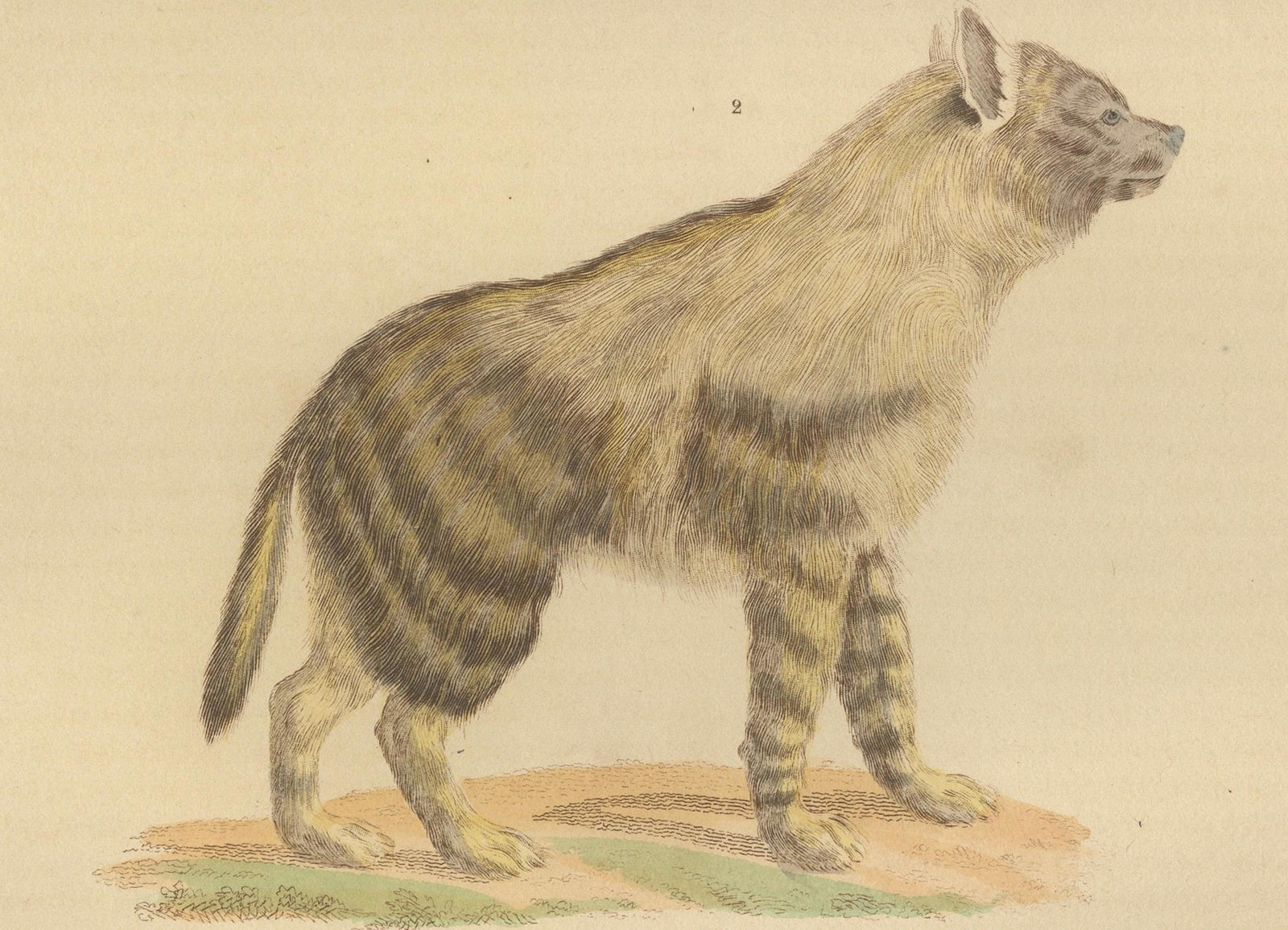
2. **Hyène Brune** - This refers to the brown hyena (Hyaena brunnea), identifiable by its shaggy brown coat striped with white, and its pointed ears. The brown hyena is known for its strong front shoulders and sloping back, which are accurately depicted in the illustration.
The print is a hand-colored engraving from Drapiez's 'Dictionnaire Classique des Sciences Naturelles', published in 1845. Such prints were essential in the pre-photographic era for the dissemination of zoological knowledge and would have been particularly valuable for educational purposes, offering a realistic portrayal of animals that many people might never have the chance to see in person.