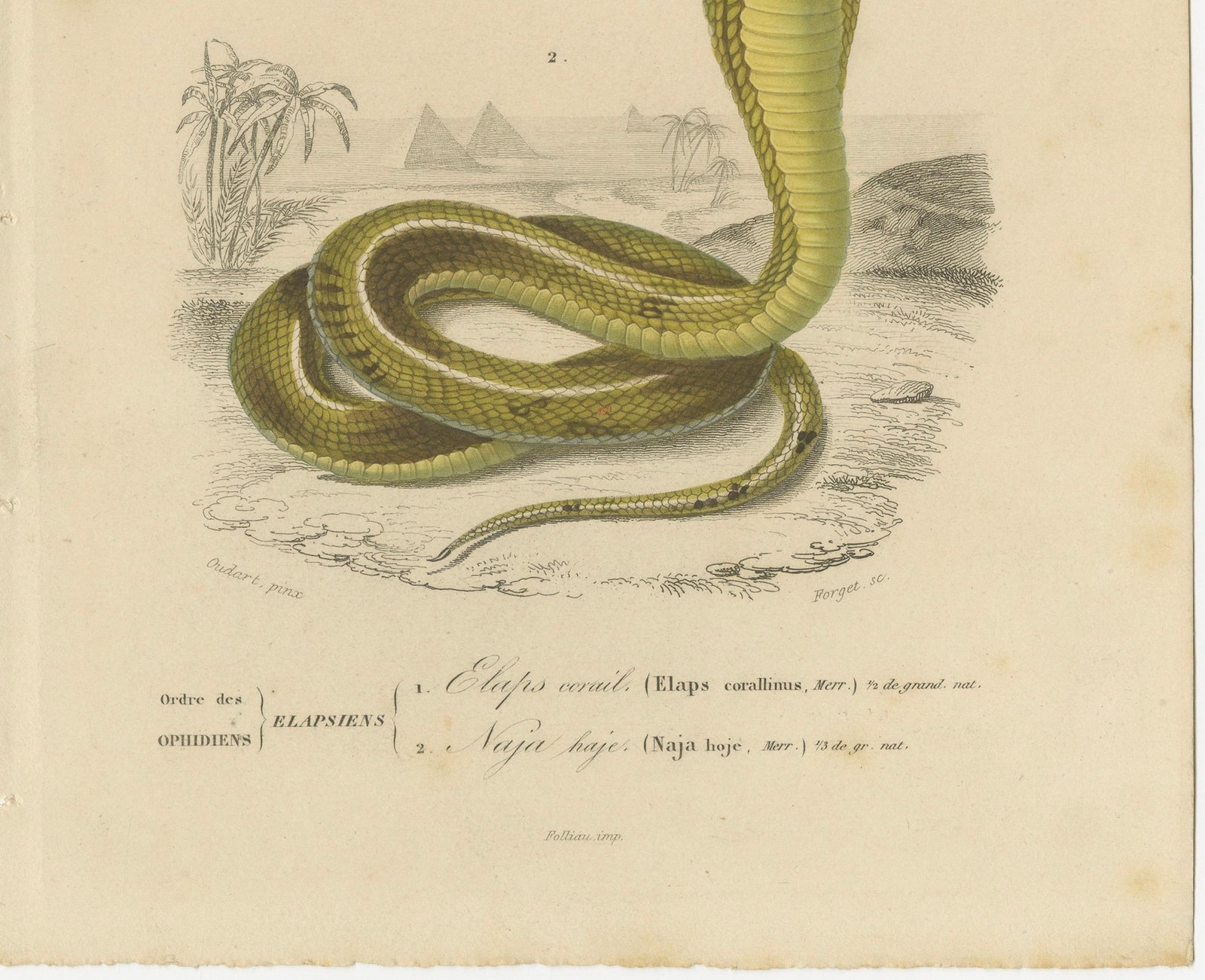
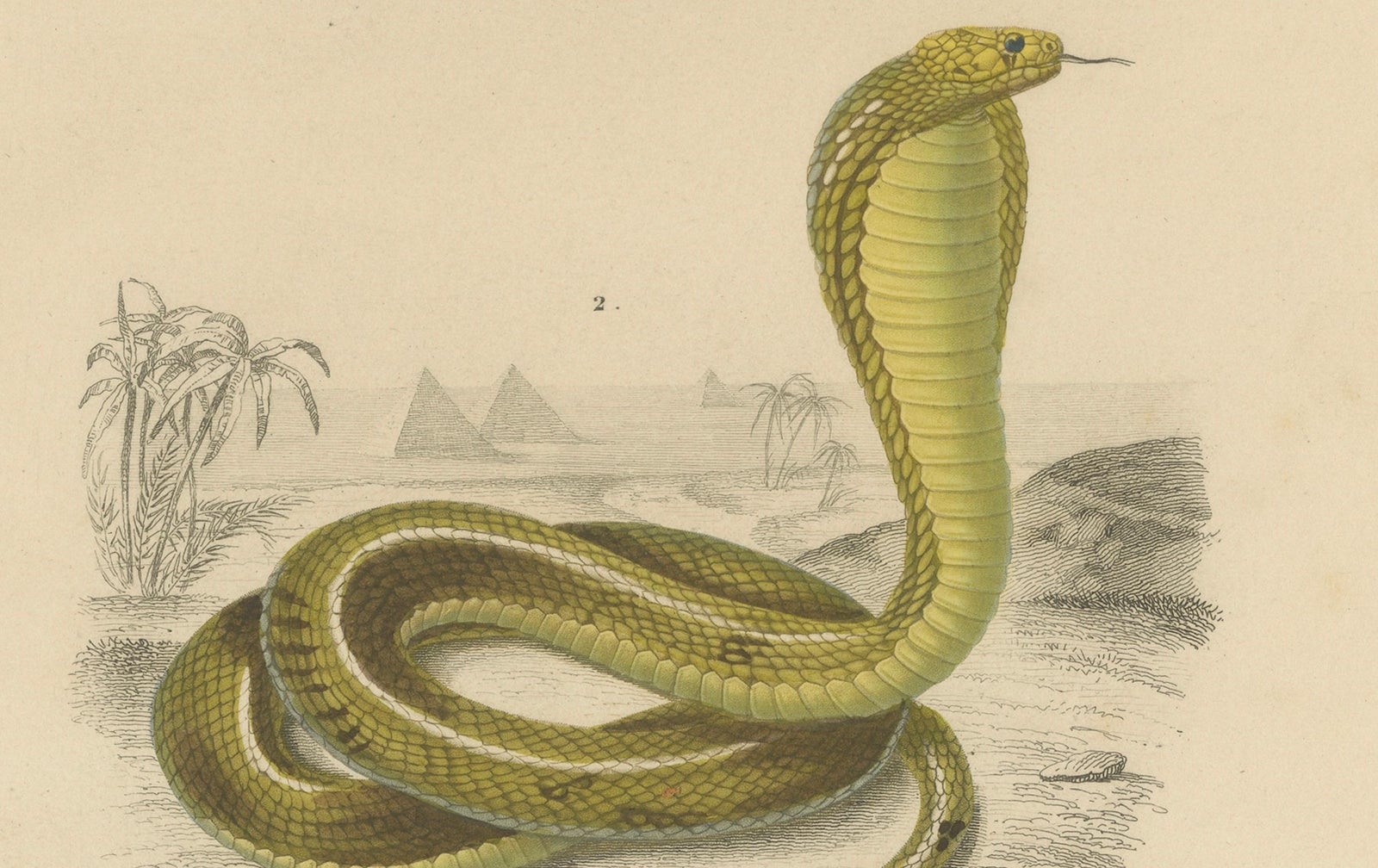
Close-ups
Framed and on the wall
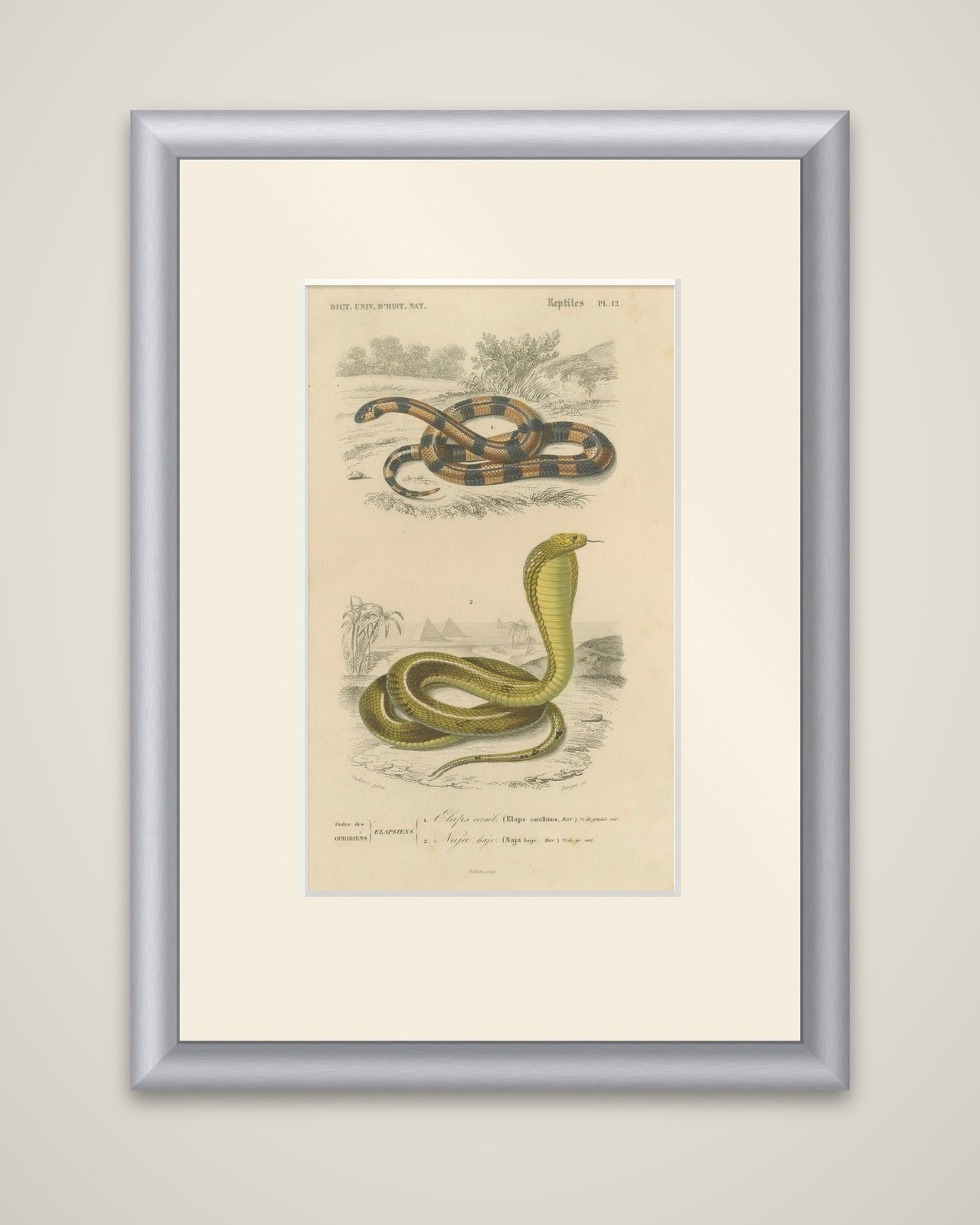


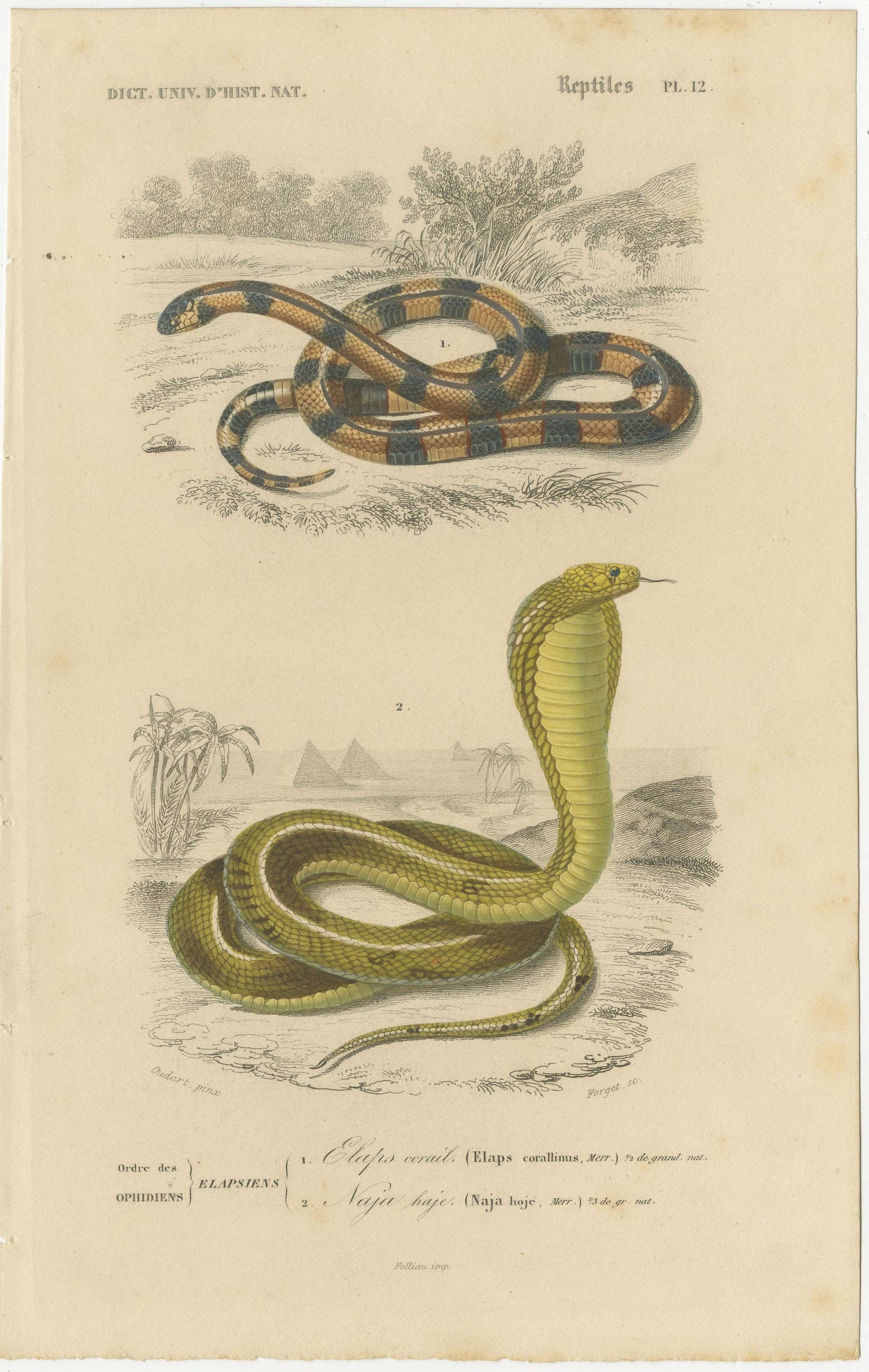
Frame and rooms are illustrations of how the print could look; the description says what is included.
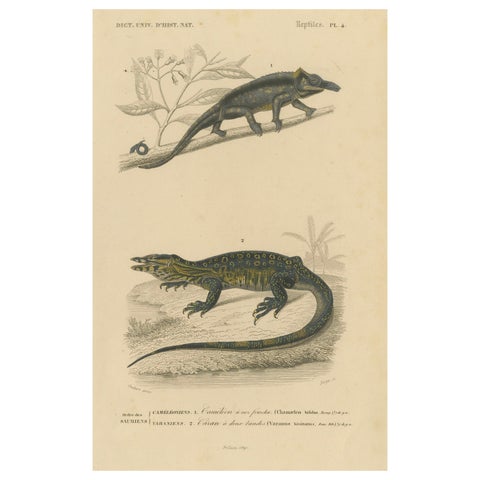
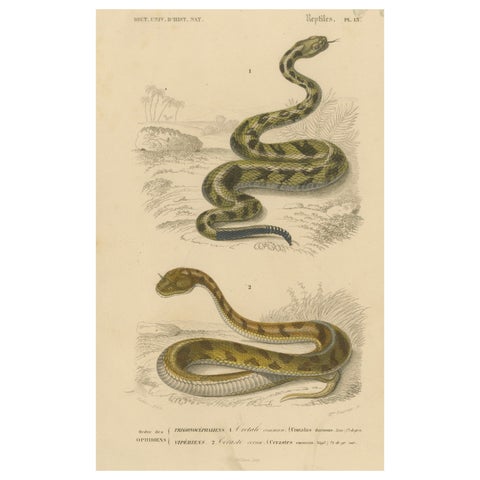
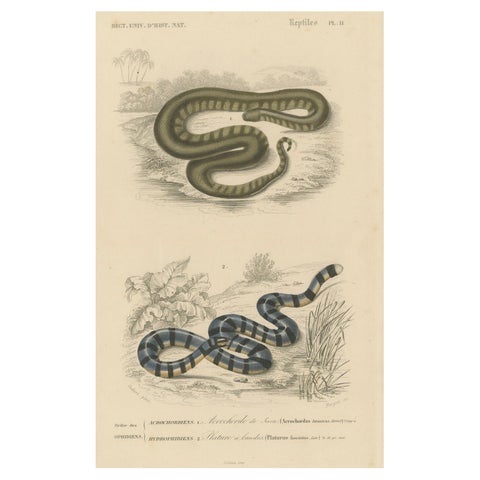
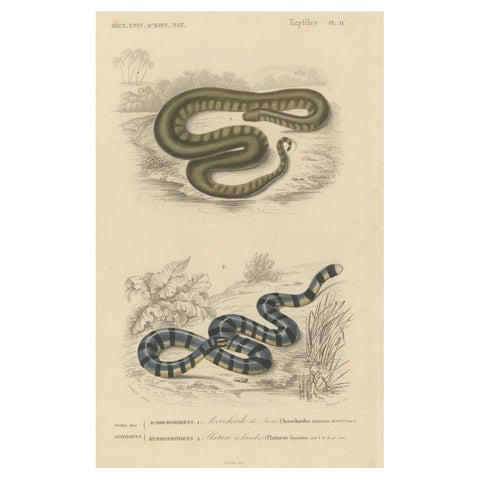
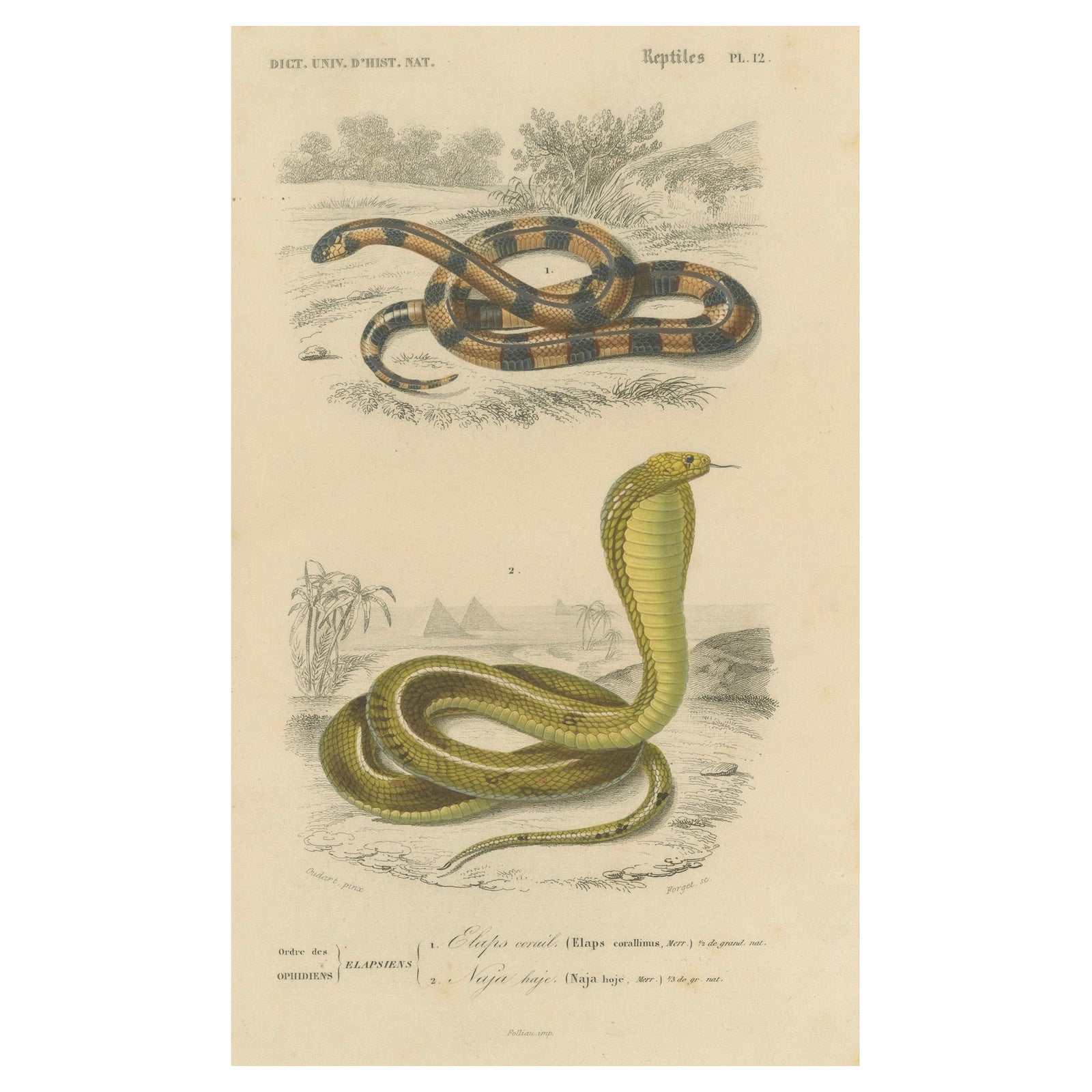
Snake Print of Coral Snake and Egyptian Cobra, c.1850, by Orbigny
£195 ($260, €230)
Period original, not a reproduction.
Shipped from the Netherlands, flat, insured and tracked, worldwide. Returns accepted within 14 days.
- Date
- 1850
- Size
- 9.7 × 6.3 in (24.7 × 16 cm)
- Condition
- Good. Minor foxing in the margins, image area clean with rich hand coloring. Strong plate impression, no tears or repairs. A well-preserved and visually striking 19th-century print.
- Period
- Late 19th century
- Section
- Reptiles and amphibians
- Reference
- f_45337722
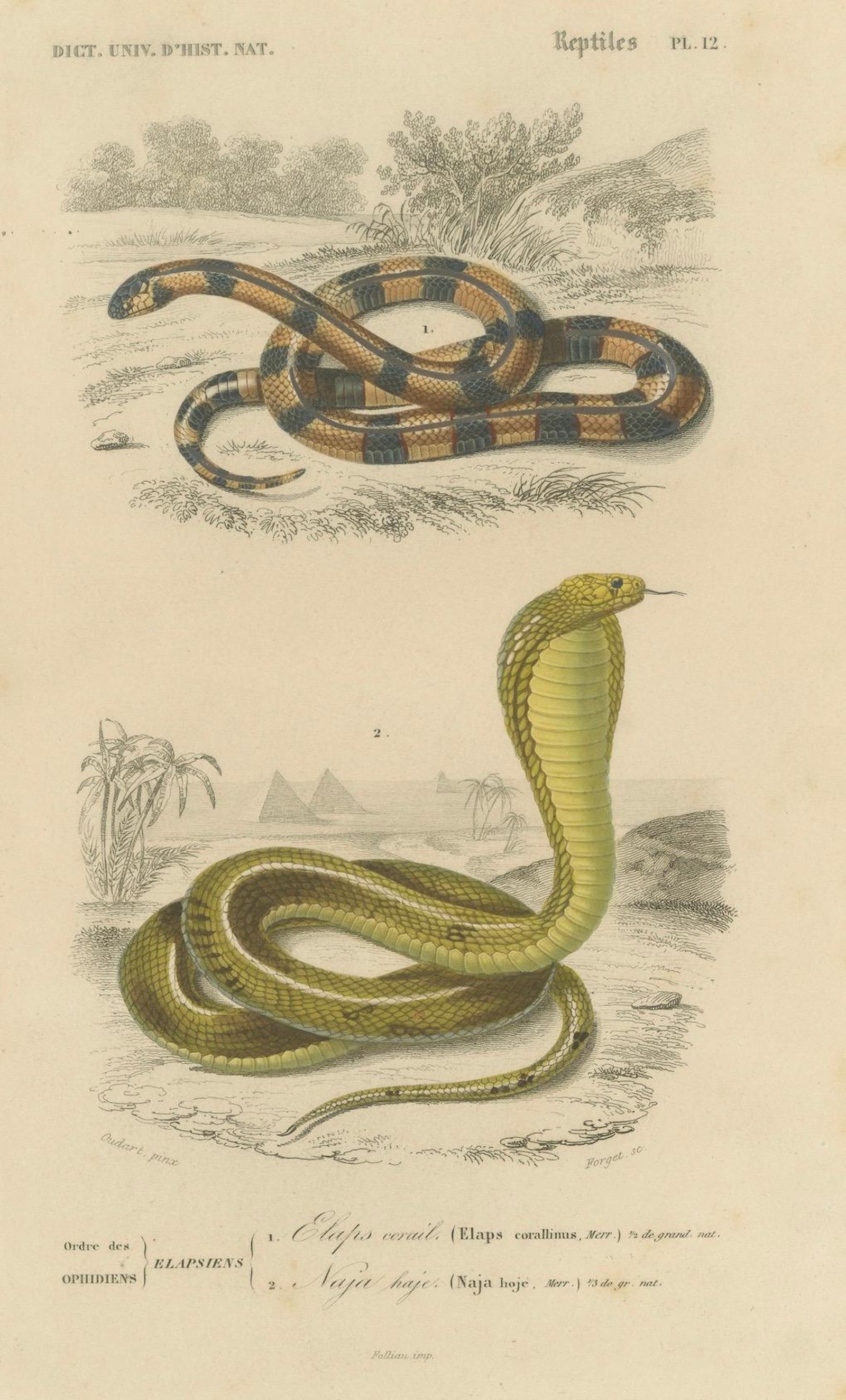
A South American coral snake and an Egyptian cobra on one plate, "Reptiles Pl. 12," an original hand-colored engraving from the Dictionnaire universel d'histoire naturelle, edited by Charles d'Orbigny and published in Paris around 1850. The plate was drawn by Oudart and engraved by Forget.
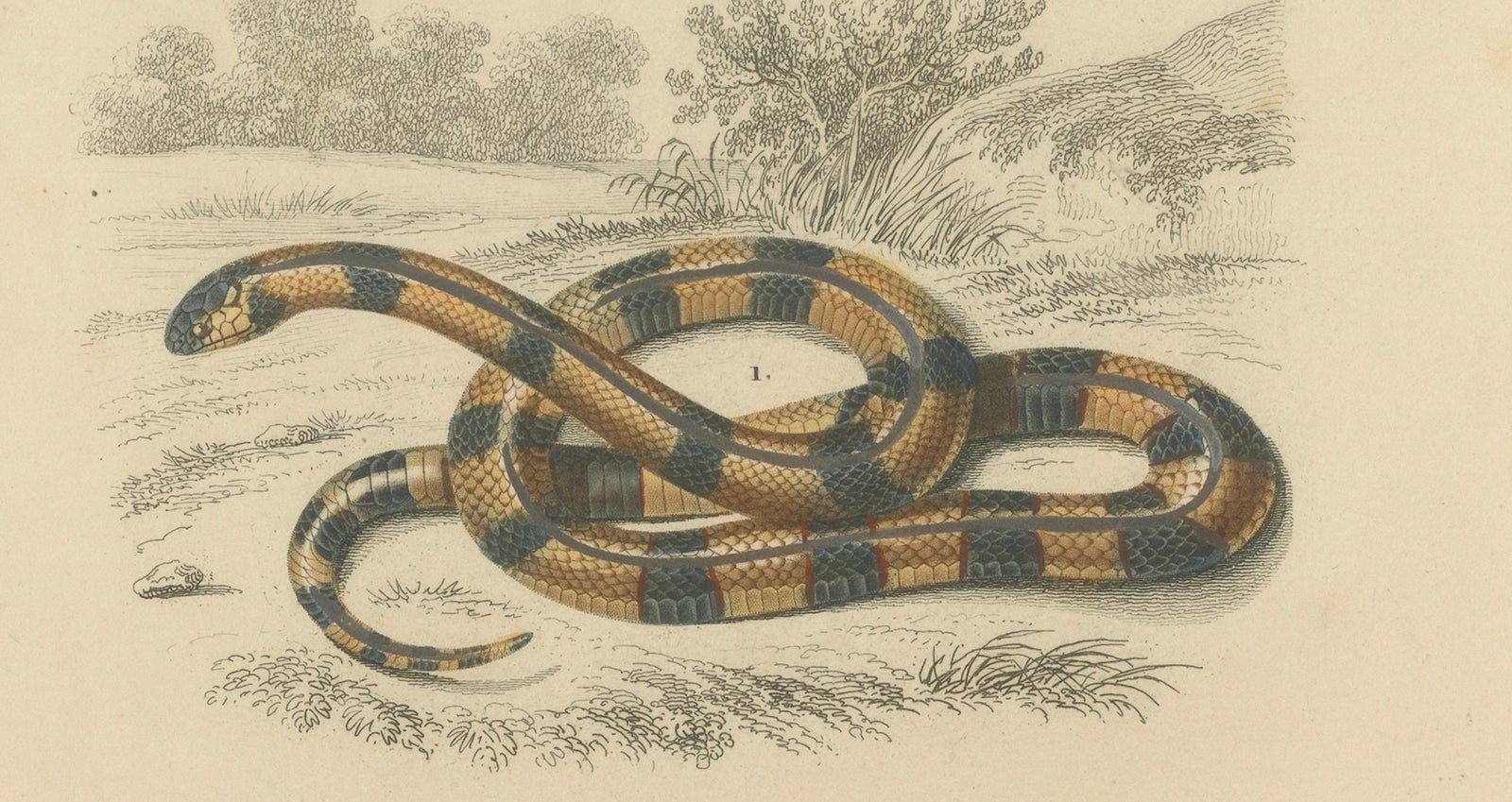
At the top, figure 1 is the coral snake, "Elaps corail (Elaps corallinus)," coiled across open sandy ground with a few shrubs behind it. Its body carries broad black bands separated by narrow rings, colored in orange-red and cream, and the name given at the foot of the plate is now written Micrurus corallinus. Below it, figure 2 is "Naja haje," the Egyptian cobra, raised with its hood spread above a thick coil, in greenish yellow and olive, with palm trees and the pyramids drawn faintly in the distance. Both snakes are lettered at the foot under the heading "Ordre des Ophidiens, Elapsiens," and the plate number sits at the upper right.
The dictionary was a standard French reference on natural history in the middle of the century, and its plates were issued in numbered series by class, here Reptiles.