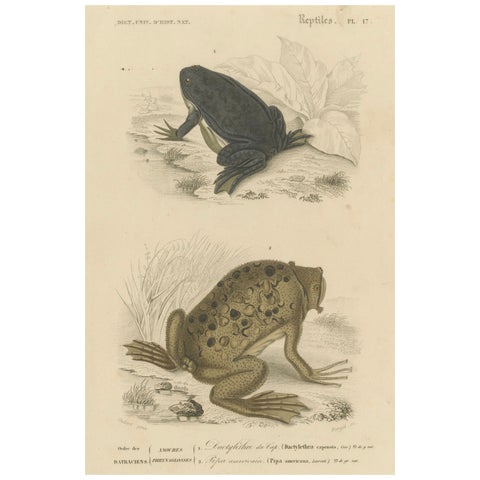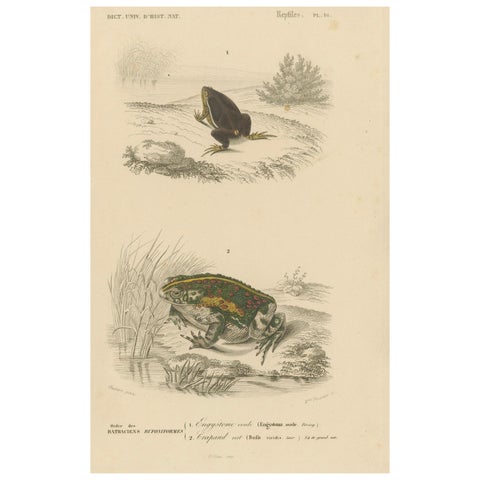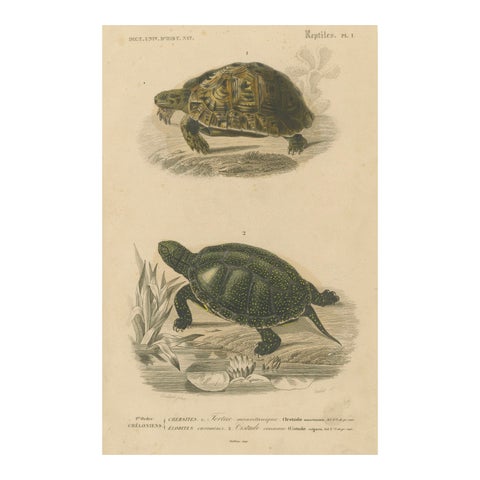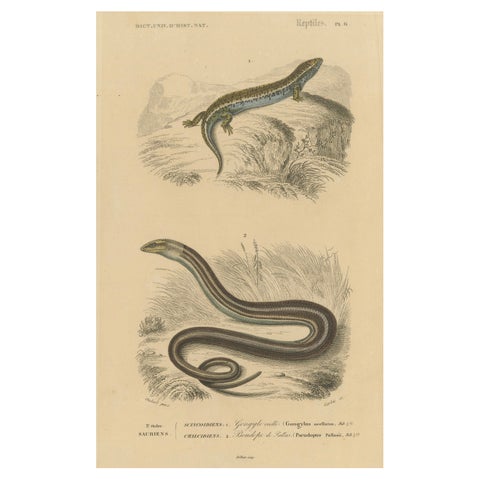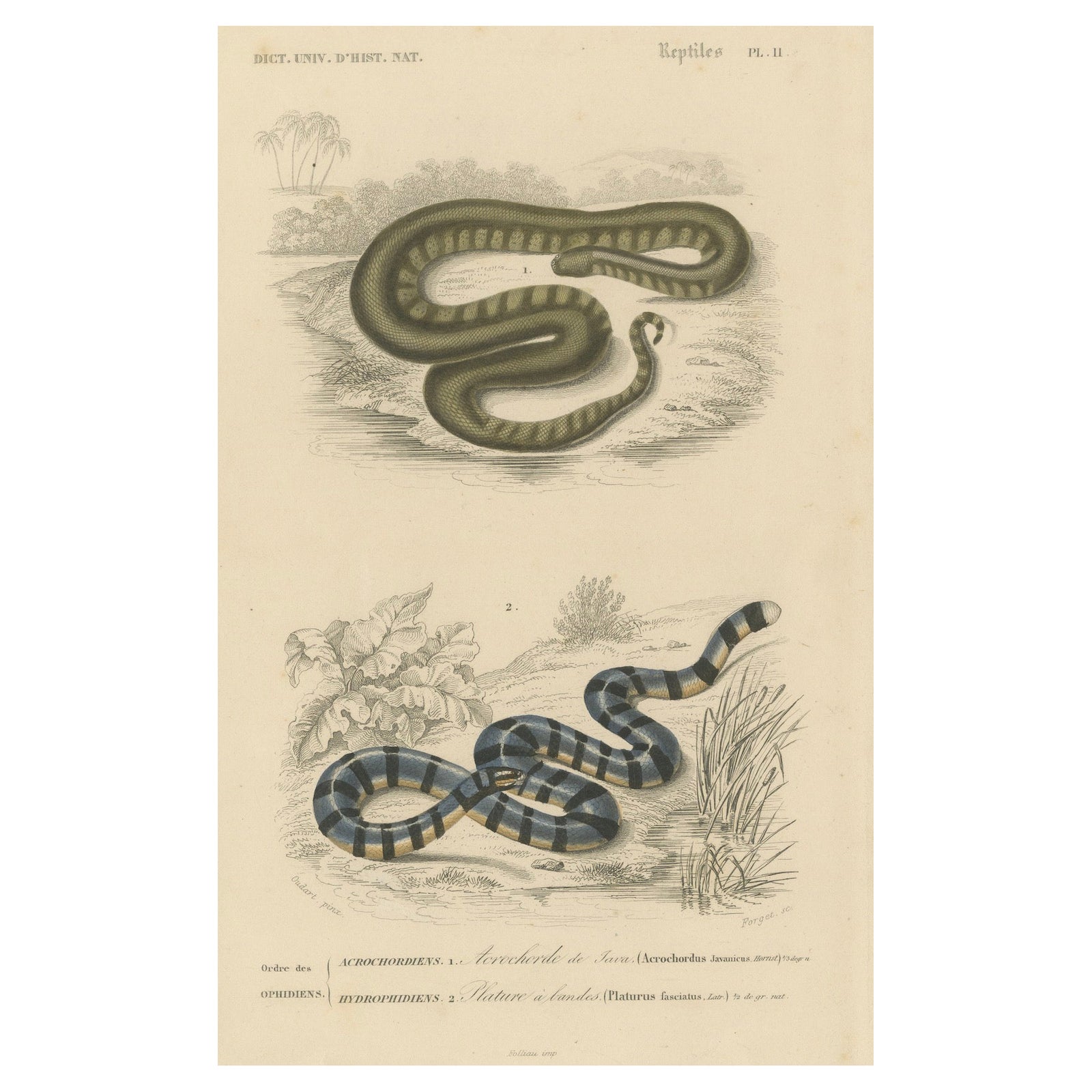
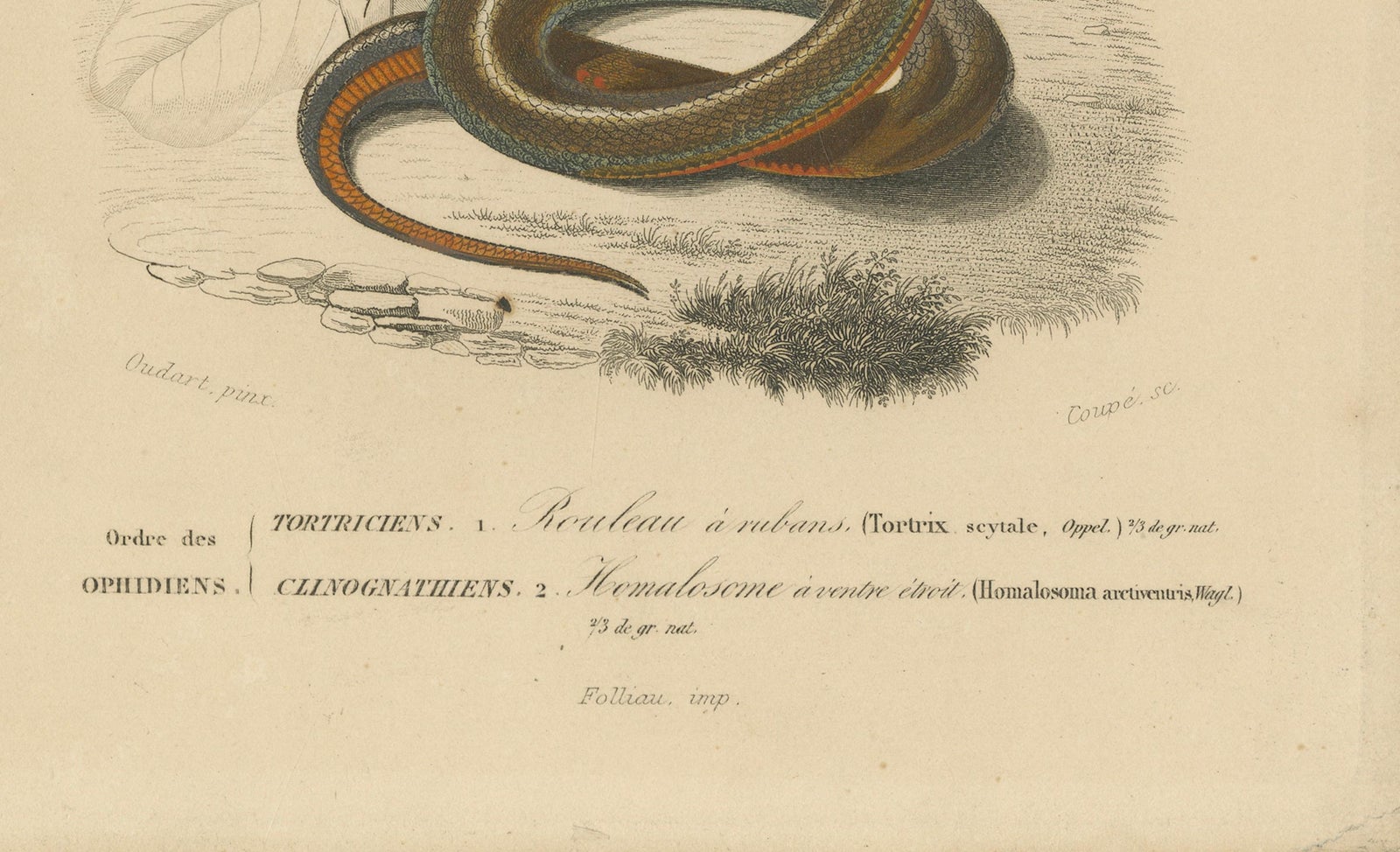
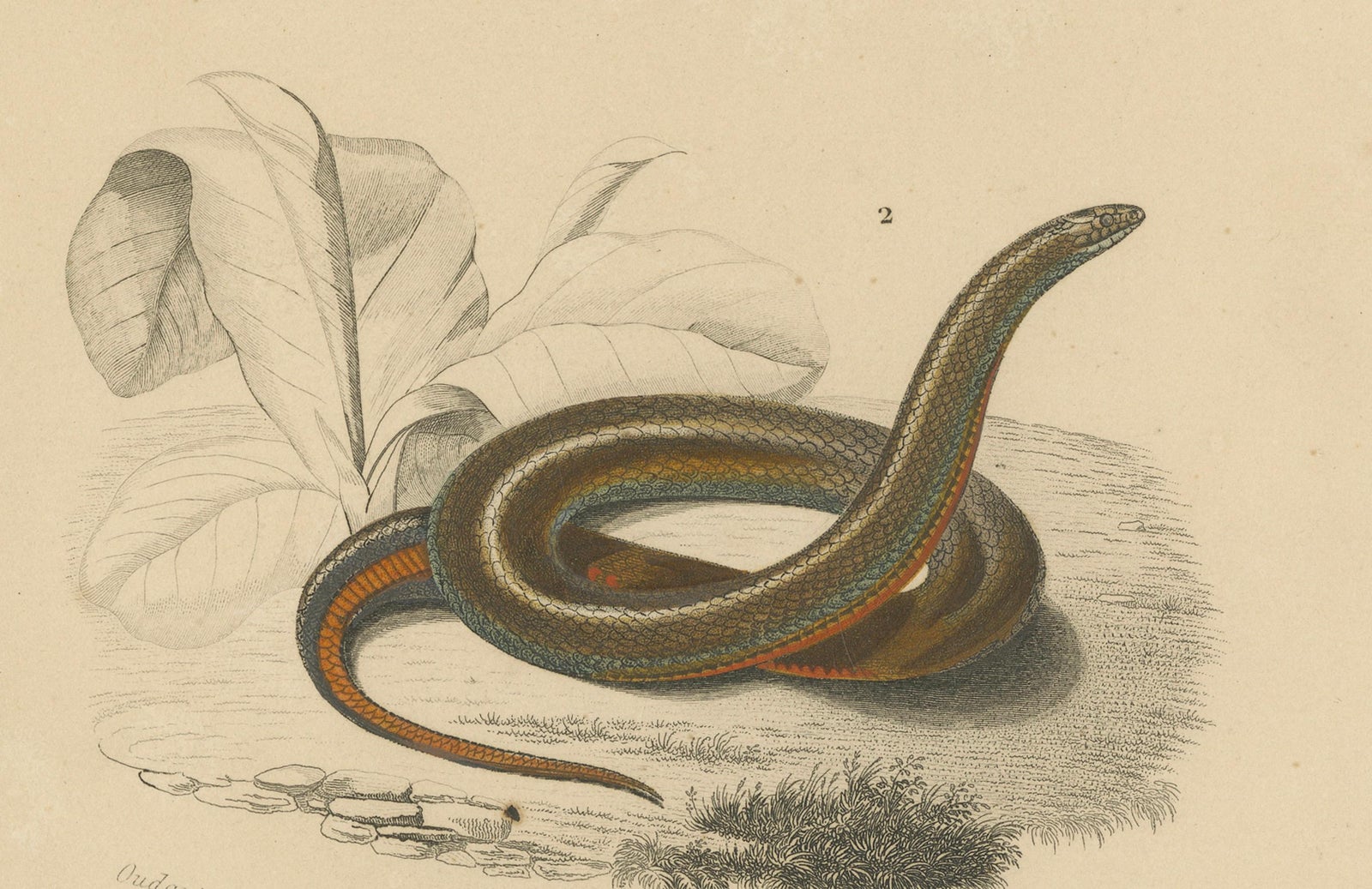
Close-ups
Framed and on the wall
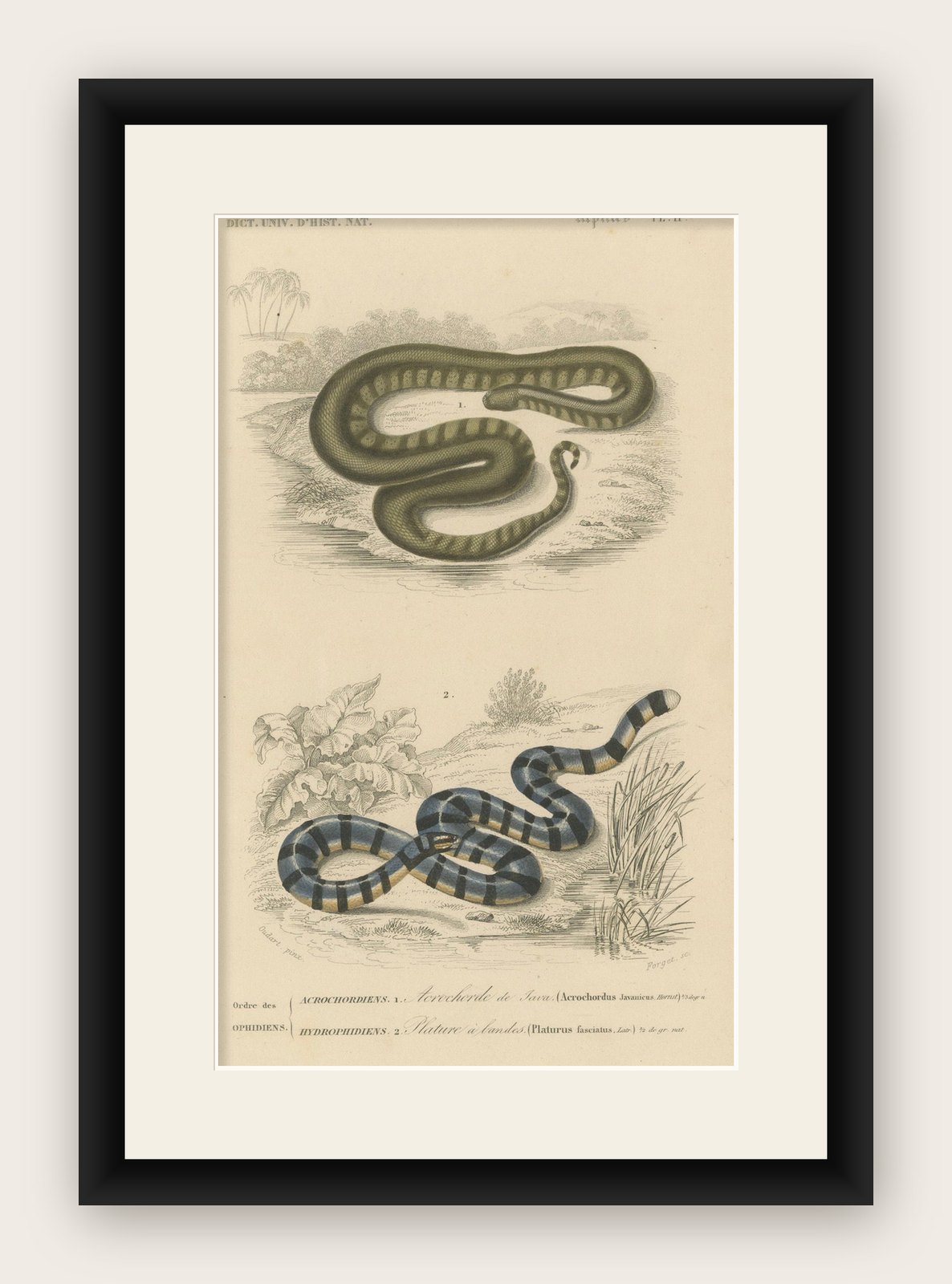


Frame and rooms are illustrations of how the print could look; the description says what is included.
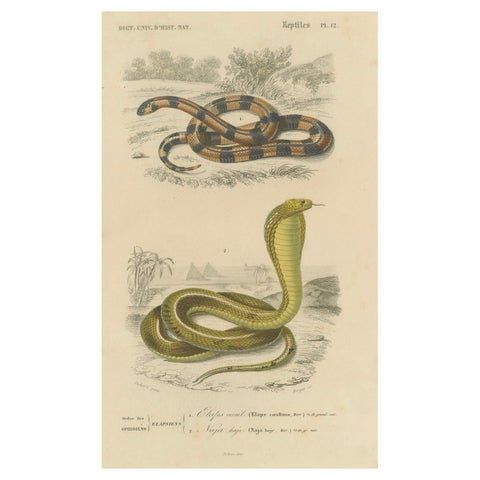
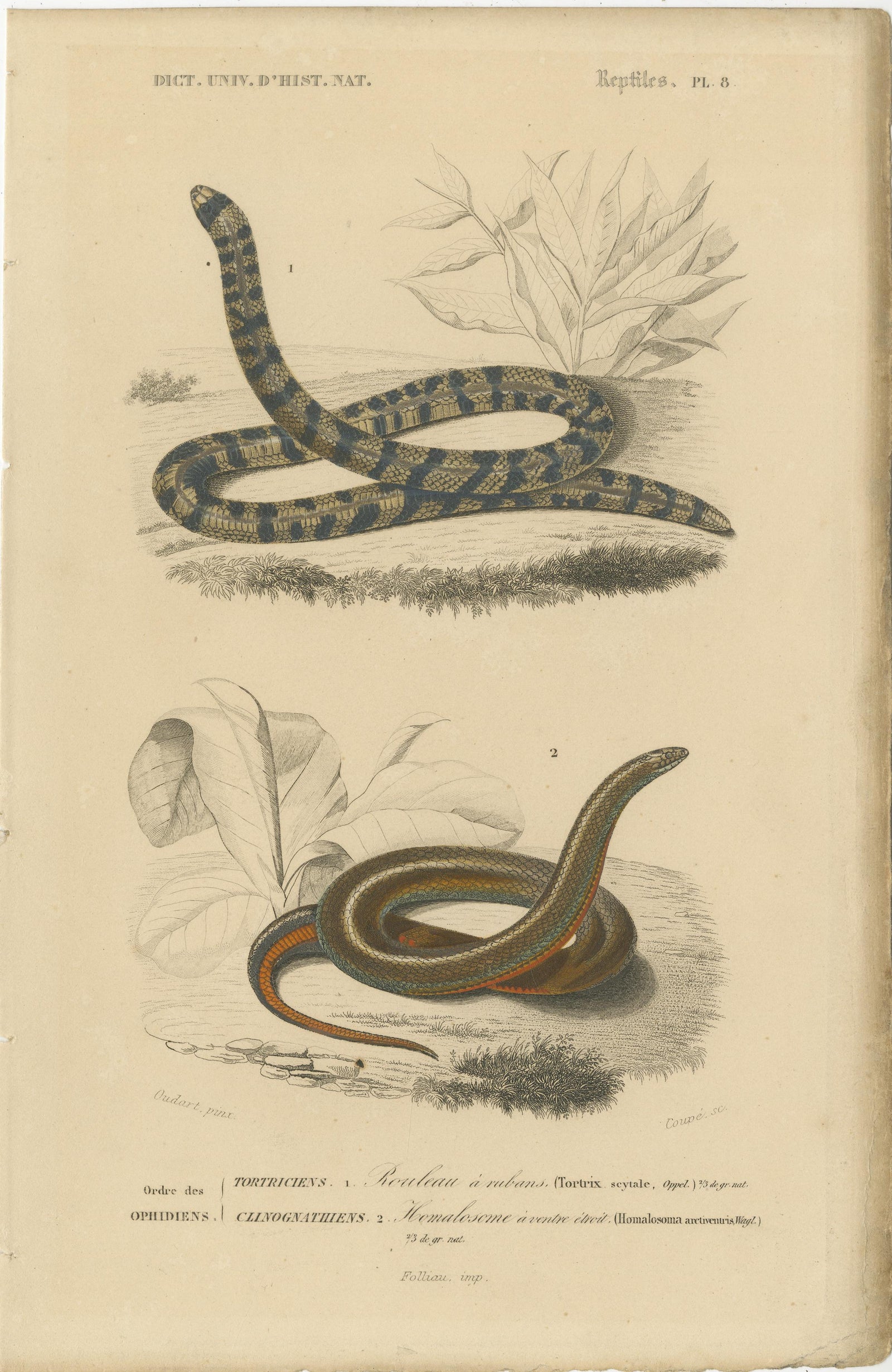
Snake Print of Banded Snake and Red-Striped Snake, c.1850, by Orbigny
€190 ($210, £160, €190)
Period original, not a reproduction.
Shipped from the Netherlands, flat, insured and tracked, worldwide. Returns accepted within 14 days.
- Date
- 1850
- Size
- 9.7 × 6.3 in (24.7 × 16 cm)
- Condition
- Good. Light age toning and faint foxing in margins, central image crisp with rich original hand coloring. No visible damage or repairs. A well-preserved natural history plate.
- Period
- Late 19th century
- Section
- Reptiles and amphibians
- Reference
- f_45337562
- Colour
- Hand coloured
What the condition grades mean
- Excellent
- Bright and clean, with no faults worth mentioning.
- Very good
- Only light signs of age, such as faint toning.
- Good
- Normal signs of age for a sheet of this period: toning, some foxing, small marks or neat old repairs.
- Fair
- Clear faults such as staining, tears or repairs, priced to match.
Every fault we see is written in the condition note, and the whole sheet is shown uncropped in the photos.
Snake Print of Banded Snake and Red-Striped Snake, c.1850, by Orbigny
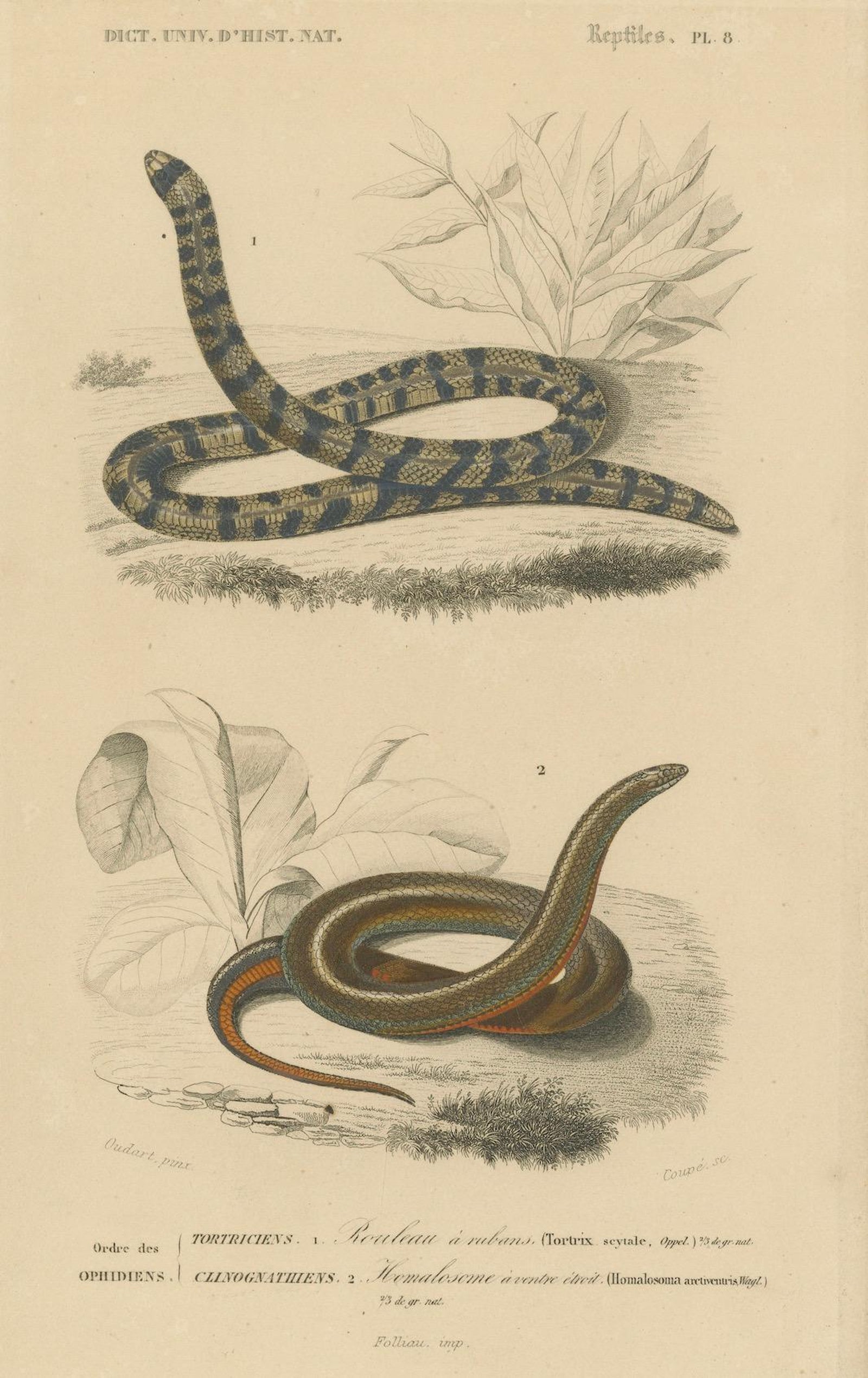
This colorful and rare 19th-century hand-colored engraving, Reptiles Pl. 8, features two vividly depicted snake species: the Banded Snake (Toruix scytale) and the Red-Striped Snake (Homalosoma arctiventre). Published around 1850 as part of the monumental French encyclopedia Dictionnaire Universel d’Histoire Naturelle by Charles Dessalines d'Orbigny, this plate is a fine example of the era's dedication to both scientific study and artistic craftsmanship.
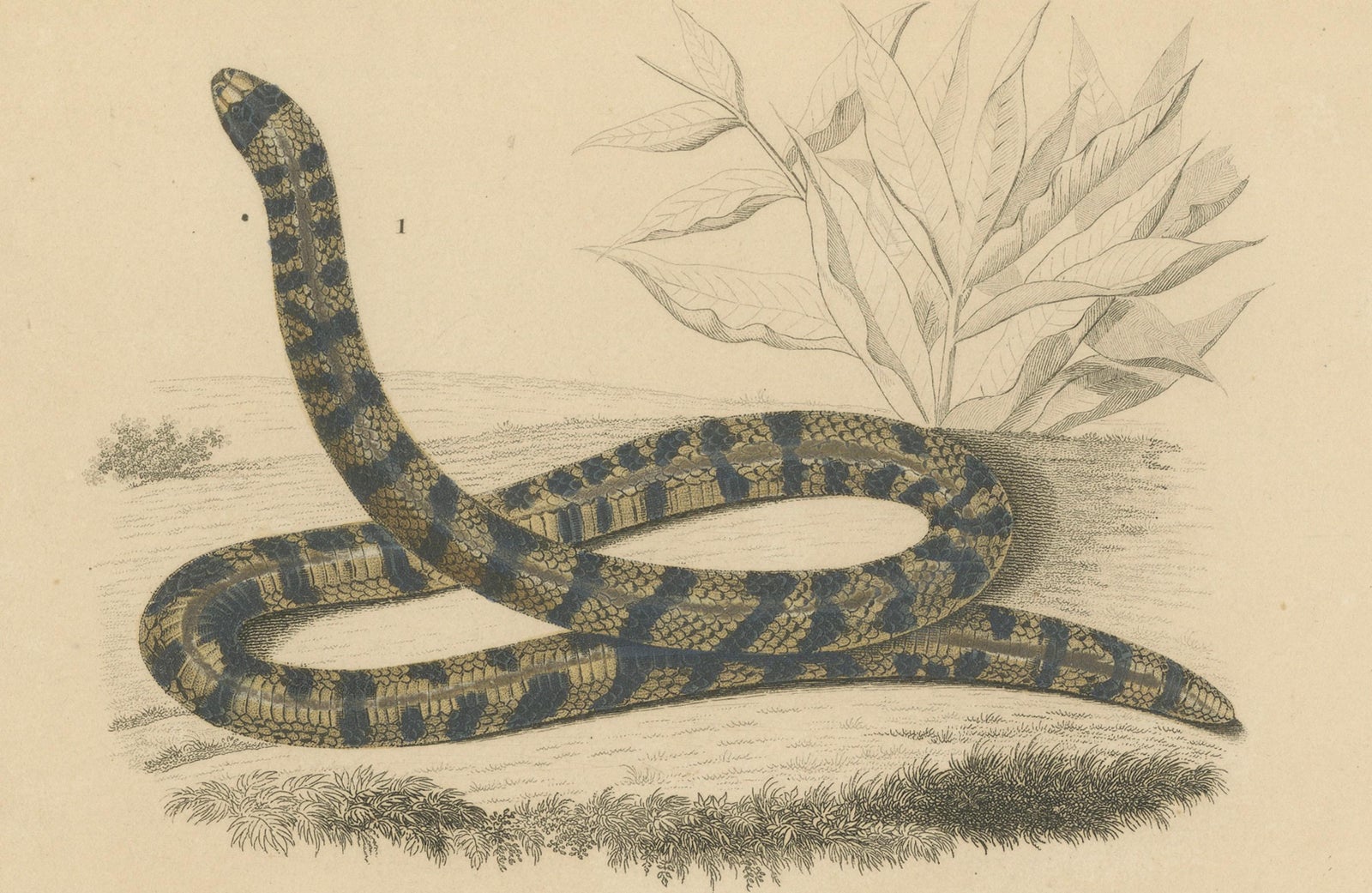
Figure 1, at the top, illustrates Toruix scytale, also known as the Banded Snake, rendered in alternating blue and yellow segments. This coloration likely reflects warning patterns found in nature, although the original taxonomic name used here has since undergone revisions. The artist places the snake in a sparse tropical landscape, coiled and alert, emphasizing its elegant body shape and scale texture.
Figure 2, shown below, presents the striking Homalosoma arctiventre, known for its iridescent sheen and bright reddish-orange underbody stripe. Coiled beneath a broad-leafed plant, this snake is shown in a vivid pose that captures its vibrant pattern and slender form. Native to parts of South America, this species belongs to a group of snakes often found in forested or grassland environments. Its name, Homalosoma, refers to its smooth body surface.
Both snakes are drawn by the accomplished natural history illustrator Oudart and engraved by Coupé, known for their precise scientific imagery. These engravings were carefully colored by hand, making each print slightly unique. The publication from which this plate comes was highly influential in 19th-century Europe, serving as a reference for naturalists and collectors.
This print would appeal to collectors of zoological illustrations, interior decorators seeking nature-themed artwork, or enthusiasts of antique prints and herpetology.
Condition Summary:
Light age toning and faint foxing in margins, central image crisp with rich original hand coloring. No visible damage or repairs. A well-preserved natural history plate.
Framing Tips:
Frame in black, walnut, or dark green wood to complement the deep blues and reds. Use a light cream or soft olive mat to enhance the vivid colors. UV-protective glass is recommended to preserve the quality of the hand-applied coloring.