Close-ups
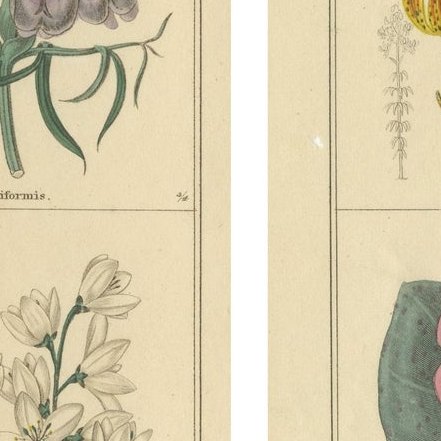
Framed and on the wall
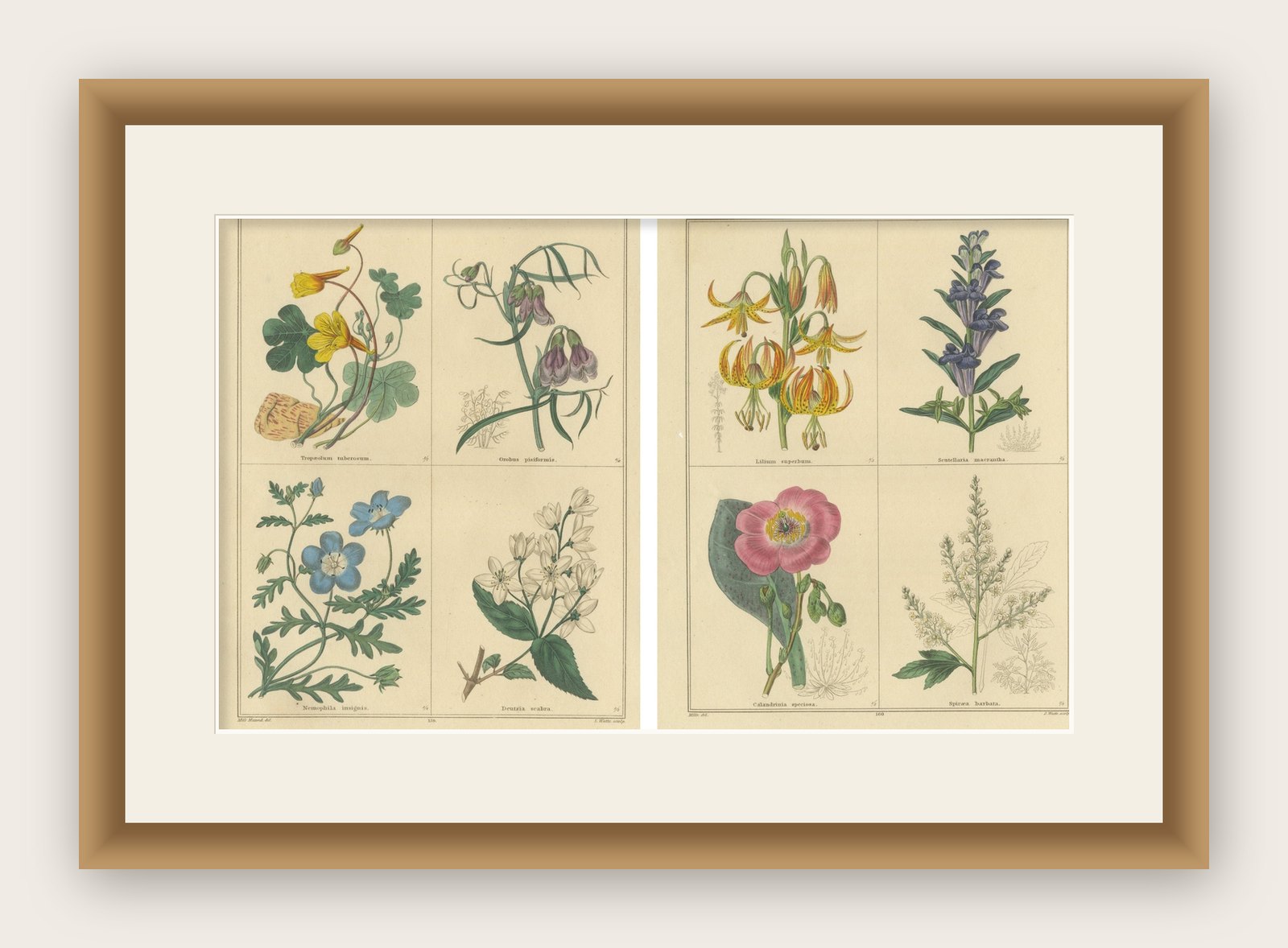
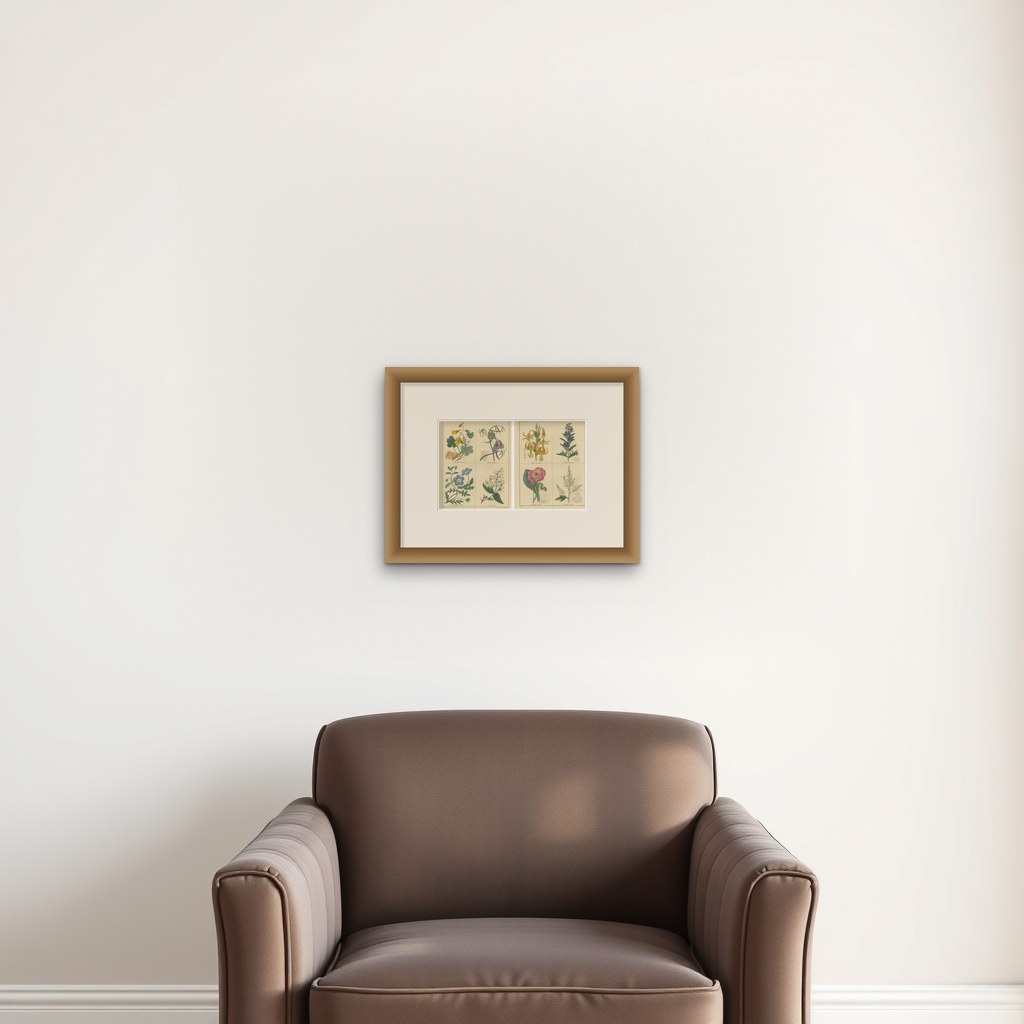

Frame and rooms are illustrations of how the print could look; the description says what is included.
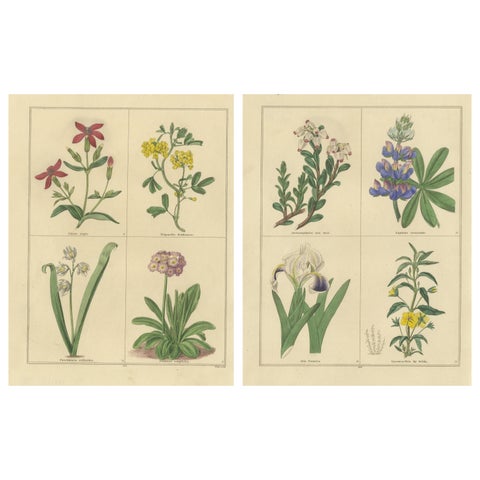
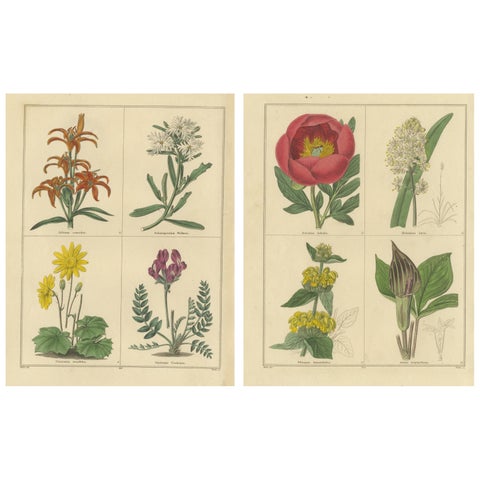
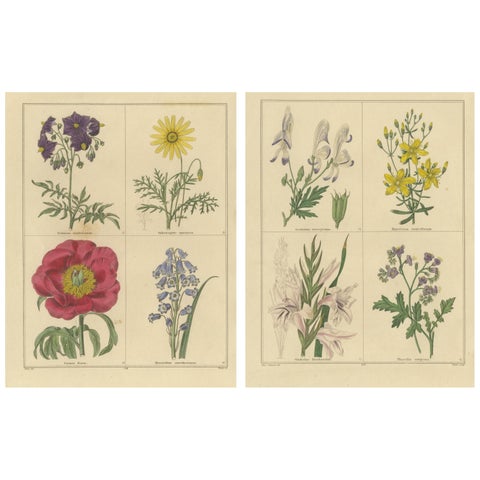
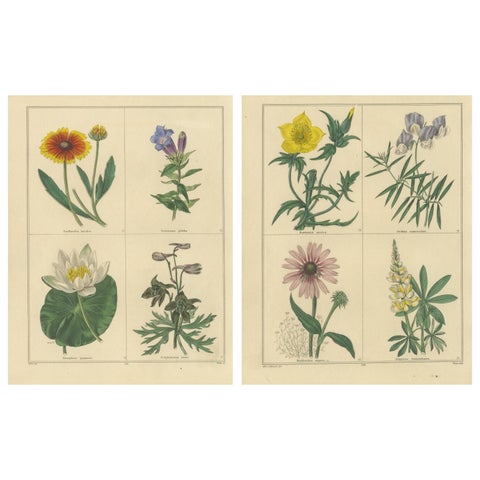
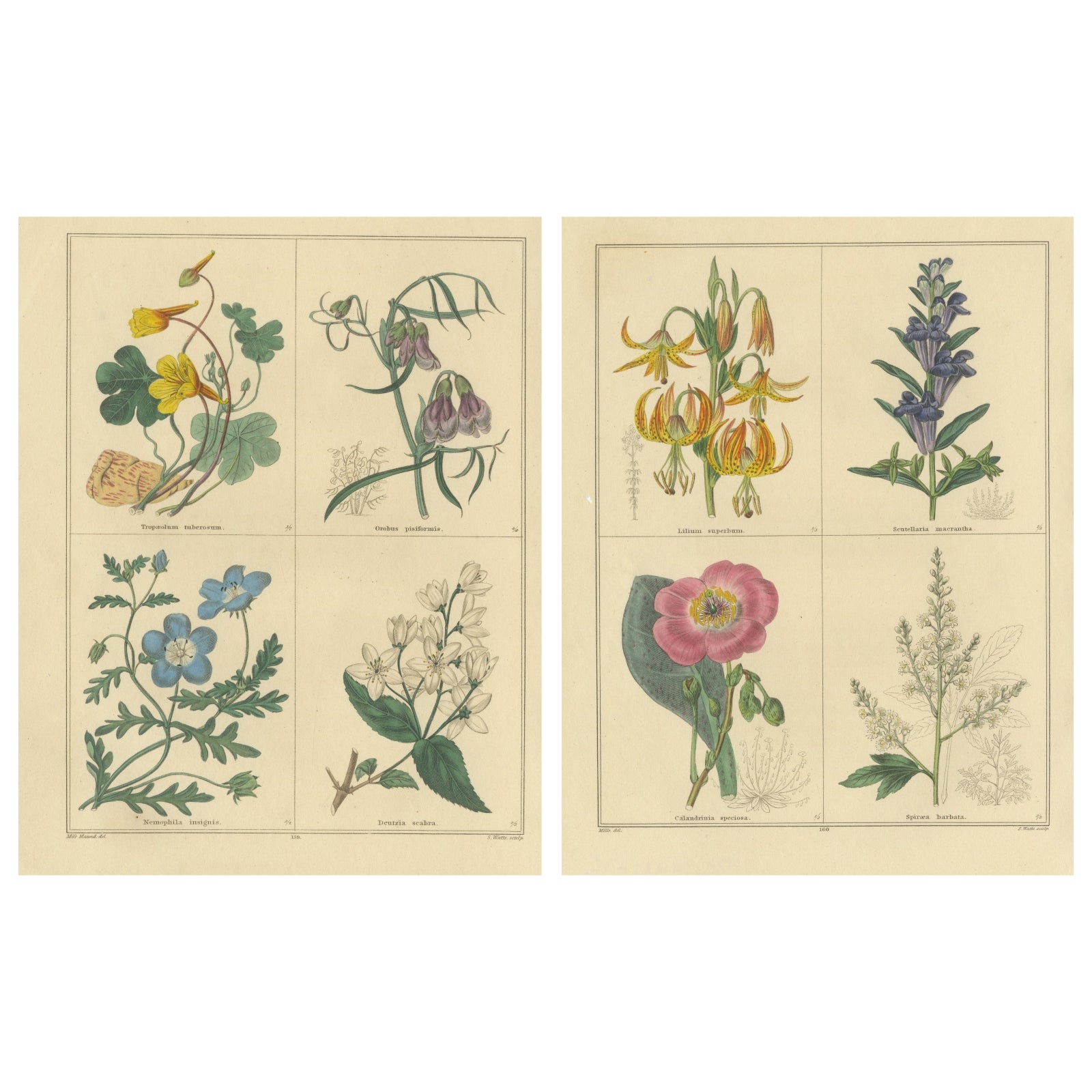
Set of Two Hand-Colored Botanical Engravings by B. Maund 1836
€340 ($380, £290, €340)
Period original, not a reproduction.
Shipped from the Netherlands, flat, insured and tracked, worldwide. Returns accepted within 14 days.
- Date
- 1836
- Size
- 9.4 × 7.1 in (24 × 18 cm)
- Condition
- Good. Fine impressions with strong, original hand-coloring. Minor age toning and faint foxing in margins, but overall bright and well-preserved with visible plate marks.
- Period
- Early 19th century
- Artist or book
- Benjamin Maund
- Section
- Botanical
- Reference
- f_47335492
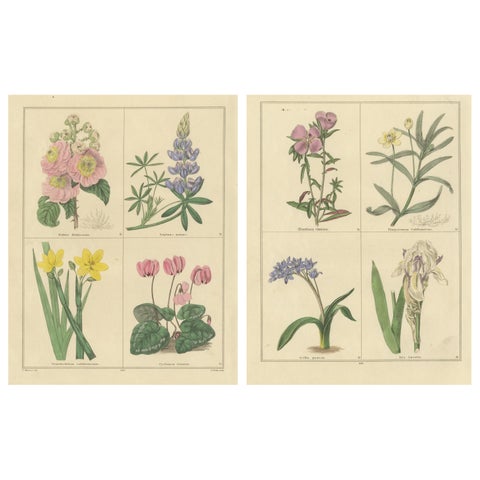
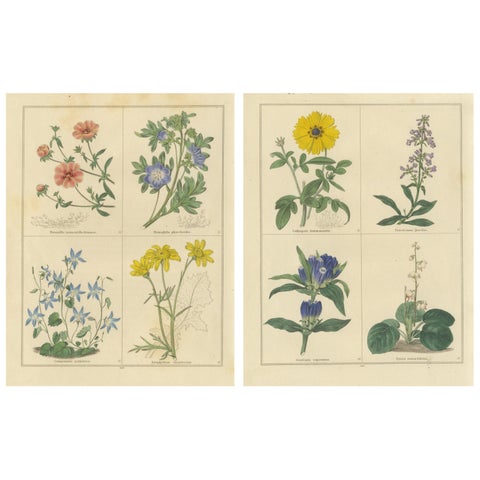
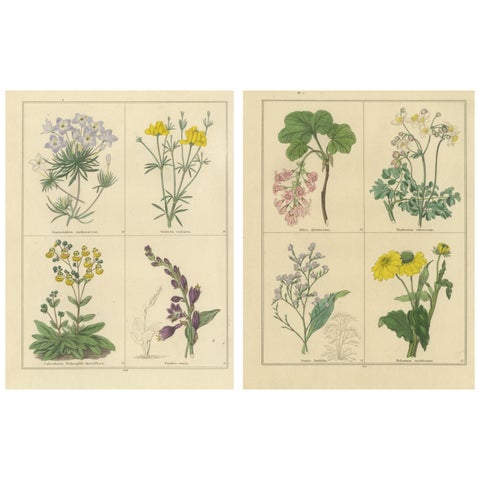
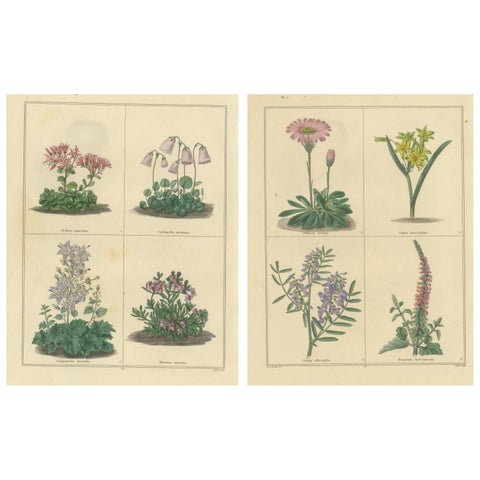
Pair of Botanical Engravings from The Botanic Garden by B. Maund, London c.1836
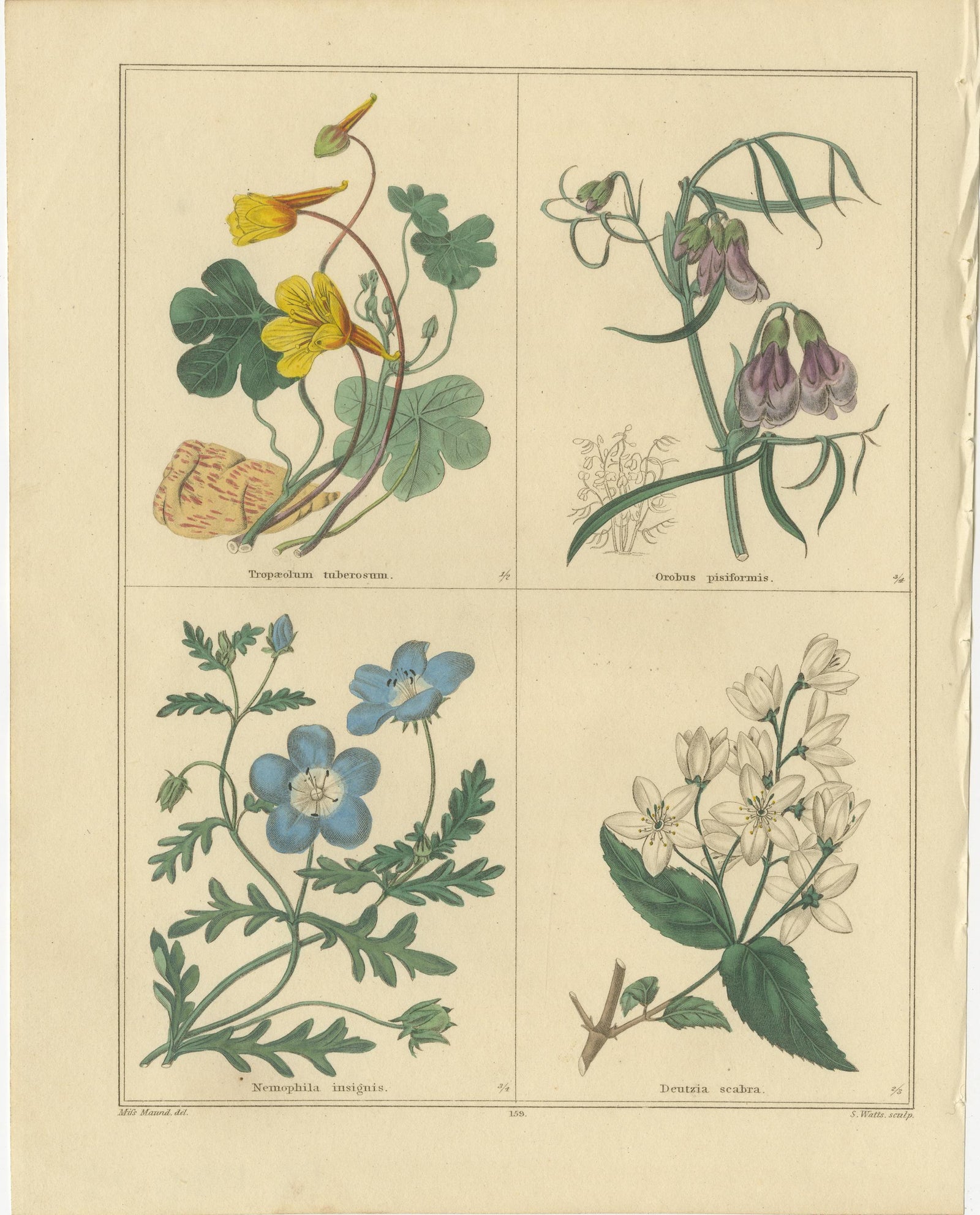
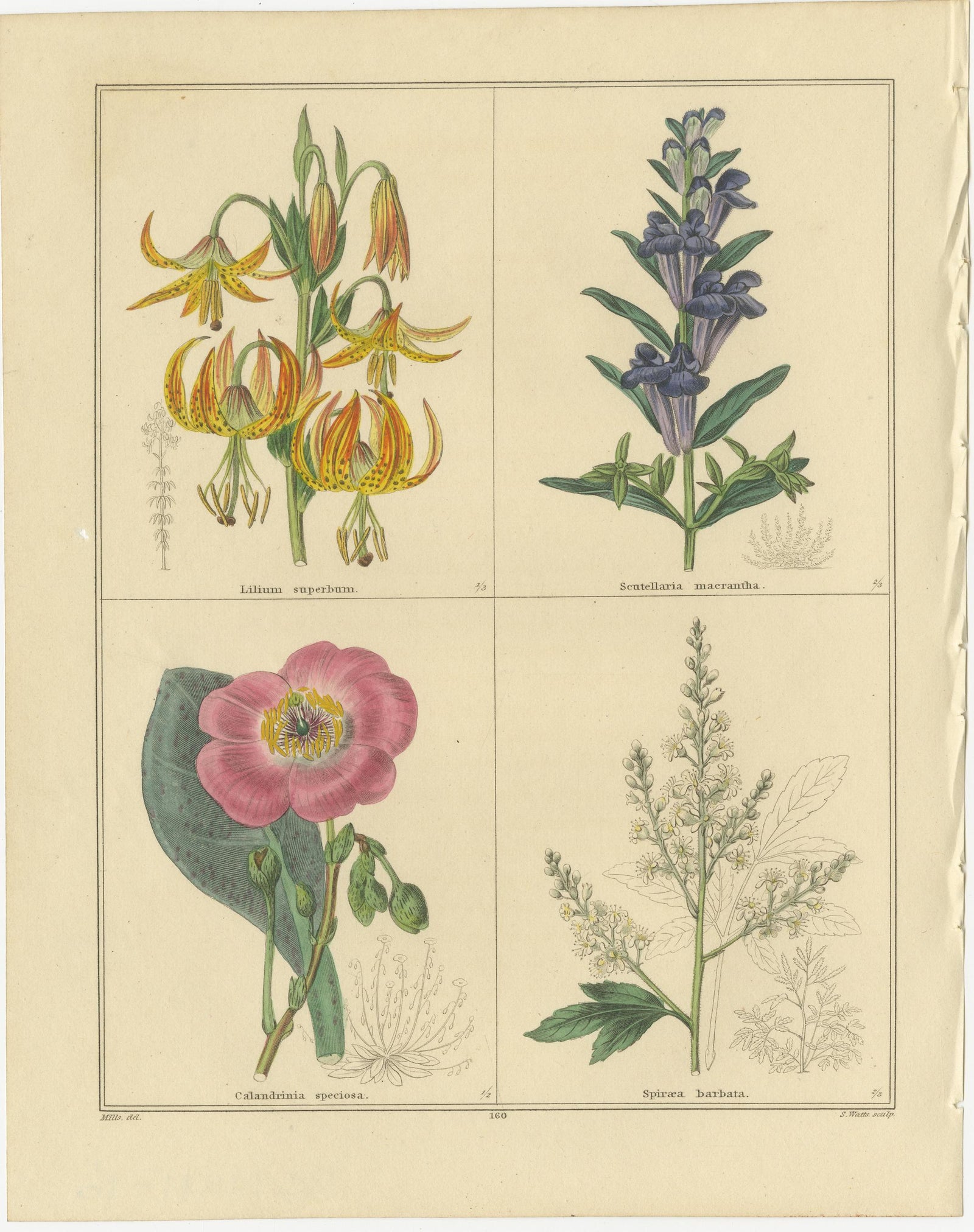
An elegant pair of original hand-colored botanical engravings from *The Botanic Garden* by Benjamin Maund (1790–1864), Volume VII, published in London circa 1836. Each engraving presents four floral species in refined composition and coloring, typical of Maund’s celebrated 19th-century natural history series. These plates combine scientific observation with the decorative charm that made *The Botanic Garden* one of the most admired botanical publications of its time.
The left-hand sheet depicts *Tropæolum tuberosum* (Peruvian nasturtium), *Orobus psilophorus*, *Nemophila insignis* (baby blue eyes), and *Deutzia scabra* (rough deutzia). The right-hand engraving features *Lilium superbum* (Turk’s-cap lily), *Scutellaria macrantha* (large-flowered skullcap), *Calandrinia speciosa* (showy calandrinia), and *Spiræa barbata* (barbed spirea). Each flower is rendered with precision and grace, showcasing a spectrum of vivid yellows, blues, purples, and pinks balanced against delicate botanical outlines.
Benjamin Maund’s *The Botanic Garden; consisting of Highly Finished Representations of Hardy Ornamental Flowering Plants Cultivated in Great Britain* was first issued in the early 1830s and continued for over two decades. Drawn by E.D. Smith and engraved by S. Watts, the series was widely admired for its artistry and accuracy. Maund, a Fellow of the Linnean Society, sought to make horticultural knowledge both accessible and aesthetically pleasing, blending scientific integrity with fine craftsmanship.
These plates, engraved on copper and hand-colored by skilled colorists, capture the flourishing enthusiasm for botanical art during the Victorian period. They served as both scientific records and decorative objects, reflecting the period’s fascination with nature’s variety and order.
Condition report:
Fine impressions with strong, original hand-coloring. Minor age toning and faint foxing in margins, but overall bright and well-preserved with visible plate marks.
Framing tips:
Ideal for pairing in a botanical-themed interior. Use soft cream or pale green matting with gilt or dark wooden frames to accentuate the colors and period character of these charming florals.
Technique: Hand-colored copperplate engraving
Maker: Engraved by S. Watts after E.D. Smith; published by Benjamin Maund, London, c.1836